No Picture
News Briefs

Chilean bishops’ president names delegate to replace him at papal meeting

January 2, 2019 CNA Daily News 1

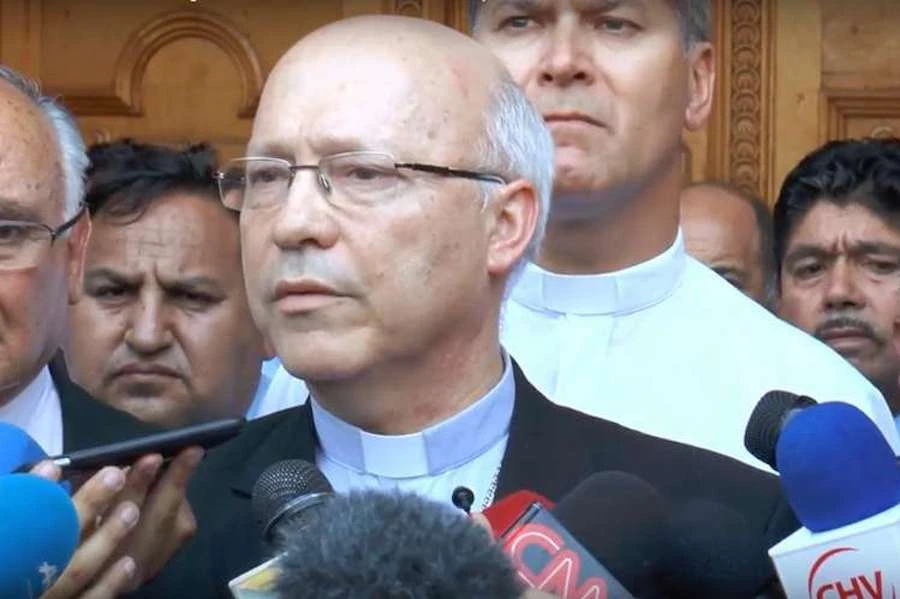
Santiago, Chile, Jan 2, 2019 / 04:03 pm (ACI Prensa).- At the Vatican summit to discuss sex abuse next month, the secretary general of the Chilean Bishops Conference will take the place of the conference president, who is embroiled in the nation’s current sex abuse crisis.

Bishop Fernando Ramos, apostolic administrator of Rancagua and secretary general of the conference, will represent the Chilean bishops at the meeting requested by Pope Francis, which will include the heads of bishops’ conferences from around the world.

The anti-abuse summit will be held at the Vatican Feb. 21-24. While the presidents of the national bishops’ conferences have been invited, Bishop Santiago Silva will not attend.

Silva, who serves as president of the Chilean Bishops’ Conference, has been subpoenaed on charges of covering up abuse within the Military Diocese, which he has headed since July 2015.

“Given that this is an important meeting called by the Holy Father,” Ramos told the La Tercera newspaper, Silva asked him to attend “in order to avoid shifting the focus to… the person of the president himself.”

Ramos told La Tercera that at the most recent Plenary Assembly of the bishops’ conference in November 2018, Silva said that he was willing to continue as the conference president or to step down.

“At that time, he was asked to continue in his position as president,” Ramos said. “Regarding the invitation that the Holy Father has made to the presidents of the bishops’ conferences of the world, for the February meeting, the president of the Chilean Bishops’ Conference asked me to attend.”

The Church in Chile is still reeling from revelations of a sex abuse scandal following an in-depth investigation by Maltese Archbishop Charles Scicluna and Msgr. Jordi Bertomeu of the Congregation for the Doctrine of the Faith, which resulted in a 2,300-page report on the scandal.

Pope Francis initially dismissed some of the abuse cover up allegations as “calumny,” but later apologized and said he had been misinformed in judging the case, due to “a lack of truthful and balanced information.”

The pope then summoned all the Chilean bishops to Rome in May 2018 for a meeting in which he harshly criticized them for a systematic cover-up of abuse involving not only the destruction of documents, but superficial investigations that led to moving accused abusers to other schools or parishes where they had access to children.

Following that meeting, every bishop in the country submitted their resignation. The pope has accepted several of the resignations and is expected to accept several more in the coming months.

In his interview with La Tercera, published Dec. 29, Bishop Ramos acknowledged that the abuse crisis has contributed to an ongoing decrease in the size of the Chilean Church.

He pointed to a survey finding that Catholics made up 73 percent of the population 20 years ago, but now make up 55 percent. This trend is partly due to “a process of profound transformation of Chilean society where cultural forms of expression of greater individualism and materialism are emerging,” he said.

The bishop added that “the cases of abuse and mishandling that we have had as a Church have accelerated this process of disaffiliation. We must acknowledge our responsibility that we have not responded well to this kind of situation and that has affected Church affiliation.”

Regarding the response to the sex abuse crisis in the country, Ramos argued that the Church in Chile is not “the same Church that it was a year ago.”

“[S]everal bishops have been changed, [and] a very profound process of reflection by our communities has begun, with the aim of our having in 2020 an Ecclesiastical Assembly where a series of pastoral guidelines for the life of the Church can take their final form,” he said.


This article was originally published by our sister agency, ACI Prensa. It has been translated and adapted by CNA.

[…]

No Picture
News Briefs

Amid priest murders, religious freedom situation in Mexico draws concern

December 12, 2018 CNA Daily News 0

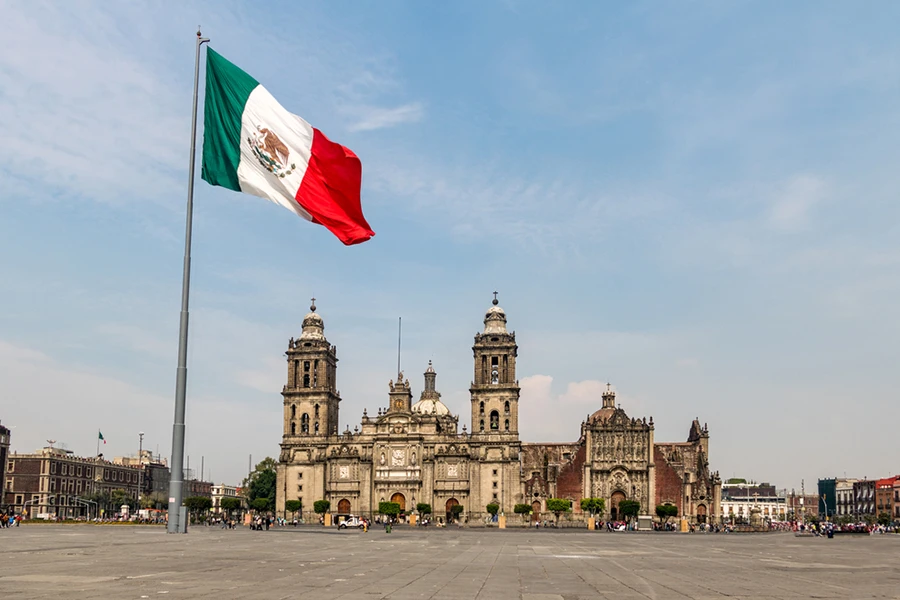
Mexico City, Mexico, Dec 12, 2018 / 05:40 pm (ACI Prensa).- With 26 priests murdered in the last six years, Mexico received a prominent mention in the 2018 Report on Religious Freedom in the World, recently published by the pontifical foundation Aid to the Church in Need (ACN).

Julieta Appendini, ACN’s director in Mexico, explained that although the country is not experiencing “a persecution such as in the Middle East,” where religious minorities are being killed, they are instead seeing “new forms of persecution.”

The majority of the murders of priests are due to their “getting in the way” of organized crime and drug trafficking, since the priests “provide stability to society,” Appendini told ACI Prensa, CNA’s Spanish language sister agency.

She added that confrontations between Catholics and Protestants in southern Mexico are also recorded in the ACN report, as well as cases of looting churches and extortion.

The ACN director in Mexico explained that the religious freedom report analyzes the right to religious liberty in 106 countries.

“Every two years, we see how each country is doing based on this right which is founded on Article 18 of the Universal Declaration on Human Rights,” she said.

Appendini said the situation in 2018 “has gotten worse,” since “in 38 countries out of 196 there is serious, heavy persecution and discrimination,” which is primarily concentrated in the Middle East and Africa.

In addition to China and Russia, India is also a critical case, where the government promotes Hinduism and encourages discrimination and repression of religious minorities such as Christians.

“Out of the world’s population, 61 percent, we’re talking 2.5 billion people, live in a country where there is religious persecution or discrimination.”

Faced with this situation, she said, ACN is seeking to inform and raise awareness, encourage prayer, and be bridges of charity.

“The foundation has helped financially, through all the donations of our benefactors throughout the world, especially for the persecuted Christians,” she said.

Appendini said that ACN has provided “emergency aid on all levels. Not just with spiritual support, but with food, building their churches, schools, and with emergency aid so they can survive.”

This article was originally published by our sister agency, ACI Prensa. It has been translated and adapted by CNA.


[…]

No Picture
News Briefs

Nicaraguan priest attacked with acid during confession

December 7, 2018 CNA Daily News 0

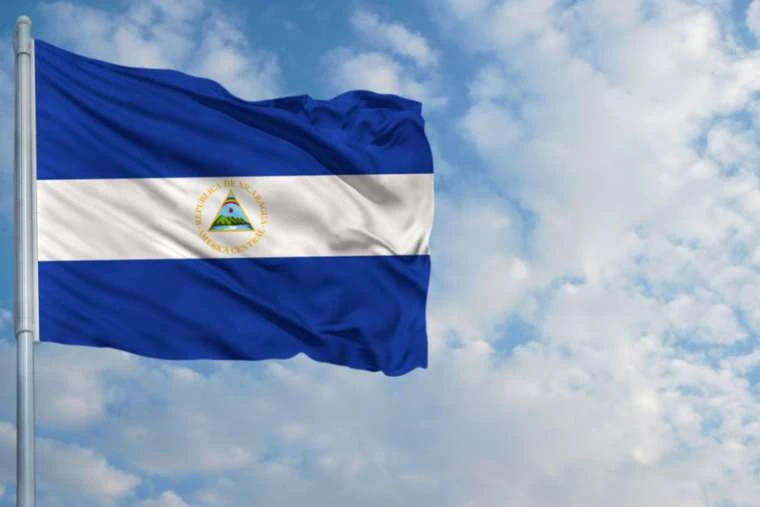
Managua, Nicaragua, Dec 7, 2018 / 05:59 pm (ACI Prensa).- Father Mario Guevara was injured in an acid attack Wednesday while hearing confessions in the cathedral of Managua.

Elis Leonidovna Gonn, a 24 year old Russian citizen, threw sulfuric acid on the 59 year old priest Dec. 5.

Fr. Guevara was taken to hospital to be treated for severe burns to his face, arms, and shoulders.

The Archdiocese of Managua has said the priest is now in stable condition, has been discharged, and will continue his treatment at home.

“We deplore this act because we priests are there to provide a service and this pains us very much: that they would  attack a priest in this way because they attacked his health,” Cardinal Leopoldo Brenes of Managua told the media.

The Auxiliary Bishop of Mangua, Silvio Báez, deplored the attack and expressed his solidarity with Fr. Guevara. “I accompany him with my love as a brother and I offer my prayers for his complete recovery. Jesus and his Most Holy Mother protect our priests!” the prelate wrote on Twitter.

The attack comes amid tension between the Church in Nicaragua and the country’s government.

Protests against president Daniel Ortega which began April 18 have resulted in more than 300 deaths, according to local human rights groups. The country’s bishops have mediated on-again, off-again peace talks between the government and opposition groups.

The Church in Nicaragua was quick to acknowledge the protesters’ complaints, which quickly turned to Ortega’s authoritarian bent.

Ortega has been president of Nicaragua since 2007, and oversaw the abolition of presidential term limits in 2014.

The Church has suggested that elections, which are not scheduled until 2021, be held in 2019, but Ortega has ruled this out.

Ortega was a leader in the Sandinista National Liberation Front, which had ousted the Somoza dictatorship in 1979 and fought US-backed right-wing counterrevolutionaries during the 1980s. Ortega was also leader of Nicaragua from 1979 to 1990.


This article was originally published by our sister agency, ACI Prensa. It has been translated and adapted by CNA.

[…]