No Picture
News Briefs

Venezuelan bishops call for humanitarian aid to be distributed

February 23, 2019 CNA Daily News 0

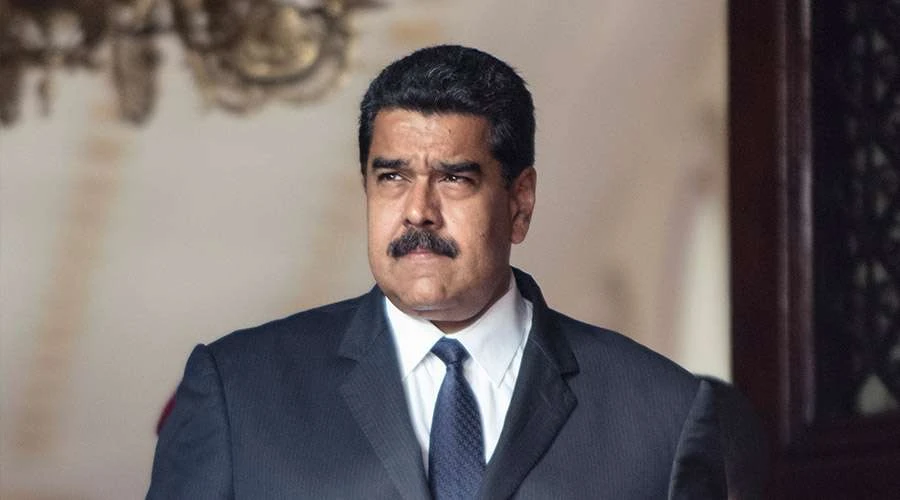
Caracas, Venezuela, Feb 23, 2019 / 04:50 pm (CNA).- The Venezuelan Bishops’ Conference is calling on Nicolas Maduro’s government to allow humanitarian aid to enter the country and be peacefully distributed to people who are desperately in need of it.

The bishops of the country urged Nicolas Maduro to listen to the “cry of the people,” stressing that the humanitarian aid is responding to a “grave crisis,” and not politically motivated.

Maduro was sworn in for a second term Jan. 10, after winning a contested election in which opposition candidates were barred from running or imprisoned. Amidst the protests that followed, the head of the nation’s parliament, Juan Guaidò, declared himself interim president on Jan. 23, pledging a transitional government and free elections. The United States and more than a dozen other European and South American nations no longer recognize Maduro as Venezuela’s president.

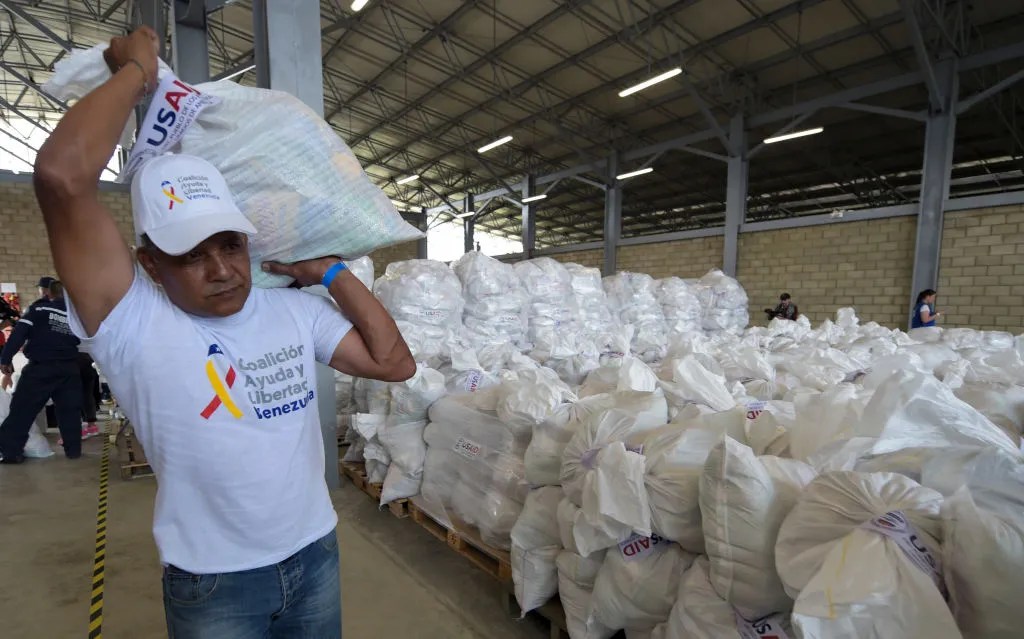
Food and medical aid are currently being warehoused in Cúcuta, Colombia and Roraima, Brazil. While the supplies have been offered to Venezuela, Maduro has not allowed it to enter the country, claiming that there is no humanitarian crisis.

The Venezuelan National Assembly has helped organize the aid, which Guaidó says will start entering the country over the weekend, despite Maduro’s opposition.

In a Feb. 17 statement, Bishop Mario Moronta of San Cristóbal, Venezuela, urged Maduro not to continue saying “the aid is unnecessary.” The bishop said that “countless officers from the Armed Forces, and high-ranking government officials are quietly coming to many priests and laypeople, institutions in this region, so we can obtain in Cúcuta medicine for them, or their relatives, food, etc. Out of fear they’re certainly not telling you. But it’s true.”

In their statement, the Venezuelan bishops said that “the regime has the obligation to attend to the needs of the population, and therefore to facilitate the entrance and distribution of humanitarian aid, avoiding any type of repressive violence.”

They argued that requesting and receiving aid is not “any kind of treason to the homeland,” as Maduro has said, but “a moral duty that is incumbent on us all.”

They also mentioned the pastoral and social work the Church is carrying out through Caritas.

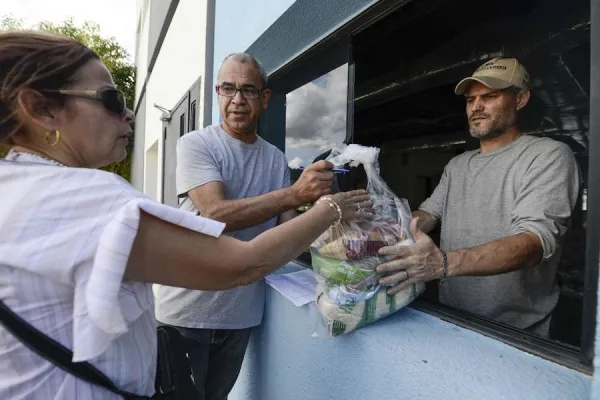
“The aid basically consists of emergency food supplies, supplements for malnourished children and the elderly, and medical supplies, mainly therapeutic,” the bishops’ conference said in its statement.

The bishops called on the National Armed Forces “to stand on the side of the people to which they belong,” noting that their members swore to uphold the Constitution and that “they serve the Venezuelan people first.”

“It is their commitment to defend them, to protect their inalienable rights and to make their human dignity shine forth. In conscience, you must not to follow orders that attack the life and safety of the population,” the bishops said.

The bishops asked the intercession of the Virgin of Coromoto, patroness of Venezuela, to accompany the people “in these times of so much hope for the country,” so that what Christ taught might become a reality: “I have come that they may have life and have it in abundance.”

Maduro’s leadership in Venezuela has been marred by violence and social upheaval with severe shortages and hyperinflation leading millions of Venezuelans to emigrate. Those who have stayed have faced a serious lack of food, medicine and other necessities.

According to research by the NGO Médicos para la Salud, public hospitals in the country have lacked 90 percent of the necessary medical supplies over the last three years.

Almost 18,000 Parkinson patients are unable to access medication, which costs between $400 and $600 a month, as the minimum wage salary is about $6 a month.

[…]

No Picture
News Briefs

Sodalit founder expelled from congregation

February 21, 2019 CNA Daily News 0

Lima, Peru, Feb 21, 2019 / 03:00 pm (CNA).- The founder of the Sodalitium Christianae Vitae has been formally expelled from the group, and forbidden from contacting any member of the Sodalitium, the group announced in a statement released on Feb. 20. Figari is also forbidden from returning to his native Peru.

On January 30, 2017, the Vatican’s Congregation for the Institutes of Consecrated Life and Societies of Apostolic Life prohibited Figari from having any contact with members of the society after it was found that he had sexually and psychologically abused members and committed other abuses of power.

Figari immediately appealed this decision, and made a second appeal in 2018 after his first was denied.

In January 2017, the Congregation for the Institutes of Consecrated Life and Societies of Apostolic Life ordered at that the Sodalitium ban Figari from Peru, “except for grave motives and always with a written permission,” and that he be moved to a location where there is no Sodalit community.

They also said that Figari should be forbidden from any form of contact with members of the Sodalitium, and that Figari would not be allowed to make “publicly or in private, any statement to the news media, or to participate under any title or for any reason, in public events or meetings of either the Sodalitium or any other ecclesiastical or civil person or institution.”

A Sodalit has since been designated as a contact person for Figari, should there be a need to establish communication.

The Superior General of the Sodalitium Christianae Vitae, José David Correa, published a decree on February 5, 2019, that said that because Figari’s appeals had been rejected, he is now definitively subject to the 2017 restrictions. Figari has been informed of these restrictions.

Figari resides in Rome. As part of the decree enacting the policies, the “Mother of the Reconciler” community where he is living has been suppressed, and is no longer considered to be a Sodalit community. Figari will continue to live at the residence “until the details of his new residence are completed,” the Sodalitium said in the statement.

At the conclusion of its 2019 General Assembly, the Sodalitium issued a statement of “forgiveness and reconciliation” in which it lamented the cases of abuse committed by some of its members and its founder Luis Fernando Figari.

“We consider it a duty as an Assembly to make a public statement on the relationship of our community with Luis Fernando Figari, whom we cannot consider as a spiritual exemplar for our Sodalit community.”

”We strongly condemn, and at the same time with pain and shame, the abuses committed by him; the abuse of his authority, his lack of respect for freedom, the physical and psychological abuses, the sexual abuse, which were denounced and investigated by our community and the Holy See,” the statement says.

The Sodalitium Christianae Vitae is a society of apostolic life which was founded in 1971 in Peru, and granted pontifical recognition in 1997. CNA’s executive director, Alejandro Bermúdez, is a member of the community.


ACI Prensa, CNA’s Spanish-language sister agency, contributed to this report.

[…]

No Picture
News Briefs

Analysis: Pope Francis’ position on Venezuela

February 16, 2019 CNA Daily News 2

Vatican City, Feb 16, 2019 / 11:00 pm (CNA).- Pope Francis’ recent letter to Venezuela’s Nicolas Maduro confirmed the Holy See’s position on the Venezuelan crisis, while demonstrating that Maduro has become an increasingly isolated global figure.

While the Holy See has long maintained its diplomatic ties with Venezuela, and for this reason a papal representative to Caracas took part in Maduro’s swearing in for his second term Jan. 10, Pope Francis and the Holy See’s diplomacy has always been on the Venezuelan bishops side, and backed their efforts to restore social peace, relief the population and call for new and free elections.

The pope’s letter, however, showed that Maduro’s request for a mediation can take place only under some specific conditions.
 
This is the reason why the letter was not leaked by Maduro’s entourage, but from other sources that gave it to the Italian newspaper Il Corriere della Sera. The Holy See Press Office limited itself to saying that it would not commentc on a private letter, indirectly confirming that the pope might have actually written the letter.
 
The letter, two pages and a half long, is dated Feb. 7, 2019, and it is addressed to “Excelentismo señor Nicolas Maduro Moros, Caracas” (To Most Excellent Mister Nicolas Maduro Moros).
 
The pope did not refer to Maduro as president, and in that way his letter backed the Venezuelan bishops. Gathered for their 111st plenary assembly on Jan. 9, the bishops said that “Maduro’s claim to start a new presidential mandate on Jan 10 is illegitimate at his roots, and paves the way for the unrecognition of the government, as democratic foundations on justice and right are lacking.
 
In the letter, Pope Francis reminded Maduro that the Holy See has been committed to mediation in the past, but in all of the attempts “what had been agreed in the meetings was not followed by concrete action to carry out the accords,” and that “words seemed to delegitimize
the good propositions put into a written form.”
 
Pope Francis also stressed that he did not back “any kind of dialogue,” but only “the dialogue that takes places when all conflicting parties put the common good above any other interest and work for unity and peace.”
 
Pope Francis also recalled a letter by Cardinal Pietro Parolin, Vatican secretary of State, that set the conditions for a dialogue: liberation of political prisoners, re-establishment of the constitutional assembly, open access for humanitarian aid, free political elections.
 
Those conditions are still in effect.

The letter is tailored in a perfect diplomatic style.

On one hand, Pope Francis takes the bishops’ position. On the other hand, he places the Holy See in the middle between two positions: that of the US and Europe, eager to recognize Juan Guaidò as interim president; and that of China, Russia, Turkey and Iran, who are on the opposite position.
 
As a diplomatic habit, the Holy See never breaks diplomatic ties. Papal ambassadors are called to stay on the ground as long as it is possible, to support the bishops and to carry on institutional dialogue that can resolve into an aid for population.
 
For example, the Holy See never broke diplomatic ties with Cuba, not even when Castro regime persecuted Christians. In fact, ties stayed because there was an ongoing persecution.

Read through this lens, the Secretariat of State’s decision not to meet at an institutional level the delegation Guaidò sent to Italy for talks with Italian government on Feb. 11 should be no surprise.
 
The Holy See makes no interference in domestic policies, and the meeting with Guaidò could have been instrumentalized. The delegation reportedly met with Archbishop Edgar Pena Parra, deputy to the Secretariat of State, who is Venezuelan. The meeting was framed as a meeting of a Venezuelan that works in Secretariat of State and his concerned for his country and some representatives coming from his country.
 
Pope Francis’ statements on the matter have always been prudent. Coming back from Panama on Jan. 28, Pope Francis told journalists that it is not his role as a pastor to pick political sides, and said he is terrified of the possibility of a bloodshed there.
 
However, the narrative that presents the pope on a different side from that of Venezuelan bishops is not correct at all.
 
It must not be forgotten that Pope Francis, after a visit from the presidency of the Venezuelan bishops’ conference, said his voice “resounds in the voice of the Venezuelan bishops.”
 
Pope Francis’ followed each step of the Venezuelan crisis. On April 10, 2014 he addressed an appeal to political leaders of Venezuela and asked to respect truth and justice. On March 1, 2015, the Pope condemned the death of some students involved in pacific protests.
 
The Holy See accepted to conduct a facilitation of the dialogue in October 2016, and on Dec. 2, 2016 Cardinal Parolin stressed the four conditions. Coming back from Egypt on Apr. 29, 2017, Pope Francis denounced that the government did not accomplish these conditions.
 
On April 30, 2017 after the prayer of Regina Coeli, Pope Francis spoke of the “dramatic news” on Venezuela and “the worsening of clashes there, with many people reported dead, injured and detained”, and appealed “to the government and all the members of Venezuelan society to avoid any further forms of violence, to respect human rights and to negotiate solutions to the serious humanitarian, social, political and economic crisis that is exhausting the population”.
 
The action of bishops moved along with Pope Francis’ declaration. This combined action encouraged all the local and regional Catholic realities of Latin America to take a common stance: the Conference of Religious Brothers and Sisters in Venezuela, the Jesuits of Venezuela, but also the Colombian, Ecuadorian, Uruguayan, Chilean and Bolivian bishops conference took strong stances on the Venezuelan crisis, which weakened Maduro position.
 
Despite the will to keep a diplomatic neutrality, also the Holy See diplomacy was very active.

Cardinal Parolin, who was nuncio to Venezuela from 2009 to 2013, stressed on May 13, 2017 that “the only solution for Venezuela is elections.”

On Aug. 4, 2017, the Pope sent via the Secretariat of State a communiqué asking “all the political actors, and in particular the government, to ensure the full respect of the human rights and fundamental freedoms, as well as of current Constitution; to suspend initiative like the new constitutional assembly that, instead of favoring reconciliation and paz, foster a climate of tensions and confrontations; to create conditions for a negotiated solution”.
 
It is also noteworthy that, in his urbi et orbi message of Christmas 2018, Pope Francis included Venezuela among the countries that are enduring serious humanitarian crisis, on a par with Yemen, Syria and Nicaragua: the decision turned out to be prescient.
 
The pope also spoke about Venezuela on his new year speech to the diplomatic corps, and said that he wishes “that peaceful institutional means can be found to provide solutions to the political, social and economic crisis, means that can make it possible to help all those suffering from the tensions of recent years, and to offer all the Venezuelan people a horizon of hope and peace.”
 
The pope’s letter to Maduro comes at the end of a path that the pope and the Venezuelan bishops have been following since the beginning. The Holy See will never break diplomatic ties, and will always seek dialogue and reconciliation. But, on the other hand, bishops on the ground are backed in supporting the population and to work for the common good.
 
This is, in the end, how the pontifical diplomacy works.


[…]

No Picture
News Briefs

Bishop to Maduro: Open your eyes to see the suffering of the people

February 14, 2019 CNA Daily News 1

Caracas, Venezuela, Feb 14, 2019 / 02:00 pm (CNA).- The bishop of San Cristóbal has exhorted Nicolas Maduro to consider the suffering of the Venezuelan people amid the ongoing political and humanitarian crisis in the country.

“Open your eyes to see the suffering of the people. Hear the cry of the people who want not only freedom and democracy but to be considered in their dignity,” Bishop Moronta said in an interview this week with ACI Prensa, CNA’s Spanish language sister agency.

Moronta, who is also the vice president of the Venezuelan bishops’ conference said that “for several years the Venezuelan people have been asking for a change in the social-political and even economic orientation” of the country.

“The Church has insisted that it is the people who must be listened to. The political, social and economic  eadership must be on the side of the people,” the bishop said.

Regarding Juan Guaidó. President of the National Assembly and recognized as interim president of Venezuela by the United States, member states of the European Union and more than 50 countries, the bishop positively characterized his “leading role” taken up on behalf of the nation’s citizens.

He said that it is the Venezuelan people themselves “who can and should make the changes” in the country.

The bishop said it is the Church’s role to “build bridges” adding that the Church is ready “to do everything that is necessary to have a just and peaceful transition.”

He likewise noted that the Church promotes “not just actions but awareness of the need to improve the situation and the promotion of social leaders who aim at the integral development of the country.”

Moronta also said that the Church has carried out “concrete actions in each diocese in the interest of the people being able to attain a better quality of life,” and highlighted “the communion that has existed between the various Churches in Latin America, especially Cúcuta in Colombia with the Church in Venezuela.”

Finally, he said that with the help of the Church in Colombia and in other countries, aid centers have been created throughout the Diocese of San Cristóbal, which borders the Diocese of Cúcuta in Colombia.

“There are soup kitchens, centers for food, medicine, and pastoral care. We sustain ourselves here with the solidarity of those same people, from Cúcuta, of many church agencies which to allow us to receive food from the community soup kitchens,” he added.

Nicolas Maduro was sworn in for a second term as president Jan. 10, after winning a contested election in which oppositon candidates were barred from running, or imprisoned. Venezuela’s bishops have called his new term illegitimate, and Guaidó, head of the National Assembly, declared himself interim president Jan. 23.
Guaidó has been recognized as Venezuelan president by the US, Canada, much of the European Union, and several Latin American nations.

Since Jan. 21, at least 40 people have died and hundreds have been arrested amid protests against Maduro.

Since Maduro succeeded Hugo Chávez as president of Venezuela in 2013, Venezuela has been marred by violence and social upheaval. Under the socialist government, the country has seen severe shortages and hyperinflation, and millions have emigrated.

[…]

No Picture
News Briefs

Colombian cardinal encourages humanitarian aid for Venezuelan people

February 12, 2019 CNA Daily News 1

Cucuta, Colombia, Feb 12, 2019 / 05:23 pm (ACI Prensa).- The bishop of a Colombian diocese bordering Venezuela has said that “we can’t be still” in face of the Venezuelan people’s suffering, and noted that the Church has responded to the humanitarian crisis from its beginning.

Under the administration of Nicolas Maduro, Venezuela has been marred by violence and social upheaval, with severe shortages and hyperinflation leading millions of Venezuelans to emigrate.

Opposition leader Juan Guaidó, who declared himself interim president of Venezuela last month, has been recognized as Venezuelan president by the US, Canada, much of the European Union, and several Latin American nations.

In a statement to ACI Prensa, CNA’s Spanish language sister agency, Bishop Victor Manuel Ochoa Cadavid of Cúcuta said that when Maduro’s government began deporting Colombians in August 2015, the Church in Cúcuta “began its services to the brothers experiencing hardship.”

Since then the Diocese of Cúcuta has been daily serving thousands of people crossing the border through several initiatives, such as the Divine Providence House of Transit.

Bishop Ochoa pointed out that Cúcuta has Colombia’s highest unemployment rate: “more than 21 percent unemployment, and almost 75 percent of those employed are poorly paid, under the table.” However, “the Church is intervening with humanitarian assistance.”

“We have been helping with this crisis for the last three years. We’re doing it, we’re helping many institutions  in Venezuela. Also with the aid of the U.S. government. We have a medical clinic that serves almost 800 people a day. We’re distributing food, we’re helping people who are migrating,” he said.

“The emergency has been created, but we’ve already been helping as a Church,” he told ACI Prensa.

The bishop said that since mid 2015 they have distributed “a million good quality warm servings without counting emergency servings.”

“When the food allotted for the day runs out we distribute tuna and pasta, or tuna and rice and a loaf of bread so no pregnant woman goes without eating, no child goes without eating, no elderly person goes without eating,” he said.

The bishop said that the Divine Providence House of Transit distributes 5,000 servings a day. Another 5,000 meals are delivered to eight parishes.

“It’s the charity of the Church that we try to live out here with great fidelity to the Lord: ‘I was hungry and you gave me to eat, I was thirsty and you gave me to drink, I was a stranger and you welcomed me,’” said Bishop Ochoa, expressing the desire of the faithful to be able to do more for the migrants.

The prelate highlighted the commitment of nearly 800 volunteers from parishes and ecclesial movements who are also joined by priests and nuns.

For several days aid shipments, arranged by Guaidó, have been sitting in Cúcuta, awaiting permission from Maduro to enter Venezuela.

A tanker truck and a cargo container, placed there by the Venezuelan military, are currently blocking the Tienditas bridge which connects Cúcuta to Urena, Venezuela.

Caritas Venezuela has been asking for three years that humanitarian aid be allowed into the country.

Maduro told the BBC Feb. 12 that the aid is being blocked because “it’s a show, that the United States government has set up with the compliance of the Colombian government to humiliate the Venezuelans. Venezuela is a country that has the capacity to satisfy all the necessities of our people.”

“Venezuela is a country that has dignity, and the United States has intended to create a humanitarian crisis in order to justify a military intervention – ‘humanitarian’. And this is part of that show,” Maduro said. “That’s the reason that we, with dignity, tell them that the miniscule crumbs that they intend to bring with toxic food, with leftovers that they have, we tell them no – Venezuela has dignity, Venezuela produces and works and our people do not to beg from anyone.”

It was reported Feb. 11 that Brazil has also agreed to set up a staging area for humanitian aid intended for Venezuela.

Bishop Ochoa expressed his desire that the aid enter Venezuela, saying, “Not to permit access is a political problem. We want the Venezuelan people to have all they need.”

Lester Toledo, Guaidó’s coordinator of humanitarian aid, said Feb. 11 that besides the United States “there are dozens of countries in the region, from the Lima Group and from Europe, that are willing to bring in the initial tons of aid, medical supplies, food.”


This article was originally published by our sister agency, ACI Prensa. It has been translated and adapted by CNA.

[…]

No Picture
News Briefs

Archbishop: 152 priests in Mexico removed for abuse in last 9 years

February 11, 2019 CNA Daily News 0

Monterrey, Mexico, Feb 11, 2019 / 05:04 pm (ACI Prensa).- Over the past nine years, 152 priests in Mexico have been removed from ministry for sexual abuse of youth or vulnerable adults, the president of the Mexican Bishops’ Conference said Sunday.

At a Feb. 10 press conference, Archbishop Rogelio Cabrera of Monterrey said that some of the 152 “because of the magnitude of the [crime], have had to go to prison.” He did not give further details on the number of those in jail.

The archbishop did say that the Church in Mexico is working to “compile the statistics” on clerical sexual abuse in the in the country, since “in Mexico there is no center for compiling information, because each bishop is the one who deals [locally] with these problems.”

“I hope that very soon we’ll have the count to also let society know – it’s our duty to say how things are in Mexico,” he said.

Cabrera voiced hope that “after the more exacting measures that the Church has put in place – or as it is called, ‘zero tolerance’ – the number of cases, crimes, will go down, and also that the bishops will make every effort to put these situations in order.”

He emphasized that “as required by law, when we receive a report of this nature, we must immediately inform the Public Prosecutor’s Office, and then the Public Prosecutor’s Office determines the judicial procedures.”

This article was originally published by our sister agency, ACI Prensa. It has been translated and adapted by CNA.


[…]

No Picture
News Briefs

Rubio: Blocking aid to Venezuela is a ‘crime against humanity’

February 8, 2019 CNA Daily News 1

Washington D.C., Feb 8, 2019 / 01:50 pm (CNA).- Sen. Marco Rubio has called the humanitarian and political impasse in Venezuela “unsustainable,” and compared a blockade stopping food and medical aid from entering the country to a war crime.

The senator said leaders of the country’s security forces must choose between their orders and the needs of their families, neighbors and fellow citizens.

In a Feb. 8 interview with CNA, Rubio said that orders to prevent aid from crossing the border are illegitimate and should be refused by officers.

“They are being asked to do something that is illegitimate, they are being asked to do something that – if this were an armed conflict – would be a war crime,” Rubio said.

“Under the Geneva Conventions, the denial of the transit of food and medicine to civilian populations would be a war crime – that’s what they are being asked to participate in.”

The Republican senator from Florida is a key strategist and advisor to the Trump administration on the U.S. response to the political and humanitarian crisis in Venezuela.

Rubio said that while international support is important, the escalating humanitarian and political crisis can only be ended by Venezuelan leadership.

“Ultimately it falls upon the Venezuelan people, and by that I include members of the National Guard, the armed forces, and the police forces, to decide their own destiny and their own future.”

“The international community is here to help and support, but this is their cause.”

On Jan. 23, President Donald Trump recognised opposition leader Juan Guaidó as the legitimate interim president of the country. Nicolas Maduro has refused to recognize Guaidó, and clings to power through his control of the military.

Maduro succeeded Venezuelan president Hugo Chavez in 2013. In 2017, the U.S. Treasury Department called Maduro “a dictator who disregards the will of the Venezuelan people.”

Rubio told CNA that Maduro must relinquish power to bring stability to a country that has seen more than 3 million people flee the country since 2015 amid spiralling inflation, food shortages and mass demonstrations.

The circumstances under which Maduro might be persuaded to abandon power are unclear, the senator said.

“Do I think Maduro is going to exit power eventually? Absolutely. Do I think he is going to do it willingly? I don’t know. But a lot of that depends on the people holding him up,” the senator said.

“Here’s the bottom line: the rank and file military does not support Maduro, but they are not willing to face the very grave consequences of breaking with him.”

These leaders, Rubio said, have the opportunity and responsibility to allow aid into the country.

“There are four or five senior military leaders, starting with the defense minister [Vladimir Padrino López], who if they were to recognize the interim government, that would be the end of the Maduro regime.”

If military leaders recognize the interim government, Rubio told CNA, they could also benefit from amnesties offered by the interim government but “that window is closing, on them and on the country.”

“The further this goes, the likelier it is that senior military leaders like [defense minister Vladimir] Padrino will disqualify themselves from the ability to receive domestic and international amnesty: because they deny food and medicine and thereby commit a crime against humanity; because they try to follow orders and attack unarmed protestors and civilians.”

“It’s in their hands, they can decide to change the trajectory of Venezuela.”

In the meantime, protests continue in the country and, according to Rubio, the Venezuelan people “are well aware” that the Maduro and his loyalists stand between them and the flow of foreign aid into the country.

“There is no way, if current trends continue, that Maduro holds on to power,” Rubio said. “The question becomes: how does he leave? Does he leave through a negotiated exit or does some other even occur that forces his hand?”

Earlier this week, Maduro issued a request for Pope Francis to act as a mediator in resolving the political standoff.

While the pope said that such a request for mediation would have to come from “both sides,” Cardinal Baltazar Enrique Porras Cardozo, Apostolic Administrator of Caracas, appeared to pour cold water on the notion of papal intervention, telling Argentina’s Radio Continental Feb. 6 that the suggestion was “non-viable.”

Rubio told CNA the request for papal mediation is a delaying tactic on the part of Maduro.

“He’s already done this before, the Vatican tried to mediate [in 2016] and it was a fiasco – they walked away from it knowing that he wasn’t sincere.”

“Maduro has a very simple plan: to buy time until he can fracture the opposition and the world’s attention is diverted to some other crisis and away from Venezuela.”

“That’s the model he has followed and he’s trying to pull it off one more time.”

The Venezuelan standoff began Jan. 10, when Maduro was inaugurated at the start of his second term. Both the National Assembly and the Venezuelan bishops’ conference declared at that time Maduro’s 2018 reelection to be invalid. Guaidó declared himself the nation’s interim leader Jan. 23.

Rubio paid tribute to Guaidó and other opposition leaders in the country, noting the real dangers they face.  

“I have tremendous admiration for the risk that they are taking,” Rubio said. “They have always been at risk, there are a significant number of opposition leaders dead, in jail, or in exile as a result of this regime.”

But, he said, those committed to seeing genuine democracy in Venezuela recognize that they have had no other practical option than to put themselves at risk.

“As they themselves will tell you, the alternative would be for them to surrender and give in and live under this tyranny or have to leave their country.”

The senator told CNA that direct intervention by U.S. personnel – military or otherwise –  remains “a controversial concept.”

“What there is a strong international consensus behind is that Maduro should not stand in the way of humanitarian relief reaching people who are literally dying,” Rubio said, but the moral imperative lay primarily on those carrying out Maduro’s orders.

“If Maduro is going to order that aid be blocked, then it is incumbent upon those that he is ordering not to follow those orders.”

“The military and its leaders are going to have to choose: do we follow these illegitimate orders that are hurting our own people or do we actually help them to reach the starving people of Venezuela, in many cases their own parents, their own siblings, their own families, their own neighbors.”

Rubio said that direct intervention is not something currently being contemplated in Washington. But, the senator noted, it remains an option to protect American personnel, including those trying to deliver food, medicine, and other aid to the country.

“Any U.S. personnel who comes in danger as a result of actions of the Maduro security forces- there will be grave consequences for it, they are well aware of it and they should govern themselves accordingly.”

“The plan here is not to have a caravan of American soldiers or aid workers entering Venezuela, the plan is to hand this over to whoever the interim government directs so that they can distribute in a non-political way.”

“The goal is to distribute the aid through non-governmental, non-political organizations inside Venezuela, for them to distribute through Caritas for the Catholic Church, the Red Cross and other NGOs that are operating within the country.”

Maduro’s security forces, who have erected roadblocks to prevent aid from entering the country, stand between food and medicine stockpiled across the Colombian border and Venezuelan organizations ready to distribute it.

Rubio said that while international pressure and consensus is important, responsibility for resolving the impasse lies with the soldiers blocking aid from entering the country. The senator suggested they should stand down.

“The choice is theirs.”

[…]

No Picture
News Briefs

Venezuelan cardinal rejects Maduro’s call for Vatican mediation

February 7, 2019 CNA Daily News 0

Merida, Venezuela, Feb 7, 2019 / 03:41 pm (ACI Prensa).- The Archbishop of Merida has ruled out Vatican mediation of the Venezuelan crisis after president Nicolas Maduro made public a letter to Pope Francis requesting intervention.

“I think the circumstances say no. Why? Because it’s a call with a blank sheet of paper, but to talk about what, there’s no prior agenda,” Cardinal Baltazar Enrique Porras Cardozo of Merida told Radio Continental, an Argentine news station, Feb. 6.

The cardinal, who is also serving as apostolic administrator of the Caracas archdiocese, noted that on prior occasions when the Vatican participated as a facilitator of dialogue, what the Vatican got from Maduro’s government was a “mockery.”

“That’s what you really have to call the times the Vatican has been called in,” Cardinal Porras said. “Out of good will the pope wanted to send someone, but it all came to naught.”

Additionally, the intention of Maduro’s government to seek “a cosmetic way out” makes Vatican mediation “non-viable,” he said.

During the in-flight press conference en route from Abu Dhabi to Rome Feb. 5, Pope Francis said that mediation “takes the will of both parties, it has to be both parties who ask for it.”

Opposition leader Juan Guaidó, who has declared himself interim president of Venezuela, has not requested the Vatican’s mediation. Guaidó has been recognized as Venezuelan president by the US, Canada, much of the European Union, and several Latin American nations.

Cardinal Porras said that “it’s already routine for the government, when it feels under pressure, up to its neck in water, to call on its friends,” which include “countries that cannot be trusted at all in the cause for democracy … that is not the way to go.”

Among the nations supporting Maduro are China and Russia.

When asked if there is any differences or distancing between the Venezuelan bishops and the Holy See, the cardinal explained that “there is a full and complete unity of criteria and action, a permanent relationship between the Holy See and us … We have the total and complete support of the Holy Father.”

“What’s going on is the following: everyone has to fulfill their role. We are the first ones who have to take responsibility. We’ve told the government through the spokesman for the bishops’ conference that it’s fine that they want to address the Holy Father, but first they should go through us because there is total harmony (between us) and there’s nothing they’re going to do there (with the Vatican) that’s different.”

“Those of us who have the first option (for dialogue) are the ones who are going through the situation we’re suffering from,” Cardinal Porras noted.

The cardinal commented that with this letter to the pope, Maduro is just looking to “buy time,” especially when the Venezuelan people are taking to the streets seeking “a peaceful way out” from the grave crisis in the country.

“The every day situation on the social level is getting worse because we’re in a process like a toboggan careening downward due not only to the prices of food and medicine, but also the absence of respect for human rights,” he lamented.

Inflation in Venezuela in 2018 was estimated by the National Assembly at 1.3 million percent.

In the interview, Cardinal Porras mentioned the ineffectiveness of the Vatican’s previous mediation with Maduro’s government.

In August 2017 the Holy See urged Venezuela’s government to refrain from its constitutional assembly and to respect the existing constitution. Maduro ignored this invitation and went ahead with the Constiuent Assembly, which has superseded the National Assembly, Venezuela’s opposition-controlled legislature.

Cardinal Pietro Parolin, Vatican Secretary of State, was apostolic nuncio to Venezuela from 2009 until his October 2013 appointment to the secretariat.

On Feb. 4 the Venezuelan bishops’ conference, the Confederation of Religious Men and Women of Venezuela, and the National Council of Laity issued a joint statement reiterating the call for free elections and to allow outside humanitarian aid to come into the country, which Caritas Venezuela has requested from the government for the last three years, as it does not have the resources to meet the people’s need.

Cardinal Porras said Feb. 1 that the actions taken by Guaidó as interim president have given the people confidence, and called for “a period of transition leading to free elections with international oversight.”

Guaidó has arranged for the delivery of aid shipments to the country, which Maduro is refusing.

A tanker truck and a cargo container are currently blocking the Tienditas bridge which connects Cucuta, Colombia, to Urena, Venezuela.

The Venezuelan military placed the obstacles to prevent aid shipments entering the country, as Maduro has said it would be the beginning of a US-led invasion.

Caritas Venezuela has been asking for three years that humanitarian aid be allowed into the country.

Since Maduro succeeded Hugo Chávez as president of Venezuela in 2013, Venezuela has been marred by violence and social upheaval. Under the socialist government, the country has seen severe shortages and hyperinflation, and millions have emigrated.


This article was originally published by our sister agency, ACI Prensa. It has been translated and adapted by CNA.

[…]