No Picture
News Briefs

Venezuelan bishops, religious sisters and laity call for free elections

February 5, 2019 CNA Daily News 0

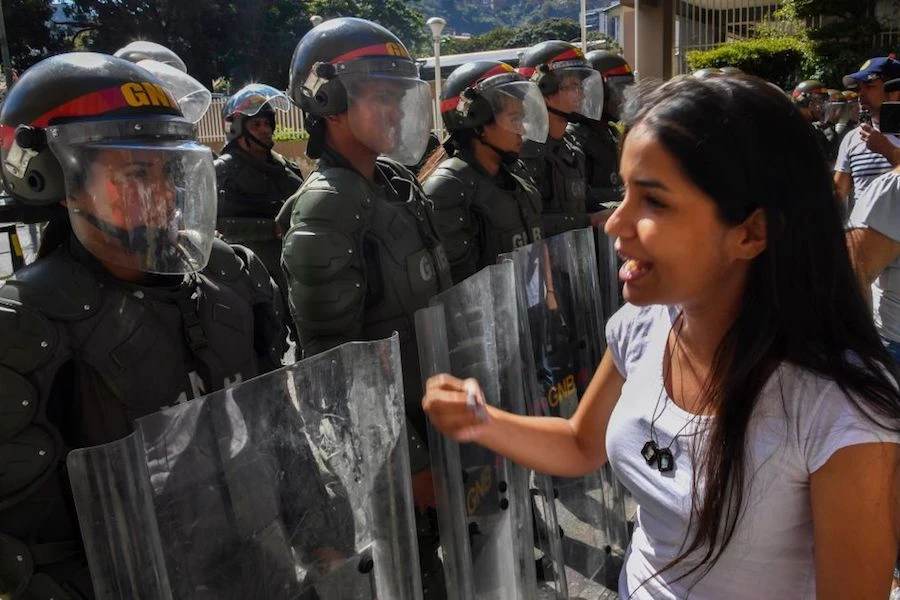
Caracas, Venezuela, Feb 5, 2019 / 01:55 pm (CNA).- In a joint statement Monday, the Venezuelan bishops’ conference, the Confederation of Religious Men and Women of Venezuela and the National Council of the Laity demanded the state agencies call “free and legitimate elections to retake the path to democracy,” allow the entry of humanitarian aid into the country and stop the repression against citizens.

The Feb. 4 statement said Venezuelan Catholics, facing a “painful situation of injustice and suffering,” are in search of a “peaceful and transparent” transition that will lead to “free and legitimate elections to retake the path to democracy, restoring the rule of law, and fostering the reconstruction of the social fabric, economic productivity, morality in the country and reconciliation among all Venezuelans.”

The statement called for a transition toward elections undertaken “in a peaceful manner in accordance with the National Constitution” to avoid more suffering.

“In this crucial moment in our country’s history, we invite the entire Venezuelan people to give their best, everyone in their sphere of work and action, so that working from unity, solidarity and ethical responsibility, in a calm spirit, we may seek the common good and tirelessly work for the reconstruction of democracy and of our entire homeland, avoiding bloodshed,” they added.

In addition to the call for new elections, the statement demanded that the “necessary permits be granted to make available humanitarian aid, to mitigate the impact of the crisis on the nation’s most vulnerable.”

“Caritas Venezuela and other national Catholic aid organizations commit ourselves to continue the service that we have been providing with equity, inclusion, transparency and effectiveness,” the text said.

Stopping the repression

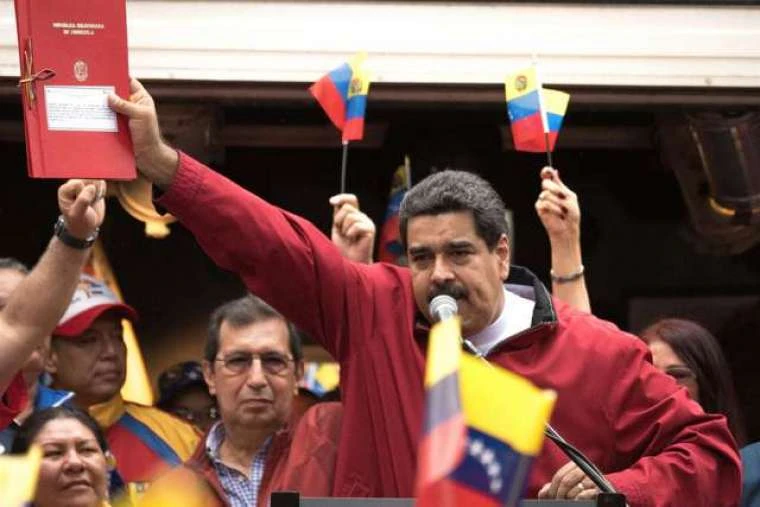
Venezuelan president Nicolas Maduro was sworn in for a second term as president Jan. 10, after winning a contested election in which opposition candidates were barred from running or imprisoned. Venezuela’s bishops have called his new term illegitimate, and Guaidó, head of the National Assembly, declared himself interim president Jan. 23.

Guaidó has been recognized as Venezuelan president by the US, Canada, much of the European Union, and several Latin American nations.

Since Jan. 21, at least 40 people have died and hundreds have been arrested amid protests against Maduro.

Since Maduro succeeded Hugo Chávez as president of Venezuela in 2013, Venezuela has been marred by violence and social upheaval. Under the socialist government, the country has seen severe shortages and hyperinflation, and millions have emigrated.

The Feb. 4 statement said that amid the crisis, “the growing repression for political motives, the violation of human rights, and the arbitrary and selective arrests are morally unacceptable.”

The Church leaders demanded that “the state security forces no longer repress their Venezuelan brothers, and instead assume their true responsibility to protect the people in all circumstances, particularly when exercising their right to peaceful protest.”

They likewise reminded the Public Prosecutor’s Office  and the People’s Ombudsman’s Office that they must fulfill their duties by putting an end to human rights abuses, “particularly with regard to the detention of minors.”

Finally, the joint statement invited Venezuelans to participate in the Sunday Eucharist on Feb. 10 and “to pray in all the churches, homes and communities, asking the Lord to grant us peace, reconciliation, freedom and spiritual and corporal well being.”  

“Let us trust in the God of history. He is the God of salvation in Jesus the liberator, who tells us ‘don’t be afraid, I will be with you always until the end of the world.’ May Our Lady of Coromoto, our national patroness, always accompany us as a people.”


This report was originally published by our Spanish-language sister agency, ACI Prensa. It has been translated and adapted by CNA.
[…]

No Picture
News Briefs

Pope Francis: Mediation in Venezuela requires willingness of both sides

February 5, 2019 CNA Daily News 0

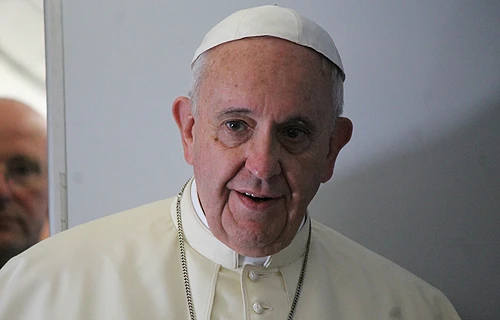
Vatican City, Feb 5, 2019 / 01:17 pm (CNA/EWTN News).- Pope Francis said Tuesday that he had not read Nicolas Maduro’s letter, but expressed an openness to mediate in Venezuela’s political situation, if both sides are willing.

“I will look at that letter, and I will see what can be done,” Pope Francis told reporters aboard the papal plane Feb. 5.

The status of Venezuela’s governance is currently split, as the United States and more than a dozen other European and South American nations no longer recognize Maduro as Venezuela’s president.

Maduro was sworn in for a second term Jan. 10, after winning a contested election in which opposition candidates were barred from running or imprisoned. Amidst the protests that followed, the head of the nation’s parliament, Juan Guaidò, declared himself interim president on Jan. 23, pledging a transitional government and free elections.

Maduro’s leadership in Venezuela has been marred by violence and social upheaval with severe shortages and hyperinflation leading millions of Venezuelans to emigrate.

The pope stressed there are “little steps” needed diplomatically in Venezuela first to “start the possibility of dialogue” before mediation.

He pointed to the “courageous act” of Saint John Paul II’s mediation between Argentina and Chile that averted the possibility of war as an example, but called mediation “the last step” diplomatically.

The European Union, Italy, and Ireland have not recognized Guaido, but instead called for new elections to be held in Venezuela. Russia, China, Bolivia, Nicaragua, Cuba, Iran, Syria, Turkey, and Belarus continue to support Maduro’s leadership.

In response to this legitimacy crisis, Maduro sent a letter to Pope Francis asking him to mediate in Venezuela, telling Italian media Monday that he appealed to the pope as a Christian, asking him to “help us on the path of dialogue.”

Pope Francis said Tuesday that he had received Maduro’s letter before leaving for his trip to the United Arab Emirates Feb. 3-5.

The pope, who is returning from Abu Dhabi for a trip focused on interreligious dialogue, has maintained a strict neutrality on Venezuela. On his return trip from Panama last week, he told reporters that it would be “pastoral imprudence” on his part to choose a side in the current split in Venezuela.

“I support in this moment all of the Venezuelan people – it is a people that is suffering – including those who are one side and the other. All of the people are suffering,” the pope said Jan. 28. Francis then called for “a just and peaceful solution” without bloodshed.

Speaking to reporters in Abu Dhabi, Cardinal Parolin said Feb. 4 that Maduro’s letter “relaunches dialogue” in Venezuela, ANSA reported.

Venezuela’s bishops have taken a less neutral stance, calling Maduro’s election “illegitimate” and backing opposition marches in January. On Feb. 1, Venezuela’s bishops met with Guaido in an effort to mobilize the entrance of humanitarian aid to the crisis-stricken country.

The Archbishop Emeritus of Caracas Jorge Liberato Urosa Savino told ACIPrensa Jan. 29, “I hope Maduro, who always appeals to the pope’s words, heeds those calls [for peace], and steps down from office since his administration has been absolutely harmful for the Venezuelan people.”

On Feb. 7, European Union representatives will meet in Uruguay to discuss a peaceful resolution of the political situation in Venezuela with delegates from Mexico, Bolivia, Costa Rica, and Ecuador with the hope that it will lead to future transparent and credible elections in Venezuela.

[…]

No Picture
News Briefs

Maduro asks Pope Francis to mediate in Venezuela

February 5, 2019 CNA Daily News 1

Vatican City, Feb 5, 2019 / 05:39 am (CNA).- Nicolas Maduro wrote a letter to Pope Francis asking him to mediate in the political situation in Venezuela, Vatican Secretary of State Cardinal Pietro Parolin confirmed Monday.

After more than a dozen Western countries — including the U.S. — recognized the head of Venezuela’s parliament, Juan Guaidò, as the interim president of Venezuela, the status of Venezuela’s governance faces a profound split as Russia, China, Bolivia, Cuba, Iran, and others continue to support Maduro’s presidency.

Responding to the legitimacy crisis, Maduro said in a television interview with Italian Feb. 4 that he had sent a letter to Rome asking the pope to “help us on the path of dialogue.”

“The Pope knows that I am a practitioner of faith. I pray, a Christian of prayer and action. And with this spirit I asked for help,” Maduro told Sky Tg24.

The successor of Hugo Chávez, Maduro’s presidency of Venezuela has been marred by violence and social upheaval with severe shortages and hyperinflation leading millions of Venezuelans to emigrate.

Maduro was sworn in for a second term Jan. 10, after winning a contested election in which opposition candidates were barred from running or imprisoned. Amidst the protests that followed, Guaido declared himself interim president Jan. 23, pledging a transitional government and free elections.

Pope Francis, who is currently visiting Abu Dhabi for an interreligious meeting, has maintained a strict neutrality on Venezuela. On his return trip from Panama last week, the pope told reporters that it would be “pastoral imprudence” on his part to choose a side in the current split in Venezuela.

“I support in this moment all of the Venezuelan people – it is a people that is suffering – including those who are one side and the other. All of the people are suffering,” the pope said Jan. 28. Francis then called for “a just and peaceful solution” without bloodshed.

Speaking to reporters in Abu Dhabi, Cardinal Parolin said Feb. 4 that Maduro’s letter “relaunches dialogue” in Venezuela, ANSA reported.

Venezuela’s bishops have taken a less neutral stance, calling Maduro’s election “illegitimate” and backing opposition marches in January. On Feb. 1, Venezuela’s bishops met with Juan Guaido in an effort to mobilize the entrance of humanitarian aid to the crisis-stricken country.

The Archbishop Emeritus of Caracas Jorge Liberato Urosa Savino told ACIPrensa Jan. 29, “I hope Maduro, who always appeals to the pope’s words, heeds those calls [for peace], and steps down from office since his administration has been absolutely harmful for the Venezuelan people.”

On Feb. 7, European Union representatives will meet in Uruguay to discuss a peaceful resolution of the political situation in Venezuela with delegates from Mexico, Bolivia, Costa Rica, and Ecuador with the hope that it will lead to future transparent and credible elections in Venezuela.

[…]

No Picture
News Briefs

Venezuelan bishops meet with Guaidó

February 4, 2019 CNA Daily News 0

Caracas, Venezuela, Feb 4, 2019 / 03:01 pm (ACI Prensa).- The Venezuelan bishops met Friday with Juan Guaidó, the national opposition leader who has declared himself interim president, in an effort to mobilize the entrance of humanitarian aid to the crisis-stricken country.

“Today, February 1, we are continuing to coordinate efforts to mobilize humanitarian aid and to assist Venezuelans. We will be allowing the entry of food and medicine,” Guaidó wrote on Twitter.

Guaidó also called upon all citizens and the Venezuelan armed forces to act in the face of the humanitarian crisis the country is going through.

Attending the meeting were the president and vice presidents of the bishops’ conference: Archbishop José Luis Azuaje Ayala of Maracaibo, Bishop Mario del Valle Moronta Rodriguez of San Cristobal, and Bishop Raúl Biord Castillo of La Guaira. Also present was Miguel Pizzarro, a legislator in the National Assembly.

<blockquote class=”twitter-tweet” data-lang=”en”><p lang=”es” dir=”ltr”>Hoy <a href=”https://twitter.com/hashtag/1Feb?src=hash&amp;ref_src=twsrc%5Etfw”>#1Feb</a> seguimos articulando esfuerzos para movilizar la ayuda humanitaria y atender a los venezolanos. Nosotros sí vamos a permitir la entrada de alimentos y medicinas. <br><br>Convocamos a todos los ciudadanos y a la FAN a que actuemos  ante la crisis humanitaria que vivimos. <a href=”https://t.co/KO8pgOlFUd”>pic.twitter.com/KO8pgOlFUd</a></p>&mdash; Juan Guaidó (@jguaido) <a href=”https://twitter.com/jguaido/status/1091392062669422592?ref_src=twsrc%5Etfw”>February 1, 2019</a></blockquote>
<script async src=”https://platform.twitter.com/widgets.js” charset=”utf-8″></script>

The leadership of the bishops’ conference had met Jan. 31 with the superiors of religious congregations to address the pastoral challenges of the Church in Venezuela.

Archbishop Azuaje said that one of the goals of the meeting with religious superiors was to have “a profound encounter of faith, to meet together as servants of the Venezuelan people in the religious sphere and also in the area of human development.”

He affirmed that it was “necessary to propose to all the religious communities some actions that go from the spiritual sphere to the solidarity sphere” and to achieve a joint commitment.

Also participating in the meeting were representatives from the educational field and Caritas Venezuela.

Venezuelan president Nicolas Maduro was sworn in for a second term as president Jan. 10, after winning a contested election in which oppositon candidates were barred from running or imprisoned. Venezuela’s bishops have called his new term illegitimate, and Guaidó, head of the National Assembly, declared himself interim president Jan. 23.

Guaidó has been recognized as Venezuelan president by the US, Canada, much of the European Union, and several Latin American nations.

Since Jan. 21, at least 40 people have died and hundreds have been arrested amid protests against Maduro.

Since Maduro succeeded Hugo Chávez as president of Venezuela in 2013, Venezuela has been marred by violence and social upheaval. Under the socialist government, the country has seen severe shortages and hyperinflation, and millions have emigrated.

[…]

No Picture
News Briefs

Venezuelan cardinal hopes Maduro will step down

January 30, 2019 CNA Daily News 0

Caracas, Venezuela, Jan 30, 2019 / 03:01 pm (ACI Prensa).- The Archbishop Emeritus of Caracas expressed his hope Tuesday that Venezuelan president Nicolas Maduro would step down from office, heeding the pope’s call for peace in the country.

Maduro was sworn in for a second term as president Jan. 10, after winning a contested election in which oppositon candidates were barred from running or imprisoned. Venezuela’s bishops have called his new term illegitimate, and opposition leader Juan Guaido has declared himself the country’s interim president.

“I hope Maduro, who always appeals to the pope’s words, heeds those calls, and steps down from office since his administration has been absolutely harmful for the Venezuelan people,” Cardinal Jorge Liberato Urosa Savino told ACI Prensa, CNA’s Spanish language sister agency, Jan. 29.

Cardinal Urosa, 76, retired as Archbishop of Caracas in July 2018.

“We Venezuelan bishops always feel the constant support of the Holy Father in our position critical of the government,” the cardinal added.

On his return flight from Panama to Rome Jan. 28 Pope Francis said he was frightened by “the shedding of blood” in Venezuela and urged reaching a just and peaceful solution to the crisis.

“What is it that scares me? The shedding of blood. And there I also ask greatness to help, to those who can help and resolve the problem,” the Holy Father said.

Since Jan. 21, at least 40 people have died and hundreds have been arrested amid protests against Maduro.

And after the praying the Angelus in Panama Jan. 27, the pope expressed his concern for the Venezuelan people and asked “the Lord that a just and peaceful solution be sought and achieved to overcome the crisis, respecting human rights and exclusively desiring the good of all the inhabitants of the country.”

Cardinal Urosa told ACI Prensa that “the numerous messages of the Holy Father Francis regarding the socio-political conflict in Venezuela, and the message in Panama, are along the lines of promoting a peaceful solution and promoting the defense of human rights and avoiding the suffering of the people.”

“And we are grateful for that constant concern of Pope Francis. It seems a very good message to me,”
the archbishop emeritus added.

Cardinal Urosa said that “for quite some time there has been almost no contact with the national government” on the part of the country’s bishops. “We are open to those contacts, but since we maintain a position critical of a government that has ruined Venezuela, and has caused so much harm to so many people, they are not approaching us.”

“I just returned from Rome, and I have no information that there have been any negotiations between the Venezuelan bishops and Maduro’s government,” the cardinal said.

He was responding to a recent Twitter post which attributed to him knowledge of an agreement by which Marduro and some of his officials could receive asylum in the Apostolic Nunciature in Caracas.

The cardinal also recalled the Venezuelan bishops’ Jan. 9 exhortation which “called the claim of Maduro and his people to continue to govern the country as morally unacceptable after the resounding failure of his administration. And we called the May 2018 elections illegitimate and false.”

Since Maduro succeeded Hugo Chávez as president of Venezuela in 2013, Venezuela has been marred by violence and social upheaval. Under the socialist government, the country has seen severe shortages and hyperinflation, and millions have emigrated.

Guaido, head of the National Assembly, has been recognized as Venezuelan president by the US, Canada, and several Latin American nations. The European Union has said that if Maduro does not call for new elections within eight days, it will also recognize Guaido.

Venezuela’s Supreme Court has banned Guaido from leaving the country, and has frozen his bank accounts.

Maduro has said he would talk to the opposition, but ruled out holding early presidential elections, which aren’t due until 2025.


This article was originally published by our sister agency, ACI Prensa. It has been translated and adapted by CNA.
[…]

No Picture
News Briefs

‘Stop the repression,’ Venezuelan bishops plead

January 28, 2019 CNA Daily News 2

Caracas, Venezuela, Jan 29, 2019 / 12:43 am (ACI Prensa).- The Justice and Peace Commission of the Venezuelan Bishops’ Conference is calling for an end to violence surrounding protests after Nicolas Maduro claimed to have won a second presidential term in a contested election.

A communique from the commission draws from words spoken by St. Oscar Romero in its title: “In the name of God and in the name of this suffering people, whose lamentations reach up to heaven…stop the repression.”

“Since January 22 the repression and violence have been escalated by State security forces and armed bands against people civically protesting,” the document says. “We deeply deplore so much death, pain and suffering of our people. The toll of injured, dead, arbitrarily detained, tortured and persecuted throughout the land violates the dignity and human rights of the citizens. It is a clamor that cries out: Stop the repression.”

At least 26 people have died in the massive protests taking place around the country in the last week, the Venezuelan Observatory on Conflict reported, based on information gathered from morgues, hospitals and courts.

Since Maduro succeeded Hugo Chávez as president of Venezuela in 2013, the country has been marred by violence and social upheaval. Under the socialist government, the country has seen severe shortages of basic goods, with inflation reaching an estimated 1.3 million percent last year, according to the National Assembly. Some 3 million people have emigrated since 2014.

Maduro’s swearing in for a second term as president earlier this month has prompted a recent wave of protests around the country. Maduro won a May 2018 presidential election which was boycotted by the opposition and has been rejected by much of the international community.

The bishops of Venezuela, who say Maduro’s second president term is illegitimate, have voiced support for peaceful opposition demonstrations, calling them a “sign of hope” for necessary democratic change. Some bishops have taken part in the marches. The bishops’ Justice and Peace Commission has also urged prayer “that the constitutional order is restored and we achieve a spiritually and materially prosperous nation.”

At one of the opposition protests on Jan. 23, Juan Guaidó, president of the National Assembly, proclaimed himself “interim president of Venezuela.” He pledged a transitional government and free elections.

Soon afterwards, U.S. president Donald Trump said he recognized Guaidó as president, saying the National Assembly is the sole “legitimate branch of government” in Venezuela and that Maduro’s presidency is “illegitimate.” Colombia, Brazil, Peru, Ecuador, and Costa Rica are among the other nations that have recognized Guaidó.

In response, Maduro announced that he was breaking diplomatic relations with the United States and closing the Venezuelan embassy and all its consulates in the U.S.

In the Jan. 25 communiqué, members of bishops’ conference Justice and Peace Commission called on the government to respect “the lives and safety of all Venezuelans including those civically protesting” and demanded “the cessation of the violation of human rights and the guarantee of all the rights of citizens.”

They also implored security forces to remember that they are not obligated to follow orders to “violate human rights and commit crimes against humanity.”

“We appeal to all Venezuelans to not respond with violence to the various provocations to which you are subjected,” they asked, calling on Mary, Mother of the Church and Queen of Peace to pray for Venezuela.


This article was originally published by our sister agency, ACI Prensa. It has been translated and adapted by CNA.


[…]

No Picture
News Briefs

Cuba’s first church inauguration since the revolution

January 28, 2019 CNA Daily News 0

Pinar del Rio, Cuba, Jan 28, 2019 / 06:01 pm (CNA/EWTN News).- The first new Catholic church in Cuba since the the country’s revolution 60 years ago was inaugurated on Saturday.

Sacred Heart of Jesus parish in Sandino, 45 miles southwest of Pinar del Rio, was inaugurated Jan. 26. It is the first of three new parishes to be completed; the other two will be in Havana and Santiago. It was built on land granted by the state.

“To see this finished is like coming out of the night into the day,” said Father Cirilo Castro, who supervised the construction of the church, according to CNN. “We knew it would happen one day,” he added.

The church is a sign of the country’s increase of religious freedom. Communist rule was established soon after the conclusion of the Cuban Revolution in 1959, which ousted the authoritarian ruler Fulgencio Batista.

Under communism churches and schools were closed, and priests were exiled or assigned to re-education camps. The Church was driven underground until religious tensions in the country began to ease in 1991. St. John Paul II then visited the island in 1998. Pope Francis played a role in the 2015 restoration of diplomatic relations between Cuba and the US.

The construction of Sandino’s new church building, which seats 200, was made possible by a $95,000 donation from St. Lawrence parish in Tampa, Fla.

“From the day they put the first stone we have been watching it grow little by little. Patience has given us this church,” said Aleida Padrón Zabala, a Sadino resident who attended the church’s inaugural Mass with her family, according to CNN.

Bishop Jorge Enrique Serpa Perez of Pinar del Rio commented: “Sometimes you have to overcome many obstacles but then you get to a point where things can be accomplished.”

[…]

No Picture
News Briefs

Diminished crowds at World Youth Day

January 28, 2019 CNA Daily News 0

Panama City, Panama, Jan 28, 2019 / 10:22 am (CNA/EWTN News).- The 15th international World Youth Day ended Sunday with a Mass celebrated by Pope Francis attended by hundreds of thousands of young people from around the world.

At the end of the Jan. 2… […]