No Picture
News Briefs

Costa Rican police raid Church offices after priests accused of sex abuse

March 7, 2019 CNA Daily News 0

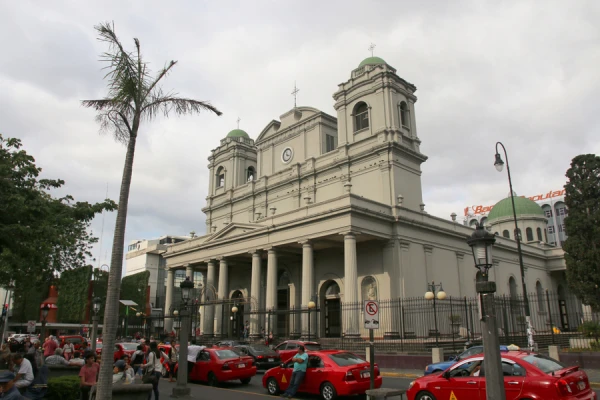
San José, Costa Rica, Mar 7, 2019 / 04:49 pm (CNA).- The offices of the Archdiocese of San José and the Costa Rican bishops’ conference were raided by police Thursday as part of an investigation of two priests accused of sex abuse.

The Judiciary Investigation Department confiscated computers and files March 7 in search of information regarding Fathers Manuel Antonio Guevara Fonseca and Mauricio Viquez Lizano, and proof of potential cover-up by Archbishop José Rafael Quiros Quiros of San Jose, according to the AP.

Viquez, 54, has been dismissed from the clerical state, the San José archdiocese announced March 4. Nine canonical complaints of sexual abuse of altar boys had been filed against him. He had been teaching at a local university, but he fled Costa Rica Jan. 7, and prosecutors in the country have issued an international arrest warrant.

Guevara, 52, was arrested earlier this month for one allegation of sexual abuse against a minor. He has been released from prison, but has strict regulations to follow and is suspended from his work at Santo Domingo de Heredia parish.

The 52 year-old priest was only kept in prison for one night, but he must check in with civil authorities once a month, cannot change addresses, and has surrendered his passport. He is also forbidden from any form of contact with the victim.

The Costa Rican bishops’ conference issued a statement a day after his arrest, seeking forgiveness for a lack of an appropriate response in other sex abuse cases, according to Q Costa Rica.

“We humbly acknowledge our mistakes and ask forgiveness for the faults that have been painfully committed by some members of our church,” the bishops said.

[…]

No Picture
News Briefs

Santiago archdiocese comments on priest sentenced for sex abuse

March 6, 2019 CNA Daily News 0

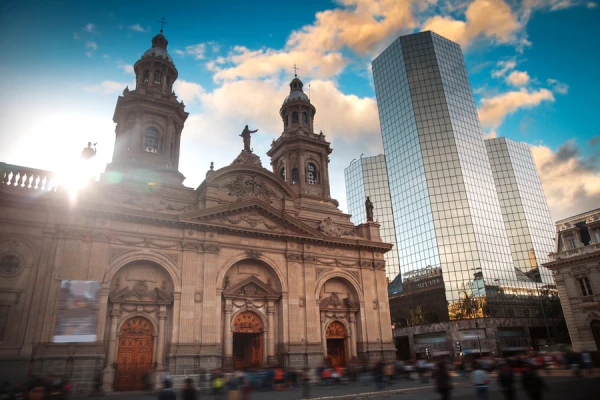
Santiago, Chile, Mar 6, 2019 / 03:33 pm (CNA).- The Archdiocese of Santiago commented Tuesday on the case of Father Tito Rigoberto Rivera Muñoz, who was found guilty in August 2018 of the sexual abuse of adults.

Rivera’s victim claims that he told the Archbishop of Santiago of the attack, but the prelate gave him money and asked him not to report it.

The March 5 statement of the Santiago archdiocese’s Truth and Peace Commission follows the appearance of the victim, Daniel Rojas Alvarez, on state television.

Rivera sexually assaulted Rojas, who was then about 40, in a room of the Santiago Metropolitan Cathedral in 2015.

Rojas claims he told Cardinal Ricardo Ezzati Andrello of the attack, who asked him to pray for the abuser, gave him 30,000 pesos ($45), and asked that he not asked him not to share what happened.

During proceedings initiated by the Chilean justice system, another victim reportedly presented photographs and videos that confirmed Rivera’s abuse of other youths.

The Santiago archdiocese stated that it received a complaint of possible abuse of minors by Rivera in August 2011, but that during enquiries into the case “it was not possible to contact the complainant.”

The Pastoral Office for Complaints then received a complaint against Rivera from an adult in March 2015, which permitted the start of a preliminary investigation and the implementation of the precautionary measure of removing the priest from all pastoral responsibilities.

The preliminary investigation “was widened with new information that was provided to the Chilean Investigative Police, which included the possible theft of the religious objects.”

In August 2015, Cardinal Ezzati sent the information on the case to the apostolic nunciature.

The Congregation for the Doctrine of the Faith, at the request of the Santiago archdiocese, “gave new instructions to continue the preliminary investigation and to start an administrative penal process” in September 2016.

The preliminary investigation was closed in November 2016, leading to the administrative penal process which concluded with the Decree of Condemnation of Aug. 16, 2018.

The priest was declared “guilty of crimes against the Sixth Commandment of the Decalogue continued  over time and involving scandal, with adults, as is specified in Canon 1395§1 of the Code of Canon Law,” the archdiocese said.

Rivera was suspended from public ministry for ten years, “only being able to celebrate the Eucharist privately and with the company of a person over 50 years of age.”

He was also prohibited from “meeting with or maintaining contact with young people” and was required not to move anywhere.

Once the ten years are completed, if the priest does not comply with the measures, he risks “being suspended for a greater period of time.”

The archdiocese also noted that these four penalties were “among others.”

It concluded, saying that “besides the canonical sentence which was implemented  in September 2018, an exhaustive review was begun to clarify all the information that was made known publicly.”

Bishop Luis Fernando Ramos Perez, an Auxiliary Bishop of Santiago and secretary general of the Chilean bishops’ conference, has called the Rivera’s abuse “repugnant, unacceptable and terrible. The question we have to ask ourselves is how a priest came to that.

Cardinal Ezzati has faced accusations that he was involved in covering up the crimes of other abusive priests, including Fernando Karadima and Oscar Munoz Toledo.


This article was originally published by our sister agency, ACI Prensa. It has been translated and adapted by CNA.

[…]

No Picture
News Briefs

Nicaraguan bishops not mediating latest round of peace talks

March 5, 2019 CNA Daily News 0

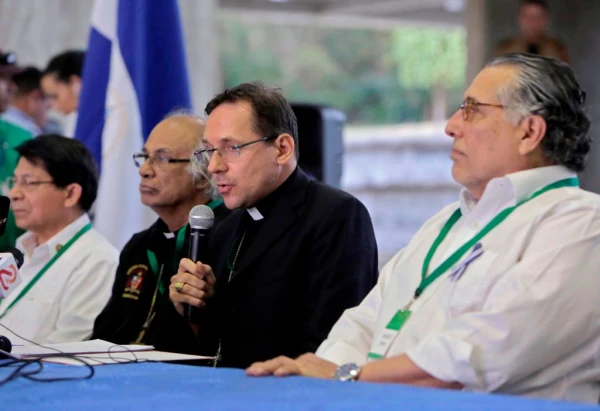
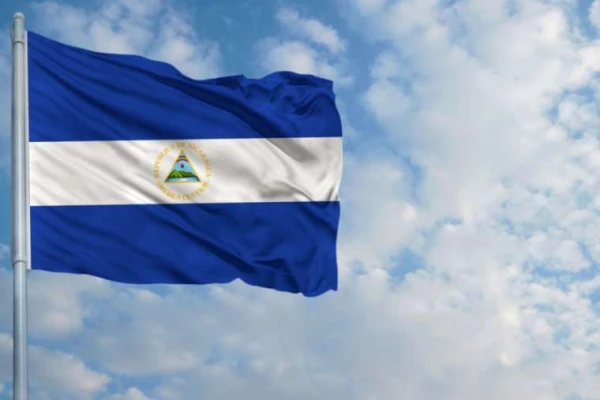
Managua, Nicaragua, Mar 5, 2019 / 07:01 pm (CNA).- The Nicaraguan bishops said Monday they have not been invited to mediate in the renewed dialogue between the government of President Daniel Ortega and the opposition Civic Alliance for Justice and Democracy.

Anti-government protests in the country began in April 2018. They resulted in more than 300 deaths, and the country’s bishops mediated on-again, off-again peace talks until they broke down in June.

A new round of dialogue began Feb. 27 at the INCAE Business School in Managua.

Attending the start of the talks as witnesses and as “a gesture of good will” were Cardinal Leopoldo José Brenes Solorzano of Managua and the Apostolic Nuncio to Nicaragua, Archbishop Waldemar Stanislaw Sommertag.

The bishops’ conference stated March 4 that “in this historic moment our greatest contribution as pastors of this pilgrim Church in Nicaragua will continue to be to accompany the people in their suffering and sorrows, in their hopes and joys, and lifting up our prayers of intercession so that Nicaragua may find civilized and just ways for a peaceful solution in view of the common good.”

At the end of the Feb. 27 session of the peace talks, a statement was read which reported the approval of 9 out of 12 proposed points, without specifying what these were.

The talks continued Feb. 28 and March 1, with the agreement to continue meeting March 4-8. In addition, it was indicated that the goal is that “the negotiations conclude as soon as possible.”

Nicaragua’s crisis began after Ortega announced social security and pension reforms. The changes were soon abandoned in the face of widespread, vocal opposition, but protests only intensified after more than 40 protestors were killed by security forces initially.

Anti-government protestors have been attacked by “combined forces” made up of regular police, riot police, paramilitaries, and pro-government vigilantes.

The Nicaraguan government has suggested that protestors are killing their own supporters so as to destabilize Ortega’s administration.

The Church in Nicaragua was quick to acknowledge the protestors’ complaints.

The pension reforms which triggered the unrest were modest, but protests quickly turned to Ortega’s authoritarian bent.

Ortega has been president of Nicaragua since 2007, and oversaw the abolition of presidential term limits in 2014.

The Church has suggested that elections, which are not scheduled until 2021, be held in 2019, but Ortega has ruled this out.

Ortega was a leader in the Sandinista National Liberation Front, which had ousted the Somoza dictatorship in 1979 and fought US-backed right-wing counterrevolutionaries during the 1980s. Ortega was also leader of Nicaragua from 1979 to 1990.


This article was originally published by our sister agency, ACI Prensa. It has been translated and adapted by CNA.

[…]

No Picture
News Briefs

How the Church in Chile is helping women victims of domestic violence

March 4, 2019 CNA Daily News 0

Santiago, Chile, Mar 4, 2019 / 04:58 pm (CNA).- The Vicariate for Social Pastoral Care of Caritas in the Archdiocese of Santiago takes in every year hundreds of women and their children, victims of domestic violence who find in their shelters comprehensive care to be able to get on with their lives.  

According to figures from the Center for the Study and Analysis of Crime of the Undersecretariat for Crime Prevention, in 2018 there were 64,361 complaints in Chile related to domestic violence, and of these, 76 percent were against women.

That same year, Caritas’ Social Pastoral Care took into its two shelters in Santiago 86 women and 115 children. Today, 30 percent of its residents are immigrants.

“The women come in as referrals from the Public Prosecutor’s Office, Family Courts, and Sernameg (National Service for Women and Gender Equality), the Carbineros [national police] and the unified risk assessment guidelines,” said Loreto Rebolledo, head of Caritas’ Solidarity Outreach, told the Archdiocese of Santiago’s communications office.

Robelledo explained that that is a Sernameg program run by the Archdiocese of Santiago which consists in providing a quality temporary residence for women over 18, with or without children, who are experiencing violence from their partner, husband, or ex.

In the shelters the women are taught about  the risks and consequences of violence and strategies for self-care and for developing autonomy. The children are given psychological help and given tools for self-knowledge and awareness of their environment, as well as crisis intervention. They are also made to understand that they in no way deserved the violence they were subjected to and are taught how to incorporate strategies to protect themselves.

According to Rebolledo “one of the hardest things to work on and overcome is changing their understanding of affective relationships and the concept of the ideal family, since their learned interrelationships are characterized by following patterns of dependence, submission, and subordination, causing, in the majority of cases, the women to treat their sons and daughters with the same kind of violence they have experienced.”

Caritas’ pastoral ministry endeavors to have people question the roots of violence and commit to building a “more just and equitable society.”

“It emphasizes the expression of a just, fraternal and solidary society where every man and woman has the right to a full and abundant life,” Rebolledo said.

The victims “need to understand why they were experiencing a violent situation and how they got there,” so their sense of guilt is lessened and they put an end to the mistreatment, she noted.

“Networks of family and friends play a key role. Active listening, empathy, support, not judgeing and information are fundamental. That they know and feel they are not alone,” the social worker pointed out.

One of the people who has benefited from from the homes is Sandra, 41, who for years was mistreated by her ex-partner and the father of her three children. In 2014, she asked for asylum with the pastoral ministry and after eight months was able to resume her life without violence.

“Drugs, alcohol and machismo had a played a big part. I put up with so much violence because he was the breadwinner. The episode that I remember the most and that triggered my leaving was once when I was cooking beans he didn’t like them. He threw all the food in my face, then he knocked me up against the stove and began to shoot, in the air, because he had a pistol,” she related.

“They asked my daughter at school what gift that money cannot buy she would like to have. She replied: ‘That my dad would never hit my mom again.’ After that the school called me and I let it all come out. For the first time, I let go of my fear and I told everything I had gone through for five years and then I came to the shelter,” she recalled.

Sandra acknowledged that “it was hard at first, but they helped me here and especially my children. After the eight months that I was here at the home, I was afraid to leave and live elsewhere  with my children, but I got up the courage to do so and thanks be to God it went well for me. I managed to get a job as a waitress and was able to pay the rent.”


This article was originally published by our sister agency, ACI Prensa. It has been translated and adapted by CNA.

[…]

No Picture
News Briefs

Argentine bishop calls for pro-life commitment after C-section on young girl

March 2, 2019 CNA Daily News 0

San Miguel de Tucumán, Argentina, Mar 2, 2019 / 06:01 am (CNA).- After an 11-year-old rape victim in Argentina received a Caesarean section Wednesday, the local bishop has called for society to be committed to protecting life.

The girl was admitted Jan. 31 to the Eva Perón East Hospital in Banda del Río Salí, in the San Miguel de Tucumán metro area, due to some injuries attributed to suicidal behavior. It was then that she was found to be pregnant as the result of being raped by the partner of her grandmother, and she requested an abortion.

Argentine law prohibits abortion, except when the mother’s life or health is in danger, or in cases of rape.

Family court judge Valeria Brand authorized an abortion for the girl after delays caused by uncertainty over who was the girl’s legal guardian. Several local doctors refused to perform an abortion citing conscientious objection.

The girl ended up receiving a Caesarean section Feb. 27, about about 23-24 weeks of pregnancy, after doctors said there were too many risks associated with abortion in the case. The infant is alive, but is in poor health, weighs 1 lb 5 oz, and has little chance of survival.

In the wake of the case, Archbishop Carlos Alberto Sánchez of Tucumán called on society to be committed to protecting life. He encouraged the faithful “to be aware of this” and to care for the life “of every child, of every adolescent, of every elderly person, of every sick person,” and daily “to protect, to care for, to serve, every human life, because every life has value.”

Archbishop Sánchez recalled that “for us, believers, it is very important to be called together in prayer, but for this prayer to become a real commitment to protect every human life and defend every human life with passion, courage and with much generosity and dedication.”

“May God bless you and may we be able to join in prayer always to be guardians of life,” Archbishop
Sánchez concluded.

Both pro-life and pro-choice groups have been dissatisfied with how the girl’s case was handled.

The pro-life group Doctors for Life of Tucumán “strongly and absolutely” repudiated the Caesarean section and expressed their support “to all healthcare personnel who categorically refused on a scientific and legal basis” to do the procedure, due to the grave health risks involved “at this gestational age”; some have said that delaying the procedure 20 days would help ensure the lives of both the girl and her child.

Pro-choice activists have protested the girl’s inability to procure an abortion, and her delay in receiving  the Caesarean.

The case follows a similar one that took place in Jujuy, in which a 12-year-old girl said she had been raped by her neighbor, and was given a Caesarean section Jan. 18. Her baby, Esperanza, was born at 1 lb 8 oz, and died Jan. 22.  

A medical team had advised against the procedure due to the risk to the lives of mother and child. The pro-life organization Mas Vida charged that Esperanza’s death was a homicide because “there was no medical reason to deny her the gestational formation she was lacking.”

A bill to legalize abortion through the first 14 weeks of gestation narrowly passed the Chamber of Deputies last year, but was rejected by the Senate Aug. 9.


This article was originally published by our sister agency, ACI Prensa. It has been translated and adapted by CNA.

[…]

No Picture
News Briefs

French nuncio accused of sexual misconduct during time in Canada

March 1, 2019 CNA Daily News 0

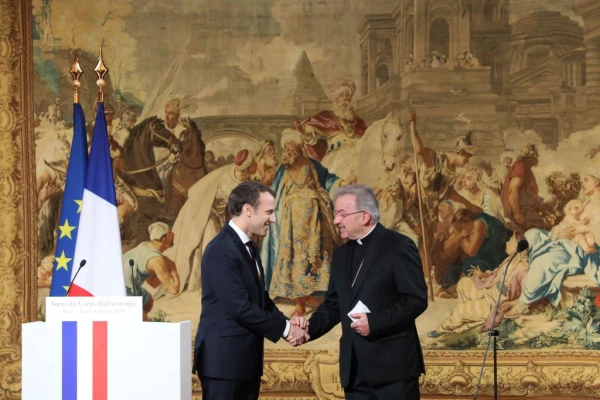
Ottawa, Canada, Mar 1, 2019 / 03:01 pm (CNA).- Archbishop Luigi Ventura, apostolic nuncio to France, has been accused of sexual misconduct against an adult male while he was nuncio in Canada. The Vatican diplomat is already under investigation for alleged sexual assault in Paris.

Christian Vachon emailed the nunciature to France Feb. 22 to file a complaint against Ventura. Vachon says that during a banquet held July 26, 2008 at the Basilica of Sainte-Anne-de-Beaupré, about 20 miles northest of Quebec, Ventura touched his buttocks at least twice. At the time, Vachon was 32.

“I believe that the ‘modus operandi’ of Archbishop Ventura has left a doubt in the conscience of the victim as to whether he was truly a victim of touch,” Vachon’s email to the nunciature read, according to Présence, a French Canadian religious news service.

Ventura, 74, was apostolic nuncio to Canada from 2001 to 2009.

In 2008, Vachon part of the pastoral team at the basilica, and was discerning religious life. He told  Présence he was asked to be a server at the head table: “The people could not see, because it was in the back of the room. We were thus facing the guests. No one could witness it.”

He said Ventura touched his buttocks while he was serving him, and he thought at first it might have been inadvertent, but a second time he felt the nuncio’s hands “grazing my buttocks.”

Vachon said Ventura tried to speak with him during the meal, but he was too shocked and scandalized to engage with him. He says he told a colleague what had happened, without identifying the nuncio. He has also, in recent years, told his wife.

In the wake of the new wave of clergy sex abuse scandal, he shared his experience, again without identifying Ventura, on an online forum in December 2018.

“Has a crime been commited? I am not able to say yes. It is immoral, out of place, undignified for his function,” Vachon told  Présence.

Vachon informed both the Canadian nunciature and Bishop Serge Poitras of Timmins, a former secretary to Ventura, of his claims about the nuncio. Archbishop Luigi Bonazzi, the present apostolic nuncio to Canada, phoned Vachon the same day to discuss his claims.

Vachon said he did not inform the nunciature earlier because “it was the equivalent of complaining directly to [his] aggressor,” and he didn’t inform the police because it is a “he said-he said” situation.

Bonazzi told Présence that Vachon’s allegations are the only ones the Canadian nunciature has received against Ventura.

French daily Le Monde reported Feb. 15 that Ventura is being investigated by Parisian authorities after he was accused late last month of having inappropriately touched a young male staffer of Paris City Hall.

The alleged assault is said to have taken place in Paris’ City Hall Jan. 17, during a reception for the annual New Year address of Paris mayor Anne Hidalgo.

Ventura was ordained a priest of the Diocese of Brescia in 1969. He entered the diplomatic service of the Holy See in 1978 and was stationed in Brazil, Bolivia, and the UK. From 1984 to 1995 he was appointed to serve at the Secretariat of State in the Section for Relations with States.

After his episcopal consecration in 1995, Ventura served as nuncio to Ivory Coast, Burkina Faso, Niger, Chile, and Canada. He was appointed apostolic nuncio to France in September 2009.

[…]

No Picture
News Briefs

Bishops ask for prayers for start of talks in Nicaragua

February 28, 2019 CNA Daily News 0

Managua, Nicaragua, Feb 28, 2019 / 02:07 pm (CNA).- The bishops of Nicaragua have asked the faithful to pray for the dialogue begun Wednesday between the government of President Daniel Ortega and the opposition Civic Alliance for Justice and Democracy.

In a message posted on social media, Cardinal Leopoldo José Brenes Solorzano of Managua asked the faithful to pray “so that we can make a sincere effort to authentically work for the common good, declining all selfish  and sectarian interests, in the search for new horizons for Nicaragua.”

These horizons, he indicated, must be founded “on respect for human rights, promoting a culture of dialogue and understanding. Mary, Mother of the Church, pray for us.”

On Facebook, the Nicaraguan bishops’ conference joined this intention of Cardinal Brenes to the “ ‘Let us Pray Together’ campaign.’” In addition, they asked Mary Immaculate to intercede for the country.

On Twitter, Auxiliary Bishop Silvio José Báez Ortega of Managua stated Feb. 27 his “prayers for Nicaragua at the start of negotiations today.”

“Let personal and ideological interests be renounced and economics never be put before human rights. Let everything be transparent, with all political prisoners released and with public freedoms restored,” he added.

Attending the start of the talks as witnesses were Cardinal Brenes and the Apostolic Nuncio to Nicaragua, Archbishop Waldemar Stanislaw Sommertag.

However, the newspaper La Prensa de Nicaragua reported that the government vetoed the participation of Bishop Rolando Álvarez of Matagalpa at the talks.  The opposition is demanding that the prelate be present.

The renewal of talks is taking place after almost eight months since the first attempt at dialogue. However, in order for the Feb. 27 meeting to take place, the opposition demanded that the regime release the political prisoners and demonstrators arrested during the protests that began in April 2018.

According to the opposition those in detention number more than 700. However, fewer than 150 were released and moved to house arrest Feb. 27. The government has not said if in the coming days more people would be released from prison.

Besides the release of the demonstrators, the Civic Alliance for Justice and Democracy also asked for
“the restoration of freedoms, rights, and guarantees established by the Political Constitution” and
“electoral reforms that guarantee fair, free, and transparent elections.”

On social media they stated that “in this first meeting we are defining the road map to ensure a transparent, effective and specific process.”

Nicaragua’s crisis began after Ortega announced social security and pension reforms. The changes were soon abandoned in the face of widespread, vocal opposition, but protests only intensified after more than 40 protestors were killed by security forces initially.

Anti-government protestors have been attacked by “combined forces” made up of regular police, riot police, paramilitaries, and pro-government vigilantes.

The Nicaraguan government has suggested that protestors are killing their own supporters so as to destabilize Ortega’s administration.

The Church in Nicaragua was quick to acknowledge the protestors’ complaints.

The pension reforms which triggered the unrest were modest, but protests quickly turned to Ortega’s authoritarian bent.

Ortega has been president of Nicaragua since 2007, and oversaw the abolition of presidential term limits in 2014.

The Church has suggested that elections, which are not scheduled until 2021, be held in 2019, but Ortega has ruled this out.

Ortega was a leader in the Sandinista National Liberation Front, which had ousted the Somoza dictatorship in 1979 and fought US-backed right-wing counterrevolutionaries during the 1980s. Ortega was also leader of Nicaragua from 1979 to 1990.


This article was originally published by our sister agency, ACI Prensa. It has been translated and adapted by CNA.

[…]

No Picture
News Briefs

Tens of thousands attend youth pilgrimage to Mexico’s Cristo Rey shrine

February 26, 2019 CNA Daily News 1

Leon, Mexico, Feb 26, 2019 / 01:51 pm (CNA).- More than 37,000 young people made a pilgrimage Saturday to the Christ the King shrine on Cerro del Cubilete in Mexico’s Guanajuato state.

The Feb. 23 pilgrimage was organized, as it is each year, by the national youth movement Witness and Hope and had as its theme “Youth to politics: Commitment of faith, solidarity and peace.”

This year the date of the 10 mile walk was changed from the last Saturday of January to the last of February, due to World Youth Day in Panama, which took place Jan. 22-27.

The aim of the pilgrimage, the organizers said, is “to prepare ourselves to engage in politics, true politics, without labels, without euphemisms, in the true sense of attaining the common good.”

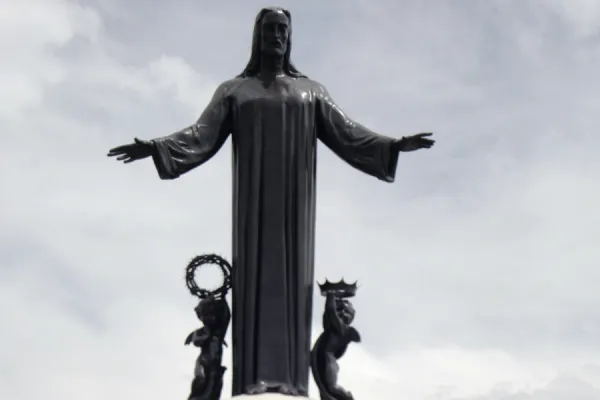
The present Cristo Rey which crowns Cerro del Cubilete, a little more than 30 miles southeast of León, is 75 feet tall and was erected in 1950 as a tribute to the martyrs of the Cristero War. In the 1920s persecution by the Mexican government against the Catholic faith, which involved the banning of religious congregations, limitations on worship, prohibiting a priest from dressing as such, reached a point at which civilians in various parts of the country took up arms.

The Mexican government responded with even greater repression and the killing of priests and laity. Among the martyrs of the Cristero War was Saint José Sánchez del Río, who was executed at 14 years of age.

The Cristero forces were known for their cries of “Long live Christ the King” and “Long live the Virgin of Guadalupe!”

The present Cristo Rey statue stands where a smaller one was dynamited in 1928 by the government of Mexican President Plutarco Elías Calles, during the war.

Archbishop Alfonso Cortés Contreras of León celebrated Mass at the shrine and stressed to the young pilgrims the importance of being actively engaged in politics and seeking the common good.

Also attending the pilgrimage was Jerson Velasco, the director of the National Coordination for Adolescents and Young People of the Venezuelan bishops’ conference, who shared with the pilgrims about the suffering going on in his country.

“We have lacked food, we have lacked medicine, who have lacked a Christian government, but we have never lacked hope,” he said.

The organizers of the pilgrimage sent their “prayers and expressed their brotherhood with Venezuelan young people who are in the midst of fighting for freedom, democracy and the minimal guarantees of a decent life, without violence, without the shortages of the economic catastrophe and with respect for religious freedom.”

[…]

No Picture
News Briefs

Venezuelan bishop warns of consequences after destruction of humanitarian aid

February 25, 2019 CNA Daily News 0

Ciudad Bolivar, Venezuela, Feb 25, 2019 / 07:01 pm (CNA).- The Archbishop of Ciudad Bolívar warned Saturday of “very grave consequences” for the government of Venezuelan president Nicolas Maduro after the destruction of humanitarian aid that entered the country.

Archbishop Ulises Antonio Gutiérrez Reyes said on Twitter Feb. 23 that “the crimes committed today, killing people on the borders with Brazil and Colombia and the destruction of humanitarian aid, sets up another scenario that will bring very grave consequences for the regime. Enough is enough.”

Archbishop Gutiérrez also Tweeted Feb. 23 that “throughout Venezuela the great battle is waged today for dignity. Today is an historic day since the Venezuela we all want is reborn and nothing and no one is going to prevent it.”

Under Maduro’s administration, Venezuela has been marred by violence and social upheaval, with severe shortages and hyperinflation leading millions of Venezuelans to emigrate.

Opposition leader Juan  Guaidó, who declared himself interim president last month, arranged for aid shipments to Venezuela, but the humanitarian aid has been rejected by Maduro.

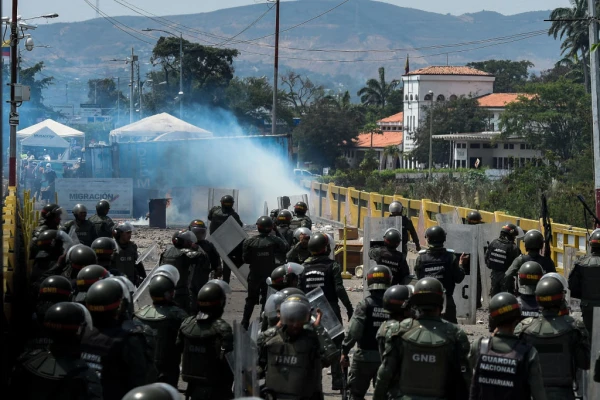
The Venezuelan military has placed large trucks and cargo containers on highways connecting Venezuela to Colombia and Brazil, whence the aid would enter. The New York Times reported that only one aid truck made it through Feb. 23, and that some supplies from Colombia were burned. The supply ship The Midnight Stone was stopped from reaching Venezuela with aid from Puerto Rico.

Four people have been killed in altercations between opposition protesters and Maduro loyalists since Friday.

Most of the Venezuelan military has remained loyal to Maduro, with only about 150 defections to the opposition.

Bishop Mario del Valle Moronta Rodriguez of San Cristóbal de Venezuela called on “all the soldiers and police in the Name of God, to not even raise your voice, nor attack with armaments those who are trying to do good for all of Venezuela.”

“That those who should be looking after everything concerning the well being of the people would have set fire to the cargo that is a symbol of the humanitarian aid from other countries and of the efforts of many men and women also from Venezuela is not just a sin of immorality, it’s an act of inhumanity for which they will have to answer before God,” Bishop Moronta said.

“To all those who have military or police authority, don’t fire on the people, don’t raise your voice against the people, don’t forget that you also are the people, and if this means a lot to you, think also of your families, your neighbors and friends who are also suffering, don’t let yourselves feel you’re not part of the people. Respect, protect and dignify the people of Venezuela.”

Cardinal Baltazar Enrique Porras Cardozo of Mérida said on Twitter that “we commend to prayer the dead, the injured, and those detained in a senseless repression. Violence is the weapon of the heartless. May hatred not take hold in the hearts of Venezuelans.”

He also asked that “God would bless our homeland and all those who are helping us.”

Guaidó emphasized that the government he has headed since Jan. 23 on behalf of the National Assembly continues “to receive the support of the international community, which has been able to see, with their own eyes, how the usurping regime is violating the Geneva Protocol, where it clearly says that destroying humanitarian aid is a crime against humanity.”


This article was originally published by our Spanish-language sister agency, ACI Prensa. It has been translated and adapted by CNA.

[…]

No Picture
News Briefs

Jesuits withdraw award as Rosica offers plagiarism apology and resigns from college board

February 25, 2019 CNA Daily News 7

Washington D.C., Feb 25, 2019 / 02:47 pm (CNA).- A Canadian priest who apologized last week for plagiarism has resigned from the governing board of a Catholic college affiliated with the University of Toronto.

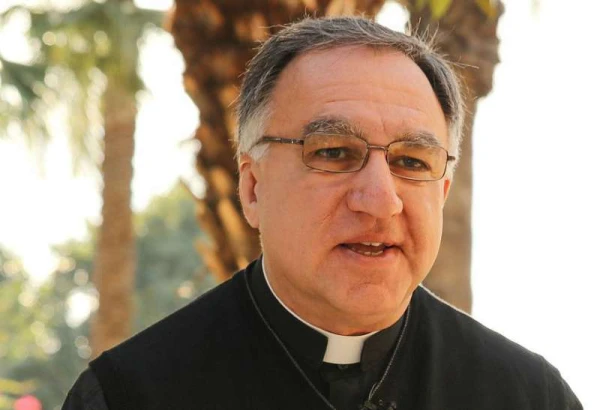
“As a sign of contrition and acknowledgement of the error, I freely submitted my resignation (Feb. 24) to the Collegium of the University of St. Michael’s College,” Fr. Thomas Rosica told The Catholic Register Feb. 25.

“It has been a privilege for me to serve that excellent university for many years in various capacities. I did not want my errors to cloud over the university governance and offer a bad example to students, educators and staff. We know that plagiarism is wrong, especially when it is practised deliberately. Please note that my actions were never deliberate. Nevertheless they were wrong.”

In a statement Monday, Fr. Don McCleod, CSB said that “Fr. Thomas Rosica, CSB made significant contributions while serving the St. Michael’s community as a member of its Collegium,” adding that he had “respectfully accepted his resignation from the Collegium.”

McLeod is the chairman of the Collegium, or governing board, of The University of St. Michael’s College, which was founded by the Congregation of St. Basil, the religious community of which McLeod and Rosica are members. The college has nearly 4,000 students.

Rosica, a long-serving English language press aide at the Vatican Press Office, and the CEO of Canada’s Salt+Light Television network, was reported by Life Site News Feb. 15 to have plagiarized sections of text in several lectures and op-eds from a variety of writers, among them priests, theologians, journalists, and at least two cardinals.

Subsequent reports found widespread plagiarism in essays, speeches, and op-eds by Rosica, dating back more than a decade. Plagiarized sections in some texts ran beyond even one paragraph.

“I realize that I was not prudent nor vigilant with several of the texts that have surfaced and I will be very vigilant with future texts and compositions,” Rosica told The Catholic Register.

“I take full responsibility for my lack of oversight and do not place the blame on anyone else but myself.”

Rosica told the National Post Feb. 22 that “What I’ve done is wrong, and I am sorry about that. I don’t know how else to say it.”

Rosica also told the National Post his plagiarism was inadvertent and not malicious. He explained that “it could have been cut and paste,” apparently meaning that he had mistakenly included passages of text written by others in his texts without remembering to attribute them.

The priest added that he would “apologize that this came to light, and it’s wrong, and it’s not going to happen again.”

After Rosica’s initial apology, evidence emerged on Twitter that Rosica had also copied directly and without attribution the work of several theologians in a 1994 article he published in the theological journal “Worship.”

Journalists who have worked with Rosica told CNA they were surprised by the evidence of plagiarism, noting the priest’s intellectual gifts and his reputation for charitable generosity toward young staff members and journalists.

Sources noted that Rosica is known to work extremely long hours and to eschew vacations or time off. Some praised the priest’s love for the Church, and his availability to assist the bishops of Canada and the Holy See whenever he is asked.

The priest told the National Post that some plagiarism might have occurred because he neglected to check sources and overlooked attributions in background material prepared for him by interns.

He elaborated Monday, telling The Catholic Register that “if there was an error on my part, it is that I have often relied on others who have generously helped me in my preparation of various texts and I did not do the necessary checking into sources, etc. I regret that. It was never willfully done.”

One source confirmed to CNA that the priest sometimes has had interns assist him with research, adding that he was not aware of incidences in which interns would have written speeches or op-eds for Rosica, and that he was unaware of what role interns might have played in the priest’s plagiarism.

Rosica is no stranger to controversy. In August 2018, the priest generated considerable debate when he wrote that Pope Francis “breaks Catholic traditions whenever he wants because he is ‘free from disordered attachments.’ Our Church has indeed entered a new phase: with the advent of this first Jesuit pope, it is openly ruled by an individual rather than by the authority of Scripture alone or even its own dictates of tradition plus Scripture.”

The remark prompted considerable debate among Catholic commentators and theologians.

Rosica was scheduled to be honored in April at the annual Provincial’s Dinner of the Canadian province of the Society of Jesus. The province withdrew its invitation Feb. 25.

“The Jesuits of Canada have followed the recent media reports regarding plagiarism by Father Thomas Rosica, CSB, actions for which he has taken responsibility and offered a full apology. Plagiarism is a grave offense against intellectual honesty and the community of scholarship. At the same time, many of us know Fr. Tom personally, and celebrate his genuine service to the Church in Canada and around the world. It is with great sorrow then that we have written to Father Rosica and withdrawn our invitation to him to receive the Magis Award on April 24, in the context of the Annual Provincial’s Dinner,” the province said.

Rosica is a member of the Board of Trustees at St. John Fisher College in New York and the Board of Directors at the University of St. Thomas in Houston. Neither college was available for comment before deadline.


This story has been updated.


[…]