No Picture
News Briefs

Historic Marian shrine in Florida elevated to national shrine

October 15, 2019 CNA Daily News 1

St. Augustine, Fla., Oct 15, 2019 / 03:01 am (CNA).- Bishop Felipe Estévez of St. Augustine announced Friday that the Shrine of Our Lady of La Leche has been elevated as a National Shrine by the US bishops’ conference.

The shrine is located at the Nombre de Dios mission in St. Augustine, founded in 1587. According to the Diocese of St. Augustine, it is America’s oldest Marian shrine.

It is dedicated to the nursing Mother of God, and is a site of pilgrimage particularly for those hoping to become pregnant or to have a safe delivery.

Bishop Estévez made the announcement at an Oct. 11 Mass for the feast of Our Lady of La Leche.

“Mary recognizes the living God who closes the door to the mighty of this world and raises up the little ones, the poor in spirit, who are blessed by God,” he said. “She praises God in his great mercy towards those who obey him and open their hearts to him.”

“When we look at the image of Our Lady of La Leche, in pure beauty, we see the whole mystery of Incarnation,” he reflected. “If Mary has a message for us today, I find it in the only words that appear in the Gospel of St. John, attributed to her: ‘Do what He tells you.’”

Some 200 people attended the Mass, including benefactors, members of the Confraternity of Our Lady of La Leche, and Knights and Dames of Malta.

The first Mass at the site of the Nombre de Dios mission was said in 1565, and the mission itself was founded 22 years later by Franciscans. A chapel dedicated to Our Lady of La Leche was established on the grounds of the mission in 1609.

The statue of Our Lady of La Leche will be crowned Oct. 11, 2020, as part of the celebration of the 150th anniversary of the erection of the Diocese of St. Augustine.

[…]

No Picture
News Briefs

California expands statute of limitations for childhood sex abuse

October 14, 2019 CNA Daily News 0

Sacramento, Calif., Oct 15, 2019 / 12:02 am (CNA).- California Governor Gavin Newsom signed into law on Sunday a measure extending the statute of limitations for childhood sex abuse victims.

The law allows civil claims of childhood sexual abuse to be filed by victims until age 40, or five years after discovering the damages from the abuse.

Previously, claims had to be filed by age 26, or within three years of discovering damages from the abuse.

The new law also opens up a three-year window to revive past claims that would have expired under the previous statute of limitations. That window begins Jan. 1, 2020.

Andy Rivas, executive director of the California Catholic Conference of Bishops, responded in an Oct. 14 statement, saying, “Ultimately, our hope is that all victim-survivors of childhood sexual abuse in all institutional settings will be able to have their pain and suffering addressed and resolved and so our prayers are that AB 218 will be a step forward in that direction.”

“The Catholic Church has confronted this issue of child sexual abuse for more than two decades now,” Rivas said. “It is a legacy of shame for all of us in the Church, and we are aware that nothing can undo the violence done to victim-survivors or restore the innocence and trust that was taken from them.”

He noted the reforms made by the Church to protect children and that new reports of abuse in the Church in California are rare. He also pointed to efforts by dioceses in the state to devote hundreds of millions of dollars to therapy and pastoral care to abuse victims.

“The Church cooperated with then-Governor Gray Davis and the legislature during the opening of the statute of limitations in 2003. The Church paid more than $1.2 billion to settle claims filed by hundreds of victim-survivors,” he said.

Rivas noted that earlier this year, six of California’s 12 Catholic dioceses established an independently managed compensation program, which would provide compensatory payment to those alleging to be victims of priestly sexual abuse, regardless of what that abuse is alleged to have happened.

The programs covers Los Angeles, Sacramento, San Bernardino, San Diego, Orange, and Fresno. These six dioceses represent 80% of California’s Catholics, according to an announcement about the compensation program.

Assemblywoman Lorena Gonzalez (D-San Diego), who authored the California bill, said in a statement, “The idea that someone who is assaulted as a child can actually run out of time to report that abuse is outrageous.”

“More and more, we’re hearing about people who were victims years ago but were not ready to come forward to tell their story until now,” she said. “We shouldn’t be telling victims their time is up when in reality we need them to come forward to protect the community from future abuse.”

However, critics argue that the law goes too far, opening the door to cases with little evidence and allowing damages to be tripled if cover-up of abuse was involved.

Rivas also noted with disappointment that the law does not cover sexual abuse victims of state employees.

According to the Associated Press, school districts in the state showed heavy opposition to the legislation, arguing that reliable evidence and witnesses are more difficult to collect 40 years after an alleged act of abuse.

Troy Flint, spokesman for the California School Boards Association, said the bill “has a very real chance of bankrupting or impoverishing many districts,” the AP reported.

“We don’t want to minimize or trivialize the trauma that’s associated with inappropriate sexual conduct in schools,” Flint said, but added that the financial impact on school districts in the state could “inhibit our ability to properly serve today’s students and students in years to come.”

The Boy Scouts of America – which has faced millions of dollars in damages to child abuse victims, said it is considering “all available options,” including declaring bankruptcy, the AP reported.

In a statement the organization said it cares “deeply about all victims of child abuse and sincerely apologize(s) to anyone who was harmed during their time in Scouting.” It noted the procedures put in place to avoid individual youth and adult interactions and ensure respect for privacy.

According to the Associated Press, Michael Pfau, an attorney based in Seattle, says his firm has approximately 100 abuse victims who are ready to file suits against California schools, Catholic dioceses, foster homes, the Boy Scouts when the extended window opens.

California is among several states to consider expanding the statute of limitations for childhood sexual abuse.

Earlier this year, New York widened the statute of limitations for both criminal and civil claims, and opened a one-year window for abuse survivors to files suits against their abuser or the institution where the abuse occurred.

More than 400 lawsuits were filed in the state on the first day of the expanded window, including claims against members of the Catholic clergy, the Boy Scouts, and the state’s public schools.

The governor of New Jersey signed a similar law in May. North Carolina, Maryland, and Pennsylvania have also considered similar legislation in the last year.


[…]

No Picture
News Briefs

Calif. governor signs state college campus abortion pill mandate into law

October 14, 2019 CNA Daily News 3

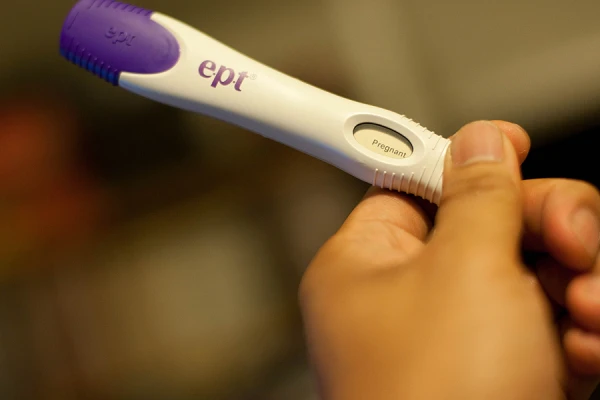
Sacramento, Calif., Oct 14, 2019 / 11:48 am (CNA).- California governor Gavin Newsom signed into law Friday a measure requiring public universities to provide free access to medical abortions for students.

The law will take effect in 2023, and applies to the 34 campuses of the University of California and California State University.

Sen. Connie Levya (D-Chino), the law’s author, said Oct. 11 that “abortion is a protected right, and it is important that everyone—including college students—have access to that right, if they so choose. I thank the Governor and my legislative colleagues for upholding the right to choose and affirming the right of college students to access medication abortion on campuses here in California.”

The law will also create a fund to provide a $200,000 grant to each public university student health center to pay for the cost of offering abortion pills, with money coming from nonstate sources such as private sector entities and local and federal government agencies.

The law will only take effect if $10.29 million in private funds are made available by Jan 1, 2020, which funding has already been secured according to an Aug. 12 analysis of the bill by the State Assembly’s appropriations committee.

It also requires abortion counseling services to students, but it is “specifically written in such a way to exclude pro-life counseling,” the California Catholic Conference said in a statement on their website.

Former Governor Jerry Brown, a public supporter of abortion, vetoed a similar bill last September, saying it was was “not necessary,” as abortion services are already “widely available” off campus.

The California Catholic Conference was opposed to the law as it passed through the legislature, and last month the group urged Newsom to veto “this unprecedented and unnecessary legislation because it purposely narrows a young woman’s choices and puts the state’s prestigious academic institutions in a position of actually promoting, facilitating and potentially funding only abortions.”

Currently, a majority of campus health centers offer gynecological services and contraceptives, but they will refer students seeking an abortion to an off-campus abortion clinic.

The California Catholic Conference said the bill overemphasizes abortion as an option for college pregnancies. While the bill invites health centers to include abortion counseling services, the conference said it is “specifically written in such a way to exclude pro-life counseling.”

“This bill will promote only abortion-inducing drugs on college campuses,” said Andrew Rivas, executive director of the conference. “No government-funded institution, medical or counseling center, should ever provide only one set of services. If this bill is truly about providing choices for female students, the state should then also require and fund life-affirming services on campus.”

“Offering state-funded abortions as the only alternative to pregnancy undermines the ability of a state academic institution to promote the value of diversity and the empowerment of women,” he added.

Medical abortions involve the taking of two pills – the first, mifepristone, blocks progesterone, which is essential for maintaining the health of the fetus. The second pill, misoprostol, is taken 24 hours after mifepristone and works to induce contractions in order to expel the fetus.

[…]