No Picture
News Briefs

Tax churches that oppose gay marriage, Democratic candidate says

October 11, 2019 CNA Daily News 1

Washington D.C., Oct 11, 2019 / 01:00 pm (CNA).- A Democratic candidate for president has said religious institutions should be stripped of their tax-exempt status if they oppose same-sex marriage. 

On Thursday night, during and Equality Townhall hosted and broadcast on CNN, Robert Francis O’Rourke, a former congressman, was asked by CNN anchor Don Lemon if he thought that  “religious institutions like colleges, churches, charities, should they lose their tax exempt status if they oppose same sex marriage?”

O’Rourke answered “yes,” and after applause and cheers from the crowd, added, “there can be no reward, no benefit, no tax break, for anyone or any institution, any organization in America that denies the full human rights and the full civil rights of every single one of us. And so, as president, we’re going to make that a priority, and we are going to stop those who are infringing upon the human rights of our fellow Americans.” 

Sen. Cory Booker (D-NJ), another presidential candidate, was asked earlier in the night if he would strip the tax-exempt status of churches who were opposed to same-sex marriage. Booker said that such a move would entail a “long legal battle,” but signaled his sympathy with the idea. 

“I’m saying I believe fundamentally that discrimination is discrimination,” he said. “And if you are using your position to try to discriminate others, there must be consequences to that. And I will make sure to hold them accountable using the DOJ or whatever investigatory [body].”

Both O’Rourke and Booker are averaging less than 2% in polls of democratic voters. 

Of the five largest Christian denominations in the United States–the Catholic Church, the Southern Baptist Convention, the United Methodist Church, the Church of Jesus Christ of Latter-Day Saints, and the Church of God in Christ–none condone or perform same-sex marriages and all consider same-sex activity to be sinful. 

Same-sex activity is banned in most mainstream forms of Islam, and most Orthodox Jewish rabbis will not conduct same-sex marriages. 

Tax-exempt status for religious institutions is protected by Supreme Court precedent.

In the 1970 case Walz v. Tax Commission of the City of New York, the court found that exempting religious institutions from taxes did not violate the Establishment Clause of the First Amendment. 

On the contrary, the Court decided that taxing churches could increase government entanglement with religion, as a church may be unable to pay its tax bill and be shut down. In order to avoid this from happening, the court instead the court found in favor of continuing to exempt religious institutions from taxation. 

Tax exemptions for organizations opposed to same-sex marriage have been an open question since the oral arguments of Obergefell v. Hodges, the 2015 case that resultred in same-sex marriage being legalized throughout the country. 

During arguments, Justice Samuel Alito asked Solicitor General Donald B. Verrilli Jr., who was arguing on behalf of same-sex couples, if colleges or churches would face the same fate as Bob Jones University. In the 1983 case Bob Jones University v. United States, the Supreme Court found that the IRS was right to deny a tax exemption to the school on the grounds that it engaged in racial discrimination by banning inter-racial dating (Bob Jones University dropped its anti-interracial dating policy in 2000, and regained federal tax-exempt status in 2017). 

At the time of oral arguments in Hodges, Verrilli admitted that he did not have an answer to Alito’s question “without knowing more specifics,” and said that “it’s certainly going to be an issue.” 

Luke Goodrich, vice president and senior counsel at the Becket Fund for Religious Liberty, told CNA that he did not believe O’Rourke’s suggestion was constitutionally sound.  

“Stripping the tax-exempt status of religious groups simply because they hold beliefs that the government dislikes is blatantly unconstitutional,” said Goodrich. 

“It’s also foolish because those groups provide billions of dollars in essential social services to their communities. Churches and ministries should be allowed to hold centuries-old beliefs without fear of government retribution.” 

Transgender issues were also discussed on Thursday night, and transgender activists interrupted the townhall several times throughout the event. A nine-year-old girl who identifies as a transgender boy questioned frontrunner Sen. Elizabeth Warren (D-MA) about what she would do to protect transgender children in schools. Warren said she would dismiss the current Secretary of Education Betsy DeVos, who she characterized as one of the worst people to hold the position. 

“I want to make sure that the person I think is the right secretary of education meets you and and hears your story, and then I want you to tell me if you think that’s the right person and then we’ll make the deal,” Warren said to the child.


[…]

No Picture
News Briefs

Bishops urge mercy on World Day Against the Death Penalty

October 10, 2019 CNA Daily News 5

Washington D.C., Oct 10, 2019 / 03:00 pm (CNA).- The death penalty is outdated and promotes a culture of violence, three bishops said during a livestream conversation on Oct. 10, marked as World Day Against the Death Penalty. 

Archbishops Paul Coakley of Oklahoma City and Wilton Gregory of Washington were joined by Bishop Frank DeWane of Venice (FL) for the roundtable discussion facilitated by Catholic News Service. DeWane is the current chairman of the USCCB’s domestic justice committee, and will be succeeded by Coakley in a few weeks’ time. 

“There’s no question that we are living in an age where violence has captured the hearts and minds of a lot of people,” said Gregory, offering that social media in particular has put “despicable” human carnage on display. 

On Wednesday, the day before the livestream, an anti-Semitic attack on a synagogue in Germany resulted in the murder of two people. The attack was broadcast over the streaming site Twitch. 

“What the Church wants us to understand is that taking a life, even the life of one who may have been guilty of a horrendous crime, is itself a continuation of violence,” said the Washington archbishop.  

“It makes us violent to do violence against another human being” regardless of the circumstances, Gregory said. 

October is also Respect Life Month, during which the Church makes special efforts to promote its teachings on the sanctity of life, something Coakley said is “foundational” to the Church’s teachings on human dignity and which, he emphasized, is not granted by a government, but endowed by the creator.

The Church’s positions are “very consistent in affirming human life and human dignity at every stage,” he said.

DeWane concurred with Coakley, saying that throughout the entirety of a person’s life, “we have to see that life is sacred.”

Catholics, said DeWane, have a moral obligation to “say something” when life is not being respected, especially in instances that involve people who cannot speak for themselves. 

Coakley pointed out that there is another side of the death penalty debate that is often forgotten: the victims of violent crime and their surviving friends and relatives. While it is important to champion the rights of accused, and even convicted criminals, Coakley stressed, it is important of acknowledge that some survivors–as well as those in the community–want to see the death penalty carried out in as a form of justice. Their desire for justice, Coakley said, cannot be ignored, even while accepting that the death penalty is not the answer.

“I think in our conversations about the death penalty, even though we’re speaking out in favor of abolition of the death penalty, we have to affirm and acknowledge–not just give lip service–to the suffering of victims as well,” said Coakley, noting that his archdiocese is home to the deadliest act of domestic terrorism in this country’s history. 

As a result of the 1995 Oklahoma City bombing, Coakley said that many within his archdiocese remain supportive of capital punishment. 

Speaking to CNA after the discussion, Coakley developed his point. 

“Revenge is not the same as justice,” said Coakley. “And as even William Shakespeare said, ‘mercy seasons justice,’ I think just as many people who maybe see the perpetrator of a violent crime executed, would acknowledge that it did not bring them the release and the relief and the peace that they expected that it might.”

During the roundtable, DeWane also questioned the common assertion that executions bring any sense of relief to the families of victims. Instead, he said, the act of taking a life in an execution hurts society as a whole, while observing that there is little evidence that the death penalty serves as a deterrent against crimes. 

Gregory also highlighted the many cases in which a person is released from death row having been exonerated by either new evidence or modern DNA testing.  

“With the death penalty, there are no re-tries. It concludes and ends a life that may have been wrongly [convicted],” Gregory said. The Washington archbishop went on to point out the significant racial disparity in the application of the death penalty in the United States.

At the same time, Gregory said that favoring the abolition of the death penalty does not mean any lessening of the requirement to keep society safe. The choice, he said was not between killing or releasing the most violent offenders. Instead, “our society has the capacity to take violent personalities and put them away so they don’t harm others,” he said.  

“The Gospel calls us to mercy. Mercy is never cruel,” said Gregory. 

“I think our Church has to be a voice that is faithful to the call of the Gospel, which calls us to love our enemy and pray for those who persecute us,” Coakley told CNA after the livestream. 

“I think that’s incumbent upon us — because we have to affirm the dignity of human life, that every person has been created in the image and likeness of God–even for the person who was guilty of heinous crimes. They don’t forfeit their human dignity as a result of their criminal activity.” 

The World Day Against the Death Penalty was first observed in 2003. This year, the theme is “Children, Unseen Victims,” which is focused on increasing awareness of the children whose parents were executed or have been sentenced to death.

[…]

No Picture
News Briefs

A day in the park for L.A.’s foster families

October 10, 2019 CNA Daily News 0

Los Angeles, Calif., Oct 10, 2019 / 01:01 pm (CNA).- The Archdiocese of Los Angeles is hosting a day in the park to not only celebrate foster families throughout the archdiocese but to get to know these “heroes,” who are often unknown among the Catholic community.

“To be a foster parent is really to be a hero, honestly,” said Kathleen Domingo, the archdiocese’s senior director of the Office of Life, Justice, and Peace.
 
“We know for sure that there are thousands of Catholic families in our parishes and in our schools who are fostering; we just don’t always know who they are. Part of the reason that we are doing this event is to help them come out of the woodwork a little bit so we can get to know them and find out better ways to support them.”

The event is titled “Catholics Love Foster” and is part of the archdiocese’s march for life organization, OneLife LA. It will take place Oct. 13., beginning a Mass said by Archbishop Jose Gomez.

Afterward, attendees will walk to LA State Historic Park, where there will be music, food, and games. There will also be 20 organizations with giveaways for kids and resources for foster parents.

According to Domingo, the event will be catered for free by a few local vendors, who will prepare enough food for 1,000 people.

Domingo said lots of Catholics in the archdiocese are foster parents, but these families are perhaps unknown to the parish community or their pastor. She said that since the archdiocese revamped its foster care efforts two years ago, parishioners have loved the idea but do not know who these families are or how to support them.

“A number of different parishes we have been working with told us that they are happy to have foster agencies come and speak and that they are happy to make these introductions… [However], they really felt like they wanted to do more for the families,” she said.

“They know that families are going through the process and they can tell sometimes when some families … come with kids they didn’t have before … but they didn’t always know who they were or they didn’t always know if it would be okay if they [approached them].”

She said fostering needs extra support because it’s a 24/7 job with kids who face additional challenges. She said, very often, foster children come with almost nothing – sometimes only a garbage bag full of clothes – and experience instability, affecting mental health and school. She said the kids may have also faced abuses and court pressures.

“Because many of them have been through times of trauma in their young lives, they may come with some more needs where they may need some additional counseling or some therapy,” she said.

“What I hear from foster families is even just that extra help with tutoring and making sure that their kids have extra support in the classroom.”

She said the archdiocese will help connect foster families to a greater support system in the Church. She said numerous parishioners, who may not have foster kids themselves, have offered to provide physical aid like clothes, food, or daycare. She also stressed the spiritual support of a praying community.

“[Parishioners] loved doing this work to promote fostering, but, so often, they aren’t aware of who in the community is actually fostering and they would love to provide traditional support,” she said.

“[We want to] find out how can the parish can support you, how can we support your kids, how can we integrate them better and reach out in love to them.”

Daria Ongsing, a 53-year-old grandmother, and her husband Virgilio will be attending the event. This couple was approved to be foster parents in July, but they are not new to foster care.

Around five years ago, she and her husband took in the children of their daughter, who had been struggling with drug addiction and had her kids confiscated by Child Services. After two and a half years, her daughter was able to get her children back.

She told CNA that the experience awoke a desire within her to help other people through foster care. Then last February, the couple went on a pilgrimage to Cebu. Once they returned, they saw flyers on their back door for a foster care orientation at the parish.

“There were flyers in the back, for Foster ALL had come to our church to do like an orientation. I just felt in my heart again, look, God is calling us to this,” she said. 

After the couple was approved, the Virgilios received four siblings into their home for a few days at the beginning of August. Later that month, the family took in Bryant, who turned five in September, and Bri-Asia, who will be turning seven in December. The two siblings are still at her house and have become a source of joy, she said.

Ongsing said the process has been a struggle at times. She expressed hope to meet more Catholics at the event who may be a source of support and that it inspires other parents to take on this ministry which has a great need.

She is currently working for Kaiser Permanente as a certified ophthalmic technician, but she plans to enter into early retirement within the next few years and take on fostering full-time.

“The [fostering] need is so great. It’s crazy. So my plan is to retire young in the next year or two and certainly give it even more than I can do now,” she said.

“It’s quite challenging, but it’s very rewarding. I keep praying and asking God to just get us to do the best thing for these kids while they need us,” she further added. “I’m just trying to share a little bit of our blessings.”

Domingo told CNA that the Catholic Church in California has been shut out of the foster system because they will not place children with same-sex couples. She said the archdiocese’s Catholic Charity has not acted as a foster care agency for nearly 20 years.

“When Catholic Charities got out of the business of doing foster care, what happened is nobody picked it up, nobody in the Church was tasked with working on foster issues. What I’ve come to realize is that that is a similar story in most dioceses,” she said.

The Archdiocese of Los Angeles decided to ramp up its foster care efforts during the second OneLife event, after Nick Vuljicic, a motivational speaker born with no arms and no legs, encouraged the archdiocese to act “pro-life” to the unborn as well as those already born, like foster kids. Domingo said, at the time, LA County had an estimated 30,000 foster children.

Since then, Domingo has spoken to numerous parishes to booster fostering efforts. She said, although the archdiocese can no longer place kids into foster care, parishes in the area will host agencies to come talk to the laity.

Domingo said foster care is a “bridge-building topic” and supported by a variety of different people and groups. She also said good foster care is a solution to many issues in society.

“You can talk about fostering as a preventative for human trafficking, you can talk about it for keeping young adults off the streets, … you can talk about it in terms of helping birth parents, … who often get cleaned up and get prepared to accept their children back.”

“What we find is that when are talking about fostering and do these kinds of events, we are bringing people from different perspectives together to say we need to do something wonderful for these children and their families.”

[…]

No Picture
News Briefs

African Heritage Mass in Philadelphia draws Catholics from 21 countries

October 10, 2019 CNA Daily News 0

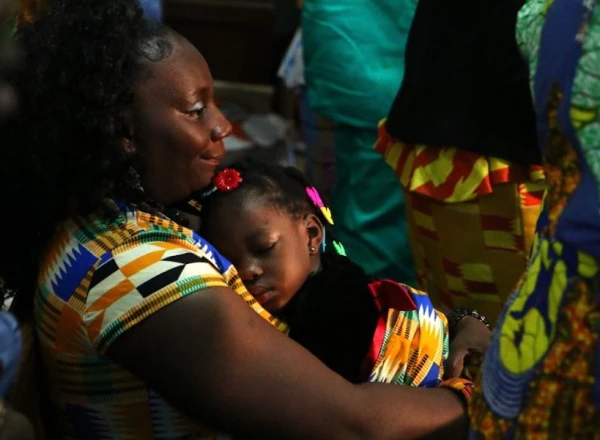
Philadelphia, Pa., Oct 10, 2019 / 03:10 am (CNA).- Hundreds of African Catholics gathered last Sunday for an annual Mass in Philadelphia, blending cultures, languages, and attire from across the African continent.

The sixth annual African Family Heritage Mass was hosted by the Archdiocese of Philadelphia Oct. 6. Mass and a celebratory banquet were held at St. Raymond of Penafort Church in northwest Philadelphia.

Sister Florence Enechukwu, a Missionary Sister of the Holy Rosary, founded the event in 2014. Father Christopher Walsh, the pastor at St. Raymond, was the main celebrant and homilist this year.

Fr. Walsh told CNA that the event gathered people representing 21 African countries.

“This is an opportunity for them to get together to worship…Different communities take different parts of the Mass and many different languages are used,” he said.

The scripture readings at the Mass were proclaimed in Swahili and English; the prayers of the faithful were read by representatives of Malawi, Tanzania, Eritrea, and Democratic Republic of the Congo, Catholic Philly reported.

Prior to the Mass, a Liberian choir sang “Let Us Come to Jesus My Friend.” During Mass, songs were sung by Kenyan, Francophone, and Nigerian Igbo choirs.

While some participants are part of vibrant communities in their hometowns, Walsh said, “there were also people there who drove down from areas further away in Pennsylvania who don’t get to connect. They’re from Africa, but they don’t get a chance to connect with the larger African community.”

The priest noted that cultural practices are often tied closely to the dissemination of faith.

“The Church has always had an appreciation for culture, and in many cases, the African culture in which these folks grew up is the culture that passed on the faith to them,” he said. “Being able to celebrate in their own liturgical style with their own liturgical music, praying to God in their own language, is important.”

The event, which is hosted at a different parish every year, was held at St. Raymond’s this year because of the parish’s refugee ministry. The parish has sponsored 10 African refugees, hailing from Sierra Leone, Democratic Republic of the Congo, and Tanzania.

Walsh told CNA that the parish works with several agencies to support the refugees. The parish is able to provide clothes and pay a portion of their rent for a few months, in addition to helping them find work and obtain documentation and diplomas.

Participants at the Mass came from Togo, Nigeria, Ghana, Benin, Kenya, Sierra Leone, Cameroon, Liberia, Congo, and the Ivory Coast, among other countries. They wore traditional African clothing from their respective countries.

Many attendees wore clothing featuring black and white images of their favorite saint atop their clothing. Emmanuel Okoro, coordinator for the Igbo Catholic Community at St. Cyprian Parish, said the event is joyfully anticipated by the African communities in the area.

“Many of us are wearing a patron saint,” Okoro told Catholic Philly. “I chose to wear the outfit with St. John Paul II. I have a special devotion to him. Many of those here are from throughout the Philadelphia Archdiocese and Camden. You will see that many of us are wearing different saints,” she told the Catholic Philly.

After Mass, a buffet was offered with a variety of traditional African dishes from different regions.

“It is part of the culture to make sure everyone comes together. Many of these groups worship together as a group,” said Samuel Abu, coordinator for the archdiocese’s Refugee Resettlement Program.

“Under Archbishop Charles Chaput we have the opportunity to pray together and gather to serve God,” he told Catholic Philly. “We have apostolates throughout the archdiocese. The African Catholic community is always increasing because now we have first, second and third generations of families. This Mass made it possible to bring them together.”

[…]

No Picture
News Briefs

Holy See to UN: More must be done to end violence against women

October 9, 2019 CNA Daily News 0

New York City, N.Y., Oct 10, 2019 / 12:35 am (CNA).- Violence against women remains a global concern for the Vatican, an official told members of the United Nations this week, stressing that society must “advance and defend all the rights derived from the inalienable human dignity of every woman and girl.”

Archbishop Bernardito Auza, the Holy See’s Permanent Observer to the UN, on Monday sent an address to the UN General Assembly’s third committee that highlighted the “unique and irreplaceable” role of women in the world.

“While significant progress has been made in increasing the participation of women in social, political, economic and cultural life, and in ending violence against women and girls, much remains to be achieved,” Auza said.

He cited a report from the UN Secretary-General and said migrant women in particular, including many female migrant workers, are at risk of labor exploitation, human trafficking, and also face broader social exclusion. He said this remains a deep concern of the Holy See.

“These women deserve to be welcomed, protected, and integrated within our communities with dignity. They also deserve full and equal recognition before the law, including through access to the justice system,” Auza said.

“These women courageously leave their land and communities, often in the most difficult circumstances, to provide for their family and to assure their children of a better future. It is necessary, therefore, to adopt specific measures to protect and assist women migrant workers and to recognize their precious contribution to society.”

Auza also mentioned the “heinous” practice of trafficking of newborn babies, as well as forced surrogacy. He called for “effective legislation and enforcement to prevent trafficking in persons and limit impunity as much as possible.”

“While there have been various advances in formulating adequate legal instruments to investigate, prosecute and punish traffickers, in unlocking the financial chains, understanding the connection to other forms of organized crime and corruption, and fostering cooperation at and across borders, concrete measures and effective sanctions remain often limited,” he said.

September 2020 marks the 25th anniversary of the UN’s Fourth World Conference on Women and the adoption of the Beijing Declaration and Platform for Action, parts of which the Vatican spoke out strongly against, including efforts to expand abortion as a means of population control.

Auza quoted Pope St. John Paul II, who wrote in 1995 to the Secretary-General of the Fourth World Conference on Women.

“There will never be justice, including equality, development and peace, for women or for men, unless there is an unfailing determination to respect, protect, love and serve life— every human life, at every stage and in every situation,” Pope John Paul II wrote.

“The Holy See insists on equality in dignity between men and women and on equal respect at all stages of their lives…This remains an utmost priority and focus of the Holy See,” Auza added.

[…]