No Picture
News Briefs

Mississippi pro-lifers file suit against abortion clinic protest restrictions

October 16, 2019 CNA Daily News 0

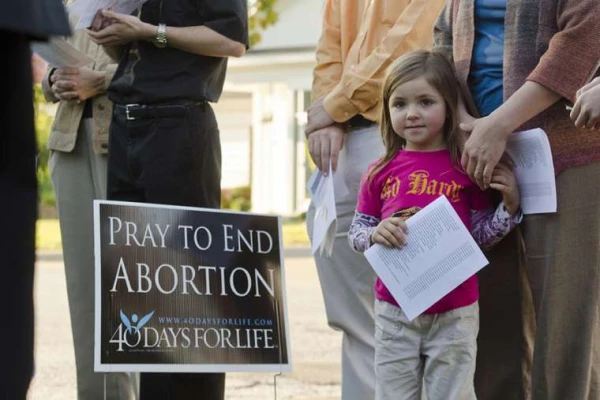
Jackson, Miss., Oct 16, 2019 / 02:41 am (CNA).- Pro-life advocates in Jackson, Mississippi have filed a lawsuit against a new city ordinance that would restrict protesters’ ability to approach people and demonstrate outside abortion clinics.

The appellants, who are volunteers for a national organization called Sidewalk Advocates for Life, often congregate outside the state’s last abortion clinic, the Jackson Women’s Health Organization. That facility performs abortions up to 16 weeks.

Sidewalk Advocates for Life trains volunteers to offer women alternatives to abortion, and says that nearly 7,000 women nationwide have freely chosen not to abort in the past five years thanks to their advocacy. They describe their ministry as “prayerful and peaceful.”

The ordinance prohibits protesters from approaching within eight feet of another person— unless that person consents— for the purpose of handing a leaflet, displaying a sign, engaging in oral protest, or educating or counseling a person within 100 feet of a healthcare facility.

The Jackson City Council adopted the ordinance Oct. 1, and it is scheduled to take effect Oct. 31, the AP reports.

The ordinance also prohibits congregations or demonstrations within 15 feet of a healthcare facility entrance, as well as shouting and amplified sound with 100 feet as long as the area is marked as a “quiet zone.”

The lawsuit, filed by members of Sidewalk Advocates for Life and the Mississippi Justice Institute, notes that pro-life protesters often have to shout in order to be heard above the loud music that the abortion clinic plays in order to drown out the protesters’ speech.

Violators of the new ordinance could face a fine of up to $1,000 or up to 90 days in prison, or both.

The lawsuit argues that the ordinance has a chilling effect on the protesters’ speech, prevents them from engaging in peaceful assemblies, and “irreparably harms persons patronizing the abortion facility by denying them access to useful information regarding the alternatives to abortion.”

The suit also argues that the ordinance is a content-based regulation of speech, since it prohibits certain speakers from participating in certain types of speech while allowing others to engage in the same type of speech.

Brett Kittredge, director of marketing and communications with Mississippi Center for Public Policy, told CNA that the lawsuit could make its way to the Mississippi Supreme Court.

The Mississippi Constitution provides for an even stronger protection of free speech than the 1st Amendment to the U.S. Constitution, he said.

“It says in our constitution that [free speech] is sacred— that it is something we hold with the utmost respect, treasure, and reverence,” Kittredge told CNA.

“And so we feel…that this is a free speech issue above all else. It’s not about whether you support one issue or the other, whether you take one side or another on abortion, it’s a matter of should people have the right to assemble, have the right to speak freely and convince others of their speech, and we believe that’s central to a free society.”

Sidewalk Advocates for Life says in Jackson alone, 30 women this year have turned away from the abortion clinic and sought alternatives in the area.

“The sidewalk counselors aren’t there to yell at anybody, aren’t there to scream at anybody, they’re just there to tell people that don’t know there is another option that you don’t have to do this,” Kittredge said.

“So we are ready to challenge this, and we are obviously looking forward to a positive ruling in favor of our clients.”

The AP notes that a federal appeals court in February 2019 upheld the constitutionality of a 2009 Chicago ordinance that created an 8-foot buffer zone outside medical facilities, while several other cities, such as Philadelphia, have had buffer zone ordinances struck down.

A 2007 Massachusetts “buffer zone” law forbade sidewalk counseling within 35 feet of an abortion clinic, but the Supreme Court in June 2014 unanimously ruled it a violation of the First Amendment. The law imposed “serious burdens” on the counselors, the court wrote, adding that sidewalks have traditionally been a forum for “the exchange of ideas.”

Colorado and Montana both have buffer zone laws in effect. Across the Atlantic, the High Court of England and Wales upheld a buffer zone order around a London abortion clinic in a July 2018 decision, which pro-life advocates are now appealing.

The appellants in the Mississippi lawsuit have requested a hearing date for the parties to appear and present oral arguments.

[…]

No Picture
News Briefs

US Secretary of State discusses international religious freedom threats

October 15, 2019 CNA Daily News 0

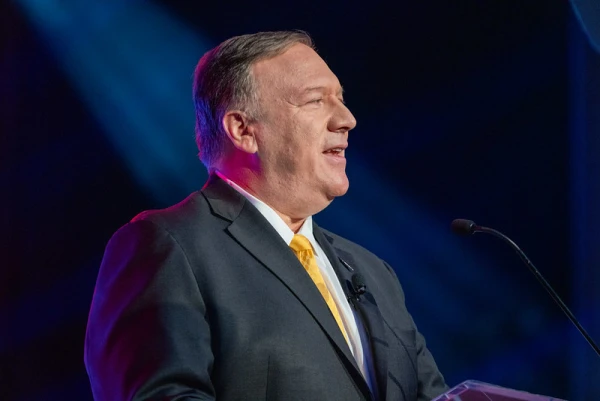
Nashville, Tenn., Oct 15, 2019 / 01:01 pm (CNA).- In a speech on Christian leadership Friday, US Secretary of State Mike Pompeo highlighted international religious freedom threats, especially in China, Iran, and Iraq.

Pompeo spoke Oct. 11 in Nashville to the American Association of Christian Counselors, discussing Christian leadership in disposition, dialogue, and decision making.

“Before you can help others, you need to have the right approach to yourself,” he began in speaking of disposition. “How you carry yourself is the first arena of Christian leadership.”

Pompeo noted he keeps an open Bible on his desk, and tries to read it each morning. “I need my mind renewed with truth each day. And part of that truth … is to be humble.”

He also noted the importance of forgiveness in one’s disposition.

Turning to dialogue, Pompeo emphasized the importance of listening carefully and not rushing to judgement, but especially truth telling.

He noted that as Secretary of State “I’m especially telling the truth about the dire condition of religious freedom around the world. America has a proud history of religious freedom, and we want jealously to guard it here. But around the world, more than 80% of mankind lives in areas where religious freedom is suppressed or denied in its entirety.”

He said the Chinese Communist Party “is detaining and abusing more than one million Uighur Muslims in internment camps in the Xinjiang” and “Christian pastors today are being unlawfully arrested, beaten, detained inside the Islamic Republic of Iran. We need to speak about this.”

“Christian areas in northern Iraq that I’ve had the privilege to visit have been ravaged by ISIS, part of a greater trend of Christian persecution all across the Middle East,” he added.

Pompeo spoke of the State Departments efforts in recent years to emphasize religious freedom, saying, “we’ve hosted ministerials. We bring leaders from all around the world called the Ministerial on Religious Freedom at the State Department. We’ve told the world about these shortfalls and the success of nations when individuals are given their basic human dignity to practice their conscience, their faith, or to choose no faith if they so choose all around the world.”

Finally, the state secretary addressed decision making, focusing on faithful stewardship and intentional use of time.

“Decisions are a question of priorities, often … I am grateful that my call as a Christian to protect human dignity overlaps with America’s centuries-old commitment to the same mission in our foreign policy all across the world.”

Pompeo noted that “international organizations will try, from time to time, to sneak language into their documents claiming that abortion is a human right. And we’ll never accept that. We’ve worked diligently to find every dollar that might be going to that and we have worked tirelessly and successfully now to bring it nearly to an end.”

[…]

No Picture
News Briefs

El Paso bishop encourages Catholics to overcome racism with acts of inclusion

October 15, 2019 CNA Daily News 0

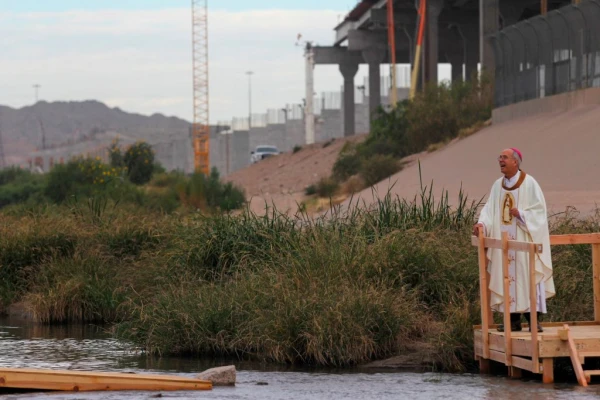
El Paso, Texas, Oct 15, 2019 / 12:19 pm (CNA).- Bishop Mark Seitz of El Paso issued a pastoral letter Sunday reflecting on the area’s history of racism and encouraging Catholics to be a source of justice, after a mass shooting in the city some months ago.

Night Will Be No More was issued Oct. 13 “on the theme of racism and white supremacy to reflect together on the evil that robbed us of 22 lives.”

Bishop Seitz wrote that “God can only be calling our community to greater fidelity. Together we are called to discern the new paths of justice and mercy required of us and to rediscover our reasons for hope.”

An armed man opened fire at a shopping complex in El Paso Aug. 3, killing 22 and injuring more than two dozen. The shooter reportedly published a four-page document online in the hours before the attack, detailing his hatred toward immigrants and Hispanics.

“Hate visited our community and Latino blood was spilled in sacrifice to the false god of white supremacy,” said Bishops Seitz.

“I know God will never allow the hate that visited our community on August 3rd to have the last word. We must recommit ourselves to the hospitality and compassion that characterized our community long before we were attacked, with all the risk and vulnerability which that entails. We must continue to show the rest of the country that love is capable of mending every wound,” he added.

While a lack of gun control and mental healthcare contribute to mass shootings, the bishop said, he noted racism as the prime motivator for the attack in El Paso.

“This mystery of evil also includes the base belief that some of us are more important, deserving and worthy than others. It includes the ugly conviction that this country and its history and opportunities and resources as well as our economic and political life belong more properly to ‘white’ people than to people of color,” he said.

“This is a perverse way of thinking that divides people based on heritage and tone of skin into ‘us’ and ‘them’, ‘worthy’ and ‘unworthy’, paving the way to dehumanization.”

He said that “the history of colonization can discern both the presence of a genuine Christian missionary impulse as well as the deployment of white supremacy and cultural oppression as tools of economic ambition, imperial adventurism and political expansion.”

The bishop asserted that “it was in the encounter between the Spanish colonists and Indigenous communities that fateful identities were co-produced and sinful notions of civilized versus uncivilized and the invention of the savage were born.”

He chronicled the history of racism and discrimination among various groups in the area.

“Older generations of El Pasoans still talk about entrenched attitudes against Latinos and how the system was stacked against them growing up. Latinos were excluded from political life by a closed network dominated by White, wealthy men. Latino children at school didn’t see themselves, not in the faces of their teachers or school leadership, but only custodial and cafeteria staff,” he said.

He called the wall on the US-Mexico border wall “a powerful symbol in the story of race” which “has helped to merge nationalistic vanities with racial projects.”

“It is not just a tool of national security. More than that, the wall is a symbol of exclusion, especially when allied to an overt politics of xenophobia … The wall deepens racially charged perceptions of how we understand the border as well as Mexicans and migrants. It extends racist talk of an ‘invasion’.”

For Bishop Seitz, the border wall “perpetuates the racist myth that the area south of the border is dangerous and foreign and that we are merely passive observers in the growth of narco-violence and the trafficking of human beings and drugs.”

It is the responsibility of Catholics to defend the immigrant, he said. He pointed to the story of Our Lady of Guadalupe, who asked Saint Juan Diego to build a church in her honor. In the image, Our Lady is depicted as a mestiza “who takes what is noble from each culture, elevates it and points out new ways towards reconciliation,” he said.

“Our Lady affirmed Juan Diego against dehumanization. And that affirmation came with a divine charge to make persistent petition before the authorities and build a temple.”

Likewise, he said Catholics must build a “Temple of Justice” through which solidarity, friendship, and charity may take place. He said the evil history of racism may be overcome with encounters of love.

“God offers us the chance to build a new history where racism does not prevail. The ‘manifesto’ of hate and exclusion that entered our community can be countered with a manifesto of radical love and inclusion. I want to see an El Paso that addresses both the legacy of racism and one which builds more just structures to eradicate and overcome that history.”

He said there must be practical steps of inclusion and love, overcoming unjust political measures and the racism of the past. There needs to be a new history of human rights and bridge building, he said.

“It is not enough to not be racist. Our reaction cannot be non-engagement. We must also make a commitment to be anti-racists in active solidarity with the suffering and excluded,” he said.

“We must take active steps to defend the human rights of everyone in our border community and their dignity against dehumanization as we work to forge a new humanity. What racism has divided, with the help of God, we can work to restore.”

To combat racism, he said, measures need to be taken to ensure equal educational opportunities, universal health care, immigration reform, improved wages, and environmental protections. He also emphasized the role of priests and the importance of the sacraments, which communicate anti-racist themes.

“In [baptism] we celebrate the radical transformation and equality that comes from renewal in Christ. In the anointing with holy oils we proclaim a reverence for human life without distinction. The strength of these symbols should flow into our daily parish life and work for justice,” he said.

“Likewise, in our celebration of Mass, pastors can lead our people to a deeper consciousness of the weight of communal and historical sin that we bring to the table of the Lord in the penitential rite. We should ask ourselves carefully who is yet not present, and whose cultures are not yet reflected at the banquet of the Lord that we celebrate at the altar,” he asserted.

He also encouraged President Trump, members of Congress, and the jurists of the highest U.S. courts, “in the absence of immigration reform … to listen to the voice of conscience and halt the deportation of all those who are not a danger to our communities, to stop the separation of families, and to end once and for all the turning back of refugees and death at the border.”

[…]

No Picture
News Briefs

New York will get statue of Mother Cabrini

October 15, 2019 CNA Daily News 0

New York City, N.Y., Oct 15, 2019 / 10:30 am (CNA).- New York Governor Andrew Cuomo has announced the state will erect a statue of St. Frances Xavier Cabrini.

The announcement comes two months after a New York City public arts program decided they would not build a statue of Mother Cabrini, despite the saint topping a poll organized by the program. 

During a public nominations period for the She Built NYC program, Mother Cabrini received 219 nominations–more than double the number received by Jane Jacobs, who received the second-most nominations.

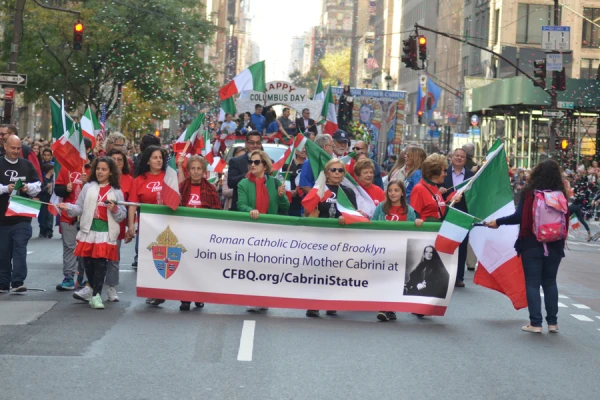
In an announcement at the annual Columbus Day Parade in New York on Oct. 14, Cuomo said 

“We’re also pleased to announce we’re going to build a statue to Mother Cabrini.”

The move was immediately welcomed by the Diocese of Brooklyn.

“I welcome the assistance the Governor is promising in erecting a statue for Mother Cabrini, which we hope is a monument to her for her work on behalf of immigrants,” said Bishop Nicholas DiMarzio of Brooklyn on Monday. 

Cabrini was the founder of the Institute of the Missionary Sisters of the Sacred Heart of Jesus, and opened and operated many schools and orphanages in New York City. She was canonized in 1946, the first naturalized American citizen to be declared a saint, and she is venerated as the patron of immigrants.

The Diocese of Brooklyn participated in the annual Columbus Day parade on Monday, marching with a float and banner in honor of the saint and calling for the erection of a statute in her honor.

“Almost all of our churches in Brooklyn have a statue of Mother Cabrini. It’s not another statue we’re talking about. It’s respect for immigrants,” DiMarzio said.

“We will work with Governor Cuomo’s office to make it happen.”

The state commission will work alongside the Diocese of Brooklyn and the Italian-American heritage organization the Columbus Citizens Foundation to construct the statue. Cabrini was an Italian immigrant who arrived in New York in the late 19th century. 

The She Built NYC program was created to increase the number of statues of women throughout the city. In mid-August, the program’s selection committee, led by Chirlane McCray, married to New York City Mayor Bill de Blasio, and former deputy mayor Alicia Glen, announced that statues were to be built of Rep. Shirley Chisolm, Katherine Walker, Marsha P. Johnson, Sylvia Rivera, Elizabeth Jennings Graham, Billie Holiday, and Dr. Helen Rodriguez-Trias. They received the third, fifth, seventh, 19th, 22nd, 24th and 42nd-most nominations, respectively. 

Johnson and Rivera, who are both biological men who identified as “drag queens,” will appear on a statue together. 

In August, a spokesperson for Ms. McCray told CNA that the public nominations process was not intended to determine which women would be honored, but only to inform the judgment of the selection committee.

“Nominations made by the public were the foundation of this entire process – only those submitted were considered by the advisory committee and the City,” Siobhan Dingwall, press secretary for the Office of the First Lady in New York City, told CNA in a statement. 

In addition to the public nominations, She Built NYC also considered other factors, such as proposed locations, existing monuments, and site availability when deciding who and where to erect new statues.

[…]