No Picture
News Briefs

Survey says: Most Catholics in US reject Church teaching on cohabitation

November 6, 2019 CNA Daily News 12

Washington D.C., Nov 6, 2019 / 06:18 pm (CNA).- Nearly three quarters of Catholics in the United States are not opposed to couples cohabiting before marriage, despite the Church’s moral teaching.

A new survey by the Pew Research Center, released Nov. 6, reports that Americans as a whole are very accepting of unmarried couples living together, even if they have no plans to marry. Additionally, Pew found that a shrinking percentage of adults are getting married, and an increasing number of adults have decided to cohabit.

Only 14% of adults surveyed said they did not believe that it was ever acceptable for two unmarried adults in a romantic relationship to live together. An additional 16% said that they agreed with cohabitation only if there were plans for the couple to one day get married.

Of the people surveyed, 69% said they believed it was acceptable for an unmarried couple to live together, without any plans to eventually wed.

In 2002, the National Survey of Family Growth found that while 54% of adults between the ages of 18 and 44 had ever cohabited with a romantic partner, 60% had ever been married. By 2017, the number of adults who had ever been married dropped to 50%, while the number of adults who had cohabitated rose to 54%.

Pew found that race and religion played a role in whether or not a person was approving of the ideal of cohabitation. A total of 72% of white respondents said that cohabitation without a plan to get married was acceptable, with an additional 13% saying they approved of cohabitation without a plan to get married. Of black survey respondents, 23%, the largest of any ethnic group, said that they did not thing cohabitation was ever acceptable. Only 55% of black respondents said they approved of cohabitation without planning on getting married.

For Hispanics, only 10% of respondents said it was never acceptable to cohabitate. Slightly over one-fifth of Hispanic respondents – 21% – said they found cohabitation acceptable as long as there were wedding bells in the future.

Religion was a factor as well. Catholics and white mainline Protestants had nearly identical rates of approval of cohabitation–the survey found that 74% of Catholics and 76% of white Protestants who do not claim to be born-again or evangelical were okay with an unmarried couple cohabitating. Conversely, this figure dropped to 47% for blacked Protestants and 35% for white evangelical Protestants.

A full 90% of religiously unaffiliated people approved of cohabitation, and fewer than a third of this group said they believed society would be better off if more couples who cohabited got married.

White evangelical Christians were more likely than any other group to say that they believed increased marriage rates were better for society.

The survey also showed that married adults are more satisfied with their relationship than are those who cohabit, and they are more trustful of their partners.

The data for this survey came from the American Trends Panel, which was taken June 25- July 8. A total of 9,834 people were surveyed. Pew said the margin of error was about 1.5 points.

During the Fall 2013 USCCB General Assembly, Cardinal Sean O’Malley spoke to CNA about the reasons why couples are increasingly turning to cohabit. O’Malley cited financial instability–particularly student loans–as well as cultural norms as for why this was the case.

“Concerns about marriage – people not getting married, falloff in Mass attendance, (and the) challenge of catechizing the young Catholics” are some of the more troubling trends facing Catholicism in the U.S., the Archbishop of Boston said to CNA Nov. 11, during the general assembly of the national bishops’ conference in Baltimore.

The cardinal noted that “the whole notion of family is so undercut by the cohabitation mentality,” and that these social trends are having a tremendous impact on the working-class communities “who were once the backbone of the Church.”

“Half of the children born to that demographic are born out of wedlock,” a statistic that Cardinal O’Malley said would have been “inconceivable” a few decades ago.
[…]

No Picture
News Briefs

Gallup diocese drops Zoom video conferencing app over abortion support

November 6, 2019 CNA Daily News 10

Gallup, N.M., Nov 6, 2019 / 04:01 pm (CNA).- The Diocese of Gallup has chosen to stop using Zoom Video Communications for its internet meetings, citing the company’s support of abortion rights.

Eric Yuan, the founder and CEO of Zoom, was among the 187 executives who signed a letter that appeared a full-page ad in the New York Times June 10 criticizing regulations on abortion passed by state legislatures.

“Due to the company’s vocal support for abortion, the Diocese of Gallup has ceased all business with Zoom and will instead be seeking the use of an alternative platform for online meetings and presentations,” read a letter sent to the diocese’s schools and parishes.

The diocese’s education office had been utilizing Zoom for several years.

While acknowledging that “our monthly transactions with Zoom were not large,” the diocese said that “large or small, we cannot contribute to a company with anti-life policies.”

“It is distressing that the CEOs who paid for the ad call abortion restrictions ‘bad for business’, as if the life of a human being can be measured solely in monetary and economic value. We wholeheartedly reject this view.”

The Gallup diocese stated: “Each human, made in the image and likeness of God, is inherently worthy and has a right to life, from conception to natural death. We do not want to lose even a single future child, future student, future mother, father, sister or brother to abortion.”

“In providing the highest-quality Catholic education to our students, we must also strive to follow Christ and the teachings of his Church. We cannot truly be Christlike if we cooperate with evil or provide monetary support – even in the smallest amount – to other companies and institutions who promote and foster abortion, euthanasia, or other anti-life actions,” the diocese added.

The diocese has indicated that several Catholic companies and groups also use Zoom for video conferencing, and hopes that its decision may raise awareness of the company’s stance on abortion.

[…]

No Picture
News Briefs

‘You belong to Jesus’ – The unlikely friendship of an abortionist and a pro-life Catholic

November 6, 2019 CNA Daily News 2

Fort Wayne, Ind., Nov 6, 2019 / 02:31 pm (CNA).- The unlikely friendship between a controversial abortion doctor and a local Catholic shows the impact of encounter and friendship in spreading the Gospel, reflected a priest after the abortionist’s death.

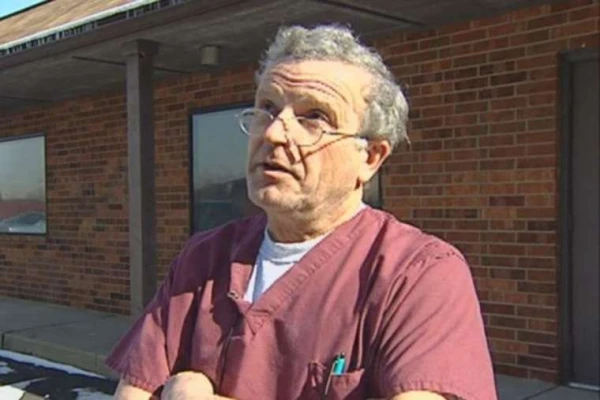
On Sept. 16, police launched an investigation after more than 2,000 remains of aborted children were found at the former home of abortion doctor Ulrich “George” Klopfer in Will County, Illinois.

Klopfer, 75, had died about a week before the fetal remains were discovered on his property. He had spent four decades performing abortions at clinics in Indiana and Illinois.

For years, Klopfer’s abortion practice had been criticized for a lack of safeguards. His license was suspended in 2016 because he failed to exercise reasonable care and violated documentation requirements, according to local reports.

In a homily on Sept. 15, Father Dan Scheidt of St. Vincent de Paul Catholic Parish in Fort Wayne said that one of the parishioners from the church had befriended Klopfer while he was alive. The parishioner, who was not named in the homily, would routinely pray outside one of the clinics where Klopfer worked, and the two eventually got to know one another.

“Even after his [medical] license was taken away from the state, George Klopfer kept returning to his closed clinic so that he could get out of his car and sit in the passenger seat of the Saint Vincent’s parishioner’s car and talk to his friend. Every single Thursday, George Klopfer drove from Chicago to be with his friend.”

Through the parishioner, Scheidt said he was also introduced to Klopfer.

“Twice I sat next to that man, who is responsible for the ending of over 30,000 human lives,” said Scheidt. “It became clear in our conversation that we were his only friends. It’s what prompted him to drive the distance and want to meet with the priest.”

Scheidt said he learned a great deal about Klopfer and the sufferings of his life. Klopfer was born in World War II Germany and witnessed “the neglect of human beings for each other,” he said. In one story, the abortion doctor recalled Russian soldiers machine-gunning small animals for their own cruel amusement.

Before Klopfer passed away, the priest said, the Catholic parishioner believed he saw the abortion doctor undergo a change of heart. At the time of their last meeting, the parishioner had challenged Klopfer, saying, “George, it’s not too late. You are like the thief on the cross next to Jesus. You belong to Jesus, George, accept that, even in the last hour, accept that.”

“The parishioner, who so many times left the Thursday meeting with frustration at the progress, he left that meeting believing that he’d actually reached George’s heart,” Scheidt said, emphasizing that God alone knows the condition of Klopfer’s soul at the moment of his death.

Scheidt encouraged members of his congregation to imitate the actions of the parishioner, seeing everyone as more than the sum of their sins, but as a child of God.

“My brothers and sisters, we must go in search of the divine image in every person. I saw in George Klopfer not simply one who slaughtered, but a lost sheep…Somebody who needed to know his sonship,” the priest said.

He encouraged parishioners to consider anyone they may have dismissed because of that person’s sin. He asked them to call on Christ for help in inviting those people into an encounter of love.

“God possesses the ability to transform and to heal human life,” he said. “This is our story and Jesus has given us everything, everything, for us to be part of the happy ending.”

[…]

No Picture
News Briefs

Construction on Blessed Stanley Rother Shrine begins in OKC

November 6, 2019 CNA Daily News 0

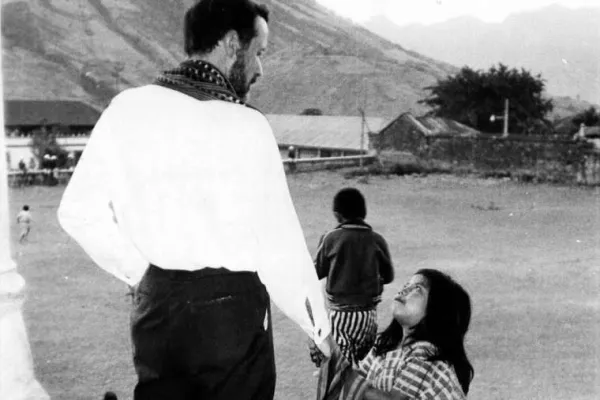
Oklahoma City, Okla., Nov 6, 2019 / 01:55 pm (CNA).- Archbishop Paul Coakley of Oklahoma City broke ground Sunday on what will be the largest Catholic church in the state— the Blessed Stanley Rother Shrine, meant to honor a late Oklahoma priest on the path to sainthood.

“What we are about to construct here we are building for the honor and glory of God whose goodness, whose holiness, whose faithfulness, whose mercy is shown through the life of Father Stanley Rother,” Archbishop Coakley said during his Nov. 3 homily.

Rother was born in 1935 in Okarche, Oklahoma, about 40 miles northwest of Oklahoma City. He graduated from Mount St. Mary’s Seminary in Maryland and was ordained a priest of the Diocese of Oklahoma City and Tulsa in 1963.

Five years after his ordination, Fr. Rother accepted an invitation to join the mission team at Santiago Atitlan, Guatemala, a poor rural community of mostly indigenous people.

Rother served the people of the parish during the Guatemalan civil war. He briefly returned to his home state of Oklahoma after a death threat, then returned knowing the dangers.

Rother was martyred in his rectory in the early morning hours of July 28, 1981 by men involved in the civil war who were attempting to kidnap him at gunpoint.

Coakley on Sunday blessed the cornerstone of the planned Spanish-style colonial shrine, the ground where the future main altar will be located, as well as the area where Blessed Rother will be entombed.

Most of Rother’s body is buried in Okarche, but his heart remained in Guatemala and became a relic upon his beatification.

Funds for the $40 million shrine come in large part from the archdiocese’s first ever capital campaign. The site will include a 2,000-seat church, a chapel where Rother’s body will be entombed, an education building, an event space and several areas designated for shrines and devotion, according to the archdiocese.

Also in attendance at the ceremony were Oklahoma City Mayor David Holt, Archbishop Emeritus Eusebius Beltran, Tulsa Bishop David Konderla and Little Rock Bishop Anthony Taylor, along with nearly 2,000 priests, deacons and laypeople.

The shrine will host many large diocesan events and will help accommodate the growing Hispanic population whose parishes are significantly overcrowded, the archdiocese says.

The Oklahoma City archdiocese opened Rother’s cause for canonization in 2007, and Pope Francis recognized Rother as a martyr in 2016. His Rite of Beatification took place Sept. 23, 2017, in downtown Oklahoma City with more than 20,000 people in attendance.

Rother is the first martyr from the United States and the first U.S.-born priest to be beatified, the archdiocese says.

Rother was, according to those who knew him, a quiet man who struggled with academics at times. He was well-suited for missionary life and was much-beloved by the Tz’utujil indigenous people he served, who called him “Padre Apla’s.”

The fruits of Rother’s service in Guatemala are still apparent, Coakley and others have told CNA.

Rother helped to translate the Bible into the native language, organizing a team to translate the New Testament so they could read it at Mass. That translation is still used to this day.

He also helped to build schools, hospitals, wells, and a Catholic radio station.

“The Catholic community in Santiago Atitlan is incredibly vibrant and active. I’ve never seen as many altar servers as they have at each Sunday Mass in Santiago – it’s incredible,” said Father Josh Mayer, a priest of the Diocese of Gallup who visited Rother’s mission in Guatemala for his feast day last summer.

“The Eucharistic Ministers and lectors and catechists and other ministry groups are all incredibly well organized and everyone takes their roles very seriously. The people are very proud of what they do for Jesus and His Church. Every time I visit the parish of Santiago Apostol [St. James the Apostle], I’m inspired with a vision of what we could do at our parishes back home.”

[…]

No Picture
News Briefs

Rubio reviews Kanye’s new album, and talks about dignity of work

November 6, 2019 CNA Daily News 1

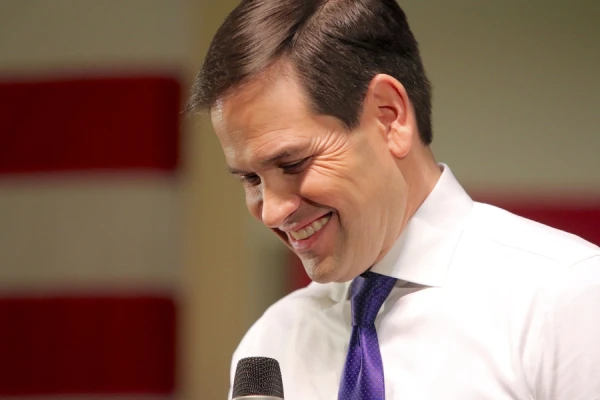
Washington D.C., Nov 6, 2019 / 04:00 am (CNA).- U.S. senator and noted hip-hop enthusiast Marco Rubio shared his thoughts on rapper Kanye West’s new gospel album in a recent interview with CNA.

“I don’t know if I like it or dislike it,” Sen. Marco Rubio (R-Fla.) told CNA of the track “Selah” on West’s highly-anticipated album “Jesus is King.” Rubio said the track was the only one he had listened to on the album as of Monday.

The Florida senator has often spoken publicly about his fondness for rap, previously professing a preference for the West Coast rappers of the 1990s in their musical feud with New York East Coast artists. In a 2012 interview, Rubio described Eminem as “the only guy that speaks at any sort of depth” in the genre. 

“He’s a guy that does music that talks about the struggles of addiction and before that violence, with growing up in a broken family, not being a good enough father,” Rubio said of Eminem in 2012, while noting it was harder to find time to play rap music with a growing family of children around.

Returning to West’s new offering, Rubio told CNA that “he’s an interesting artist, and obviously someone who is going through a lot positively, and potentially, I don’t know, negatively as well,” Rubio said of West. “I don’t mean to be judgmental, he’s doing it in the public eye,” he said, “and it’s not the first time that he has religious themes in his music.” 

West’s track “Jesus Walks” was featured on his 2004 album “College Dropout.”

“His faith is clearly something that calls to him, and obviously it’s a road he’s been on for a while and it’s interesting to see it cross over into his music,” Rubio said. “What’s most interesting, however, is to see the critical reaction to it.”

Rubio discussed the album with CNA, along with his vision for “common good economics” Nov. 4, ahead of a major speech on the same theme at the Catholic University of America on Tuesday morning. 

The senator addressed students at Catholic University’s Busch School of Business on “common good capitalism” and the dignity of work, during a Vocation of Business Class taught by Professor Andreas Widmer.

Rubio said that profit making has been prioritized over the dignity of workers, with the result of many Americans being “left behind” in an economy that, overall, has grown in recent decades. He cited Pope Francis’ warning that “finance overwhelms the real economy” when profit is prioritized above all else.

The political right, he said, upholds the rights of companies and shareholders to profits, but ignores the rights of workers. The political left, meanwhile, promotes “free everything” but will “rarely focus on our obligation to work.”

“When an economy stops providing dignified work for millions of people,” he said, parents no longer have time for their children and resources to volunteer and contribute to their communities.

Furthermore, when men in particular do not have dignified work to provide for their families, he said, “the impact is corrosive and devastating.” He pointed to evidence in declines in rates of marriage, childbirth, and life expectancy, and corresponding increases in drug abuse, drug overdose and suicide.

Yet as a solution, “socialism would be far worse” than the current challenges of working families in the U.S., Rubio said.

Instead, he said, Catholics should look to “restore ‘common good capitalism’” where people have dignified work and businesses can make a profit, while reinvesting in the company.

Professor Andrew Abela, founding dean of the Busch School, agreed with the importance of Rubio drawing attention to those “left behind” in today’s economy. While the Busch School emphasizes “entrepreneurial capitalism” that exists “to serve others,” today’s “crony capitalism” promotes greed, selfishness, and a utilitarian view of workers, he said.

“The moment it’s cheaper to move to China, you’re gone,” he said of the view of workers by corporations under “crony capitalism.”

Rubio pitched specific policies as an antidote to today’s economy, including preferences in the tax code for job creation, families with children, and higher wages for workers rather than company stock buybacks.

Rubio also said the U.S. should look to invest in whole industries such as aerospace, telecommunications, transportation and housing, “to retrofit past engines of productivity” for the new economy, and also revamp the Small Business Administration.

The proposal to reenergize the Small Business Administration was “music to my ears,” Widmer told CNA, as his class seeks to form principled entrepreneurs who will create dignified jobs.

“We’re not the business school you go to, to become the next president of GE,” he said. “Here you come to run your family business.”

Immigrant Catholics have had a storied tradition of running small businesses in the U.S., he said. “The Catholics aren’t the Bill Gateses of the world. The Catholics are the dry cleaners and the lawn care companies and all of that kind of stuff,” he said.

“We have a finance department and all of that, but the majority of our students are people who will go back and run Main Street, not Wall Street and not Silicon Valley,” he said.

[…]

No Picture
News Briefs

Despite the hype, non-monogamy is far from common, researcher says

November 6, 2019 CNA Daily News 2

Washington D.C., Nov 6, 2019 / 02:50 am (CNA).- On October 24, CBS published a 20-minute documentary following the lives of several different groups of people in polyamorous relationships, also called consensual non-monogamous relationships. In such relationships, three or more people in a group are sexually and emotionally involved with the other members of the group.

On the same day, ABC’s Nightline aired a segment on actor Nico Tortorella, whose open marriage with Bethany Meyers is documented in Tortorella’s new book, Space Between: Explorations of Love, Sex, and Fluidity.

The week prior, Congresswoman Katie Hill was reported to have been in a “throuple,” or a threesome relationship, with her estranged husband and a female staffer. She has subsequently announced her resignation from Congress.

To read the news, it would seem that consensual non-monogamy (CNM) is prolific. An oft-cited statistic in stories about CNM claims that one in five Americans has participated in such a relationship at some point in their lives.

“There is nothing with which modern relationship journalism seems so peculiarly infatuated as non-monogamy. Call it ‘polyamory,’ ‘swinging,’ or ‘consensual non-monogamy’ —if reporting is to be believed, it’s everywhere,” Charles Fain Lehman, a staff writer for Washington Free Beacon, wrote in a recent analysis for the Institute of Family Studies.

But really, Lehman argues, polyamory is not everywhere. Or it is at least not as common as most media coverage, and the ubiquitous “one in five” statistic, would make it seem.

“Where does that number come from? Essentially all of the articles point to the same source, a 2016 study in the Journal of Sex & Marital Therapy by a group of researchers at the Kinsey Institute. The abstract of the study does indeed confirm that ‘more than one in five (21.9% in Study 1; 21.2% in Study 2) participants report engaging in CNM at some point in their lifetime,’” Lehman said.

However, a closer look at the study reveals that the two surveys on which it is based rely only on information from single people – in the first study aged 21 and older, in the second study aged 18 and older. The first study surveyed people who were legally unmarried at the time, while the second study surveyed people who were either single or just casually dating.

Lehman said this means the conclusions of the survey can only apply to the single population and not to married people, even though all married people were at one time single.

“But, as decades of research have shown, married people vary systematically from their single peers. Among other factors, they are whiter, wealthier, and more religious,” Lehman noted.

“It is entirely plausible that a sample of entirely single people overrepresents a preference for polyamory—indeed, that they have not selected out of singlehood and into stable monogamy is one such indicator.”

Moreover, Lehman said he is not sure that the “one in five” statistic can even be accurately claimed for the single population, because of the phrasing of one of the questions in the survey and what may be a difference of definition.

“According to the study, ‘(a)ll participants were asked if they had ever had an open sexual relationship.’ What’s an open sexual relationship? ‘An agreed-upon, sexually non-exclusive relationship,’” Lehman noted.

“This language could, of course, describe ‘swinging’ or ‘opening up.’ But it could also quite plausibly describe casual dating, in which singles knowingly date, and sleep with, multiple people at once,” Lehman said.

“Such relationships are perhaps, strictly speaking, a-traditional, but they do not meet most people’s intuitive definitions of ‘polyamory,’ or even ‘open relationships’ (which connotes a degree of romantic, but not sexual, commitment—a nuance uncaptured by the question),” he added.

Even some CNM relationships would not fit this definition, if they are sexually exclusive relationships between three or more people, but are not open to others outside of the set group, Lehman wrote.

“There’s at least one other reason to be suspicious of Haupert et al.’s finding,” Lehman added.  “Their methodology notes that they deliberately oversampled ‘homosexual men and women.’ In fact, 15.3% of study 1 and 14.3% of study 2 respondents self-identified as LGB (lesbian, gay, or bisexual). That’s substantially higher than the population-wide prevalence of LGB people, which is generally pinned at 3 to 5%.”

“Previous research cited by the paper has shown, and Haupert et al. confirm, that identifying as lesbian, gay, or bisexual is associated with a significantly higher likelihood of reporting engaging in consensual non-monogamy,” he said.

“In other words, the study substantially oversampled the very subpopulation they then find is far more likely to engage in CNM.”

Lehman said it is not explained in the study whether the researchers adjusted for this bias in the results, though he said it seems unlikely. But the frequently-cited statistic that at least 20% of all Americans have dabbled in CNM seems to be a product of sample selection instead of reality, he noted.

“As always, the reality is probably more boring. Some single people engage in non-exclusive relationships; a smaller, unmeasured share probably engage in more formal ‘polyamorous’ or ‘consensually non-monogamous’ relationships, and that share has probably risen slightly,” he wrote.

In fact, he noted, the 2018 “i-Fidelity” survey by YouGov for The Wheatley Institution at BYU found that roughly 12% of Americans had ever engaged in an “open sexual relationship,” defined as “an agreed-upon, sexually non-exclusive relationship with more than one partner.”

Millennials were more likely to have engaged in such relationships, but still at a rate of less than 20%, he added.

“Polyamory may sound fun and exotic, but most of us don’t live such fun and exotic (and complicated) lives. By their 30s, most Americans (80%) are either married or single, with little evidence that ‘alternative’ structures are filling the gap for a significant share of adults. As Dr. Alan Hawkins recently put it, ‘the norm of marital monogamy is not crumbling’ after all.”


[…]

No Picture
News Briefs

Catholic Relief Services dismayed over US intent to leave Paris Climate Accord

November 5, 2019 CNA Daily News 19

Baltimore, Md., Nov 6, 2019 / 12:03 am (CNA).- Catholic Relief Services, the official charitable arm of the U.S. bishops, is expressing strong opposition to the Trump administration’s decision to withdraw from the 2015 Paris Climate Accord.

“With the planet warming at an alarming rate and the poorest of the poor left to withstand the consequences, there will undoubtedly be more global instability, forced migration and conflict,” said Bill O’Keefe, CRS’ executive vice president of Mission, Mobilization and Advocacy.

“It is not too late to take meaningful steps to care for creation and mitigate some of the worst impacts of climate change, which is why we hope our government reconsiders this misguided decision.”

On Monday, the United States gave its formal notification of its intent to exit the Paris Climate Accord.

The Dec. 2015 agreement, which 188 nations signed following the United Nations Climate Change Conference, came into force during Nov. 2016.

The coalition of nations agreed to attempt to limit the rise of global temperatures to 1.5 degrees Celsius above pre-industrial levels by the end of the century.

Pope Francis hailed the agreement as “historic” and said that it would require “a concerted and generous commitment” from members of the international community. Since then, officials of the Holy See have reiterated its view that climate change is a moral issue and has an effect on human dignity.

At a UN climate change summit in Poland in Dec. 2018, Vatican Secretary of State Cardinal Pietro Parolin urged the implementation of the Paris Climate Accord by “easing the impact of climate change through responsible mitigation and adaptation measures.”

“The scientific data at our disposal clearly show the urgent need for swift action, within a context of ethics, equity and social justice,” Parolin said.

Some 60 dioceses in the United States have so far pledged to continue to support action to mitigate climate change, along with close to 200 religious communities, more than 100 parishes, and other Catholic groups in an agreement affirming the goals of the Paris Climate Accord.

President Donald Trump had announced his intention to withdraw the United States from the agreement after he took office in 2017, citing economic downsides to the plan’s implementation.

The United States is the world’s second largest emitter of greenhouse gases, after China. Trump has previously said that the agreement put “no meaningful obligations on the world’s leading polluters” like China.

Secretary of State Mike Pompeo issued a formal notification to the United Nations of its intention to withdraw on the first possible day to do so, the BBC reports. UN rules meant it was not possible for the U.S. to start the withdrawal process until Nov. 4, 2019.

The withdrawal will take effect on Nov. 4, 2020, one day after the 2020 presidential election.

According to the BBC, the Paris Climate Accord included efforts to limit the amount of greenhouse gases emitted by human activity to the same levels that trees, soil and oceans can absorb naturally, beginning at some point between 2050 and 2100, as well as a review of each country’s contribution to cutting emissions every five years.

Pompeo said the U.S. would instead follow “a realistic and pragmatic model,” using “all energy sources and technologies cleanly and efficiently.”

CRS said in a Nov. 4 statement that the Paris Climate Accord signifies international recognition that climate change is especially threatening “the most vulnerable who contributed the least to it,” and asserted that the agreement would “secure the cooperation, action and resources needed to address the problem.”

The agency also quoted Pope Francis’ 2015 encyclical Laudato Si on the environment: “Faced with a climate emergency, we must take action accordingly, in order to avoid perpetrating a brutal act of injustice towards the poor and future generations.”

CRS noted that in Bangladesh, rising sea levels are encroaching on water tables and coastal homes. In Central America, CRS said in 2017, coffee farmers are losing their crops due to more frequent drought and because warmer temperatures help pests thrive.

According to data from the National Oceanic and Atmospheric Administration (NOAA), the years 2015, 2016, 2017, and 2018 are the four warmest years in recorded history, with 2019 projected to be in the top three.

The next UN climate summit will begin in Madrid in December.

[…]