No Picture
News Briefs

EWTN anchor’s Christmas album climbs the charts

November 16, 2023 Catholic News Agency 1
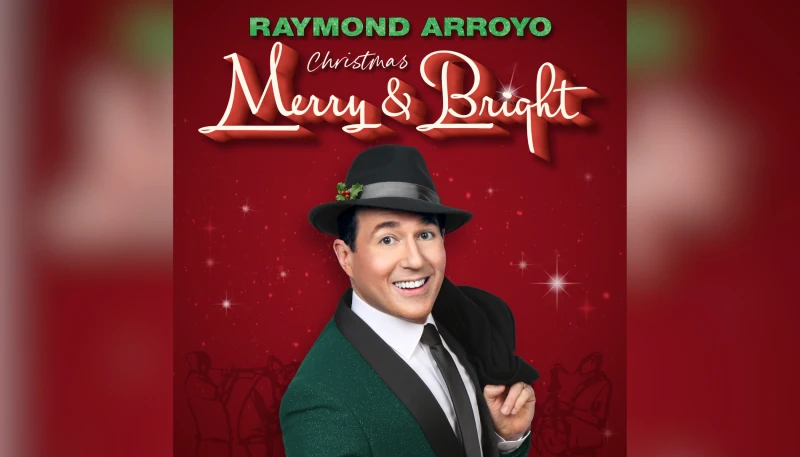
The cover of Raymond Arroyo’s album “Christmas Merry & Bright.” / Credit: Sophia Music Group

CNA Staff, Nov 16, 2023 / 12:40 pm (CNA).

Combining warm vocals and the classic sound of a New Orleans jazz band, Raymond Arroyo’s album “Christmas Merry & Bright” offers a fresh spin on treasured Christmas melodies. The recently released album currently stands among the top 5 on Billboard’s seasonal and jazz charts, top 10 overall on Amazon’s music chart, and top 25 on Barnes & Noble’s bestselling chart for all genres. 

Arroyo, host of EWTN’s “The World Over,” called the process of making the album “an explosion and a journey of joy” in an interview with CNA and credited his audience for the inspiration behind his album. 

Over the years, Arroyo has performed with the likes of Johnny Mathis and Aaron Neville, among others, on several Christmas specials, which led many to ask him about making his own Christmas album.

When he was first approached by a record producer to consider recording an album, he said his initial thought was no. However, after praying about it, he thought about how he could make it original.  

“I dug into the origin stories of so many of these Christmas carols and songs we take for granted and discovered these incredible backstories and approaches to the songs that I had never heard before or considered before,” he explained. 

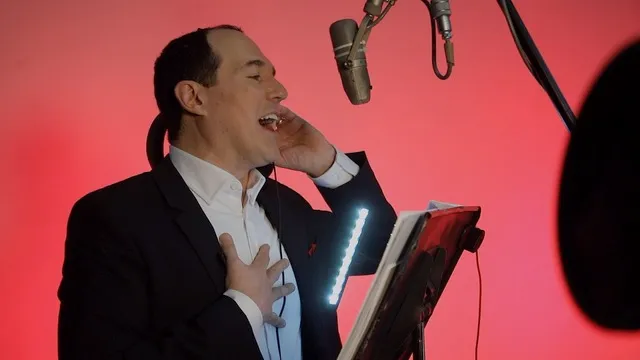
Raymond Arroyo recording his new album "Christmas Merry & Bright." Credit: Sophia Music Group
Raymond Arroyo recording his new album “Christmas Merry & Bright.” Credit: Sophia Music Group

Together with Kevin Kaska — composer and arranger for hit shows such as “The Greatest Showman” and Disney’s “The Jungle Book” and “The Lion King,” among others — the album showcases the big band jazz sound from Arroyo’s native New Orleans in the rendition of Christmas classics such as “Hark the Herald Angels Sing,” “Deck the Halls,” and “Feliz Navidad” with José Feliciano. 

Arroyo shared that this is the first time Feliciano agreed to do a new rendition of his beloved Christmas song. When he first wrote it in 1970, Feliciano was “under duress” due to his producer pressuring him to come up with something original, Arroyo explained.

“So, he wrote ‘Feliz Navidad’ in literally 10 minutes. But in his mind, he was thinking of celebrating Christmas by sitting with his brothers on the shores of Puerto Rico, beating on tin cans and boxes, whatever they could find, and singing Spanish carols.”

Inspired to go back to the original context of the song, Arroyo proposed a bossa nova feel to the song and that it be sung “like two brothers on a beach.” Feliciano agreed. 

Arroyo shared that many of his fans are surprised to learn that he has a musical background. He attended a performing arts school in New Orleans, studied acting at NYU’s Tisch School of the Arts, and took part in several musicals. 

“Growing up in New Orleans you can’t help but be influenced and surrounded by music,” he said. “It’s a part of your life. … So, there was a rich jazz world that swirled around me my entire life.” 

Before returning to the recording studio, Arroyo saw a vocal coach every week, ran his scales, and is now preparing for a tour that will include stops in Phoenix; Dallas; Tampa, Florida; Cleveland; and Nashville, Tennessee.

Arroyo said he was “humbled and aghast” when he saw his Christmas album climbing to the top of the charts. 

“When you see an album like this that really was a labor of love, and anytime you sing, it’s such a vulnerable art,” he added. “You’re putting your heart out for public consumption because it’s not like speech or book, there’s something removed there. It’s your voice; it’s your breath; it’s your mind behind it all. So there’s something very personal about it.”

Arroyo said that during this difficult time in the world, the album is a “gift” for his audience and a reminder to “focus on joy and the ultimate joy, which is the coming of the Christ Child.”

“It’s a touchstone of joy in the midst of chaos and gloom and darkness that light still shines in Bethlehem. And that really is the through-line to all these songs … the light still dawns in Bethlehem.”

He pointed out that Christmas music “is the only genre of music that your great, great, great, grandparents sang, you are singing, and your children’s children will be singing in the future.”

“There’s no other genre of music that has that power. None,” Arroyo said. “And I think it’s because it touches Jesus. That’s my take. It’s wrapped up in the Incarnation and in God, which is why it’s the only eternal music.” 

As for future projects, Arroyo said he hopes to make another album but will “wait on the inspiration.”

“Mother Angelica used to say, ‘When God inspires you to do something, don’t question it. Run at it.’ And I’ve done that my whole life. Really since she told me that, because I watched her do that.”

A segment about “Christmas Merry & Bright” was recently featured on EWTN’s “The World Over”:

[…]

No Picture
News Briefs

U.S. bishops approve voting guide that calls abortion ‘pre-eminent priority’

November 15, 2023 Catholic News Agency 3
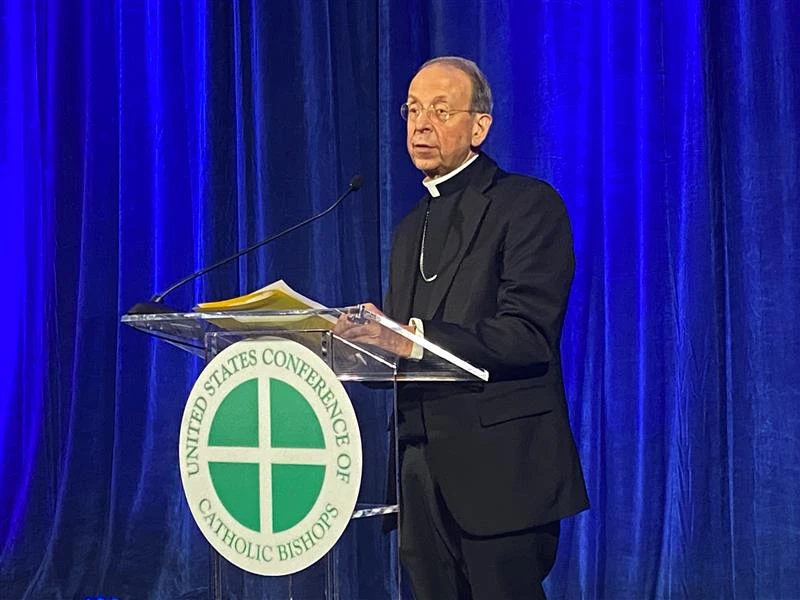
Archbishop William Lori of Baltimore, vice-president of the United States Conference of Catholic Bishops, at the USCCB’s fall meeting Nov. 15, 2023. / Credit: Joe Bukuras/CNA

Baltimore, Md., Nov 15, 2023 / 19:30 pm (CNA).

The U.S. bishops will continue to highlight the threat of abortion as a “pre-eminent priority” in the introduction to a guide they’ll disseminate to Catholic voters ahead of the 2024 election.

That designation, the source of debate among some bishops in recent years, was retained when the bishops voted overwhelmingly (225-11, with seven abstentions) to approve a revised introduction to the guide, “Forming Consciences for Faithful Citizenship,” at their annual fall assembly Wednesday in Baltimore.

The bishops also voted to approve several brief excerpts from the guide to be inserted in parish bulletins during the upcoming election cycle. 

“The threat of abortion remains our pre-eminent priority because it directly attacks our most vulnerable and voiceless brothers and sisters and destroys more than a million lives per year in our country alone,” the new introduction to the guide says.

The new introduction also lists euthanasia, gun violence, terrorism, the death penalty, and human trafficking as “other grave threats to life and dignity of the human person.”

The revised introduction also now states that the “redefinition of marriage and gender … threaten[s] the dignity of the human person.”

While the previous version of the guide included language condemning gender ideology, there was no mention of that issue in the document’s introduction. 

In a press conference after the vote, Archbishop William Lori of Baltimore, vice-president of the United States Conference of Catholic Bishops, said that while many issues are important “not all issues are equal.”

“We are called to stand in radical solidarity with women in difficult pregnancies and their unborn children and to provide them with the kind of support and services and public policies that they need,” he explained. 

“So, it’s not simply a public policy issue. It is a deeply, deeply pastoral issue of loving the moms in need, walking with them, helping them bring their babies to term, and then providing them with what they need to move forward,” he said.

“In a culture where there is so much death and so much disregard for life, we bishops and together as a Catholic family, a united Catholic family, we need to stand together.”

Forming Catholic consciences

The U.S. bishops first issued “Forming Consciences for Faithful Citizenship” in 2007 which they have updated every four years, in 2011, 2015, and 2019, ahead of the next presidential election.

At last year’s fall assembly, however, the bishops voted not to postpone a full revision until after the 2024 election, opting instead to limit revisions in 2023 to the guide’s introduction and “supplemental inserts” disseminated in parish bulletins nationwide.

“I think the underlying document has served us very, very well,” Lori said Wednesday. “It’s based on Catholic social teaching. It’s not based on one’s favorite political ideology. It’s rooted very much in the tradition of the Church.”

“I think it is important to recall the purpose of this, which is to help first and foremost individual members of the Church to form their consciences. Not simply to ask themselves, ‘Who’s my favorite candidate? Who do I like? What kind of ideology attracts me?’ But rather to step back and say, ‘What does my Church say? What does our tradition say about the public order and what is good and true and right and just?’” 

“In these materials,” he emphasized, “the bishops do not tell Catholics for whom to vote or against whom to vote. Rather, we seek first and foremost to help Catholics to form their consciences through prayer, study, reflection, and dialogue so that they can discern with prudence their decisions about public life.”

Lori said the bishops made a “very deliberate decision” to “rewrite” the guide after the 2024 elections through what he described as a “very thought-through, detailed, consultative process,” adding that “one might even say it will be synodal,” a reference to Pope Francis’ call for a synodal Church characterized by greater dialogue, inclusion, and openness.

One of the newly approved bulletin inserts addresses the Church’s opposition to gender ideology. “We support the dignity of the human person, created male or female,” it reads, “therefore, we oppose a gender ideology that fails to recognize the difference and reciprocity between man and woman.”

Another bulletin insert, adopting language used in the bishops’ existing guide, stresses that “family – based on marriage between a man and a woman – is the first and most fundamental unit of society: a sanctuary for the creation and nurturing of children.” The insert goes on to say that traditional marriage “should be defended and strengthened, not redefined, undermined, or further distorted.”

‘A planet for people’

The bishops’ nearly unanimous approval of the revised introduction (93% voted to approve it) underscored both the gravity of abortion in the eyes of the Catholic Church and the powerful influence the issue continues to exert on American political life. Some Church observers expected more debate and a closer vote. 

In his remarks to the media, Lori pushed back on the suggestion that the bishops’ revisions fail to place enough emphasis on climate change, an issue Pope Francis has highlighted in his encyclical Laudato Si and this year’s apostolic exhortation Laudato Deum.

“First, I would remind you that the vote was 225 to 11,” Lori said, referring to the vote on the new introduction. 

“No. 2, if you look at Laudato Si and when [the pope] talks about integral human ecology, the earth is our common home, but it is the home of people. And certainly in our midst, there are people who are vulnerable for many, many different reasons. The reason we focus on the unborn as we do is because they are utterly voiceless and defenseless. And abortion is a direct taking of human life,” he said.

“I would also say that if you go to read what Pope Francis has said about abortion, it is said in far more stark terms that we have said it, and he would identify abortion as a primary instance of the throwaway culture. And so I think we have done our level best to reflect fully, fairly and lovingly the magisterium of Pope Francis, to whom we are most, most grateful.”

[…]

The Dispatch

Synod’s next steps? U.S. bishops look to Rome for guidance, say priests and poor need a voice

November 15, 2023 Catholic News Agency 17
Father Iván Montelongo, a priest from the Diocese of El Paso, Texas; Bishop Daniel Flores of the Diocese of Brownsville, Texas; and Bishop Kevin Rhoades of the Diocese of Fort Wayne/South Bend, Indiana, discuss the Synod on Synodality at the U.S. Conference of Catholic Bishops’ fall meeting in Baltimore on Nov. 14, 2023. / Credit: Joe Bukuras/CNA

Baltimore, Md., Nov 15, 2023 / 13:15 pm (CNA).

U.S. bishops are hoping for further guidance from the Vatican before they formulate concrete plans to prepare for the final stage of the Synod on Synodality next fall.

At the conclusion of the synod’s first assembly that took place at the Vatican between Oct. 4–29, delegates approved a 42-page synthesis document titled “A Synodal Church in Mission” containing more than 80 proposals, including recommendations aimed at giving lay Catholics a greater role in decision-making.

The preliminary document did not, however, specify the next steps that dioceses and episcopal conferences should take during the interim period before the synod reconvenes in October 2024.

On Tuesday during the fall assembly of the United States Conference of Catholic Bishops (USCCB) in Baltimore, two of the synod delegates — Bishop Daniel Flores of the Diocese of Brownsville, Texas, and Bishop Kevin Rhoades of the Diocese of Fort Wayne-South Bend, Indiana — emphasized the need for an “executive summary” of the synthesis document to help guide continuing engagement with U.S. Catholics.

“When you think about it being a 41-page document, how are we going to consult people? Are they going to read 41 pages?” Rhoades said during a Nov. 14 press conference with Flores.

“At this point, I think we do need to identify exactly or more clearly what are the big items that we really need to have the input of the faithful. And I think that’s a work in progress because maybe the Vatican is going to provide those for us,” he said.

“We don’t know yet. If not, I mean, we have to get moving, so we may have to do it ourselves,” he added.

Flores agreed that the USCCB might have to produce its own summary if the Vatican doesn’t provide one soon. Asked if there was a timeline for when additional steps need to be taken, he said it was premature to formulate a schedule.

“To be honest, I don’t think we’ve gotten to the timeline stage yet because it is still fairly recent,” Flores said.

The synod’s synthesis document was the fruit of the delegates’ small-group discussions of issues raised in these listening sessions. The document calls for greater “co-responsibility” among all members of the Church and recommends specific steps to take and proposals to consider to achieve that goal.

Bishops: Not enough voices were heard

Pope Francis initiated the Synod on Synodality in October 2021, kicking off a multiyear worldwide Church effort to engage in listening sessions with Catholics. The faithful were asked to submit feedback to their local dioceses on the question “What steps does the Spirit invite us to take in order to grow in our ‘journeying together?’”

Archbishop Timothy Broglio, president of the U.S. Conference of Catholic Bishops, had noted at last month’s synod that only 1% of Catholics participated in the listening sessions.

“One thing we have to do going forward is to encourage greater participation and invite people to partake and engage in this process of speaking, and listening and praying together,” Broglio said in October, adding: “That would be a source of growth for the Church.”  

Flores echoed these sentiments Tuesday, calling for a greater variety of voices to be heard as the synodal process continues.

“The voice of the pastors and the priests was not heard as clearly as we need to hear it, “ Flores said. “I think we all, as bishops, will get an encouragement to kind of find the vehicle by which, with their priests, they can reflect on what this document says as we prepare for going forward.”

“But they’re not the only ones. We all admitted that because it was our first sort of effort that we could do a lot better in consulting with the peripheral materially poorer. It’s because it’s hard, because you’re not always going to get a welcome,” the bishop of Brownsville said.

In his remarks, Flores said he expects to send some “resources” out to bishops and dioceses before the U.S. bishops’ conference in June.

[…]

No Picture
News Briefs

Ousted Bishop Strickland leads rosary outside U.S. bishops’ conference

November 14, 2023 Catholic News Agency 10
Bishop Joseph Strickland, who was removed as the leader of the Diocese of Tyler, Texas, by Pope Francis on Nov. 11, 2023, leads the recitation of the rosary outside the site of the U.S. bishops’ fall assembly in Baltimore on Nov. 14, 2023. / Credit: Shannon Mullen/CNA

Baltimore, Md., Nov 14, 2023 / 18:20 pm (CNA).

Bishop Joseph Strickland didn’t join his fellow U.S. bishops at their annual fall assembly on Tuesday, but he wasn’t far away, leading the recitation of the rosary for a few dozen people outside the waterfront hotel where the bishops’ meeting was taking place without him.

“I figured since I’m in town and didn’t have to go to the meeting, I’d just come here and pray,” Strickland told CNA in a brief interview.

Strickland’s appearance came just three days after Pope Francis removed the 65-year-old prelate as the head of the Diocese of Tyler, Texas.

Strickland remains an American bishop, however, and there is nothing in the statutes of the United States Conference of Catholic Bishops (USCCB) that would prevent him from participating in this week’s assembly.

In a five-minute interview outside the hotel, Strickland claimed that the papal nuncio to the U.S., Cardinal Christophe Pierre, asked him not to participate. Pierre, who addressed the bishops Tuesday morning, declined CNA’s interview request Tuesday.

Strickland showed up outside the meeting anyway, he said, because he “already had plans to be here.” He told CNA that he also had committed to leading a rosary outside the meeting. He has led a rosary outside the USCCB meeting in past years as well.

Strickland led the rosary while kneeling. A man kneeling and praying nearby held a sign that read, “We love Bishop Strickland.”

“Today is a day for living the Lord more fully. And so that’s what we are called to do. And that’s what I would encourage the bishops to just keep refocusing on. I have to, every day when I wake up, remember, what’s this about? It’s about following Jesus Christ,” Strickland told CNA. 

“And today is a new day to follow him with joy and hope. His light is as bright as ever. We need to all remember that, and especially my brother bishops,” he said.

Strickland said that he may attend future USCCB meetings, but he thought it best not to do it this year, explaining, “I didn’t want to be a distraction.”

Why was Strickland removed?

Strickland told CNA that when he was notified about his removal, he received an email “with an attachment of the letter that said the Holy Father had … relieved me of the responsibilities as bishop of Tyler.”

Strickland’s removal on Nov. 11 follows a formal investigation of him and his diocese ordered by Pope Francis that occurred in June.

An official report of that investigation was never published, nor has the Vatican disclosed why Strickland was removed from office.

“I really can’t look to any reason except I’ve threatened some of the powers that be with the truth of the Gospel,” Strickland said in an interview with LifeSiteNews following his removal.

Strickland served as bishop of Tyler since 2012 and has been fiercely outspoken on certain Catholic social issues such as abortion and gender ideology. The firebrand bishop has gained a sizable social media following, where he has railed against the political agendas of elected officials who blatantly disregard the sanctity of the unborn.

Cardinal Daniel DiNardo of the Archdiocese of Galveston-Houston, of which the Tyler Diocese is a suffragan, said following Strickland’s removal that the investigation focused on “all aspects of the governance and leadership” in the diocese, which ultimately concluded with a recommendation being made to Pope Francis that “the continuation in office of Bishop Strickland was not feasible.”

Speaking to CNA, Strickland didn’t provide any details about what administrative issues may have contributed to his ouster.

“Yeah, there are allegations, but we had the bishop’s appeal that was $3.1 million, larger than ever in the history of the diocese,” he said.

Strickland also touted the number of the diocese’s seminarians — 21 — now in formation, as well as “a presbyterate with great priests.”

“So yeah, you can make allegations of anything. But I think if you just look at the record of the diocese, it’s grown. People are moving in. It’s a happy place. It’s not perfect. It’s not heaven, but it’s in good shape,” he said.

Asked if any reasons were given for his removal, Strickland said that there were “verbal reasons” given by Pierre that were “quite extensive,” one of which was that he was too outspoken.

One notable example is a May 12 tweet in which he suggested that Pope Francis was “undermining the deposit of faith.”

“There were things that, yes, I did. I’ve raised a lot of questions. I’ve tried my best to guard the deposit of faith. And, you know, I feel the same commitment,” he said.

“Some say maybe I’ve spoken up too much, but how can we speak too much for the truth of Christ? It’s a treasure. It’s a beautiful light that the world desperately needs.”

Another reason he was given was “the fact that I didn’t shut down the Latin Mass in my diocese because, you know, I felt as a shepherd, I couldn’t do that,” he said, referring to the restrictions Pope Francis imposed on the old liturgy in his July 2021 motu proprio Traditionis Custodes.

Strickland said that the document “wasn’t really clear” and could be debated upon but added that “many bishops haven’t shut down the Latin Mass in their diocese.”

Ultimately, his removal was the result of “an accumulation of things,” he said, adding that he’s “committed to Jesus Christ” and loves the Church.

“I love every aspect of the Church, but I think we’d all agree the Church needs to be stronger in Christ, and that’s what I’ve encouraged through all of this. My prayer is that every bishop, every faithful Catholic, can be drawn closer to the Sacred Heart of Christ,” he said.

[…]