For homeless woman, Rome trip proves that ‘good things can happen’

September 25, 2017 CNA Daily News 1

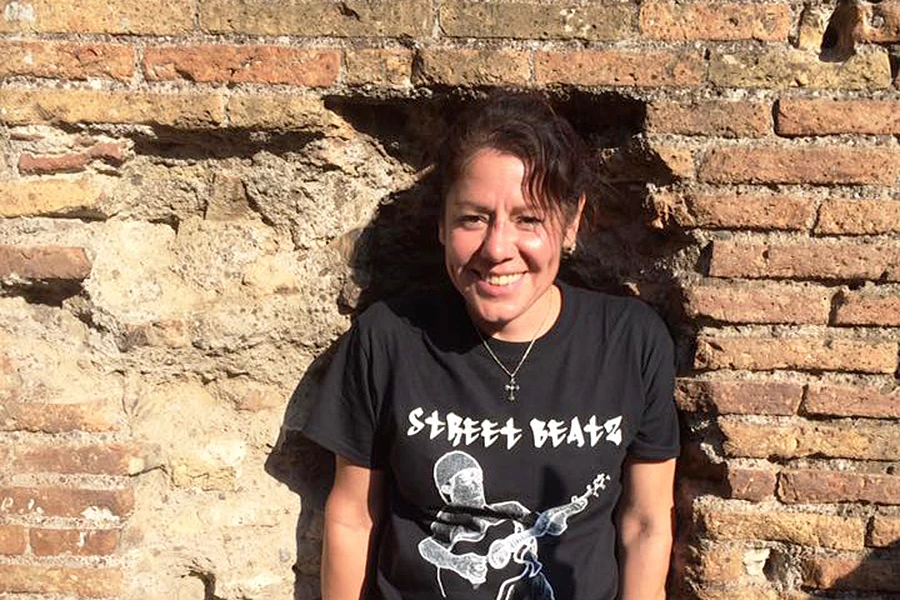
Rome, Italy, Sep 26, 2017 / 12:24 am (CNA).- After a long struggle with alcoholism and homelessness, Melanie Medina has turned her life around. She said that a recent pilgrimage to Rome has proven that change is possible, and that “good things can happen.”

Medina spoke to CNA at the end of a six-day visit to Rome. She is the fourth person selected to go on pilgrimage to Rome through Denver Homeless Ministries (DHM).

“It’s all just a blessing, everything’s been turning totally different than the way it was before, everything,” Medina said.

DHM is an organization working to provide opportunities to serve the homeless as both “equals and friends.” DHM offers the pilgrimage as a way to encourage those who have made steps to change their lives.

This year’s pilgrimage lasted from Sept. 9-14 and consisted of Medina, trip organizer Tanya Cangelosi, and chaperone Christine Logan.

The pilgrimage was organized with the help of the Catholic Travel Center (CTC), who payed for their hotel, limo transportation service to the airport, and Medina’s birthday dinner while in Rome. The CTC also took care of their flights after a delay left them stranded at the airport.

Until last year, Medina, 38, had been living on the streets and was struggling with alcoholism. She grew up in an alcoholic family, and from a young age she was often responsible for taking care of her parents and cleaning them up at night.

Medina left home at the age of 15, and went to stay with her older sister, who was also an alcoholic. She started hanging out with gangs and eventually entered an abusive relationship. She left the man after having two children with him by the age of 19.

After entering another long-term relationship and having her third child, Medina began to drink heavily herself, but eventually broke up with the man and entered rehab. When she got out, her ex-boyfriend offered to pay rent on their apartment so she and her kids could stay together while she got on her feet.

However, the man went back on his promise, leaving Medina on the streets, while her kids went to live with her mother.

Although she tried to stay sober, Medina started drinking again when the camp she made with a friend was raided and all of their things taken. When they moved camps, they would often have to put their food and belongings in the trees, so rats and mice didn’t get into them.

Throughout her time on the streets Medina was beaten several times, once until she was unrecognizable, and she was also raped. Last year she began having severe problems with her feet and could barely walk.

With no diagnosis, she bandaged her feet and quit wearing shoes. After awhile they began to heal, and it was around that time that Medina and her boyfriend, Christopher, decided to make a change and get off the streets.

In her comments to CNA, Medina said the turning point for her was Christopher: “ I met a really good guy out there, and we just wanted a better life for ourselves and to get my family back together,” she said.

After Medina’s visit to Rome this year, Christopher has been selected to go on next year’s pilgrimage.

In comments to CNA, trip organizer Tanya Cangelosi said she chose Medina for this year’s trip because she was an answer to a prayer on Easter morning last year.

Before driving to the Knights of Columbus hall where she kept all of the DHM outreach materials, Cangelosi said a prayer, and told the Lord that if he wanted her to take someone to Rome, he needed to put the person in her path that day, since time was getting short to make the arrangements.

As she drove up to the hall, Cangelosi said Medina walked up to her “and I didn’t even recognize her because she’d been alcohol free for several days and she look like a total different person.”

“I knew at that point she was the one that was supposed to go. And that’s how she was chosen totally by the Lord!”

Medina said that the main highlights of the Rome visit were seeing the Sistine Chapel and the Leonardo Museum, which showcases the inventions of Leonardo Da Vinci, who despite his widespread fame for painting, was also a prolific inventor.

Medina said she especially appreciated the art: “Everything is pretty much art around here, all the oldish stuff, I love how antique it is.”

“The drivers are a little bit crazy, and the scooters are nuts! But just to see…the people that actually live here, they’ve been good,” she said, explaining that Romans she met were friendly and welcoming.

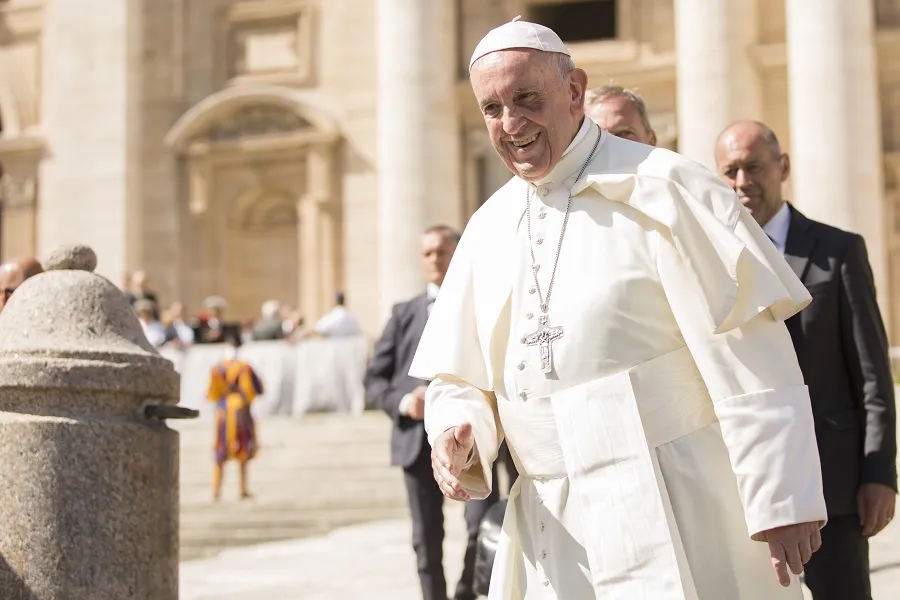
Medina, Cangelosi and Logan also had front row tickets to Pope Francis’ general audience Sept. 13, which happened to coincide with her 38th birthday. Although she didn’t have an impression about the Pope beforehand, Medina said that as he was greeting people, “he seemed really friendly.”

“There was one little boy who got to meet him at the end, down near where we were sitting, and just the way he interacted with him, he didn’t seem any different,” she said, noting that Pope Francis even ruffled the boy’s hair while talking and taking pictures with the family.

“He treated them all the same, as if he were one of them, so to me that’s important,” she said, and voiced admiration for the fact that the Pope would hold the audience despite the fact that he had just returned from a six-day visit to Colombia the day before.

Francis, she said, “made time to still do this for his people, so to me that’s great. He didn’t say ‘I can’t do it this week because I’m out of town.’ He made it important to come back.”

She voiced her thanks to Cangelosi and DHM for the arranging the trip, saying it was “quite an experience, seeing a whole new place.”

“I’m a person that’s not good with change, and then to come across the world with people that I know, but not as well, I was very nervous but they’ve made me feel at home,” she said. “I’ve met some great people out here. I got to see a lot of great stuff, history, and I got to see the Pope. It’s been wonderful.”

Medina also commented on the difference between homelessness in Rome and homelessness in Denver, saying, “Rome treats there homeless so much better. They let them sleep at the train station. In Denver you cannot do that.”

“You go to Union Station out in Denver, and you just close your eyes and they’re kicking you out or making you wake up,” whereas in Rome “they let them just hang out, and the way I see it, a lot of them are a lot more mellow, I think because they have a lot more freedom. They have the right to rest.”

She recalled how, after her birthday dinner, the group went to Rome’s Termini train station near their hotel and handed out their leftovers to the homeless sleeping outside.

“I’ve been there before, so sometimes in the evening it was great to get a white box,” she said, referring to the typically white takeaway boxes given to customers at restaurants.

For Medina, most important was simply being acknowledged, because “I’m still a person, I’m here.”

Speaking to others in her situation who might want to get off the streets but are perhaps struggling to take the first steps, Medina told them to “have faith. That’s all we did.”

“If you want it and it doesn’t happen right away, nothing happens right away. Rome wasn’t built in a day, so it takes time,” she said. “You just have to be positive about it and keep trying, because when it’s time and you’re ready, God will be there for you, he’ll help you out.”

In her comments to CNA, Cangelosi said that while it’s still too early to tell what overall impact the trip has made on Medina, having the incentive of Christopher come next year “has got to make a huge impact on their life as they both have to try to stay clean, meaning alcohol free.”

They have to keep their jobs and their apartments, she said, explaining that “that right there is life-changing for both of them.”

Cangelosi said a highlight for her was seeing Medina hand out their leftovers to the homeless at Termini, which was “beautiful.” Medina, she said, “was phenomenal. Honestly she made me laugh daily. It was a joy to see her joy.”

As far as previous participants in the Rome pilgrimage, Cangelosi said the first, Clarissa, is off the streets, has a three bedroom apartment, is holding down a job and has her two children living with her.

The second, Derrick, is now in an apartment and works part-time as a barista, and the third, Shyla, is now living in New York and working in customer service at a hotel.

Seeing where each is at now, Cangelosi said “all lives have changed and continue to be changed, totally by the Lord’s hand.”


[…]

Trump administration announces changes to travel ban

September 25, 2017 CNA Daily News 0

Washington D.C., Sep 25, 2017 / 04:42 pm (CNA/EWTN News).- Just weeks before the Supreme Court was to hear a challenge to the Trump administration’s travel ban, the administration announced new restrictions to the ban on Sunday.

“Following an extensive review by the Department of Homeland Security, we are taking action today to protect the safety and security of the American people by establishing a minimum security baseline for entry into the United States,” President Donald Trump stated on Sunday.

“Our government’s first duty is to its people, to our citizens – to serve their needs, to ensure their safety, to preserve their rights, and to defend their values,” Trump stated.
 
On Sunday evening, the Trump administration announced it was continuing the travel ban indefinitely just before it was set to expire, expanding the number of countries of restricted travel to eight, as part of “enhanced national security measures.” It also set new security standards for other countries to help the U.S. vet visa applicants and immigrants.

In March, President Donald Trump had signed an executive order “on Protecting the Nation from Foreign Terrorist Entry into the United States.” It was a revision from his January executive
order on immigration.

In the revised order, foreign nationals from six countries would be temporarily barred from travelling to the U.S. except in special cases. The countries were Iran, Somalia, Yemen, Libya, Syria, and the Sudan.

Then before the travel ban was set to expire on Sunday evening, the administration increased the number of restricted countries to eight, dropping the Sudan and adding North Korea, Chad, and Venezuela. The policy will be continued indefinitely, and the new countries experiencing “certain travel limitations and restrictions” will be added to the list on Oct. 18.

The administration also announced that it would, “for the first time in history,” set up minimum standards for other countries to comply with, for vetting of visa applicants and immigrants looking to travel to the U.S.

President Trump said the revised policy would improve U.S. national security and establish “a minimum security baseline for entry into the United States.”

“We cannot afford to continue the failed policies of the past, which present an unacceptable danger to our country,” Trump stated. “My highest obligation is to ensure the safety and security of the American people, and in issuing this new travel order, I am fulfilling that sacred
obligation.”

The March executive order on immigration had directed the Secretary of Homeland Security to investigate whether “additional information would be needed from each foreign country” to issue
visas and admit immigrants.

Then in July, the administration said it came up with new minimum standards for other countries, with regard to the vetting of visa applicants and other immigrants. The standards related to the issuing of electronic passports, “sharing criminal data” and helping identify
potential security threats to the U.S. looking to enter.

The administration gave countries 50 days “to work with the United States to make improvements” to their existing standards.

According to the administration, the eight countries remaining on the restricted travel list “remain currently inadequate in their identity-management protocols and information-sharing practices or present sufficient risk factors that travel restrictions are required.”

The countries can be removed from the list once they comply. Iraq, however, did not comply with the standards but Trump “determined” that “entry restrictions are not warranted.”

Iraq was originally on a list of countries with restricted travel in the President’s first executive order on immigration in January, but was not listed in the revised executive order in March, reportedly because of a deal with the U.S. to accept Iraqi nationals living in the U.S. who had been given a final order of removal from an immigration judge, in exchange for being removed from the list.

A challenge to the constitutionality of the previous order was scheduled to be heard by the Supreme Court on Oct. 10 in oral arguments. However, the court canceled those arguments after
Sunday’s revisions were announced.

Bishop Joe Vasquez, chair of the U.S. bishops’ migration and refugee services committee, had voiced serious concerns before about the travel and refugee bans. The immigration executive order had also shut down refugee admissions for 120 days and set a cap on refugee admissions for FY 2017 at 50,000, less than half of the 110,000 set as a goal by the previous administration.

Bishop Vasquez said he was “deeply troubled by the human consequences of the revised executive order on refugee admissions and the travel ban,” saying it “still leaves many innocent lives at risk.”

“The U.S. Catholic Bishops have long recognized the importance of ensuring public safety and would welcome reasonable and necessary steps to accomplish that goal,” he said. Yet the current refugee resettlement process is secure, with “the most vigorous vetting process of anyone who enters the United States.”

Lawyers and advocates for Muslim immigrants said on Monday that the administration’s new travel ban still constitutes a “Muslim ban” since most of the eight countries’ populations are Muslim-majority, and that Trump had on the campaign trail proposed a ban on Muslims seeking to the enter the U.S.

There are also reports that the administration will consider lowering its cap on refugees even more in the next fiscal year, to below 50,000. The new quota is expected to be announced by the
end of September.

[…]

How do we heal racial tensions? Start by admitting errors, US bishop says

September 25, 2017 CNA Daily News 0

Washington D.C., Sep 25, 2017 / 04:12 pm (CNA).- To address the longstanding racial divide within the United States – and within the Catholic Church in the country – Catholics should learn more about the history of that divide, and honestly engage with that history, and with others attempting to tackle similar issues themselves.

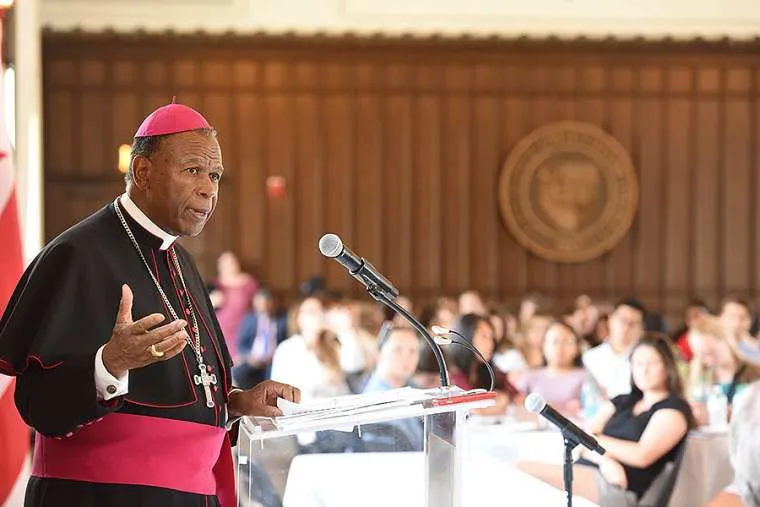
“Don’t whitewash the misdeeds and silence of our history,” said Bishop Edward Braxton, of Belleville, Ill. in a Sept. 21 lecture at The Catholic University of America in Washington, D.C.

Bishop Braxton urged participants to teach children the history of the Catholic Church – including parts of the history which are painful or shameful – “not to belittle those people, not to harshly judge them as bad people, but to understand but they are all people of our own era and history and if they have blind spots so do we.”

The bishop’s talk was one of two held at the university on the theme of the racial divide in the United States and the Church. The first talk, which focused more on how to address the racial divide, was part of a “teach in” sponsored by the university’s National Catholic School of Social Service, and a second talk, part of the campus Theology on Tap program, discussed the Black Lives Matter movement and how Catholics can respond to racism.

Bishop Braxton, originally from Chicago, is the bishop of Belleville, Ill., outside of his hometown, and one of nine African-American bishops in the United States.

The bishop’s talks discussed what he described as the “flaw at the foundation” of racial relations in America – particularly within the American Church – and how it lead to many of the tensions seen today in American politics.

Bishop Braxton pointed to the Dred Scott Supreme Court decision, which in 1857 ruled that African-Americans could not be citizens. That opinion was penned by Chief Justice Robert Taney – a Catholic.

The bishop also noted that some American bishops in the years leading up to the Civil War actively opposed abolition efforts. Furthermore, early American bishops and religious organizations, such as Bishop John Carroll and the Jesuits, owned slaves themselves

These actions, the bishop said, beg the question “Is there a flaw at the foundation?” of racial relations. He added that many Catholic churches and religious orders remained segregated after slavery’s end.

This history has impacted both the African-American Catholic community and the Church’s efforts to evangelize within the broader African-American community, he said. On top of that, the Church’s previous efforts to address the racial divide, such as the 1979 pastoral letter “Brothers and Sisters to Us,” have yet to be fully implemented.

Knowing this “painful, shameful history,” Bishop Braxton said, is necessary for the Church to help the country heal its racial divides in the future. “We can’t rewrite history. We must acknowledge it and never repeat it,” he told the crowds.  

Pointing to the shortfalls and blind spots of those who came before is not judgment, he said, nor does admitting flaws pose a threat to the universal teachings of the Church. “We don’t know what we would have done in the 1840s or ’50s or ’60s,” Bishop Braxton reminded listeners, and even saints “have blind spots.” Instead, acknowledging the full truth and history can help us to appreciate the fullness of the task ahead of us and make us more attentive to the moral blind spots and shortfalls of our own age.

With the need for a comprehensive education on race in mind, Bishop Braxton urged Catholic schools – seminaries in particular – to educate children and future priests on American and Catholic history regarding race, and urged all Catholics to learn more about African-Americans who have open causes for canonization.

While education is a key component in mending the racial divide, so too is engaging and listening to others involved in similar efforts, Bishop Braxton said. He urged Catholics at both talks to “Listen. Learn. Think. Pray. Act.” and shared his own experiences dialoguing with members of the Black Lives Matter movement.

Before discussing the movement itself, Bishop Braxton noted that he does not believe that “Black Lives Matter and All Lives Matter are necessarily incompatible.”

However, he continued the “point of Black Lives Matter is that some in the African American community face existential threats that cannot be ignored.”

Pointing to those concerns in particular – such as the increased likelihood for African Americans to face violence during routine police interactions, while other offenders like Dylan Roof can be apprehended without being shot – does not negate that other issues of human dignity exist, he said. “In this instance, while all lives matter, their lives are in peril.”

He also explained that while there are Catholics within the Black Lives Matter movement, and that not all members hold the same views, many within the movement are cautious when dealing with the Church because of some of its history.  

Some members perceive the Church as being opposed to addressing the racial issues the movement sees as a problem, he said. In addition, Bishop Braxton explained that many – though not all – members of the movement have fundamental differences with the Church on matters of sexuality, marriage and abortion.

Bishop Braxton challenged the movement to address the issue of abortion in particular, affirming the life of the unborn child, and noting that the “alarmingly” high number of abortions within the African-American community brings “an abrupt end to the nascent black lives in their mothers’ wombs. Those lives also matter.”

By listening and learning from the members of Black Lives Matter within his community, Bishop Braxton said that he was also able to explain the richness of the Church’s social teaching and its applicability to issues of race, poverty and discrimination. “I also pointed out that Catholic beliefs on marriage, the meaning of human sexuality and the dignity of human life from conception to natural death are not mere cultural norms or social issues,” he added. “These beliefs represent what the Church holds to be fundamental moral principles, natural law, biblical revelation and the teachings of Jesus Christ.”

Overall, conversations like this have been fruitful and can provide a way for engagement in addressing the racial divide, Bishop Braxton offered. “They did not lead to agreement on every point, but they lead to a focus on the need to be open to hear those with whom we disagree with an open mind and an open heart.”  


[…]

Catholic group continues Blessed Stanley Rother’s work in Guatemala

September 25, 2017 CNA Daily News 1

Oklahoma City, Okla., Sep 25, 2017 / 10:28 am (CNA/EWTN News).- Father John Goggin was serving as a missionary priest in Guatemala on July 28, 1981, when he was woken up early with the news that Father Stanley Rother, from the parish just up the road, had been killed in the night by a government-backed death squad.

While another priest went to be with Fr. Rother’s people, it became Fr. Goggin’s job to drive an hour to the Sololá-Chimaltenango diocesan office to alert the people there. He also had to tell the news to the American embassy and the Archdiocese of Oklahoma City.

Fr. Goggin said he knew Father Stanley for many years, having been missionary priests in the same region of Guatemala.  

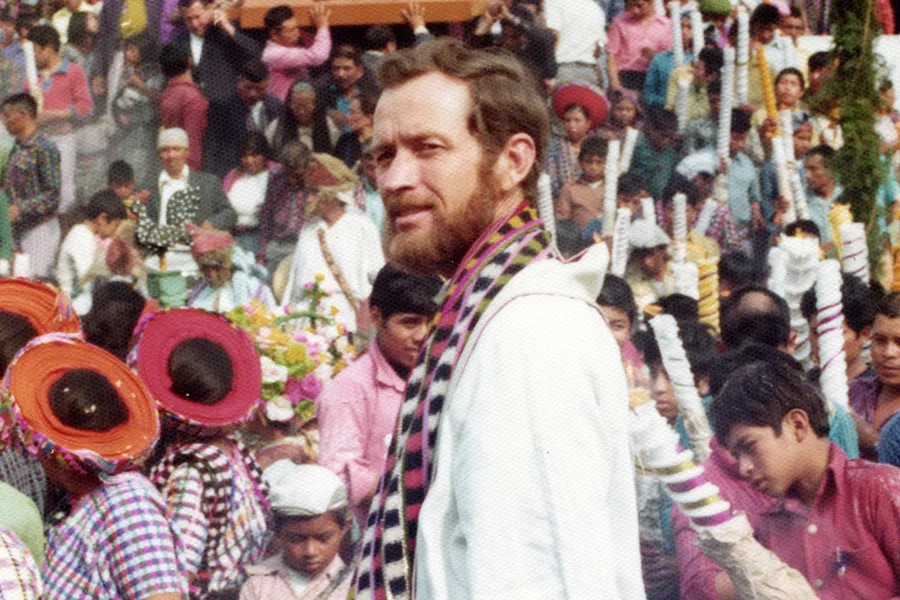
Fr. Stanley was a priest from the small town of Okarche, Oklahoma, and spent 13 years of his priesthood as a beloved missionary in Santiago, Atitlan in Guatemala before he was killed. Pope Francis declared him a martyr last year, paving the way for his beatification.

His sacrifice is something that continues to inspire and challenge Fr. Goggin as a priest, which is why he made the nearly 2,000-mile journey to Oklahoma City to be present for his beatification on September 23.

“I certainly wanted to be here, I never thought I would know a person who would be (on the path to canonization),” he said. “Being able to come to Fr. Stan’s beatification is just wonderful to me.”

“In all the prayers as a priest–it’s the whole idea of trying to give yourself, doing what the Lord asks, what the people ask, and you find that in Fr. Stan,” he added.

Fr. Stanley was also known for not wanting to abandon his people, even though he knew his life was at risk. After Fr. Stanley died, Fr. Goggin said he still did not want the people to feel abandoned.

That’s why he was grateful when the opportunity came to work with Unbound, a non-profit founded by lay Catholics who had also spend time serving as missionaries in Latin America.

The group works as a sponsorship program, pairing children and elderly people with sponsors in other countries, who provide monthly financial aid and moral support in order to help them achieve their own dreams and goals. Sponsors communicate with their partners through letters and e-mail, and also have the opportunity to visit the communities through awareness trips sponsored by Unbound.

Unbound currently serves in 19 countries, including countries in Latin America, Africa, and Asia.

“When the opportunity came to become part of Unbound…I felt it was the direct result of a gift from Fr. Stanley Rother,” Fr. Goggin said, “because we were trying to fill a little bit of his shoes.”

One of the founders of Unbound had known Fr. Stanley while serving as a missionary in Guatemala, and was inspired by his spirit of solidarity with his people, which he kept in the ethic of Unbound.

Fr. Stanley had once flunked Latin studies, but he had mastered the local indigenous dialect of Tzutuhil and had become a beloved member of his community in Santiago Atitlan. He would share meals with them, visit them in their homes, and lived a simple life just like his people.

“We come from the same roots,” said Andrew Kling, director of community outreach and media relations for Unbound.

“Walking with, rather than speaking for the community, is part of our ethic. Rather than passing out stuff, we walk with the families. We have social workers who ask them: what are your dreams, what are your goals, how can we help you get there with a little bit of help every month. We don’t just parachute in western aid workers, we’re developing an ear and listening to the community,” he said.

Chico Chavajay is a Guatemalan who works as the coordinator of Unbound’s largest project, based in the region around Lake Atitlan where Fr. Stanley worked.

Chavajay grew up speaking the same native language that Fr. Stanley learned to speak. While he was only one year old when Fr. Stanley died, Chavajay told CNA that the impact of Fr. Stanley is still strongly felt by everyone in the region.

“Everyone knows him, if you just mention his name, people respond, because he rescued people and people knew they were rescued by him,” Chavajay said.

And it doesn’t matter if someone is Catholic or not. “Padre A’plas is Padre A’plas,” Chavajay noted, using Fr. Rother’s other name.

“Stanley” was such a foreign name that the people of Guatemala took to calling the priest Fr. Francisco, after his baptismal name of Francis, which in Tzutuhil translates to A’plas.

“There’s lots of connections of spirituality of Fr. Stanley and the spirit of Unbound,” Chavajay added. “Our program prioritizes education and health, just like Fr. Stanley.”

Fr. Stanley had helped to establish the first hospital in the area, which was free and open to anyone, Chavajay said. That hospital saved his sister’s life when he was just 8 years old.

Chavajay noted that Unbound has also, in a way, adopted the signature phrase of Fr. Stanley: “The shepherd cannot abandon his sheep at the first sign of danger.”

This was something Fr. Stanley wrote in a letter home, explaining why he would not abandon his missionary post, even as the threats of the Guatemalan civil war escalated.

“We have the same belief that we’re not going to abandon the people that we serve,” he said.

The connection that Chavajay feels to Fr. Stanley is strong, particularly because they spoke the same language, he said.

“I feel that I have a real blood connection with the community in Santiago and Padre A’plas because our language is the same,” he said.

Furthermore, his younger brother also became a priest and served at the same parish where Fr. Stanley had been a priest.

An increase in vocations is something that the whole region has seen since Fr. Stanley’s death, Fr. Goggin added. Five or six priests have come from Fr. Stanley’s own parish, and several more have come from the local diocese.

“My own feeling is that Fr. Stan is making some of this happen,” Fr. Goggin said.

On the morning of Fr. Stanley’s beatification, Unbound sponsored a walking pilgrimage from their hotel to the beatification Mass, with Fr. Goggin, Chavajay, and Kling in attendance. Fr. Goggin also got to take part in the procession of Fr. Stanley’s relics up to the altar at the beatification Mass.

They each said it was a privilege to be at the Mass to honor someone who had and continues to have such a strong impact on their mission.

“His same spirit really permeates what we do,” Kling said, “and we hope an event like this could really highlight the importance of walking in solidarity with people.

“You don’t have to be a martyr to change the world. Fr. Stanley’s example shows that love is a choice, and that if you make that choice you can change the world. Love requires sacrifice, it requires vulnerability, it requires dedication, and sometimes it requires everything. But the fact that 36 years later it lives on in such a profound way is a powerful testament,” he added.

“My hope is that we will have many more people (who loved) like him, because if you look at the news today, we desperately need it.”  

The Unbound website is at www.unbound.org.

[…]

Love of neighbor must begin with love of God, Pope Francis says

September 25, 2017 CNA Daily News 0

Vatican City, Sep 25, 2017 / 09:12 am (CNA/EWTN News).- Monday Pope Francis spoke to benefactors of the Vatican Swiss Guard about love of neighbor, which he said must first be steeped in love of Christ and drawn from prayer and frequent reception of the sacraments.

“Love to one’s neighbor corresponds to the mandate and the example of Christ if it is based on a true love of God. It is thus possible for the Christian, through his dedication, to make others feel the tenderness of the heavenly Father,” the Pope said Sept. 25.

“To give love to brothers, it is necessary to draw it from the furnace of divine charity, through prayer, listening to the Word of God, and nurturing the Holy Eucharist. With these spiritual references, it is possible to operate in the logic of gratuity and service.”

Pope Francis met Monday morning with 50 members of the Foundation of the Pontifical Swiss Guard, an organization which offers financial, material and technical support to the Vatican’s small military force.

He thanked them for their work in support of the young Swiss men who devote some years of their lives to “serving the Church and the Holy See.”

“This is an opportune occasion for me to reiterate that their discreet, professional and generous presence is so appreciated and useful for the good performance of Vatican activities.”

The business of the foundation expresses community spirit and solidarity, the Pope said, a typical feature of the Catholic presence in society and an attitude which is rooted in the appeal of the Gospel to love one’s neighbor.

“Therefore, through your work, you are concrete witnesses of evangelical ideals and, in the Swiss social fabric, you are an example of fraternity and sharing,” he said.

Concluding, Francis wished them joy as they continue their “fruitful commitment,” and bestowed the apostolic blessing.

He also prayed for protection for them and their families through the intercession of the Blessed Virgin Mary and St. Nicholas of Flüe, the patron of Switzerland, whose feast the Swiss celebrate on Sept. 25.

St. Nicholas of Flüe was born in 1417 near the Lake of Lucerne in Switzerland. He married at the age of 30 and had 10 children. In addition to his duties as a husband and a father, Nicholas donated his talents and time selflessly to the community and always strove to give an excellent moral example to all.

The saint was also able to devote much of his private life to developing a strong relationship with the Lord.  He had a strict regime of fasting and he spent a great deal of time in contemplative prayer.

Around the year 1467, when he was 50 years old, Nicholas felt called to retire from the world and become a hermit. His wife and children gave their approval, and he left home to live in a hermitage a few miles away.

While living as a hermit, Nicholas quickly gained a wide reputation for his personal sanctity, and many people sought him out to request his prayers and spiritual advice.

Nicholas lived the quiet life of a hermit for 13 years. However in 1481, a dispute arose between the delegates of the Swiss confederates at Stans and a civil war seemed imminent. The people called on Nicholas to settle the dispute, so he drafted several proposals which everyone eventually agreed upon.

Nicholas’ work prevented civil war and solidified the country of Switzerland. But, as a true hermit, he then returned to his hermitage after settling the dispute.

He died six years later on March 21, 1487 surrounded by his wife and children. The Church celebrates his feast day on March 21, though in Switzerland and Germany it is celebrated on Sept. 25.

[…]

Inclusion, dialogue highlighted in new Vatican guidelines for educators

September 24, 2017 CNA Daily News 0

Vatican City, Sep 24, 2017 / 10:36 pm (CNA/EWTN News).- The Vatican has issued new guidelines for Catholic educators, developed to help them respond to the modern challenges of a globalized society, placing a heavy emphasis on inclusion, the need to dialogue and the importance of “humanizing” education so the person is at the center.

The guidelines were published Sept. 22 in a short document entitled “Educating to Fraternal Humanism: Building a Civilization of Love 50 years after Populorum Progressio.”

Populorum Progressio is an encyclical written by Pope Paul VI in 1967 on “the development of peoples” in wake of the Second Vatican Council.

Vatican officials said the guidelines represent a fresh perspective on what Christian education means in today’s globalized world, with a special emphasis on dialogue, inclusion and creating a “humanizing” approach to education.

It was published by the Gravissimum Educationis Foundation, which was established by Pope Francis in 2015 to mark the 50th anniversary of the Second Vatican Council’s declaration on Christian education.

One of three declarations of Vatican II, Gravissimum educationis recognized the Church’s role in education, ordered toward man’s salvation, and stated fundamental principles of Christian education.

The conciliar document, issued Oct. 28, 1965, stated that Catholic schools are meant “to help youth grow according to the new creatures they were made through baptism as they develop their own personalities, and finally to order the whole of human culture to the news of salvation so that the knowledge the students gradually acquire of the world, life and man is illumined by faith.”

Cardinal Giuseppe Versaldi, president of the Vatican’s Congregation for Catholic Education, told journalists that Populorum Progressio “marked a decisive watershed in the history of social issues, offering a new model of ethics that was able to embrace, with a wider gaze, all continents in the perspective of ever-increasing global interdependence.”

The document, which forms the basis for the guidelines, “underlines how urgent and necessary it is to humanize education, favoring a culture of encounter and dialogue,” he said.

And the first step in “humanizing” education, he said, is by “globalizing hope guided by the message of salvation and love from Christian revelation.”

“The solidarity and brotherhood that arise from this personal and social transformation,” he said, “will be the basis of an inclusive process capable of influencing lifestyles and economic and environmental paradigms.”

Alongside Cardinal Versaldi at the press conference were the congregation’s secretary, Archbishop Angelo Vincenzo Zani, and the Secretary General of the Gravissimum Educationis Foundation, Msgr. Guy-Réal Thivierge.

In comments to journalists, Archbishop Zani said there are three key points to the guidelinest, the first of which is “to humanize education.”

“This is very important because the Pope said at the end of the global congress in 2015 said no to proselytism, yes to humanization. So education is above all making it so the person is fully themselves.”

To do this, the person must use all the instruments available to them, but without forgetting “the dimension of transcendence” that the incarnation of Christ offers.

“For us this dimension of humanization is essential not only in an ideological or theoretical sense, but in concrete practice,” Zani said, explaining that it must be “translated into paths that go beyond the technicalities and ‘proceduralisms’ that often suffocate institutions.”

A second key aspect of the text is its emphasis on “the culture of dialogue,” which Archbishop Zani said involves “the need to pass from the throwaway culture to to the culture of dialogue.”

To this end, the text outlines the thought of French philosopher Paul Ricueur, who develops the concept of dialogue, “asking that this dialogue isn’t done on a superficial level, but on the level of the depth of the person who in order to dialogue, must enter into themselves and…put themselves into contact with the identity of the other.”

Zani then pointed to a third element of the guidelines he said is part of the core message, which is “the disposition of inclusion,” which Pope Francis himself speaks of often.

Inclusion means to encounter, rather than to exclude, Zani said, noting that “many times our institutions are exclusive more than inclusive,” and “the knowledge itself that we communicate in our institutions, is often a selective knowledge.”

“So this culture of inclusion would like to propose a knowledge that is rather understood as a good that isn’t positional, which guarantees a social position, but a relational good, which helps every person to further develop their relationships with other people,” he said.

Zani also outlined several projects the foundation is currently involved with, including research for a new models of education, a survey for youth ahead of the upcoming Synod of Bishops and a permanent observatory tasked with studying international changes and challenges to an integral education.

In comments to CNA, Cardinal Versaldi said the term “fraternal humanism” in the title of the guidelines means “to educate man, humanity, on how to be true men.”

“You cannot avoid relationships with others, which are relationships in the logic of love,” he said, and emphasized the importance of mutual sharing and enrichment, “because we aren’t all from the same place, there are inequalities, there are exclusions.”

 The cardinal said that the guidelines emphasize  “the duty on the part of everyone to see how to give their contribution to change a situation of inequality or of being discarded.” This, he said, is because “in a globalized world, where there inequality, a problem arises for everyone, not only for those who are discarded.”

Because of this, not only do people need to have the foresight to see and remedy situations of injustice, but institutions and governments must as well, Versaldi said. “Otherwise the world won’t be cured of its evils.”

What Catholic educational institutions can offer, he said, is the proper formation of youth in particular, so they can themselves become examples of “fraternal humanism” that others will follow.

Versaldi said the congregation won’t be asking educational institutions to change their curriculum per se, but rather, ask that educators themselves be formed in the contents of the guidelines and update their own approach based on the perspective the text offers.

“You can’t simply repeat the past, even from the point of view of content and curriculum, but you need to also be able to adapt to the new situations, always maintaining in a strong way the meaning of the Christian message, which doesn’t change through time,” he said.

According to the cardinal, there are currently more than 216,000 Catholic schools throughout the world with a student population of over 60 million from all faiths and ethnicities.

Africa boasts more than 24 million Catholic school students, and is followed by Asia, which has 13 million. The Americas have a Catholic school population of 12 million, followed by Europe with 8.6 million and Oceania with 1.2 million.

Cardinal Versaldi said that “despite falling in some western countries, in recent years there has been a steady increase in registrations on a global level.”

In addition to the number of Catholic schools and students, there are roughly 1,800 Catholic universities and 500 ecclesial faculties globally.


[…]