Cardinal Parolin: Iraqi Christians are called to be ‘artisans’ of reconciliation
September 28, 2017 CNA Daily News 0

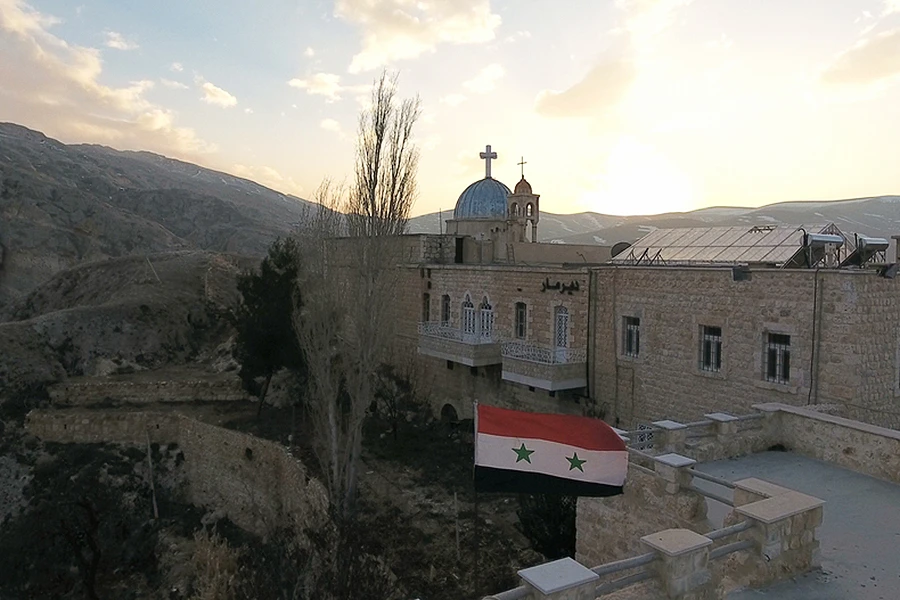
Rome, Italy, Sep 29, 2017 / 12:21 am (CNA/EWTN News).- During a conference on rebuilding Christian villages on the Plains of Nineveh, Vatican Secretary of State Cardinal Pietro Parolin said Christians are an essential part of Iraqi society, and must strive to be witnesses of peace true reconciliation.

One of the greatest challenges in Iraq right now is “to restore to the Christian communities the environment of a normal life, essential for all the families in overcoming fear and despair, and looking to the future with hope,” Cardinal Parolin said in his Sept. 28 speech.

The rebuilding of houses and villages, he said, “is the first and fundamental condition for the return of Christians to their own lands.”

However, beyond the rebuilding of cities and structures, Parolin said “there is the more important obligation of reconstructing Iraqi society and consolidating a harmonious and peaceful coexistence.”

“Here, Christians have the specific position to be artisans of peace, reconciliation and development,” he said.

And this mission, he added, is made all the more important in the context of current regional instability and “urgently demands a process of national reconciliation and shared effort by all parts of society to achieve shared solutions for the good of the whole country.”

Cardinal Parolin was one of seven panelists participating in a half-day symposium organized by the pontifical organization Aid to the Church in Need (ACN) on efforts to rebuild Christian towns and villages on the Nineveh Plains.

In addition to Parolin, other speakers included Cardinal Mauro Piacenza, international president of ACN and prefect of the Congregation for Clergy; Archbishop Alberto Ortega Martin, apostolic nuncio to Iraq and Jordan; and Chaldean Patriarch of Baghdad Luis Rafael Sako, among others.

During the symposium, one of ACN’s reconstruction projects, titled “Iraq, return to the roots,” was presented. From 2014-2017, the project has financed various programs for Christians in Iraq, amounting to an approximate total of 30 million euro.

Among the structures destroyed or damaged since the ISIS invasion of the Nineveh Plains in 2014, it is estimated that some 13,000 homes, schools, hospitals and religious buildings were completely or partially destroyed.

The project, with a total estimated cost of $250 million, aims to continue providing a concrete response to Christians from the Nineveh Plains who want to return to their homes.

In his speech, Cardinal Parolin noted the significance of the fact that the project draws participation from the three main Christian Churches in Iraq: the Chaldean Catholic Church, the Syriac-Catholic Church and the Syriac-Orthodox Church, each of which had representatives present at the meeting.

“May the cooperation between Churches be a tangible sign of unity in charity,” the cardinal said, and thanked the bishops for their “generous commitment,” urging them “to spare no effort before overcoming the sources of tension between the various communities in order to obtain a renewed unity.”

“Such a witness of Christian unity is made all the more urgent and necessary by the complex situation that the country faces and the real danger of loss of the Christians and the Christian presence,” he said.

In addition to the challenges posed by violent extremism, the region has also undergone new threats to social stability with a Sept. 25 referendum held by the Kurdish Regional Government on whether to declare independence from the central Iraqi government in Baghdad.

In the referendum, Kurds voted almost unanimously in favor of the referendum, prompting concern on the part of some that a declaration of independence would lead to war between Baghdad and Kurdistan, which would likely take place on the Nineveh Plains, again putting Christians in harm’s way.

In his speech, Cardinal Parolin stressed the need to work for unity, saying one of the greatest challenges in Iraq right now is “to create the social, political and economic conditions to enable a new social cohesion which favors reconciliation and peace.”

This also entails ensuring Christians and other minorities have full rights, he said. Christians do not want to simply be “benignly tolerated,” but want “to be citizens whose rights are protected and guaranteed along with all the other citizens,” he said.

And without the option of returning to the cities and villages of their birth, “very little of the aforementioned would be possible.”

“Christian presence is fundamental in the Middle East for peace, stability and pluralism,” he stressed. “Each of the Christian communities have made their own contribution in the centuries.”

The presence of Christians is in “constant decline” due to a lack of security and an unclear future, Parolin said, adding that the conflicts and tensions of recent years have made the situation worse, posing a risk “not only for the survival of Christians, but also for the very possibility that the Middle East can be a place of coexistence between peoples of different religious and different ethnic groups.”

He stressed the importance of safeguarding the rights of Christians by means of “adequate juridical instruments,” including their right to return home, their right to security and to religious freedom.

“There is likewise a need to address the root causes of the phenomenon of terrorism and to promote inter-religious dialogue, mutual understanding,” he said, noting that while “much has been done” since the effort to re-take Mosul began a year ago, “much remains to be done.”

“The process of reconstruction (and) the return of Christians to a degree of normality in their lives should be the primary and urgent objective of our efforts,” he said.

This, Cardinal Parolin added, “will allow the Christian community in new force to face up to other challenges that await them, so that they can be fully and generously engaged in working for the common good of the entire nation.”

In his speech, which was a joint statement from the patriarchs of the three Christian Churches in the region, Patriarch Sako said that in the face of the Christian genocide perpetrated by ISIS, “it is our duty” to reconstruct the houses and villages of Christians.

Their presence in these areas, he said, “is as important as maintaining witnesses of Gospel values, otherwise, they will leave the country.”

In order to help Christians stay, he stressed the need for educational and political support, humanitarian assistance, the defeat of fundamentalism, and security and stabilization of the areas freed from ISIS so that those displaced by the group can return home.

“Iraqi Christians need well-defined support and strong action to save them and help them return to their towns, homes and jobs,” he said, urging those in positions of authority to be “seriously open-minded.”

In many ways, Iraqi culture is still deeply “tribal,” Sako said, and as such is frequently drawn to war, violence and revenge.

Going into the future, “we need to be trained to live in peace, respecting life and living in harmony together despite our religion or ethnicity,” he said.

He also pushed for a swift stabilization of areas recently liberated from ISIS, saying this sense of security is “essential” in ensuring both the “rapid return” of those who have been displaced, and long-term protection.

When it comes to putting an end to terrorism in the region, the patriarch stressed that a military victory over ISIS “does not mean all of the problems have been solved.” This, he said, is because the extremist ideology continues to present “a fundamental problem and risk for us all.”

“Therefore, it is urgent for all who are concerned to work together for dismantling and eradicating the extremists’ widespread ideology,” he said, explaining that this can be possible through adequate educational programs.

Patriarch Sako closed his address saying Christians in Iraq “love our land, where our root traces back to thousands of years and we want to stay and contribute in the reconstruction of our country.”

“Christians also have not only problems and sufferings; they have a mission in Iraq,” he said, explaining that they want to stay faithful to Christ and understand faith as a journey “into the light that can ‘point the way.’”

“It is like a lamp that burns and turns into a joy, that brightens our night,” he said, and “with this faith we can overcome fears by daily prayers while we are awaiting our blessed hope.”
 

[…]

Baptist theologian: Fr. Martin’s ideas ‘require a total redefinition of doctrine’

September 28, 2017 CNA Daily News 2

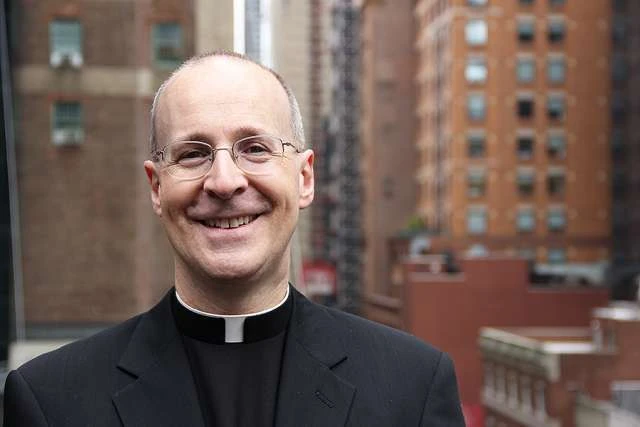
Washington D.C., Sep 28, 2017 / 05:47 pm (CNA/EWTN News).- A Baptist theologian, Dr. Albert Mohler, has claimed that Fr. James Martin’s teaching on sexuality is “an entire re-orientation of the Catholic faith.”

Mohler’s comments refer to Martin’s suggestion that Catholics should refer to same sex attraction or an LGBT identity as “differently ordered” rather than the Catechism’s use of “intrinsically disordered.” Mohler says the suggestion fundamentally changes Catholic teaching on sexuality, and on creation itself.

In comments to CNA, Martin rebuffed Mohler’s comments, calling them “obtuse,” and stating that those who identify as LGBT, or those who are not educated in philosophy or theology, could easily perceive the Church’s language to be “cruel.”

“So my point is simply that we have to be sensitive to the language we use. We can’t pretend that language like that isn’t harmful,” Martin told CNA.

Martin has drawn criticism after the publication of his most recent book, Building A Bridge, which addresses the Church’s engagement with those who identify as LGBT. Most notably, he has been critiqued for the book’s avoidance of Catholic teaching on celibacy and chastity, and for the book’s lack of engagement with Catholics who identify as LGBT, but observe the moral teachings of the Catholic Church. In August, Martin announced on Facebook that he intends to respond to these critiques in a revised edition of the book.

Martin’s comments came in response to a podcast by Mohler, who is president of the Southern Baptist Theological Seminary.

On the Sept. 19 edition of his podcast, “The Briefing,” Mohler points to a passage in Martin’s book, which suggests replacing the theological term “disordered” with the phrase “differently ordered.”

“If you say that LGBT sexual orientation is merely differently ordered, you have actually not only changed the catechism in this specific case of the Roman Catholic Church, you have changed the Catholic Church’s understanding of the doctrines of creation, of humanity, of sin, of redemption, of the church. It is an entire re-orientation of the Catholic faith,” Mohler said.

Mohler explained his comments in an interview with CNA, saying that to an evangelical Protestant, language like Martin’s is “pointing to a fundamental change that’s happening in the Catholic Church.”

He expressed concern that given Martin’s statements, his role at the Vatican could imply a change in Catholic Church doctrine. In April, Martin, the editor-at-large of America Magazine, was appointed to serve as a Consultor to the Secretariat for Communications in the Vatican.

“Acceptance of the LGBT revolution by Christians, or any belief system based upon a claim to revelation, will require a total redefinition of doctrine,” Mohler said. He stated that, in his view, such a change of language “isn’t just about sex, it’s about our understanding of Creation.”

Mohler elaborated, saying that the phrase ‘intrinsically disordered’ explains that same-sex attractions are a result of mankind’s fall, whereas the phrase ‘differently ordered,’ means that those attractions are “a part of the goodness of creation.”

“That’s just not changing the position on homosexuality, now you’re redefining the Garden of Eden.”

Martin called Mohler’s understanding of his book “absurd,” and questioned Mohler’s conclusions. He continued, saying that Mohler’s reaction is part of why it’s difficult to even discuss persons who identify as LGBT in Christian churches. “To link a new way of understanding their sexuality with the destruction of the faith is not only absurd, it’s a sign of how LGBT people are still seen primarily, and in this case totally, as sinful,” he said.

Martin accused such an approach of echoing the “scribes and Pharisees, who cared more about words than about people,” rather than Jesus. “The Catholic faith, in the end, is not about a single phrase in the Catechism; it is about an encounter with the Risen One,” he said.

The phrase in question derives from paragraph 2357 of the Catechism of Catholic Church, which states that “ tradition has always declared that ‘homosexual acts are intrinsically disordered’…They do not proceed from a genuine affective and sexual complementarity. Under no circumstances can they be approved.”

The Catechism elaborates, explaining that those “who have deep-seated homosexual tendencies,” should be “accepted with respect, compassion, and sensitivity.”  


[…]

Pope Francis will re-use popemobiles for his Chile trip

September 28, 2017 CNA Daily News 1

Santiago, Chile, Sep 28, 2017 / 03:59 pm (ACI Prensa).-

The commission planning Pope Francis’ apostolic visit to Chile has announced that the popemobiles which the Holy Father will use in the country have all been used during previous papal trips.

“We’ve made an agreement with the Vatican to reuse the popemobiles so as to comply with the Holy See’s request to avoid a proliferation of these vehicles in the world, and also to carry the message of environmental sustainability that we want to give this visit,” said Javier Peralta, executive director of the Chilean commission planning the visit.

“Although we received proposals from different businesses in Chile to make them locally, we considered, along with the Vatican, that the most appropriate thing to do is to re-utilize vehicles that already have all the technical specifications,” he said.

<blockquote class=”twitter-tweet” data-lang=”en”><p lang=”es” dir=”ltr”>Chile reutilizará tres papamóviles que llegarán desde Estados Unidos y Bolivia para visita <a href=”https://twitter.com/hashtag/FranciscoEnChile?src=hash&amp;ref_src=twsrc%5Etfw”>#FranciscoEnChile</a><a href=”https://t.co/cYERwTMpgE”>https://t.co/cYERwTMpgE</a> <a href=”https://t.co/0qzYTXCud9″>pic.twitter.com/0qzYTXCud9</a></p>&mdash; IglesiadeSantiago.cl (@Iglesiastgo) <a href=”https://twitter.com/Iglesiastgo/status/913079851535536128?ref_src=twsrc%5Etfw”>September 27, 2017</a></blockquote>
<script async src=”//platform.twitter.com/widgets.js” charset=”utf-8″></script>

Two identical 2015 Jeep Wranglers – which were used during the Holy Father’s 2015 visit to New York, Philadelphia and Washington, D.C., and his trip to Mexico in 2016 – will be imported to Chile.

These vehicles will transport Pope Francis in Santiago and Temuco on Jan. 16-17.

The popemobile that will be used in Iquique on Jan. 18 was built for the pontiff’s 2016 visit to Bolivia. It is a 2015 Toyota Series 70 Land Cruiser.

The vehicle was modified with solar protection, due to the high temperatures and exposure to ultraviolet rays common in the northern part of the country.

Peralta said that the popemobiles will arrive in mid-December.

The Toyosa S.A. business, which represents Toyota in Bolivia, contacted the Chilean commission directly to offer the Bolivian vehicle. Meanwhile, the U.S. vehicles were coordinated between the Vatican and Fiat-Chrysler.


This article was originally published by our sister agency, ACI Prensa. It has been translated and adapted by CNA.

[…]

Vatican office for evangelization of peoples gets a new undersecretary

September 28, 2017 CNA Daily News 1

Vatican City, Sep 28, 2017 / 10:22 am (CNA/EWTN News).- On Thursday, the Vatican announced Pope Francis’ appointment of Fr. Ryszard Szmydki, a Missionary Oblate of Mary Immaculate, as the new under-secretary of the Congregation for the Evangelization of Peoples.

Fr. Szmydki, 66, replaces Fr. Tadeusz Wojda S.A.C., an official of the congregation since 2012 who was appointed metropolitan archbishop of Bialystok, Poland on April 12.

Originally from Poland, Fr. Szmydki has been secretary general of the Pontifical Mission Societies since 2014. He holds a doctorate in dogmatic theology from the Catholic University of Lublin in Poland, where he also taught for several years.

He is also the author numerous studies in the field of dogmatic theology and ecumenism.

Born in Tarebiski, Poland April 26, 1951, Fr. Szmydki entered the Congregation of the Missionary Oblates of Mary Immaculate (OMI) in 1970, making his perpetual vows on Jan. 21, 1977.

During formation with the Oblates he spent two years as a missionary in Cameroon before being ordained a priest July 2, 1978.

Before obtaining his doctorate, Fr. Szmydki received a licentiate in dogmatic theology from the Pontifical Urbanianum University in Rome.

In 1992 and 1998 he was elected assistant general in charge of mission in the OMI. He returned to Poland in 2005 and was appointed vicar provincial for the missions. In 2010 he was elected superior of the Oblate Province of Poland and was re-elected to the position Sept. 13, 2012.

In addition to Polish, he speaks Italian, French and English.

The Congregation for the Evangelization of Peoples was established by Pope Gregory XV on June 22, 1622 with the publication of the papal bull “Inscrutabili Divinae Providnetiae,” and is currently headed by Cardinal Fernando Filoni. Until 1982, it was known as the Congregation for the Propagation of the Faith or “Propaganda Fide.”

According to the Vatican, the role of the congregation “has always been the transmission and dissemination of the faith throughout the whole world.” It also holds “the specific responsibility of coordinating and guiding all the Church’s diverse missionary efforts and initiatives.”

In their last few rounds of meetings this year, Pope Francis and his Council of Cardinals have held a discussion of the possibility of restructuring the Congregation for the Evangelization of Peoples, as well as the Congregation of Oriental Churches and the Pontifical Council for Interreligious Dialogue.

So far no changes to the congregation have taken place, though they could in the future as part of ongoing reform of the Roman Curia.


[…]

Euthanasia movement is weaker than it seems, expert says

September 27, 2017 CNA Daily News 1

Rome, Italy, Sep 27, 2017 / 06:45 pm (CNA/EWTN News).- A leading opponent of assisted suicide says that while the movement supporting euthanasia seems strong, the reality is that, at least in the United States, it has had few political victories.

“The difficulty in this issue is that the media sells us this as a tidal wave that’s coming; it’s inevitable, this is people’s rights, it’s going to happen anyway, and in fact none of this is true,” Alex Schadenberg told CNA Sept. 23.

While a handful of states in the U.S. have legalized euthanasia and assisted suicide, “over and over and over again [euthanasia] bills have been defeated.”

Assisted suicide became legal in the United States when Oregon approved the practice in 1998. Washington State legalized it in 2009, Vermont in 2013, and Colorado, California, and Washington, D.C. in 2016. In Montana, the practice was permitted by the state Supreme Court in 2009.

However, while the legalization of euthanasia in these states has been “tragic,” the losses for the euthanasia movement far outweigh their victories, Schadenberg said, explaining that thus far in 2017, assisted suicide bills were introduced in dozens of states, and “all of them were defeated.”

“U.S. courts have universally found that there is no right to assisted suicide,” he added. “So in the U.S. you don’t have a tidal wave.”

Schadenberg is the executive director of the Euthanasia Prevention Coalition in Canada, and was a speaker during a Sept. 20-24 conference for MaterCare International in Rome.

In his comments to CNA, Schadenberg said “the [euthanasia] movement has lost more battles than probably any other movement in the history of the U.S., and yet there’s supposedly a tidal wave in favor.”

“And for a group that has the kind of money they have, they should almost be embarrassed,” he said, explaining that Americans “are not buying the news, they’re not buying their lies.”

The euthanasia mentality is built on a lie, he said, because while those supportive of legalization argue that euthanasia supports freedom and autonomy, though actual laws are focused on protecting doctors’ rights instead.

In Canada, which legalized euthanasia in 2016, laws protect doctors and nurse practitioners who assist in euthanasia from nearly any liability or error, “so long as it is reasonable error.”

By law, then, there’s essentially “no way (for) a doctor who intentionally does something, (that) you can prosecute them. The law is so tightly protecting of them,” Schadenberg said.

He noted that the American College of Physicians reiterated their stance against euthanasia and assisted suicide in a recent position-paper on topic, published September 19.

In the paper’s abstract, the college said they remain unsupportive of euthanasia because it “is problematic given the nature of the patient–physician relationship, affects trust in the relationship and in the profession, and fundamentally alters the medical profession’s role in society.”

“Furthermore, the principles at stake in this debate also underlie medicine’s responsibilities regarding other issues and the physician’s duties to provide care based on clinical judgment, evidence, and ethics,” the abstract read, and stressed the need to focus on palliative care.

“There is no tidal wave in the U.S…the doctors don’t even want this,” Schadenberg said. What actually happens in the states and counties where euthanasia has been legalized, he said, is“terribly sad, because lives are being lost and vulnerable people are being abandoned.”

“The reality is when you legalize euthanasia or assisted suicide, there is money that’s saved because you are ending the lives of people who are not always terminally ill…but might have a significant health condition, which means they are expensive,” Schadenberg said.

He condemned the “eugenics mentality” that he said drives the push for euthanasia, saying it’s a part of our culture “whether we like it or not.”

Schadenberg said that euthanasia supporters “look at certain lives as not worth living, they would look at certain conditions” and, coupled with the fact that euthanasia is money-saving and makes healthy organs available, “would be in favor of it for those reasons, they would say that’s actually a good thing.”

However, the average person who supports the euthanasia cause wouldn’t argue on these points, but rather on the prospect of eliminating suffering, Schadenberg said.

People are afraid to suffer, “and that’s a normal human reality,” he said, explaining that “we’ve got to break down the issue and talk about our normal human experience, and my experience as a human being is that when I’m going through a terrible situation, I become very emotionally upset, and that’s because that’s how we are as humans.”

“This is how we were made to be, whether you believe in God or not, we’re wired this way,” he said, adding that throwing in the idea of euthanasia when one is “emotionally and physically distraught” makes the situation worse.

Rather than freedom and autonomy, euthanasia and assisted suicide are about “abandonment,” he said. “It’s about abandoning people in a time of need, it’s not about freedom.”


[…]

Pope Francis: Charity is ‘the soul’ of the Church’s mission

September 27, 2017 CNA Daily News 2

Vatican City, Sep 27, 2017 / 04:13 pm (CNA/EWTN News).- On the Feast of St. Vincent de Paul, Pope Francis said that charity is central to the Church’s mission, and we are called to share it with the world, especially those in need.

“All of us, in truth, are called to water ourselves upon the rock that is the Lord and to quench the world’s thirst with the charity that springs from Him,” the Pope said Sept. 27.

“Charity is at the heart of the Church, it is the reason for its action, the soul of its mission.”

As Benedict XVI wrote in the encyclical Caritas in Veritate: “Charity is the main path of the Church’s social doctrine. Every responsibility and commitment outlined by this doctrine is attuned to charity which, according to Jesus’ teaching, is the synthesis of all the Law,” he said.

Pope Francis sent the message Wednesday for the 400th anniversary of the start of the charism of the Vincentian Family, a group of organizations founded by or under the inspiration of St. Vincent de Paul, whose feast is Sept. 27.

A 17th-century French priest, St. Vincent is known as the patron of Catholic charities for his apostolic work among the poor and marginalized.

“Inflamed by the desire to make Jesus known to the poor,” St. Vincent “intensely devoted” himself to the announcement of the Gospel, especially through missionary work, charity, and the care and formation of priests, Francis said.

In his message, he compared St. Vincent to a tiny mustard seed, which sprouted and spread through his charitable works, the priests he taught, and the religious orders he founded.

Like St. Vincent, “you are called to reach the peripheries of the human condition,” Pope Francis said, “to bring not your own capacities, but the Spirit of the Lord, ‘Father of the poor.’”

“He spreads you into the world as seeds that sprout on dry land, as a consolation balm for those who are hurt, as a fire of charity to warm up many hearts choked by abandonment and hardened because they are discarded.”

St. Vincent still speaks to us and to the Church today, his testimony inviting us to be on the road, working to sow the love of God in the hearts of others, even the unpleasant, the Pope said.

“I ask for the Church and for you the grace to find the Lord Jesus in the hungry brother, the thirsty, the stranger, the one stripped of clothing and dignity, the sick and imprisoned, but also the doubtful, the ignorant, the obstinate in sin, the afflicted, the offensive, the bad-tempered and the annoying.”

He also asked that from the “glorious wounds of Jesus,” the “dying seed that gives life,” and the “wounded rock from which water flows,” members of the Vincentian Family would find the strength and joy to go out of themselves and into the world, facing challenges with creativity.

Because “as St. Vincent said, ‘love is creative even to infinity.’”

“This is the way to follow,” the Pope said, “because the Church is always more and more mother and teacher of charity, growing and overflowing in mutual love towards all.”

“We ask for smallness of heart, full availability, and docile humility. It pushes us to fraternal communion between us and our courageous mission in the world.”


[…]