Dutch cardinal: Don’t underestimate power of Catholics as a ‘creative minority’

October 3, 2017 CNA Daily News 3

Rome, Italy, Oct 3, 2017 / 06:24 am (CNA/EWTN News).- Despite the challenges of secularization, a Dutch cardinal encouraged Catholics from his country and from all parts of the world to be a “creative minority” in society.

Cardinal Wilhelm Jacobus Eijk, archbishop of Utrecht, recently spoke with CNA in Rome, while giving a presentation on euthanasia. Eijk studied medicine before becoming a priest, and wrote a doctoral dissertation on euthanasia.  

The cardinal, however, identifies euthanasia as only one of many issues the Church is facing amidst a secularizing society.

Between 2003 and 2013, the Catholic population of the Netherlands declined by 589,500. Catholics now represent just 22.9 percent of population, according to 2015 data.

The country underwent a rapid period of secularization during the 1970s and ’80s, and religious groups now find it difficult to identify their place in public life.

Euthanasia is one of the most obvious symptoms of this problem, Eijk said. The Netherlands legalized euthanasia and assisted suicide in 2002. The cardinal noted that Dutch “society is marked by abortion and euthanasia.”

The situation is similar in Belgium, the Netherlands’ neighbor. There, the cultural push toward euthanasia has affected hospitals owned by the Brothers of Charity religious order, whose lay-majority board recently voted to allow euthanasia to be performed in their facilities under certain conditions.

Cardinal Eijk said that the struggle against secularization is mostly cultural. “We have to fight this secularizing trends with testimony,” he said.

In the public square, he said, Catholics “have limited possibilities, because they are just a few, and because among them there are even fewer Catholics who fully accept the Church’s teaching.”

Eijk said the solution is for faithful Catholics to build a culture of life by becoming a “creative minority.”

“When Benedict XVI traveled to the Czech Republic, he said that Czech Catholics could be few in number, but when a minority is creative, we can achieve a lot,” Cardinal Eijk said.

“The idea of a creative minority,” he explained, “is derived from the English historian (Arnold) Toynbee. He analyzed many cultures and determined that the rise of culture is due to creative minorities.”

And so, the cardinal said, “we should behave as Catholics in a way that shines with the culture of life and fights the culture of death.”

In pragmatic terms, this includes fighting euthanasia through public testimony, and by providing care for the sick and suffering.

“We work a lot to propose bills or amendments to bills in the Parliament, we explain our positions in our journals and websites,” Eijk said. “We try to announce the Gospel of Life as clearly and as often as possible.”


[…]

New Tucson bishop played key role in Rother beatification cause

October 3, 2017 CNA Daily News 0

Vatican City, Oct 3, 2017 / 06:09 am (CNA/EWTN News).- The Vatican announced Tuesday that Pope Francis has appointed Bishop Edward J. Weisenburger, who was the “promoter of justice” for the beatification cause of Fr. Stanley Rother, as the next bishop of Tuscon.

Bishop Weisenburger, 56, replaces Bishop Gerald F. Kicanas, 76, who has retired from the episcopate after reaching the normal age of retirement, which is 75.

Before becoming bishop of Salina, Weisenburger was the promoter of justice for the cause of beatification of Fr. Stanley Rother, who was beatified Sept. 23 in Oklahoma City after being recognized as a martyr.

Loosely speaking, the “promoter of justice” for a beatification or canonization cause is the person who, on a diocesan level, is in charge of carrying out an investigation into the candidate’s qualifications for sainthood.

The promoter of justice must be a priest with a solid background in theology, canon law and knowledge of saints’ causes. They are tasked largely with inspecting the documentation and testimonies gathered on the candidate’s life for accuracy, and can make further inquiries or requests if necessary.

For his role in the canonization cause, Bishop Weisenburger was given a first-class relic of now-Bl. Rother for the Diocese of Salina.

Weisenburger also served as an on-site chaplain for rescue workers at the site of the Murrah Federal Building in Oklahoma City after the April 19, 1995, bombing that killed 168 people.

He was born Dec. 23, 1960, in Alton, Illinois. His father was a military officer and his mother was a homemaker. He spent two years of his childhood in Hays, Kansas, but grew up in Lawton.

The future bishop studied philosophy at Conception Seminary College in Conception, Miss. and theology at the Catholic University of Louvain in Belgium.

Ordained a priest on December 19, 1987, for the Archdiocese of Oklahoma City, he afterward studied at Saint Paul University in Ottawa, Canada, obtaining his pontifical degree in canon law.

He has served as a parochial vicar and pastor at several parishes in Oklahoma City, and also worked in prison ministry and served on the archdiocesan tribunal for 20 years.

From 1996-2012 he was vicar general of the Archdiocese of Oklahoma City, and was rector at the Cathedral of Our Lady of Perpetual Help in Oklahoma City from 2002-2012.

He was also a member of the College of Consultors of the archdiocese’s Council of Priests.

In 2009 he was given the honorific title “monsignor” by Benedict XVI and in 2012 was appointed Bishop of the Diocese of Salina in Kansas. In addition to English, Weisenburger also speaks Spanish.

[…]

Iraqi nun: We pray for ISIS militants. It helps us forgive.

October 3, 2017 CNA Daily News 1

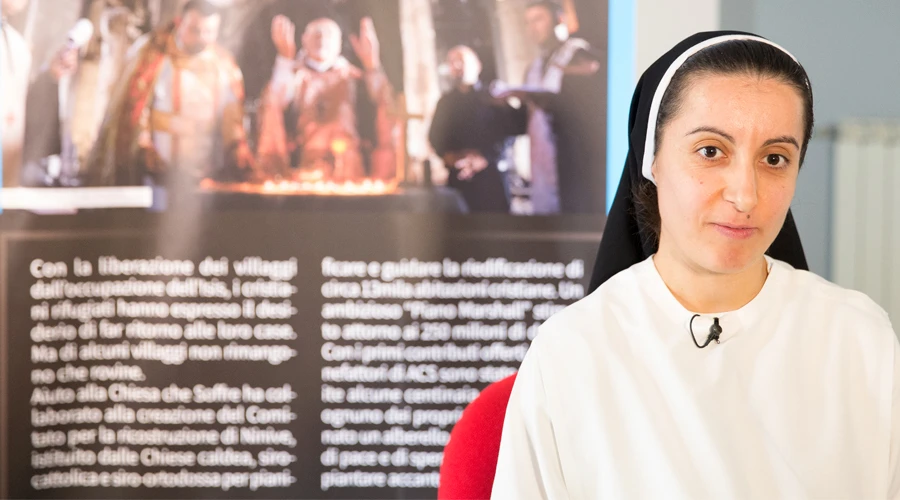
Rome, Italy, Oct 3, 2017 / 03:11 am (ACI Prensa).- Three years ago, there were 73 nuns with the Dominican Sisters of Saint Catherine of Siena living in Kurdistan. Since the Islamic State captured the Plain of Nineveh in 2014, one-third of them have died.

Sister Silvia is one of the survivors. Surrounded by devastation, she said that she is praying for those who persecute her community, and learning how to forgive them.

“We pray for them every day as sisters. We pray for them, for those bringing peace, for our soldiers, for those who help people have a better life,” she told CNA.

“This prayer helps us forgive – not to forget, because you can’t forget, but to not hate the other person. If we hate others, that means that we’re doing what the devil wants, not what Jesus wants.”

Silvia had been living with 35 of her fellow sisters at a convent in Qaraqosh, Iraq’s largest Christian city.

“When we knew that ISIS has arrived, the first thing we felt was fear – fear of being taken prisoner by them, fear of violence, fear of death.”

The sisters – whose community has lived in the Nineveh Plains and Kurdistan regions of Iraq for 120 years – were forced to flee in August 2015.

During ISIS’ occupation of the Nineveh Plain, some 100 places of worship were destroyed, mostly Christian churches.

Now, thanks to the support of the pontifical foundation Aid to the Church in Need, about 1,000 Christian families have returned to their homes. Since 2014, the foundation has allocated $36.6 million for food and housing projects for the displaced Christians in northern Iraq. The estimated cost of reconstruction of the Christian towns is $250 million.

Looking forward, Silvia says, she hopes to continue the religious mission to which she has dedicated her life.

“My dream is to live in peace,” she said. “Both my own peace, within myself – because we are also at war within ourselves – and the peace we physically live. Living in tranquility, in love, and helping the people know Jesus because he is love.”

“I say to all Christians that if we are really Christians, baptized in the name of Jesus, we must always trust in the fact that Jesus will be with them. Jesus is with us. Jesus never leaves us. Even if we turn away from him, he will wait for us to return,” she emphasized.

Little by little, Christians have begun to return to the Plain of Nineveh, but there still remains much to be done.

“We’ve asked Aid to the Church in Need for help in rebuilding our convent, and to allow people to return as soon as possible,” Sister Silvia said.

“Around 30 sisters will return. We will give hope to the people, we will help educate them, because we have schools to educate their children, and we will continue our catechesis in the churches and the schools,” she said.


This article was originally published by our sister agency, ACI Prensa. It has been translated and adapted by CNA.

[…]

Vatican conference tackles new technology and medicine

October 2, 2017 CNA Daily News 0

Vatican City, Oct 3, 2017 / 12:43 am (CNA/EWTN News).- Technology will be at the heart of an upcoming Vatican conference on accompanying human life in the digital era, particularly with regard to the medical field.

The conference will emphasize both the benefits and limits of new technology, and what those mean for the Church.

New technology has “an increasingly relevant impact on the various aspects, the various moments of human life,” Msgr. Renzo Pegoraro, chancellor of the Pontifical Acedemy for Life, said Oct. 2.

The Pontifical Academy for Life wishes to look at the positive aspects of technology and everything it has achieved “in the field of health, of human life, and the betterment of certain conditions and situations.”

However, while great helpful strides have certainly been made, Pegoraro said it’s also important to discuss “the dangers, the risks that are linked with a technology that is increasingly invasive and powerful, which can condition many aspects of human life.”

Pegoraro spoke at a news briefing on the academy’s upcoming general assembly, which is titled “Accompanying Life: new responsibilities in the technological era,” and will take place Oct. 5-7.

The conference marks the academy’s first general assembly since the renewal of their statutes last year, and will draw new academic members from 37 countries around the world.

Among the members are four honorary members; 45 ordinary members appointed by the Pope; 87 corresponding members named by Board of Directors; and 13 young researchers, a request of the new statutes. All members will serve for a five-year period.

In his comments to journalists, Pegoraro said the academy wants to start the discussion from a “positive perspective,” and stressed that there is “there is no fear of technology or immediate negative judgement” of its uses.

Rather, the goal is to recognize the positive and beneficial contributions of new technologies while also drawing attention to the risks.

The great challenge, he said, is finding an answer to the question: “what is the responsibility? What ethics are at play? What methods are there of managing this power, which has been entrusted to man’s responsibility?”

The program of the conference more or less follows the structure of the new charter for healthcare workers the Vatican published in February, and is divided into three main categories: issues surrounding the beginning of life, healthcare in general, and the themes relevant to the phase of the end of life.

Topics to be discussed include looming modern questions in the areas of reproduction, parenthood, illness, and death, as well as the consequences of what Pope Francis has often called a “throwaway culture.”

Discussion will also bring in elements of Pope Francis’ chapter on technology in his 2015 encyclical Laudato si’, raising questions such as: “Is the spread of technology is creating more justice and reducing certain inequalities? Or are inequalities growing?” Pegoraro said.

“Those who have this technology in hand, are they favoring global growth in various countries, especially in the relationship between the north and south of the world? Or do they run the risk of widening the gap between developed countries and those in the process of developing?”

He stressed the need to more clearly explore where the line should to be drawn between prolonging life and when to accept mortality, incorporating technology to reduce pain and help the person to have a “dignified death.”

Technology can help to keep a person comfortable, he said, but “it doesn’t defeat death.” So the great challenge, then, is “to find the lines that are respected for every person, especially the most weak, vulnerable and suffering.”

In comments to CNA, Archbishop Vincenzo Paglia, president of the academy, said there is an urgent need to reflect on life “not as if it were an abstract idea, but in the concrete reality of people of all ages, in the different conditions in which they live, so that human life rediscovers its meaning, its vocation, and also its responsibility in the entire context of the planet.”

So while beginning of life issues such as abortion or end of life issues such as euthanasia are crucial modern talking points, they aren’t the full picture, he said, explaining that the academy seeks to address “defending life in all its conditions,” including childhood, adolescence, and old age, as well as when it comes to other opics such as the death penalty.

“We interested in accompaniment at every moment, we are interested in making understood the contradiction of choices of new technologies in front of a humanistic vision,” he said, explaining that the recovery of a “humanistic” dimension is required for all “scientific areas that involve human life.”

Also present at the news briefing was Dr. Bernadette Tobin, Director of the Plunkett Centre for Ethics at the Australian Catholic University.

In comments to CNA, Tobin said that “new technologies require us to think out (about) medicines, healing, ethics, and thinking out how that can be provided for people in a way that respects their dignity as human beings.”

New technologies have helped ensure that people suffering from various diseases have cures, “and can now live out what you might call a natural lifespan rather succumbing to some of these terrible diseases.”

However, the reverse side “is that people are often kept alive in circumstances in which they simply would not want that to happen, and they simply feel that they don’t have a duty to accept what kind of healthcare is being offered to them,” Tobin said.

Because of this, “we need to think carefully about that, and help doctors who are looking after people at the end of their lives understand ethically and clinically what their responsibilities are because there is both over-treatement, and under-treatment, and we’ve really got to avoid both.”

New technologies, she said, have “augmented medicine’s ability” to pursue noble objectives such as pain relief, various cures and organ transplantation.

“This is a wonderful new set of technologies,” Tobin said, while cautioning there is always a challenge in ensuring “that what’s now possible is done in ways which respect both the internal ethic of medicine, and respect the dignity of the human being.”


[…]

Pope Francis’ retooling of the JPII Institute shows his modus operandi

October 2, 2017 CNA Daily News 2

Vatican City, Oct 2, 2017 / 05:00 pm (CNA/EWTN News).- The September 19 re-establishment of the Pontifical John Paul II Theological Institute for Science on the Family and Marriage is a good object lesson in the modus operandi of Pope Francis. It offers observers some helpful lessons about the Roman Pontiff’s leadership style.

The John Paul II Pontifical Institute, founded by the late Polish Pope, whom Pope Francis calls the “Pope of the Family”, has developed as well-respected institution in theological circles. It is known to foster and promote theological discussions on family and marriage issues at twelve campuses around the world.

The institute’s work was mentioned in the 2014 Synod on the Family’s instrumentum laboris – its working document. It is worth noting, however, that no professors of the institute were invited to serve as theological experts to the 2014 Synod.

Fr. José Granados, however, who is one of the institute’s most prominent faculty members, was included among the participants of the 2015 Synod.

Nevertheless, some have suggested the institute seems to have been sidelined under Pope Francis.

The appointment of Archbishop Paglia as Grand Chancellor of the institute, together with the appointment of Professor Pierangelo Sequeri as its president, were interpreted as a shift away from the institute’s ordinary approach, which some speculated the Pope considered too traditional.

With the motu proprio refounding the institute, Pope Francis apparently wanted dispel any perception that he had sidelined the institute.

Speaking with journalists Sep. 20, Sequeri remarked twice that “the Pope renews an institute that was considered sidelined, and involves the same professors of the institute in this renewal.”

The institute’s new direction will not take shape until its statutes are drafted. It is possible that some faculty members will be involved in the drafting process. The Pope, however, gave clear indication of his intentions in the motu proprio.

According to Archbishop Paglia, the new institute will broaden its focus to include history, economics, and other social sciences.The social science focus will include a new endowed chair, to be named for  Gaudium et Spes, the Second Vatican Council’s pastoral constitution on the Church in the modern world.

However, much remains uncertain about the institute’s future. Nothing is known about how the new statutes will be developed, nor if the institute’s present professors will be invited to stay on.

So how can the establishment of this new theological institute can give clues about Pope Francis’ modus operandi?

First of all, it is clear that Pope Francis wants to make every reform very personal. He issued a motu proprio to renew a Pontifical Institute, an unusually involved step that might ordinarily be delegated, which seems intended to connect his desired reforms to his name and to his authority.

Likewise, this reform follows his pattern: all the others reforms he has enacted in the Curia have begun with a motu proprio or a chirograph.

In general, the Pope has left the details to be determined after announcing his intentions – discussion of the statutes of the new dicasteries has typically come after his announcements.

He has done the same with the new John Paul II Theological Institute. He issued a motu proprio, setting the direction, and he left the discussion of statutes, which govern the practical details of reform, to others.

A second characteristic of Pope Francis’ leadership style is that he likes to do reform “in the making.”

What does this mean? A response to the question can be provided by Pope Francis’ apostolic exhortation Evangelii gaudium.

In the exhortation, the Pope stressed that “giving priority to time means being concerned about initiating processes rather than possessing spaces”, and so “what we need, then, is to give priority to actions which generate new processes in society and engage other persons and groups who can develop them to the point where they bear fruit in significant historical events. Without anxiety, but with clear convictions and tenacity.”

The Pope begins reforms, and then he waits for things to organically move in the direction for which he is calling.

Finally, it is an old saying in leadership that “people are policy.” Pope Francis seems to approach personnel decisions uniquely. Rather than firing people, the Roman Pontiff prefers to add new people or new groups to decision-making processes, in order to rebalance the general discussion.

At the renewed John Paul II Institute, it seems unlikely that the Pope will dismiss the full professors, who are hired into tenured positions. Instead, he will add to the faculty new chairs on different topics in order to broaden the conversation.

And then, if history is a good predictor, he will wait to see what happens next.


[…]