Parents must be involved in child’s education, Pope Francis says
January 5, 2018 CNA Daily News 0

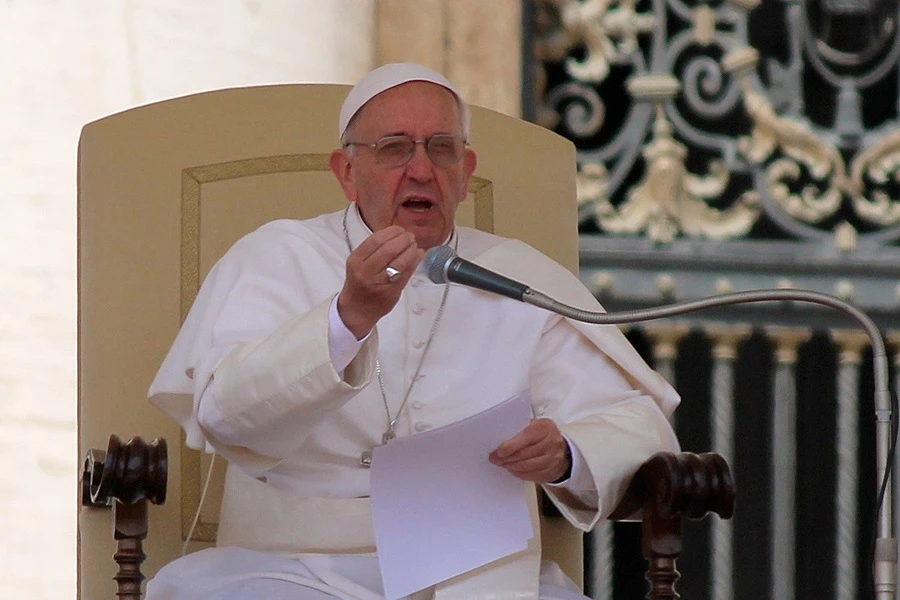
Vatican City, Jan 5, 2018 / 06:14 am (CNA/EWTN News).- On Friday Pope Francis said education is a family matter, and rather than contradicting one another, parents and teachers must collaborate openly and constructively to form children in core values which enable them to face modern challenges.

Speaking of the relationship between education and the family, the Pope said “everyone knows that this relationship has been in crisis for some time, and in certain cases is completely broken.”

At one point there was a mutual reinforcement between the instructions given by teachers and those given by the parents, however, “today the situation has changed.”

“But we cannot be nostalgic for the past,” Pope Francis said. Rather, we must make careful note of the changes that have affected both the family and schools, and renew our commitment “for a constructive collaboration for the good of children and young people.”

If this synergy no longer occurs in a “natural way,” he said it must be promoted with a planning approach, and if necessary with the contribution of experts in the educational field.

To do this, he stressed the need for “a new ‘complicity’ between teachers and parents. Above all to renounce thinking like opposing fronts, blaming each other.”

On the contrary, parents and teachers must put themselves in the shoes of the other, “understanding the objective difficulties that one and the other encounter today in education, thus creating greater solidarity.”

Pope Francis spoke to members of the Italian Association of Catholic Teachers at the conclusion of their national congress, which took place Jan. 3-5 in Rome.

He has stressed the importance of the relationship between parents and their children’s teachers before, using examples from his own past experience to drive the point home.

In his speech Friday, Francis also touched on the importance of building a culture of encounter from a young age and spoke of the need for a more solid education in ecology.

He encouraged those present to strive to build a culture of encounter in “an even more extensive and incisive way” than has been done in the past.

This “cultural challenge” is the basis for primary education, when children are still young, he said, explaining that Christian teachers, whether they are in Catholic or state-run schools, “are called to stimulate in the students an openness to the other as a face, as a person, as a brother and sister to know and respect with their story, with their merits and defects, their richness and limits.”

Francis said this also means forming youth who are open to an interested in the reality around them, who are capable of tenderness and free from the “widespread prejudice” which insists that to be worth something, “you must be competitive, aggressive, harsh toward others, especially toward those who are different,  a stranger or whoever in any way is seen as an obstacle to their own affirmation.”

Unfortunately, this is “the air” that children often breathe, he said, adding that the remedy is to make it so that they can breathe “a different air which is healthier, more human.”

To accomplish this, the relationship between teachers and parents “is very important,” he said.

Pope Francis also pointed to what he sees as the need for a greater ecological education, which he said doesn’t consist of just a few notions that are taught in the classroom, but instead means educating students in a lifestyle based on care for creation and the common home.

He stressed the need for “a lifestyle that is not schizophrenic,” such as that lived by those who care about animals going extinct but ignore the problems faced by the elderly, or those who defend the Amazon forest but neglect workers’ right to a just salary.

“The ecology in which to educate must be integral,” he said, adding that all education “must point to the sense of responsibility: not to transmit slogans that others should implement, but to rouse the taste of experiencing an ecological ethic starting from everyday choices and actions.”

Francis also touched on the importance of making and being part of associations, saying they are a value that shouldn’t be underestimated, but must rather be continually cultivated.

“I urge you to renew your will to be and make associations in the memory of the inspiring principles, in reading the signs of the times and with a gaze open to the social and cultural horizon,” he said, and told participants not to be afraid of the challenges and even conflicts that can often arise in lay associations.

Rather than being hidden, these differences must be confronted “with an evangelic style in search of the true good of the association,” he said, explaining that to be an association “is a value and a responsibility, which right now is entrusted to you.”

Pope Francis closed his speech thanking the participants for their presence and their work, and asked for their prayers.

[…]

Commentary: A Catholic moment in US politics?

January 5, 2018 CNA Daily News 1

Washington D.C., Jan 5, 2018 / 02:51 am (CNA).- It’s been a little over a year since the 2016 election that polarized the nation and left deep political divides among family and friends.

Another election may be the last thing many Americans want to think about, but with midterm races just 10 months away, the already tense political rhetoric is about to become even more heated.

This election season comes at a time of broad dissatisfaction with America’s major political parties. Harvard’s Institute of Politics recently found that only 29% of young Americans age 18-29 had a strong party affiliation.

An NBC / University of Chicago survey found that just 26% of American adults said the Republican and Democratic parties are doing an adequate job representing the American people, while 71% said a third party is needed.

What would a viable third party look like? Is a third party even possible, or is it more likely that we will see major party leaders scramble to recover eroding loyalties by redefining party values and principles?

It’s always tough to predict what will happen in politics. But since Catholics make up roughly 1 in 4 U.S. voters, they have a chance to shape the trajectory of existing and new political parties over the next few years.

And in fact, Catholics have a duty to shape the political landscape. The US bishops have repeatedly taught that Catholics should take an active role in the political process; discouraging blind partisanship, and encouraging that, “our participation should help transform the party to which we belong.”

In order to do this, we first have to understand what the Church teaches about politics. What exactly is the nature and purpose of the state? Catholics on both sides of the aisle often claim that their party’s view of government embodies the vision of Christ. But is that true?

In 1991, as the Soviet Union collapsed and the Cold War drew to a close, Pope John Paul II penned a momentous encyclical, Centesimus annus. In it, he reflected on another encyclical, Rerum novarum, the work by Pope Leo XIII that had laid out the foundations of Catholic social thought one hundred years earlier.

Through the lens of Rerum novarum, and looking at the events taking place in his own time, John Paul II wrote:

“The Marxist solution has failed, but the realities of marginalization and exploitation remain in the world, especially the Third World, as does the reality of human alienation, especially in the more advanced countries. Against these phenomena the Church strongly raises her voice.”

However, the Pope didn’t stop there. He continued:

“Vast multitudes are still living in conditions of great material and moral poverty. The collapse of the Communist system in so many countries certainly removes an obstacle to facing these problems in an appropriate and realistic way, but it is not enough to bring about their solution. Indeed, there is a risk that a radical capitalistic ideology could spread which refuses even to consider these problems, in the a priori belief that any attempt to solve them is doomed to failure, and which blindly entrusts their solution to the free development of market forces.”

The words of John Paul II have been echoed by his successors. Both Benedict XVI and Francis have had sharp criticisms for Marxism and for an “unbridled capitalism” that relies entirely upon the machinations of the free market, without recognizing the need for values that can only be upheld through intentional human action.

So what does the Church propose? John Paul II clarifies: “The Church has no models to present; models that are real and truly effective can only arise within the framework of different historical situations, through the efforts of all those who responsibly confront concrete problems in all their social, economic, political and cultural aspects, as these interact with one another.”

In other words, it’s up to Catholics to work for the best solution we can in our current circumstances.

What does it mean to put the Church’s social teaching into practice in 21st century America? It’s a complex question, but before we can even start proposing answers, we need to know what the Church’s social teaching is.

What does it mean to say that the dignity of the human person “is the foundation of all the other principles and content of the Church’s social doctrine,” or to say that “society and the State exist for the family”? What are the principles of the common good, solidarity, and subsidiarity? What is the universal destination of goods and how does it relate to private property? What is the preferential option for the poor?

Again and again, the bishops have clarified that it is not the Church’s role to tell people whom to vote for at the ballot box. Rather, the Church talks about issues and principles. To understand what the Church teaches about the issues – from abortion to migration – and to exercise the prudential judgment necessary to turn those ideas into policies, we must first understand the foundational principles. John Paul II describes the Church’s social teaching as “an indispensable and ideal orientation,” a viewpoint, and a framework on which to build.

As we enter into what is certain to be a heated election year, why not make it a (belated) New Years Resolution to learn more about Catholic social teaching? Centesimus Annus is a great place to start. So is the Compendium of the Social Doctrine of the Church. To catechists, teachers, and members of the clergy: Why not resolve to teach the Church’s social doctrines more frequently, to help equip Catholics as they prepare to vote?

Educating ourselves on these issues can help us be better citizens, and better Catholics. In the words of Pope Francis: “A good Catholic meddles in politics, offering the best of himself, so that those who govern can govern.”

[…]

Venezuelan cardinal calls for transparent elections to resolve crisis

January 4, 2018 CNA Daily News 2

Caracas, Venezuela, Jan 4, 2018 / 05:19 pm (ACI Prensa).- In his New Year’s message, the Archbishop of Caracas encouraged transparent elections the results of which the citizenry could trust, in order to alleviate the grave crisis affecting the country.

“The year 2017 was very tragic for Venezuela, marked by political violence with a terrible toll of more than 120 persons killed in attacks on demonstrations held by the people,” read the message of Cardinal Jorge Urosa Savino.

Venezuela is experiencing a severe economic crisis, with hyperinflation and chronic shortages of food and medicine.

Its socialist president, Nicolas Maduro, is due to run for re-election this year, as his term ends in 2019. Last July, contested elections led to the formation of a Constituent Assembly, which has superseded the authority of the National Assembly, Venezuela’s opposition-controlled legislature.

Mass protests against the Constituent Assembly were held, in which more than 120 people were killed by security forces.

After rejecting violence “wherever it comes from” and encouraging the peaceful defense of everyone’s rights, the cardinal’s message stated that “in order to resolve this situation, which has its roots in the political problem, it is necessary to hold the presidential elections for which the constitution calls. But for that, it is necessary to guarantee fair and reasonable conditions for elections with transparency and whose results the people can trust.”

Cardinal Urosa was joined in his message by his four auxiliary bishops. The text is to be read in the parishes of the Caracas archdiocese Jan. 6-7.

The cardinal and his auxiliary bishops reiterated their call to release “prisoners held for actions related to political activities.” The bishops’ message stated that “We are pleased that some positive steps have already been taken in that regard.”

More than 180 political prisoners have been held in Venezuela, and the government announced it would release 80 of them as a goodwill gesture for Christmas.

 Given the serious shortage of food the prelates urged solidarity, with concrete actions such as “soup kitchens and with everything that can alleviate the tragedy of the poor, especially malnourished children.”

The message also noted that “moved by our faith and full of hope despite so many difficulties, we begin this 2018 New Year with sentiments of trust in God and hopeful of a happier world for us, our families, and our beloved Venezuela.”

“To accomplish this let us recall that God grants happiness only to those who listen to his word and fulfill it,” they continued.

“Let us ask God to help us to go by the only way to happiness, the way of Jesus that our holy Catholic religion teaches us,” they exhorted.

To arrive at happiness, they said, “let us resolve to lead a religious life, drawing close to the Lord, especially celebrating on Sundays his glorious resurrection in the Holy Eucharist, living a life closer to God, the sole source of true happiness.”  

Concluding their message, the bishops asked God that the political leaders, “whether in the ruling party or in the opposition, may have the light and strength to act on behalf of the common good, with a truly patriotic spirit, to resolve the pending problems.”

Frustration in Venezuela has been building for years due to poor economic policies, including strict price controls coupled with high inflation rates, which have resulted in a severe lack of basic necessities such as toilet paper, milk, flour, diapers, and medicines.

Venezuela’s socialist government is widely blamed for the crisis. Since 2003, price controls on some 160 products, including cooking oil, soap and flour, have meant that while they are affordable, they fly off store shelves only to be resold on the black market at much higher rates.

The International Monetary Fund has forecasted an inflation rate of 2,300 percent in Venezuela in 2018.


This article was originally published by our sister agency, ACI Prensa. It has been translated and adapted by CNA.

[…]

Assisted suicide opponent remembered for his strength, determination

January 4, 2018 CNA Daily News 0

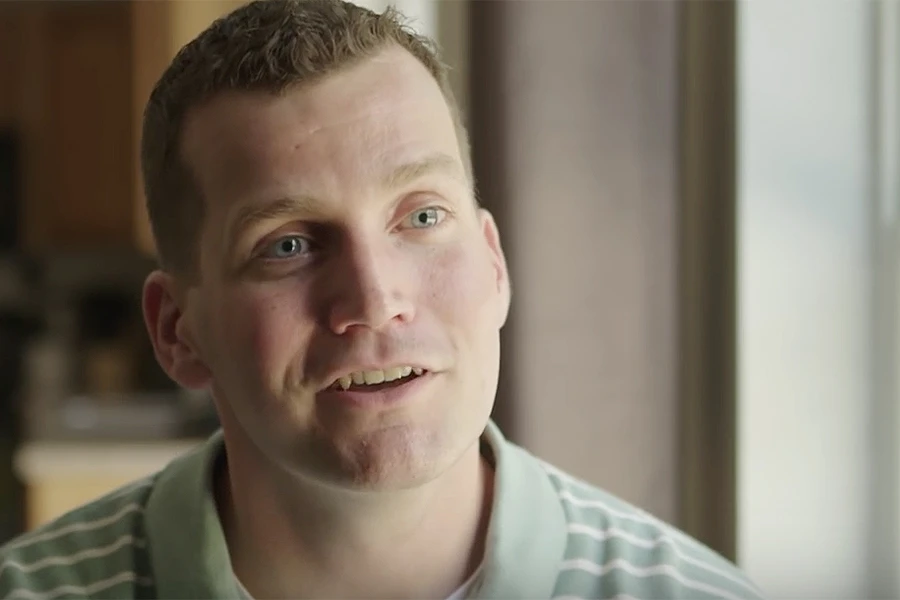
New York City, N.Y., Jan 4, 2018 / 05:08 pm (CNA/EWTN News).- The funeral for J.J. Hanson, an outspoken assisted suicide opponent, was celebrated Thursday. He was remembered for his strength, faith, and determination.

Hanson died of brain cancer on Saturday at the age of 36. He is survived by his wife, Kristen, and his sons James and Lucas.

“He [J.J.] was one of the most optimistic persons I’ve met in my life,” said Fr. Joselin Berkmans during the homily at Hanson’s Mass of Christian Burial, held Jan. 4 at the Church of St. Anthony of Padua in Yulan, N.Y., about 90 miles northwest of New York City.

“What a great spirit he had. He never worried about his life, but always wanted to be the hope for all who were around him,” Fr. Berkmans continued.

Hanson’s death was felt by many in the New York area, including Bishop Edward Scharfenberger of Albany.

“As we mourn the loss of our friend and fellow advocate, James “J.J.” Hanson, we choose not to focus on the great sorrow surrounding his death,” Bishop Scharfenberger said on Twitter.

“Instead, today, we choose to focus on the great good J.J. did during his time on earth, especially during the past few years of his life when his battle with cancer became for him an opportunity to show the strength of his faith and the power of love and determination,” Bishop Scharfenberger continued.

In 2014, Hanson was diagnosed with glioblastoma, a terminal brain cancer, the same illness that led Brittany Maynard to take her own life in California three years ago, and given four months to live.

While given a life expectancy of only a few months, Hanson was surrounded by a positive support group and a loving family. Hanson said that during his darkest moment, he might have opted for assisted suicide, but instead chose to pursue alternative treatments. He lived three years longer than expected.

“Here I am three years later, enjoying the arrival of our second son and living life to the fullest,” Hanson said in October 2017.

Throughout his battle with cancer, Hanson became a passionate opponent of physician-assisted suicide and was the president of the Patients Rights Action Fund, an organization which fights efforts to legalize assisted suicide.

He was also actively involved with the New York State Catholic Conference and the New York Alliance Against Assisted Suicide, where he fought against the passage of a bill that would have legalized assisted suicide in the state of New York.

Hanson additionally served as a former aide to Govs. Eliot Spitzer and David Paterson.

“He outlived that death sentence by more than three years, giving hope and inspiration to thousands of people during that time,” remembered Kathleen M. Gallagher, director of pro-life activities for the New York State Catholic Conference, according to the conference website.

“J.J. lived his motto: ‘Every day is a gift, and you can’t ever let that go,’” Gallagher continued.

[…]

State Department names 10 countries as worst religious freedom offenders

January 4, 2018 CNA Daily News 0

Washington D.C., Jan 4, 2018 / 04:02 pm (CNA/EWTN News).- The State Department on Thursday unveiled its list of countries designated as the worst offenders against religious liberty. Advocates of religious freedom applauded the list, but said that several additional countries should have been added.

The countries of Burma, China, Eritrea, Iran, North Korea, Sudan, Saudi Arabia, Tajikistan, Turkmenistan, and Uzbekistan were labeled as “Countries of Particular Concern” (CPC) in the State Department’s report. The 10 countries on the CPC list are unchanged from last year.

In addition, Pakistan was placed on a “Special Watch List,” which is a new category below that of Countries of Particular Concern.

A country is labeled as a CPC after it engages in “systemic, ongoing, [and] egregious” violations of religious liberty. The “Special Watch List” is for countries that “engage in or tolerate severe violations” of religious liberty, but not to the extent of a CPC.

The U.S. Commission on International Religious Freedom (USCIRF), a government commission created in 1998 to study religious liberty around the world, praised the inclusion of the 10 CPC counties, but said that several others should have been added.

The commission had recommended that Russia, Vietnam, Syria, Nigeria, and the Central African Republic be added, and that Pakistan should have been included on the list of CPCs, rather than the lower designation of “Special Watch List.”

“The designation of these countries is a key step in ensuring continued U.S. engagement in support of international religious freedom. Although USCIRF agrees with the 10 countries on the State Department’s list, it does not go far enough,” said Daniel Mark, chairman of the commission, in a press release.

Mark said it was a “surprise and disappointment” that Pakistan was not added to the list of CPCs, especially given President Donald Trump’s past criticism of the nation, which has engaged in state-sponsored discrimination against religious minority groups, and has anti-blasphemy laws.

Vietnam was previously designated as a CPC, but was taken off the list about a decade ago, in opposition to USCIRF’s recommendation. The commission has since called for it to be re-added to the list.

House Foreign Affairs Committee Chairman Rep. Ed Royce (R-Calif.) questioned why Vietnam was omitted from the list of CPCs. Royce said Vietnam has regularly violated both religious liberty and other basic human rights, and that it is the United States’ responsibility to call out these violations.


Chairman Royce writes: “Religious freedom is a fundamental human right, yet far too  many people around the world are still persecuted, imprisoned, and killed solely  because of their beliefs. It is our responsibility, as Americans, to speak for those with no voice.”

— Jason Calvi (@JasonCalvi) January 4, 2018


Russia was also among the countries that the State Department omitted from its list of CPCs. USCIRF had called for it to receive the designation, in part due to an anti-extremism law that has been used to label Jehovah’s Witnesses as an extremist group, banning them from legally gathering or preaching in the country.

<blockquote class=”twitter-tweet” data-lang=”en”><p lang=”en” dir=”ltr”>????RUSSIA notes in this thread. <br>State Dept. doesn't name Russia a <a href=”https://twitter.com/hashtag/ReligiousFreedom?src=hash&amp;ref_src=twsrc%5Etfw”>#ReligiousFreedom</a> Country of Particular Concern, even though the US Commission on International Religious Freedom recommended that designation. <a href=”https://t.co/s9She8I9KD”>https://t.co/s9She8I9KD</a></p>&mdash; Jason Calvi (@JasonCalvi) <a href=”https://twitter.com/JasonCalvi/status/948987873843400704?ref_src=twsrc%5Etfw”>January 4, 2018</a></blockquote>
<script async src=”https://platform.twitter.com/widgets.js” charset=”utf-8″></script>


[…]

US bishops extend sympathy at death of Mormon Church president

January 4, 2018 CNA Daily News 5

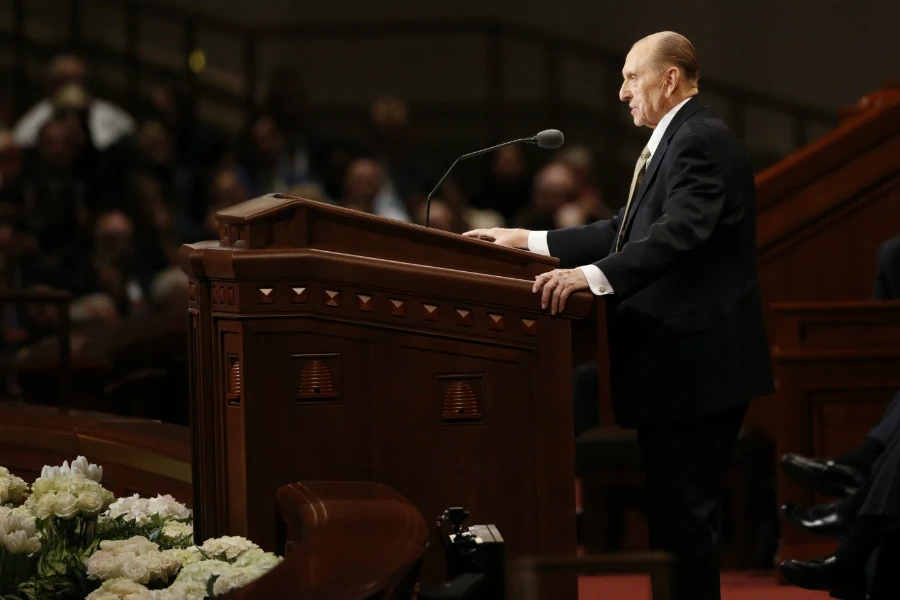
Salt Lake City, Utah, Jan 4, 2018 / 11:40 am (CNA/EWTN News).- Thomas Monson, president of the Mormon Church, died Tuesday at the age of 90, leading Catholic bishops to offer not prayer and praise for a man dedicated to philanthropic works.

“President Monson was an advocate of unity and believed in the goodness of each person. He embraced people regardless of faith, seeing in them the image of Jesus,” Bishop Oscar Solis of Salt Lake City said Jan. 3.

“He was a ‘human’ touch of kindness and dignity that will long be treasured. We join in prayer with the LDS faithful at this difficult time.”

Monson, 16th president of the Church of Jesus Christ of Latter-day Saints, died of natural causes Jan. 2 at his home in Salt Lake City. The leader of the 15.8 million-member religion had a strong dedication to the poor. He had been president of the religion since 2008.

According to The Salt Lake Tribune, Monson would make surprise visits to sick children or bereaving widows. Additionally, former Utah legislator Stuart Reid said Monson had modified the LDS Church’s three-fold mission to include a fourth – an outreach to the poor.

“The President has been a good friend and supporter in our mutual efforts to support the common good and care for the most vulnerable both at home and abroad,” continued Bishop Solis.

“Catholic Community Services as well as the Good Samaritan Program have benefited from his commitment to the poor.”

Born in 1927 in Salt Lake City, Monson was always an active member of the Mormon Church. He served on one of the religion’s governing bodies, the Quorum of the Twelve Apostles, from 1963 until his 2008 appointment as president.

Monson’s funeral services will be held Jan. 12 in Salt Lake City.

Cardinal Daniel NiNardo of Galveston-Houston, president of the US bishops’ conference, offered his condolences to the leaders and members of LDS Church and promised to pray for Monson, whom he said aided friendship between Catholics and Mormons.  

“During his tenure as president, understanding and friendship developed between our two communities on national and local levels,” he said Jan. 3. “As we engage important questions on family and the dignity of the human person, Catholics and Mormons work together and support each other. Today, Catholics join their Latter-day Saints brothers and sisters in commending his soul to the mercy and love of God.”

The Mormon Church, a nontrinitarian religion, was founded in the 19th century in New York.

[…]

Pope Francis prays for victims of tragic bus accident in Peru

January 4, 2018 CNA Daily News 0

Vatican City, Jan 4, 2018 / 05:28 am (CNA/EWTN News).- On Thursday Pope Francis offered his prayer for the 48 people who died in a gruesome bus accident in Pasamayo earlier this week, voicing words of comfort to families of the victims and all who were wounded.

In a Jan. 4 telegram, the Pope said he was “deeply saddened to learn of the painful news of the traffic accident in Pasamayo,” and offered prayers “for the eternal repose of the deceased.”

Signed by Vatican Secretary of State Cardinal Pietro Parolin, the telegram conveyed Pope Francis’ consolation “to the families who weep for such a grievous loss,” and assured of his his spiritual closeness to the wounded.

The telegram closed asking that God would “pour out on all the gifts of spiritual serenity and Christian hope,” and imparting Francis’ “heartfelt apostolic blessing” to all those who are affected.

It comes after at least 48 people were killed when a bus collided with a tractor-trailer on a narrow road along Peru’s coast Tuesday.

In the accident, which took place in the Peruvian city of Pasamayo, about 43 miles north of Lima, the bus plunged form the highway onto the rocks below, killing the majority of the 57 passengers on board.

Due to its proximity to the cliff and the heavy fog that frequently shrouds visibility, the stretch of highway where the accident happened is often called “the Devil’s Curve.”

Numerous people have died in previous accidents on that stretch of highway. In 2015 some 37 people died in an accident involving three buses and a truck, and in 2013 at least 51 of Peru’s Quechua indigenous people died when their bus fell from the cliff into a river.

According to the Washington Post, only six people survived Tuesday’s incident, and three are still missing.

[…]

Report: Government funds largest source of Planned Parenthood revenue

January 4, 2018 CNA Daily News 0

Washington D.C., Jan 4, 2018 / 05:00 am (CNA/EWTN News).- Planned Parenthood reported that it received more than $500 million in government funding last year, while performing more than 300,000 abortions across the United States.

The country’s largest abortion provider released its 2016-2017 annual report this weekend, reporting that while the organization is seeing fewer patients than in previous years, revenue from government sources remains mostly stable. The report also showed increased excess revenues for the organization.

In the 2016-2017 fiscal year, Planned Parenthood saw 2.4 million patients at its 600 health centers, and performed 321,384 abortions. Though the number of abortions decreased slightly from the prior year, Planned Parenthood’s abortion numbers have increased 10 percent over the past decade, despite seeing about 600,000 fewer patients. In 2006, Planned Parenthood reported that they performed 289,750 abortions, and served 3.1 million patients.

Planned Parenthood’s excess revenue increased from the prior fiscal year, from $77.5 million to $98.5 million, an increase of 27 percent.

Despite seeing fewer patients, Planned Parenthood’s taxpayer funding has increased by 61 percent in the past decade, from $336.7 million in 2006 to $543.7 million in 2016.

CEO Cecile Richards bemoaned a “historic threat” to Planned Parenthood in the report, stemming from legislative efforts at the state and federal level to regulate or defund Planned Parenthood.

Despite defunding efforts, the organization received only two percent fewer tax dollars in 2016 than in 2015. “Government Health Services Reimbursements & Grants” constituted the largest source of funding for Planned Parenthood in 2016-2017, providing 37 percent of the organization’s revenue.  

The majority of Planned Parenthood’s expenses, 60 percent, were for “medical services.”

The report showed that the number of patients receiving contraceptive services from Planned Parenthood declined last year, as it has since 2009. That year, Planned Parenthood provided 4,009,549 contraceptives to patients, a number that was nearly halved by 2016. Most of Planned Parenthood’s birth control services are oral contraceptives, the report said, although there was an increase in the number of IUDs implanted in 2016 compared to 2015.

Cancer screenings and prenatal care also declined over the past year. While adoption referrals increased, Planned Parenthood performed about 82 abortions for every child that was referred for adoption.

In light of the report showing a significant, growing, profit, pro-life advocates are continuing to calling for Planned Parenthood to be defunded by state and federal legislatures.

“Enough is enough,” said Marjorie Dannenfelser, president of the pro-life Susan B. Anthony List, in a Jan. 3 statement. “Community health centers vastly outnumber Planned Parenthood facilities nationwide and offer comprehensive primary and preventative care for women and families. Congress must follow through on the promise to redirect tax dollars away from Planned Parenthood without further delay.”

<blockquote class=”twitter-tweet” data-lang=”en”><p lang=”en” dir=”ltr”>In looking at <a href=”https://twitter.com/PPact?ref_src=twsrc%5Etfw”>@PPact</a>'s latest annual report, more than 82 abortions were performed for every 1 adoption referral. You have to ask –  how much choice is Planned Parenthood advocating for their vulnerable patients?</p>&mdash; Catherine Szeltner (@CatSzeltner) <a href=”https://twitter.com/CatSzeltner/status/948263568440426497?ref_src=twsrc%5Etfw”>January 2, 2018</a></blockquote>
<script async src=”https://platform.twitter.com/widgets.js” charset=”utf-8″></script>

<blockquote class=”twitter-tweet” data-lang=”en”><p lang=”en” dir=”ltr”>As I’ve stated before (and setting aside the fungible aspect of $), I don’t care if the dollars that Planned Parenthood receives from the government go to purchase fish tanks for waiting rooms. Their organization takes lives, and that is unacceptable.</p>&mdash; Kimberly Ross (@SouthernKeeks) <a href=”https://twitter.com/SouthernKeeks/status/948347629590728704?ref_src=twsrc%5Etfw”>January 3, 2018</a></blockquote>
<script async src=”https://platform.twitter.com/widgets.js” charset=”utf-8″></script>

Left unmentioned in the report was that 32 Planned Parenthood facilities have closed during the last year.


[…]