Reversing course, FEMA allows religious groups to receive disaster aid

January 3, 2018 CNA Daily News 0

Washington D.C., Jan 3, 2018 / 04:30 pm (CNA/EWTN News).- The Federal Emergency Management Agency announced Tuesday that houses of worship will now be eligible to receive federal disaster relief funds, after outcry from religious leaders in the wake of Hurricane Harvey.

Previously, these FEMA funds were limited to private nonprofits that were not affiliated with a religion, such as museums, libraries, community centers, and homeless shelters.

“Effective for any major disaster declared on or after August 23, 2017, private nonprofit organizations operating a house of worship are now eligible under the FEMA Public Assistance Program,” the agency’s administrator wrote to Texas Gov. Greg Abbott Jan. 2.

Abbott and Texas Attorney General Ken Paxton announced Wednesday that FEMA had granted their request to permit houses of worship to gain access to these disaster relief funds.

Abbott and Paxton had sent President Donald Trump a letter in September arguing that houses of worship were no different than other nonprofits, and had even assisted FEMA with their recovery efforts. Yet due to past FEMA policy, these organizations were barred from funds.

Three Texas churches that were damaged during Hurricane Harvey had filed suit saying that they were being discriminated against for their religious beliefs as their requests for aid had been denied by FEMA.

Now, FEMA will permit houses of worship damaged during the hurricane to retroactively apply for aid, and any other church damaged in a storm in the future will also be eligible for these funds.

Abbott praised FEMA for changing this policy, and also thanked various religious organizations for playing a “vital role” in the area’s ongoing recovery since Harvey made landfall in late August.

“Churches and other houses of worship continue to play a vital role in the ongoing recovery effort, and their ability to receive the same assistance available to other nonprofits should never have been in doubt. I thank FEMA and the Administration for their commitment to helping Texans and the churches that have helped their communities throughout the recovery and rebuilding process,” said Abbott in a statement.

Catholic and Jewish leaders penned an opinion piece in USA Today in September encouraging legislation which would end discrimination against religious organizations in disaster aid.

Echoing Abbott’s praise was Knights of Columbus CEO Carl Anderson, who said the Knights were grateful FEMA had agreed to assist churches, and that the damage caused by these particular storms had necessitated government help.

“Having stepped into the breach to help meet the great needs of the affected communities, we welcome the significance of FEMA’s decision.The destruction due to the flooding and hurricanes is of such a magnitude that the government must help in the response.”

The Knights of Columbus raised $3.8 million for disaster assistance in the immediate aftermath of the 2017 hurricane season. In addition to relief efforts in Texas, the Knights of Columbus donated $100,000 to the Archdiocese of San Juan to assist with rebuilding efforts in Puerto Rico following Hurricane Maria.

[…]

Bishop Barron: Don’t water down Christianity

January 3, 2018 CNA Daily News 1

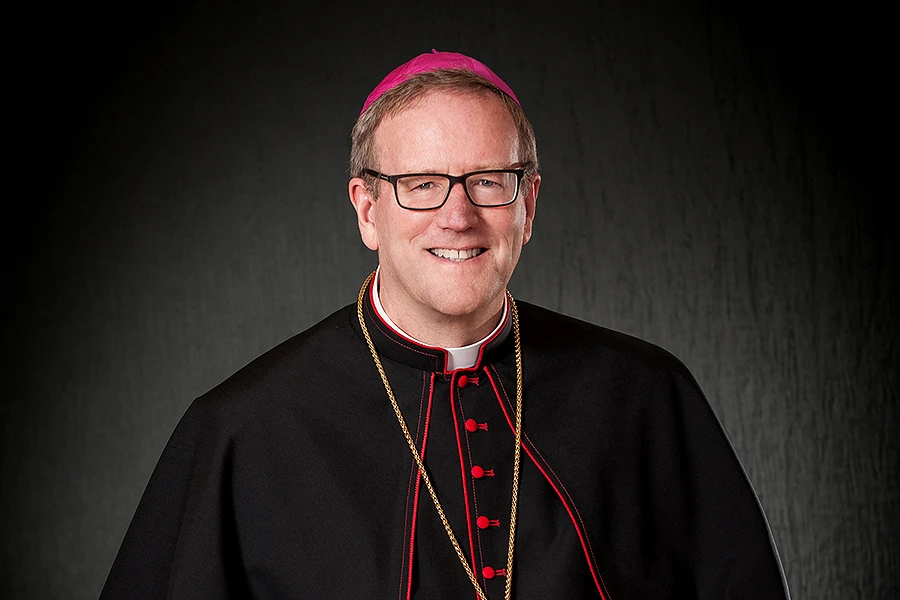
Chicago, Ill., Jan 3, 2018 / 01:21 pm (CNA/EWTN News).- Speaking to some 8,000 people at a Catholic leadership conference, Bishop Robert Barron said on Tuesday that trust in the risen Christ should give us the courage to preach the truth boldly.

“Through the Holy Spirit, the ascended, risen Christ commands his mystical Body the Church to do what he did, and to say what he said. That’s it…that’s the task of the Church to the present day.”

Barron, the auxiliary bishop of Los Angeles, is also the founder of Word on Fire Catholic Ministries and host of the award-winning “Catholicism” documentary.  

He delivered one of the opening keynotes at this year’s Student Leadership Summit in Chicago. Known as SLS, the summit is hosted by the Fellowship of Catholic University Students (FOCUS) every other year. It aims to train student leaders and other ministers with tools for evangelization and missionary work, largely on college campuses.

This year’s SLS drew more than 8,000 participants, more than double the attendance of the last summit, hosted in 2016 in Dallas with approximately 3,400 participants.

In his talk, Bishop Barron focused on the Acts of the Apostles, a Biblical book that he said “sets the agenda for us” in the work of evangelization.

He noted that this book begins with an account of Jesus’ ascension, comparing Christ’s glorified position in heaven to that of a general who commands his army at a vantage point from above.

“It tells us very clearly who’s in charge, and what I mean by that is, the ascended Christ who now commands his Church.”

Moving on from the Ascension to the account of Pentecost, Barron said that the descent of the Holy Spirit compels us to spread the Word of God. The Holy Spirit comes to earth to guide the Church, he said, led by the ascended Christ from heaven.

“In a myriad ways, according to your particular missions, bring something of heaven to earth, doing as Jesus did,” the bishop exhorted attendants.

In bringing the message of heaven to earth, Catholics should be careful not to water down the Gospel or fall for bland and uninspiring half-truths, he said.

He recalled an encounter that he had with Biblical scholar Scott Hahn, who remarked that “there is no historical basis for the for the claim that St. Francis said, ‘Preach always, and when necessary, use words.’”

While indeed “our whole life should be a kind of preaching,” Barron said, the statement attributed to St. Francis can become a problem when it is “used as a justification for a kind of pastoral reductionism,” for example, the idea that “what it all really comes down to is taking care of the poor.”

While caring for the poor is important, Barron said, this work “in and of itself can never be evangelically sufficient.”

“This is not the time for anti-intellectualism in our Church! We have lots of young people, you know them, they’re your friends and colleagues, who are leaving the Church for intellectual reasons,” Barron said.

He called for a kind of “bold speech” needed to proclaim the Gospel, pointing to the preaching in the early Church, which challenged the widely held belief at the time that “Casear is Lord.”

“The bold speech of the Church is that not ‘Caesar,’ or any of his colleagues or predecessors or successors, but rather Jesus is Lord, Jesus is the king. And he is also Christos, anointed.”

The Roman empire at the time, Barron said, was rather liberal with regards to new religions, yet still rejected the early Christians because they identified Jesus – and not Caesar – as the only Lord.

“If he is Lord, everything in your life belongs to him. Your personal life, yes. Your body, yes. Your friendships, yes. Your political life, yes. Your entertainment, yes. All of it.”

When Christianity becomes reduced to a mere message that can be gained from the dominant culture, Bishop Barron said, it moves from the faith of early persecuted Christians to one which is rewarded lavishly by others.

“That’s what happens to a weakened, attenuated Christianity,” he said.

“In the Acts of the Apostles we hear that when those first disciples spoke, people were cut to the heart. Still true, still true to this day. Bland spiritual teachings, saying what everybody else says, that won’t cut anyone to the heart, but trust me, declaring the lordship of Jesus, that’ll cut them to the heart.”

Bishop Barron highlighted Jesus’ role in light of the Old Testament, saying that only as a fulfillment of laws and the prophets does Jesus make sense. He pointed to St. Stephen’s speech to the Sanhedrin before his martyrdom, in which the saint summarized the entire Old Testament and then described Jesus’ ministry.

When Jesus is cut off from his roots in Israel, he becomes just a philosopher or wise figure, a “flattened out, uninspiring Jesus,” the bishop warned.

In contrast, he said, “when you present Jesus as the fulfillment of the great story of Israel, Jesus as the fulfillment of the temple that was meant to bring humanity and divinity together, when you preach him as the fulfillment of the law and the covenant and the Torah, when you preach him as the culmination of all the proclamation of the prophets, people will be cut to the heart.”

Bishop Barron related a story he commonly tells of a little girl he met while working in Chicago who presented to him a detailed account of George Lucas’ “Star Wars” movies. He said that kids’ aptitude to memorize such complex plotlines and character names dispels the notion that they cannot understand the Bible.

“This great, rollicking, complex, rich story that we have, full of weird names, yeah, but no weirder than Obi-Wan Kenobi, right? The kids have no trouble with that. Don’t tell me they can’t understand the Bible. And therefore don’t tell me that they can’t appreciate Jesus as the culmination of that great story.”

The bishop ended his talk by encouraging conference attendees in prayer and asking them to help “remind the world whom they are to worship.”

“Everybody worships somebody or something,” he said. “Everyone’s got a king, right? Our job is to stand up boldly and say, ‘No, Christ is your king. Everything in your life belongs to him’.”


[…]

Could Iranian protests bring religious freedom for Christians?

January 2, 2018 CNA Daily News 0

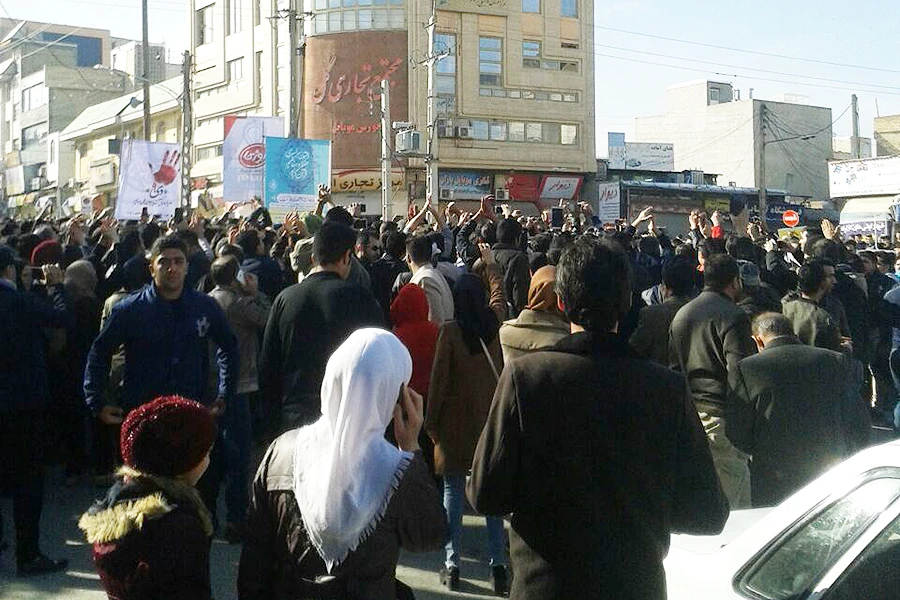
Tehran, Iran, Jan 2, 2018 / 04:08 pm (CNA/EWTN News).- Ongoing protests in Iran could be a sign of hope for repressed religious minorities, if protesters demand that conscience rights be respected, said an Iranian-born journalist who converted to Catholicism in 2016.

Although most of those protesting in the streets of Iran were born after the 1979 revolution that led to the current Islamist regime, “many of them are chanting nostalgic slogans about the pre-revolutionary era,” noted Sohrab Ahmari.

“At the time Iran was no democracy,” he said, but the pre-revolution regime “was far less repressive and people retained many personal and social liberties, if not political ones.”

Ahmari was born in Tehran. He has lived in the United States for two decades and worked for the Wall Street Journal for several years before becoming a senior writer for Commentary magazine.

Ahmari spoke to CNA on Jan. 2, as Iranians protesting economic and social grievances flooded the streets of the Middle Eastern country.
 
Since the current round of protests erupted on Dec. 28, at least 21 people have died and 450 been arrested, CNN reports.

The protests are the largest in the country since the 2009 Green Movement, when thousands rallied in opposition to a presidential election they claimed was fraudulent.

The Iranian government has responded to the current demonstrations by sending out riot police and restricting access to internet and social media.
The protests began over economic issues. A year after sanctions against Iran were lifted by the United States, United Nations, and European Union, citizens of the Middle Eastern nation have yet to see the economic recovery that many had expected. Unemployment among the youth is high, and food and gasoline prices have risen significantly.

However, as the protests have grown, so have the grievances, with signs and slogans opposing what many see as a corrupt regime that suppresses the civil rights of its people.

“I don’t think you can separate the economic from the political,” Reza Marashi, research director for the National Iranian American Council, told CNN.

Ahmari agreed that the nation’s unrest shows a deep-seated discontent.

“The Iranians who are pouring into the streets have had it with an ideological regime that represses them and can’t even delivery basic economic security,” he said.

And while life is difficult for every Iranian, the situation for Christians and other religious minorities is particularly perilous, Ahmari told CNA.

“They are systematically discriminated against, are barred from various public offices and military posts, are prohibited by law from proselytizing, and so on.”

The regime does grant Christians and Jews a certain level of “second-class protection” as “People of the Book,” Ahmari said, but even this “limited protection only applies to the likes of Armenians and Assyrians, who are considered indigenous Christians.”

Converts are not protected, he said, because Sharia law – which is the foundation of Iran’s penal code – views apostasy from Islam as a crime punishable by death.

While the regime generally does not formally charge Christian converts with apostasy, Ahmari said, “it routinely harasses them, monitors and raids their house churches, and arrests and imprisons their pastors on trumped-up ‘national-security’ charges.”

Nearly a week after the start of the protests, it remains to be seen what effect they will have, if any. But Ahmari is hopeful that any changes in the government will include a greater respect for religious minorities.

Life before the 1979 revolution that brought Sharia law to the country “wasn’t ideal,” he acknowledged.

“(B)ut minorities thrived, and there was a sense that Iranian-ness wasn’t just about Shiite Islam but also incorporated pre-Islamic elements. Jews, Christians, Baha’i and others belonged to this identity. They were tolerated and even celebrated,” he said.

“If the protesters can recover something of that inclusive nationalism, then Christians and other ethnic and sectarian minorities will be better off than they are now.”
 

[…]

Kazakh bishops affirm indissolubility of marriage – and its implications

January 2, 2018 CNA Daily News 3

Astana, Kazakhstan, Jan 2, 2018 / 12:42 pm (CNA).- Three Kazakhstani bishops signed a statement on Sunday confirming that it is not licit to admit to sacramental communion Catholics who are divorced and illictly remarried, if they are not living according to the long-standing teachings of the Church.

The statement was released in response to norms issued by several groups of bishops since the promulgation of Amoris laetitia.

“It is not licit (non licet) to justify, approve, or legitimize either directly or indirectly divorce and a non-conjugal stable sexual relationship through the sacramental discipline of the admission of so-called ‘divorced and remarried’ to Holy Communion, in this case a discipline alien to the entire Tradition of the Catholic and Apostolic faith,” read the Dec. 31, 2017 letter of the bishops.

“By making this public profession before our conscience and before God who will judge us, we are sincerely convinced that we have provided a service of charity in truth to the Church of our day and to the Supreme Pontiff, Successor of Saint Peter and Vicar of Christ on earth.”

The statement was signed by Archbishop Tomash Peta of Maria Santissima in Astana; his auxiliary, Bishop Athanasius Schneider; and Archbishop Jan Pawel Lenga, Archbishop Emeritus of Karaganda.

It comes nearly a year after the same bishops issued an appeal to prayer that Pope Francis would confirm the Church’s constant practice regarding the indissolubility of marriage.

The three bishops noted that some bishops around the world – such as those of Malta and Sicily – have issued norms allowing for the divorced-and-remarried who have a living spouse yet who are in “stable cohabitation more uxorio” with a third person to “receive the sacrament of Penance and Holy Communion, while continuing to live habitually and intentionally more uxorio with a person who is not their legitimate spouse.”  Those norms have qualified that such permissions are limited to individual cases, at the discretion of a confessor, pastor, or bishop.

More uxorio, which means “in the mode of marriage,” refers in this context to cohabitation and a sexual relationship between those who are not validly married.  

“These pastoral norms have received approval from various hierarchical authorities. Some of these norms have received approval even from the supreme authority of the Church,” they noted. Pope Francis had, in 2016, sent a letter approving of norms from the bishops of the Buenos Aires region of Argentina, which seemed to permit reception of holy communion in particular cases.

The Pope’s letter, and the Buenos Aires norms, were then promulgated in the Acta Apostolicae Sedis, a fact made known last month.

“The spread of these ecclesiastically approved pastoral norms has caused a considerable and ever increasing confusion among the faithful and the clergy, a confusion that touches the central manifestations of the life of the Church, such as sacramental marriage with the family, the domestic church, and the sacrament of the Most Holy Eucharist,” the Kazakh bishops stated.

They said that to admit the divorced-and-remarried to Communion “means in practice a way of approving or legitimizing divorce, and in this meaning a kind of introduction of divorce in the life of the Church.”

Such pastoral norms “are revealed in practice and in time” as a way of spreading the “plague of divorce”, they said, quoting from the Second Vatican Council’s pastoral constitution on the Church in the modern world, Gaudium et spes.

The bishops maintained that the Church should be, rather, “a bulwark and an unmistakable sign of contradiction against the plague of divorce … because of her unconditional fidelity to the doctrine of Christ.”

“An approval or legitimation of the violation of the sacredness of the marriage bond, even indirectly through the mentioned new sacramental discipline, seriously contradicts God’s express will and His commandment,” the Kazakh bishops wrote.

They stated that sexual acts between those who are not married are “always contrary to God’s will and constitute a grave offense”’ and that no circumstance, including diminished guilt, can make such a sexual relationship “a positive moral reality.”

The bishops also emphasized that although the Church cannot judge the internal state of grace of any person, sacramental discipline is not based on this but on their “visible and objective situation”; and that is it morally illicit “to engage in sexual relations with a person who is not one’s legitimate spouse supposedly to avoid another sin.”

They also affirmed that the divorced-and-remarried may be admitted to Communion “only when they with the help of God’s grace and a patient and individual pastoral accompaniment make a sincere intention to cease from now on the habit of such sexual relations and to avoid scandal. It is in this way that true discernment and authentic pastoral accompaniment were always expressed in the Church.”

Furthermore, they said that those who violate their marriage bond with their legitimate spouse may not participate in Communion, and that “the fulfillment of God’s will … constitutes the true spiritual good of the people here on earth and will lead them to the true joy of love in the salvation of eternal life.”

The bishops called the recently proposed pastoral norms “a substantial alteration” of the Church’s 2,000 year discipline, and added: “a substantially altered discipline will eventually lead to an alteration in the corresponding doctrine.”

“The constant Magisterium of the Church … has preserved and faithfully transmitted both in the doctrine (in theory) and in the sacramental discipline (in practice) in an unequivocal way, without any shadow of doubt and always in the same sense and in the same meaning (eodem sensu eademque sententia), the crystalline teaching of Christ concerning the indissolubility of marriage.”

The bishops said that the indissolubility of a ratified and consummated marriage is “the revealed word of God and the faith of the Church,” and that sacramental discipline cannot contradict this, “because of its Divinely established nature.”

The faith naturally “excludes a formal contradiction between the faith professed on the one hand and the life and practice of the sacraments on the other,” they said, citing Vatican II and the writings of St. John Paul II.

“In view of the vital importance that the doctrine and discipline of marriage and the Eucharist constitute, the Church is obliged to speak with the same voice. The pastoral norms regarding the indissolubility of marriage must not, therefore, be contradicted between one diocese and another, between one country and another,” they added, citing St. Irenaeus of Lyons and St. Thomas Aquinas.

The bishops provided ample citations for the existing teaching and practice regarding the indissolubility of marriage, including Bl. Pius IX, Ven. Pius XII, Bl. Paul VI, St. John Paul II, and the Pontifical Council for Legislative Texts.

“As Catholic bishops, who … must defend the unity of faith and the common discipline of the Church, and take care that the light of the full truth should arise for all men we are forced in conscience to profess in the face of the current rampant confusion the unchanging truth and the equally immutable sacramental discipline regarding the indissolubility of marriage according to the bimillennial and unaltered teaching of the Magisterium of the Church,” they wrote.

“Being bishops in the pastoral office those, who promote the Catholic and Apostolic faith, we are aware of this grave responsibility and our duty before the faithful who await from us a public and unequivocal profession of the truth and the immutable discipline of the Church regarding the indissolubility of marriage. For this reason we are not allowed to be silent,” stated the Kazakh bishops.

They made their affirmation in the spirit of Ss. John the Baptist, John Fisher, and Thomas More, who were martyred for upholding the indissolubility of marriage, and of Bl. Laura Vicuna, who offered her life for the conversion of her mother, who was living in concubinage.


[…]