Pope baptizes 34 babies, says faith can’t grow without love at home

January 7, 2018 CNA Daily News 1

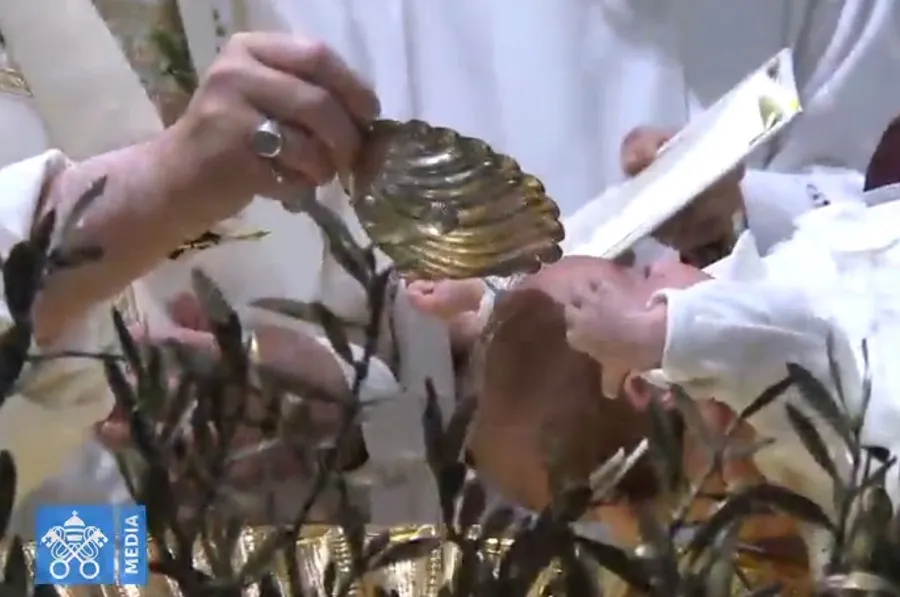
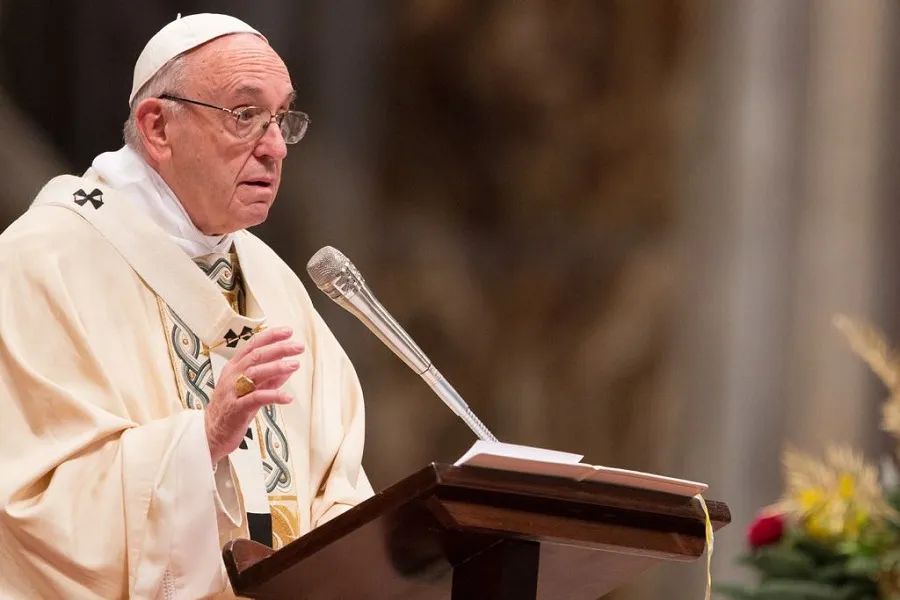
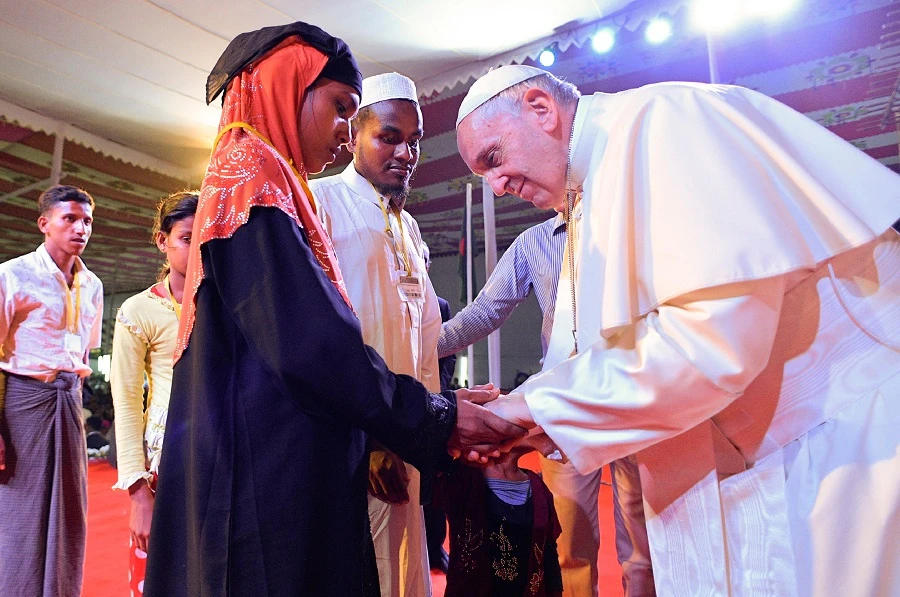
Vatican City, Jan 7, 2018 / 02:52 am (CNA/EWTN News).- Keeping with papal tradition, Pope Francis marked the Feast of the Baptism of the Lord by celebrating Mass in the Sistine Chapel, during which he baptized 34 infants, telling parents that love at home is the first requirement of passing on the faith.

“If there is no love at home, if the language of love isn’t spoken between mother and father at home, you can’t do it,” the Pope said Jan. 7, telling parents to “transmit the faith, but do it with the love of the family, at home.”

He celebrated Mass in the Sistine Chapel, as he does each year on the Feast of the Baptism of the Lord, during which he baptizes several infants. This year he administered the Sacrament of Baptism on 34 babies, 16 boys and 18 girls.

In his brief, off-the-cuff homily, the Pope told parents that in baptizing their children, they are making the “first step” in the task of transmitting the faith.

“We need the Holy Spirit to transmit the faith, or else we can’t do it,” he said, adding that to transmit the faith “is a grace of the Holy Spirit.”

However, even with the grace of the Holy Spirit, Francis stressed that truly transmitting the faith to one’s children “can only be done in love; in the love of the family, of the father and mother, grandmother and grandfather.”

Catechists come later in life to help in transmitting the faith with “ideas and explanations,” he said, but told parents “don’t forget this: have love.”

He also told parents to be childlike in their own prayer, saying children communicate in the only way they can, but “it’s the language Jesus likes a lot.”

“Jesus advises us to be like them, to speak like them. May your prayers be simple like children,” he said, telling parents that in their own prayer, “say it in your heart like they do” when they cry, and “the Lord will teach you how to be like them, how to speak to them.”

Francis closed his homily telling mothers that if the babies cry and “start to have a concert” because they are uncomfortable or hungry, to breastfeed them without fear or hesitation if it is the latter, “because this is also a language of love.”

After celebrating Mass, the Pope will then make his way to the Apostolic Palace, where he will lead pilgrims in the traditional Angelus prayer, as he does every Sunday.

[…]

Want to know the history behind the Feast of the Epiphany?

January 6, 2018 CNA Daily News 0

Washington D.C., Jan 6, 2018 / 01:01 pm (CNA/EWTN News).- While the hustle and bustle of Christmas ends for many people on Dec. 26, throughout Christian history Christmas lasts for twelve days – all the way until Jan. 6.

This feast marking the end of Christmas is called “Epiphany.”

In the Latin Rite of the Catholic Church, Epiphany celebrates the revelation that Jesus was the Son of God. It focuses primarily on this revelation to the Three Wise Men, but also in his baptism in the Jordan and at the wedding at Cana.

In the Eastern rites of the Catholic Church, Theophany – as Epiphany is known in the East – commemorates the manifestation of Jesus’ divinity at his Baptism in the River Jordan.

While the traditional date for the feast is Jan. 6, in the United States the celebration of Epiphany is moved to the next Sunday, overlapping with the rest of the Western Church’s celebration of the Baptism of Christ.

However, the meaning of the feast goes deeper than just the bringing of presents or the end of Christmas, says Fr. Hezekias Carnazzo, a Melkite Catholic priest and founding executive director of the Virginia-based Institute of Catholic Culture.

“You can’t understand the Nativity without Theophany; or you can’t understand Nativity without Epiphany.” The revelation of Christ as the Son of God – both as an infant and at his baptism – illuminate the mysteries of the Christmas season, he said.

“Our human nature is blinded because of sin and we’re unable to see as God sees,” he told CNA. “God reveals to us the revelation of what’s going on.”

Origins of Epiphany

While the Western celebration of Epiphany (which comes from Greek, meaning “revelation from above”), and the Eastern celebration of Theophany (meaning “revelation of God”), have developed their own traditions and liturgical significances, these feasts share more than the same day.

“The Feast of Epiphany, or the Feast of Theophany, is a very, very early feast,” said Fr. Carnazzo. “It predates the celebration of Christmas on the 25th.”

In the early Church, Christians, particularly those in the East, celebrated the advent of Christ on Jan. 6 by commemorating Nativity, Visitation of the Magi, Baptism of Christ and the Wedding of Cana all in one feast of the Epiphany. By the fourth century, both Christmas and Epiphany had been set as separate feasts in some dioceses. At the Council of Tours in 567, the Church set both Christmas day and Epiphany as feast days on the Dec. 25 and Jan. 6, respectively, and named the twelve days between the feasts as the Christmas season.

Over time, the Western Church separated the remaining feasts into their own celebrations, leaving the celebration of the Epiphany to commemorate primarily the Visitation of the Magi to see the newborn Christ on Jan. 6. Meanwhile, the Eastern Churches’ celebration of Theophany celebrates Christ’s baptism and is one of the holiest feast days of the liturgical calendar.

Roman Traditions

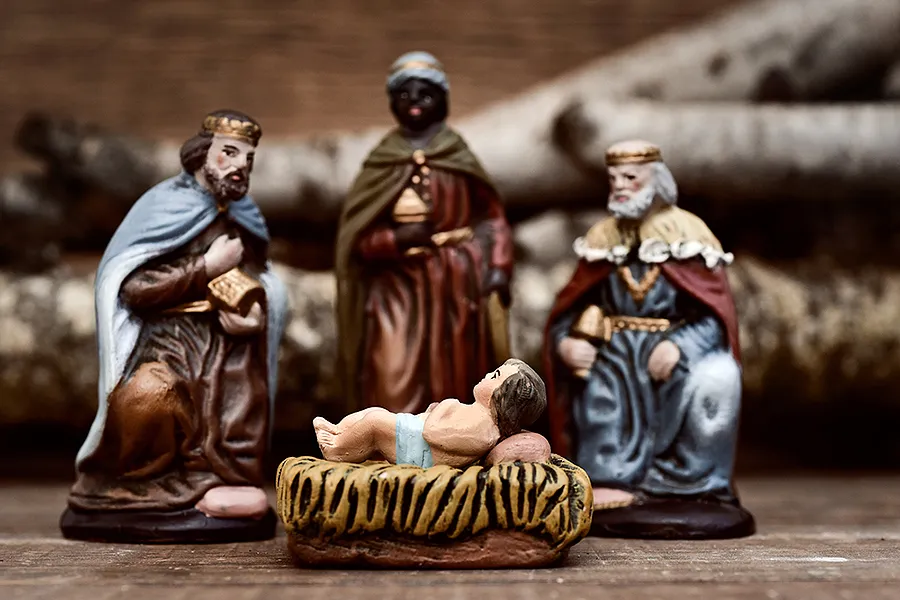
The celebration of the visitation of the Magi – whom the Bible describes as learned wise men from the East – has developed its own distinct traditions throughout the Roman Church.

As part of the liturgy of the Epiphany, it is traditional to proclaim the date of Easter and other moveable feast days to the faithful – formally reminding the Church of the importance of Easter and the resurrection to both the liturgical year and to the faith.

Other cultural traditions have also arisen around the feast. Dr. Matthew Bunson, EWTN Senior Contributor, told CNA about the “rich cultural traditions” in Spain, France, Ireland and elsewhere that form an integral part of the Christmas season for those cultures.

In Italy, La Befana brings sweets and presents to children not on Christmas, but on Epiphany. Children in many parts of Latin America, the Philippines, Portugal, and Spain also receive their presents on “Three Kings Day.”

Meanwhile, in Ireland, Catholics celebrate “Women’s Christmas” – where women rest from housework and cleaning and celebrate together with a special meal. Epiphany in Poland is marked by taking chalk – along with gold, incense and amber – to be blessed at Mass. Back at home, families will inscribe the first part of the year, followed by the letters, “K+M+B+” and then the last numbers of the year on top of every door in the house.

The letters, Bunson explained, stand for the names traditionally given to the wise men – Casper, Melchior and Balthazar – as well as for the Latin phrase “Christus mansionem benedicat,” or, “Christ, bless this house.”

In nearly every part of the world, Catholics celebrate Epiphany with a Kings Cake: a sweet cake that sometimes contains an object like a figurine or a lone nut. In some locations lucky recipient of this prize either gets special treatment for the day, or they must then hold a party at the close of the traditional Epiphany season on Feb. 2.

These celebrations, Bunson said, point to the family-centered nature of the feast day and of its original celebration with the Holy Family. The traditions also point to what is known – and what is still mysterious – about the Magi, who were the first gentiles to encounter Christ. While the Bible remains silent about the wise men’s actual names, as well as how many of them there were, we do know that they were clever, wealthy, and most importantly, brave.

“They were willing to take the risk in order to go searching for the truth, in what they discerned was a monumental event,” he said, adding that the Magi can still be a powerful example.

Lastly, Bunson pointed to the gifts the wise men brought – frankincense, myrrh and gold – as gifts that point not only to Christ’s divinity and his revelation to the Magi as the King of Kings, but also to his crucifixion. In giving herbs traditionally used for burial, these gifts, he said, bring a theological “shadow, a sense of anticipation of what is to come.”

Revelation of God

Fr. Hezekias Carnazzo explained to CNA the significance of the feast of the Theophany – and of Christ’s Baptism more broadly – within the Eastern Catholic churches.

“In our Christian understanding in the East, we are looking at creation through the eyes of God, not so much through the eyes of Man,” Fr. Carnazzo said.  

In the feast of the Baptism of the Lord, he continued, there is special divine significance.

With this feast day, the pastor explained, “God has come to reclaim us for himself.” Because of original sin, he continued, humanity has inherited “a human nature which has been dislocated from its source of life.”

Sin also effected parts of creation such as water have also been separated from their purpose and connection to God’s plan for life, Fr. Carrazzo said, because its original purpose is not just to sustain our bodies, but our souls as well.  

“With the fall, however, it has been dislocated from its source of life, it is under the dominion of death- it doesn’t have eternal life anymore. So God comes to take it to himself.”

“What Jesus did was to take our human nature and do with it what we could not do – which is, to walk it out of death, and that’s exactly what He did with His baptism.” As it is so linked to the destruction of death and reclaiming of life, the Feast of Theophany is also very closely linked to the Crucifixion – an attribute that is reflected in Eastern iconography of both events as well.

The feast of the Theophany celebrates not only Christ’s conquering of sin through baptism, but also God’s revelation of Christ as his Son and the beginning of Christ’s ministry. “The baptism of the Lord, just like the Nativity, is not just a historical event: it’s a revelation,” Fr. Carrazzo said.

To mark the day, Eastern Catholics begin celebrations with Divine Liturgy at the Church, which includes a blessing of the waters in the baptistry. After the water is blessed, the faithful drink the water, and bring bottles of water to bring back to their homes for use and not only physical but spiritual healing, he explained. Many parishes hold feasts after Liturgy is over. In many Middle Eastern cultures, people also fry and eat awamat – dough that is fried until it floats, and then is covered in honey.

During the Theophany season, priests also try to visit each home in the parish to bless the house with Holy Water that was blessed at Theophany. Fr. Carrazzo invited all Roman Catholics to come and become familiar, “to be part of a family” and join in celebrating Eastern Catholic traditions.


This article was originally published on CNA Jan. 6, 2017.

[…]

Pope: Like the Magi, we must leave our comfort zone to find Jesus

January 6, 2018 CNA Daily News 1

Vatican City, Jan 6, 2018 / 02:58 am (CNA/EWTN News).- Pope Francis marked the Feast of the Epiphany Saturday by encouraging faithful to imitate the actions of the Magi, who weren’t attached to worldly comforts, but were willing to go out and take risks in order to find Jesus.

“Setting out, the second thing the Magi do, is essential if we are to find Jesus,” the Pope said Jan. 6, on the Feast of the Epiphany.

“His star demands a decision to take up the journey and to advance tirelessly on our way,” he said. “It demands that we free ourselves from useless burdens and unnecessary extras that only prove a hindrance, and accept unforeseen obstacles along the map of life.”

Jesus, the Pope said, allows himself to be found by those who are looking for him, however, in order to find him ourselves, “we need to get up and go, not sit around but take risks, not stand still, but set out.”

“Jesus makes demands: he tells those who seek him to leave behind the armchair of worldly comforts and the reassuring warmth of hearth and home.”

Francis noted that “setting out” isn’t always easy, as can be seen by various characters in the Gospel, including Herod, who organized meetings and sent people to gather information about the royal birth that had been prophesied, but himself “does not budge; he stays locked up in his palace.”

Even the priests and scribes, who had the ancient texts and knew the prophesy, were able to tell Herod exactly where to go, yet made no move themselves.

Their temptation, Francis said, is the same as those who have grown accustomed to being believers: “they can talk at length about the faith they know so well, but will not take a personal risk for the Lord.”

“The Magi, on the other hand, talk little and journey much,” he said. “Ignorant of the truths of faith, they are filled with longing and set out. So the Gospel tells us: they ‘came to worship him,’ ‘they set out; they went in, and fell down and worshiped him; they went back.’ They kept moving.”

Pope Francis spoke during Mass for the Feast of the Epiphany, which he celebrated inside St. Peter’s Basilica. In his homily, the Pope focused on three key actions carried out by the Magi in the day’s Gospel: they first saw the star, they set out to follow it, and they then bring gifts to the infant Jesus.

Questioning whether anyone else saw the star that night, Francis observed that “few people raised their eyes to heaven.”

“We often make do with looking at the ground: it’s enough to have our health, a little money and a bit of entertainment,” he said, and wondered aloud if people still dream or long for God and the newness that he brings.

He also asked why, if the star was so bright, no one else had followed it. “Perhaps because the star was not eye-catching, did not shine any brighter than other stars,” he said, noting that Jesus’ star “does not dazzle or overwhelm, but gently invites.”

Asking those present which star they have chosen to follow, Francis noted that some of the stars we choose are bright, but don’t point the way.

“So it is with success, money, career, honors and pleasures when these become our life,” he said, calling them meteors that “blaze momentarily,” but quickly burn out and fade away.

“The Lord’s star, however, may not always overwhelm by its brightness, but it is always there: it takes you by the hand in life and accompanies you. It does not promise material reward, but ensures peace and grants, as it did to the Magi, ‘exceedingly great joy.’”

After seeing the star, the Magi then set out and follow it to Bethlehem, he said, explaining that to do so meant taking a risk, which we are all required to do if we want to find Jesus.

“Following Jesus is not a polite etiquette to be observed, but a journey to be undertaken,” he said, adding that if we ourselves want to find Jesus, “we have to overcome our fear of taking risks, our self-satisfaction and our indolent refusal to ask anything more of life.”

Pope Francis then noted how when the Magi they arrived to Bethlehem, they offered Jesus gifts of gold, frankincense and myrrh, saying the Gospel “becomes real when the journey of life ends in giving.”

“To give freely, for the Lord’s sake, without expecting anything in return: this is the sure sign that we have found Jesus,” he said. “To do good without counting the cost, even when unasked, even when you gain nothing thereby, even if it is unpleasant. That is what God wants.”

Jesus, who became small and vulnerable for our sake, also asks us to offer something to “the least of our brothers and sisters,” he said, explaining that these are the people who have nothing to give in return, such as the hungry, the needy, the prisoner, the sick and the stranger.

“We give a gift pleasing to Jesus when we care for a sick person, spend time with a difficult person, help someone for the sake of helping, or forgive someone who has hurt us,” he said, stressing that “these are gifts freely given, and they cannot be lacking in the lives of Christians.”

Francis closed his homily urging those present to look at their hands, which are “so often empty of love,” and to think of a free gift they can give without expecting anything in return. This, he said, “will please the Lord.”

[…]

Appeals court strikes down Baltimore law targeting pregnancy centers

January 5, 2018 CNA Daily News 0

Baltimore, Md., Jan 5, 2018 / 04:56 pm (CNA/EWTN News).- An appellate court struck down a Baltimore city ordinance Friday, ruling that the city’s pro-life pregnancy centers would not be forced to display in their waiting areas information relating to abortion services.

The Fourth Circuit Court of Appeals’ Jan. 5 decision, a victory for Baltimore’s pregnancy centers, was a unanimous 3-0.

Greater Baltimore Center for Pregnancy Concerns, Inc., a pro-life pregnancy center in Baltimore, along with the Archdiocese of Baltimore and St. Brigid’s Roman Catholic Congregation, Inc., sued the city of Baltimore in March 2010 after a city ordinance was passed the previous year which required it and other organizations promoting alternatives to abortion to post signs in their waiting room saying that they do not perform abortions and will not refer patients out for an abortion.

The ordinance only applied to “limited-service pregnancy center(s)” that do not provide abortion or birth control.

Greater Baltimore Center for Pregnancy Concerns said that they should not be forced to post this information as it ran contrary to the center’s mission. The center operates in space owned by a Catholic church, and provides pregnant women with counseling, sonograms, pregnancy tests, prenatal vitamins, diapers, and other needs completely free of charge.

The mayor of Baltimore and the City Council were joined in the suit by a variety of pro-abortion groups, including NARAL Pro-Choice America, Planned Parenthood of Maryland, and the Maryland Abortion Fund. The city argued that the ordinance was lawful due to the center’s “deceptive advertising” and the various health risks from delaying an abortion.

Previously, the center had run advertisements on Baltimore busses about its free pregnancy tests, counseling, and alternatives to abortion, but did not mention that it is a center religiously opposed to abortion.

In October 2016 the district court ruled in favor of Greater Baltimore Center for Pregnancy Concerns, Inc., but the ruling was appealed and sent to the 4th Circuit.

In the appellate court’s opinion, Judge J. Harvie Wilkinson said that the City of Baltimore could not provide a single example of someone who entered the Greater Baltimore Center thinking that she could obtain an abortion or abortion referral, and that the center had a history of “affirmative advocacy of abortion alternatives.”

Wilkinson said the city ordinance was “neither viewpoint nor content neutral,” as it was aimed specifically at clinics that do not provide abortion services.

“We do not begrudge the City its viewpoint. But neither may the City disfavor only those who disagree,” wrote Wilkinson.

On the city’s defense of the ordinance combating “deceptive advertising,” he also said the ordinance was “overinclusive” as it applied to all pro-life pregnancy centers, regardless if they do any sort of advertising whatsoever.

Wilkinson wrote that it was the “compelled speech” mandated by the signage that violated the First Amendment, and that while the City of Baltimore may view abortion as acceptable, the Greater Baltimore Center did not, and that it indeed is “antithetical” to its mission to do so.

“At bottom, the disclaimer portrays abortion as one among a menu of morally equivalent choices,” said Wilkinson. “While that may be the City’s view, it is not the Center’s. The message conveyed is antithetical to the very moral, religious, and ideological reasons the Center exists. Its avowed mission is to “provid[e] alternatives to abortion.”

This, said Wilkinson, is where the City of Baltimore violated the First Amendment.

“But, at least in this case […], it is not too much to ask that they lay down the arms of compelled speech and wield only the tools of persuasion. The First Amendment requires it.”

[…]

Bishops’ letter on sexual identity prompts LGBT counter-lobbying

January 5, 2018 CNA Daily News 0

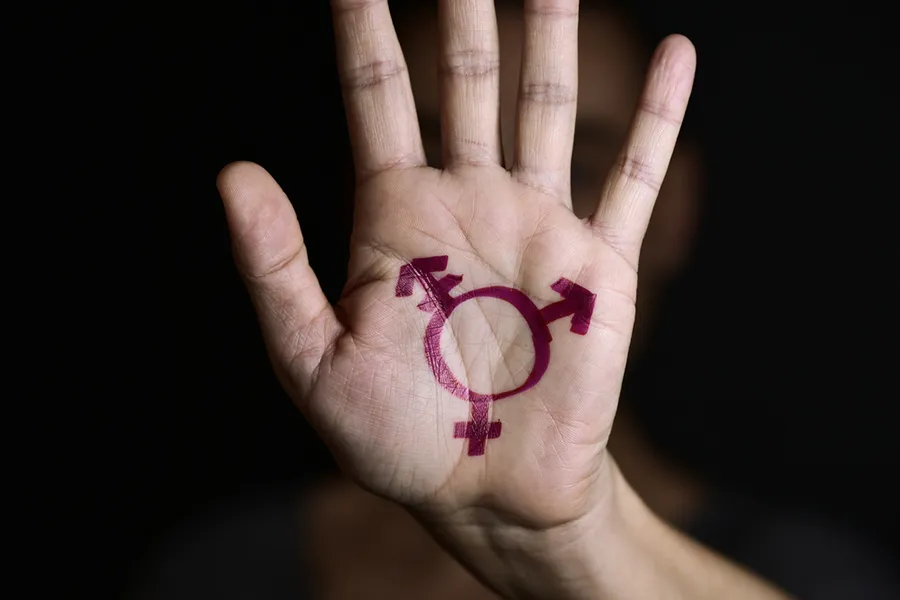
Washington D.C., Jan 5, 2018 / 12:05 pm (CNA/EWTN News).- Several Catholic bishops’ call for clarity and compassion on sexual identity issues such as transgenderism drew the ire of a dissenting Catholic group which is part of a well-funded LGBT activism network.

New Ways Ministry’s executive director Francis DeBernardo encouraged his group’s supporters Dec. 18 to write the four bishops who signed the recent letter. Claiming gender transition helps people “become closer to God,” he said the letter is “denying transgender experience” and “promotes a false scenario about how gender topics are being taught to children.”

The Dec. 15 letter “Created Male and Female” was published on the website of the U.S. Conference of Catholic Bishops. Catholic signers included Archbishop Charles Chaput of Philadelphia, who chairs the U.S. bishops’ Committee on Laity, Marriage, Family Life and Youth; Bishop James Conley of Lincoln, chair of the bishops’ Subcommittee for the Promotion and Defense of Marriage; Archbishop Joseph Kurtz of Louisville, chair of the bishops’ Committee for Religious Liberty; and Bishop Joseph Bambera of Scranton, who chairs the Committee on Ecumenical and Interreligious Affairs.

Other signers included religious leaders from Orthodox, Anglican, Lutheran, Presbyterian, Pentecostal, Baptist, and Muslim backgrounds.

The religious leaders stressed that male and female are God-given differences that must be publicly acknowledged, and that those who are confused about their own identity deserve authentic support.

Their letter voiced the belief that “God created each person male or female; therefore, sexual difference is not an accident or a flaw – it is a gift from God that helps draw us closer to each other and to God. What God has created is good.” They cited the Book of Genesis on the creation of humankind: “male and female he created them.”

DeBernardo, however, contended the letter was based on a scientifically false idea of gender. He rejected the idea that gender is a choice, portraying it as something discovered through one’s biological and sociocultural development.

“To force someone to live inauthentically is neither healthy nor holy,” said DeBernardo. “Reading this statement makes one wonder if any of these leaders have ever listened to the journey of transgender people. If they had, they would find that transgender people often experience their transition as not only a psychologically beneficial step, but one that also involves important spiritual dimensions. Transitioning helps people become closer to God. That is something religious people should support.”

The religious leaders’ letter said the movement to enforce the idea that a man can become a woman or a woman can become a man is “deeply troubling.”

They voiced concern that children are affected by current trends in sexual identity and are harmed when told they can change their sex or are given hormones that can affect their development or render them infertile.

Desires to be identified as the opposite sex are “a complicated reality that needs to be addressed with sensitivity and truth” and with a response of “compassion, mercy and honesty,” the letter said.

The letter is in line with writings from Pope Francis, who has addressed sexual identity issues several times. In his 2016 apostolic exhortation Amoris laetitia, he said young people “need to be helped to accept their own body as it was created.” And in his 2015 encyclical Laudato si’, he linked the acceptance of the human body as God’s gift to accepting the entire world as a gift from God. “[T]hinking that we enjoy absolute power over our own bodies turns, often subtly, into thinking that we enjoy absolute power over creation,” he warned.

New Ways Ministry has faced correction from leading U.S. bishops in the past, including a March 2011 statement from Cardinal Donald Wuerl of Washington. A February 2010 statement from Cardinal Francis George of Chicago, then-president of the U.S. bishops’ conference, said the group’s claim to be Catholic “only confuses the faithful regarding the authentic teaching and ministry of the Church with respect to persons with a homosexual inclination.”

In 1999 the Congregation for the Doctrine of the Faith, headed by the future Pope Benedict XVI, said New Ways Ministry’s founders took an approach to homosexuality that had “ambiguities and errors” which cause confusion among Catholics and harm the community of the Church.

New Ways Ministry’s current backers include the Arcus Foundation, founded by billionaire heir Jon Stryker. The foundation also backs the Equally Blessed Coalition, of which the group is a part. A 2014 grant for this coalition aimed “to support pro-LGBT faith advocates to influence and counter the narrative of the Catholic Church and its ultra-conservative affiliates” in connection with the Catholic Church’s Synod on the Family and World Youth Day.

In 2016 New Ways Ministry gave its Bridge Building Award to Father James Martin, S.J., editor-at-large of America Magazine. The priest’s lecture at the award ceremony was the basis for his book Building a Bridge, on Catholic-LGBT relations.

Catholic pastoral approaches to sexual identity and transgender issues in line with Church teaching are underway, though rarely on an organized basis.

In February 2017 a spokesperson for the U.S. Bishops’ Conference Office of Public Affairs told CNA most pastoral care has largely taken place “at a local and personal level.”

“As attention to and awareness of this experience has grown, we are seeing more efforts regionally and nationally to respond in a way faithful to the Catholic understanding of the human person and God’s care for everyone,” the spokesperson said.

The spokesperson said that dioceses with their own chapter of Courage, which aims to accompany Catholics with same-sex attraction, are in a good position to respond to people with questions about their sexual identity.

[…]

Pope Francis makes surprise visit to sick children

January 5, 2018 CNA Daily News 0

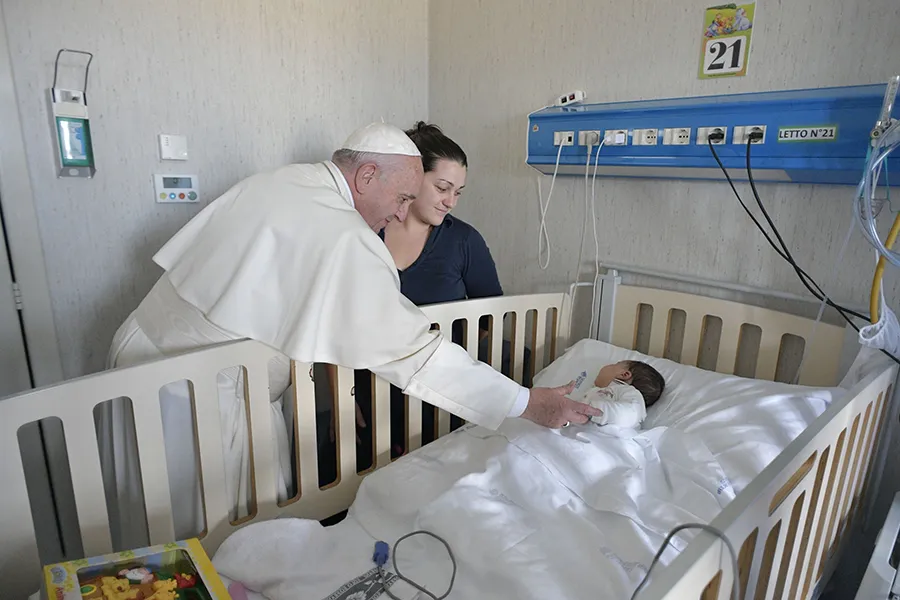
Rome, Italy, Jan 5, 2018 / 10:22 am (CNA/EWTN News).- In yet another “Mercy Friday” outing, Pope Francis this afternoon traveled to the outskirts of Rome to visit sick children receiving care at a campus of the Vatican’s Bambino Gesu hospital, offering comfort to patients and their parents.

According to a Jan. 5 Vatican communique, the Pope made the visit around 3 p.m., heading to the Palidoro campus of Bambino Gesu children’s hospital, which sits about 20 miles west of Rome.

Francis made his way through different wings of the hospital, greeting the children who are receiving care and their parents, who are helping their children through “these tiresome and painful trials.”

Bambino Gesù, colloquially known as the “Pope’s hospital,” is among most important pediatric hospitals in the world. Founded in 1869 by the Duchess Arabella Salviati, the hospital was donated to Pius XI in 1924, with the aim of giving it a more stable future.

The Palidoro campus was established in 1978 under Bl. Paul VI, who entrusted Bambino Gesu with the activities of the “Pontificia Opera di Assistenza” clinic in Palidoro, which specialized in care for polio patients and until that year had been separate from the hospital.

The campus is also currently home to a special exhibit titled “Caro Papa, ti regalo un disegno,” meaning, “Dear Pope, I’ll give you a drawing.”

Promoted by both Bambino Gesu and the Jesuit newspaper “La Civilta’ Cattolica,” the exhibit consists of a series of drawings given to the Pope by children throughout the world either through the mail, or in person during audiences or trips abroad.

The drawings were given to La Civilta’ Cattolica, which partnered with Bambino Gesu to launch a campaign using the images as a means of supporting and welcoming the children who come to hospital from all over the world.

Promoted largely through social media outlets such as Facebook, Instagram and Twitter, the campaign promises each person who makes a donation, no matter how much, a digital copy of the drawings given to Pope Francis by the children, and which has been certified by Vatican Secretary of State Cardinal Pietro Parolin.

Parolin inaugurated the exhibit featuring the original drawings at the Palidoro campus, which is managing campaign and fundraising efforts.

Pope Francis’ visit to the hospital is a continuation of his “Mercy Friday” custom which he began during the Jubilee of Mercy, in 2016.

Originally planned once per month for the duration of the jubilee, the Pope has continued these visits as a means of practicing the spiritual and corporal works of mercy. He has met with refugees, children, women freed from sex trafficking, and the terminally ill, among others.

[…]

Pope’s latest prayer video highlights religious persecution in Asia

January 5, 2018 CNA Daily News 0

Vatican City, Jan 5, 2018 / 07:14 am (CNA/EWTN News).- Pope Francis has kicked off the new year by shedding light on the plight of persecuted religious minorities in Asia, asking that Catholics join him in praying for these people and for religious freedom in their countries.

The video, released Jan. 5, opens by showing images of different scenery and people in Asia as the Pope, speaking in his native Spanish, says that “in the vastly diversified cultural world of Asia, the Church faces many risks and her task is made more difficult by the fact of her being a minority.”

These risks and challenges, he said, “are shared with other minority religious traditions, with whom we share a desire for wisdom, truth and holiness.”

Images of people from various religious confessions praying and lighting incense are then shown, and chains are placed around their hands.

“When we think of those who are persecuted for their religion, we go beyond differences of rite or confession; we place ourselves on the side of the men and women who fight to avoid renouncing their religious identity,” the Pope said, as the chains are broken.

He closed the video asking faithful to join him in praying “for all of them, so that Christians, and other religious minorities in Asian countries, may be able to practice their faith in full freedom.”

<iframe width=”560″ height=”315″ src=”https://www.youtube.com/embed/I-EHz34B0Hs” frameborder=”0″ gesture=”media” allow=”encrypted-media” allowfullscreen></iframe>

The Pope’s video for January is the second one in three months to focus on Asia, which holds a special place in his heart.

In his November 2017 video, which which highlighted the diverse ethnic and religious background of the Asian continent, Francis prayed for the Church in Asia, which despite the various challenges associated with being a minority, continues to be a source of peace and dialogue between religions.

Between the two videos dedicated to Asia, the Pope made Nov. 27 – Dec. 2 pastoral visit to Burma and Bangladesh, both of which have small minority Catholic populations.

In Bangladesh less than three percent of the population is Catholic, and in Burma it’s less than one percent. In addition to being a minority, the Church in these countries is also composed of people from a variety of ethnic minority backgrounds.

The visit to Burma, also called Myanmar, and Bangladesh, marked the Pope’s third tour of Asia, the first being a visit to South Korea in 2014, and the second a trip to Sri Lanka and the Philippines in 2015.

January’s video, then, is yet another expression of the Pope’s interest and concern for Asia, where the Church is rapidly growing in spite of difficulties.

An initiative of the Jesuit-run global prayer network Apostleship of Prayer, the Pope’s prayer videos are filmed in collaboration with the Vatican Television Center and mark the first time the Roman Pontiff’s monthly prayer intentions have been featured on video.

The Apostleship of Prayer, which produces the monthly videos on the Pope’s intentions, was founded by Jesuit seminarians in France in 1884 to encourage Christians to serve God and others through prayer, particularly for the needs of the Church.

Since the late 1800s, the organization has received a monthly, universal intention from the Pope. In 1929, an additional missionary intention was added by the Holy Father, aimed at the faithful in particular.

However, as of last year rather than including a missionary intention, Pope Francis opted to have only one prepared prayer intention – the universal intention featured in the prayer video – and will add a second intention for an urgent or immediate need should one arise.

[…]