Pope Francis: Include the Holy Spirit in art, theology

November 17, 2018 CNA Daily News 0

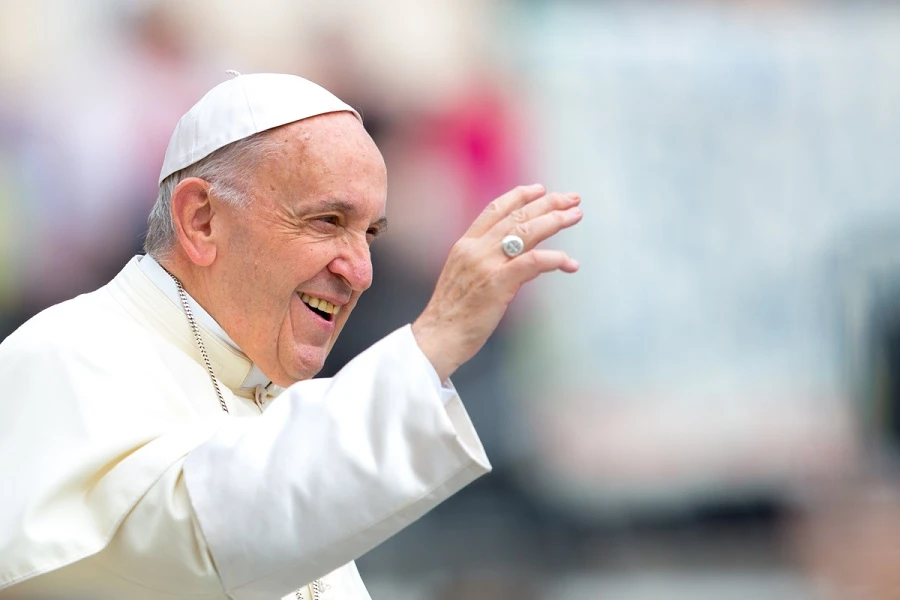
Vatican City, Nov 17, 2018 / 05:34 am (CNA/EWTN News).- In the face of the difficulties of the modern-age, artists and theologians need the inspiration of the Holy Spirit – the source of joy and hope, Pope Francis said Saturday, during the awarding of the 2018 Ratzinger Prize.

“Against the backdrop and in the context of the great problems of our time, theology and art must therefore continue to be animated and elevated by the power of the Spirit, which is the source of strength, joy and hope,” he said Nov. 17.

“I thank the theologians and the architects who help us to lift our heads and turn our thoughts to God,” he added. “Let [their work] always be addressed to this end.”

Pope Francis spoke with members of the Joseph-Ratzinger-Benedict XVI foundation, which is headed by Fr. Federico Lombardi. During the audience in the Clementine hall, the pope bestowed the 8th annual Ratzinger Prize on Swiss architect Mario Botta and Bavarian theologian Marianne Schlosser.

The Ratzinger Prize was started in 2011 to recognize scholars whose work demonstrates a meaningful contribution to theology in the spirit of Cardinal Joseph Ratzinger, the Bavarian theologian who became Pope Benedict XVI.

It is not the first time a woman has been awarded the prize, he noted, but stressed the importance of greater recognition of the contribution of women to the sciences, to theological research and to the teaching of theology, which were “for so long considered almost exclusive territories of the clergy.”

This contribution should be encouraged, and “find a wider space, in keeping with the growing presence of women in the various fields of responsibility for the life of the Church,” he said, pointing to the example set by St. Teresa of Avila, St. Catherine of Siena, St. Therese of Lisiuex and St. Hildegard of Bingen, who are all considered Doctors of the Church.

Francis also praised the contribution of the other prize winner, architect Mario Botta. He noted the importance of sacred buildings throughout the history of the Church, as places which show “a concrete call to God” and express “the faith of the believing community.”

“The commitment of the architect, creator of sacred space in the city of men, is therefore of highest value, and must be recognized and encouraged by the Church, especially when we risk the oblivion of the spiritual dimension and the dehumanization of urban spaces,” he stated.

Pope Francis also encouraged members of the foundation to continue to study the writings of Benedict XVI, both those from his time as pope and before, “but also to face the new themes on which faith is called to dialogue,” like care of creation and defense of human dignity.

For admirers of Benedict’s spiritual legacy, there is a “mission to cultivate it and to continue to make it bear fruit,” he said. “His is a spirit that views the problems of our time with awareness and courage, and knows how to draw, from attention to Scripture in the living tradition of the Church, the wisdom necessary for a constructive dialogue with today’s culture.”

Schlosser, 59, has been a professor of the theology of spirituality at the University of Vienna since 2004. Pope Francis appointed her a member of the International Theological Commission in 2014.

She has translated a large part of the body of work of St. Bonaventure into German and was the researcher for the second volume of the total works of Joseph Ratzinger, which was on “the Idea of Revelation and the Theology of the History of Bonaventure.” Her expertise is in Patristics and the theology and spirituality of the late Middle Ages.

Botta, 75, is an internationally-acclaimed architect, who has designed many different buildings, including homes, schools, libraries, museums, and banks. He has also designed several significant religious buildings, among them the Church of St. John the Baptist in Mogno, the Cathedral of Evry near Paris, and the Co-cathedral of Santo Volto in Turin.

He is also the designer of one of the chapels on display in the Holy See’s pavilion at this year’s Venice Architecture Biennale.

[…]

Underground bishop in China reported missing

November 16, 2018 CNA Daily News 0

Wenzhou, China, Nov 16, 2018 / 05:01 pm (CNA/EWTN News).- A Vatican-appointed Chinese bishop has reportedly been taken into custody by the government and is undergoing “isolation and indoctrination.”

This is Peter Shao Zhumin’s fifth… […]

At least 42 dead in cathedral attack in Central African Republic

November 16, 2018 CNA Daily News 0

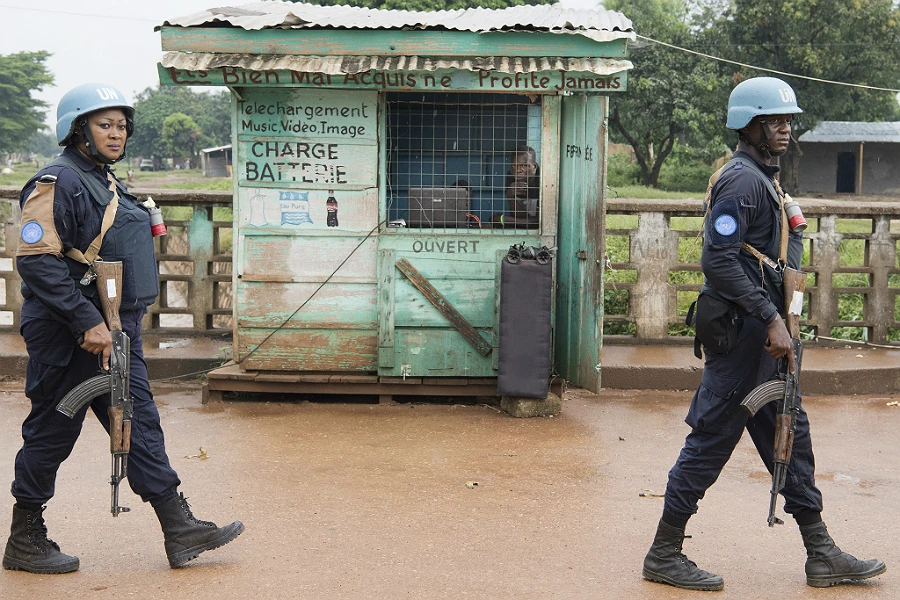
Alindao, Central African Republic, Nov 16, 2018 / 04:05 pm (CNA/EWTN News).- At least 42 people have died in an attack Thursday on the Cathedral of the Sacred Heart in Alindao, in the Central African Republic, according to local reports.

At least one priest was among those killed in the Nov. 15 attack. Some unofficial estimates have said the death toll could reach as high as 100. Many of the people killed were refugees sheltering at the Church.

The CAR has suffered violence since December 2012, when several bands of mainly Muslim rebel groups formed an alliance, taking the name Seleka, and seized power.

In reaction to the Seleka’s attacks, some Central Africans formed self-defense groups called anti-balaka. Some of these groups, mainly composed of Christians, began attacking Muslims out of revenge, and the conflict took on a sectarian character.

According to reports from Aid to the Church in Need, ex-Seleka forces attacked the cathedral, reportedly in retaliation for a Muslim who was killed the day prior by anti-balaka.

The priest killed in the attack was vicar general of the diocese, Abbe Blaise Mada. Aid to the Church in Need added that some reports have said second priest, Father Celestine Ngoumbango, was also killed, but this has not been confirmed.

Houses in the neighborhood were also looted and burned.

Many Catholic churches in the country provide refuge to Muslims and Christians alike fleeing violence, included churches in the Diocese of Bangassou, some 140 miles to the east of Alindao, where several Catholic institutions have taken in displaced Muslims who face violence at the hand of anti-balaka.

Anti-balaka killed more than 100 Muslims in Bangassou in May 2017 before United Nations peacekeepers intervened, and since then the city’s Petit Seminaire Saint Louis has been home to about 1,600 displaced Muslims. Another 2,000 Muslims have taken refuge at St. Peter Claver Cathedral in Bangassou.

The CAR held a general election in 2015-16 which installed a new government, but militant groups continue to terrorize local populations. Thousands of people have been killed in the violence, and at least a million have been displaced. At least half of Central Africans depend on humanitarian aid, the U.N. reports.

Pope Francis visited the CAR during his trip to Africa in 2015, and urged the country’s leaders to work for peace and reconciliation.

Three priests were killed in CAR this year prior to yesterday’s Cathedral attack.

[…]

Mexican bishops discussing commission to address abuse of minors

November 16, 2018 CNA Daily News 1

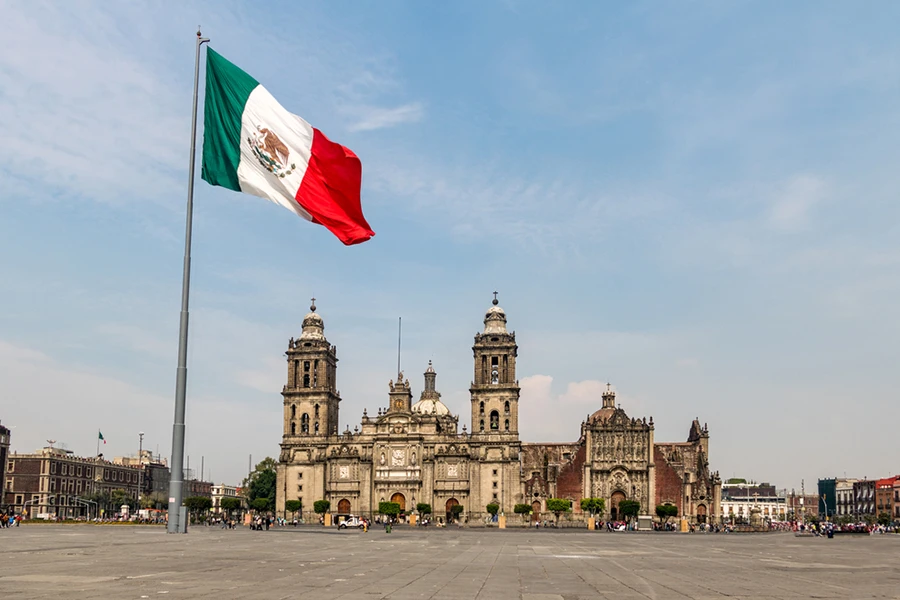
Mexico City, Mexico, Nov 16, 2018 / 03:33 pm (ACI Prensa).- As part of their work at the 106th Plenary Assembly, the Mexican Bishops’ Conference (CEM) is discussing and could approve a commission for the protection of minors, to deal with cases of sexual abuse in all the dioceses of the country.

The CEM Plenary Assembly is taking place Nov. 12-16 at Casa Lago, Cuautitlán Izcalli, a church facility on the outskirts of Mexico City.

At a Nov. 15 press conference, Bishop Alfonso Miranda, Secretary General of the CEM, noted that “the proposal for the creation of a commission for the protection of minors in the Catholic Church in Mexico will be presented this afternoon.”

This proposal for a commission, he explained, “is to make official what we are already doing in practice at the General Secretariat.”

However, he added, currently “there does not exist a body within the structure” of the Church in Mexico to address abuse accusations.

“It does not exist, rather each bishop in his diocese deals with this situation and this issue, but on the national level it hasn’t yet existed.”

“What we intend is that there be a regulatory body which would oversee, which would serve in an advisory capacity to address not only “the issue of the bishop but also what they have to do with the victim, the perpetrators, with the regulations under Mexican law and also under canon law, in complete liaison with the Vatican, with the Pontifical Commission for the Protection of Minors.”

He said that this body would also work in coordination with other bishops’ conferences. “We want to be a step forward, we want to be proactive in such a crucial issue for the Catholic Church worldwide and also of course in Mexico.”

In February 2019, the presidents of national bishops’ conferences around the world will gather in Rome to meet with Pope Francis to address the issue of sexual abuse in the Church.

Bishop Miranda said the Mexican bishops will prepare “something more specific for the coming meeting in Rome which our new president of the CEM,” Archbishop Rogelio Cabrera of Monterrey, is scheduled to attend.

This article was originally published by our sister agency, ACI Prensa. It has been translated and adapted by CNA.


[…]

How will palliative care fare in Canada?

November 16, 2018 CNA Daily News 0

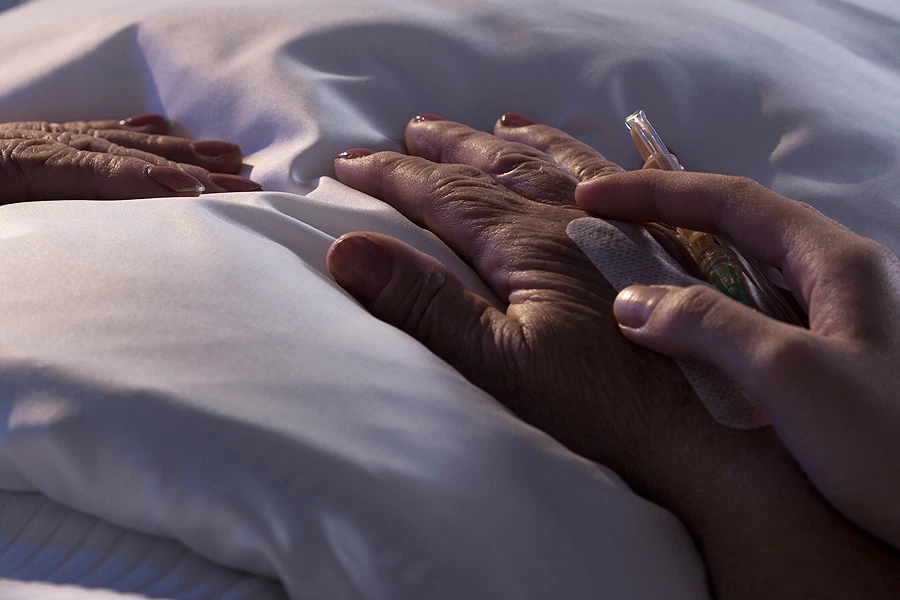
Edmonton, Canada, Nov 16, 2018 / 03:02 pm (CNA/EWTN News).- A member for Canadian Physicians for Life says requiring provision of assisted suicide by Catholic hospitals and by hospices will have disastrous results for palliative care throughout the country.

Karol Boschung, a second year medical student at University of British Columbia, wrote an opinion piece in the Edmonton Journal Nov. 15 expressing concern for the effects of forcing out Catholic healthcare providers.

“Bullying Catholic health-care providers into compliance will not result in expanded access to medical care for all Canadians. If forced to perform procedures which compromise its morals, the Catholic Church may be pressed into withdrawing from the administration of organizations like Covenant Health,” she said.

Covenant Health is one of the major health care administers for Alberta, she said, noting the Catholic health service provides over one-third of palliative-care beds for this province.

According to Covenant Health’s figures in 2008, the organization had more than 8,800 staff across 11 sites. The report states that the budget for 2008 was $514 million, which helped served more than 2,300 beds.

“What might happen to these beds if the government found itself on the hook for purchasing these facilities?” she asked.

“Indeed, attempting to push the Catholic Church out of the administration of Covenant Health would reduce, not improve, access to palliative care and other essential services.”

Boschung spoke on the recent media attention around Doreen Nowicki, who had ALS and committed physician-assisted suicide in 2017. On Covenant Health property, Nowicki had been denied access to the exams to determine the patient’s eligibility for assisted suicide

While sympathizing with the struggle of ALS, Boschung said assisted suicide is not an intrinsic human right as argued by the ethicist Arthur Schafer, who supported Nowicki in a story last month by the CBC.

“We are talking about a fundamental human right, not a privilege to be bestowed at the discretion of a Catholic or religious bureaucrat,” Schafer told the CBC, noting that Covenant’s position was morally inexcusable.

Boschung said that since assisted suicide was decriminalized by the Supreme Court of Canada’s Carter v Canada decision in 2015, assisted suicide “has gone from a criminal offence to a broadly-accepted practice — even a ‘fundamental human right,’ even though legally it is nothing of the sort.”

She added that pressure to provide assisted suicide has affected not only Catholic organizations.

“For example, the Delta Hospice Society, a secular hospice in B.C., was embroiled in controversy earlier this year when the local health authority attempted to bully them into making physician-assisted suicide available on their premises, despite strenuous objections by hospice founders and operators.”

“The operators correctly maintained that PAS was incompatible with the philosophy of hospice palliative care, and that to force them to provide this service was incompatible with the mission of the hospice itself,” Boschung wrote.

Boschung said enforcing PAS is a shorted-sighted solution – a move which will reduce palliative care to ensure the availability of assisted suicide.

“If we really care about the sick and dying, the last thing we need is an approach that leads to a reduction in the availability and diversity of end-of-life care,” she said.

“To push for such an outcome would be a triumph of ideology over practicality.”

[…]