Ho Chi Minh City archdiocese warns against deviant devotions

July 27, 2019 CNA Daily News 0

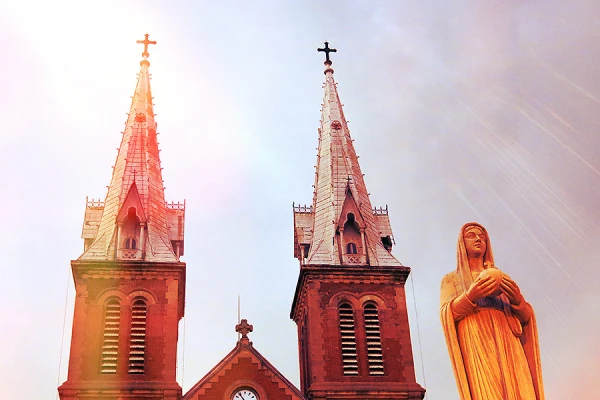
Ho Chi Minh City, Vietnam, Jul 27, 2019 / 06:01 am (CNA).- The bishops of the Archdiocese of Ho Chi Minh City warned Monday against a false Marian devotion and other deviant ritual practices meant to cast out eavil spirits, according to UCA News.

The local Church’s auxiliary bishops, Joseph Do Manh Hung (who is also serving as apostolic administrator) and Louis Nguyen Anh Tuan, issued a pastoral letter July 22 warning that a priest on the outskirts of Ho Chi Mihn City was purporting to perform healings that thousands of people, Catholic and non-Catholic, have been attending.

The bishops said Father Joseph Tran Dinh Long abused Divine Mercy celebrations by putting his hands on people’s heads to purportedly heal their illnesses, and he was said to have allowed people to bear witness to having been healed, UCA News reports.

They also warned against Mother Mary’s Message, a Marian devotion movement launched by a lay man named Thomas Mary Nguyen Thanh Viet, who claims that Mary healed him of illnesses in 2010.

The Marian group had spread “appalling” claims that endanger the faith, the bishops said as quoted by UCA News.

The bishops urged their people to follow “mainstream church leaders” rather than engaging in practices to expel evil spirits, and urged unity within the archdiocese.

Archbishop Joseph Nguyen Chi Linh of Hue, president of the Catholic Bishops’ Conference of Vietnam, and Auxiliary Bishop John Do Van Ngan of Xuan Loc, head of the Episcopal Commission on Doctrine of the Faith, last month issued a letter urging Catholics to avoid superstitious and fortune-telling practices and abusing the faithful’s simple beliefs for self-interest, UCA News says.

[…]

Why one expert says communism is ‘anathema to religion’

July 26, 2019 CNA Daily News 5

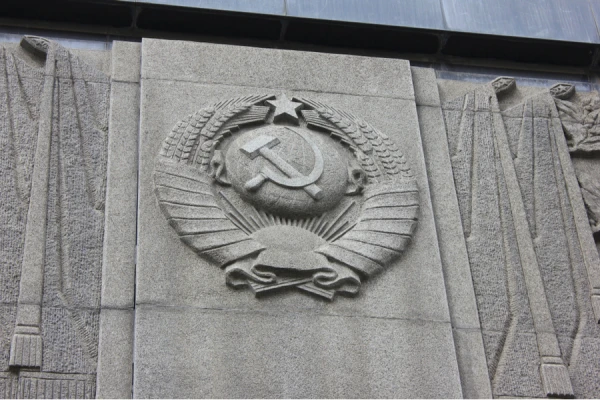
Washington D.C., Jul 26, 2019 / 05:05 pm (CNA).- The Catholic Church’s teachings on economics and government have a tendency to frustrate anyone committed to a political ideology. The Church has condemned both unrestrained capitalism, as well as communism, socialism, and totalitarianism.

But a column recently published in America Magazine, entitled “The Catholic Case for Communism”, by Dean Dettloff, has resurrected questions about whether it is permissible for a Catholic to be a communist.

“Christianity and communism have obviously had a complicated relationship,” Detloff wrote, arguing that even though “communist states and movements have indeed persecuted religious people at different moments in history,” Christians have been “passionately represented” in communist movements.

“These Christians, like their atheist comrades, are communists not because they misunderstand the final goals of communism but [sic] because they authentically understand the communist ambition of a classless society,” he wrote.

Kristina Olney, director of government relations at the Victims of Communism Memorial Foundation, said that description is an unreasonable way of presenting the situation.

“It is just simply false,” she said. “The fact is, that every time what [communists] will point to is that the ideas just haven’t being implemented correctly, not the fact that the results are a direct product of the ideology itself,” explained Olney.

Olney believes that communism’s very nature makes it impossible for a Catholic to be a communist.

“There can be no Catholic case for communism, because the dignity of the human person is at the root of the Catholics faith, and communism is an ideology that is anathema to religion,” she said to CNA.

Since modern communism was first developed as a theory in the mid-19th century, popes have condemned the practice and taught the right of private ownership of property. In 1846, Blessed Pius IX wrote that “that infamous doctrine of so-called Communism which is absolutely contrary to the natural law itself” would eventually “utterly destroy the rights, property and possessions of all men, and even society itself.”

His successor, Pope Leo XIII, called communism “the fatal plague which insinuates itself into the very marrow of human society only to bring about its ruin” in his encyclical Quod Apostolici muneris. Pope Pius XI wrote the encyclical Divini Redemptoris, where he also condemned communism. In 1949, Venerable Pius XII issued the Decree Against Communism, which excommunicated all Catholics who professed to be communists.

St. John Paul II made opposition to communism a hallmark of his papacy, and his pastoral visit to his homeland of Poland is credited with jump-starting the Solidarity movement there and the eventual fall of communism in Eastern Europe.

Christians have faced persecution in several countries that transitioned to communist governments.

In 2001, St. John Paul II beatified Nicholas Charnetsky and 24 companions, Byzantine Catholics martyred by communists in Eastern Europe between 1935 and 1973.

The “Red Terror” of the Spanish Civil War saw nearly 7,000 members of the clergy and religious sisters killed for their faith. Nearly 2,000 martyrs of the Spanish Civil War have already been beatified.

Today, the situation for Catholics in communist countries is still difficult.

In China, the Communist Party is involved in the selection of bishops in the Chinese Patriotic Catholic Association, and the state exercises significant oversight of Church activities.

Olney expressed concern that the situation would continue to worsen under present leadership.

“You have a cult of personality that is reminiscent of the Mao era that is reappearing with Xi Jinping,” said Olney. The government is “forcing people to sing songs in praise of the Communist Party, and putting up communist banners in places of worship.” 

In the U.S., communism and socialism have grown in popularity in recent years. A majority of young people today say they reject capitalism.

A “real sense of disenfranchisement” could be why Americans are embracing socialism and communism, explained Olney, which is a feeling that she empathizes with, but also chalks up to naivete.

“People saying that socialism can be a solution to the problems that they’re facing, but, you know, the fact is, although socialism is gaining in popularity, people can’t describe what it is,” she said.

Olney said she hopes the Church must “speak the truth about and stand for the dignity of the human person,” as these concepts are the root of the Catholic faith.

“I think that the Church needs to speak out against the regimes that are still committing gross violations of human rights and human dignity in the name of communist ideology today,” she added.


[…]

Church in Philippines rejects president’s call to revive death penalty

July 26, 2019 CNA Daily News 1

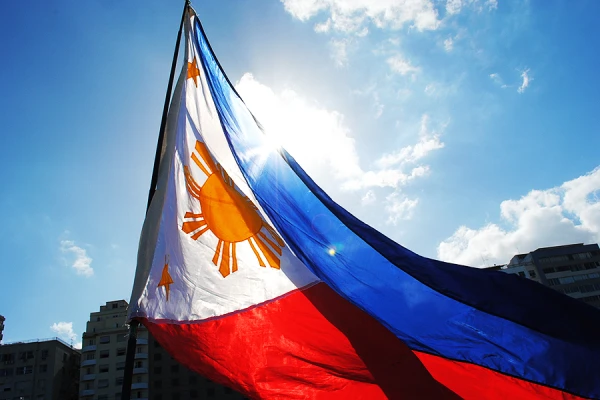
Manila, Philippines, Jul 26, 2019 / 05:01 pm (CNA).- Catholic leaders in the Philippines are calling on Catholics and lawmakers to resist President Rodrigo Duterte’s call to revive the death penalty.

The president called for its reinstatement during a lengthy State of the Nation Address in Manila July 22, while activists, clergy, seminarians, and nuns protested the president in the rainy streets, according to UCA News.

Church leaders have said that despite his claims of success, Duterte has helped bring about “the most trying period in the nation’s history.”

“A vision of a country where peace and justice reigns, sovereignty is cherished and human rights are upheld … has been sliding into oblivion,” an ecumenical group said in a statement, according to UCA News.

The country, the group noted, is undergoing a crisis that is not only social and political, but moral and spiritual as well.

“The regression of our country’s democracy, the emboldenment of a tyrannical regime and the oppression of the people are fueling a national catastrophe,” they said.

Rodolfo Diamante, executive secretary of the Episcopal Commission on Prison Pastoral Care, urged caution for lawmakers when considering legislation that would reinstate the death penalty.

“We urge them to study the bills thoroughly and determine if they will really address the problems of drug trafficking and plunder,” he said, according to CBCP News.

Diamante also urged lawmakers not to reinstate the death penalty as a quick fix, or in order to appease Duterte.

“They have been elected by the people to work for their welfare, not the President’s,” he said. “Don’t give our people an illusion and a quick fix ‘solution’ to our problems. They deserve something better.”

The death penalty was abolished in the Philippines under the country’s 1987 constitution. In the 1990s, the policy underwent varying periods of moratorium and reinstatement, until it was abolished again under President Gloria Macapagal-Arroyo in 2006, according to Human Rights Watch.

The last time death penalty legislation was considered by the country’s Congress in 2017, it faced strong opposition from lawmakers, UCA noted.

The Philippines is a majority-Catholic nation, with roughly 86% of the country’s 104.9 million people identifying as Catholic.

In August 2018, the Congregation for the Doctrine of the Faith issued a new draft of the catechism’s paragraph regarding capital punishment. Quoting Pope Francis’ words in a speech of Oct. 11, 2017, the new paragraph states, in part, that “the Church teaches, in the light of the Gospel, that ‘the death penalty is inadmissible because it is an attack on the inviolability and dignity of the person,’ and she works with determination for its abolition worldwide.”

Reasons for changing the teaching, the paragraph says, include: the increasing effectiveness of detention systems, growing understanding of the unchanging dignity of the person, and leaving open the possibility of conversion.

Fr. Thomas Petri, O.P., a moral theologian at the Dominican House of Studies in Washington, D.C., told CNA at the time of the revision that he thinks this change “further absolutizes the pastoral conclusion made by John Paul II.”

“Nothing in the new wording of paragraph 2267 suggests the death penalty is intrinsically evil. Indeed, nothing could suggest that because it would contradict the firm teaching of the Church,” Fr. Petri added.

Duterte has a rocky relationship with the Catholic bishops and clergy of his country, frequently calling them various names and even calling for them to be killed, in large part because they have resisted his war on drugs, which has lead to a spike in extrajudicial killings since he took office in 2016.

Bishop Antonio Tobias of Novaliches hosted a “Mass for Truth” for activists before Duterte’s SONA address. Tobias, along with two other bishops, was recently charged with libel and sedition for allegedly accusing Duterte’s family of having connections to the illegal drug trade, UCA reported.

Tobias said that the war on drugs was gotten worse since Duterte came to power in 2016, despite his vows to quash it.

 “After three years, the number of drug users increased and many have died,” Tobias told UCA News.

[…]

Colombian bishops support marches against murder of community organizers

July 26, 2019 CNA Daily News 0

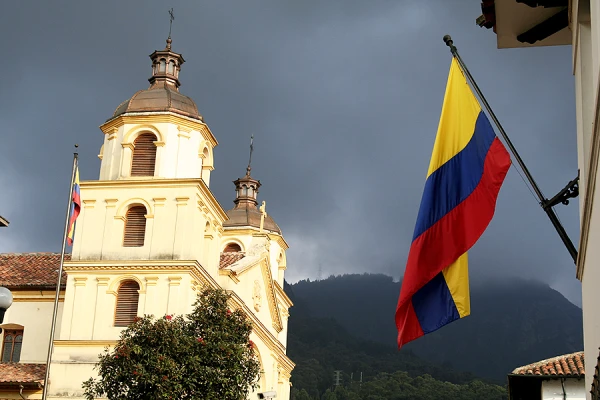
Bogotá, Colombia, Jul 26, 2019 / 04:01 pm (CNA).- The Colombian bishops’ conference has expressed its support for Friday’s national march against the murders of social work leaders, citing the sanctity of human life and urging national reconciliation.

According to the People’s Ombudsman’s Office, between Jan. 1, 2016 and Feb. 28, 2019, 462 social work leaders were killed throughout the country.

On July 20 alone, three of these crimes were recorded.

In a July 24 statement the bishops said that “we support and join the citizen mobilizations to take place July 26 to express our repudiation of the murder of so many social work leaders who were working for the good of their communities, and to unite with one conviction: that life is sacred and that together we must build a country that is reconciled and at peace.”

The bishops asked that church bells be rung that day “as a call to everyone to a commitment in favor of life.”

Civil, political and academic organizations have called a national march in repudiation of the murders of social work leaders that have taken place in recent months.

The bishops expressed their “profound sorrow because the violence continues to destroy the lives of many brothers and sisters. We pray for them and express our solidarity with their families,” they said.

“Life is sacred and inviolable, a supreme and fundamental right, which is not negotiable and that is necessary to defend and ensure to achieve a free and just country, reconciled and at peace,” they said.

The bishops asked Colombians “to join forces to promote and courageously defend the lives of our brothers, particularly the weakest and most needy: Let us close ranks against the culture of death to be a people that serves life!”

The government offered a reward Jan. 31 to anyone who provides information leading to the capture of the 31 people considered to be responsible for the murders of the social work leaders.

The authorities indicated that those responsible are the leaders of the National Liberation Army and FARC dissidents who did not accept the 2016 peace agreement, as well as other violent groups souch as the Clan del Golfo.

On July 24, the commander of the Military Forces, General Luis Fernando Navarro, announced that eight of the 31 most wanted persons have been captured.

[…]

Forest fire in Israel endangers Basilica of the Transfiguration

July 26, 2019 CNA Daily News 0

Jerusalem, Jul 26, 2019 / 02:37 pm (CNA).- A forest fire in the northern region of Israel is threatening the Basilica of the Transfiguration of Christ, according to local reports.

The flames sprang up late Thursday at the foot of the wooded Mount Tabor, where the transfiguration of Christ is believed to have taken place.

Over the past week, dry conditions and heavy winds have made conditions ripe for fires throughout the country. The police do not know the exact cause of the blaze, but they do not suspect arson.

“An additional front of the fire is at the moment advancing toward the church,” said Dudi Peretz, a spokesman for the fire department, according to Agence France-Presse.

“The fire’s centre is far from main roads and the topography of the area and difficulty of access are hindering the work of the firefighting teams.”

Overnight, the monks at the basilica were safely evacuated. The Latin Patriarchate of Jerusalem posted that there have been no deaths associated with the fire so far.

“According to one of the Franciscan friars who lives at Mount Tabor, the fire has been brought under control. The proper authorities will keep monitoring the situation throughout the day,” the post said, asking for continued prayers.

The Franciscans built the Basilica of the Transfiguration of Christ in 1924. The spot, upon Mount Tabor, is where the Gospels record Christ taking three of his disciples – Peter, John, and James. Atop the mountain, he was transfigured before them in heavenly splendor and spoke to the prophets Moses and Elijah, who appeared alongside him.

The basilica receives hundreds of thousands of pilgrims a year and is operated by the Franciscan Custody of the Holy Land, which released a statement on Friday, accusing the government of negligence that led to the fire.

The situation “is a direct consequence of the state’s neglect of the basic infrastructure of Mount Tabor,” it said, according to i24 News.

“For years, Christian churches have warned the authorities and demanded a normal water supply to the top of the mountain, as provided by law.”


[…]

Why do priests study philosophy?

July 26, 2019 CNA Daily News 4

Denver, Colo., Jul 26, 2019 / 11:38 am (CNA).- Philosophy does not teach its students the Bible. It does not teach one how to minister to a congregation. It does not teach one how to distribute the sacraments.

Despite this, seminarians are required to study between two and four years of philosophy, depending on their diocese and seminary, before they transfer to a major seminary to study exclusively theology, taking up time during which they could study pastoral ministry or theology.

This study, which might seem impractical, is fundamental to seminarians’ understanding their future education and the people with whom they will interact as pastors, according to the Congregation for Catholic Education.

The congregation, in its 2011 decree on the reform of ecclesiastical studies of philosophy, wrote that “philosophy is indispensable for theological formation.”

Modern-day priests are not the first Catholics to have studied philosophy along with theology. A plethora of the saints have done the same, and many of them are renowned philosophers themselves.

St. Thomas Aquinas is an example of these influential theologian-philosophers. They have taken advantage of the advanced logic and specialized vocabulary of philosophy, and used it to clarify and deepen their understanding of theology, Notre Dame Seminary rector Fr. James Wehner believes.

“St. Thomas Aquinas was the best; he bridged both disciplines”, Fr. Wehner said. “He was a philosopher and a theologian, and I think today you can’t study either without studying him – the perfect example of how both were bridged together. “

Philosophy has helped theologians better to understand problems such as the existence of evil, free will, and the existence of the soul, and then to apply their findings to theology, as can be seen through their writings.

Philosophy already dealt with issues such as those, requiring deep thought and logic in order to make conclusions, as seen within their papers, and so the transition from philosophy to theology was smooth, Fr. Harrison Ayre, a priest of the Diocese of Victoria, believes.

These philosopher-priests then brought their logic into the faith, many of their ideas helping to develop dogma, Fr. Ayre said, referring to the ecumenical councils.

The study of philosophy helps theologians better understand the specifics of what ancient theologians mean by their use of philosophical terms, as they often described theological thoughts with philosophical terms capable of capturing the depth necessary in order to discuss theology, Fr. Aye believes.

This is important as many conclusions of the Church were made through ecclesial councils during the early part of the Church during which most scholars relied heavily on philosophy, and the writings stemming from these are not fully understandable without an understanding of the use of terms and ideas during the time of their writing.

Philosophy helped many early theologians better understand their faith through logic and come to natural conclusions rather than resting entirely on faith, and it continues to do so, Fr. Ayre believes.

The Congregation for Catholic Education wrote that “philosophical wisdom forms the summit that reason can reach.”

“Philosophy trains the mind to do the work of theology,” Fr. Wehner explained.

Fr. Ayre recalled: “One of my professors in seminary said that Jesus redeems the whole man, including the man, so use it. We sometimes tend to eschew the reasonableness of faith thinking it’s not important, ‘I just believe and that’s enough.’”

“Now not everyone’s gonna be philosophers, and not everyone’s gonna seek those deep questions of life, but we also ought not to have an attitude that looks negatively at rational thought and life of the Church because it’s these rational things that ultimately are the underpinning of the life of the Church,” he continued.

Catholicism is not fideistic, so in order to be able to understand its teachings reason is necessary, and this is why the Church has so long encouraged the study of philosophy, Fr. Ayre told CNA.

There are some truths the Church believes, inspired by divine revelation, that could not be arrived at through reason alone, but this is why it is important to have a combination of faith and reason, Fr. Wehner believes.

“I think one could make a statement that everything the Catholic Church teaches is ‘reasonable.’ People might not believe the teachings, but one can’t say that they violate reason,” Fr. Wehner continued.

Although not all truths can be reasoned to, they all are reasonable, so reason can help us understand revealed truths, he believes.

“Faith and reason are the two ways which God has allowed has allowed human beings to know the truth,” Fr. Wehner said.

For a priest who will be in charge of teaching congregations about the faith, a deeper understanding past baseless faith-statements is necessary so that he can better explain it and help people understand why, not just what we believe, Fr. Ayre believes.

“That’s going to take shape in homilies, that’s going to take shape in the classroom, that’s going to take shape with a couple who’s preparing to get married,” Fr. Wehner said. “So we’re not all going to be theologians and philosophers, but we have to be trained to understand the mysteries of the faith, the way God chose to reveal them to us.”

Philosophy also helps priests understand their parishioners when they come for help with problems. Having studied philosophy, a priest can better understand the “underpinning of problems”, as Fr. Ayre says.

As counsel is a major part of the priest’s role, it is essential that he is able to enter into these counseling opportunities with understanding and a broader view, Fr. Ayre has found through his priesthood.

“Philosophy actually gives you these critical tools to get to the root of the problem,” Fr. Ayre said. “It gives you those critical and rational tools to be able to do that with people, so it’s very helpful in that regard.”

“It helps you to be able to address the deep concerns in peoples’ lives in a rational way because the faith is not something irrational. It is something rational. And so you want to be able to give a rational basis for that, so philosophy is definitely something incredibly helpful,” he continued.

Fr. Ayre also credits philosophy with helping him understand the beliefs of those who are not Catholic.

“It allows you to be able to understand things from the natural realm much more clearly, to understand opposing positions, and it’s the underpinning of doing theology,” he said. “You can’t really do theology without philosophy.”

[…]

Benedict XVI pays a surprise visit to Castel Gandolfo

July 26, 2019 CNA Daily News 0

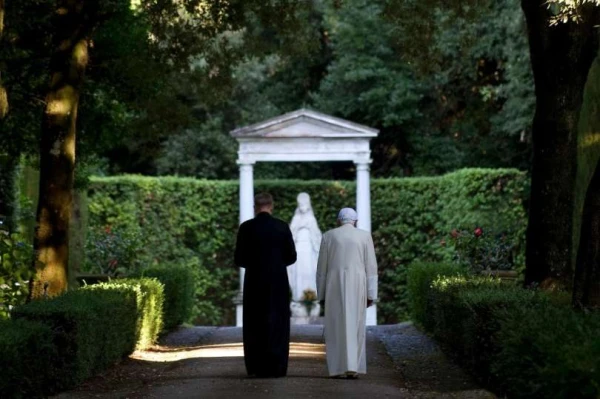
Castel Gandolfo, Italy, Jul 26, 2019 / 04:00 am (CNA).- Pope Emeritus Benedict XVI left Vatican City Thursday to make a surprise visit to Castel Gandolfo.

The pope emeritus visited the Pontifical Villa July 25 for the first time in four years, and walked the garden paths where he used to pray, according to Italian media.

Benedict XVI then went to the 15th century Sanctuary of the Madonna of Tufo in Rocca di Papa for a short prayer before traveling to the town of Frascati in the Alban Hills outside of Rome.

In Frascati, Benedict had a private dinner with Bishop Raffaello Martinelli of Frascati at the Bishop’s Palace. Benedict’s private secretary and Prefect of the Papal Household Archbishop Georg Gaenswein accompanied them.

Since his resignation in Feb. 2013, Benedict has led a life of prayer, occasionally consulting with and meeting with his successor. At age 92, he currently resides in the Mater Ecclesiae monastery within Vatican City State, where he has few private meetings with guests for breakfast or lunch.

During his pontificate, Benedict XVI used to spend his summers at the Pontifical Villa in Castel Gandolfo, which was conceded to the Holy See as an extraterritorial possession under the Lateran Pact of 1929.

The villa has served as the papal summer residence since the reign of Pope Urban VIII during the 17th century.

Pope Francis broke the tradition after his election in 2013, choosing to spend his summers in Rome in his residence in Vatican City’s Domus Sanctae Marthae guest house.

The Apostolic Palace in Castel Gandolfo was opened to the public in 2016. Visitors can see the papal library, private study, throne room, consistory hall, and private chapel in the papal residence, as well as the bedroom where Popes Pius XII and Paul VI died.

The villa also has a small farm created by Pope Pius XI, which produces eggs, milk, oil, vegetables and honey either for local employees, or for sale in the Vatican supermarket.

During his stay at Castel Gandolfo in July 2011, Pope Benedict XVI said, “Here I find everything: mountains, the lake, and even the sea; a beautiful church with a renewed façade and good people. For these reasons, I am happy to be here.”

[…]

Baptismal record for same-sex couples causes controversy in Colombia

July 25, 2019 CNA Daily News 0

Medellin, Colombia, Jul 26, 2019 / 12:00 am (CNA).- The recent baptism of a child raised by a same-sex couple has caused a controversy in Colombia, after a parish pastor issued a baptismal certificate indicating that the child has two mothers.

Manuela and Luisa Fernanda Gómez, who are civilly married under Colombian law, wanted to have their 17-month-old son Matías baptized in the city of Medellin.

According to local media reports, the couple went to several parishes where they were told that their son could be baptized, but that a baptismal certificate would list only the same of his biological mother, and not that of her partner, since the Church does not recognize the marriage of persons of the same sex.

Manuela Gomez told reporters that eventually, they found a parish priest willing to perform the baptism and record them both as mothers on the baptismal registry, if the Archdiocese of Medellin would permit him.

“He wrote the (diocesan) curia, investigated, and he told us that he could (perform the baptism), in fact, because according to canon law, the sacrament must be documented with the same information that appears on the civil registry of the minor’s birth, which in this case had two lines: ‘Mother one’ and ‘Mother two,’” Manuela told the local media.

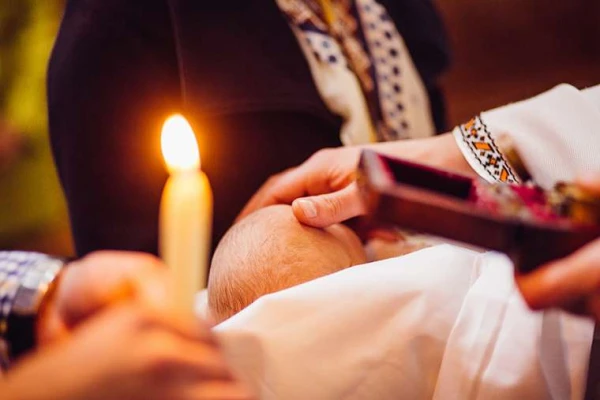
The baptism was performed July 13.

In a statement issued July 23, the Archdiocese of Medellin said that for several years “the sacrament of baptism has been administered to children of homosexual couples.”

The statement said that through baptism, “the Church gives the grace of Christian life to the children.”

Baptism in such cases is “not a recognition of the couples themselves,” the archdiocese added.

The archdiocese also said that “for the registration of the baptism and the issuance of the certificate of the latter, the Church assumes the information that appears on the civil documents which must be presented before the administration of the sacrament, taking into account that on the certificate the names of those that are recorded on the civil registry as parents, in the same order in which they are written on that registry.”

In a 2017 letter from Cardinal Francesco Coccopalmerio, then the prefect of the Pontifical Council for Legislative Texts, the Holy See clarified how the baptisms of the children of same-sex couples should be recorded.

“In the current Code, there is not a specific law with respect to the entry of same sex couples or ‘transgendered persons’ as parents on the baptismal record. The term ‘parents’ used by the Church’s Canon 877 clearly refers to the father and mother, the man and the woman created by God who are united in the sacrament of marriage.”

“The entry of same sex couples or ‘transgendered persons’  as parents would be contrary to the aforementioned canon and the teaching of Our Lord and of the Church on marriage as God desires it as the union between a man and a woman. If one of the partners is the natural father or mother of the child, it must be mentioned on the record, the other partner cannot be entered,” Coccopalmerio added.

“Given the foregoing instructions, we do not consider it possible to enter on the baptismal record two mothers or two fathers or a ‘transgendered father’ whose real nature is a woman or a ‘transgendered mother’ whose true nature is a man,” the letter concluded.


A version of this article was previously published by ACI Prensa, CNA’s Spanish-language sister agency. It has been translated and adapted by CNA.

[…]

Oregon removes assisted suicide waiting period for some of the terminally ill

July 25, 2019 CNA Daily News 5

Salem, Ore., Jul 25, 2019 / 04:17 pm (CNA).- New legislation in Oregon shortens an initial waiting period for some persons seeking assisted suicide, allowing them to receive quicker access to life-ending drugs.

Governor Kate Brown signed SB 579 into law July 23. The bill had passed the Senate in May and the House of Representatives in June.

If the terminally ill patient has fewer than 15 days to live, the legislation will bypass a 15-day delay required under the Death with Dignity Act. The waiting period usually takes place between the first verbal request and second written request for assisted suicide.

“By signing this bill, Governor Kate Brown shirked her duty to protect Oregon’s citizens,” Oregon Right to Life executive director Lois Anderson said July 25. “Oregon’s ‘Death with Dignity’ law already lacks important safeguards to protect vulnerable Oregonians. Removing one of the only safeguards that does exist is both unnecessary and incredibly ill-advised.”

The legislation was sponsored by members of the Democratic Party, including Senator Floyd Prozanski, Representative Mitch Greenlick, and Senator Elizabeth Hayward.

During the floor debate last month, Republican Representative Duane Stark expressed concern over the new law. He said it will remove a safeguard designed to ensure the patients confidence in their decision.

“I don’t want to make it any easier for any individual in any circumstance to take their life prematurely,” said Stark, according to the AP.

The bill was also opposed by two Democrat Senators – Peter Courtney and Sara Gelser.

Anderson had applauded their decision, noting that the problem extends beyond the lines of political parties.

“It is dangerous to assume that the political party someone belongs to is universally right or universally wrong,” said Anderson in May. “Senators Peter Courtney and Sara Gelser avoided group-think today and voted with their constituents’ safety in mind.”

“Every person has a right to be valued and treated ethically, especially during their last days of life,” she said. “Persons near death deserve the same protections under the law. Even more, they deserve proper care, compassion and confirmation of their inherent value, not a deadly prescription.”

In 1997 Oregon was the first US state to pass an assisted suicide law, which was later upheld by the U.S. Supreme Court in 2006. Since its enactment, 1,500 people in the sate have died by assisted suicide.

The U.S. Conference of Catholic Bishops issued a statement on medically assisted dying in 2011. It stated that palliative care is better suited for the dignity of the human person.

“Catholics should be leaders in the effort to defend and uphold the principle that each of us has a right to live with dignity through every day of our lives. As disciples of one who is Lord of the living, we need to be messengers of the Gospel of Life,” the statement reads.

“We deserve to grow old in a society that views our cares and needs with a compassion grounded in respect, offering genuine support in our final days. The choices we make together now will decide whether this is the kind of caring society we will leave to future generations. We can help build a world in which love is stronger than death.”

[…]