China continues to rebut Western claims about repression of Uighurs

July 24, 2019 CNA Daily News 0

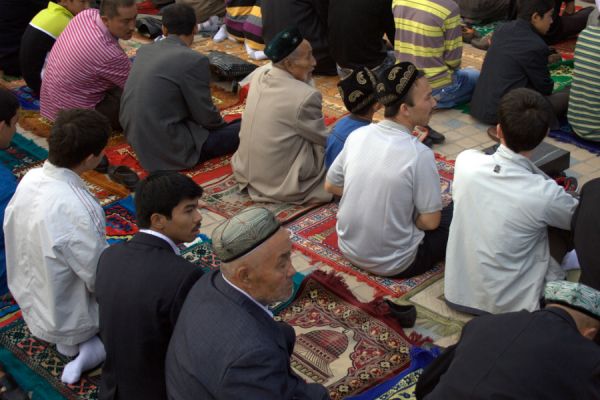
Beijing, China, Jul 24, 2019 / 12:15 pm (CNA).- An article published Wednesday in a state-run paper from mainland China repeated government talking points regarding the situations of the Uighurs, a Muslim ethnoreligious group in the country’s northwest.

Some 1 million Uighurs have been detained in re-education camps for Muslims in China’s Xinjiang Uyghur Autonomous Region. Inside the camps they are reportedly subjected to forced labor, torture, and political indoctrination. Outside the camps, Uyghurs are monitored by pervasive police forces and facial recognition technology.

Uighurs can be arrested and detained under vague anti-terrorism laws. Violence in the region escalated in the 1990s and again in 2008.

In August 2014 officials in Karamay, a city of Xinjiang, banned “youths with long beards” and anyone wearing headscarves, veils, burqas, or clothes with the crescent moon and star symbol from using public transit. That May, universities across the region banned fasting during Ramadan.

The Chinese government has said reports on the camps by Western governments and media are unfounded, claiming they are vocational training centers and that it is combatting extremism.

Li Yang, an author at China Daily, an English language daily owned by the Communist Party of China, wrote July 24 that “Western critics of China’s policies on human rights and religious freedom in the Xinjiang Uygur autonomous region seem to be divorced from the realities of the situation.”

Li’s piece focused on “Uygur separatists” who try “to brainwash the other Uygurs with extremism and terrorism.”

He said that “all the measures that Beijing has taken to fight separatism, extremism and terrorism in Xinjiang are part of the global anti-terrorism campaign, as well as an integral part of China’s efforts to boost local development.”

Li noted that the Chinese government has set up “vocational educational centers” in Xinjiang, as well as “installing surveillance systems and deploying security forces.”

He also pointed out that 150 million tourists visited Xinjiang last year, and that the autonomous region’s economy has risen 40 percent over the past five years.

According to Li, “the religious freedom of all ethnic groups … is strictly protected by law.”

Li focused on the diversity of Xinjiang, saying that separatists ignore the interest of the region’s other ethnic groups. Uighurs make up about 46% of the region’s population; Han Chinese 39%, Kazakhs 7%, and Huis 5%. A large number of minorities make up the remaining 3%.

Attention was drawn to the human and religious rights situation in Xinjiang at the recent Ministerial to Advance Religious Freedom held by the US State Department last week.

US Secretary of State Mike Pompeo said July 18 at the gathering that survivors of the detention camps have described “a deliberate attempt by Beijing to strangle Uighur culture and stamp out” Islam.

In response, Chinese officials have been outspoken in defense of policies in the region.

A letter signed by Chinese scholars and religious officials posted July 19 by the Xinjiang government said Pompeo should “stop fabricating lies and slander about Xinjiang.”

An editorial published in the People’s Daily July 20 claims that China actually respects religious rights, and said that the United States has an “ulterior motive” to criticize China’s treatment of religious minorities.

“They even use so-called freedom of religious belief as an excuse to undermine China’s national harmony and interfere in China’s internal affairs,” the editorial said.

And the Chinese State Council Information Office released a white paper July 21 that claimed, among other things, that Xinjiang is a region where religious freedom is respected, and that the Uighur population did not choose to become Muslim.

In June, Rep. Chris Smith (R-NJ) told a congressional hearing that China’s campaign to “sinicize” religion is proceeding with brutal efficiency. “Under ‘sinicization,’ all religions and believers must comport with and aggressively promote communist ideology — or else,” Smith said.

“It’s never been worse than it is right now.”

“Religious believers of every persuasion are harassed, arrested, jailed, or tortured. Only the compliant are left relatively unscathed. Bibles are burned, churches are destroyed, crosses set ablaze atop church steeples,” Smith said.

[…]

Eritreans suffering from seizure of Catholic health clinics, aid group says

July 24, 2019 CNA Daily News 0

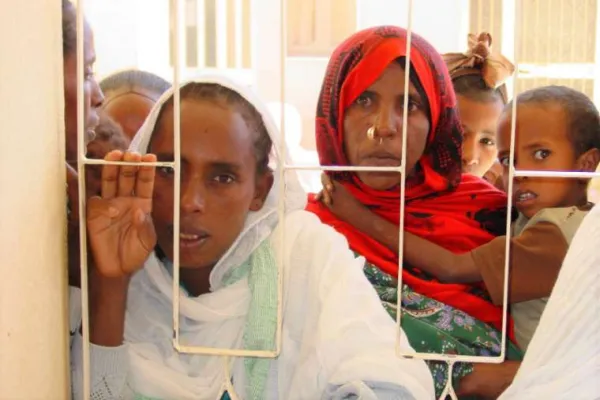
Asmara, Eritrea, Jul 24, 2019 / 10:37 am (CNA).- The Eritrean government’s recent closure of all Catholic-run health clinics in the country will have devastating effects for the people of the country, warned the pontifical foundation Aid to the Church in Need.

Sources in the country told the agency that the situation is dire and denounced the international indifference and lack of response.

“They are preventing us from offering what little we could give, in places where no one cares for the population, not even the state,” a source told Aid to the Church in Need, according to Vatican News.

“What will the people do?”

Last month, military forces arrived at the Church’s 22 health care clinics, telling patients to return to their homes, and subsequently guarding the buildings.

The government justified its seizures of the property under a 1995 decree restricting social and welfare projects to the state. The decree has been used intermittently since then to seize or close ecclesial services.

According to the BBC, analysts believe the recent seizures were retaliatory, after the Church in April called for reforms to reduce emigration. The bishops had also called for national reconciliation.

When the government interrupts the work of the Church, it is the people who suffer, Aid to the Church in Need said.

The agency argued that government-run hospitals lack the equipment and resources to take over the operations of the closed Church-run facilities, particularly in rural areas, Vatican News reported.

The agency also noted that the Catholic health care centers served people of all faiths. Some 95% of Eritreans are non-Catholic.

The Eritrean bishops have objected to the seizure of the clinics, stressing that the Church’s social services are not an act of opposition to the government.

“Any measure that prevents us from fulfilling … the obligations that come to us from the supreme commandment of brotherly love is and remains a violation of the fundamental right of religious freedom,” the bishops said in a statement.

Eritrea is a one-party state whose human rights record has frequently been deplored. Government seizure of Church property in the country is not new.

In July 2018, an Eritrean Catholic priest helping immigrants and refugees in Italy told EWTN that authorities had recently shut down eight free Catholic-run medical clinics. He said authorities claimed the clinics were unnecessary because of the presence of state clinics.

Christian and Muslim schools have also been closed under the 1995 decree designating the state as sole provider of social services, according to the US Commission on International Religious Freedom’s 2019 annual report.

Eritrea has been designated a Country of Particular Concern since 2004 for its religious freedom abuses by the US Department of State.

Many Eritreans, especially youth, emigrate due to a military conscription or a lack of opportunities, freedom, education, and health care.

A July 2018 peace agreement between Ethiopia and Eritrea, which ended a conflict over their mutual border, led to an open border which has allowed for easier emigration.

[…]

Sri Lankan church re-consecrated, cardinal challenges government

July 23, 2019 CNA Daily News 0

Colombo, Sri Lanka, Jul 23, 2019 / 08:01 pm (CNA).- One of the churches in Sri Lanka damaged in attacks on Easter was re-consecrated Sunday. During the ceremony, the Archbishop of Colombo criticized the government’s investigation of the attacks.

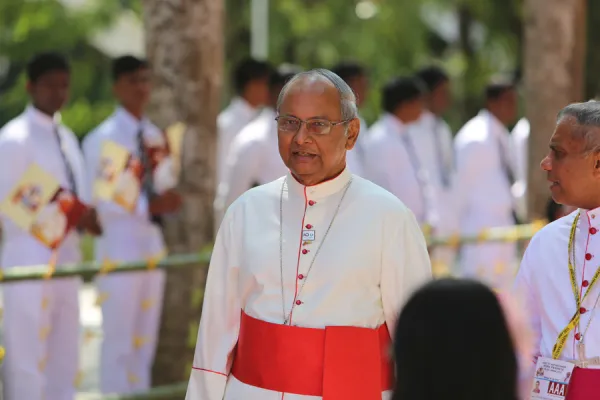
St. Sebastian’s parish in Negombo, nearly 25 miles north of Colombo, was re-consecrated July 21 by Cardinal Malcolm Ranjith.

The church was one of several targeted in bombings across Sri Lanka April 21. The attacks killed more than 250, and wounded another 500.

During his homily, the cardinal encouraged Catholics and Muslims to work together to stem the spread of terrorism. He also challenged Sri Lankan officials to reconsider their political agenda, charging that there has been a failure in the investigation of the attacks.

“The executive and the legislature were locked in a power struggle. They did not care about the international conspiracy against the country,” Ranjith stated.

He said that “the selfish power hungry leaders did not worry about ordinary people… The leaders did not heed intelligence warnings… the security council did not meet since October because of the power struggle.”

Ranjith said that “the current leaders have failed. They have no backbone. They must leave the government and go home.”

“I have no faith in any of these committees and commissions of inquiry. These are election gimmicks. The leadership must allow someone else to run the country.”

He expressed fear the investigation “will be brushed under the carpet,” and complained that the government “had been informed about the attacks more than three times” by Indian officials.

At the re-consecration a monument inscribed with the names of 114 victims killed in the attack was unveiled.

The Sri Lankan navy helped to rebuild St. Sebastian’s.

The government has blamed the attacks on the jiihadist group National Thowheeth Jama’ath, whom the police say was responsible for the attacks. The Islamic State has also claimed responsibility, saying the local jihadists had pledged loyalty to the group.

[…]

Six months after terror attack, Philippines cathedral packed at rededication

July 23, 2019 CNA Daily News 0

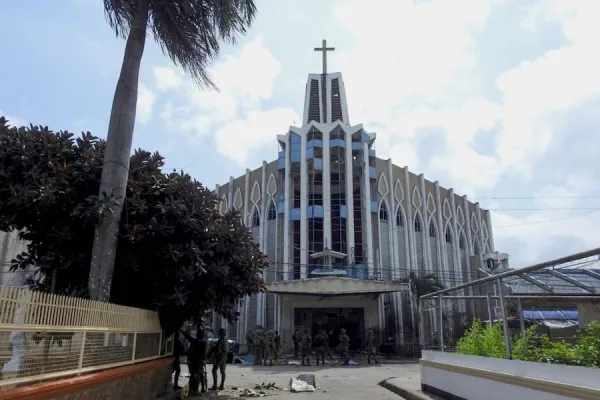
Jolo, Philippines, Jul 23, 2019 / 06:58 pm (CNA).- Despite the fresh memory of a deadly terrorist attack in January, the rededication Mass of the Cathedral of Our Lady of Mount Carmel in Jolo, an island in the Philippines, was packed with Catholics, an aid worker said.

“Security was really tight – police and soldiers locked down an entire block of the city…Yet the cathedral was packed. The dedication was attended by hundreds. It was inspiring to see the families of the victims and the survivors of the blasts there,” Jonathan Luciano, national director of the Aid to the Church in Need (ACN) in the Philippines, said in a report from the group.

The cathedral rededication was celebrated by Archbishop Gabrielle Caccia, Apostolic Nuncio to the Philippines, along with Cardinal Orlando Quevedo, Archbishop Emeritus of Cotabato, which, like Jola, is a Muslim-majority area in the country.

On January 27 of this year, two bombs exploded during Sunday Mass at the cathedral, killing at least 20 people and injuring at least 111 others. The Philippines bishops’ conference condemned the attack as an “act of terrorism.” ISIS, which has ties to the local Muslim insurgent group Abu Sayyaf, claimed responsibility for the attack. Attacks by Abu Sayyaf against Catholics in the region are not uncommon.

Jolo is a part of a group of islands called Mindanao. According to the New York Times, the attack happened just days after a referendum was held in Mindanao to establish a “Muslim autonomous region” in the area, an attempt at creating peace that was ratified by voters everywhere except in Jolo.

At the rededication Mass, Cardinal Orlando “described how inspiring the people of Jolo were because of their faith and resilience despite constant persecution,” Luciano said.

“At the end of the Mass, Archbishop Caccia assured people that the Church of Christ and the Christian community [are] with them…They are not forgotten or neglected. This is not only manifested with financial assistance, but through the solidarity of prayer all over the world,” he added. In the ACN report, Luciano said that ACN was the first aid group to offer the cathedral their assistance after the bombings, which included financial assistance for the “costly repairs.”

He said the goal of their response was to “rebuild the Christian community first then rebuild the actual church.”

The Governor of Jolo, Benjamin Loong, a Muslim, also spoke at the rededication ceremony. Luciano said he “spoke of the partnership between Christians and Muslims. With this rebuilding and this re-consecration, dialogue can restart.”

Luciano said he hopes that ACN’s mission partners and benefactors will be interested in helping persecuted Christians in the Philippines after hearing about what happened in Jolo.

“We have to reinforce the relationship between Christians and Muslims,” he said. “We can live harmoniously together.”


[…]

Catholic groups installing 5,000 solar panels in DC

July 23, 2019 CNA Daily News 1

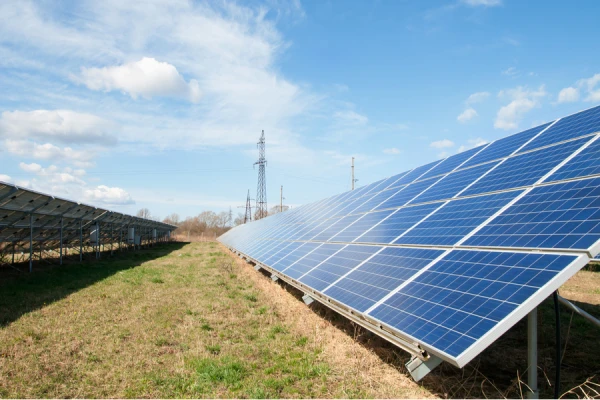
Washington D.C., Jul 23, 2019 / 04:32 pm (CNA).- Catholic organizations are installing 5,000 solar panels in a five-acre space in Washington, D.C., in what will become the largest ground array of solar panels in the city.

The project is being led by Catholic Energies, which is a nonprofit organization that is part of the Catholic Climate Covenant. Catholic Energies is working with Catholic Charities of the Archdiocese of Washington to design and create the solar panel field. Catholic Charities of the Archdiocese of Washington owns the field, which is next to a retirement home and convent.

“Catholic Energies was born as a way of providing the time, the expertise, and probably more importantly, the resources,” for creating renewable energy projects in Catholic-owned-and-operated buildings, Page Gravely, the executive vice president for client services at Catholic Energies, told CNA.

These resources are primarily financial, as energy efficiency projects are typically expensive. Catholic Energies will team up with renewable energy companies, who act as investors and work with contractors to make the projects come to life. In return, the investors receive a federal tax credit, and other financial incentives. In this project, Catholic Charities of the Archdiocese of Washington will not pay anything for the solar panels.

In this project, IGS Solar is the investing company. Washington, D.C., has the highest solar tax credit in the country.

Gravely explained that Catholic Energies’ COO Dan Last kept being asked, “How do we actually put into action…Laudato Si? What can we do here at a parish or at a church?”

Initially, the group worked with LED retrofitting. LED lights are more energy-efficient than traditional incandescent light bulbs. The company shifted focus to solar after receiving numerous inquiries from potential clients about solar panels.

“I think really from the standpoint that there was familiarity with it,” said Gravely. “Folks that both could use it at home, or they just knew about solar and you know the growth in the solar market has been well-publicized, but also it was a larger impact,” he said.

Compared to an LED retrofit, solar panels are also far more visible and tangible.

“So we pivoted,” he said. The field in D.C. is Catholic Energies’ second project in the area. In June, they coordinated the installation of 440 solar panels at Immaculate Conception Church in Hampton, VA. The panels will account for the entirety of the parish’s energy usage.

The project in Washington received some concerns and pushback from those who live near the site, who were concerned about the environmental impact of the panel installation.

Gravely told CNA that these concerns were considered, and there will be 100 trees planted in the field to create a screening effect for the panels, as well as to help beautify the area. Additionally, there will be flowers planted to help rebuild the bee, bird, and butterfly populations. Catholic Energies worked with the city to ensure that stormwater runoff would not be impacted.

“There’s still gonna always be a handful of the neighbors not happy with it, but we can only do so much. And we’ve done a lot,” said Gravely.

The panels are scheduled to be operating by March of 2020. The energy produced by the solar panels will be returned to the D.C. power grid, and the energy credits will be enough to cover the energy cost of 12 buildings owned by Catholic Charities of the Archdiocese of Washington.

[…]

Discerning in, and discerning out: What happens when seminarians leave?

July 23, 2019 CNA Daily News 0

Denver, Colo., Jul 23, 2019 / 12:15 pm (CNA).- Catholic journalists know that discernment stories are popular because they give readers hope. And they often follow a pattern: They usually include a “God moment” in which the subject, through a dramatic circumstance, hears the word of God and finds with sparkling clarity,  the call to become a cleric or religious. They end with ordination or follow final vows.

Jacob Hubbard’s discernment story isn’t like that.

Hubbard had multiple “God moments,” and he entered seminary because of them. But in seminary Hubbard realized that ordination wasn’t his calling. In November 2018, he discerned out of seminary.

“By our baptism, we’re all called to be priests, prophets, and kings,” Hubbard told CNA. “So although I won’t be an ordained priest, I’ll be living out my calling by being the priest of my family- the bridge between them and God, offering them Christ as much as I possibly can and relying on His Strength to do so.”

It could be easy to see Hubbard’s discernment out of seminary as a failure. In fact, many seminarians who discern out of seminary face a kind of stigma from their friends and family, and even from themselves.

But that stigma is based on a misunderstanding of seminary’s purpose, Hubbard told CNA.

As Hubbard said, “The stigma today is that when people see seminarians, they don’t see them as discerning individuals, they see them as mini-priests.”

Seminary is a “house of discernment,” he said, “not a house of mini-priests,” adding that if a man leaves seminary, it’s often a positive sign of his ongoing vocational discernment.

Fr. Phillip Brown, President-Rector of St. Mary’s Seminary and University in Baltimore, agreed.

“As a seminary faculty and as a rector, when a seminarian discerns out, and we’re satisfied that it was an authentic, good, discernment, we don’t consider that a failure. We consider that a success,” Brown explained.

“What I say to the seminarians is that in the end, the objective here is not to become a priest, but to be what God has made you to be,” Fr. Brown said.


Discerning with openness to God’s call

According to Fr. James Wehner, rector of Notre Dame Seminary in New Orleans, only about 30% of men who originally enter seminary are ordained.

“It’s not a failure,” Fr. Wehner said. “We think it’s a very healthy process of discernment where he and the Church recognize that he’s not called to priesthood.”

“But we want to give the guys an opportunity to discern and to form, and if they’re not called, they will leave here stronger, healthier, Christian men because they were totally open to the formation experience, so it’s a win-win situation.”

Even if a man leaves before ordination, Hubbard told CNA, “you can walk out a better man if you do seminary right. You could really figure out the areas you have believed lies your entire life. And then you can accept God’s love there instead.”


The difficulties and the fruits of seminary life

There are many gifts that come with entering seminary, but they come alongside trials, Hubbard said.

When he entered Holy Trinity Seminary in Dallas, Hubbard found himself face-to-face with a slew of challenges.

A strict schedule and constant obligations kept him busy, even without the additional work a full-time student must face at the school next door, the University of Dallas.

“You need structure to build your life on, and that structure needs to include self-love, so doing things that you personally love, and then of course prayer where you receive love from God,” he said regarding structure.

The routine of seminary taught Hubbard that “it’s impossible to earn God’s love by your own measures. But the routine can open you up to being able to receive it more.”


Discerning into seminary

Hubbard said he had long considered the priesthood, with encouragement from his family, and reflected on it while journaling about his prayer life while in high school, and through retreats and mission trips.

After several invitations to visitation weekends at HTS, he attended one, and after a “God moment,” he chose to apply to the seminary, entering as a sophomore in college.


Discerning out of seminary

During Hubbard’s time in seminary, he worked hard to be engaged in the community and to take the opportunities presented to him.

The summer before his senior year, his pastoral assignment was as a counselor at The Pines Catholic Camp, a summer camp in East Texas. There, Hubbard worked closely with other counselors to teach and take care of children at the camp.

Hubbard told CNA that he was struck by some of the beautiful and inspiring marriages he saw the camp directors have, and the happiness he saw that came from their relationships with their wives and children.

That summer he also participated in Trinity Cor, “a two-week backpacking journey to discover your heart,” Hubbard explained. “To really find your manly heart and discover your masculinity, and it was awesome.”

“Coming back from that, I was really feeling like I had more grasp at my heart, and really had the question of discernment lodged in me from The Pines because I saw beautiful relationships there. That experience of The Pines mixed with deepening the discovery of my heart through Trinity-Core began the questioning of my discernment,” Hubbard said.

He sought out counsel about his questions, and trusting his spiritual director to keep his best interests in mind, opened up to him about everything.

One of the biggest moments for Hubbard was when his spiritual director asked Hubbard to consider marriage.

His spiritual director asked Hubbard to imagine himself, in prayer, as a priest coming home from a good day of Confessions and Mass, and then to imagine, in prayer, being married and coming home to a wife and children.

“I felt so much more deeply my heart belonged with a family,” Hubbard explained. “There’s no way to really articulate it, except that I just felt myself more present, more human there. Even just painting the picture almost brought me to tears.”

Hubbard left seminary in November of his senior year.

“And I have not regretted it since,” he said. “It’s been a beautiful journey. Seminary was a necessary step, and so I know that God has just continued to lead me along a path which I hope one day, He will use to help heal those hurting around me. I want to still give of myself to those around me.”


Does “discerning out” mean failure?

Although seminary was helpful for Hubbard in his discernment both for the priesthood and for the married life, he found that a lot of people misunderstood the reasons he had left, and some saw it as a failure on his part.

“I think that a lot of people have the misconception that when you step out of seminary it’s a failure of sorts. Their reactions are, ‘Oh, I’m sorry,’ or things like that. The negative stigma of discerning out needs to be eradicated so that seminarians who are torn don’t have that fear that when they leave, their friends, their families, their priests back home will be disappointed.”

“The stigma holds seminarians back from being able to healthily discern. I think that’s something pretty unaddressed in today’s world: the very healthy and good option of discerning out. People see it as something entirely negative, and they shouldn’t,” Hubbard continued.

After explaining his decision to his friends they understood and supported him, he told CNA, but the initial uncomfortable or negative feelings still felt like a stigma, or at least a misunderstanding, about what he considered to be a healthy discernment.

“And I experienced that a bit with some of my friends and family, but I also had overwhelming support, especially from my father, and so it was okay,” he said. “I definitely felt supported in my decision.”

Discerning into seminary at 18, his father told Hubbard that he “was proud of Hubbard no matter what.” At the time, Hubbard wondered why his dad didn’t seem more enthused about his entrance to seminary.

“But that consistency was something that was actually beautiful in the long run, and that’s what I think parents should strive for when their kids enter seminary,” he told CNA.

“That’s the exact same thing he said to me when I discerned out of seminary, and I knew that he supported me on either side and trusted my judgement, so it was incredible. It really was,” Hubbard said.

Hubbard’s father, Brad, told CNA that his first and foremost step is to pray for his children, and says that he wanted to make sure his son was happy with the formation he was receiving while in seminary.

“For me, it’s just the importance of leaving the discernment to God. As a parent, I’m there to support and especially pray, and then God’s will be done in regards to that.”


Hubbard’s Future

Last May, Hubbard graduated from the University of Dallas with a degree in philosophy, and he now plans to attend the Augustine Institute for a graduate degree in theology.

He believes he has had many blessings throughout his time in seminary and now working, and wants to have the opportunity to impact people through an occupation in ministry after he graduates.

Hubbard finds that despite the magnitude of the decision, he does not question his choice. He told CNA that his relationship with God has grown since his departure from seminary.

And in the pursuit of marriage, Hubbard has felt more confirmed in his choice.

“If everything else were to fall apart in my life, if I questioned every other piece of discernment, that is what I could hold onto and know for a fact that I made the right decision because I have so deeply encountered God’s love incarnationally in a way that I could not have in seminary,” he said.


[…]

Foster moms ask Supreme Court to hear Philadelphia case

July 23, 2019 CNA Daily News 0

Philadelphia, Pa., Jul 23, 2019 / 12:08 pm (CNA).- Two foster moms are asking the U.S. Supreme Court to protect the right of a Catholic foster agency in Philadelphia to contract with the city without being required to place children with same-sex couples.

“As the City of Philadelphia attempts to shamelessly score political points, dozens of beds remain empty and children are suffering the consequences,” said Lori Windham, senior counsel at Becket, which is representing the moms and the Catholic foster agency.

“It’s time for the Supreme Court to weigh in and allow faith-based agencies to continue doing what they do best: giving vulnerable children loving homes.”

Sharonell Fulton, one of the plaintiffs in the case, has fostered more than 40 children through Catholic Social Services.

“As a single mom and woman of color, I’ve known a thing or two about discrimination over the years. But I have never known vindictive religious discrimination like this, and I feel the fresh sting of bias watching my faith publicly derided by Philadelphia’s politicians,” she wrote in an op-ed for the Philadelphia Inquirer last year.

Toni Simms-Busch, the other foster mother in the case, said in a statement that she valued the freedom of choosing the foster agency that she felt best suited her needs.

“As a social worker I evaluated the quality of care provided by all of the foster agencies in Philadelphia. When I decided to become a foster parent myself, I chose to go through the agency that I trusted the most,” she said.

“The consistency, integrity, and compassion of Catholic Social Services has made all the difference in my journey through the foster care process.”

Last March, the City of Philadelphia announced that it was experiencing a shortage of foster families, in part due to the opioid crisis, and put out a call for 300 new families to help accept children.

A few days later, the city announced that it would no longer refer foster children to agencies that would not place them with same-sex couples.

One of those agencies was Catholic Social Services (CSS), an arm of the Archdiocese of Philadelphia that has been working with foster children since its founding in 1917. CSS serves about 120 foster children in about 100 homes at any one time.

City officials cited the group’s unwillingness to place foster children with same-sex couples due to its religious beliefs on traditional marriage, even though lawyers for Catholic Social Services argued that no same-sex couple had ever approached the agency asking for certification to accept foster children.

Catholic Social Services filed a lawsuit seeking a renewal of its contract, arguing that the city’s decision violated their religious freedom under the constitution.

The U.S. Court of Appeals for the Third Circuit ruled against CSS on April 22.

“The City’s nondiscrimination policy is a neutral, generally applicable law, and the religious views of CSS do not entitle it to an exception from that policy,” Circuit Judge Thomas Ambro concluded.

Catholic Social Services has never been the subject of discrimination complaints by same-sex couples. The agency says that it assists all children in need, regardless of a child’s race, color, sex, religion, sexual orientation or gender identity.

“CSS will only certify foster parents who are either married or single; it will not certify cohabitating unmarried couples, and it considers all same-sex couples to be unmarried. So far as the record reflects, no same-sex couples have approached CSS seeking to become foster parents,” Judge Ambro wrote.

Despite this, Ambro concluded that the City of Philadelphia “stands on firm ground in requiring its contractors to abide by its non-discrimination policies when administering public services,” and that the record demonstrates, in his view, the “City’s good faith in its effort to enforce its laws against discrimination” rather than an anti-religious bias.

The U.S. Supreme Court in August 2018 declined to grant an injunction that would require the city to continue its foster-care placement with the agency during litigation over the matter.

Philadelphia is not the only city to refuse to work with a Catholic organization on the issue of foster care and adoption placement. In Buffalo, Catholic Charities recently ceased adoption and foster care work due to rules that would have forced the organization to violate their religious beliefs. Catholic Charities had done work with adoption in Buffalo for nearly a century before the rule change.

In recent years, faith-based child welfare providers in multiple states including in Massachusetts, Illinois, California, and the District of Columbia, have also been forced to shut down their adoption and foster care services because of beliefs that children should be placed with a married mother and father.

[…]