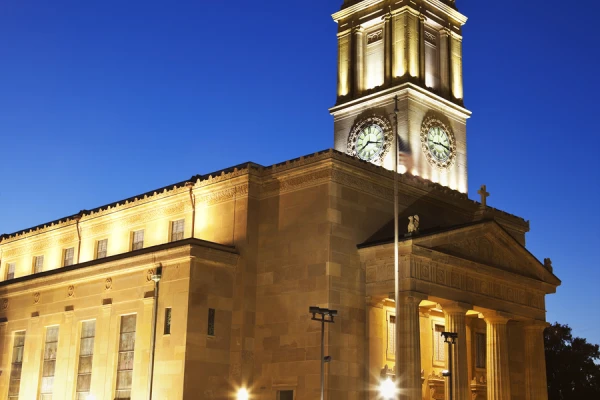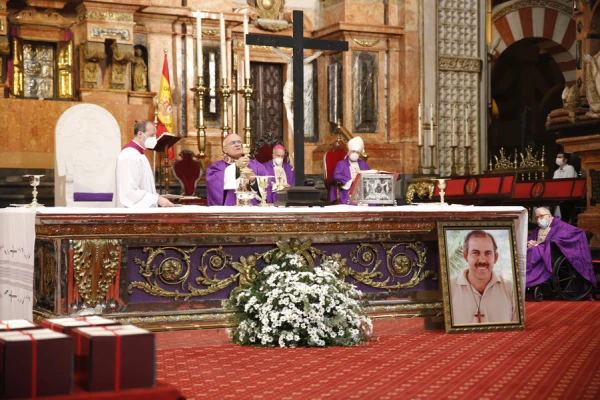
Cordoba, Spain, Mar 22, 2021 / 06:01 pm (CNA).- Bishop Demetrio Fernández Gonzalez of Córdoba closed on Saturday the diocesan phase of the beatification process for the missionary Brother Pedro Manuel Salado de Alba, who died in Ecuador in 2012 after saving seven children from drowning in the ocean.
The diocesan phase began in October 2018 and ended March 20 with the certification of the original documentation and the two copies that will be sent to the Congregation for the Causes of Saints.
Salado was a consecrated member of the Home at Nazareth, an institute of consecrated life headquartered in Córdoba. He made his final vows in 1990 and lived in Spain until 1998. He was then assigned to the Quinindé mission in Ecuador, where he directed a home and the Holy Family of Nazareth School.
In a March 20 statement from the Diocese of Córdoba, Bishop Fernández expressed his desire “that this cause be processed quickly.” Now “let’s keep it in our prayers because this cause encourages us to be like Pedro Manuel, to spend our lives for the sake of others.”
Consuelo Csanady, director general of the Home of Nazareth and superior of the women’s branch, recalled that “with Pedro Manuel Salado God wanted to give us an exceptional ambassador.”
Pedro Manuel “tells us today that we must continue giving our lives for others,” she said.
Bishop Eugenio Arellano Fernández, Vicar Apostolic of Esmeraldas, was also present for the closing and thanked the Córdoba diocese for taking up and advancing the cause of beatification.
Although canon law states that a cause should be opened where the servant of God died, for good reasons the process can be transferred to another diocese, as in this case to Córdoba.
Bishop Arellano said that the life of Salado “is a witness to us”, since he gave his life for the poor children of Esmeraldas “every day.”
At the Mass following the formal closing of the diocesan phase, the Bishop of Córdoba stressed that “he who gives his life for love has won it forever”, and that Salado “has woven the love of Jesus Christ into history.”
Pedro Manuel Salado de Alba was born Jan. 1, 1968 in Chiclana de la Frontera in Cádiz, the third of six children.
Fr. Manuel Jiménez, who heads the Home at Nazareth in Córdoba, said in a video about Salado’s life that “the children loved him very much, they got close to him. Between the children and prayers, he discovered that God was calling him.”
Salado took his final vows in 1990 and lived in the Home at Nazareth in Córdoba until 1998, when he was sent on mission to Ecuador.
“He lived in poverty, which was shown in his ability to adapt to everything. He didn’t have shoes and one day when he was going to play soccer they had to lend him a pair,” Fr. Jiménez recalled.
On Feb. 5, 2012, Salado took a group of children for a walk to Atacames beach.
Around noon the tide rose and seven children were swept away. “Manuel quickly realized that this was a matter of life and death. He didn’t hesitate to jump into the water and save each one of the children,” the priest recounted.
“I’ve got to save my children,” Salado said before charing into the water and managing to pull them out one by one. After bringing back the last two to the beach, he was completely exhausted. One of the sisters from the home said to him, “Manuel, you’ve retrieved them all,” after which he died.
“The children gathered around him and prayed that God would not take him, but Pedro Manuel had already completed his mission on earth,” Fr. Jiménez said.
“Brother Pedro Manuel has been, for all of us who have known him, a gift from God”, he concluded.
The Home at Nazareth is an institute of consecrated life founded by María del Prado Almagro in 1978. Its mission is to help homeless children and youths in complicated situations.

[…]