No Picture
News Briefs

Are the Rohingya returning to Burma? All is not as it seems.

August 3, 2018 CNA Daily News 1

Naypyitaw, Burma, Aug 3, 2018 / 03:49 pm (CNA/EWTN News).- The Rohingya, a long-suffering Muslim minority in Burma, are allegedly peacefully returning to their country from Bangladesh, where thousands fled last year after a surge of violence against them last year that the United Nations said might qualify as genocide.

At least, that is the story that the Burmese government would like the world to believe.

But a recent government-sponsored trip to Burma by New York Times journalist Hannah Beech and photographer Adam Dean revealed numerous holes in the official narrative of the Burmese government.

Burma is also known as Myanmar, a name which the U.S. government and many democracy activists oppose, because they say it was illegally imposed on the country by its military dictatorship.

While the Burmese government told journalists on the trip that the groups of people they were seeing were Rohingya peacefully returning to Burma after their exodus, hushed conversations with locals revealed that that was not the case.

“The men at one of the country’s three repatriation centers shook their heads when asked if they had peacefully come back to Myanmar from Bangladesh,” Beech wrote.

“They said they had not been repatriated at all. In fact, they said, they had never even left this waterlogged stretch of marsh and mountain in Myanmar, and had been swept up in the government’s broad repression of the Rohingya minority.”

“One day, last year, three of the men said, soldiers had arrested them in their village in northern Rakhine State. Five and a half months later, they were released and charged with illegal immigration,” Beech reported.

Until they were driven out by violence and the burning of their villages, the Rohingya had mostly occupied Burma’s Rakhine state. Conversations with locals in the area revealed more cracks in the government’s storyline, which maintains that the Rohingya are terrorists who burned their own villages to create a ruse.

“…a girl, who would be in danger if her name were revealed, said she missed a Muslim friend who had lived a few houses down. ‘The Rakhine burned their houses down,’ she said, referring to civilians from the Buddhist ethnic group that gives Rakhine State its name. ‘My friend is gone forever,’” Beech reported.

“A man corrected her quickly. ‘You’re supposed to say the reverse,’ he admonished. ‘You should say they burned their own houses down.’”

Another boy confirmed to the Times journalists that he had seen government forces burning Rohingya villages.

“Who would burn down their own houses?” the boy told the journalists. ‘That’s stupid.”

Despite widespread use of the word Rohingya in the international community, the term is controversial within Burma. The Burmese government refuses to use the term, and considers them illegal immigrants from Bangladesh. They have been denied citizenship and numerous other rights since a controversial law was enacted in 1982.

Last year the Rohingya faced a sharp increase in state-sponsored violence in their homeland, which reached levels that led the United Nations to declare the crisis “a textbook example of ethnic cleansing.”

More than 600,000 Rohingya have fled across the border to Bangladesh, and are living in refugee camps, many of which are located in a swampy sort of “buffer zone” along the border between the two countries.

When asked, government officials were not able to provide the New York Times journalists an official death count, broken down by ethnicity, from the surges of violence last year.

In a 2017 trip to Bangladesh, Pope Francis met with a group of Rohingya and offered them his prayers and condolences for what they had endured.

“In the name of all who have persecuted you and persecute you, that have done you harm, above all, the world’s indifference, I ask for forgiveness. Forgiveness,” the Pope said in a Dec. 1, 2017 meeting with Rohingya.

After greeting them individually and hearing brief explanations of their stories, Pope Francis told them that “we are very close to you.”

Although there’s “little we can do because your tragedy is very hard and great,” he told them “we give you space in the heart.”

He explained that according to the Judeo-Christian tradition, God created man in his image and likeness.

“All of us are in this image, also these brothers and sisters, they too are in the image of God,” he said.

[…]

No Picture
News Briefs

Tyburn Nuns to open chapel at foundress’ birthplace

August 3, 2018 CNA Daily News 0

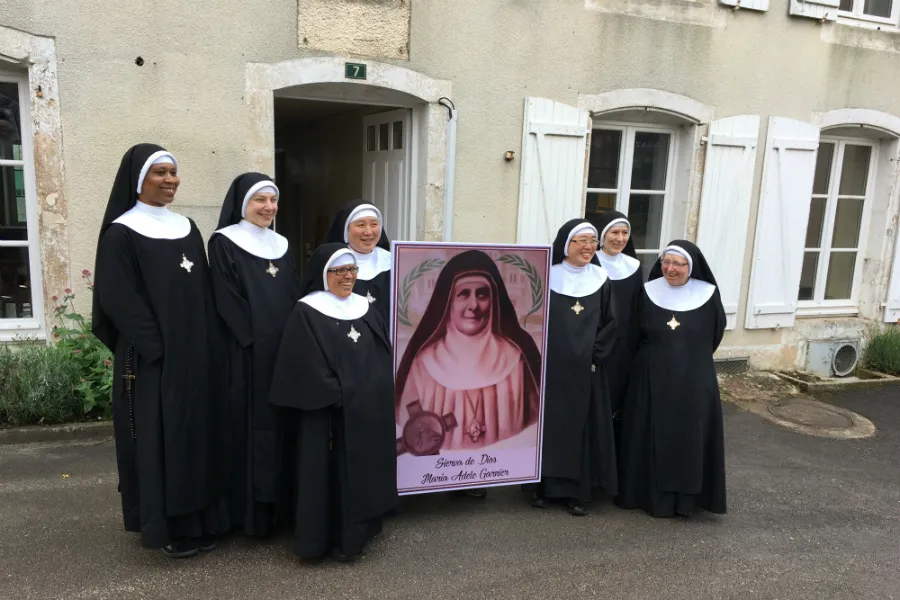
London, England, Aug 3, 2018 / 10:30 am (CNA/EWTN News).- An order of Benedictine nuns based near the site in London where Catholics were martyred during the Reformation announced Friday they will soon open a house at the childhood home of their foundress, whose cause for canonization was opened in 2016.

The Adorers of the Sacred Heart of Jesus of Montmartre, OSB, will formally open a chapel in Grancey-le-Chateau, 25 miles southest of Langres, France, Aug. 15, at the property where their foundress, Mother Marie-Adèle Garnier, was born in 1838.

“We give thanks to the Sacred Heart for this historic moment for our Congregation. Our sisters from all over the world are gathered here together to remember the birth of our foundress – the birth of our Monastic Family,” Mother Marilla Aw, OSB, superior general of the order, said Aug. 3.

“We hope that the opening of this house will be an impetus for many people to come to know the charism of our Mother Foundress who is now a Servant of God. Her teachings are profound, and she has already led many souls to the adoration of the Heart of Jesus hidden in the Eucharist.”

The chapel at the site, Maison Garnier, is dedicated to Our Lady of the Assumption. The nuns hope the site will become a pilgrimage destination for those devoted to Mother Marie-Adèle. The property includes a museum and a conference and retreat center.

Mother Marie-Adèle founded the Adorers of the Sacred Heart of Jesus of Montmartre in 1898. The order is dedicated to perpetual adoration of the Blessed Sacrament.

In 1901, the anti-clerical French government passed the Law of Associations, which greatly expanded the state’s authority over religious orders and regulated their educational work. As a result, the sisters went into exile in London, where they were able to freely wear a habit for the first time.

They eventually settled at Tyburn, the London site where in the 16th and 17th centuries several hundred martyrs – priests, religious, and lay men and women – were executed by the Protestant state for their refusal to give up their Catholic faith.

Throughout her life as a religious, Mother Garnier, who now went by Mother Mary of St. Peter, experienced intense physical suffering, so much so that when she went more than two hours without suffering, she wondered if Christ had forgotten her.

Despite her sufferings, which included debilitating migraines, her sisters say she remained cheerful and gentle with everyone, and counseled other sisters through their trials.

The order as a whole also suffered financial problems and strange demonic attacks, including instances of possession or objects being picked up and thrown across the room. But Christ promised Mother Mary of St. Peter that he would not let the order dissolve.

In 1922, Christ appeared to Mother Mary of St. Peter and told her that she would suffer and die soon. For the next two years, she suffered intense chest pains and congestion problems, until she became bedridden.

On November 15, 1923, on a Host a priest brought her, she saw the Heart of Jesus, alive in the Eucharist. She died June 17, 1924 at the Tyburn convent.

Her cause for canonization was opened Dec. 3, 2016 by Bishop Joseph-Marie-Edouard de Metz-Noblat of Langres.

Today, the contemplative order has spread throughout the world, with convents in England, Scotland, Ireland, Australia, New Zealand, Peru, Ecuador, Colombia, Italy, and France.

[…]

No Picture
News Briefs

Coptic Orthodox bishop found dead in suspected murder

August 2, 2018 CNA Daily News 1

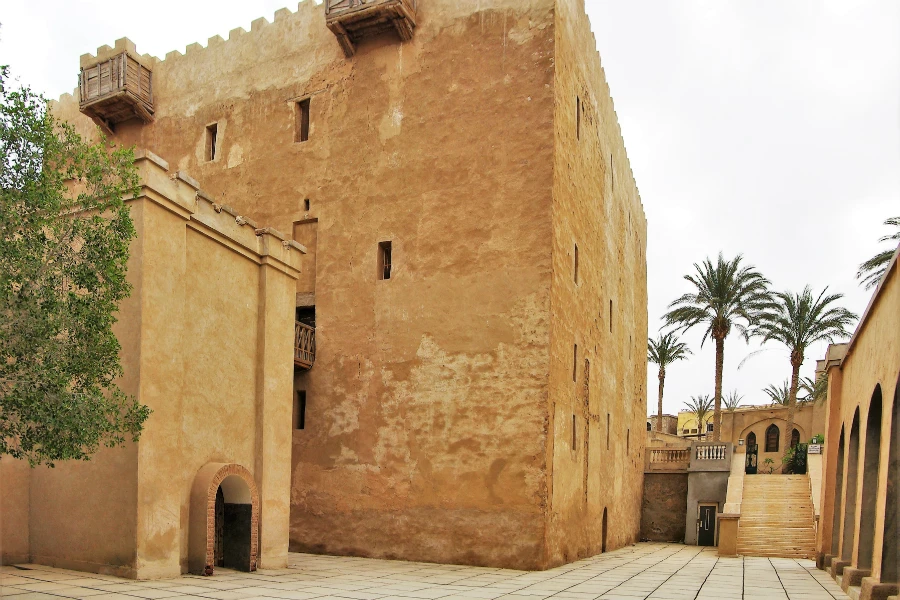
Cairo, Egypt, Aug 2, 2018 / 06:01 pm (CNA/EWTN News).- A Coptic Orthodox bishop was was found dead as a result of a suspected murder in St. Macarius Monastery in Egypt on Sunday.

Bishop Epiphanius, who died July 29, was abbot of the monastery, which is located in Egypt’s Beheira governorate, about 60 miles northwest of Cairo.

His body had injuries to his head and back that suggest that he had been hit by a sharp object, according to the preliminary security investigation.

The bishop was remembered for his wisdom, simplicity and humility by Tawadros II, Coptic Orthodox Pope of Alexandria, who celebrated Bishop Epiphanius’ funeral Mass on Tuesday.

“Just as the meaning of his name is light, he also enlightened our world. We are extremely saddened by his departure but we live on in hope of the resurrection when we bid farewell to all our loved ones,” Tawadros II said at the July 31 funeral, according to Ahram Online.

According to The Coptic Orthodox Church Centre, Bishop Epiphanius was born June 27, 1954 in Egypt’s Tanta governorate. He joined St Macarius Monastery in February 1984, and became a monk in April of that year. He was ordained a priest Oct. 17, 2002, and consecrated a bishop March 10, 2013.

In Defence of Christians (IDC) condemned the “horrific attack” on Bishop Epiphanius, calling it “the latest in a string of violence against Coptic Christians that has increased sharply in 2017 and 2018.”

Egypt’s Coptic Christian minority has suffered continued attacks since the 2015 Islamic State beheading of 21 men. In December 2017, ten people were reported dead after terrorists attacked a Coptic church near Cairo. Forty-nine Christians died in church bombings on Palm Sunday in 2017. A Coptic priest was murdered in a knife attack in Cairo in October 2017.

IDC called on the U.S. Administration and the State Department to hold Egypt accountable for the treatment of Coptic Christians.

Tawadros II announced Aug. 2 that Coptic Orthodox monasteries will stop accepting seminarians for one year, Egypt Today reported.

The Coptic Orthdox Church is an Oriental Orthodox Church, meaning it rejected the 451 Council of Chalcedon, and its followers had historically been considered monophysites – those who believe Christ has only one nature – by Catholics and the Eastern Orthodox, though they are not considered so any longer.

[…]