No Picture
News Briefs

The Japanese treasure of Sakitsu Church

August 15, 2019 CNA Daily News 0

Kumamoto, Japan, Aug 15, 2019 / 04:00 am (CNA).- My traveling companion and I could see the steeple of Sakitsu Church from more than a mile and a half away, after we drove through a mountain tunnel and over the large network of streams and lakes that s… […]

No Picture
News Briefs

San Diego bishop announces compensation fund, changes to social media policy

August 14, 2019 CNA Daily News 1

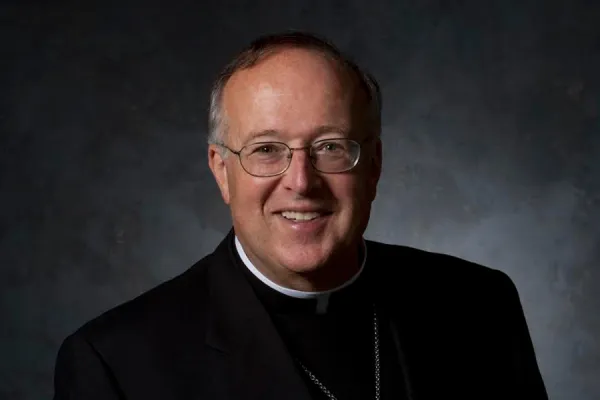
San Diego, Calif., Aug 14, 2019 / 07:19 pm (CNA).- Bishop Robert McElroy of San Diego announced Aug. 13 an Independent Compensation Program for victims of sexual abuse, set to begin in September.

He also called on all diocesan employees— not just those who are mandated reporters under the law— to contact the appropriate authorities if they “come to a strongly founded belief that a minor is being victimized sexually.”

“I would suggest that if you are not a mandated reporter, but come across evidence which points in your mind to the existence of the sexual abuse of a minor either within the life of the Church or in their family or social lives, and you are unsure how to proceed, you consult with one of the experienced mandated reporters at your school, parish or agency to come to clarity on what you should do,” the bishop said.

“I would ask those of you here today who are not mandated reporters to keep in mind that both the moral law and the civil law urge you to report known or suspected instances of the sexual abuse of a current minor to child welfare services.”

The bishop announced the program and the new policies in front of 2,500-plus employees of the parishes, schools, and organizations in the San Diego diocese. Currently, under a change in California law passed last December, the statute of limitations for sexual abuse is 10 years after the last act or attempted act of sexual assault.

Kevin Eckery, Vice Chancellor of the San Diego diocese, told CNA that the bishop’s call to diocesan employees to alert authorities encompassed all forms of abuse.

“It includes all forms of physical or sexual abuse that might be encountered by church workers at school, in the parish or in the community,” he told CNA.

Eckery also clarified that the bishop was encouraging those who suspect abuse to go directly to law enforcement, but also to alert the diocese.

“Mandated reporters under California law are supposed to go directly to law enforcement,” he said.

“So it’s not a matter of waiting for approval or running it up the chain…for the non-mandated reporters, he was giving them complete license to do the same, to go directly to law enforcement or whatever the proper civil authority is. But in all cases we are anticipating that people will alert us so that we can track these reports at the diocese to make sure everything is followed up on.”

Money for the victim compensation fund will come from diocesan funds and insurance; no parish funds will be used, nor money raised through the diocese’ annual appeal, the diocese said.

“Victim/survivors of abuse by a priest of the San Diego diocese will be invited to apply for compensation regardless of when the abuse occurred. Undocumented immigrants may also apply. There will be no statute of limitations,” the diocese said in a release announcing the program.

In addition to announcing the compensation program, McElroy also promulgated two new diocesan policies related to social media.

“It will be forbidden for any employee or clergy in the diocese to communicate privately with a specific minor whom he/she has come to know through ministry without copying that minor’s parent or guardian. Moreover, it will be forbidden for any cleric or employee to have any direct interaction on any personal media account with any individual minor whom they have met through their work in the Church,” McElroy said.

Eckery said the new social media policy was not a response to any specific incident of inappropriate communication between a diocesan employee and a minor.

“It’s more based on a feeling of what’s right,” he said. “It’s really meant to avoid problems, rather than address problems that exist.”

“We’ll promulgate [the new rules] in written form as soon as we have everybody informed on the software changes, the updates, just so that we don’t tell people not to do something before we give them a solution.”

The bishop also announced the creation of a Task Force, headed by diocesan Chancellor Marioly Galván and Director of Schools John Galvan to “focus upon designing pathways for our local Church to bring to our parents and families a deeper understanding of the pervasiveness, patterns and damaging effects of the sexual abuse of minors.”

[…]

No Picture
News Briefs

Calif. bishop: Be society’s conscience in face of campus abortion pill mandate

August 14, 2019 CNA Daily News 1

San Francisco, Calif., Aug 14, 2019 / 06:01 pm (CNA).- At a Mass marking Sunday’s conclusion of a novena for the defeat of a California bill that would require public universities to provide free access to abortion pills for students, the Archbishop of San Francisco challenged parishioners to grow in charity by embracing works of mercy to the most vulnerable – those in the womb.

Confidence in God “gives us the courage to put our identity into action by imbuing our minds and values with the truth of the Gospel so that we may live our faith with integrity and so be vigilant to the Lord’s coming by serving as a moral conscious of our society,” Archbishop Salvatore Cordileone said in his homily at an Aug. 11 Mass at the Cathedral of Saint Mary of the Assumption in San Francisco.

“And we do so above all, by bearing witness to God by a life of charity, seeking the good of those who are most disadvantaged and defenseless and so fulfill our human vocation of eternal happiness with God in heaven.”

Catholics in California held a novena Aug. 3-11 for the intercession of Our Lady of Guadalupe in order to defeat Senate Bill 24. The state legislature returned from summer recess Aug. 12.

SB 24 is a slightly-amended version of a bill introduced in California’s state legislature last year that was ultimately vetoed.

Former Governor Jerry Brown, a public supporter of abortion, vetoed the similar bill last September, saying it was was “not necessary,” as abortion services are already “widely available” off campus.

California’s current governor, Gavin Newsom, a Democrat, said before his election that he would have supported the abortion pill mandate, but has not commented on the new version of the bill since he took office.

The bill would also create a fund to provide a $200,000 grant to each public university student health center to pay for the cost of offering abortion pills, with money coming from nonstate sources such as private sector entities and local and federal government agencies.

The bill would only take effect if at least $10.29 million in private funds are made available by Jan. 1, 2020, which funding has already been secured according to an Aug. 12 analysis of the bill by the State Assembly’s appropriations committee.

Besides requiring college health centers to provide abortion pills free of charge, SB 24 would also require abortion counseling services to students, but it is “specifically written in such a way to exclude pro-life counseling,” according to the California Catholic Conference.

In his homily Archbishop Cordileone said the US “is a country that tolerates the destruction of human beings in their mothers’ wombs, and it exalts it by calling it choice while actually doing nothing to help a woman in a crisis situation to have the support that she needs to make a truly happy choice, a choice for life.”

The archbishop expanded on three lessons: identity, vigilance, and charity.

He said fathers of the Old Testament understood their identity as children of God and took courage in his providence. He said these people were rewarded for their trust, even if the answer to their prayers was not seen for generations to come.

“As the people of God, we are rooted in the certainty of a past historical saving event, which gives us the certainty of hope for God’s deliverance in his own time and in his own way,” he said.

“The fathers of the chosen people did not see this liberation. This was for a future generation, but they had confidence that God would fulfill his promise so they had the courage to do God’s will in the face of great hardship and uncertainty.”

Secondly, he said, Catholics must rise above worldly concerns and be vigilant in their identity in the faith.

“We are not to be duped by popular fashions, by political convention, or by the cultural pressure of the time,” he said. “Our values and our whole way of thinking is not to be conditioned by popular trends or pressure, but by the Gospel of Jesus Christ.”

He said parishioners cannot act as the gluttonous and violent man in the Gospel’s parable of the unfaithful steward. He said adopting the values of society condones a culture of death.

Lastly, he pointed to Christ’s words on true wealth.

In order to store up riches in heaven, he said, Catholics should give alms to the poor and the most vulnerable. He said, under the Catholic faith, the action of giving alms can be demonstrated in numerous ways, such as participating in the pro-life movement.

“What can be a greater act of charity than to defend those who have no voice with which to defend themselves? It is precisely by such acts of charity on behalf of the poor, defenseless, and marginalized that we prepare ourselves for the life of heaven.”

[…]

No Picture
News Briefs

Diocese of Scranton launches investigation into national shrine rector Rossi

August 14, 2019 CNA Daily News 0

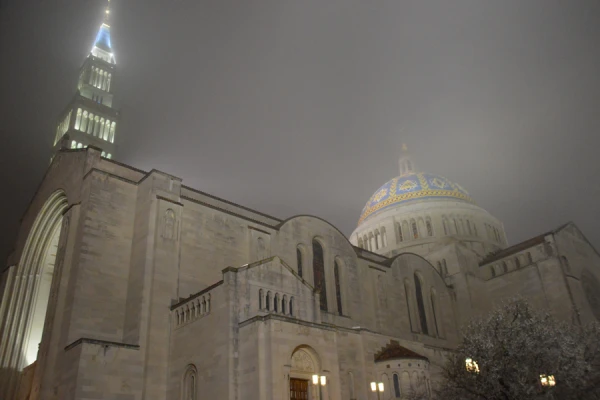
Washington D.C., Aug 14, 2019 / 04:14 pm (CNA).- The Diocese of Scranton has begun an investigation into allegations of misconduct on the part of the rector of the National Shrine of the Basilica of the Immaculate Conception in Washingon, D.C.

“Bishop Joseph Bambera, Bishop of the Diocese of Scranton, has commenced the process of launching a full forensic investigation into the concerns that have been raised,” about Msgr. Walter Rossi, the diocese told CNA Aug. 14.

“Approximately one year ago, concerns were raised in the public sector regarding Monsignor Walter Rossi, a priest who was incardinated in the Diocese of Scranton but who has served more than 20 years at the Basilica of the National Shrine of the Immaculate Conception in Washington, D.C.”

“The Diocese of Scranton referred those initial concerns to the Archdiocese of Washington, which investigated certain specific allegations and determined them to be unfounded,” the diocese added.

“Additional concerns have now surfaced, however, requiring a broadened investigation.”

“Bishop Bambera has spoken with Archbishop Wilton Gregory and they have agreed that the Diocese of Scranton and Archdiocese of Washington will work jointly and cooperatively on undertaking a comprehensive investigation,” the statement concluded.

Concerns were raised about Rossi to Archbishop Gregory Tuesday night, during a question-and-answer session at a Theology on Tap, held at the Public Bar Live in the Dupont area of Washington. The event was broadcast live on Facebook.

During that session, Gregory called for an independent, forensic investigation of some allegations against Rossi.

In the first question from the floor at the Aug. 13 event, Gregory was asked about Rossi, who has been the subject of numerous articles carried by right-wing websites and media outlets.

“My question calls for accountability, which in the past you have committed to,” a young man asked, before bringing up recent media reports alleging abuse or the cover-up of abuse on the part of Rossi.

“I am not claiming that these allegations have been technically proven,” the questioner said, “but I am wondering why in that sort of situation he hasn’t been removed from active ministry until an investigation can be completed?”

Gregory responded “In our society, people can be ‘proven guilty’ by innuendo or by common conversation.”

“As far as I know, no one who has been a victim [of Rossi] has come forward and identified themselves and said specifically ‘I was harmed.’”

A follow-up question noted that Rossi has been accused of directing young men to Fr. Matthew Reidlinger, a priest friend of Rossi’s who is alleged to have sexually harassed them in phone calls and text messages. That accusation was made in 2013.

Gregory said he was unfamiliar with the allegation.
 
“That’s news to me. And I am not doubting it, but I have not heard about [this situation].”
 
“I suspect – I hope – that there is a forensic investigation. But in today’s environment, even a forensic investigation that either proves or disproves, will not satisfy the people. But I would like to see that, I would like to see a forensic investigation of those allegations.”

Gregory was then asked why Rossi remained in ministry at the Washington shrine; as the local archbishop, Gregory is the chairman of the board of trustees.
 
“It seems to me that the investigation has to come from his bishop, he’s a priest of Scranton.”

Acknowledging that Rossi is assigned to a Washington church, Gregory said that “the investigation has to begin with his bishop, that’s just how things are done.”

“Until that kind of investigation is done, a forensic one [with] outside investigators, I don’t know how we can make a decision [on the suitability of Rossi to continue in ministry in Washington] until those kinds of investigations are completed.”

The announcement from the Diocese of Scranton came in response to questions from CNA about whether Bambera would initiate the kind of investigation called for by Gregory.

The Archdiocese of Washington did not return CNA’s calls for comment.

Attempts were also made to contact Rossi through the communications office at the Basilica of the National Shrine of the Immaculate Conception. A spokesperson for the shrine directed all enquiries to the Diocese of Scranton.
 
Beyond the allegations mentioned at the Aug. 13 Theology on Tap, additional accusations have also been leveled against Rossi.

In an interview in June, former papal nuncio Archbishop Carlo Maria Vigano alleged that the nunciature in Washington had received “documentation that states that Msgr. Rossi had sexually molested male students at the Catholic University of America.”

Vigano also said that both the Vatican Secretary of State, Cardinal Pietro Parolin, and former Washington archbishop Cardinal Donald Wuerl were both “well aware of the situation,” and that Rossi had previously been proposed for promotion to bishop and been blocked.

When he began his remarks, Gregory told the crowd of around 200 young adults that he understood and shared the disaffection of local Catholics with the Church hierarchy in the wake of recent scandals which had left him “embarrassed.”

“I too am let down by the leadership in the Church. I’ve been embarrassed. I’ve been embarrassed as a Catholic, as a priest, as a bishop, because of the behavior of some of my fellow clerics.”

“I know that this past year has been an extraordinarily painful year for Washington because of the revelation of behavior of two former archbishops.”

“[Regarding] Theodore McCarrick, there are no words to explain the awful events that visited this local Church because of his behavior. And also Cardinal Wuerl, who while he was Bishop of Pittsburgh did many good things, but obviously there were things that he didn’t do that I suspect now he is regretful of.”

“I know [Wuerl’s] regretful, but they too add to the sorrow that we experienced, and the embarrassment,” Gregory said.

“There are no easy answers or simple solutions. All I can do as archbishop is to try to the best of my ability some sense of trust.”

Earlier in the evening, Gregory introduced himself to the crowd by noting that he preferred to be up front in his dealings: “Disclosure is always better than discovery,” he said.

Responding to a series of questions throughout the evening on the subject of the abuse crisis, Gregory praised the courage and witness of abuse survivors, pledging to stand with and behind them with “whatever resources we have.”

The Diocese of Scranton has not indicated a timeline for its investigation of Rossi, or stated whether the priest’s ministry will be limited while an investigation is underway.


[…]

No Picture
News Briefs

Portland parish protests new priest’s policies

August 14, 2019 CNA Daily News 9

Portland, Ore., Aug 14, 2019 / 04:00 pm (CNA).- Parishioners of St. Francis of Assisi Parish in the Archdiocese of Portland staged a protest against their pastor during a June 30 Mass.

The Oregonian uploaded a video of the protests Aug. 11. The video … […]

No Picture
News Briefs

German archbishop in Auschwitz: Stand up against hubris of the politically powerful 

August 14, 2019 CNA Daily News 0

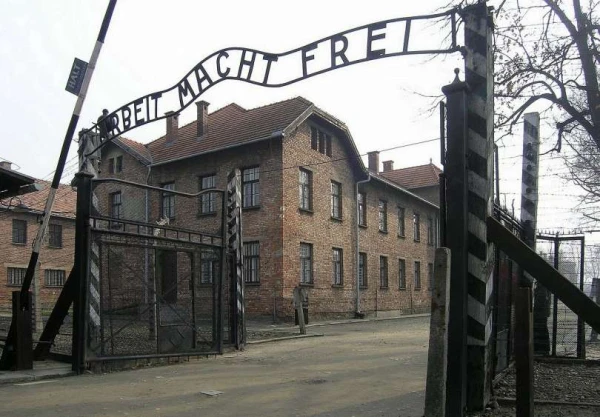
Krakow, Poland, Aug 14, 2019 / 02:31 pm (CNA).- On the eve of the 80th anniversary of the German invasion of Poland, a German archbishop has called for a stand against hubris and arrogance of those in political power.

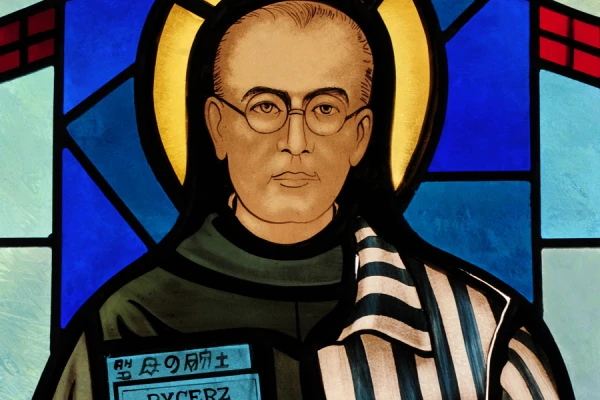
Speaking on the occasion of a Mass in the former Nazi concentration camp in Auschwitz/Oświęcim on Aug. 14, Archbishop Ludwig Schick of Bamberg recalled the witness of the Polish martyr and saint Fr. Maximilian Kolbe.

“On the anniversary of the beginning of the Second World War, Maximilian Kolbe reminds us to profess that God is the Almighty to whom all must submit for peace and unity in our world today,” Archbishop Schick said.

“No person can put themselves above God, and no nation can put itself above another, the German prelate stressed, adding that the most important contribution of Christians to peace and unity among peoples and nations was “to profess the one and only benevolent God, the Father of all creation.”

God gives equal dignity and rights to all people, peoples and nations, and imposes the same duties of charity on all, Schick said, adding that St. Maximilian Kolbe had deeply committed himself to the obligation of charity.

The Polish priest resisted the totalitarian terror of Nazi ideology and was incarcerated in Auschwitz concentration camp. In 1941, he gave his life for a fellow prisoner. He was brutally executed after suffering starvation in a hunger bunker.

Today, St. Maximilian Kolbe is a patron saint of Europe, reminding Catholics to stand against war, abuse of power and arrogance on the part of politicians, powerful men and leaders who presume to take God’s place, Schick continued.

Archbishop Schick is Chairman of the Contact Group of the German and Polish bishops’ conferences. He is taking part in the 10th workshop of the Maximilian Kolbe Foundation, of which he is Chairman of the Board of Directors, on St. Maximilian Kolbe’s Day of Remembrance at Oświęcim/Auschwitz. Since last Sunday, 45 participants from twelve European countries have been meeting there to discuss the topic “Dealing with the violent past.”

This article was first published by CNA Deutsch, CNA’s German-language sister agency. It has been adapted by CNA.

[…]

No Picture
News Briefs

Cheyenne police recommend charging two unnamed clerics for alleged child sex abuse

August 14, 2019 CNA Daily News 0

Cheyenne, Wyo., Aug 14, 2019 / 02:30 pm (CNA).- Police in Wyoming have recommended that two clerics accused of sexually abusing male juveniles in the 1970s and ’80s be criminally charged, the Casper Star-Tribune reported Wednesday.

A press release from the police said its investigation “stems from a case initiated in 2002 that was reopened in 2018,” the Casper daily reported Aug. 14.

The clerics whom the police have recommended charging were unnamed in the release.

In July 2018 the Diocese of Cheyenne announced that Emeritus Bishop Joseph Hart had been credibly accused of sexually assaulting two boys after he became Bishop of Cheyenne in 1976, following an investigation of charges ordered by its current bishop.

In 2002, a Wyoming man accused the bishop of sexually abusing him as a boy, both during sacramental confession and on outings. The alleged abuse took place after Hart had become a bishop.

The Natrona County district attorney in 2002 had put forward a report saying there was no evidence to support the allegations that originated in Wyoming.

The Cheyenne diocese said in July 2018 that it “now questions that conclusion.”

According to the diocese, Bishop Steven Biegler, the present ordinary, had ordered a “fresh, thorough investigation” because the claims against Hart had not been resolved.

In December 2017, the bishop retained an outside investigator who obtained “substantial new evidence” and who concluded the district attorney’s 2002 investigation was flawed. The investigator concluded that Bishop Hart had sexually abused two boys in Wyoming.

The diocesan review board, after reviewing the report, concurred with the investigator, finding the allegations “credible and substantiated.” The diocese reported the alleged abuse to the Cheyenne district attorney in March 2018, and Cheyenne police opened an investigation.

The diocese said it reported the allegations of abuse as required by its own policy, the national Catholic Church policy, and Wyoming law.

In August 2018, the diocese announced it had found credible a third allegation of child sexual abuse committed by Bishop Hart.

“A third individual reported that he, too, was sexually abused by Bishop Hart in 1980,” the diocese said. This third person reported the abuse after the diocese’s announcement there was “credible and substantiated” evidence that Bishop Hart had abused two Wyoming boys.

This third allegation was also reported to the Cheyenne Police Department.

Bishop Hart has denied accusations of abusing minors.

His first accusers came forward in 1989, when he was alleged to have abused boys while serving as a priest in Kansas City. Ten individuals named Hart in lawsuits related to child sexual abuse claims dating from the 1970s. These accusations were part of settlements the Diocese of Kansas City-St. Joseph reached in 2008 and 2014, though Bishop Hart denied the accusations, the Missouri diocese said July 2.

Bishop Hart was ordained a priest for the Diocese of Kansas City – St. Joseph in 1956, where he served until he was named an auxiliary bishop in Cheyenne in 1976, and appointed to lead the diocese two years later. He served as Bishop of Cheyenne until his resignation in 2001 at the age of 70.

In June the Cheyenne diocese released a list of substantiated allegations of sexual abuse against minors or vulnerable adults. The release listed allegations against 11 clerics who had served in the diocese.


[…]

No Picture
News Briefs

The Miraculous Medal: St Maximilian Kolbe’s weapon for evangelization

August 14, 2019 CNA Daily News 2

Rome, Italy, Aug 14, 2019 / 10:58 am (CNA).- As World War II raged around him in Poland, St. Maximilian Kolbe fought for souls using a printing press and another “weapon” – the Miraculous Medal.

“Even though a person be the worst sort, if only he agrees to wear the medal, give it to him…and then pray for him, and at the proper moment strive to bring him closer to his Immaculate Mother, so that he have recourse to her in all difficulties and temptations,” Kolbe said of the Miraculous Medal.

“This is truly our heavenly weapon,” the saint said, describing the medal as “a bullet with which a faithful soldier hits the enemy, i.e. evil, and thus rescues souls.”

The Miraculous Medal is a sacramental inspired by the Marian apparition to St. Catherine Laboure in Paris in 1830. The Virgin Mary appeared to Laboure as the Immaculate Conception standing on a globe with light streaming from her hands and crushing a serpent under her foot.

“A voice said to me, ‘Have a medal struck after this model. All who wear it will receive great graces, especially if they wear it around the neck,” Laboure said.

As a Franciscan seminarian studying in Rome in 1917, Kolbe was moved by the story of the role the Miraculous Medal played in the conversion of Alphonse Ratisbonne.

Ratisbonne was a French Freemason and an atheist of Jewish descent, who received the grace of conversion while wearing a Miraculous Medal given to him by one of his Catholic friends in Rome. The Virgin Mary appeared to Ratisbonne Jan. 20, 1842 in a side chapel in the Church of Sant’Andrea delle Fratte in Rome.

St. Maximilian Kolbe chose to celebrate his first Mass April 29, 1918 in the side chapel in Sant’Andrea delle Fratte, where the Virgin Mary appeared to Ratisbonne.

Ratisbonne went on to be ordained a Jesuit priest, and eventually left the order to move to Jerusalem in 1855 to found a convent for sisters in the Congregation of Our Lady of Sion, a congregation founded to “to witness in the Church and in the world that God continues to be faithful in his love for the Jewish people.”

Kolbe went on to give his life for a Jewish man imprisoned with him in Auschwitz, who had a wife and children. He died of a carbolic acid injection in the concentration camp Aug. 14, 1941. The Nazi officials cremated Kolbe’s body on the feast of the Assumption of Mary.

Kolbe is known for being an effective evangelist and missionary. Before moving to Japan in 1930, Kolbe made a pilgrimage to the Chapel of the Miraculous Medal on Rue de Bac in Paris.

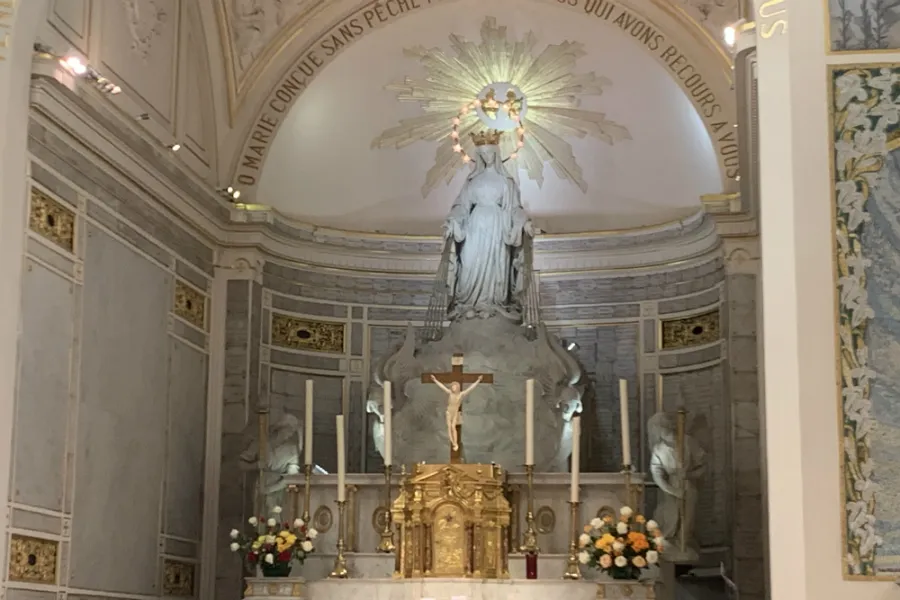
The Chapel of Our Lady of the Miraculous Medal in Paris. Credit: Courtney Grogan/CNA.

St. Pope John Paul II remembered Kolbe’s visit when he prayed in the Paris chapel in 1980:

“I come as a pilgrim, after all those who came to this chapel in 150 years, like all Christians who flock here every day to express their joy, their trust and their supplications. I come as Blessed Maximilian Kolbe: before his missionary journey to Japan, just fifty years ago, he came here to seek your support to propagate what he later called ‘the Militia of the Immaculate’ and undertake his prodigious work of spiritual renewal under your patronage, before giving his life for his brothers,” John Paul II said.

Kolbe formed the Militia Immaculata in 1917 to “lead every individual with Mary to the most Sacred Heart of Jesus.” He asked all Militia Immaculata members to wear the Miraculous Medal as a sign of their total consecration to Mary.

“Now in this epoch of the Immaculate Conception the most Blessed Virgin has given mankind the ‘Miraculous Medal’. Its heavenly origin has been proven by countless miracles of healing and particularly of conversion,” Kolbe wrote.

“The Immaculata herself in revealing it promised all who would wear it very many graces; and since conversion and sanctification are divine graces from God, the Miraculous Medal will be one of the best means for attaining these gifts,” he said.

Kolbe also added to St. Catherine’s prayer associated with the sacramental: “O Mary, conceived without sin, pray for us who have recourse to you.” To this, Kolbe added, “and for all who do not have recourse to you, especially the enemies of the Church and those recommended to you. Amen.”

[…]