No Picture
News Briefs

Monks at Valley of the Fallen denounce irregularities around Franco exhumation

October 24, 2019 CNA Daily News 1

Madrid, Spain, Oct 24, 2019 / 05:01 pm (CNA).- The prior of the Benedictine Abbey at the Valley of the Fallen, whence the body of Francisco Franco was exhumed Thursday, has written that the exhumation fails to respect the inviolability of the abbey as a sacred place.

Fr. Santiago Cantera, prior of the Abbey of the Holy Cross, sent a message to Pope Francis; the abbot of Solesmes Abbey; and Cardinal Carlos Osoro Sierra of Madrid noting the violation.

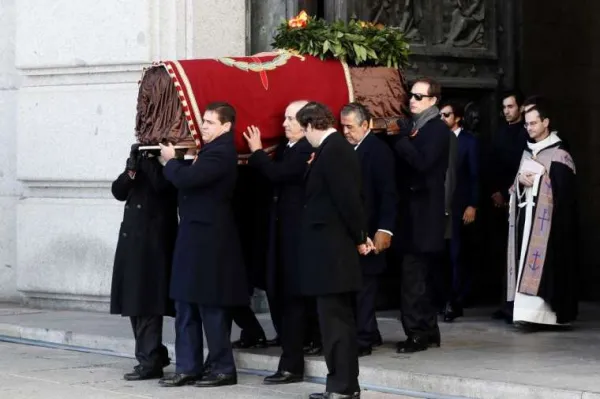
Franco’s body was exhumed from the Basilica of the Holy Cross at the Valley of the Fallen Oct. 24. It was re-interred in Madrid’s El Pardo cemetery.

Franco was Spain’s head of state from 1939, at the end of the Spanish Civil War when the Nationalist forces he led defeated the Republican faction, until his death in 1975. During the war, Republicans martyred thousands of clerics, religious, and laity; of these, 11 have been canonized, and 1,915 beatified.

The Valley of the Fallen is a monumental complex near Madrid which includes an abbey and basilica, the construction of which Franco ordered to honor the fallen of both sides during the civil war. The bodies of more than 30,000 victims of the war are buried in the complex.

The prior of the Abbey of the Holy Cross also filed a complaint in a Spanish court over the “non-consensual” access by the Civil Guard to the church.

“We want it to be on record that the actions of the Security Forces and the workers have been and are totally incompatible with the principle of the inviolability of places of worship and the rights of this Benedictine community; which we have made known also to the ecclesiastical hierarchy,” according to a statement released Oct. 23 by the Benedictine community.

Europa Press said that the Benedictines have conveyed this complaint to the Archdiocese of Madrid, the Spanish bishops’ conference, Solesmes Abbey (their mother house), and the Holy See.

Fr. Cantera filed a complaint Oct. 21 with the Guardia de San Lorenzo Court of El Escorial for “preventing access by the monks” to the basilica.

In the statement the Benedictines said that since Oct. 11, after the agreement by the Council of Ministers which decreed the closure of the Valley of the Fallen, “the Civil Guard, without judicial authorization to allow it, accessed and wandered about the premises of the abbey and, what is more serious, accessed and wandered about the basilica.”

According to the religious, the Civil Guard “without any ecclesiastical authorization and occupying it 24 hours a day, violated thus both the right to the inviolability of domiciles and the right to religious freedom.”

The complaint also states that on Oct. 20 the passage of the monks was prevented, since “chains and padlocks were placed on the access door between the abbey and the basilica,” despite the fact that the monks are “the sole owners and custodians of the church.”

However, third parties in fact have been allowed to enter the basilica and abbey “without the least supervision,” and so the Benedictines said that they are not sure if these people have not contravened “the sacred character of the church, not knowing if actions incompatible with worship, piety, or religion have taken place.”

Of the members of the abbey, the government allowed only Fr. Cantera to be present at the exhumation.

The government of Pedro Sanchez, secretary-general of the Spanish Socialist Worker’s Party, had pledged to exhume Franco’s body.

It is spending some $70,000 on the exhumation and re-burial, the BBC reported.

About 100 supporters of Franco protested the exhumation outside El Pardo cemetery Thursday.

Franco’s grandson, Francisco Franco y Martinez-Bordiu, told Reuters that “I feel a great deal of rage because [the government] has used something as cowardly as digging up a corpse as propaganda, and political publicity to win a handful of votes before an election.”

Spain is due to hold a general election Nov. 10.

Franco’s family tried to block the exhumation in court, but lost its appeal. They also asked that if his body were re-interred, it be moved to Almudena Cathedral in Madrid, but this, too, was rejected.

Fr. Ramon Tejero said Mass at the Franco family mausolum in El Prado cemetery after the re-burial.

In January, Alessandro Gisotti, then-interim director of the Holy See press office, said that the exhumation of Franco is a “matter that concerns his family, the Spanish government, and the local Church.”

Bishop Luis Javier Argüello Garcia, Auxiliary Bishop of Valladolid and secretary general of the Spanish bishops’ conference, said on numerous occasions that the Church “is not opposed” to the exhumation of the remains of  Franco according to the ruling of the Supreme Court, but asked that the country “look forward” and not “reopen wounds.”

Numerous leftist groups have proposed demolishing the 150 meter high cross that presides over the Valley of the Fallen, to make it a “memorial.” Some have also called for the site to be deconsecrated and the abbey closed.

[…]

No Picture
News Briefs

Nearly 1,000 N Ireland medical personnel say they won’t perform abortions

October 24, 2019 CNA Daily News 0

Belfast, Northern Ireland, Oct 24, 2019 / 03:41 pm (CNA).- A Northern Ireland doctor opposed to abortion said he collected the signatures of 911 health care professionals in the region who will refuse to perform abortions under a new measure that legalized the procedure.

Dr. Andrew Cupples, a general physician in Northern Ireland, collected the signatures for a letter he sent to the Northern Ireland Secretary last month. The letter, signed by doctors, nurses and midwives, stated their opposition to the new abortion laws and called for strong conscientious objection protections that would ensure that those opposed to abortion may opt out of performing or assisting with the procedure, The Independent reported.

“Hundreds of healthcare professionals in Northern Ireland will refuse to be involved in abortion services. There are even people who are planning to walk away from the healthcare service if they are forced to participate in abortion services,” Cupples told The Independent.

“There are also people in obstetrics and gynecology and midwives who are worried if they do not agree to be trained in abortion they could be forced to do so or reprimanded by their employers or a professional body,” he said.

Earlier this week, Northern Ireland’s devolved legislature failed to block changes to their abortion and gay marriage laws passed by the British Parliament, which has the authority to govern the area in the absence of a functioning local assembly.

A last-ditch effort to recall Northern Ireland’s assembly and block the new laws did not gain necessary cross-party support, and as a result, abortion and same-sex marriage are now legal in Northern Ireland.

Previously, abortion had only been permissible in the region in cases in which the mother’s life was in danger, or if there was serious risk of permanent damage to her physical or mental health if she brought her pregnancy to term.

Abortion has been legal in the rest of the UK up to 24 weeks since 1967. Pressure to legalize abortion in Northern Ireland increased after a 2018 referendum legalized abortion in the Republic of Ireland. The law in the Republic of Ireland permits medical professionals who conscientiously object to abortion to refrain from participation in the procedure; however, doctors who object to abortion must refer women to doctors who will perform them.

Documents from the Republic of Ireland’s health department earlier this year showed that abortion services are limited at nine of the country’s 19 maternity hospitals, in part due to conscientious objectors.

At least 640 general practitioners in Ireland signed a petition last November objecting to the new obligation of referring patients to other doctors for abortions.

The majority of the Reppublic of Ireland’s 2,500 GPs are unwilling to perform abortions. Only between 4-6% of GPs have said they would participate in the procedure.

Cupples told The Independent that he was most worried for midwives and other professionals who have “no protection” under the new abortion law in Northern Ireland.

Guidelines issued by Britain’s Parliament to health care professionals in Northern Ireland regarding the new abortion regulations state that “anyone who has a conscientious objection to abortion may want to raise this with their employer,” the BBC reported.

They also note that in England and Wales, medical professionals may object to participating in an abortion in a “hands on” capacity but they are still required to participate in any related administrative or health care tasks.

These guidelines apply until the end of March, by which time a 12-week public consultation will have concluded and the Northern Ireland government will have issued official protocols for health care professionals regarding abortion in the region.


[…]

No Picture
News Briefs

Trial of Indian bishop charged with rape to begin in November

October 24, 2019 CNA Daily News 0

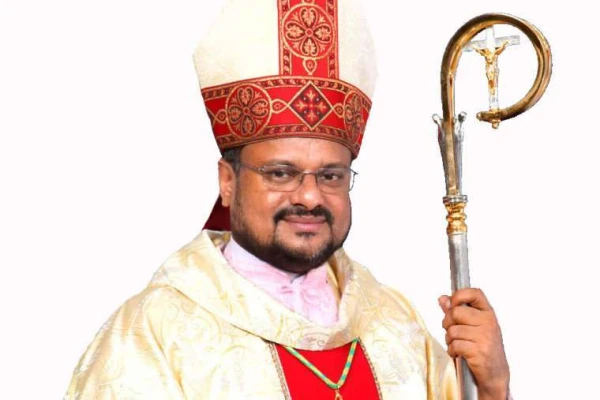
Kottayam, India, Oct 24, 2019 / 12:01 pm (CNA).- The trial of Bishop Franco Mulakkal of Jullundur, who was charged with rape in April, will begin Nov. 11 in Kottayam. He has been accused of raping a nun repeatedly over the course of two years, and he denies the allegations.

The summons was issued Oct. 23 by a magistrate in Kottayam.

The nun who has accused Bishop Mulakkal of rape has complained against him to the Kerala women’s commission, saying he his harrassing her and others through social media videos.

“In some videos on YouTube, the photographs of the victim is used, which will reveal the identity. The videos are intended to disrespect, abuse, intimidate and influence the witness, victim and the investigation team. This is a violation of the bail conditions laid down by the Kerala High Court,” she wrote in her complaint.

In August, a nun representing the alleged victim accused the defense of evidence tampering in the case and demanded that the real evidence be presented.

Bishop Mulakkal, 55, faces a maximum sentence of life imprisonment.

A nun, who is a member of the Missionaries of Jesus, has said that Bishop Mulakkal raped her during his May 2014 visit to her convent in Kuravilangad, in Kerala. In a 72-page complaint to police, filed in June 2018, she alleged that the bishop sexually abused her more than a dozen times over two years.

Bishop Mulukkal was arrested in September 2018 amid protests calling for a police investigation of the allegation. He was subsequently released on bail, and he has maintained his innocence.

The bishop has claimed the allegations were made in retaliation against him because he has acted against the nun’s sexual misconduct. He said the nun was alleged to be having an affair with her cousin’s husband.

He was temporarily removed from the administration of his diocese shortly before his arrest.

[…]

No Picture
News Briefs

‘Our faith is stronger than their bombs’: A Sri Lankan priest in Rome

October 24, 2019 CNA Daily News 0

Rome, Italy, Oct 24, 2019 / 11:00 am (CNA).- As the pastor of a parish in which many families lost a mother, father, or child in a bombing on Easter Sunday, Fr. Jude Raj Fernando has seen how healing from loss can be a long, difficult journey of faith.

Fr. Fernando is the rector of St. Anthony’s shrine in Colombo, Sri Lanka — one of the churches bombed during the Easter attacks by a group affiliated with Islamic State that killed 258 people in April. He spoke of his painful pastoral experience Oct. 24 at an Aid to the Church in Need event in Rome on the ongoing persecution of Christians.

“I had never heard a sound like that. My first words after the blast were ‘Father forgive them, they know not what they do,’” Fernando said, beginning to weep as he remembered the parishioners at Mass the day of the bombing. 

“There was a young couple married eight months before together at Easter Sunday Mass … and a man who had given an older lady his seat … a pregnant mother who lost her husband.” He noted that this woman gave birth to a healthy baby last week and she is now a single mother. 

Along with offering trauma counseling at the parish, Fernando said that the local Church remains committed to aiding the religious education of the children who lost parents and occupational training for households that lost their breadwinner. 

People at the parish are still asking, “Why did God allow this to happen to us?” he said. A young child asked him ‘why did God take my mother from me at church?’

“We priests walked this difficult journey with our victims,” Fernando said. “It is a long journey of faith.” 

“Please continue to pray for us … we can overcome evil with the love in our hearts,” he said. “Our faith is stronger than their bomb.”

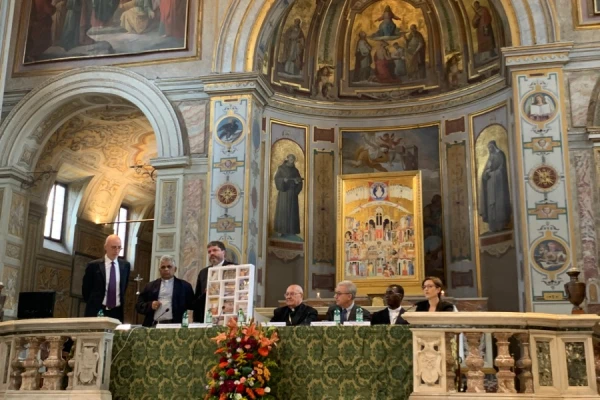
Fr. Fernando spoke in the Basilica of St. Bartholomew on Tiber Island, a basilica devoted to the Church’s modern martyrs and home to 120 relics of persecuted Christian communities around the world. 

The Sri Lankan priest presented the basilica with items from St. Anthony’s church in Colombo that survived the bombing during the Aid to the Church in Need event “Persecuted more than ever.”

“This place, the Basilica of St. Bartholomew on Tiber Island, is a testimony,” said Cardinal Leonardo Sandri, Prefect of the Congregation of Oriental Churches, “to this dimension of the Church’s today … surrounded by innumerable signs, coming from the various continents, men and women who gave their lives for the Lord Jesus.” 

“They make us sure that the passion of Christ continues in the children of the Church, as He tells us in the Gospel ‘If they persecuted me, they will persecute you too,’ but they also ask us to purify our heart and our eyes, learning to live all these experiences in faith,” the cardinal said.

The Aid to the Church in Need report on Christian persecution 2017-2019 defined Iraq, Syria, Iran, Egypt, Saudi Arabia, Nigeria, Cameroon, Burkina Faso, Central African Republic, Sudan, Eritrea, North Korea, China, Indonesia, Sri Lanka, Philippines, Pakistan, India and Myanmar as countries with the most severe persecution of Christians.

Cardinal Sandri said that an awareness of this ongoing persecution should also always be framed by the victory of Christ, who tells us “take courage, I have conquered the world.”

The cardinal said that he learned during his diplomatic service to the Holy See to look for and recognize the signs of victory that the Lord grants over time. He pointed to the example of a Eucharistic procession that took place in Zocalo Square in Mexico City after Cardinal Posadas Ocampo was assassinated.

“It was a historic fact after the prohibition of public acts of faith that had lasted since the time of the anticlerical and anti-religious persecutions that gave the country many glorious martyrs and witnesses to the faith, Christ returned to physically tread the streets of the city in the Blessed Sacrament,” he said.

Sandri stressed that, while circumstances were growing more difficult for Christians in different ways across the globe, the whole Church was rediscovering the early Church’s understanding of bearing witness to the faith.

“In different geographical and social contexts, witnessing will take on a different meaning,” Sandri said.

“In some places it will be giving life, even physically, in blood; in others it will require the courage of parresia; in others, isolation, misunderstanding or derision.” 

“In any case,” the cardinal said, “it will require a willingness to pay a high and true price, as happened in the first centuries.” 

“Being a Christian cost life, but this did not prevent the Gospel from spreading. Modern times have given us back the ancient meaning of the word witness.”

[…]

No Picture
News Briefs

Cardinal Koch: the Gospel must incorporate and purify culture

October 24, 2019 CNA Daily News 2

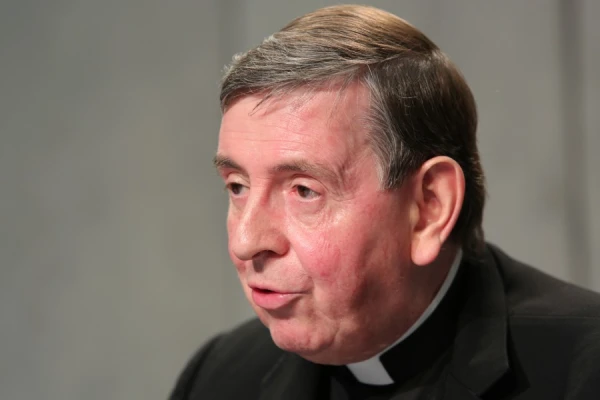
Vatican City, Oct 24, 2019 / 05:10 am (CNA).- The head of the Vatican’s Christian unity office says inculturation of the Gospel is a necessary part of evangelization, but also requires discernment of what in that culture may need “purification.”

“Evangelization always needs inculturation, so that the Gospel will be understood in different cultures,” Cardinal Kurt Koch told EWTN News Oct. 23.

“But I think we must see two things,” he continued, “first of all, inculturation, and on the other side purification of the culture, because not all things in other cultures are good.”

“We have different challenges and different problems and we must have a clear discernment of spirit of what we can accept and receive from these cultures for the better understanding of the Gospel; and on the other hand we must purify something in this culture.”

The Swiss cardinal previously served as bishop of Basel from 1996 to 2010, when he was appointed president of the Pontifical Council for Promoting Christian Unity, the Vatican’s office dedicated to ecumenism. 

Koch is participating in this month’s Synod of Bishops on the Pan-Amazonian region because of his position as head of a Vatican dicastery. The Amazon synod, a three-week long meeting on the Church’s life and mission in the region, will end Oct. 27.

Koch said he has had the impression during the Amazon synod that “bishops speak above all about inculturation and not much about purification.”

The cardinal added that he has asked the group what are the elements of the native Amazonian cultures which need purified but “I haven’t received a clear answer.” 

The need for inculturation has been one of the prominent topics of the Amazon synod. 

The Catechism of the Catholic Church states that inculturation is a necessary step on the Church’s mission of evangelizing the world.

“Missionary endeavor requires patience. It begins with the proclamation of the Gospel to peoples and groups who do not yet believe in Christ, continues with the establishment of Christian communities that are ‘a sign of God’s presence in the world,’ and leads to the foundation of local churches. It must involve a process of inculturation if the Gospel is to take flesh in each people’s culture,” paragraph 854 states.

In paragraph 1207, the Catechism explains that “it is fitting that liturgical celebration tends to express itself in the culture of the people where the Church finds herself, though without being submissive to it.”

“Enculturation,” or “inculturation” when in reference to Christianity, means having a deference in Church practice, specifically in the liturgy, to the local circumstances of a culture.

The Catechism also says, in paragraph 1149, that “the liturgy of the Church presupposes, integrates and sanctifies elements from creation and human culture, conferring on them the dignity of signs of grace, of the new creation in Jesus Christ.”

Fr. Mark Morozowich, the dean of the School of Theology and Religious Studies at the Catholic University of America, explained to CNA in March the principles that govern such “inculturation.”

“The Church has always enculturated the liturgy,” he said.

“This is something we’ve done through the centuries in every single place from the very beginning.”

Starting with the first ministry of the apostles, he said, “the Church lived Jesus Christ, proclaimed his cross, death, and resurrection. The Church proclaimed Jesus Christ being present body and soul in the elements of the Eucharist.”

He said that there have been, and continue to be, some regional differences in the matter used in the celebration of the Eucharist, but those differences are limited by the Church’s doctrinal teaching.

The Mass is not, Morozowich said, about enacting an exact historical recreation of the last supper, “but at the same time the Church has said there are some core elements of this reality of the presence of this way the [Christian] community has celebrated throughout its lifetime.”

[…]