No Picture
News Briefs

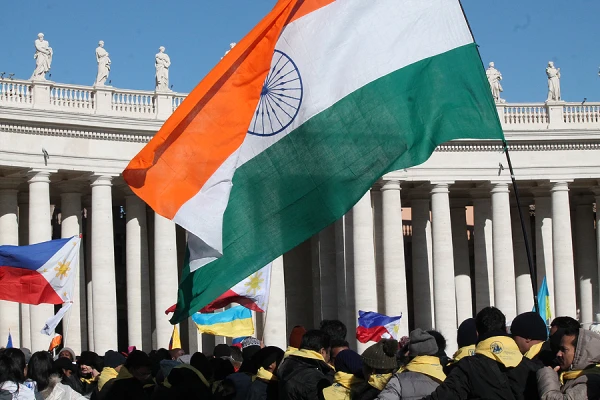
Church in India won’t host next Asian Youth Day

January 6, 2020 CNA Daily News 4

New Delhi, India, Jan 6, 2020 / 12:01 pm (CNA).- Church officials in India have said the nations will not host the 2021 Asian Youth Day as planned, ucanews reported Monday.

“Our country was given the responsibility of hosting Asian Youth Day … After consultations with higher authorities, it was decided that it was better to call off the event as the present scenario does not allow us to hold the program,” Bishop Nazarene Soosai of Kottar, head of the Indian bishops’ youth commission, told ucanews Jan. 6.

India’s ruling political party, the Hindu nationalist Bharatiya Janata Party, has been increasingly hostile to religious freedom for minorities.

Bishop Soosai commented, “We had hoped that there would be a change of government in 2019, but that did not happen and the present situation does not look good either.

The BJP came to power in 2014, and strengthened its majority in the 2019 general election.

Asian Youth Day is an event held for young Catholics in Asia every few years. The first Asian Youth Day was held in Thailand in 1999.

The most recent iteration took place in Indonesia in 2017. At the conclusion of that event, Cardinal Oswald Gracias of Bombay announced that India would be hosting the following Asian Youth Day, which was then anticipated to take place in 2020.

The recent report of ucanews said the Indian Asian Youth Day was to have taken place in October 2021.

Fr. Chetan Machado, an official of the Indian bishops’ youth council, told ucanews that “there are several practical reasons why this event was cancelled. A major reason was the granting visa to our visitors from neighboring countries … the present situation does not permit us to host this program.”

Asian Youth Day was held once before in India, in 2003 in Bangalore.

According to the 2019 report from the US Commission on International Religious Freedom, “religious freedom conditions in India continued a downward trend” in 2018.

The commission said India’s “history of religious freedom has come under attack in recent years with the growth of exclusionary extremist narratives—including, at times, the government’s allowance and encouragement of mob violence against religious minorities—that have facilitated an egregious and ongoing campaign of violence, intimidation, and harassment against non-Hindu and lower-caste Hindu minorities. Both public and private actors have engaged in this campaign.”

[…]

No Picture
News Briefs

Massachusetts bill would let minors obtain abortion without parental consent

January 4, 2020 CNA Daily News 3

Boston, Mass., Jan 4, 2020 / 04:20 pm (CNA).- In the latest move from Massachusetts state legislators to block abortion restrictions and expand access to the procedure, state Sen. Harriet Chandler has introduced a bill that would remove the longstanding requirement for teens to obtain parental consent before getting an abortion.

Currently, Massachusetts state law requires that minors obtain the consent of a parent or guardian before getting an abortion, a rule that can only be bypassed if the minor is granted permission for the abortion by a state judge.

The bill, entitled “An Act to remove obstacles and expand abortion access,” would also grant physicians the right to perform an abortion on a patient who is past 24 weeks of pregnancy if it “is necessary to protect the patient’s life or physical or mental health, or in cases of lethal fetal anomalies, or where the fetus is incompatible with sustained life outside the uterus.”

The bill also seeks to establish a state right to an abortion, which would stand even if Roe v. Wade were to be overturned. Roe v. Wade is the 1973 Supreme Court decision mandating legal abortion nationwide.

“The Commonwealth shall not interfere with a person’s personal decision and ability to prevent, commence, terminate, or continue their own pregnancy consistent with this chapter. The Commonwealth shall not restrict the use of medically appropriate methods of abortion or the manner in which medically appropriate abortion is provided,” the bill states.

Those in favor of abortion have ramped up efforts to protect and expand the procedure in light of Brett Kavanaugh’s appointment to the Supreme Court in 2018, U.S. President Donald Trump’s second appointment to the court.

Sen. Chandler, 82, told NPR that she believes the bill in part anticipates what could happen if Roe v. Wade were overturned.

“I think if people realize what a post-Roe world would be, that would make it even more reasonable to do this bill,” she said.

Pro-life advocates told NPR that laws requiring parental consent in the case of minors seeking abortions is meant as a protective measure for the minor as well as her unborn child.

“In our laws, we need to do as much as we can – especially given the kind of epidemic abuse that we’re facing – to interrupt that cycle,” David Franks, chairman of the board of the group Massachusetts Citizens for Life, told NPR.

Michael New, a visiting professor of political science and social research at The Catholic University of America, said in testimony against the new bill that the parental consent restriction has helped to save an estimated 10,000 – 44,000 lives since the enactment of the current law.

“…every peer-reviewed study I have seen, 16 in total, finds that state-level parental involvement laws reduce the in-state abortion rate for minors,” he said in his testimony.

“I think most people are uncomfortable with minor girls obtaining abortions without their parent’s knowledge,” he added to NPR.

Twenty-five other states have similar laws to current Massachusetts law, regarding parental consent for minors seeking an abortion. Some such laws have faced added scrutiny in recent years.

In August of last year, a federal appeals court upheld an injunction against part of an Indiana law that allowed judges to notify parents if their daughter is seeking to have an abortion without their consent. In 2017, a federal judge struck down an Alabama law requiring more scrutiny for minors seeking to procure abortions through judges. The law would have allowed for hearings on the maturity level of the minor in question, and for her parents or guardians to partake in the proceedings if they found out about them.

The Massachusetts bill also comes roughly 6 months after the state’s passage of the “NASTY Women” abortion act, which repealed an 1845 ban on “procuring a miscarriage.” The full title of the act is the “Negating Archaic Statutes Targeting Young Women Act,” a reference to a comment made by then-candidate Donald Trump about Hillary Clinton during a presidential candidates debate on Oct. 19, 2016.

A Massachusetts state law prohibiting protests and prayer vigils within a 35-foot “buffer zone” of an abortion facility was unanimously struck down by the U.S. Supreme Court in 2014.

[…]

No Picture
News Briefs

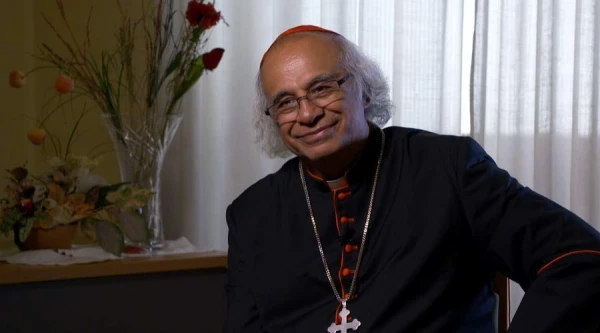
Nicaraguan cardinal: Peace comes from dialogue, accepting differences

January 4, 2020 CNA Daily News 2

Managua, Nicaragua, Jan 4, 2020 / 05:53 am (CNA).- As political tensions continue in Nicaragua, the archbishop of Managua stressed that for peace to be achieved, people need to look past their differences and foster dialogue without exclusion or manipulation.

“Only by choosing the path of respect will it be possible to break the spiral of vengeance,” said Cardinal Leopoldo Brenes on the World Day of Peace, celebrated Jan. 1.

“Peace as the object of our hope is a precious good to which all humanity aspires,” he said.

“War often begins because of intolerance of other people’s diversity, which foments the desire to possess and the will to dominate,” Brenes stressed, adding that war “is born in the heart of man because of egoism and pride, because of hatred that incites people to destroy, to frame others in a negative image, to exclude them or eliminate them.”

War feeds on broken relationships, abuse of power and ambitions, and fear of others and their differences, he said.

The cardinal said that peace is only achieved by a change in the human heart, which leads to a political willingness to reconcile and unite people and communities.

“The world doesn’t need empty words, but convinced witnesses, artisans of peace, open to dialogue without exclusion or manipulation,” he said.

Cardinal Brenes’ comments come amid continued heated protests against the government of Nicaraguan President Daniel Ortega.

Anti-government protests in the country began in April 2018. The crackdown from security forces and pro-government militias resulted in more than 320 deaths that year, with 2,000 injured and tens of thousands fleeing the country as refugees.

Modest pension reforms triggered the unrest but protests quickly turned to objections to what critics said was Ortega’s authoritarian bent.

Ortega, who previously led the country for over a decade after the Sandinistas’ 1979 ouster of the Somoza dictatorship, has been president of Nicaragua since 2007, and oversaw the abolition of presidential term limits in 2014.

The Catholic Church has served as a mediator in on-again, off-again talks between the government and opposition leaders. Church leaders had suggested that the elections scheduled for 2021 be held in 2019, but Ortega rejected the idea.

Ortega’s government has accused many bishops and priests of supporting the opposition. The president’s backers have said that a demand for the president to leave office early and to hold early elections are tantamount to a coup attempt. Some have labeled the protesters as terrorists, the Associated Press reports.

Rosario Murillo, Nicaragua’s vice president and Ortega’s wife, criticized “those who claim to speak in the name of the faith,” calling them “repugnant wolves who spread hatred.”

Since the protests began, there has been a series of attacks against clergy, churches and church facilities targeted by pro-government bands.


[…]

No Picture
News Briefs

Fort Worth bishop helps family seek care in Catholic hospital for gravely ill Tinslee Lewis

January 3, 2020 CNA Daily News 3

Fort Worth, Texas, Jan 3, 2020 / 05:12 pm (CNA).- After a Texas judge on Thursday allowed a hospital to stop medical treatment for Tinslee Lewis, a terminally ill child in Fort Worth, the local bishop offered to help her family seek care in a Catholic healthcare facility.

Lewis was born prematurely Feb. 1, 2019, and has since been in the cardiac intensive care unit at Cook Children’s Medical Center. She has Ebstein’s anomaly, a congenital heart defect; chronic lung disease; and severe chronic high blood pressure, according to the AP. She has been on a ventilator since July, and also requires cardiac support, painkillers, sedation, and medical paralysis. She currently has severe sepsis.

The hospital said that Lewis’ healthcare providers agreed by August that continued care was futile, and had begun discussing with her family the withdrawal of life-sustaining treatment by September. The hospital’s ethics committee decided unanimously Oct. 30 that further treatment was medically inappropriate.

The hospital intended to stop Lewis’ treatment Nov. 10, after disagreeing with the decision of her mother, Trinity, regarding her treatment. The girl’s doctors believe her condition to be fatal and that she is in pain.

The Texas Advanced Directives Act includes a ’10-day rule’ that says when the attending physician has decided and an ethics or medical committee has affirmed that a life-sustaining treatment is medically inappropriate, but the patient or their responsible continues to request the treatment, the attending physician and the health care facility are not obligated to provide life-sustaining treatment after the 10th day after the decision is provided to the patient or their responsible.

The rule says the physician is to make a reasonable effort to transfer the patient in such a case to a physician who is willing to comply with the directive. TADA was adopted in 1999, without a dissenting vote, and was amended in 2003 and 2015. The 2015 amendment was adopted unanimously in the House vote, and by a voice vote in the Senate.

A Tarrant County judge had issued a temporary restraining order to prevent the removal of life-sustaining treatment Nov. 10, but the hospital “filed a motion questioning his impartiality and saying he had bypassed case-assignment rules to designate himself as the presiding judge,” the AP reported.

The case was then transferred to Sandee Bryan Marion, Chief Justice of the Texas Fourth Court of Appeals, who held a hearing in December.

At that time, Marion said she would allow more time for an alternative facility to be found for Lewis’ care. And Cook Children’s said at that time that it would take no action to withdraw life sustaining treatment from Lewis for seven days from the court’s decision, to allow plaintiffs to file a notice of appeal and a motion for emergency relief with an appeals court.

Dr. Jay Duncan, a physician attending Lewis, said at the hearing that until July, there had been hope she might be able to go home, but it became clear that surgical and clinical options had been exhausted and her treatment was no longer beneficial.

Marion ruled Jan. 2 to deny the application for a temporary injunction to require indefinite medical interventions for Lewis.

The decision “restores the ability of the Cook Children’s medical staff to make the most compassionate and medically appropriate decisions for Tinslee,” Cook Children’s said.

“Our medical judgment is that Tinslee should be allowed to pass naturally and peacefully rather than artificially kept alive by painful treatments. Even with the most extraordinary measures the medical team is taking, Tinslee continues to suffer,” the hospital said.

Bishop Michael Olson of Fort Worth has offered to assist Lewis’ family “in seeking compassionate and appropriate care for her in a Catholic health care facility.”

He said Jan. 2 that “healthcare decisions involving the vulnerable and severely ill are best made in the patient’s interests by family and healthcare providers and not by judges, by politicians, or lobbyists.”

A spokesman for the Diocese of Fort Worth told CNA Jan. 3 that the bishop’s offer of assistance had been passed to the Lewis family by Cook Children’s, and that “a representative of the family has contacted the Diocese.”

For its part, the hospital said it “has been devoted to this precious baby her entire life, providing compassionate, round-the-clock, intensive care and attention since she arrived at our hospital 11months ago. Her body is tired. She is suffering. It’s time to end this cycle because, tragically, none of these efforts will ever make her better.”

The hospital also noted that it had contacted “more than 20, well-respected healthcare facilities and specialists over the course of several months, but even the highest level of medical expertise cannot correct conditions as severe as Tinslee’s.”

Trinity Lewis stated, “I am heartbroken over today’s decision because the judge basically said Tinslee’s life is NOT worth living. I feel frustrated because anyone in that courtroom would want more time just like I do if Tinslee were their baby. I hope that we can keep fighting through an appeal to protect Tinslee. She deserves the right to live.”

Trinity Lewis had also asked that the ’10-day rule’ be found unconstitutional by the court.

She is being supported by Texas Right to Life, which said that “the ruling not only disregarded the Constitution, but also sentenced an innocent 11-month-old baby to death like a criminal. The 10-Day Rule has robbed countless patients of their Right to Life and right to due process. We pray the appellate court will identify how the law violates Baby Tinslee’s due process rights, revoke her death sentence, and strike down the deadly 10-Day Rule.”

Not all pro-life groups agree with Texas Right to Life’s assessment.

Texas Alliance for Life, another pro-life organization, noted that the case centers on the dispute resolution process in TADA.

“We don’t see how [Marion] could have ruled any other way. As we have stated previously, Texas Alliance for Life supports TADA. It is good public policy, it is constitutional, and it provides a balance between the patient’s autonomy and the physician’s conscience protection rights to do no harm.”

Texas Alliance for Life, along with the Texas Catholic Conference of Bishops and several other pro-life groups, disability advocates, and medical groups, submitted an amicus curiae brief in the case Dec. 11 stating that TADA  “helps achieve their essential objectives” and arguing for its constitutionality.

The brief noted that the Texas bishops’ conference “generally supports the framework” of the act “as a balanced dispute resolution process that respects patient dignity and healthcare provider conscience,” while also supporting “continued legislative improvements to the act.”

The brief concludes by saying that “through the Texas Advanced Directives Act, the Legislature has provided families and physicians with a framework for resolving difficult end-of-life decisions. This design includes a safe harbor encouraging physicians and medical institutions to provide multiple layers of review, culminating in a period of time for families to secure a transfer to another medical facility, during which life-sustaining intervention will continue to be provided. The amici believe that the framework created by TADA is essential and constitutional.”

Disagreement over end-of-life reform is among the three criteria on the basis of which the Texas bishops’ conference urged parishes in March 2018 not to participate in the activities of Texas Right to Life.

The bishops said they “have been compelled to publicly correct Texas Right to Life’s misstatements on end-of-life care and advance directives, in which Texas Right to Life implied that the legislation the bishops were supporting allowed euthanasia and death panels rather than the reality that the legislation reflected the long-standing Church teaching requiring a balance of patient autonomy and the physician conscience protection.”

In its Ethical and Religious Directives for Catholic Health Care Services, the US bishops’ conference notes regarding the seriously ill and dying that “we have a duty to preserve our life and to use it for the glory of God, but the duty to preserve life is not absolute, for we may reject life-prolonging procedures that are insufficiently beneficial or excessively burdensome.”

The directives state that “a person has a moral obligation to use ordinary or proportionate means of preserving his or her life. Proportionate means are those that in the judgment of the patient offer a reasonable hope of benefit and do not entail an excessive burden or impose excessive expense on the family or the community,” and that “a person may forgo extraordinary or disproportionate means of preserving life.”

“Disproportionate means are those that in the patient’s judgment do not offer a reasonable hope of benefit or entail an excessive burden, or impose excessive expense on the family or the community.”

Texas Governor Greg Abbott and Attorney General Ken Paxton released a joint statement Jan. 2, after the temporary injunction was denied, saying that “the state will continue to support Ms. Lewis’s exhaustion of all legal options to ensure that Tinslee is given every chance at life.”

“The Attorney General’s office is involved in the ongoing litigation, fighting to see that due process and the right to life are fully respected by Texas law. The Attorney General’s office will be supporting an appeal of this case to the Second Court of Appeals. The State of Texas is fully prepared to continue its support of Ms. Lewis in the Supreme Court if necessary. We are working diligently to do all we can to ensure that Tinslee and her family are provided the care and support that they seek.”


[…]

No Picture
News Briefs

Soleimani air strike could mean new danger for Iraqi Christians

January 3, 2020 CNA Daily News 0

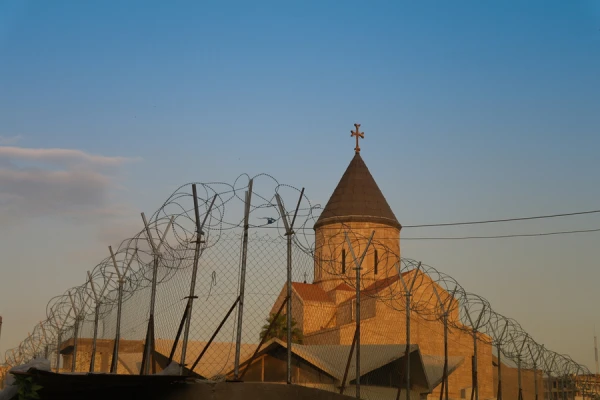
Washington D.C., Jan 3, 2020 / 03:45 pm (CNA).- Christian communities in the Middle East are likely to suffer renewed persecution in any instability following recent U.S. airstrikes, experts have warned. 

On Thursday evening Qasem Soleimani, the head of the Iranian Revolutionary Guards’ Quds Force, was killed in an airstrike in Baghdad International Airport, ordered by President Donald Trump. Also killed in the strike was Abu Mahdi al-Muhandis, the leader of the Popular Mobilization Forces, and Iraqi militia which has fought against ISIS. 

The airstrike followed an attack on the U.S. embassy in Baghdad, and U.S. officials claim that Soleimani had planned additional attacks against Americans. 

Christian groups say that in the face of escalating conflict and instability in the country and region, focus must be maintained on the marginalized religious populations in the country. 

“General Soleimani and his Quds Force wreaked havoc on Christians and others in Iraq, Iran, Lebanon, and Syria for decades. We pray his passing will mark the end of an era of terrorism and instability,” said Peter Burns, director of government relations and policy at In Defense of Christians.

But, Burns added, there are concerns that the region will become unstable, which could have “increased probability of counterattacks on religious minorities.”

“IDC is closely monitoring the situation to ensure that such attacks do not happen,” he said.

His organization is calling for the governments of Iraq and Syria to work to “ensure the safety of protesters who have already been targeted by Iran-aligned thugs,” and, Burns noted, Christians in these countries have protested alongside Muslims while seeking political and economic reforms. 

“Their right to gather and call for change should not be threatened by Iranian retaliation violence,” said Burns.

While it is unclear what the fallout of the Jan. 2 strike will be, many are wanring that Christian populations may be put at an increased risk of terrorism and other attacks. 

“Whatever happens next in Iraq, it is important that we not lose sight of the plight of the Christians in that country who have historically been disproportionately affected–and often directly targeted–in situations and upheaval and violence,” said Andrew Walther, Vice President of Communications and Strategic Planning of the Knights of Columbus in a statement to CNA. 

“The safety and survival of these communities, which were just recently decimated by ISIS’ campaign of genocide, must remain a priority,” said Walther. 

The Knights of Columbus has spent more than $25 million over the last five years to assist the plight of Christians in the Middle East, particularly in Iraq and Syria. 

Fr. Luis Montes, an Argentinian priest of the Institute of the Incarnate Word and a missionary in Iraq, told ACI Prensa that the attack is “quite serious,” but explained that there has not yet been anything “directly against Christians in this regard.”

Montes told ACI Prensa, CNA’s sister agency, that he was more concerned with the threat of instability in Iraq, which will “make life harder for Christians.” 

“The war affects us Christians more than others because there are fewer of us, we’re more unprotected” from the “the insecurity and violence,” he said. Most Christians have left the region, which further erodes efforts to help stabilize the country. 

“All this instability and violence is the perfect opportunity for violent people, for the terrorists, for interests outside the country interested in the country’s resources, and this is adverse to the population,” said Montes. 

Edward Clancy of Aid to the Church in Need also expressed concern about how the new instability would harm the Christian population. Clancy, who works as the group’s outreach director, told CNA that his initial reaction to hearing about the airstrike was “‘Oh no,’ but also hopeful at the same time.” 

“Terrorist activity will disproportionately affect the Christians. Not necessarily in the numbers killed, but in the numbers that remain. People will leave, because of lack of safety,” he said. 

“So right now, it is of utmost importance, whoever can provide it, give to the Christian community [a sense of] security,” said Clancy. 

Clancy especially highlighted the the Nineveh region, traditionally home to some of the world’s oldest Christian communities, where there is a lack of infrastructure and communication networks, and Christians are left “high and dry” in a “very difficult situation.” 

The community there is “very vulnerable right now,” Clancy said.

“We just have to be really, really vigilant about praying for these people, and we also have to put pressure on people in charge to make sure [the Christian community] is not forgotten.”

[…]