
No Picture
News Briefs

Brooklyn diocese appeals to Supreme Court over COVID church closures
November 13, 2020 CNA Daily News 0

Washington, D.C. Newsroom, Nov 13, 2020 / 09:40 am (CNA).- The Diocese of Brooklyn is appealing to the U.S. Supreme Court in its case against New York’s COVID restrictions on churches.

On Thursday, the diocese asked the Supreme Court for relief from the state of New York’s COVID rule limiting attendance at some diocesan churches to just 10 people while allowing some businesses to remain open without capacity limits.

In a statement provided to CNA on Friday, the diocese said it is “committed to reopening our churches, safely, and to vindicate our First Amendment rights.”

“We are confident we will prevail for the good of our churches and those of faith who want to operate safely yet continue to suffer under the Governor’s express restrictions on ‘houses of worship,’” the diocese stated.

In October, New York Gov. Andrew Cuomo issued an executive order curbing some public gatherings in certain localities, due to the reported rapid spread of the coronavirus in those districts.

His order limited some houses of worship to hold indoor services at just 25% capacity or 10 people—whichever number was smaller—effectively limiting Mass attendance to just one priest and nine parishioners.

Cuomo’s original order recognized certain geographic zones where the virus was spreading, and labeled them by color—red for the districts with the worst outbreaks of the virus, followed by orange zones with less serious outbreaks, and then yellow zones.

In the “red” zones, indoor religious services were effectively limited to just 10 people; in the “orange” zones, that limit was 25 people or 33% capacity, whichever number was smaller; churches in “yellow” zones were allowed to operate at 50% capacity.

The Brooklyn diocese sued over the restrictions, claiming that it had set up safety measures at churches that were being faithfully followed, and that there had been no known transmission of the virus traced to indoor Masses.

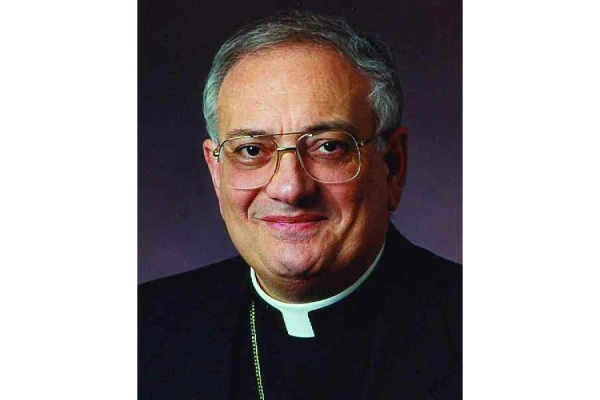
“It has been our contention that Catholics in Brooklyn and Queens have been penalized by a broad-brush approach when we are not the cause of the spreading of the contagion,” Bishop Nicholas DiMarzio wrote in a Nov. 11 column in the diocesan newspaper The Tablet.

Both a federal district court and an appeals court ruled against the diocese, which has now appealed its case to the U.S. Supreme Court.

The diocese argued in its appeal that Cuomo’s order allows “numerous secular businesses to operate without any capacity restrictions” while subjecting churches to the attendance limits.

For instance, businesses deemed “essential” by the state—and thus not subject to capacity limits in the “red” zones—included “supermarkets and grocery stores, hardware stores, convenience stores, pet food stores, banks, brokers’ offices, and accounting firms,” the diocese stated in its complaint.

In the “orange” zones, “even the vast majority of businesses designated ‘non-essential’ can open without capacity restrictions,” the diocese said, while churches are subject to either 33% or 25-person capacity limits.

The “orange” zones have since been “eliminated,” DiMarzio wrote in his column. Yet some churches subject to the strictest “red” zone rules “are literally across the street from the ‘yellow’ zones where 50 percent occupancy is allowed.”

As of Nov. 8, the diocese tweeted that five churches once located in a “red zone” are no longer in one, and have since reopened for Mass after being closed for four weeks.

“The government has a right and duty to protect the health of citizens, but this duty cannot be so broad that the right to freely exercise one’s faith is extinguished,” DiMarzio wrote in his column.

The diocese needs to fight in court, he argued, in order to prevent possible future infringements on religious freedom.

 “The issue of religious freedom is one that must be on our radar because, in the future, we might see further attempts to redefine the meaning of religious freedom and relegate us not just to be inside of our churches, but even dictating the number of people who are allowed to enter our churches,” he wrote.

[…]

No Picture
News Briefs

George Weigel praises Courage apostolate for fidelity, heroic witness

November 12, 2020 CNA Daily News 0

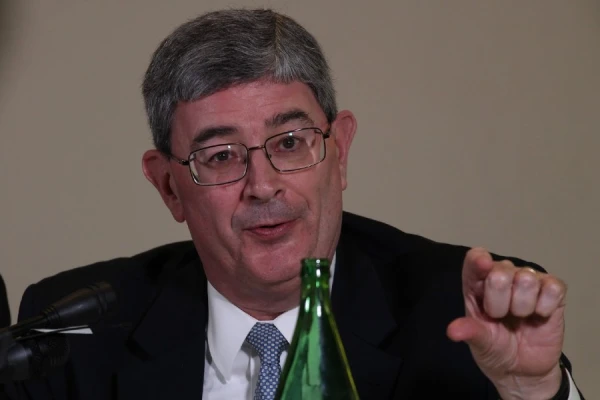
CNA Staff, Nov 13, 2020 / 12:17 am (CNA).- Catholic author George Weigel this week praised the heroic witness displayed by members of Courage, an apostolate that ministers to people experiencing same-sex attraction.

He encouraged them to stand firm amid societal pressures and recent controversy over comments from Pope Francis regarding same-sex civil unions.

“Brave men and women of ‘Courage,’ thank you for your witness. Please continue to take up the challenge that St. John Paul II issued on October 22, 1978: ‘Be not afraid! Open the doors to Christ!’” Weigel wrote in a Nov. 11 open letter published at First Things.

Courage offers resources to people experiencing same-sex attraction to help them live chaste lives according to Church teaching. Founded in 1980, the group today has more than 150 chapters in 18 countries.

“Your courage should inspire every Catholic to a similar fidelity, and to the mutual, prayerful support that helps sustain the integrity of love,” Weigel continued.

Weigel, who wrote the definitive biography of Pope St. John Paul II in 1999, noted that the “licentious” current culture can make living a chaste life difficult for anyone.

“Against fierce cultural and social pressures, you strive—with the help of grace, your pastors, and each other—to live the Catholic ethic of human love even as you experience same-sex attractions. Your efforts at fidelity bespeak deep faith, a powerful hope, and authentic love,” Weigel wrote.

Weigel’s letter was prompted by a recent controversy over a documentary film, “Francesco,” which features interviews with Pope Francis and includes a brief section in which, during a discussion of pastoral care of Catholics who identify as LGBT, the pope appears to offer support for civil union laws for same-sex couples.

The Vatican has since clarified that the pope’s comments do not pertain to Catholic doctrine regarding the nature of marriage, but to provisions of civil law in the specific context of a 2010 same-sex marriage bill in the Argentine legislature, which Pope Francis, who was then Archbishop of Buenos Aires, opposed. He had proposed the idea of civil unions as a compromise to avoid the legal redefinition of marriage.

Nevertheless, the pope’s remarks garnered praise from some Catholics who wish to see a change in the Church’s teaching on same-sex marriage, even though Pope Francis has frequently affirmed the doctrinal teaching of the Catholic Church that marriage is a lifelong partnership between one man and one woman.

Describing the pope’s comments as “cut-and-pasted by an agenda-driven filmmaker,” Weigel noted that informal remarks by a pope to a filmmaker do not constitute an expression of the papal teaching office.

Moreover, he noted that the Church’s teaching on what constitutes marriage “cannot change, because it is rooted in divine revelation and attested by reason.”

Weigel’s remarks echo those of Father Philip Bochanski, Courage’s director, who wrote a letter to the people of Courage on Oct. 22 in response to the pope’s remarks.

“[The] truth — that God has established a unique context for the total gift of self that is reflected in sexual intimacy — is rooted in the nature of the human person, in the revealed Word of God, and in the consistent teaching of the Church,” Bochanski wrote.

“That sexual relations are only morally good in the context of a permanent, faithful marriage between a man and a woman whose relations are open to having children is a teaching that cannot and will not be changed by anyone.”

Bochanski cited a 2003 document approved by Pope John Paul II and written by Cardinal Joseph Ratzinger, who later became Pope Benedict XVI, in which the Congregation for the Doctrine of the Faith taught that “respect for homosexual persons cannot lead in any way to approval of homosexual behaviour or to legal recognition of homosexual unions.”

Even if civil unions might be chosen by people other than same-sex couples, like siblings or committed friends, the CDF said that homosexual relationships would be “foreseen and approved by the law,” and that civil unions “would obscure certain basic moral values and cause a devaluation of the institution of marriage.”

Bochanski noted that Pope Francis began his remarks in the video by insisting that people who experience same-sex attractions must never be rejected or excluded by their own families, which is consistent with the Church’s teaching that people who experience same-sex attraction must be “accepted with respect and sensitivity.”

“You members of Courage who make so many sacrifices as you strive for chastity, prayerful fellowship, and authentic friendship are a heroic witness to the world that a person doesn’t need to be in a sexual relationship in order to give and receive love that is sincere, loyal and fulfilling,” Bochanski wrote.

“I know that the media chatter over the last few days has left you feeling anxious, unseen and even rejected, but nothing could be farther from the reality. The teaching of the Church on these important matters is embodied and made clear in your daily lives. The Pope’s remarks about loving and protecting our brothers and sisters who experience same-sex attractions don’t detract from your sacrificial, heroic witness — they depend on it!”


[…]

No Picture
News Briefs

Vatican appoints president of foundation overseeing scandal-ridden Italian hospital

November 12, 2020 CNA Daily News 0

Vatican City, Nov 12, 2020 / 02:00 pm (CNA).- The Vatican announced Thursday that it had appointed an interim president of the foundation which owns and operates a scandal-ridden dermatological hospital in Rome.

Fr. Giuseppe Pusceddu, a member and the superior of the Italian province of the Congregation of the Sons of the Immaculate Conception, was named Nov. 12 as the interim president of the board of directors of the Luigi Maria Monti Foundation.

The Luigi Maria Monti Foundation owns and manages Rome’s Istituto Dermopatico dell’Immacolata, or IDI, along with other health structures. Pusceddu was also named president of IDI Farmaceutici srl, a pharmaceutical agency connected to the hospital.

Fr. Pusceddu succeeds Antonio Maria Leozappa, a layman, as president of the foundation. Pusceddu’s appointment marks the first time the foundation’s leadership has been returned to a member of the Sons of the Immaculate Conception since Benedict XVI appointed a Vatican commissioner to look into the hospital’s finances in 2013.

The IDI has been plagued by problems for a decade. After years of systematic theft and fraud by hospital administrators, leaving it with 800 million euros in debt, the hospital was declared bankrupt in 2012.

In 2015, the Vatican’s Secretariat of State stepped in, arranging to purchase the hospital out of state-administered bankruptcy through a for-profit partnership with the religious order that owned and managed the hospital — an arrangement which also ended in financial scandal.

The Vatican’s Nov. 12 statement said that “pending the appointment of new management, which will have to guide the foundation in continuing to face the difficult challenges of the moment,” Pusceddu and the other board members are entrusted with adapting the statutes of the foundation to better reflect the charism of its founding influence, Bl. Luigi Maria Monti.

“The Holy See, as before, will not lack its closeness and support to the Foundation and its works,” the statement concluded.

After the IDI was driven into bankruptcy by a series of embezzlement scandals, it was purchased in 2015 by a for-profit partnership created by the Secretariat of State and the religious order that had owned the hospital, the Sons of the Immaculate Conception. 

To carry out the purchase, the partnership received — through a complex series of transactions — 50 million euros, in a loan from the Vatican central bank, APSA, although APSA had agreed with European banking regulators not to make commercial loans. 

In an attempt to take the loan off APSA’s books, officials in the Secretariat of State then asked the Papal Foundation, a U.S.-based charitable foundation, for a $25 million grant. The grant was approved, but subsequent questions from board members led to controversy and opposition. The Vatican’s secretary of state, Cardinal Pietro Parolin, has said that he organized the loan and the grant.


[…]