No Picture
News Briefs

‘A really joyful journey’: Preparing people with intellectual disabilities to receive the sacraments

November 14, 2020 CNA Daily News 1

CNA Staff, Nov 14, 2020 / 08:00 am (CNA).- As book titles go, the “Directory for Catechesis” is hardly the catchiest. But this volume could potentially transform the lives of thousands of people.

That is the conviction of Gail Williams, center manager at Caritas St. Joseph in Hendon, north London. When the updated directory — formerly known as the General Directory for Catechesis — was released in June, she was struck by what it said about people with disabilities.  

“People with disabilities are called to the fullness of sacramental life, even in the presence of serious disturbances,” the directory said. “The sacraments are gifts of God and the liturgy, even before being rationally understood, asks to be lived: therefore, no one can deny the sacraments to people with disabilities.”

“It means so much for it actually to be printed in there,” Williams told CNA, “because the General Directory for Catechesis is the go-to for anybody that’s not really doing this work. And they’ll often say: ‘Well, is it in the General Directory for Catechesis?’” 

“To be able to say ‘Yes, it is’ is just amazing, because then you have real proof and back-up that actually the Catholic Church does want to embrace everyone and does want to encompass those that are usually ignored.” 

For the past 40 years, Caritas St. Joseph has supported people with intellectual disabilities, as well as their families and friends, in the English Diocese of Westminster. Formerly known as St. Joseph’s Pastoral Centre, Caritas St. Joseph wants to share its expertise far beyond the borders of Westminster diocese, which includes all of London north of the River Thames and some outlying areas.

Williams believes that some parishes are scared of catechizing those with learning disabilities. She is on a mission to persuade them that it can, in fact, be “a really joyful journey.” 

Her interest in catechesis began when her oldest son, who is severely dyslexic, started his First Communion course at the age of seven. 

“Nobody understood how he functioned. In those days, it was all ‘sit down and read from the book,’ and it was so difficult for him,” she recalled.

She realized that her son’s faith grew by listening to the words said at Mass, as well as through the sounds and smells at the church they attended. 

In 2006, Williams attended a course called “Symbols of Faith” at St. Joseph’s. When she returned to her parish with a deeper knowledge of how to teach the faith to people with learning disabilities, she made a disturbing discovery. 

She found that there were families that didn’t bring their children to church because they couldn’t cope with crowds or remain still during the quieter parts of Mass.  

“To go back and find that part of my parish family was missing because of all these reasons was a real eye-opener for me,” she remembered. “That’s when I really felt quite strongly that everybody should be included.”

Williams continued: “When you’re a parent of a child or an adult with a learning disability, and you are on the phone constantly to doctors, fighting for them at school, the last thing you really need to do is to feel shut off from your faith.”

The latest catechetical directory is the third since the Second Vatican Council. The first, the General Catechetical Directory, was published in 1971. The second, the General Directory for Catechesis, was issued in 1997. The latest version updates catechetical methods for the digital age and is likely to have a profound impact on the teaching of the Catholic faith around the world. 

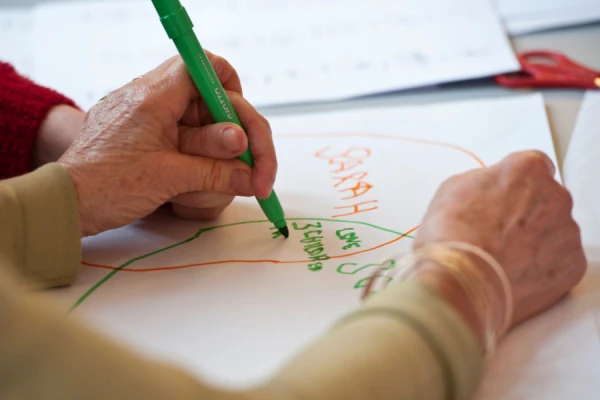
When Williams begins catechizing a child, she takes them into an empty church and helps them to appreciate all the sensory elements: the colors, sounds and smells. She may lead them to the altar and explain why it is much more than an ordinary table.  

“It’s not about long, convoluted words. It’s about showing and supporting them in making their own discoveries,” she said.

Williams urges parents of disabled children to raise the directory’s new recommendations with their pastors. If their parish doesn’t know where to begin, she advises them to contact Caritas St. Joseph or similar organizations where they live. 

“We can come out and we can train people, and we can share our knowledge, expertise and resources. But once you are trained, don’t be afraid to be the voice for those people who are left on the fringes of your parish,” she said.

Williams noted that, while her work is deeply rewarding, it can be emotionally draining. At one point, she was visiting families after finishing her day job. 

“Sometimes you would spend one minute with the child because he had had enough at school that day and just wasn’t interested,” she said. “But then you would spend half an hour with the mum, because she hadn’t seen anyone all week or he had had a difficult day at school and she needed to talk to someone.”

“At those times you think ‘Well, I can’t catechize today.’ But actually you’re supporting the whole family. And it’s so important that even if it seems impossible, actually it isn’t. Kindness, patience and time is the best gift.”

There are also heart-lifting breakthroughs. Williams talks about discussing transubstantiation with a child who responded by making two sign-language gestures, one meaning “change” and the other signifying “creation.” 

“So then you know that actually she’s understanding that that’s the Consecration, that the bread and the wine is changing and creating the Body and Blood. You get moments like that, that absolutely clarify what you are doing,” she said.

Above all, Williams wants parents to know that, thanks to the latest directory, a new path is open to them.

“It doesn’t matter where you are or who you are. God can always be present in your life,” Williams said.

“Quite a lot of time we get the question ‘Do they really know?’ And yes, they really do. Sometimes you have to work with someone for four years, sometimes for a year. Sometimes you can support them straightaway on the Communion program.”

“Just don’t be afraid,” she concluded. “It is possible for everyone.”


[…]

No Picture
News Briefs

‘I couldn’t fix myself’: Bishop Conley opens up about mental health recovery

November 14, 2020 CNA Daily News 5

Denver Newsroom, Nov 14, 2020 / 03:45 am (CNA).- In December 2019, Bishop James Conley of the Diocese of Lincoln announced he was going on a medical leave of absence.

Citing diagnoses of depression and anxiety, as well as chronic insomnia and debilitating tinnitus (a constant ringing of the ears), the bishop said in a public statement that he would be receiving psychological as well as medical treatment.

It had taken him months to get to a point where he realized he needed help.

“It really goes back to the summer of 2018, so, long before I finally got to the point where I asked for some time off,” Conley told CNA.

“There were the difficulties in the Church with regard to the misconduct of priests…(including) here in my diocese,” he said. That summer was also when the McCarrick scandal broke, and when the Pennsylvania Grand Jury Report came out.

Besides abuse scandals, Conley also had to close some diocesan schools that had been “running in the red for a number of years. And that’s always a difficult decision to make. It was the right decision, but it was a hard decision.”

There was also a priest of the diocese, younger than Conley, who died around that time.  “There were a number of other things that kind of mounted,” Conley said. “I think that started it.”

As the problems mounted, Conley felt personally responsible for them all, as a bishop and as someone who cared about the people in his diocese.

“I (felt I) was responsible for all of this and that I had to try to fix it myself instead of surrendering to God,” he said.

But the physical and mental symptoms started compounding. He couldn’t sleep. He started losing interest in things he had once enjoyed. A constant ringing began in his ears. He felt overwhelmed.

“I used to tell people that great prayer that Saint John XXIII supposedly would say at night during the Second Vatican Council: ‘Lord, it’s your Church. I’m going to bed.’ And I wasn’t able to take my own advice,” he said. “I just was getting ground down.”

Conley said that while he never was tempted to use unhealthy coping mechanisms, like drugs or alcohol, he was worried what would happen if he continued to feel so anxious and overwhelmed.

In the spring of 2019, Conley went to Mayo Clinic and was diagnosed with anxiety and depression. He said he tried to rest, worry less, and go to counseling while maintaining his duties as a bishop, but it wasn’t working.

“I was trying to fix myself and as time went on, I realized that I couldn’t fix myself while I was still on the job, so to speak.”

Conley sought the counsel of some of his friends, including Archbishop Paul Coakley of Oklahoma City; Bishop James Wall of Gallup, New Mexico; Bishop Thomas Olmsted of Phoenix; and Archbishop George Lucas of Omaha.

With the help of these friends, Conley presented his case before the U.S. Nuncio, Archbishop Christophe Pierre, during a private meeting at the November 2019 assembly of the U.S. bishops’ conference.

“And the nuncio said, ‘Well, I think you need some time off to get some professional help.’”

Until then, Conley had not even considered that a leave of absence was possible for a bishop.

“I was called by God to be a successor of the Apostles, we don’t have any record of the Apostles taking time off,” Conley said. “So I just didn’t think that a bishop could do that. And that somehow, that would be a sign of weakness or failure, or not being able to fulfill (my) duties. When in reality, we are body and soul. Grace builds upon nature. And so we need to take care of our physical and mental wellbeing in order to be good at whatever we’re doing.”

Conley said Pierre was very supportive, and told him to obtain a doctor’s note that could be sent along with the request to Pope Francis, since bishops are under obedience to the Holy Father.

By December 2019, Conley’s leave had been approved. On December 13, he announced the leave to his diocese. In the announcement, Conley said he had been diagnosed with depression and anxiety, and that he was taking a mental health leave.

“I wanted to be honest, and I wanted to be truthful about why I was leaving. If I’m going to leave, that’s a big deal. And I didn’t want to keep that a secret and leave it to people to speculate what (the reason for leaving) was,” he said.

Conley said he was overwhelmed by the positive and supportive response.

“I received a lot of letters and cards and notes, not only from people who I knew and who were writing to support me, but from people I didn’t even know, who themselves had struggled with some mental health issue, or (a relative) or some friend of theirs had,” he said.

“And they were so grateful to me for being so open about it and transparent. They thanked me for talking about it, because of the stigma that’s surrounding mental illness,” he said. “And that was helpful for me, comforting for me to know that I wasn’t the only one, and that I wasn’t alone in this.”

Shortly after the announcement, Conley left to stay in Phoenix, where he was able to receive treatment from a psychologist, a psychiatrist, and medical doctors, as well as spiritual direction.

Three months later, the rest of the world went on a sort of leave of absence as well, as the coronavirus pandemic caused national and global shutdowns. It made Conley’s recovery more difficult, he said.

“That didn’t help…the isolation, when I was down in Phoenix,” he said. He had a few good friends, particularly a young family, who were very helpful, he added. The couple were both former students of his at the University of Dallas, and they now have five kids, and would frequently invite Conley to their house.

“But it was just a strain, then, to see how the whole pandemic played out,” Conley said.

Conley said it was important that he had Catholic counselors and doctors to work with throughout his treatment, so that they were all on the same page about how his faith was a part of his recovery.

During recovery, Conley said he learned to re-frame his thinking, and to more fully trust God, as well as his staff and collaborators, with the responsibilities of a bishop. He re-learned the importance of sleep, healthy eating, exercise, and recreation as part of a well-balanced life.

“Because we’re body and soul that we need balance and we need a certain order in our life to help us stay healthy,” he said.

There can sometimes be a stigma against mental illness and treatment among some Christian circles, where the illness is seen as a sign of spiritual weakness that can be cured with more prayer.

But Conley said seeking help – including psychological, spiritual, and mental recovery – is an act of surrender to the will of God.

“One Scripture passage that jumps out is John 15, ‘Apart from the Lord, you can do nothing.’ And that’s what that I think can lead to mental illnesses, that you think it’s all up to you, that you have to solve all the problems in your life or in the world,” Conley said.

He said he has been so open with his experience because he wants to encourage others “to not hesitate to get help, when you need it. Don’t be embarrassed, or don’t feel like you’re weak or something, if you try to get help,” he said.

On Thursday, the Diocese of Lincoln announced that Conley would be returning from his leave of absence and resuming his duties on November 13, after 11 months of leave and recovery.

Conley said he is looking forward to being back with the people of the diocese, to continue helping foster vocations, and to promote Catholic education. He said he is excited about a new pro-life crisis pregnancy center being built across the street from the Planned Parenthood in Lincoln. He added that he’s also going to start thinking about evangelization post-COVID, because he fears that the Church may have lost some people from the pews during the lockdowns and extended dispensations.

But he’s going to ease back in, and he’s going to try to keep the things he learned in recovery at the forefront of his mind.

“I’m not going to hit the ground running, I’m hitting the ground walking,” he said.

He said he’s going to pace himself, and make sure he is exercising and getting good sleep and taking time to do things he enjoys. 

“You don’t live to work, you need to work to live. And some people, especially in America today, we have this mentality of pragmatism or utilitarianism, where you’re working 18 hours a day…that’s no way to live life.”

He added that he would encourage anyone struggling, particularly due to the isolation of the ongoing pandemic, to reach out and get help.

“Don’t hesitate to seek help. And especially, if you’re feeling anxious or overwhelmed. Being disconnected really is a source of pain. We’re meant to be in community and so I would say that if people are feeling disconnected in any way that they reach out and get help.”

“You’re not alone,” he added. “There are people out there that can help.”


[…]

No Picture
News Briefs

Cardinal Bassetti moved out of ICU, remains in critical condition with COVID-19

November 13, 2020 CNA Daily News 1

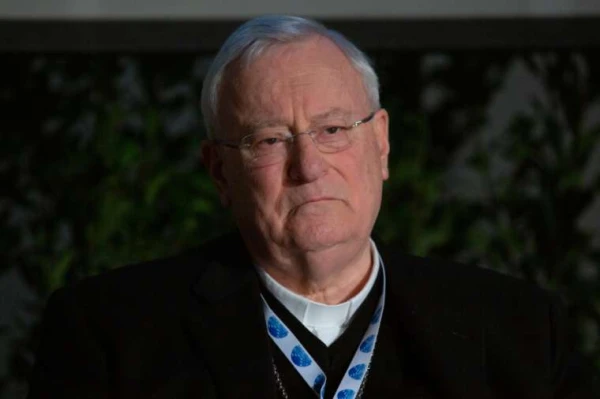
CNA Staff, Nov 13, 2020 / 03:23 pm (CNA).- Cardinal Gualtiero Bassetti, president of the Italian Bishops Conference, has slightly improved and was moved out of the ICU, but remains in critical condition since contracting COVID-19, his auxiliary bishop said on Friday afternoon.

“We welcome the news that our Cardinal Archbishop Gualtiero Bassetti has left the intensive care unit” at the hospital of Santa Maria della Misericordia,” said Auxiliary Bishop Marco Salvi of Perugia, in northern Italy. However, he warned that the cardinal’s condition “is still serious and requires a chorus of prayers.”

Earlier on Friday, the hospital’s daily bulletin reported a “slight improvement” on Bassetti’s condition, but warned that the “clinical picture remains serious and the cardinal needs constant monitoring and appropriate care.”

The 78-year-old Archbishop of Perugia, chosen by Pope Francis to lead the Italian Bishops’ Conference in May 2017, was diagnosed with Covid-19 on October 28th and was hospitalized on November 3 in very serious condition. He was placed in “Intensive Care 2” in the Perugia hospital.

After his condition worsened, on November 10, Pope Francis called Bishop Salvi, who has also contracted COVID19 but remains asymptomatic, to ask about the cardinal’s condition and offer his prayers.

Despite the slight improvement and the fact that the cardinal is awake and aware, “it is necessary to continue incessantly in prayer for our shepherd, for all the sick and for the health workers who take care of them,” Salvi said. “To these we give our heartfelt thanks and appreciation for what they do every day in alleviating the suffering of so many patients.”


[…]

No Picture
News Briefs

Religious freedom becoming ‘second tier right’ warns Supreme Court Justice

November 13, 2020 CNA Daily News 0

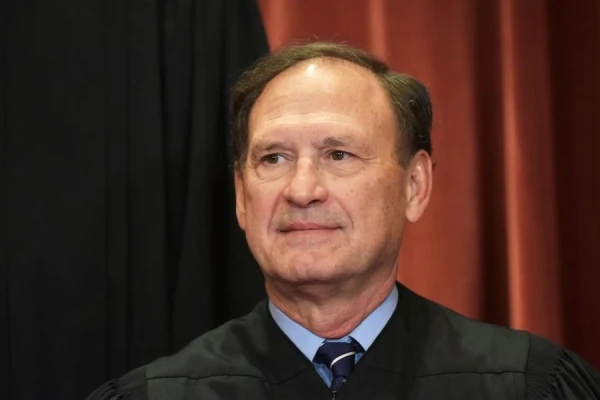
Washington, D.C. Newsroom, Nov 13, 2020 / 11:30 am (CNA).- Supreme Court Justice Samuel Alito has spoken of his concern that religious liberty is under threat in the United States. The justice spoke out on Thursday about a range of issues which, he said, were challenging basic legal freedoms in the country.

The justice warned that the ongoing coronavirus pandemic was acting as a “stress test” for Constitutional liberties, and that religious liberty as an emerging “disfavored” and “second tier” right.

Alito made the comments on Nov. 13, in a Zoom presentation to the Federalist Society’s annual conference. The Federalist Society’s website describes the group as “an organization of 60,000 lawyers, law students, scholars, and other individuals who believe and trust that individual citizens can make the best choices for themselves and society.” 

Alito has been a member of the Federalist Society for many years, and has previously addressed its conferences. 

“The pandemic has obviously taken a heavy human toll,” said Alito. “Thousands dead, many more hospitalized, millions unemployed, the dreams of many small business owners dashed. But what has it meant for the rule of law?”

Alito went on to say that his sentiments would likely be “twisted or misunderstood,” but that he believed the pandemic has had a clear impact on liberty. 

“The pandemic has resulted in previously unimaginable restrictions on individual liberty,” said Alito. 

The justice said that he was not offering a commentary on the severity of the coronavirus, and he was not suggesting that all the restrictions taken to control the spread of the virus were necessarily illegal or bad public policy.

But, he said, “we have never before seen restrictions as severe, extensive, and prolonged as those experienced for most of 2020.” 

Alito specifically mentioned the closure of churches on Easter Sunday, and the closure of synagogues during the Jewish holidays of Passover and Yom Kippur, and the delays of many federal court trials. 

“The covid crisis has served as kind of a Constitutional ‘stress test’ and in doing so, it has highlighted disturbing trends that were already present before the virus struck,” said Alito. 

He raised concerns that the pandemic has sparked a “executive fiat” in terms of lawmaking.  

“Just as the COVID restrictions have highlighted the movement toward rule by experts, litigation about those restrictions has pointed out emerging trends in the assessment of individual rights.”

“This is especially evident with respect to religious liberty,” said Alito. “It pains me to say this, but in certain quarters, religious liberty is fast becoming a disfavored right.” 

Alito said this is a “surprising turn of events,” noting that in the 1990s, the Religious Freedom Restoration Act was a bipartisan piece of legislation that easily was voted into law. Today, he said, “when states have considered or gone ahead and adopted their own versions of RiFRA, they have been threatened with punishing economic boycotts.” 

Alito said that the cases the court hears today follow the “same trend” of eroding religious liberty. 

Specifically, Alito cited the “unrelenting attack” on the Little Sisters of the Poor, a Catholic religious order that operates nursing homes for the elderly poor. The Little Sisters of the Poor have made several trips to the Supreme Court after they refused to provide contraception and abortifacient drugs in their insurance plans, and have won each time. 

“For many today, religious liberty is not a cherished freedom,” said Alito. “It’s often just an excuse for bigotry, and it can’t be tolerated, even when there is no evidence that anybody has been harmed.” He said there was no evidence that any of the employees working for the Little Sisters of the Poor had ever sought to receive contraception under their insurance plan. 

Alito was critical of states that have restricted access to worship services under the guise of coronavirus safety protocols, but had allowed other gatherings to continue without issue. 

In July, the Supreme Court declined to hear the case Calvary Chapel v. Sisolak, which argued that Nevada was discriminating against houses of worship by restricting capacity to 50 people. Casinos, however, were allowed 50% capacity. Alito voted to hear the case. 

“Now, deciding whether to allow this disparate treatment should not have been a very tough call,” said Alito. “Take a quick look at the Constitution. You will see the Free Exercise Clause of the First Amendment, which protects religious liberty. You will not find a craps clause or a blackjack clause or a slot machine clause.”

“Nevada was unable to provide any plausible justification for treating casinos more favorably than houses of worship,” he said. “But the court nevertheless deferred to the governor’s judgment, which just so happened to favor the state’s biggest industry and the many voters it employs.”

Alito raised concerns that freedom of speech was on its way to becoming a “second-tier Constitutional right,” and said that the court would be facing the “great challenge” in the future to protect freedom of speech.

“You can’t say that marriage is the union between one man and one woman. Until very recently, that’s what the vast majority of Americans thought,” said Alito. “Now it’s considered bigotry.”

“That this would happen after our decision in Obergefell should not have come as a surprise,” he said. While the majority opinion “included words meant to calm the fears of those who cling to traditional views on marriage,” he said that he foresaw that the decision would erode freedom of speech protections. 

Alito quoted his dissent in Obergefell, where he wrote “I assume that those who cling to old beliefs will be able to whisper their thoughts in the recesses of their homes. But if they repeat those of us in public, they will risk being labeled as bigots, and treated as such by governments, employers, and schools.” 

“That is just what is coming to pass,” he said.  


[…]

No Picture
News Briefs

Massachusetts bishops decry push for abortion expansion

November 13, 2020 CNA Daily News 0

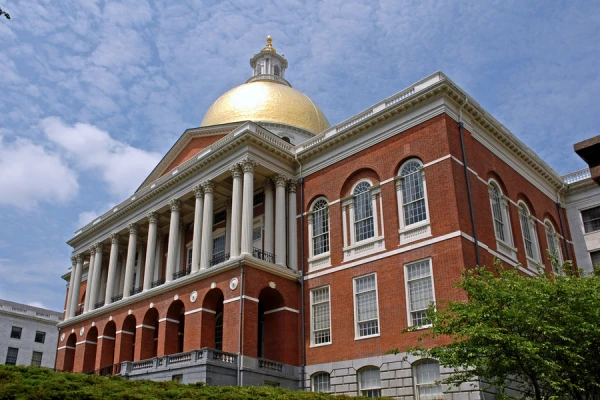
Washington, D.C. Newsroom, Nov 13, 2020 / 10:30 am (CNA).- Catholic bishops in Massachusetts are fighting a state measure to expand legal abortion.

An amendment adopted by the state house on Thursday would allow for abortions in certain circumstances throughout pregnancy, a move the state’s Catholic Conference has said goes “well beyond what is enshrined in state law.”

The amendment to a larger budget bill was adopted by the state house on Thursday by a 108-49 vote, State House News Service reported. A dozen Democrats voted against the amendment, while one Republican voted for it.

Under House amendment 759, abortions can be performed after 24 weeks in the case of a lethal fetal anomaly.

In addition, 16 and 17 year-old girls could also have an abortion without parental consent.

Minors under the age of 16 can obtain a judicial bypass waiver to get an abortion without parental consent. A waiver could be granted via teleconference, according to the bill’s sponsor, State House News Service reported.

“The Catholic Church teaches that life itself starts at conception and ends with natural death,” the Massachusetts Catholic Conference stated on Nov. 11 in opposition to the amendment.

Three bishops in the state issued the joint statement—Cardinal Sean O’Malley of Boston, Bishop Robert McManus of Worcester, and Bishop Edgar M. da Cunha, SDV, of Fall River.

Of the changes to the parental consent law, the bishops said that under the amendment, “a 16 or 17 year old girl would be deprived of the guidance and support of an adult at the time of making this life changing decision.”

The measure does require “life-saving equipment” to be present in the room when an abortion is performed past 24 weeks, but the bishops say that the amendment’s language “is nuanced enough that the physician would not be required to use the equipment” if a baby survived an abortion attempt.

Legislators introduced similar legislation, the “Roe Act,” in 2019 to act as a “trigger law” in the event that Roe v. Wade would be overturned by the Supreme Court. “Trigger laws” either legalize abortions in a state or restrict them, in the event that Roe is overturned and states once again have the authority to ban or allow abortions.

“While we acknowledge the amendment addresses some concerns that were raised about the deeply troubling provisions of the Roe legislation, the fact remains that abortion would remain an option under certain circumstances for the full term of the pregnancy,” the bishops stated.

“That fact alone is in direct conflict with Catholic teaching and must be opposed.”

Once the state senate passes a budget, the senate and house bills will be reconciled in a conference committee, which produces a final report for a final vote by the legislative chambers. Then the final bill is sent to the governor for signature.

House Minority Leader Brad Jones criticized the procedure for using the budget process to pass an abortion amendment.

“I don’t care what side of the issue you’re on, this being done as part of the budget process in a lame duck session, under the cover of darkness, in the midst of a pandemic is wrong,” Jones said, as reported by State House News Service.


[…]