Denver Newsroom, Nov 27, 2020 / 04:00 am (CNA).-
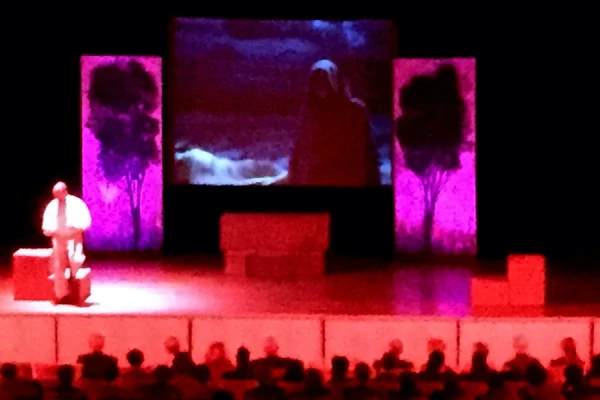
During the U.S. bishops’ meeting last week, Bishop Jaime Soto of Sacramento said his diocese had hosted a one-man play honoring the first African-American slave to become a Catholic priest, as part of its efforts to address racism.
The play is “Tolton: From Slave to Priest,” the work of St. Luke Productions. It has been performed in front of thousands of people since it was released three years ago.
Leonardo Defilippis, director and president of St. Luke Production, told CNA that the witness of Fr. Agustus Tolton is important at a moment of racial division, especially Tolton gives witness to Christian unity beyond racial barriers.
“We’re the only show in the whole country and it’s the only instrument like it in the Catholic Church,” he told CNA. “It’s so powerful. [It helps] you realize all men are created equal.”
Fr. Tolton is played by James Coleman – a television and film actor of almost 30 years. During the show, Tolton engages with memories of his past, meeting his mother, his friends and enemies, and the devil himself.
Since it opened in 2017, the play has been performed over 200 times at Catholic venues across the United States. The goal of the play is to bear witness to a holy man who confronts hatred and segregation with charity, said Defilippis.
He said this show provides the best example of a persecuted person who encountered trials with compassion and faith. Rather than with violence or revenge, Tolton responded to racial hatred with the virtues of a saint, Defilippis added.
Speaking of facing injustice, Defilippis said that “saints have a way of showing you how to do it.”
“You have to do it through love. You have to do it through forgiveness. You have to have faith. You have to have hope. That’s what leads us to that oneness, that unity.”
Tolton was born into slavery in Monroe County, Missouri, in 1854. During the Civil War, Tolton and his family escaped slavery.
He entered St. Peter’s Catholic School in Quincy, Illinois, when he was young. The school’s pastor, Fr. Peter McGirr eventually baptized Tolton, instructed him for his first Holy Communion, and recognized his vocation to the priesthood.
Tolton studied for the priesthood in Rome because no American seminary would accept an African-American student. When he returned to the U.S. after his ordination in 1889, he was greeted by thousands of people. A brass band played hymns, and black and white people processed together into the local church.
Tolton served for three years at a parish in Quincy before moving to Chicago to start a parish for black Catholics, St. Monica’s, where he remained until his death in 1897.
Coleman has performed as Tolton for the past two years. He said he was reluctant to audition at first because he was not interested in theater roles. But he said he’s glad for the experience.
“The experience of doing a true story [about] someone’s life and actually using the words that he said, … I started to take on a lot of the things that he experienced … I always pray before every show in rehearsal to allow Fr. Tolton to tell his story,” he told CNA.
Coleman expressed hope that the play might be a catalyst for racial healing. He said the show pushes the audience to see past the color of a person’s skin, and to see the unity of the human race.
“The goal of this show is to let people know that we are all one in the spirit, we are all one in Christ. Racism is a divide to the human family … In order to heal that divide, we have to heal our hearts as well as our minds of racism,” he said.
“It lets you know that in order for us to achieve, it’s not going to always be the people of the same race. It takes all of us to create greatness. It takes all of us to succeed.”

[…]