

 By
By The bishop of Sant Feliu de Llobregat near Barcelona said the popeʼs visit to a prison in his diocese will send a powerful message that the Churchʼs path is one of mercy.
In just a few days, Pope Leo XIV will land in Barcelona for the second leg of a historic trip to Spain, scheduled for June 6–12.
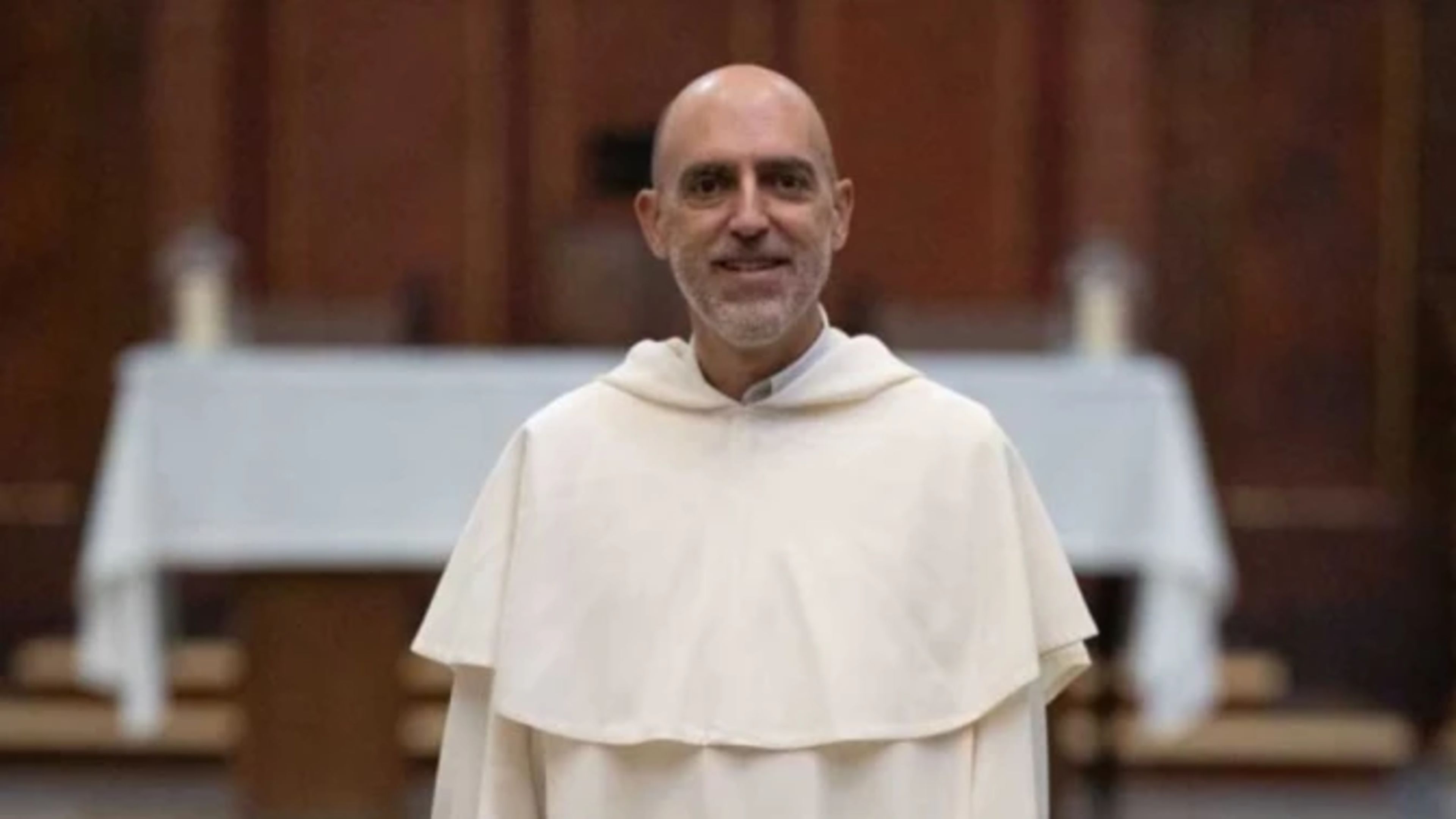
Bishop Xabier Gómez of Sant Feliu de Llobregat, which lies west of Barcelona, has been in his own words “blessed” to be designated to accompany the Holy Father during his visit to the inmates of Brians 1 prison and the Virgin of Montserrat Shrine, both located within the diocese he has led since 2024.
Speaking with ACI Prensa, the Spanish-language sister service of EWTN News, the prelate highlighted the pontiff’s “clarity, authenticity, and ability to communicate,” and underscored the importance of paying attention to both his words and his gestures during this apostolic visit, trusting that “they will serve as an impetus and invite us to deepen our conversion into being missionaries, because our priority as a Church is to proclaim Jesus Christ.”
‘The Church’s path is mercy’
One of the most anticipated moments of the Holy Father’s visit to Barcelona is his stop at the correctional facility in the Diocese of Sant Feliu, which houses the largest prison population in Catalonia.
“It’s a highly anticipated visit,” he noted, “one that has brought great joy to the hearts of the parishioners and believers within the prison who make up, as I put it, a parish within the correctional facilities.”
Since the pontiffʼs visit was confirmed, the diocese has worked tirelessly and “with great enthusiasm” with the prison pastoral care team. Their efforts have encompassed the spiritual preparation of the inmates, the welcoming song for the pope, and the testimonies to be shared by several women regarding “how faith is being for them a powerful light and hope amid the hardships and environment of the prison.”
“The fact that he would want to come and meet the inmates already says a lot. It signals that the Church’s path is mercy, that the Church’s name is mercy,” Gómez noted.
The family as a pastoral priority
Regarding the long-awaited visit to the Basilica of the Sagrada Família (Holy Family) where the pope will bless the Tower of Jesus that crowns the basilica, Gómez noted that the cross atop the tower will rise “like a beacon,” illuminating not only Catalonia but also the Mediterranean.
For the prelate, Sagrada Família calls to mind not only the Holy Family of Nazareth to whom the church is dedicated but also the need to accompany and care for families. He further emphasized that the Church “seeks to be a family within the human family, a sacrament and sign of salvation.”
In this regard, he reminds us that the family as a domestic Church also constitutes a pastoral priority and a subject of special attention for the pilgrim Church in Spain and throughout the world.
A missionary impetus for Spain
The bishop said the pope “is keenly aware of the social and ecclesial reality in Spain; he is very well informed, he knows it and knows us very well, he loves and appreciates us, and he comes to confirm us in faith and in hope.” Above all, he emphasized that his visit will confirm the “missionary impetus that the Church in Spain wants to take center stage.”
Regarding the “religious awakening in Spain,” he noted there is also an awakening within other religions and that this phenomenon should be approached with prudence as a reality that “sociology will gradually be able to confirm.”
“This is not solely a Catholic phenomenon. There is a generation of young people who have or are demonstrating an interest; they are asking questions, an interest in religious and spiritual matters and many of them, thank God, find a welcome and a response within the Catholic Church,” he said. He said he hopes these young people will find, within the Catholic Church, the experience of friendship with Jesus Christ.
‘The Church is mercy and communion’
The bishop of Sant Feliu emphasized that “the Church is mercy and communion,” two dimensions to which Pope Leo XIV constantly alludes.
“I believe that the fact that the Church deepens its identity as communion in diversity, that the Church delves deeper into catholicity, and is also capable of broadening this concept of catholicity to embrace universality and difference within harmony, and is capable of maintaining harmony amid diversity, is a message that is sorely needed for civil, cultural, and political society in Spain,” he added.
The bishop pointed out that the message of the Gospel is a message of peace, reconciliation, and fraternity. “In the Gospel, we do not find that others are adversaries or enemies.”
“Others are brothers, they are our brothers. We pray to a Father who is the Father of all. The kingdom of God [is] that kingdom of fraternity, justice, and love, the kingdom we serve in the Church, and of which Pope Leo XIV will surely speak to us,” Gómez said.
This story was first published by ACI Prensa, the Spanish-language sister service of EWTN News. It has been translated and adapted by EWTN News English.
If you value the news and views Catholic World Report provides, please consider donating to support our efforts. Your contribution will help us continue to make CWR available to all readers worldwide for free, without a subscription. Thank you for your generosity!
Click here for more information on donating to CWR. Click here to sign up for our newsletter.

DIVERSITY IS THE STRENGTH OF SPAIN: “I believe that the fact that the Church deepens its identity as communion in diversity, that the Church delves deeper into catholicity, and is also capable of broadening this concept of catholicity to embrace universality and difference within harmony, and is capable of maintaining harmony amid diversity, is a message that is sorely needed for civil, cultural, and political society in Spain,” he added.
Indeed. See this report:
SPAIN: According to a Feb. 27 post by Catholic journalist, Sachin Jose, “Islamic State terrorist organization is threatening to attack Catholic cathedrals in Spain, as part of the ‘Tear Down the Cross’ campaign launched by the jihadists in August 2016, according to La Razon.”
“The Islamists are especially interested in converts who have not yet taken on Muslim names and whose official IDs still have their Christian names, so they can purchase weapons without drawing the attention of police.
AT LEAST 50,000 MUSLIM CONVERTS ARE CURRENTLY LIVING IN SPAIN. Police say that converts are especially susceptible to radicalization because they are facing increasing pressure from Islamists who are calling on them to carry out attacks to “demonstrate their commitment” to their new faith.
Spain has also become a key entry point for human trafficking mafias being used by jihadist veterans seeking to return to Europe after fighting in the Middle East.”
https://www.gatestoneinstitute.org/21512/persecution-of-christians-february
https://www.gatestoneinstitute.org/5888/spain-jihad
To echo Oscar above (11:39 a.m.) –
That paragraph lost me too.
I hope Leo is more clear-eyed.