

 By
By Cardinal Pablo Virgilio David is advising a new civilian-led body seeking to document the thousands killed during Rodrigo Duterteʼs anti-drug campaign.

An independent, civilian-led fact-finding body has been launched in the Philippines to uncover new evidence and details about the killings carried out during former President Rodrigo Duterteʼs drug war.
Cardinal Pablo Virgilio S. David, former president of the Catholic Bishops’ Conference of the Philippines and bishop of Kalookan, serves as adviser to the Philippine Truth and Reconciliation Commission, which was launched on May 27.
The commission is chaired by Raul Pangalangan, a former International Criminal Court (ICC) judge. Other members are Dr. Raquel Fortun, a forensic pathologist; Al Fuertes, an expert in trauma and psychosocial support; Father Daniel Franklin E. Pilario, a Vincentian priest and theologian; and Carlos Conde, an independent human rights researcher.
“The truth must be protected for the families who have carried these stories for years, not just as a record,” said David, a fierce critic of the Duterte drug war. “The Truth Commission exists so these stories can be heard, verified, preserved, and acted upon.”
The commission does not intend to replace courts or determine criminal liability against persons linked to anti-drug operations and related abuses.
“The court looks for criminal liability; the Truth Commission seeks a deeper truth,” David said.
“The commission recognizes that the violence did not start in 2016, but the scale, persistence, and targeted killings in the last few years have left thousands of families still seeking truth, justice, and healing,” the commission said in a statement.
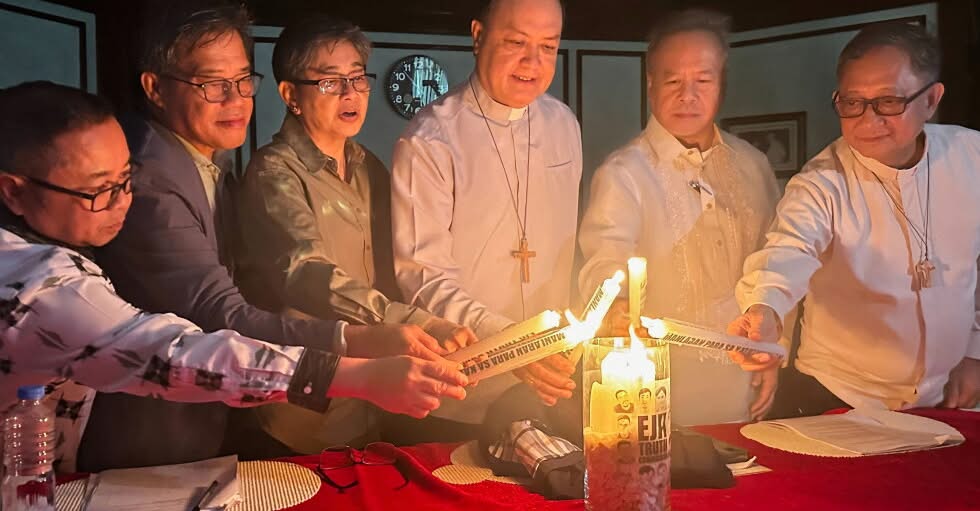
The commissionʼs framework safeguards its integrity, independence, and mission — especially regarding truth-seeking, due process, survivor protection, confidentiality, public trust, and institutional independence.
The team is to ensure that the testimonies of victims, survivors, and families are heard, validated, and kept.
“This commission is not about supplanting courts or apportioning guilt. It is about creating a credible truth record that can inform accountability, healing, reform, and the prevention of future violence,” said Pangalangan, a respected Philippine lawyer.
More than accountability
Conde, a human rights activist, said the commission is not just about accountability but also the healing of drug war victims, as the civilian and civil society-led Philippine Truth Commission is tasked to establish a credible public record of the brutal drug war in the Philippines.
When asked how the commissionʼs findings would affect Duterteʼs case in the ICC, he told EWTN News that the commissionʼs work is different from the ICCʼs and should not affect Duterteʼs trial.
“However, if the ICC determines that our findings are helpful for their purposes, we wonʼt object to them using them,” he said. “On another level, we hope that the commissionʼs work will bolster the ICC investigationʼs credibility, particularly among Filipinos who still continue to argue that the ICC does not have the authority to investigate the drug war.”
Meanwhile, Amnesty International Philippines said it commends the launch of the Truth Commission, saying the initiative would uncover the truth behind the thousands of killings.
“We also recognize and trust the integrity, credibility, and expertise of the individuals leading and guiding this initiative. Their lifelong work on human rights, accountability, forensic investigation, psychosocial support, democratic governance, and public service gives hope that this process will genuinely center victims and survivors,” Amnesty International Philippines said.
The case at The Hague
Human rights groups estimate that the drug war under Duterte, 81, killed some 30,000 drug suspects and suspected addicts and traffickers, largely poor people.
Duterte was arrested and sent to The Hague in March 2025 and is being held in the ICCʼs detention center.
The ICC has charged him with three counts of crimes against humanity, particularly the killing of at least 76 people and the attempted murder of two others during his 22 years as mayor of Davao City and then as president (2016–2022).
His trial is set to begin Nov. 30.
The Truth Commission offers a much-needed ray of hope for truth-telling, accountability, and justice-seeking, Charlito Manlupig, chairperson of Kusog Mindanaw, a civil society organization, told EWTN News.
If you value the news and views Catholic World Report provides, please consider donating to support our efforts. Your contribution will help us continue to make CWR available to all readers worldwide for free, without a subscription. Thank you for your generosity!
Click here for more information on donating to CWR. Click here to sign up for our newsletter.


Leave a Reply