Google offices in Chelsea, Manhattan, New York. / Credit: MNAphotography/Shutterstock
Washington, D.C. Newsroom, Aug 1, 2025 / 12:30 pm (CNA).
A Florida woman has secured the last of her Google data after the tech company disabled her account following emails pertaining to pro-life advocacy.
With the help of the Thomas More Society, Trudy Perez-Poveda sued Google in 2024 when the company allegedly blocked her from her account after she sent an email attempting to plan a Catholic Mass and prayer event outside of a local abortion clinic.
The lawsuit claimed that “approximately one hour” after she sent the email, Google suspended Perez-Poveda’s account with no explanation. After several days of trying to recover her account, Google informed her that it had “permanently disabled” it for violating the company’s “acceptable use policy.”
Since filing the lawsuit in July 2024, Perez-Poveda has been able to retrieve some of her messages and data in small quantities with the help of third-party tech experts. But with no assistance from Google, the majority of it remained inaccessible.
In a July 31 press release, the Thomas More Society reported that the last of Perez-Poveda’s data suddenly became “inexplicably accessible for the first time since this controversy began,” within just days of a court-imposed settlement deadline in the lawsuit.
An IT expert confirmed that action taken on Google’s end allowed the data to return. Perez-Poveda recovered the data one year and 10 months after Google first locked her out of her account.
“Google claimed that certain tools existed online to allow her to retrieve the remaining data despite tech experts proving those tools to be unworkable,” the Thomas More Society said. “At another point, Google even falsely claimed the data never had been withheld from her at all.”
“Google has dragged Trudy Perez-Poveda through a land of smoke and mirrors, apparently because she was a pro-lifer who had the fortitude to stand up to Google and demand what belonged to her,” attorney Matt Heffron said.
Trudy “was not going to let a big-tech behemoth shut down her lifesaving mission to protect the unborn,” Heffron said.
“I was able to regain access to more than a decade worth of personal data and continue my mission to save lives in our Jacksonville community,” Perez-Poveda said in the press release.
She added: “Big tech companies cannot be allowed to decide what speech is acceptable.”
If you value the news and views Catholic World Report provides, please consider donating to support our efforts. Your contribution will help us continue to make CWR available to all readers worldwide for free, without a subscription. Thank you for your generosity!
Click here for more information on donating to CWR. Click here to sign up for our newsletter.
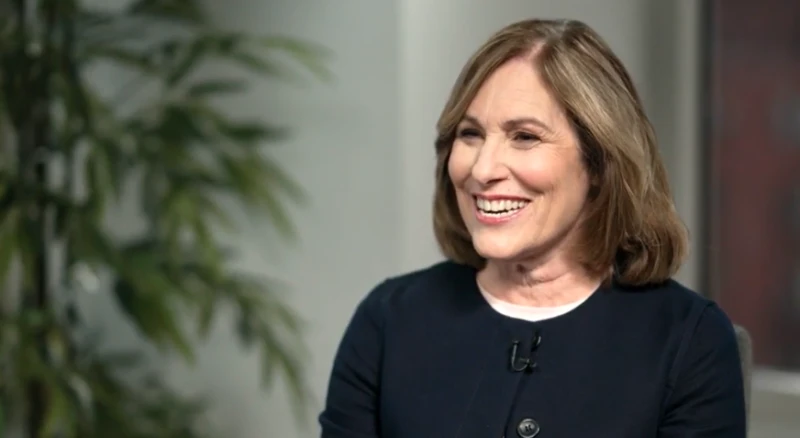
Valerie Huber, the president and CEO of the Institute for Women’s Health, speaks to EWTN Pro-Life Weekly on Thursday, May 23, 2024 / EWTN News
CNA Staff, May 24, 2024 / 08:00 am (CNA).
One woman is working with world leaders to promote women’s health without also submitting to the pro-abortion ideologies that often come with international aid.
President of the Institute for Women’s Health Valerie Huber spoke with EWTN News President Montse Alvarado on “EWTN Pro-Life Weekly” Thursday about current worldwide efforts to support women’s health from conception until death.
Huber founded the institute after completing her service as the first special representative for global women’s health under former President Donald Trump.
“I had the whole world, but only one focus, and that was promoting women’s health,” she told Alvarado about her tenure in public service. “And to ensure that health was not equated with abortion, because it shouldn’t be, and it’s not.”
Since then, through the Institute, Huber has continued her outreach to various nations to encourage them and provide them with support.
For example, Huber recently worked with the first lady of Uganda to launch the Women’s Optimal Health Framework, a new initiative developed with the pro-life government of Guatemala that marks the “first life-affirming, family-strengthening framework that ministries of health can use in these countries to affirm every life.”
“It’s looking holistically at helping a woman receive optimal health,” Huber said. “That’s not just physical health. It’s emotional health. It’s intellectual health, [it’s] physical health, it’s spiritual health,” she said.
“There’s not another framework that takes these elements, empowers a government and literally empowers a woman and a girl at that community level to have opportunities that she has not had in the past.”
Huber noted that many countries are pressured to promote abortion ideology or else their aid will be taken away.
“What we want to be as the Institute for Women’s Health is that encourager that not only encourages them to stand but gives them the tools and the resources so they can stand,” she said.
This can be a challenge when many U.S. allies equate women’s health with abortion, Huber said.
“When I was special representative for global women’s health, I saw that women’s health had experienced a devolution where women’s health was being equated with abortion,” Huber said. “It’s just not true. It’s very limiting. It’s a narrative that leaves women who are dying every day behind with no assistance for anything else.”
“Our goal really was to put the focus where it should be, and that is: look at those authentically vulnerable women and girls in countries around the world to which the United States provides foreign assistance, other countries provide foreign assistance.”
When she proposed during the Trump administration that other nations work with the U.S. to address “unsolved conditions” for women worldwide, she found that no countries would “agree to leave abortion out of that equation in order to promote women’s health.”
“I saw that even though at that time, the U.S. administration was very pro-life, many of our traditional allies were not,” she said. “What did that tell me? It told me that the priority was not really helping the women who needed help. It was promoting ideology above women’s health, and actually that women were being used as a vehicle for ideology.”
“It was based on that that I started having conversations with countries that were pro-life, pro-family, that wanted to make genuine improvements to the health of their women and girls,” she continued. “But they were being held back by these conditions that were standing in the way.”
During her time as a representative, she united the U.S. with Brazil, Egypt, Hungary, Indonesia, and Uganda and numerous other countries by initiating the Geneva Consensus Declaration, which stipulated several pro-family principles and rejected the premise of a “human right” to abortion.
Representatives from 37 different nations have signed the declaration, including Sudan, Kenya, Saudi Arabia, Paraguay, and Poland.
The declaration upheld several principles, Huber noted, including that “the family is foundational to society,” that “there is no international right to abortion; it’s not a human right,” and that “the sovereign right of countries to defend life, family, and women’s health with their own laws and not have external meddling, forcing them or pressuring them to change.”
“It created a coalition of nations that said, regardless of where we are, we commit to improve health and thriving for women and girls,” she said.
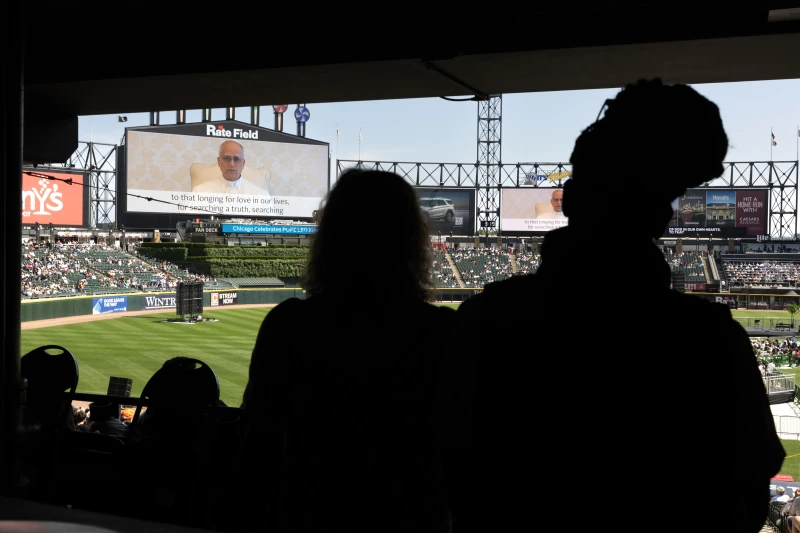
Pope Leo XIV addresses Catholic faithful on the scoreboard at Rate Field, home to the Chicago White Sox, during a celebration and Mass to honor his selection as Pope on June 14, 2025 in Chicago, Illinois. / Credit: Scott Olson/Getty Images
Chicago, Ill., Jun 14, 2025 / 18:30 pm (CNA).
Pope Leo XIV delivered a video message June 14 to thousands of Catholics gathered in his hometown of Chicago, making a special appeal to young people to be “beacons” of Christ’s hope for others.
“You are the promise of hope for so many of us,” the pope told young people attending the “Chicago Celebrates Pope Leo XIV” event at Rate Field, the home of the Chicago White Sox baseball team.
“The world looks to you as you look around yourselves and say: We need you, we need you to come together to share with us in this common mission, as Church and in society, of announcing a message of true hope and of promoting peace, promoting harmony, among all peoples.”
The pope acknowledged some of the difficulties facing youth today, from isolation experienced during the COVID-19 pandemic to dwindling communities of faith. He invited young people gathered to look into their own hearts to see that God is present and “is reaching out to you, calling you, inviting you to know his Son Jesus Christ.”
In turn, the pope said this discovery of Christ’s love can inspire young people to serve others.
“And in that service to others we find that coming together in friendship, building up community, we too can find true meaning in our lives,” the pope said. “To share that message of hope with one another — in outreach, in service, in looking for ways to make our world a better place — gives true life to all of us, and is a sign of hope for the whole world.”
The eight-minute video message from Pope Leo XIV, who was seated and clad in white, was the first time the Chicago native has directly addressed the people of his hometown and home nation as pope.
And although he wasn’t in person to deliver it, the pope’s message made an impact on young people in attendance.
Michael Wyss, an 11-year-old student at Queen of Angels School in Chicago, said he was encouraged by the pope’s message to “stay faithful” and be a witness of Christian love to those going through hard times.
“You’ll be sharing hope with them and that hope could go on and be shared with everyone else,” said Wyss, who was in attendance with his father, Joe.
Michael Wyss attends the”Chicago Celebrates Pope Leo XIV” event at Rate Field in Chicago, Saturday, June 14, 2025. Credit: Jonathan Liedl
Matthew Gamboa, a 15-year-old who attends St. Viator High School in Arlington Heights, Illinois, said he was inspired by the pope’s encouragement to be “a beacon of light,” even though he might be only a high schooler.
“I too should be a part of that and continue to spread God’s message throughout our communities,” said Gamboa, who said he felt inspired to engage in more service projects and possibly lector at Mass after hearing the pope’s message.
Pope Leo XIV’s unprecedented address was also the highlight of pre-Mass programming at the afternoon celebration.
Emceed by Chicago Bulls play-by-play announcer Chuck Swirksy, the program also included musical performances by a local parish and Catholic school, as well as an original piano ballad in honor of Pope Leo called “One of Us,” written and performed by the pope’s fellow Augustinian, Brother David Marshall.
Sister Dianne Bergant, Pope Leo XIV’s former teacher, and Father John Merkelis, a fellow Augustinian and high school classmate of the pope, also shared insights into their friend during a panel discussion.
Outside the stadium, Chicago-area members of the Neocatechumenal Way celebrated the new pope with songs and dances of praise, while others tailgated in the baseball stadium parking lot. White Sox jerseys with “Da Pope” and “Pope Leo” emblazoned on the back were spotted throughout the crowds.
At the start of Mass, Chicago’s Cardinal Blase Cupich said that Pope Leo was aware of and grateful for the celebration taking place at Rate Field.
A fan of the White Sox, the pope attended a World Series game at the stadium in 2005 when he was prior general of the Augustinian Order, and recently donned the ball club’s trademark black hat for a photo op outside of St. Peter’s Basilica. White Sox senior vice president Brooks Boyer, a Catholic and former Notre Dame basketball player, also took the opportunity at the Chicago event to publicly invite the South Side native to come back to Rate Field and throw out a ceremonial first pitch.
The Vatican has not indicated that Pope Leo has any plans to visit the United States. When Lester Holt of NBC News asked Leo at a May 12 Vatican audience if he would come to the U.S. soon, the pope responded: “I don’t think so.”
Nonethless, the pope’s sports fan credentials may help him connect with young people in his homeland and beyond.
During his video message the pope also encouraged the youth of Chicago and the whole world to grapple with the “restlessness” they might experience, just like St. Augustine did.
“That restlessness is not a bad thing, and we shouldn’t look for ways to put out the fire, to eliminate or even numb ourselves to the tensions that we feel, the difficulties that we experience,” he said. “We should rather get in touch with our own hearts and recognize that God can work in our lives, through our lives, and through us reach out to other people.”
Before concluding by imparting his apostolic blessing via video, the pope invited those gathered to “take a moment” and open their own hearts to God’s love, “to that peace which only the Lord can give us.”
“To recognize that while we do nothing to earn God’s love, God in his own generosity continues to pour out his love upon us. And as he gives us his love, he only asks us to be generous and to share what he has given with us to others.”
Washington D.C., Mar 26, 2021 / 04:05 pm (CNA).- U.S. companies must stand strong and ensure their supply chains in China are not tainted with forced labor, one human rights advocate told CNA on Friday.




Leave a Reply