A woman reacts standing in front of her earthquake-damaged house in the old city in Marrakesh on Sept. 9, 2023. A powerful earthquake that shook Morocco late Sept. 8 killed more than 1,000 people, the government said on Sept. 9, sending terrified residents fleeing their homes in the middle of the night. / Credit: Fadel Senna/AFP via Getty Images)
Washington, D.C. Newsroom, Sep 9, 2023 / 08:02 am (CNA).
More than 1,000 people were reported dead after a major earthquake rocked the North African country of Morocco overnight on Friday, the country’s government said Saturday morning.
The Moroccan government on Saturday said hundreds more were injured.
The U.S. Geological Survey said the earthquake measured a preliminary magnitude of 6.8 near the resort of Oukaïmedene. The USGS in its early report said “significant casualties” were “likely” while “extensive damage is probable and the disaster is likely widespread.”
Rescue workers search for survivors in a collapsed house in Moulay Brahim, in Morocco’s Al Haouz province, on Sept. 9, 2023, after an earthquake. Morocco’s deadliest earthquake in decades has killed at least 1,000 people, officials said on Sept. 9. Credit: Fadel Senna/AFP via Getty Images
The BBC reported that the quake destroyed “large areas of the historic center of Marrakesh,” one of the country’s largest cities and a major economic center for the region.
Pope Francis shortly after the disaster issued a telegram in which he offered the country his “prayerful communion in the face of this natural disaster.”
The Holy Father offered his “deep solidarity” with the country, Vatican News reported, while also “extend[ing] his encouragement to civil authorities and rescue services who are working to provide assistance and support,” according to the news service.
The Archdiocese of Rabat, meanwhile, urged Catholics in a Facebook post to “pray with Our Lady of Morocco for the victims and their families.”
This is a developing story.
If you value the news and views Catholic World Report provides, please consider donating to support our efforts. Your contribution will help us continue to make CWR available to all readers worldwide for free, without a subscription. Thank you for your generosity!
Click here for more information on donating to CWR. Click here to sign up for our newsletter.
A section of the priests’ house at St. John Paul II Rwamishenye Church in the Diocese of Bukoba in Tanzania was destroyed by the storm Oct. 18, 2023. / Credit: Radio Mbiu
ACI Africa, Oct 21, 2023 / 08:00 am (CNA).
St. John Paul II Rwamishenye C… […]
Over a year after the earthquake that hit Syria and Turkey in February 2023, restoration of Aleppo’s Church of St. George has been completed. / Credit: Abdul Kareem Daniel
Aleppo, Syria, Apr 23, 2024 / 14:15 pm (CNA).
This year’s feast of St. George was a particularly joyful one in the Syrian city of Aleppo, especially for the Melkite Greek Catholic community.
The church is reopening its doors after undergoing restoration due to damage from a February 2023 earthquake. Additionally, Archbishop George Masri of the Melkite Archdiocese of Aleppo and its environs will celebrate his golden jubilee.
The celebrations took place during the visit of Patriarch Joseph Absi, the current patriarch of the Melkite Greek Catholic Church, who presided over the Divine Liturgy in the restored church on the evening of April 23. The evening before, there was a procession along Holy Bible Street followed by vespers.
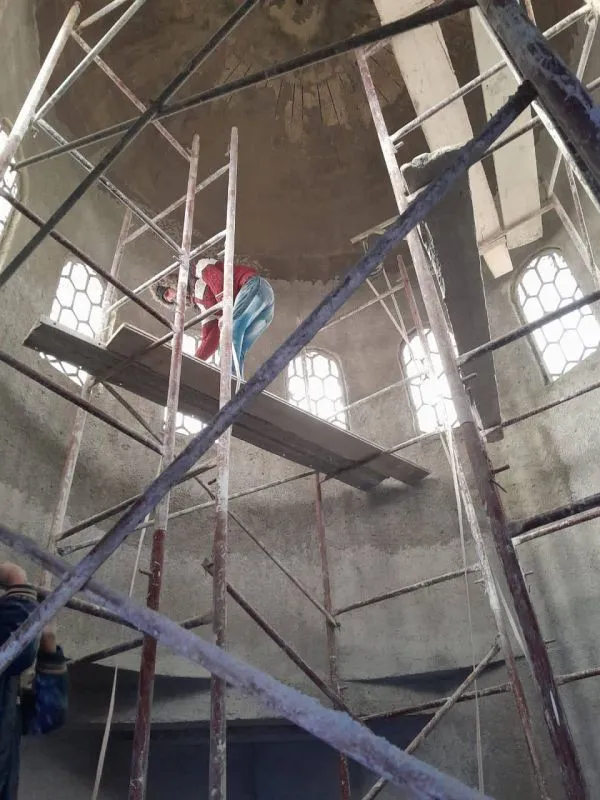
Restoration of the Church of St. George in Aleppo after the February 2023 earthquake. Credit: Father Fadi Najjar
In an exclusive interview with ACI Mena, CNA’s Arabic-language news partner, Father Fadi Najjar, principal of Providence Private School, which is adjacent to and belongs to the church, explained that last year’s earthquake caused cracks in the church walls on both the right and left sides, allowing rainwater to leak inside. The exterior facade was also shattered, with falling stones damaging the stairs.
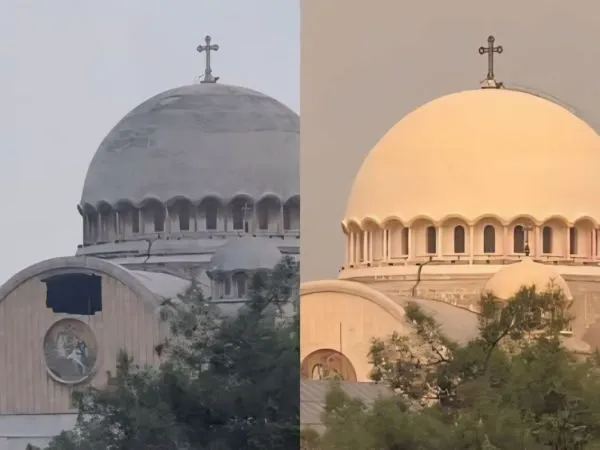
“The first step was removing the loose stones from above to protect people, especially since the church hall had sheltered the displaced for over a month, providing meals,” Najjar explained. “The restoration then began, taking about a year under Archbishop Masri’s direct supervision. The cracks were sealed, the exterior facade restored, the interior repainted, the stone polished, and new stairs built.”
Regarding Providence School, Najjar said that classroom walls had also cracked while sanitation systems were damaged. “We didn’t just restore the school. Rather, we began a complete renovation, taking advantage of the summer vacation. In five months, the building rose beautifully from the ashes,” he explained.
“New classrooms are being opened, the language lab revived, bathrooms added, as well as a TV/cinema hall, playroom, and aerobics studio. About 150 seats will be restored, walls repainted, floors polished, and stonework whitened — all thanks to funding from the Salla charity. Aid to the Church in Need covered the church’s restoration costs,” he added.
The Church of St. George in Aleppo before and after the restoration work. Credit: Joseph Nono
Najjar revealed that Masri strongly supported the school’s renovation, expressing deep appreciation for the contractor, engineer Joseph Nono, who was entrusted with both the church and school projects.
Notably, Absi’s Aleppo visit included stops at the Dar Al-Nahda Music Institute under artist Shady Najjar’s direction and a dinner for men and women named after St. George born between 1960 and 1980. He has also planned a tour of Aleppo’s Old Square.
This article was originally published in ACI Mena, CNA’s Arabic-language news partner, and has been translated and adapted by CNA.
A view of the separation wall between Israel and the Palestinian Territories from behind a window in the Comboni Sisters’ house in East Jerusalem. / Credit: Marinella Bandini
Jerusalem, Feb 17, 2024 / 06:00 am (CNA).
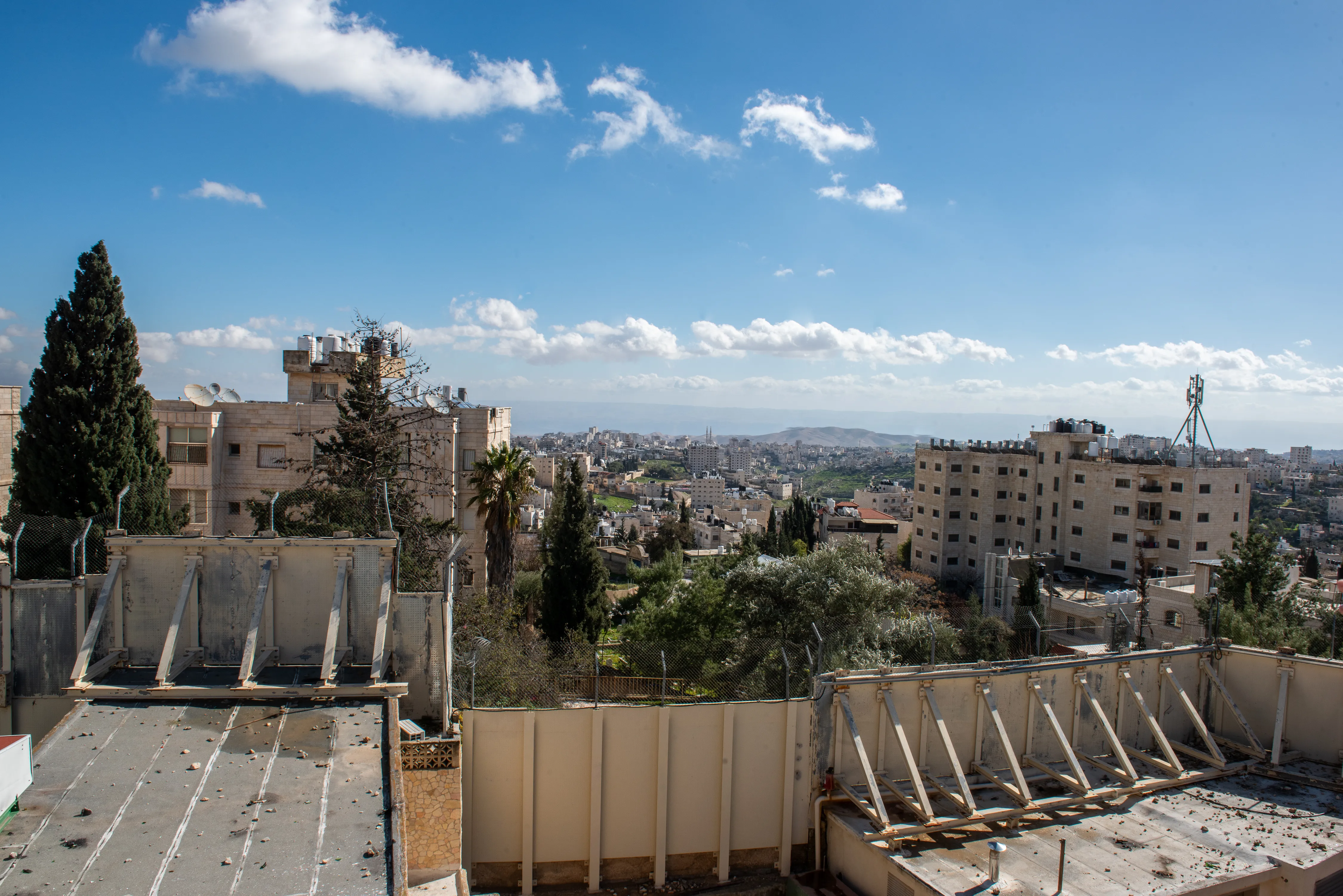
The Comboni Sisters have been living on the border of East Jerusalem since 1967. Running along the border of their property is a wall, constructed by the Israelis in 2009, dividing the village of Bethany/al-Eizariya — renowned as the site of the resurrection of Lazarus. The sisters’ residence remains on the Israeli side, while the church and the tomb of Lazarus are on the Palestinian side, on the other side of the wall.
“For us, the passage from Scripture that says ‘in Christ the wall of separation between peoples has been broken down’ is very powerful [Eph 2:14], especially when there is a physical wall in front of us that clearly indicates this separation,” Sister Anna Maria Sgaramella, provincial councilor and coordinator of the Middle East Zone for the Comboni Sisters, told CNA.
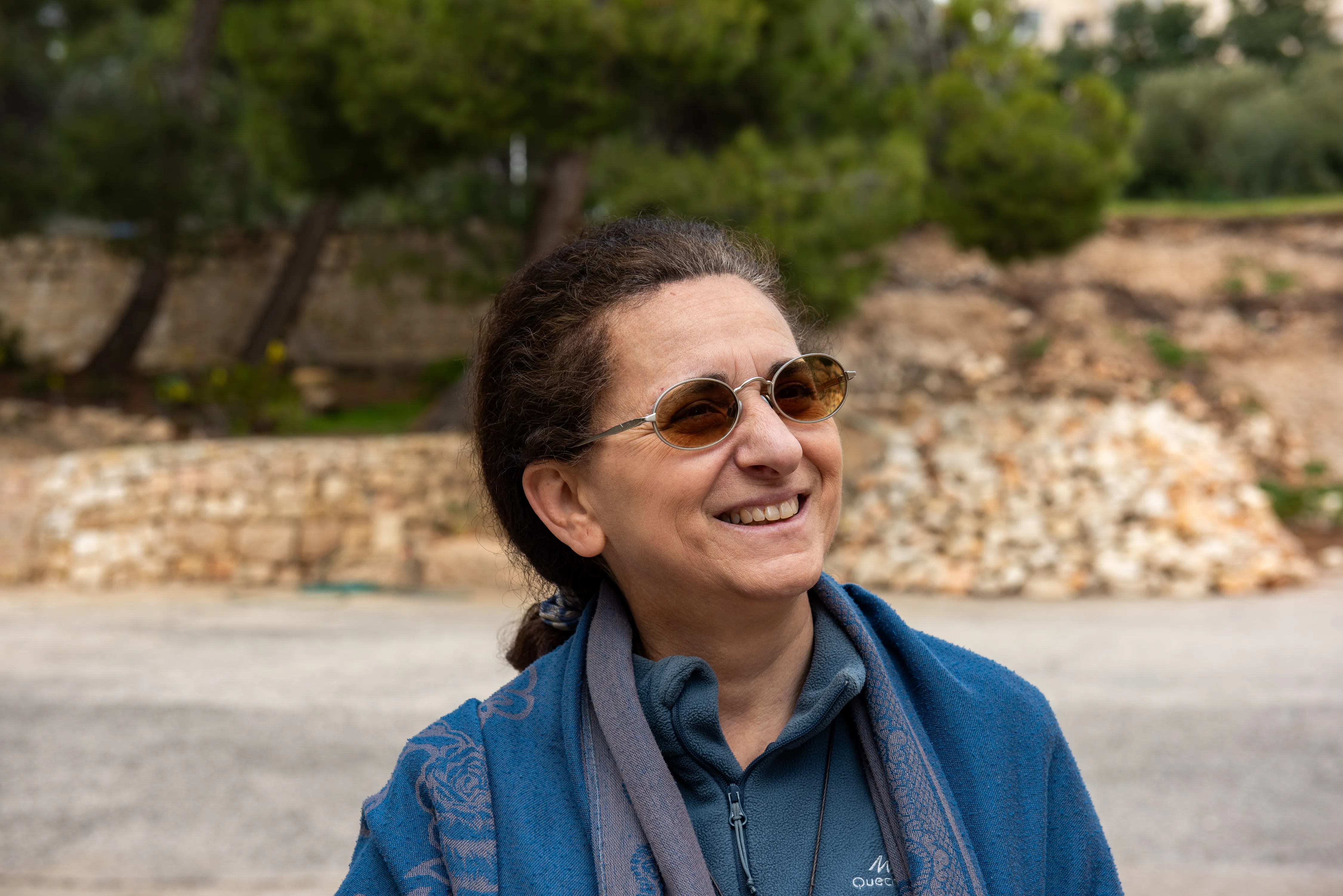
Sister Anna Maria Sgaramella, provincial council and coordinator of the Middle East Zone for the Comboni Sisters. Credit: Marinella Bandini
Sgaramella arrived in Jerusalem for the first time on Sept. 26, 2000. The very next day, the second intifada — a major uprising by Palestinians against Israeli occupation — erupted. She witnessed the siege of the Basilica of the Nativity in Bethlehem, where she taught theology.
Later, she was transferred to Egypt, where in 2011, she witnessed the uprising known as the “Arab Spring.”
Since 2013, Sgaramella has permanently returned to Jerusalem and now faces another long and bloody conflict. “I have always been struck by the deep sense of hope and determination to move forward among the Palestinian people. With this war, I see it weaker; people are more exhausted,” she said.
A view of the separation wall between Israel and the Palestinian Territories from the terrace of the Comboni Sisters’ house in East Jerusalem. The wall, constructed by the Israelis in 2009, runs along the border of their property, dividing the village of Bethany/al-Eizariya in two, believed to be the site of the miracle of the raising of Lazarus. The sisters’ residence remains on the Israeli side, while the church and the tomb of Lazarus are on the other side of the wall. Credit: Marinella Bandini
There are currently six Comboni Sisters in Jerusalem and each is involved in a specific ministry. They usually come together for morning Mass and evening vespers as well as for meetings and reflection. Their community house is open to religious individuals seeking periods of study or discernment and serves as a center of spirituality for both the congregation and the local Church. The sisters host educational workshops and spiritual exercises as well as welcome pilgrims.
The Comboni Sisters in Jerusalem in a recent photo at the Jordan River. The Comboni Sisters’ community in Jerusalem currently consists of six sisters and each is involved in a specific ministry. Credit: Photo courtesy of Sister Anna Maria Sgaramella
Sgaramella shared with CNA what it’s like to live on the border.
“With the construction of the wall, we found ourselves in the middle, between Palestinians and Israelis,” she explained. “The Palestinians attempt to bypass the wall — especially to pray at the Dome of the Rock — while the Israelis try to repel them in an endless game.”
“Being in the middle is a physical position that has also become a spiritual one,” Sgaramella continued. “We had to reflect and decided to ‘stay in the middle,’ between these two peoples, to serve as a bridge between them. By placing ourselves in the middle, we listen to the injustice faced by the Palestinians and also to the fears of Israeli families.”
For this reason, the religious community has chosen to maintain a small presence in the Palestinian area. Two sisters reside in an apartment beyond the wall, about 100 feet from the Comboni Sisters’ residence.
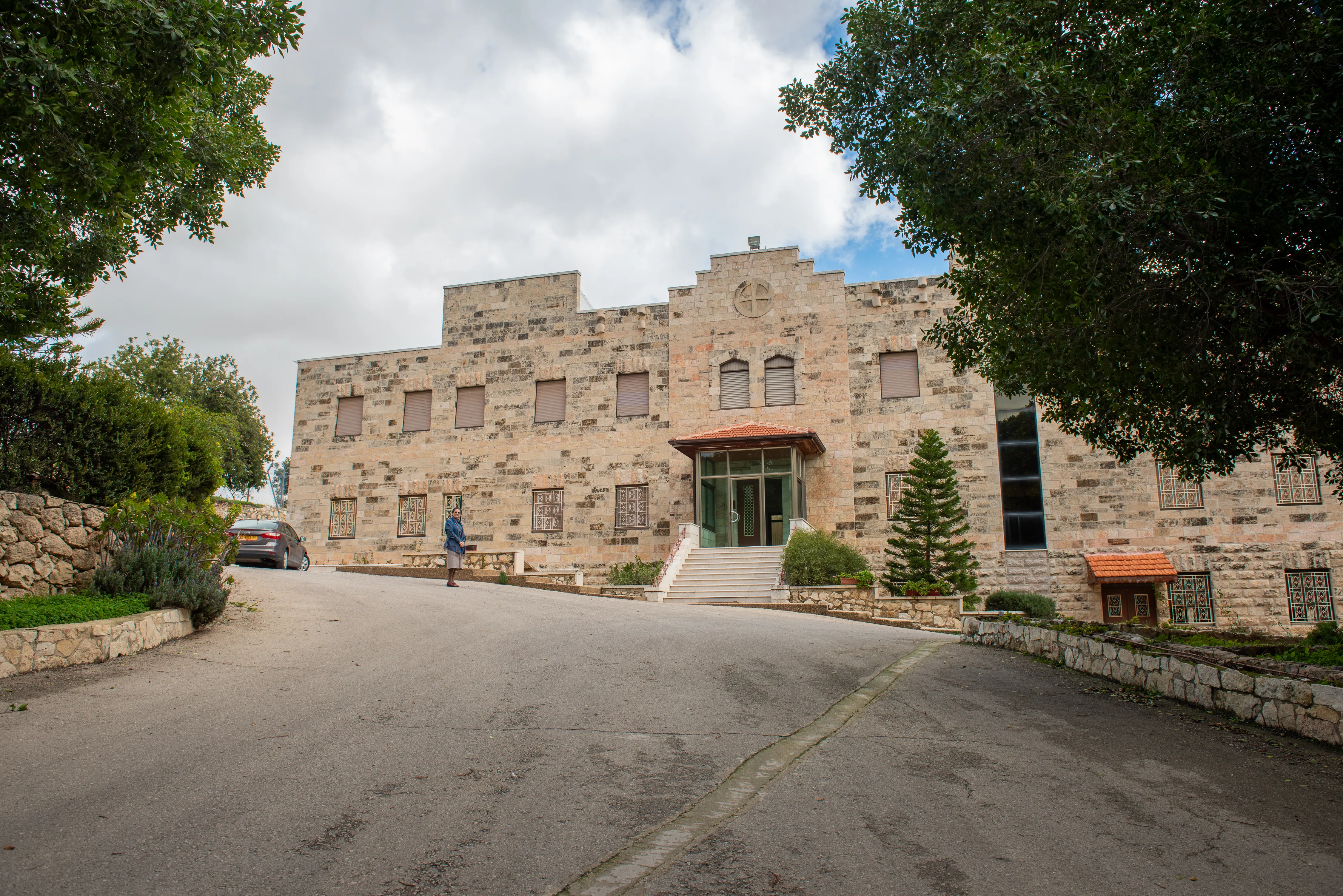
The exterior of the Comboni Sisters’ house in East Jerusalem where the Comboni Sisters have been living since 1967. Credit: Marinella Bandini
“We desired to stay and share the lives of those people and accompany the small remaining Christian community there. Every time they need to reach the community, they have to travel 18 kilometers [about 11 miles] passing through the Israeli checkpoint,” Sgaramella explained.
The sisters do not do this simply in the spirit of altruism, explained Sgaramella, who is also involved in ecumenical and interreligious dialogue. “We understood from the beginning that being in the middle comes at a cost. It often means getting hit from both sides. On one hand, there are stones and Molotov cocktails from the Palestinians that land on our property; on the other hand, we are under the smoke of tear gas launched in response by the Israelis,” she said.
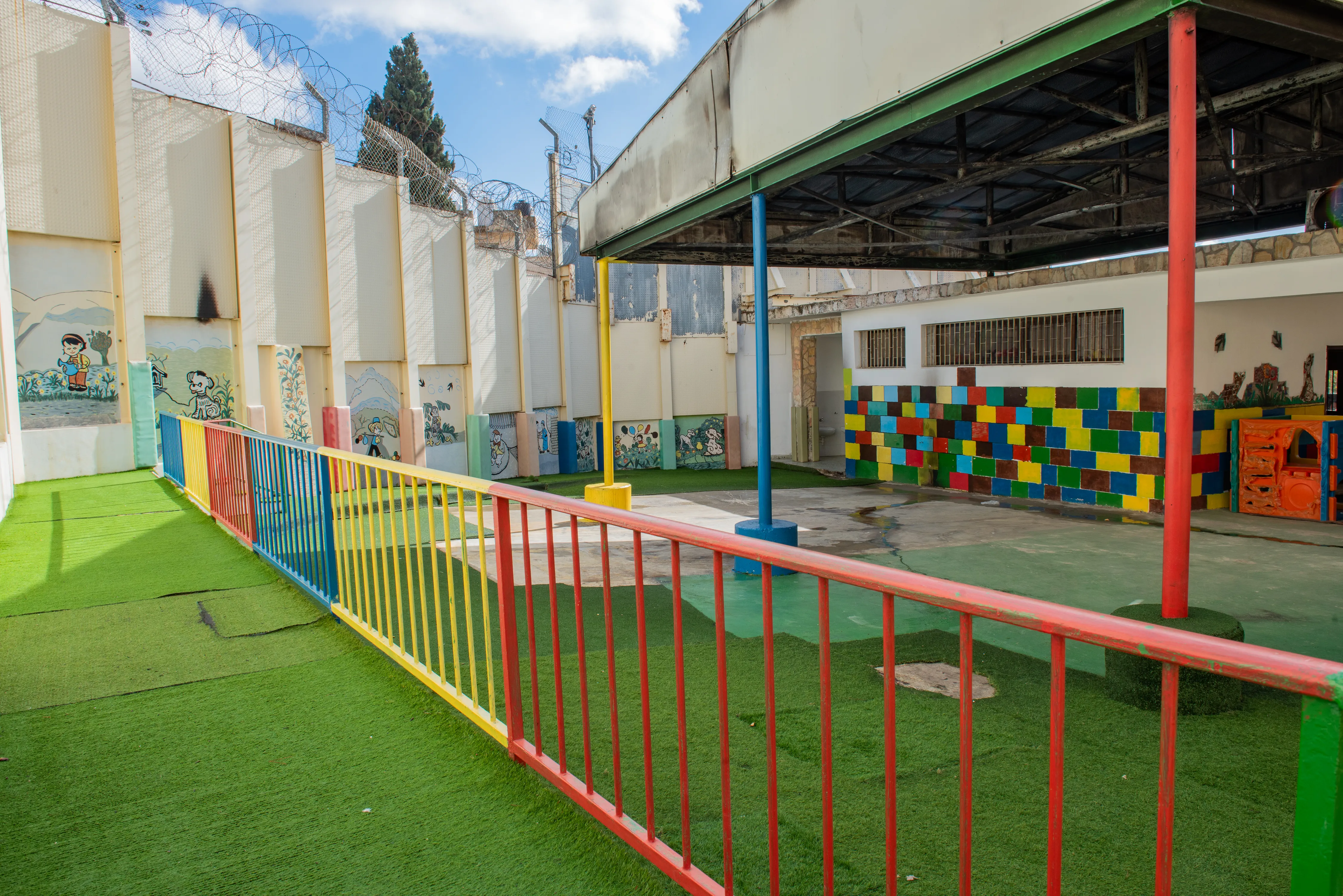
One incident happened the night of Oct. 6, just hours before the Hamas attack on Israel. Some Molotov cocktails landed on the synthetic grass in the part of the property that houses the kindergarten, causing a fire — the signs of which are still visible today. The fire destroyed the grass, playground equipment, and blackened the recently painted wall.
The exterior of the kindergarten, housed on the Comboni Sisters’ property. In the background is the separation wall that was erected on the edge of the Comboni Sisters’ property in 2009.
The kindergarten is a work that the Comboni Sisters have been carrying out since their arrival and today it serves as an important point of connection with the surrounding community. This significance has grown, especially after the construction of the wall.
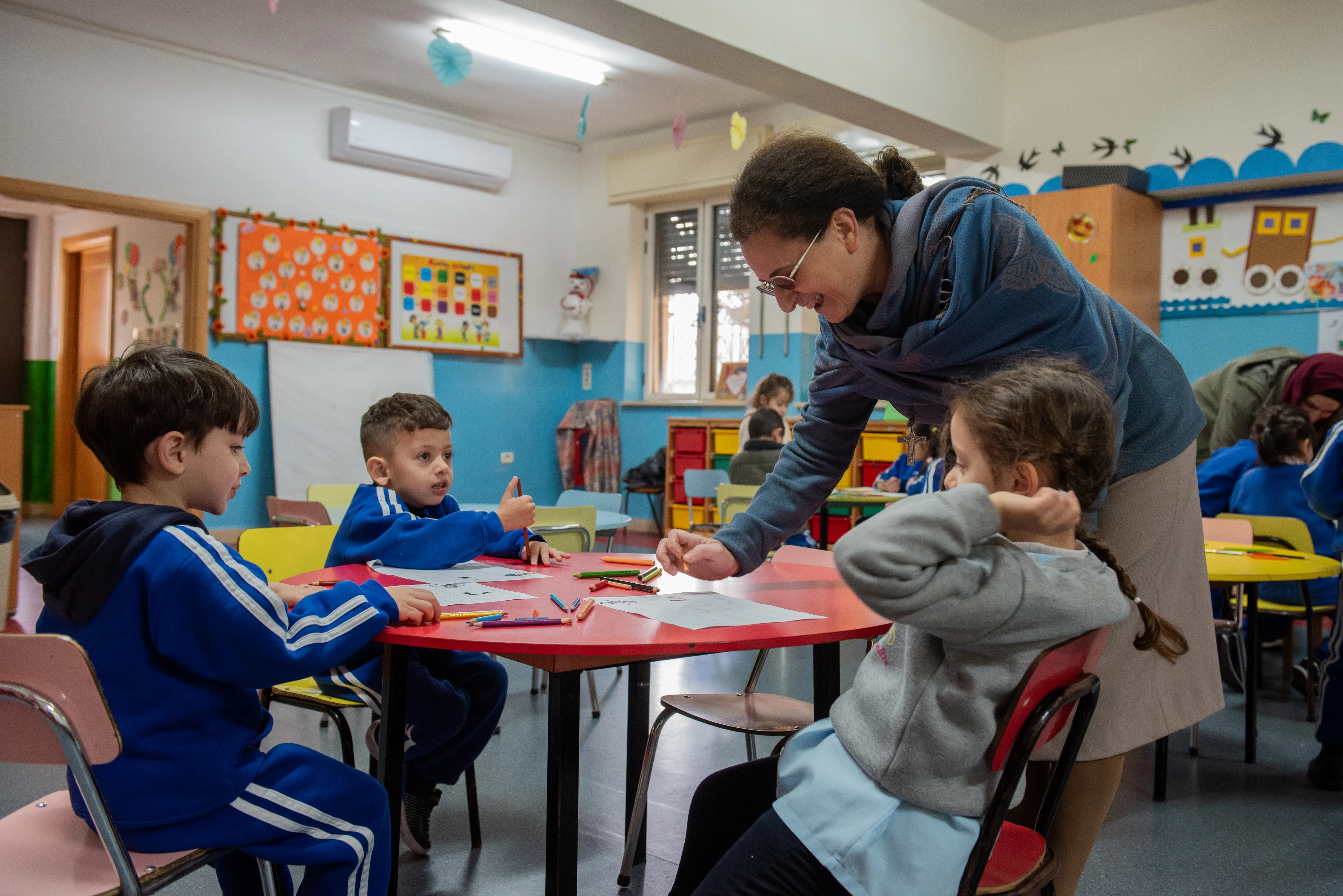
“The presence of the kindergarten has never been questioned, neither with the wall nor with the war,” said Sgaramella, who is the director. The kindergarten is attended by approximately 40 children, all of whom are Muslims, divided into two classes. Formally, it is under the jurisdiction of the Palestinian Ministry of Education. “It is a project that meets the needs of the people; furthermore, episodes of violence never occur during the day when the children are present,” she added.
Sister Anna Maria Sgaramella of the Comboni Sisters talks with the children in one of the kindergarten classes hosted at their home in East Jerusalem. The presence of the kindergarten has never been questioned, said Sgaramella, the director. Credit: Marinella Bandini
Every morning, the children begin with a prayer. “We tell the parents right from the start,” Sgaramella explained. “It’s a prayer of thanksgiving for what God has created, for the day, for life, a blessing for parents, neighbors, friends, and also for children who suffer. We pray for peace in the world and in this country.”
Regarding the families, she shared: “There is great trust and respect. They usually choose to send their children here, especially for moral education and English-language instruction.”
Most of the children come from East Jerusalem, but some also come from al-Eizariya. One of the two teachers, Nihal Hashmime, who is also the vice director, has to pass through the checkpoint every day to get to work.
“With the war,” the sister told CNA, “we faced some educational challenges because initially, some children were absent. The work we do with them is to impart certain values, such as peace, friendship, love, and respect for differences.”
Play is also an important aspect. “Children here do not find toy weapons, and they are not allowed to bring them from home,” Sgaramella said.
“Our attempt in education and all other activities is to break down this wall that leads to seeing the other as an enemy,” Sgaramella said. “Sometimes it is difficult to recognize the universality of salvation. We know that Jesus died for everyone, but in certain conflict-ridden contexts, it is challenging to acknowledge the other as a brother. Personally, the field of teaching theology provides me with the space to build bridges among believers. Because in every religion, there are sincere believers seeking truth.”






Leave a Reply