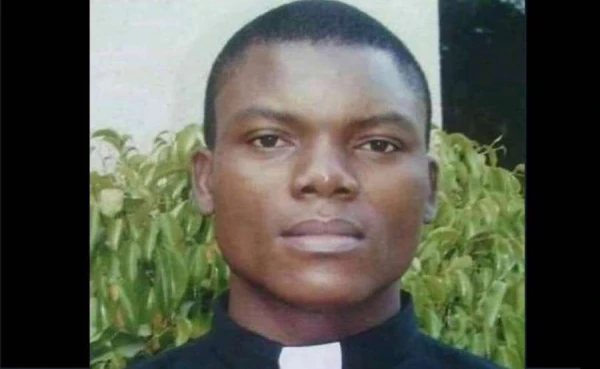
Jalingo, Nigeria, Aug 30, 2019 / 10:08 am (CNA).- A Catholic priest was killed in Nigeria this week when the car he was driving was set ablaze.
Fr. David Tanko was traveling within the Jalingo diocese of Nigeria, near the country’s border with Cameroon, when he was attacked Aug. 29. The priest was traveling to a “peace meeting” of local clergymen to discuss a conflict between the local Tiv and Jukun ethic groups.
“We received the news of his death with shock. This is sad. The diocese is mourning,” Bishop Charles Hammawa of Jalingo told local media.
“We have been preaching peace and making efforts to bring both parties in the crisis in the area to a roundtable discussion,” the bishop added.
Shiban Tikari, chairman of Taraba State Council, told local media that a Tiv militia carried out the attack.
Hammawa encouraged a peaceful response to Tanko’s killing.
“Our basic concern now is to give him a befitting burial,” the bishop said.
“We don’t want any group to go on reprisal. Going on reprisal will only worsen the situation.”
The bishop announced a Vigil Mass for the priest on Monday, Sept. 2 and burial the following day at the diocesan cemetery in Jalingo.
A version of this story was initially reported by CNA's sister agency, ACI Africa. It has been adapted by CNA.
If you value the news and views Catholic World Report provides, please consider donating to support our efforts. Your contribution will help us continue to make CWR available to all readers worldwide for free, without a subscription. Thank you for your generosity!
Click here for more information on donating to CWR. Click here to sign up for our newsletter.
The “Holy Fire” is passed from inside Christ’s tomb to pilgrims gathered inside the Basilica of the Holy Sepulcher in Jersusalem on May 4, 2024, for the annual Orthodox Christian ceremony, held on the day before Easter, according to the Julian calendar. / Credit: Marinella Bandini/CNA
Jerusalem, May 5, 2024 / 09:00 am (CNA).
Pilgrims gathered in Jerusalem Saturday for the annual “Holy Fire” ceremony at the revered site of Jesus’ burial and resurrection, an ancient custom considered by many believers to be a miraculous event that takes place the day before the Orthodox Christian celebration of Easter.
For safety reasons, attendance at the May 4 event was capped at 4,200 people inside the Basilica of the Holy Sepulcher, though the crowds were more manageable and somewhat subdued this year because of a lack of pilgrims from the Palestinian territories and abroad due to the ongoing Israel-Hamas war.
Israeli police man a checkpoint inside the Old City of Jerusalem during the “Holy Fire” ceremony held at the Basilica of the Holy Sepulcher on May 4. 2024. Credit: Marinella Bandini/CNA
Access to the Old City where the basilica is located was restricted beginning on Friday night amid a heavy police presence. Numerous medical personnel and firefighters were present inside the basilica.
Though its authenticity is disputed by some, the “Holy Fire” or “Holy Light” refers to a fire of purported divine origin that ignites inside Jesus’ tomb while only the Greek Orthodox patriarch is present. Pilgrims then light their candles by extending them through a small opening in the tomb, producing a dramatic scene of flickering flames and joyous celebration.
The Orthodox Christian ceremony, which is attended by Catholics and other Christians, as well, has been held continuously since at least 1106, though accounts dating to the fourth century relate that the apostle Peter saw the holy light himself inside the tomb.
Pilgrims carry candles lit from the “Holy Fire” inside the Basilica of the Holy Sepulcher in Jerusalem on May 4, 2024. Credit: Marinella Bandini/CNA
The doors of the Holy Sepulcher were opened at 9 a.m. by Greek Orthodox representatives and again at 9.30 a.m. by representatives of the Armenian Apostolic Church — the two Orthodox communities that serve with Catholic Franciscans as the custodians of the site. Only then did the faithful begin to enter the basilica.
Around 11 a.m., those present began to sing traditional hymns in the loudest voice possible. These chants date back to the Turkish occupation of Jerusalem in the 13th century when Christians were not allowed to chant anywhere but in the churches.
The heart of the ceremony was between 1 and 2 in the afternoon. After the solemn entrances of the other Orthodox patriarchs of Jerusalem, the Greek Orthodox patriarch, Theophilos III, entered the basilica.
Previously, the doors of the Aedicule (the small shrine that houses the tomb of Jesus Christ) had been sealed with a large wax seal — signifying that the tomb had been inspected and that nothing was present that could be used to start a fire. Shortly before the arrival of the Greek patriarch, the seal was removed, and a large oil lamp was carried into the tomb.
After completing three rounds around the Aedicule, leading a procession of monks and priests, Patriarch Theophilos III entered the Aedicule, followed by a delegate of the Armenian patriarch (who could not attend due to an internal dispute) and several bishops from various denominations.
The Greek Orthodox Patriarch Theophilos III exits the Aedicule of the Holy Sepulcher on May 4, 2024, in Jerusalem, showing the faithful the two candles just lit from the oil lamp that is believed to have been miraculously ignited inside Jesus’ tomb. Credit: Studio Sami Jerusalem
Only the Greek Orthodox patriarch is allowed to enter the chamber that houses the tomb of Jesus, while all the others remain in the Chapel of the Angel, a sort of antechamber that commemorates the appearance of a heavenly messenger to the women at the tomb announcing Jesus’ resurrection.
Before entering the tomb, the Greek patriarch was inspected by Israeli authorities to prove that he didn’t carry any technical means to light the fire.
All the lights and lamps in the basilica were extinguished, especially those inside the Aedicule, which was left in darkness.
What believers attest to be a miracle takes place after a brief time of prayer: A holy fire is said to descend from heaven and ignite an oil lamp inside the tomb.
Pilgrims inside the Basilica of the Holy Sepulcher hold their candles aloft after the “Holy Fire” was ignited inside Jesus’ tomb on May 4, 2024, the day before the Orthodox Christian celebration of Easter. Credit: Marinella Bandini/CNA
On Saturday, after the lamp was lit the Greek Orthodox patriarch emerged from the tomb and lit bundles of 33 candles (a number representing the age of Christ at the time of his crucifixion and resurrection.) Meanwhile, pilgrims lit their candles also from the small round windows on the sides of the Aedicule, creating a dramatic scene outside the tomb. It is said that the fire does not burn anything (or anyone) for the first 33 minutes after being lit.
For Orthodox believers, the lighting of the fire is a genuine miraculous event, although voices within the Orthodox world itself have repeatedly questioned the authenticity of the miracle, attributing the spontaneous lighting of the lamp to tricks or chemical methods.
A lamp used to transport the “Holy Fire” from the Basilica of the Holy Sepulcher in Jerusalem to Bethlehem is carried at the lighting ceremony on May 4, 2024. By longstanding tradition, the flames from the purported miraculous fire are brought to the main Orthodox churches in the Holy Land and sent to the main Orthodox churches around the world via specially arranged flights. Credit: Marinella Bandini/CNA
In solidarity with the Palestinian people in Gaza and the victims of the war, the Orthodox Christians have chosen a more subdued celebration this year. To that end, the Holy Fire was not passed hand to hand through the streets of the Old City of Jerusalem, as is the custom, but was brought directly into the homes of the faithful.
Special lanterns transport flames from the tomb to the main Orthodox churches in the Holy Land and around the world (via specially arranged flights). The arrival of the flames from Jerusalem will mark the beginning of the Easter celebrations.
Rome Newsroom, Feb 8, 2021 / 12:10 pm (CNA).- The Great Al-Tahira Immaculate Conception Cathedral in Bakhdida was charred black inside after the Islamic State set it aflame after taking control of the town in 2014. Now the restored cathedral is prepari… […]
Kaduna, Nigeria, Jan 20, 2020 / 11:30 am (CNA).- A Nigerian seminarian who was abducted this month was freed by his kidnappers after 10 days in captivity. Three seminarians kidnapped with him remain in captivity.
The freed seminarian, who has not yet been identified, is being treated at a Catholic hospital in Kaduna, Nigeria. The extent of his injuries is unclear, but he is being treated in the hospital’s intensive care unit.
“From the time of the abduction, this seminarian was stubborn to the abductors; he could hold on anything he could find, resisting the kidnapping,” a source close to Good Shepherd Major Seminary in Kaduna told ACI Africa, CNA’s African news partner.
“The seminarian was beaten up badly resulting in some fractures of his body parts, yet they took him still,” the source said of the Jan. 8 kidnapping.
The seminarian, still suffering injuries from his abduction, was dumped by kidnappers Jan. 18 on the side of Nigeria’s Kaduna-Abuja highway. He was taken to the hospital after being found by passing motorists.
The seminarian might have been freed and dumped along the road “because the abductors felt the boy could not survive in their hands,” a source told ACI Africa.
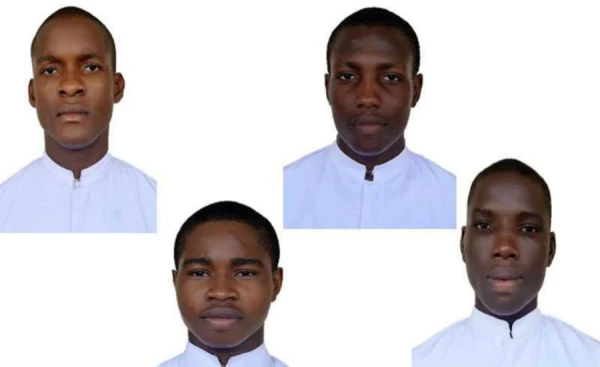
The students, Pius Kanwai, 19; Peter Umenukor, 23; Stephen Amos, 23; and Michael Nnadi, 18, were abducted on the night of Jan. 8 in a 30-minute operation that saw the kidnappers, dressed in military uniform and armed with guns, force their way onto the Catholic seminary campus, which is home to 268 seminarians.
Since Jan. 11, the abductors have been making contact with family members of the seminarians to discuss ransoms for their release, a source in Nigeria told ACI Africa Jan. 12.
According to a Sunday news report, Archbishop Matthew Man’oso Ndagoso of Kaduna has cautioned against speculation about the abductors’ demand for ransom for the safe release of the seminarians.
“We have streamlined discussion with the kidnappers, it is only one person that is communicating with them, we can’t disclose any discussion with them,” Archbishop Man’oso told local media. Good Shepherd Seminary is located just off the Abuja-Kaduna-Zaria Express Way. According to AFP, the area is “notorious for criminal gangs kidnapping travelers for ransom.”
The news agency said that schoolgirls and staff from a boarding school also located near the highway were kidnapped in October, and were later released.
Kidnappings of Christians in Nigeria have multiplied in recent months, a situation that has prompted Church leaders to express serious concern about the security of their members and to call on the government to prioritize the security of its citizens.
A version of this story was first published by ACI Africa, CNA’s African news partner. It has been adapted by CNA.





Leave a Reply