The Holy Father has already visited Algeria, Cameroon, and Angola as part of his papal visit to the continent.
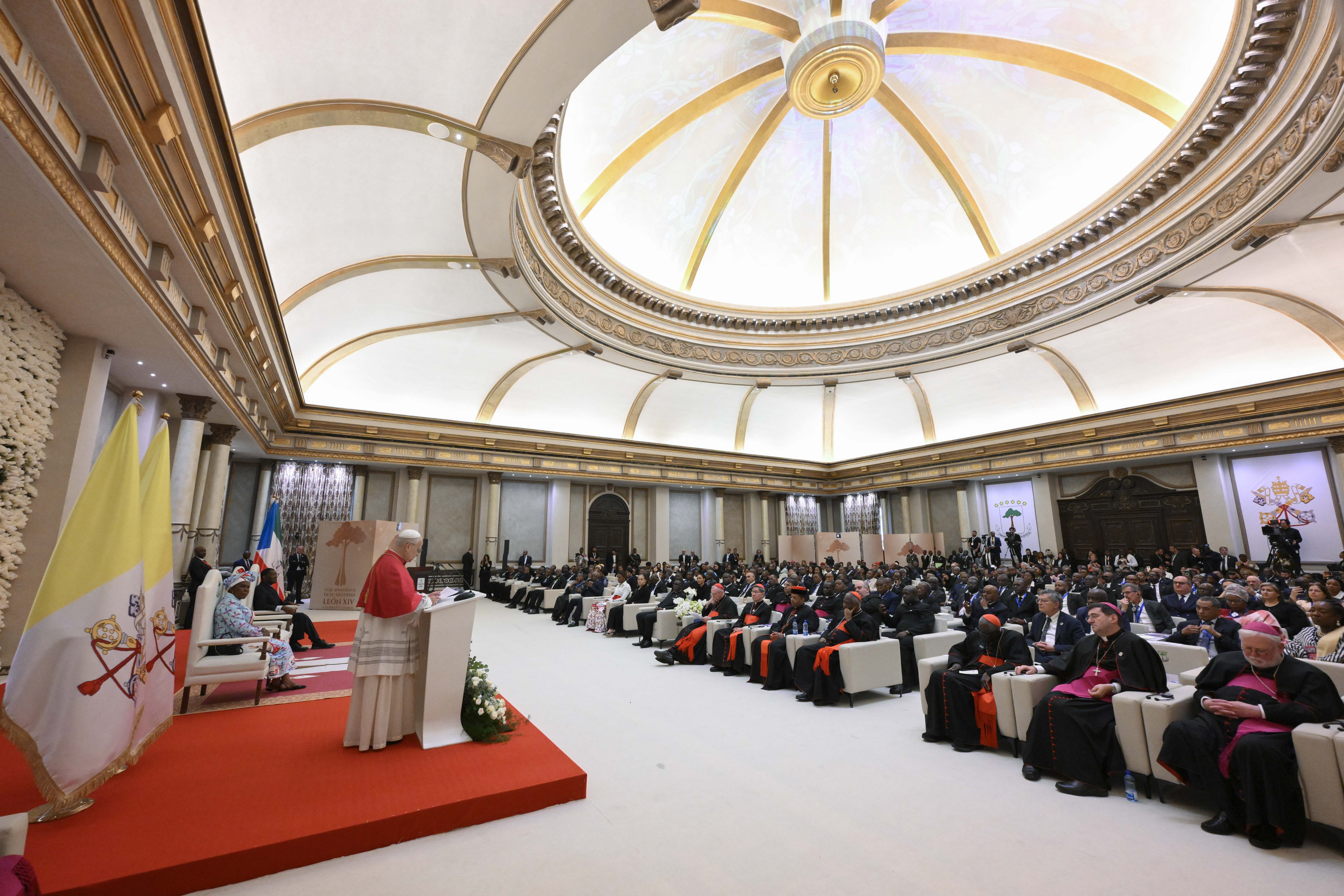
Pope Leo XIV listens during a meeting with civil leaders at Malabo, Equatorial Guinea, on Tuesday, April 21, 2026. | Credit: Vatican Media
Pope Leo XIV met with civic leaders and cultural stewards in Equatorial Guinea on April 21, coming to the coastal African nation after traveling across much of the continent during his first papal visit there.
The Holy Fatherʼs two-day stay in Equatorial Guinea will cap his visit to Africa, during which he has visited and toured Algeria, Cameroon, and Angola.
During his first day in Equatorial Guinea, Leo met with President Teodoro Obiang Nguema Mbasogo along with civil leaders and the countryʼs diplomatic corps.
He also visited with cultural leaders and with staff and patients at a psychiatric hospital in Malabo.
Hereʼs a look at Leoʼs activities during his first day in Equatorial Guinea:
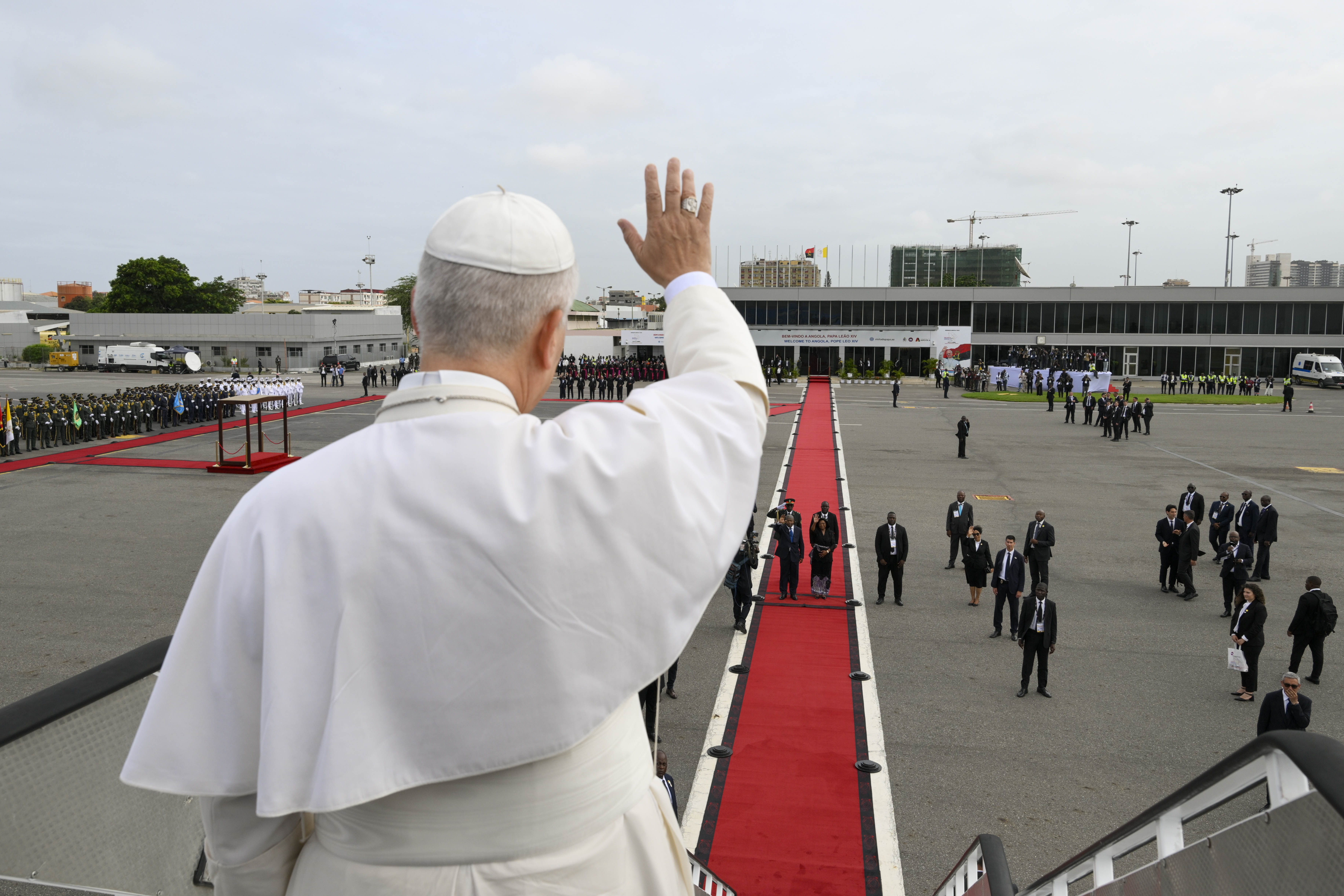
Pope Leo XIV waves as he departs Angola at Quatro de Fevereiro International Airport on Tuesday, April 21, 2026. | Credit: Vatican Media
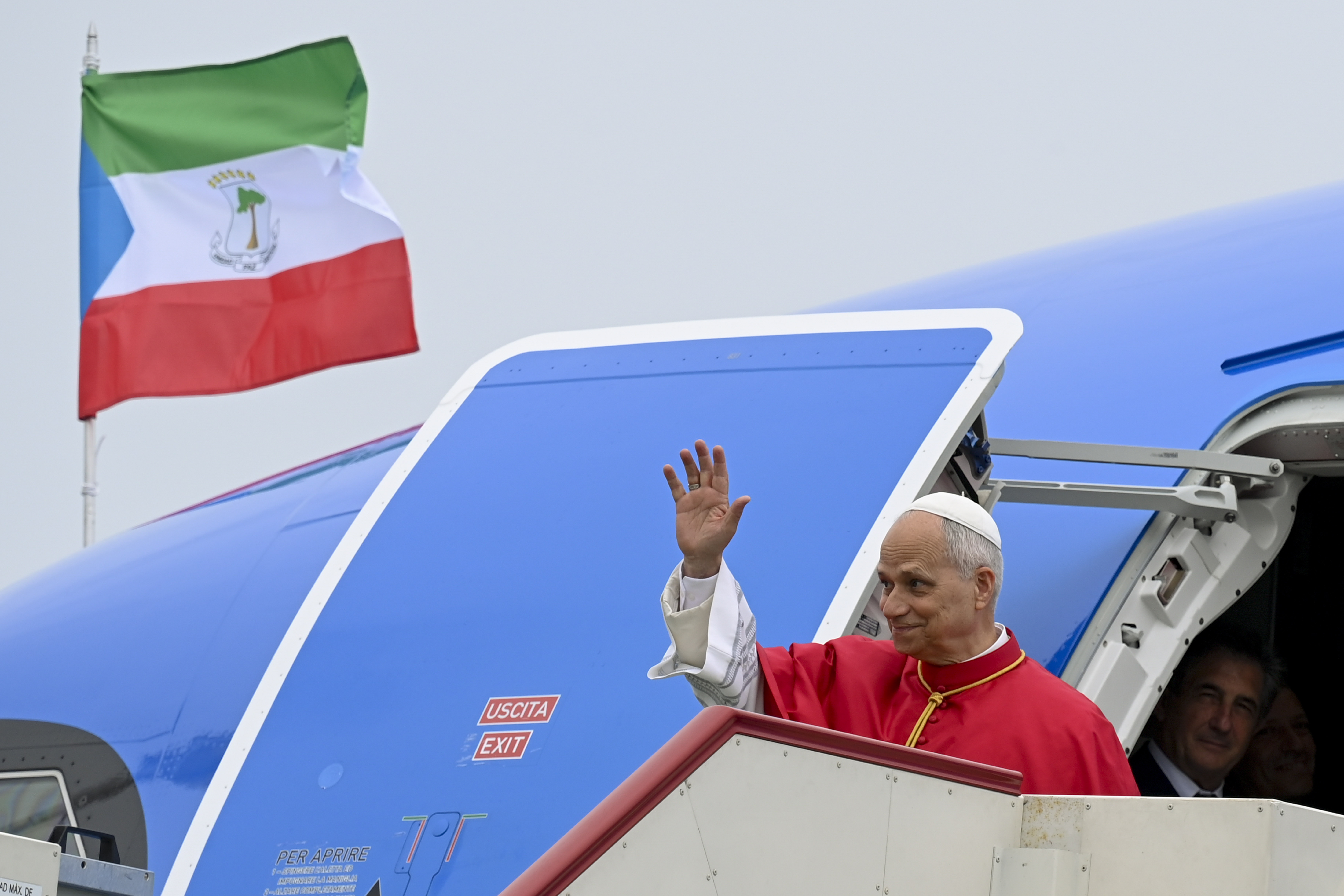
Pope Leo XIV waves as he arrives in Equatorial Guinea on Tuesday, April 21, 2026. | Credit: Vatican Media
Pope Leo XIV greets Equatorial Guinea President Teodoro Obiang Nguema Mbasogo upon his arrival in the country on Tuesday, April 21, 2026. | Credit: Vatican Media
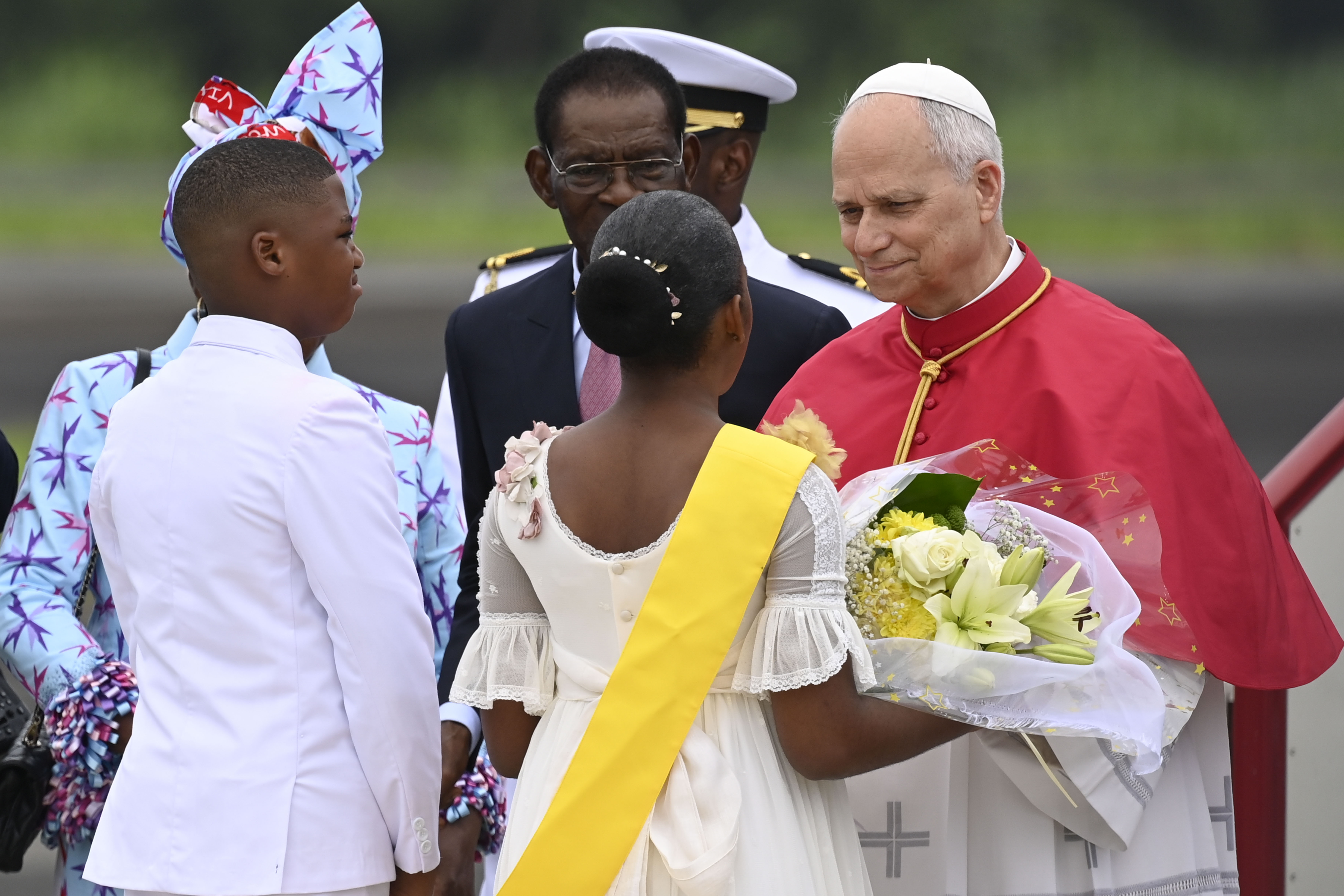
Pope Leo XIV is greeted as he arrives in Equatorial Guinea on Tuesday, April 21, 2026. | Credit: Vatican Media
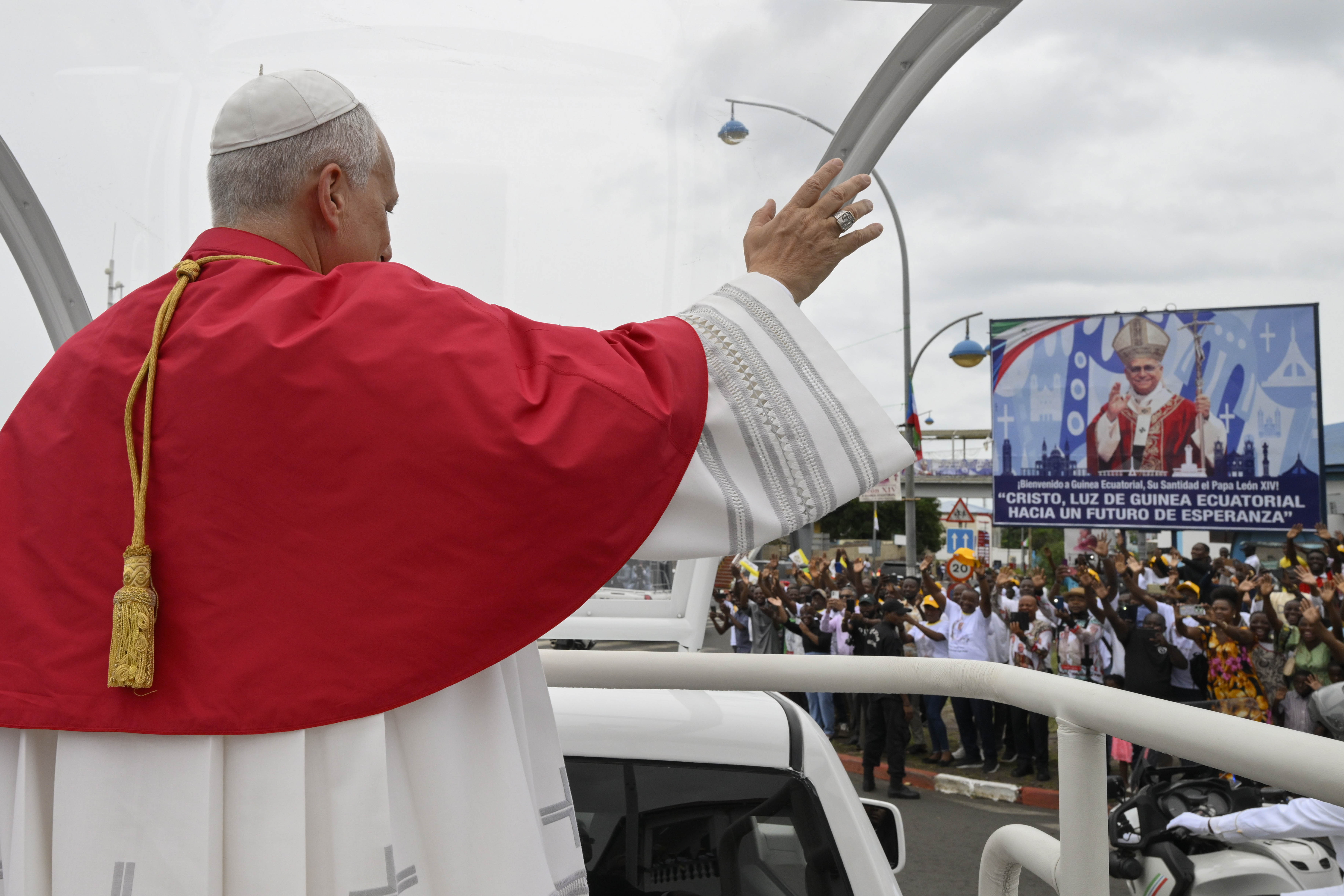
Pope Leo XIV waves to crowds after arriving in Equatorial Guinea on Tuesday, April 21, 2026. | Credit: Vatican Media
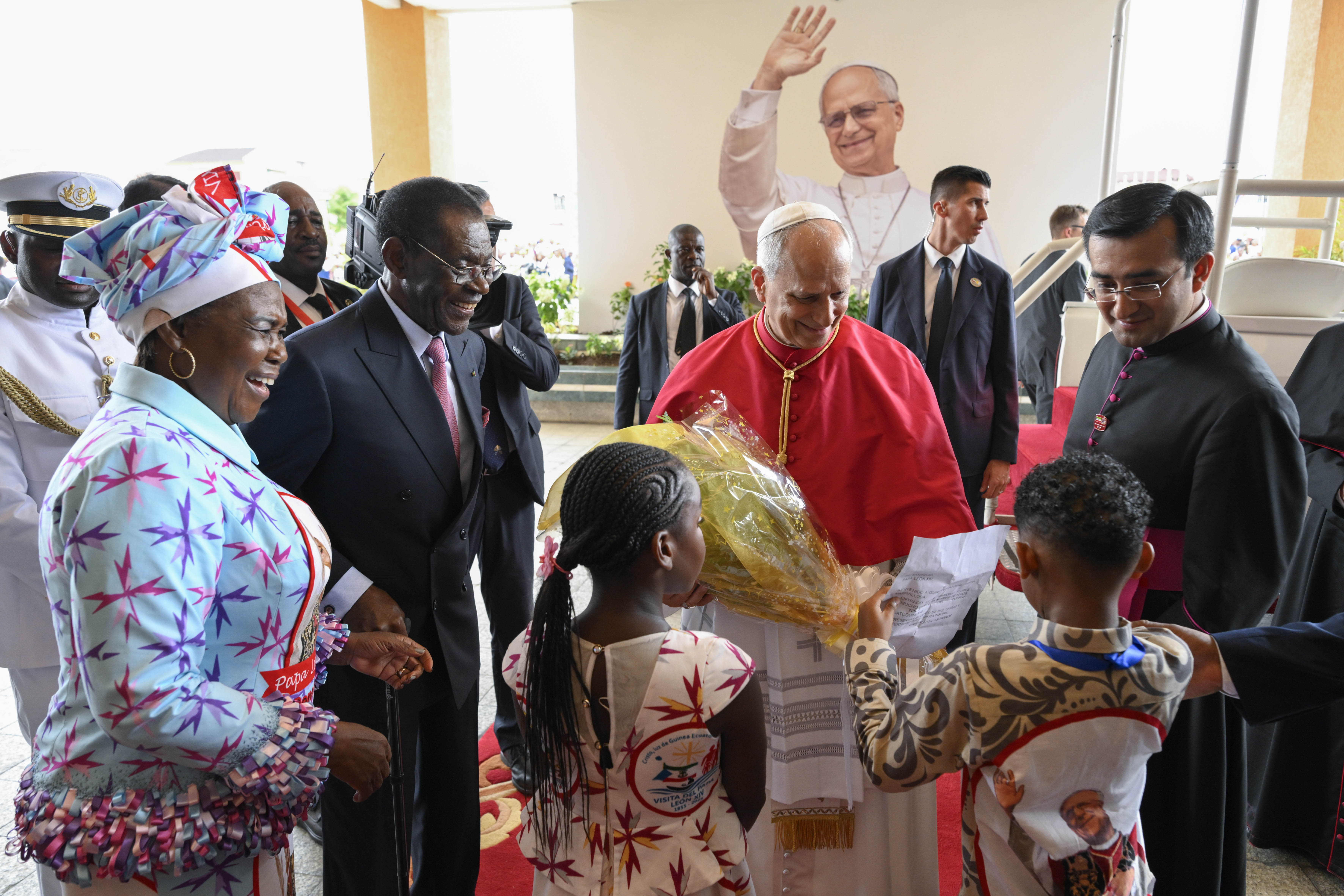
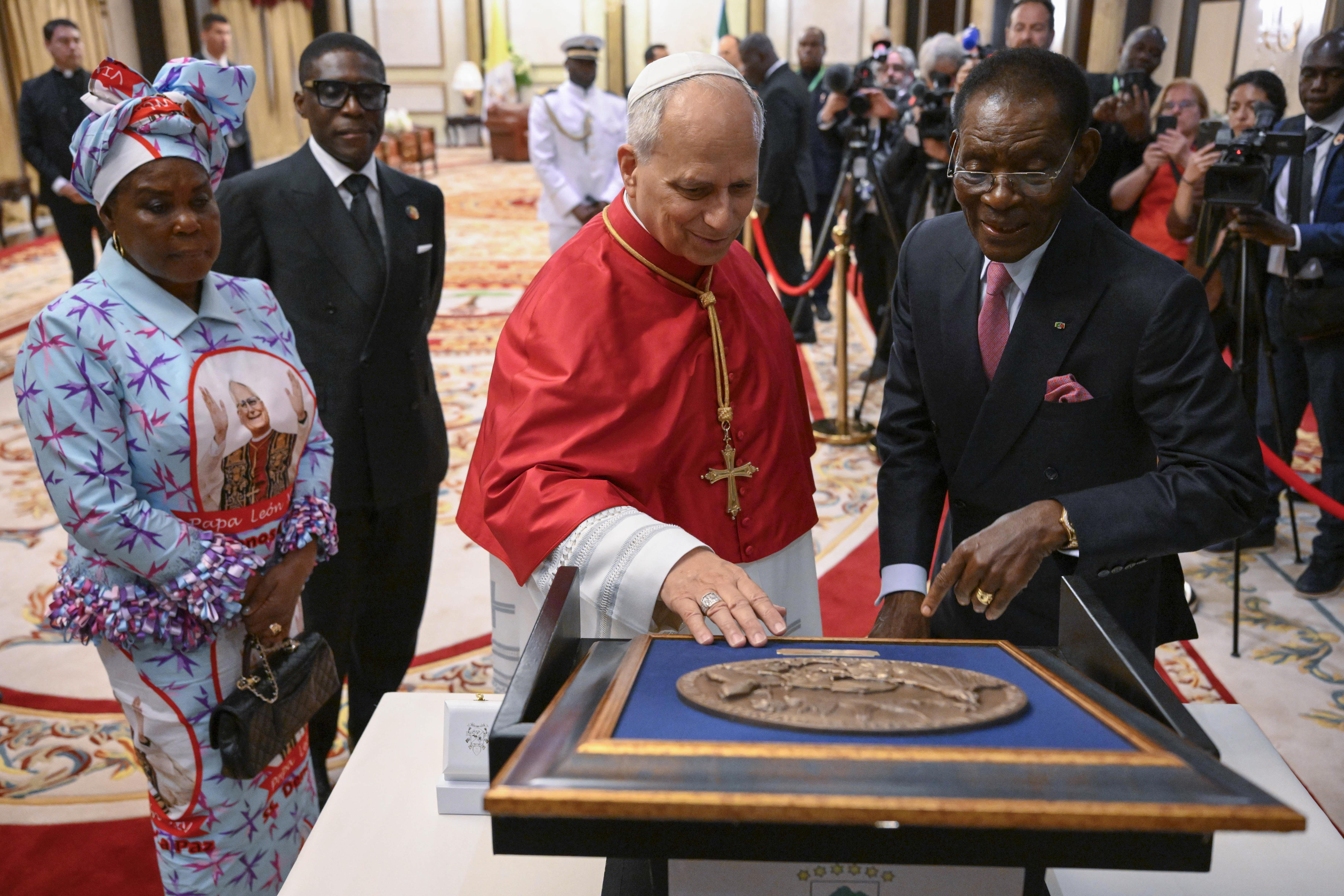
Pope Leo XIV receives gifts during his meeting with Equatorial Guinea President Teodoro Obiang Nguema Mbasogo at the presidential palace in Malabo on April 21, 2026. | Credit: Vatican Media
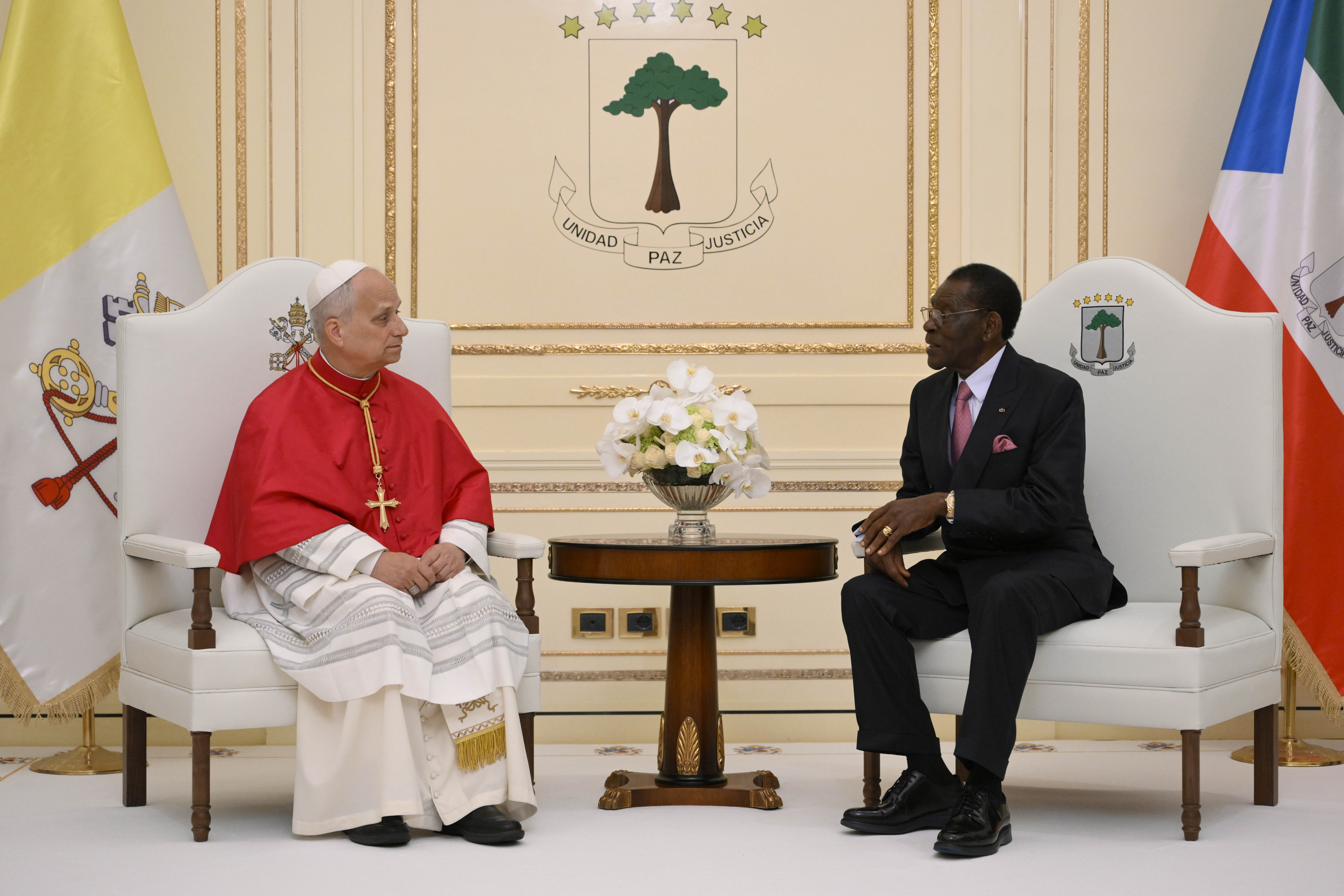
Pope Leo XIV and Equatorial Guinea President Teodoro Obiang Nguema Mbasogo speak at the country’s presidential palace on Tuesday, April 21, 2026. | Credit: Vatican Media
Pope Leo XIV meets with Equatorial Guinea President Teodoro Obiang Nguema Mbasogo at the presidential palace in Malabo on April 21, 2026. | Credit: Vatican Media
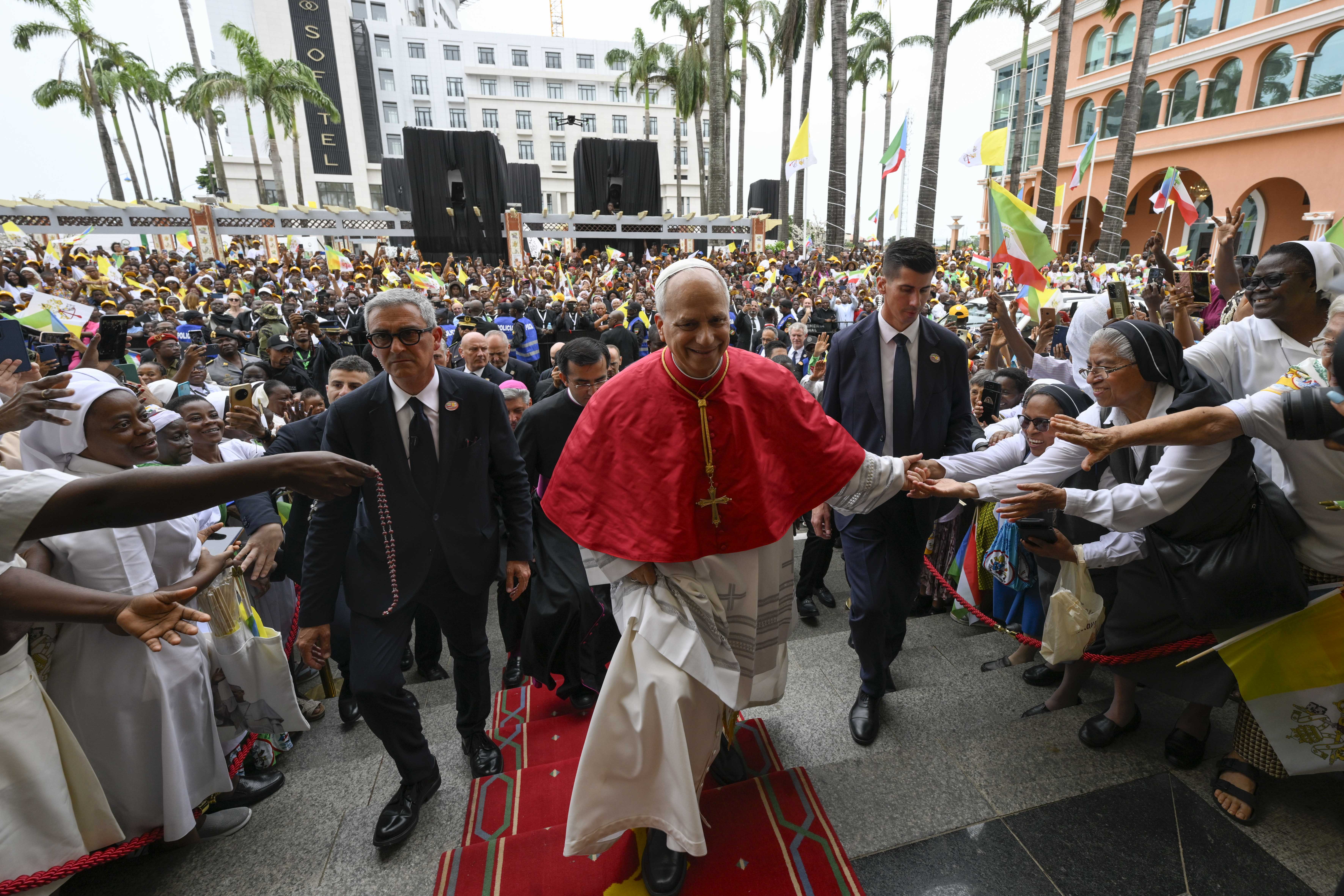
Pope Leo XIV greets crowds as he walks through Malabo in Equatorial Guinea on Tuesday, April 21, 2026. | Credit: Vatican Media
Pope Leo XIV greets crowds as he walks through Malabo in Equatorial Guinea on Tuesday, April 21, 2026. | Credit: Vatican Media
Pope Leo XIV speaks to civil leaders at Malabo, Equatorial Guinea, on Tuesday, April 21, 2026. | Credit: Vatican Media
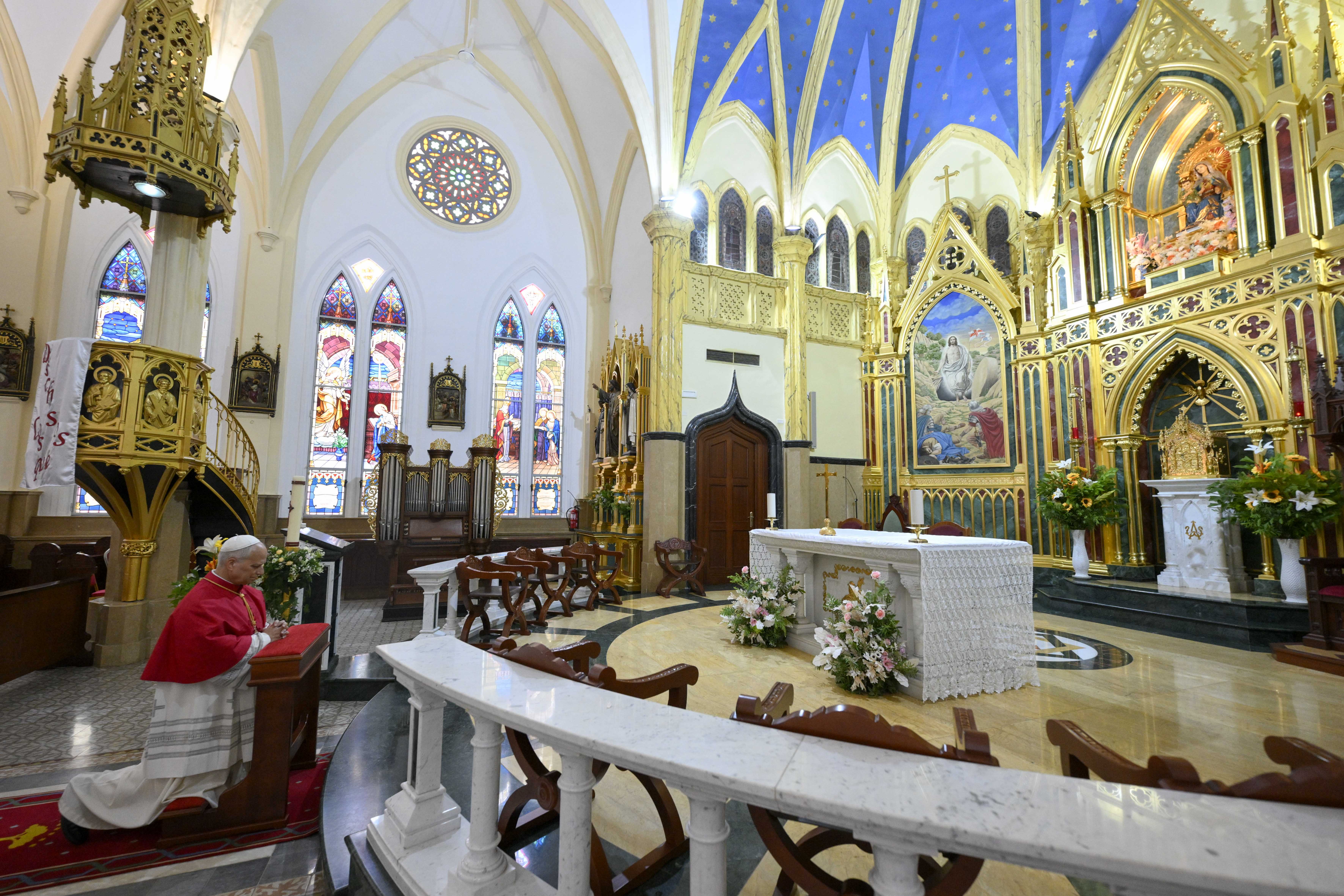
Pope Leo XIV prays at St. Elizabeth Cathedral in Malabo, Equatorial Guinea, on Tuesday, April 21, 2026. | Credit: Vatican Media
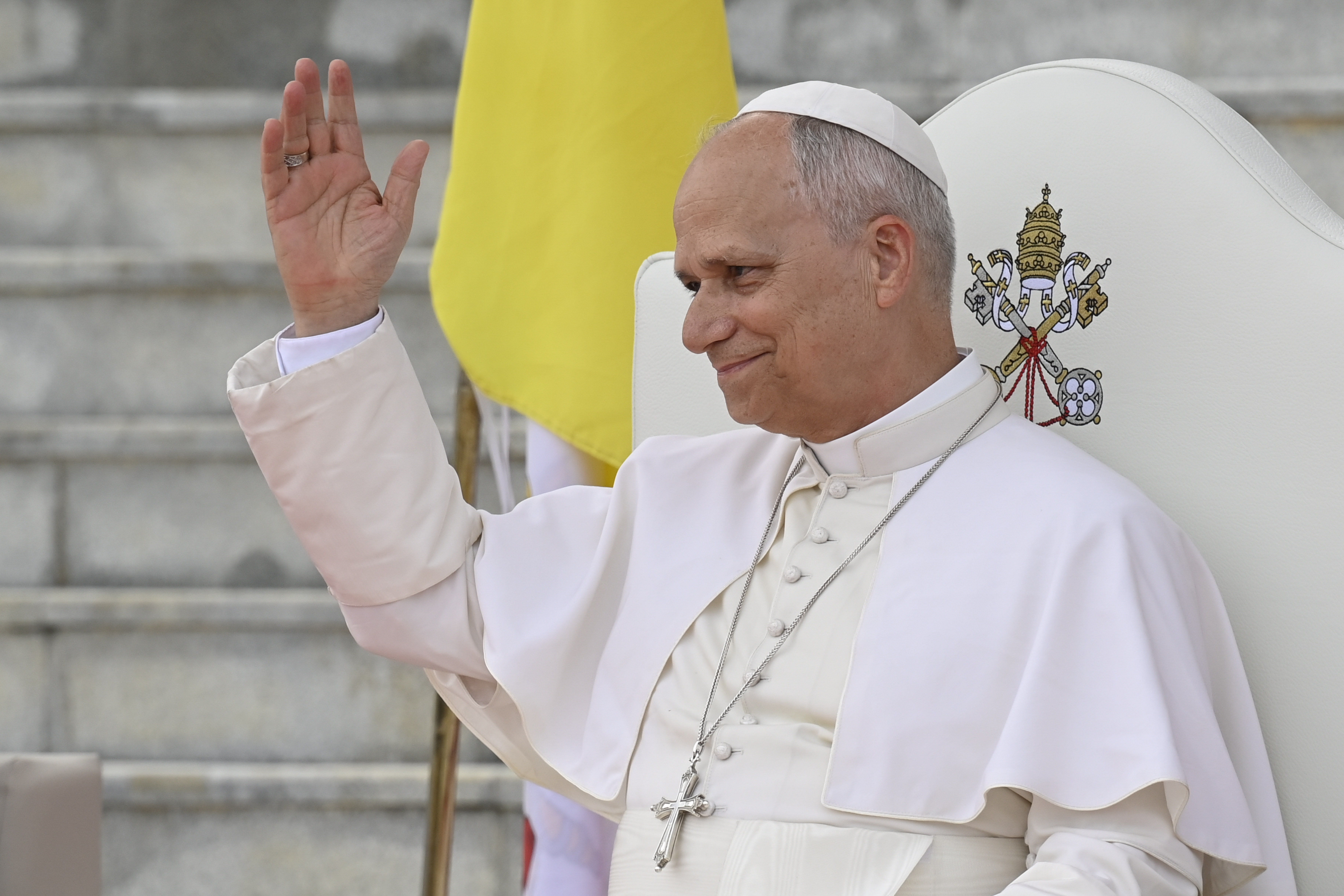
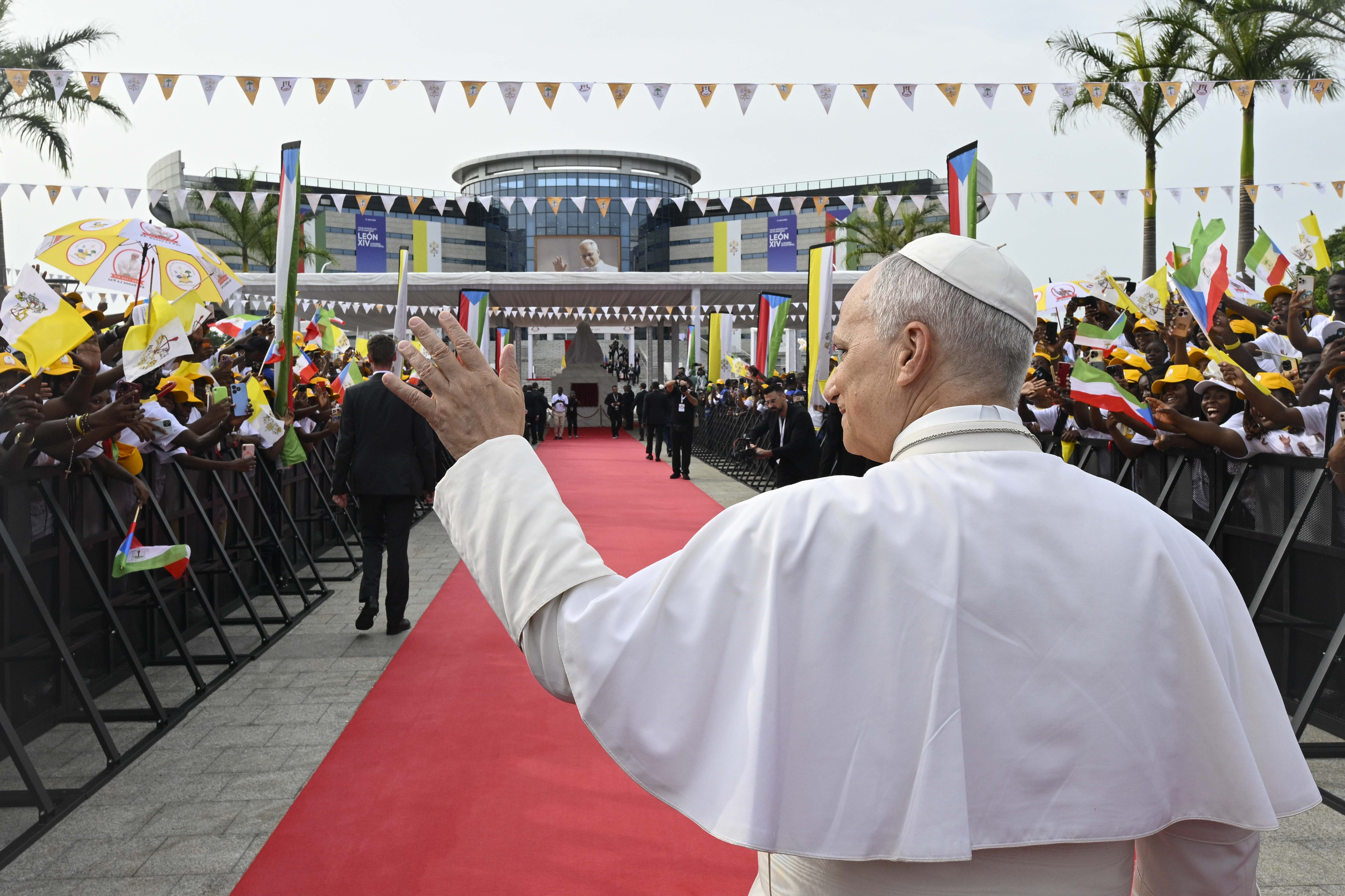
Pope Leo XIV waves to the crowd during a meeting with the World of Culture at the León XIV Campus of the National University, Malabo, Equatorial Guinea, on Tuesday, April 21, 2026. | Credit: Vatican Media
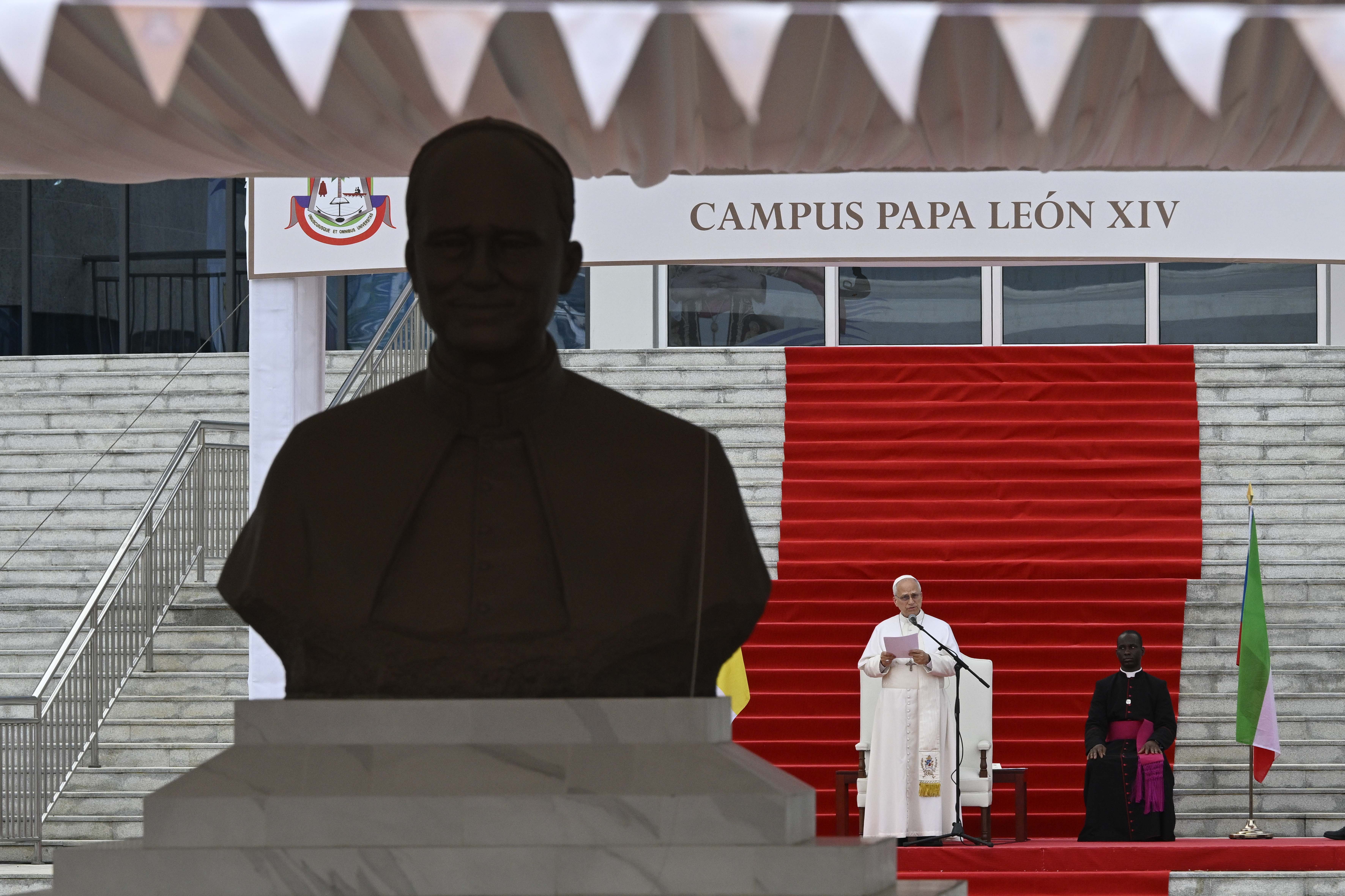
Pope Leo XIV speaks during a meeting with the World of Culture at the León XIV Campus of the National University in Malabo, Equatorial Guinea, on Tuesday, April 21, 2026. | Credit: Vatican Media
Pope Leo XIV waves to crowds during a meeting with the World of Culture at the León XIV Campus of the National University in Malabo, Equatorial Guinea, on Tuesday, April 21, 2026. | Credit: Vatican Media
Pope Leo XIV speaks at the Jean Pierre Olie Psychiatric Hospital in Malabo, Equatorial Guinea, on Tuesday, April 21, 2026. | Credit: Vatican Media
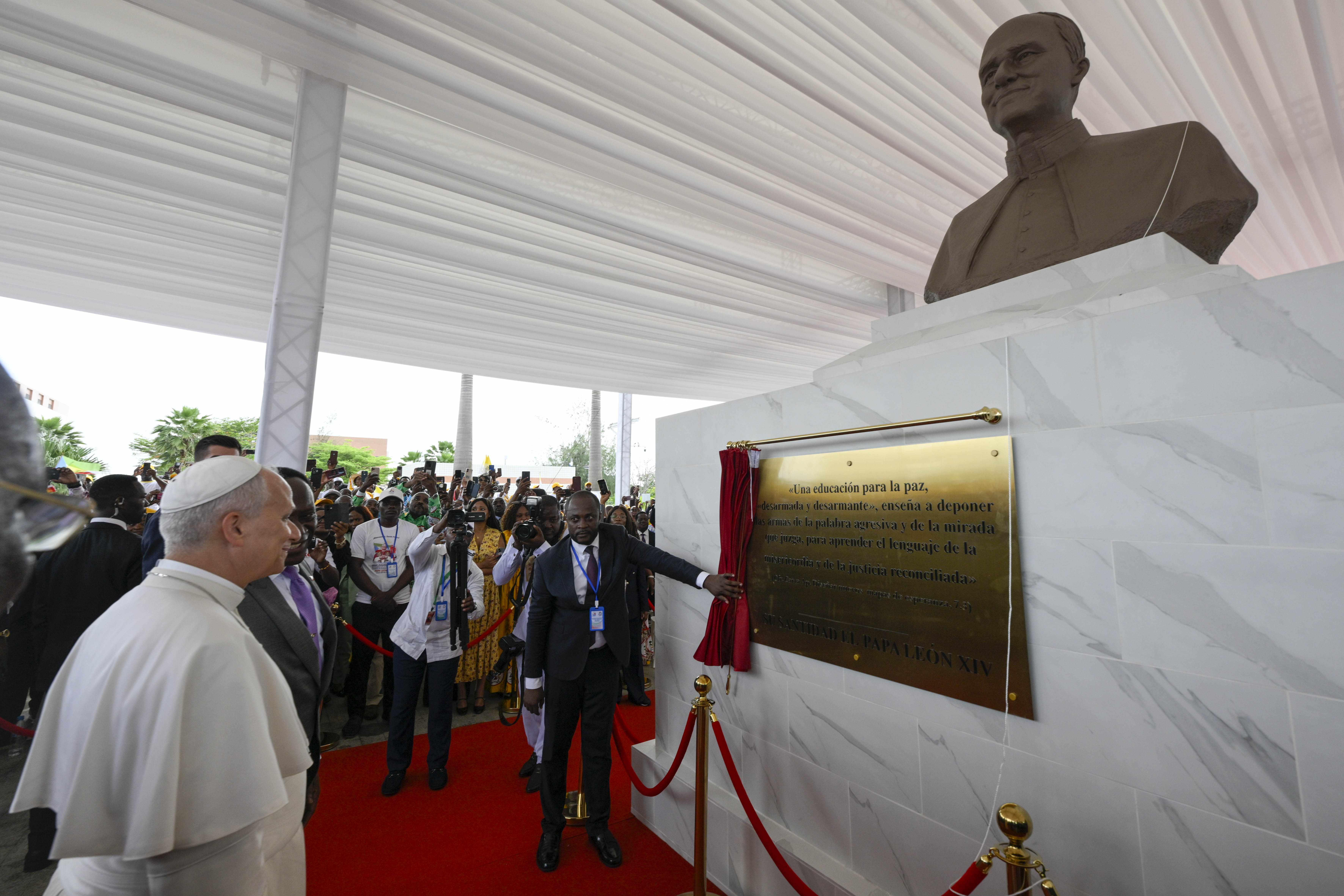
Pope Leo XIV views a plaque underneath a statue in his honor during a meeting with the World of Culture at the León XIV Campus of the National University in Malabo, Equatorial Guinea, on Tuesday, April 21, 2026. | Credit: Vatican Media
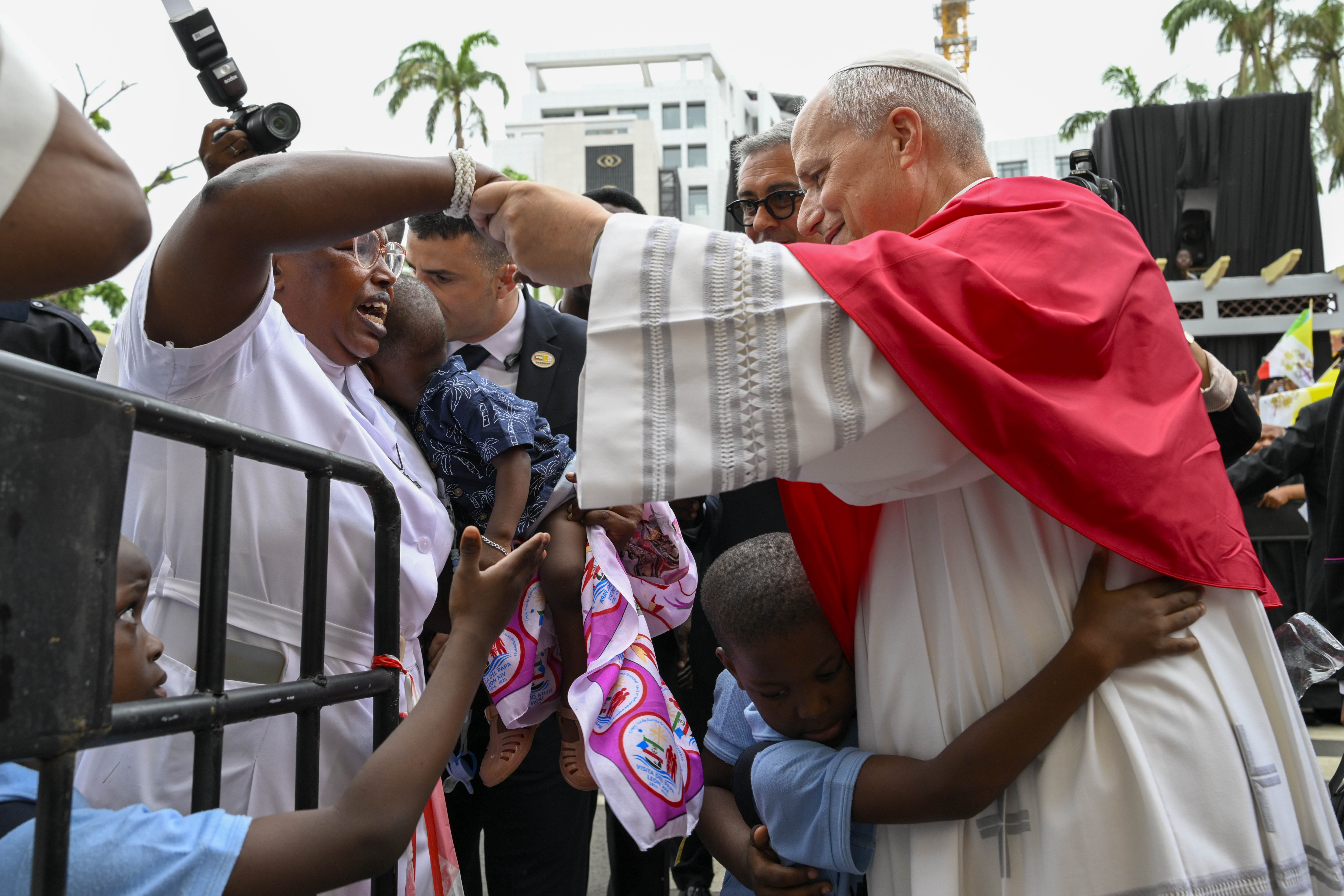
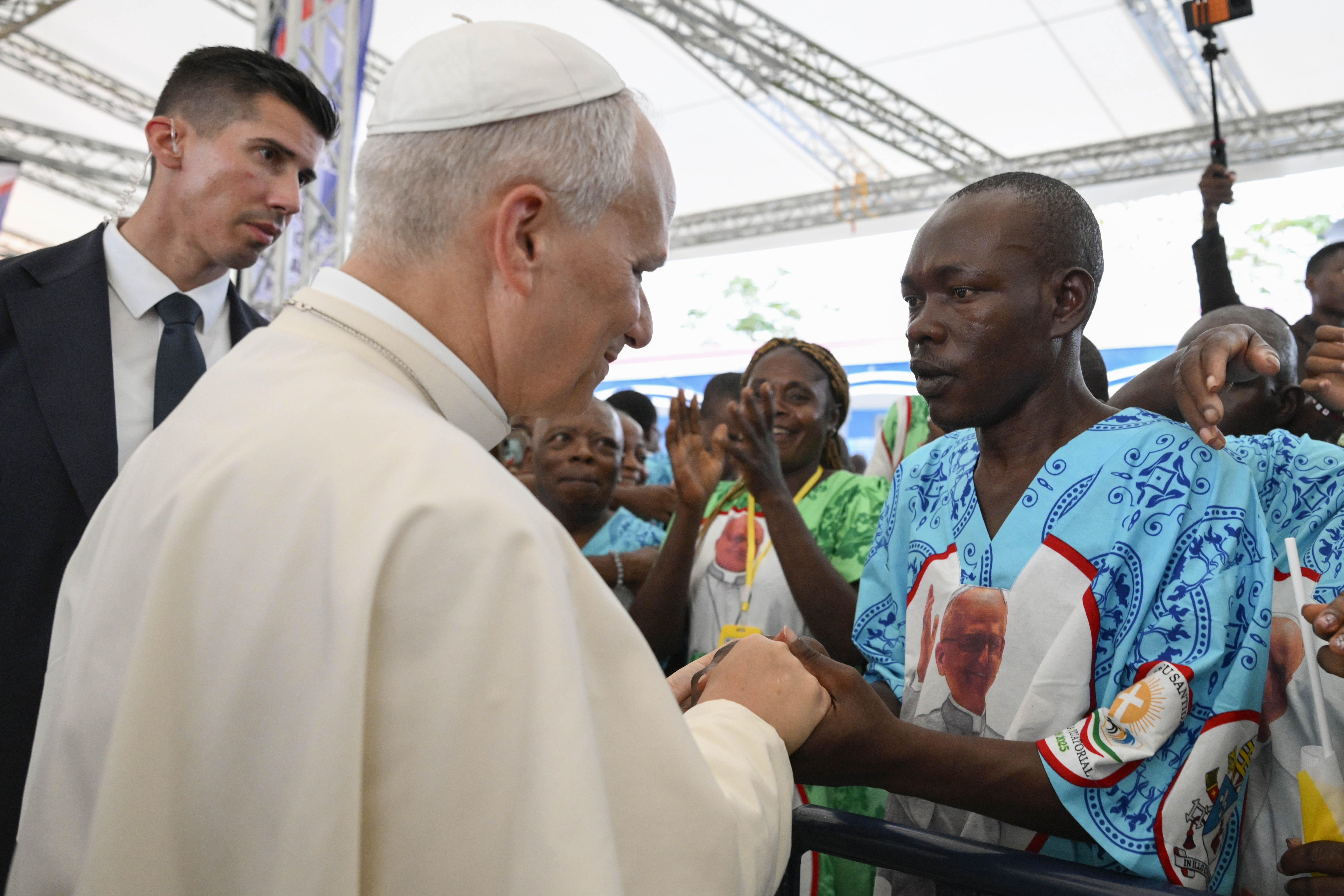
Pope Leo XIV greets crowds at the Jean Pierre Olie Psychiatric Hospital in Malabo, Equatorial Guinea, on Tuesday, April 21, 2026. | Credit: Vatican Media
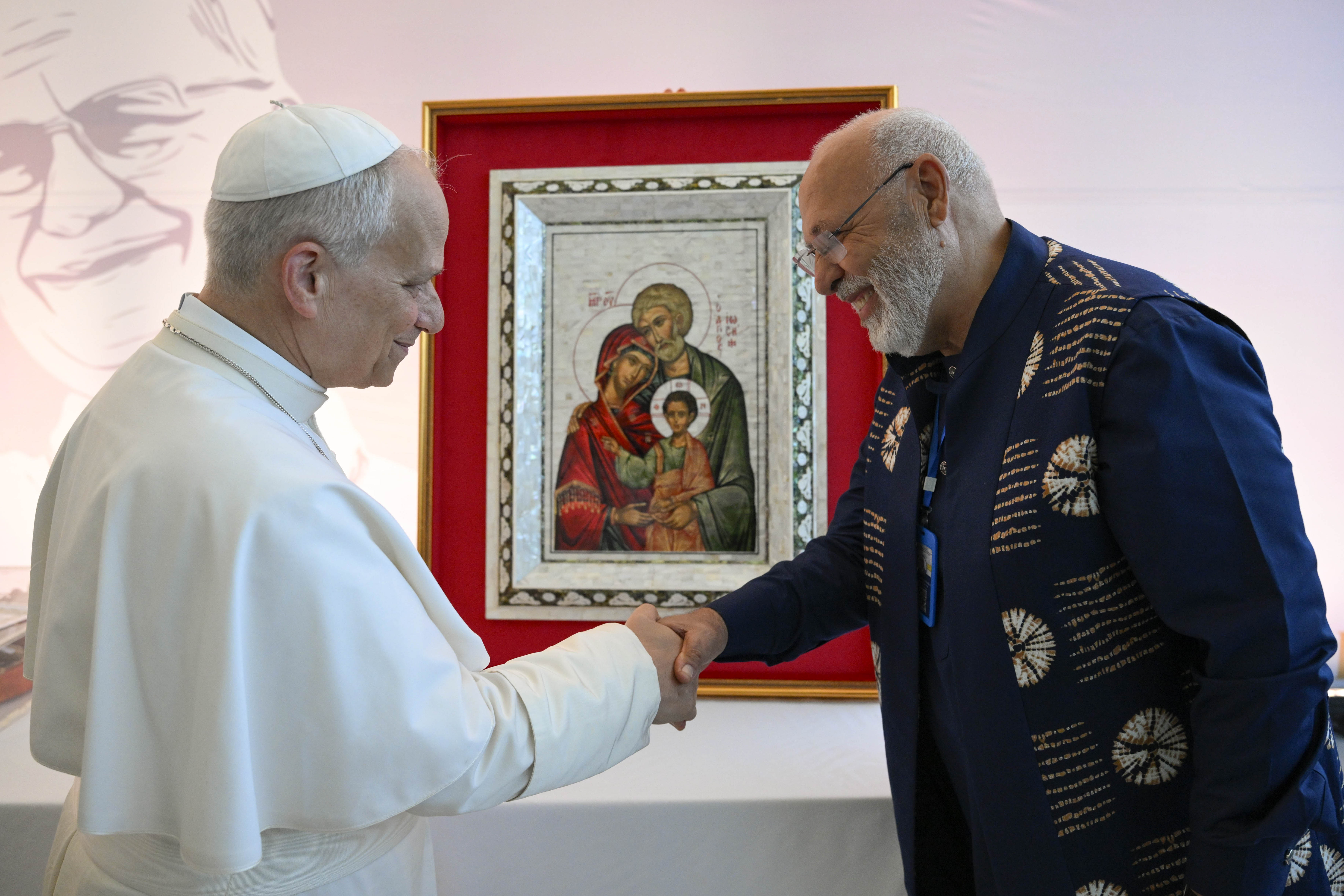
Pope Leo XIV greets an official at the Jean Pierre Olie Psychiatric Hospital in Malabo, Equatorial Guinea, on Tuesday, April 21, 2026. | Credit: Vatican Media
If you value the news and views Catholic World Report provides, please consider donating to support our efforts. Your contribution will help us continue to make CWR available to all readers worldwide for free, without a subscription. Thank you for your generosity!
Click here for more information on donating to CWR. Click here to sign up for our newsletter.
Pope Francis speaks to pilgrims gathered in St. Peter’s Square for the Angelus on the solemnity of All Saints on Nov. 1, 2023. / Credit: Vatican Media
CNA Staff, Nov 1, 2023 / 10:46 am (CNA).
Pope Francis on Wednesday told pilgrims in St. Peter’s Square that holiness is both a “gift” from God and a “journey” to which we must “commit” ourselves after we’ve received it.
The Holy Father delivered the remarks from the Apostolic Palace prior to a special recitation of the Angelus for the Nov. 1 solemnity of All Saints. The pope asked attendees to consider holiness in light of the feast day.
Holiness is “a gift, you can’t buy it,” Francis said. “And at the same time, it’s a journey. A gift and a journey.”
“Holiness is a gift of God, which we’ve received at baptism. And if we let it grow, it can completely change our lives,” he said.
The saints, the pope noted, “are not heroes who are unreachable or distant. They’re people like us, our friends, whose starting point is the same gift that we’ve received: baptism.”
“Holiness is a gift offered to everyone for a happy life,” the pope said. “After all, when we receive a gift, what’s our first reaction? It’s precisely that we’re happy, because it means that someone loves us. A gift of holiness makes us happy. It shows us how God loves us.”
But “every gift must be accepted, welcomed,” the pope said. And a gift “carries with it the responsibility of a response.” Holiness is “an invitation to commit ourselves,” Francis said, so that we do not squander the gift from God.
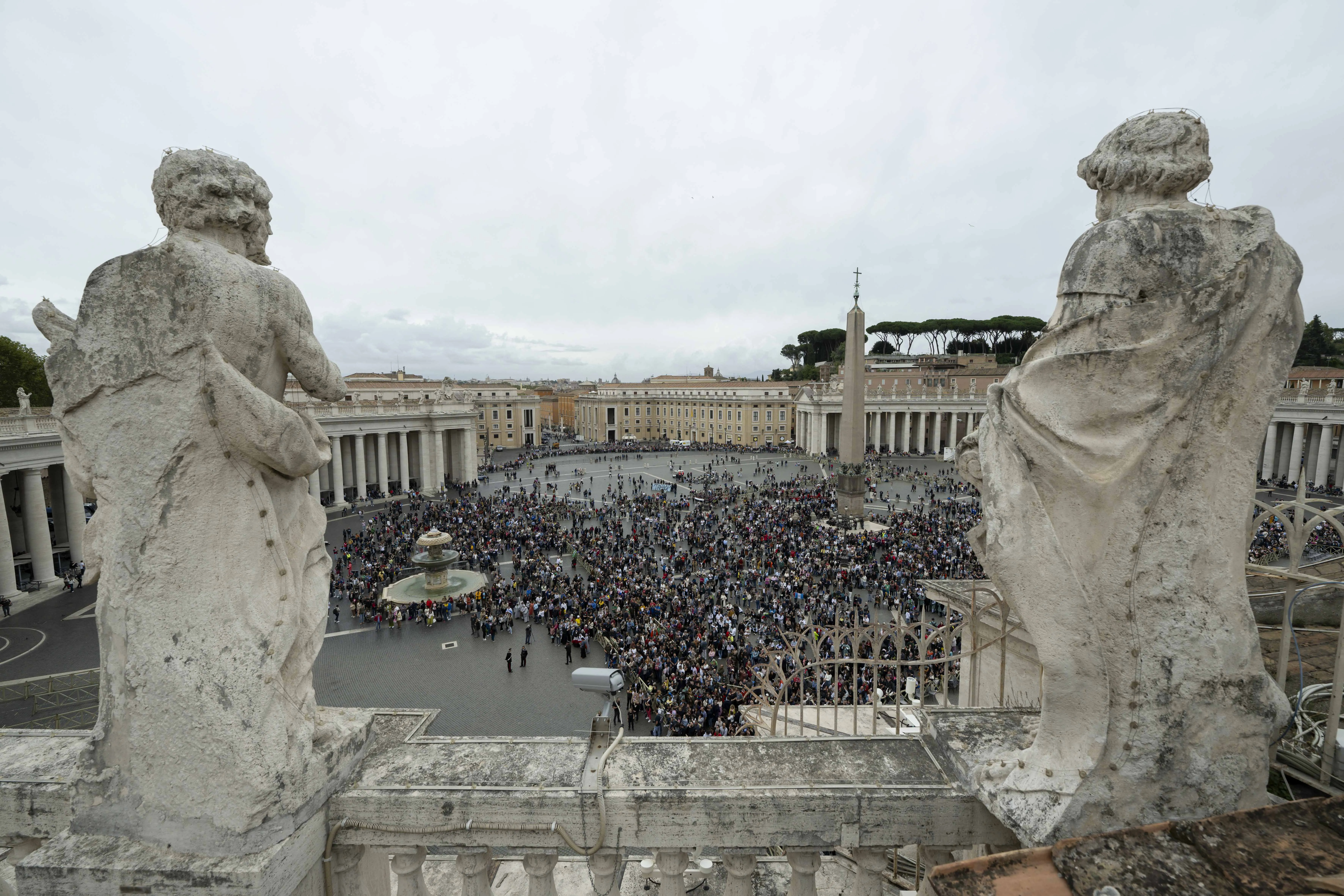
Pilgrims gather in St. Peter’s Square for the Angelus on the solemnity of All Saints, Nov. 1, 2023. Credit: Vatican Media
Holiness, the pope argued, is also “a journey. A journey to be made together, helping each other, united with those great companions, who are the saints.”
“They’re our elder brothers and sisters on whom we can always count,” he said. “The saints support us, and when we take a wrong turn along the way, with their silent presence, they never fail to correct us.”
The pope urged visitors to ask themselves several questions regarding receiving the gift of holiness: “Do I remember having received the gift of the Holy Spirit, who calls me to holiness and helps me to arrive there? Do I thank the Holy Spirit for this gift? Do I feel that the saints are close to me? Do I turn to them? Do I know the history of some of them?”
“May Mary, Queen of All Saints, help us feel the joy of the gift received and increase in us the desire for our eternal destination,” he said.
After the recitation of the Angelus, the pope noted that on Thursday he would be celebrating Mass at the nearby commonwealth war cemetery in Rome, in which are buried numerous soldiers who died in World War II.
“Let’s continue to pray for all those suffering from the wars of today,” Francis said. “We remember suffering Ukraine, suffering Palestine, suffering Israel. Let’s remember all the other parts of the world where war is happening.”
Washington D.C., Jun 27, 2020 / 12:00 pm (CNA).- In the wake of a gene-editing experiment gone wrong, the president of the National Catholic Bioethics Center said that the Church must stand firm against the unborn being “sacrificed on the al… […]
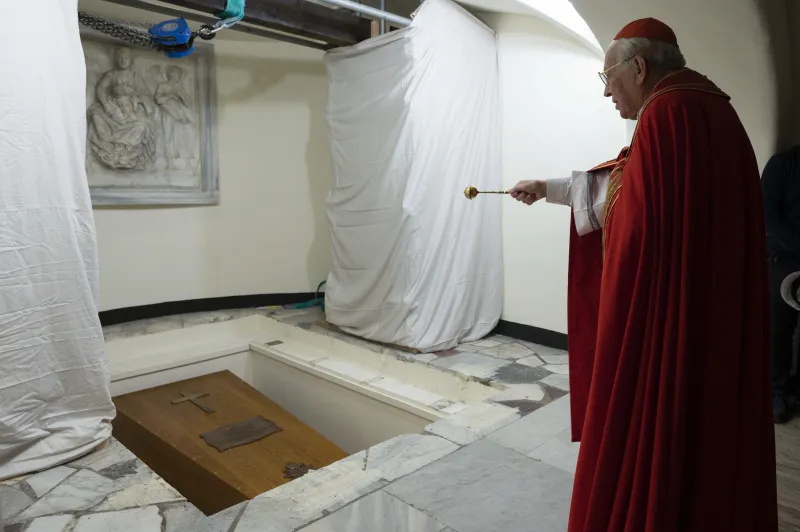
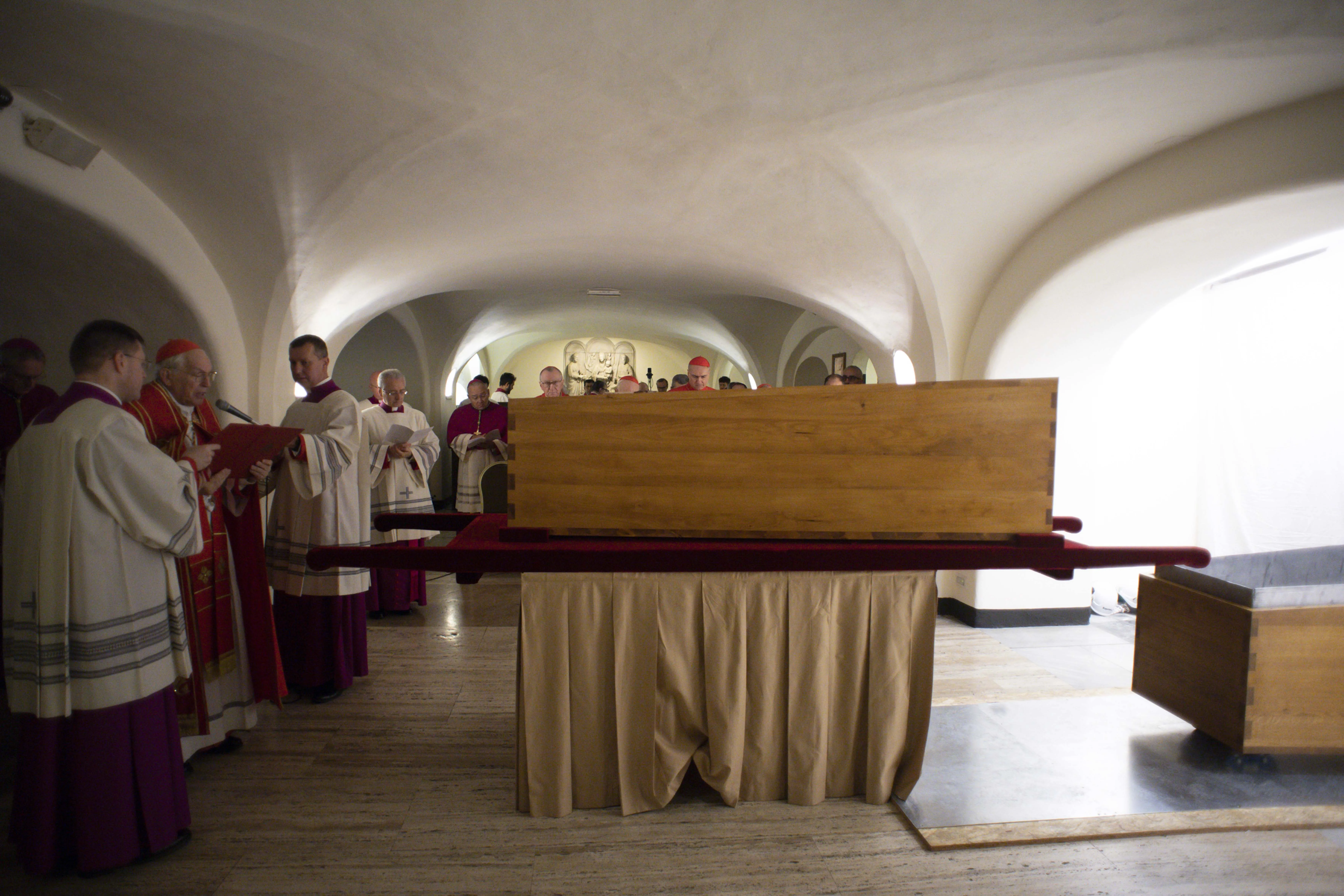
The coffin of Pope Benedict XVI is prepared for interment in the crypt of St. Peter’s Basilica on Jan. 5, 2023. / Vatican Media
Rome Newsroom, Jan 7, 2023 / 11:00 am (CNA).
Benedict XVI was buried in the crypt under St. Peter’s Basilica after his funeral Mass on Jan. 5.
The late pope’s coffin was interred in the former burial place of both St. John Paul II and St. John XXIII, whose remains were moved to the upper part of the basilica at the time of their beatifications.
The coffin of Pope Benedict XVI is prepared for interment in the crypt of St. Peter’s Basilica on Jan. 5, 2023. Vatican Media
After being closed for several days, from 9 a.m. on Sunday, Jan. 8, the Vatican crypt, which has small chapels and the tombs of popes and royals, will reopen to the public.
To visit the tomb of Benedict XVI, first enter St. Peter’s Basilica.
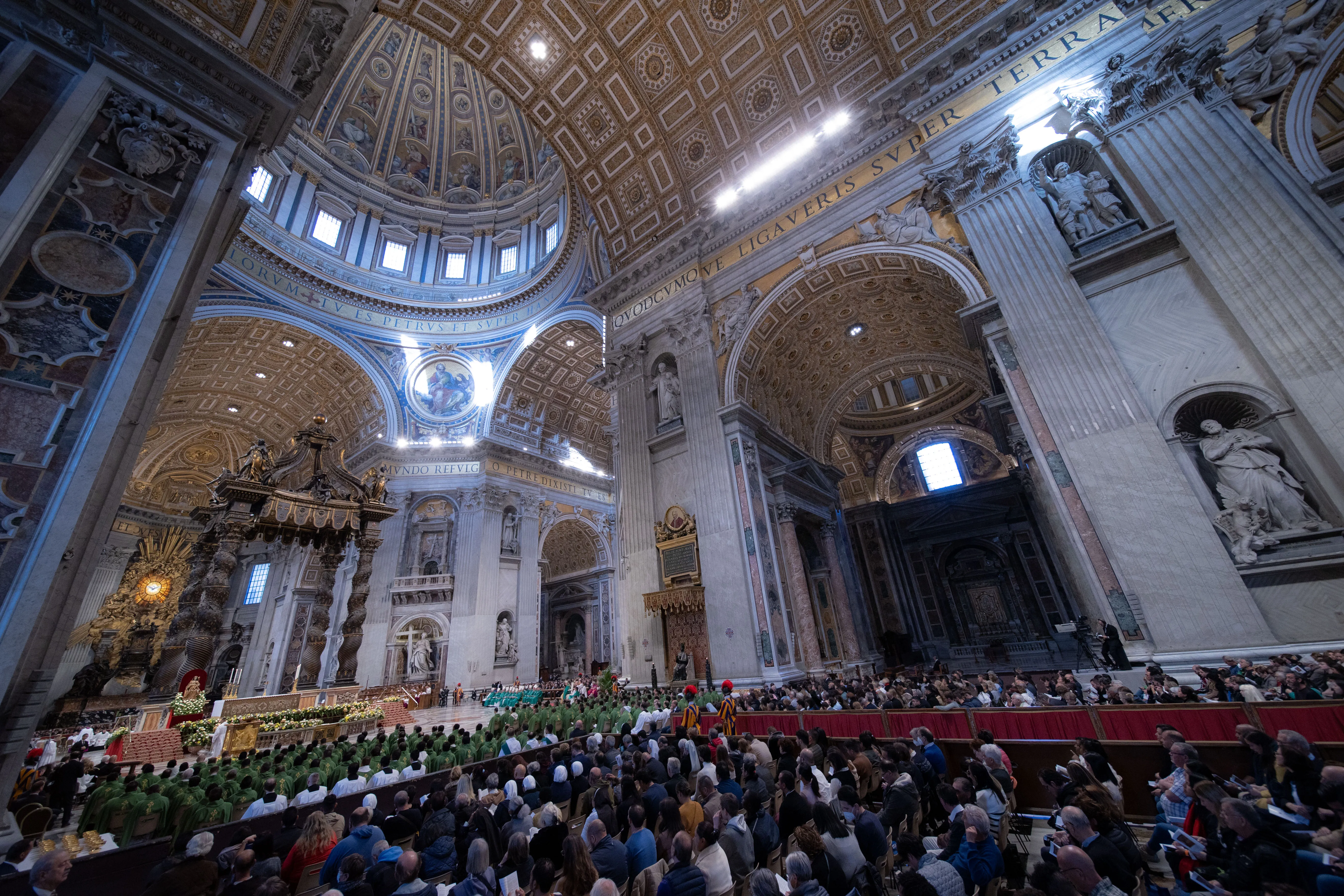
Proceed to the front of the basilica and the central altar and Baldachin, a Baroque bronze canopy sculpted by Gian Lorenzo Bernini.
The papal altar and Baldachin as seen during Pope Francis’ Mass for the World Day of the Poor on Nov. 13, 2022. Daniel Ibanez/CNA.
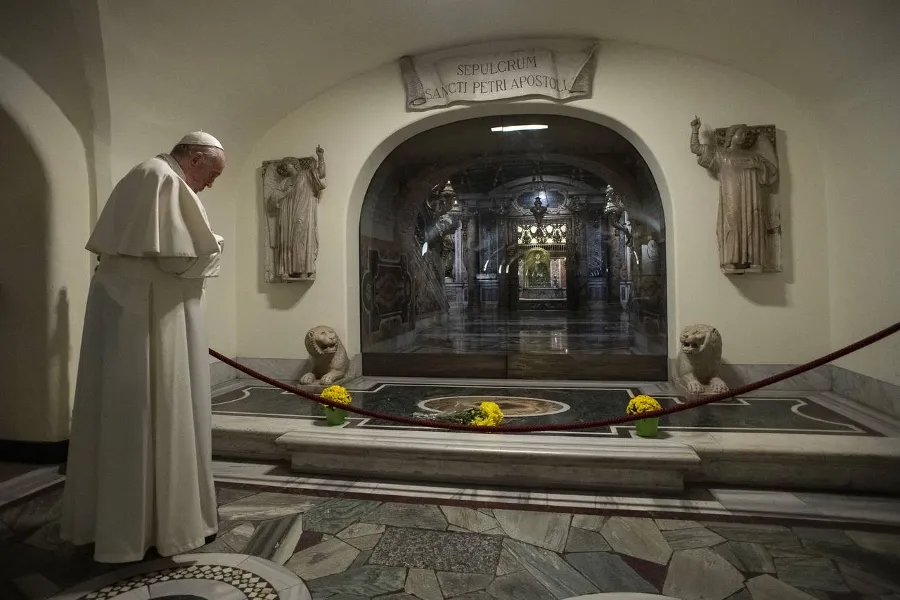
The bones of St. Peter, the Church’s first pope, are under the papal altar in the central part of the crypt, called the Confessio.
Turn left in front of the papal altar. In front of the first column on the left, below a statue of St. Andrew, are the stairs giving access to the crypt.
Pope Francis prays at the Confessio, the place where St. Peter’s bones are buried in the crypt beneath St. Peter’s Basilica, Nov. 2, 2021. Vatican Media.
Benedict XVI’s tomb is on the north side of the crypt, on the other side of the Confessio from the stairs. On the marble slab covering the tomb is written: Benedictus PP. XVI.
Queen Christina of Sweden, who died on April 19, 1689, is buried in a sarcophagus immediately to the right of Benedict.
On the wall above Benedict’s tomb, there is a bas-relief sculpture of the Virgin Mary and the child Jesus flanked by angels.


 By
By 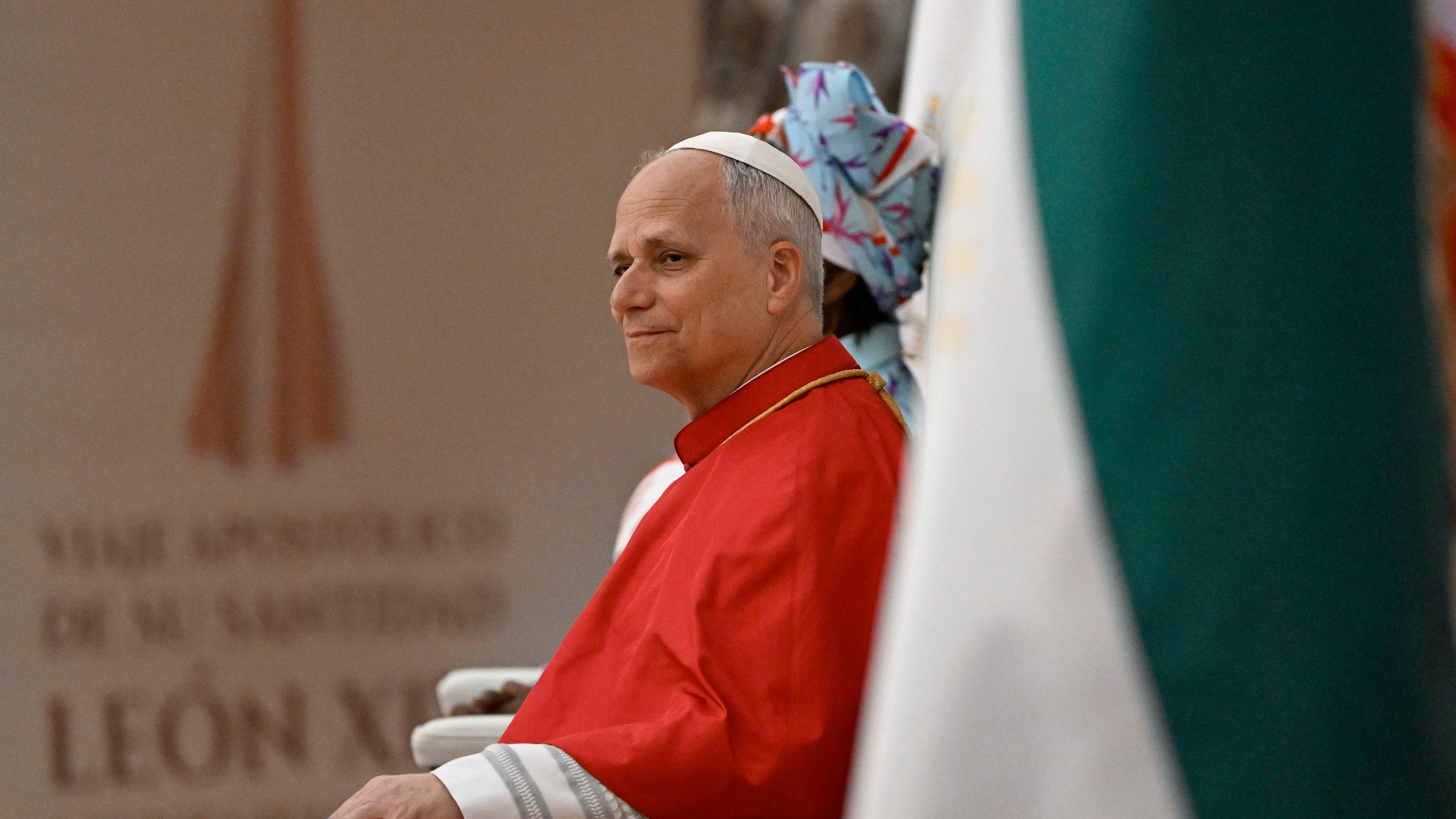




Beautiful pictures. God bless Equatorial Guinea and the dwellers there with peace, justice, dignity and wisdom.