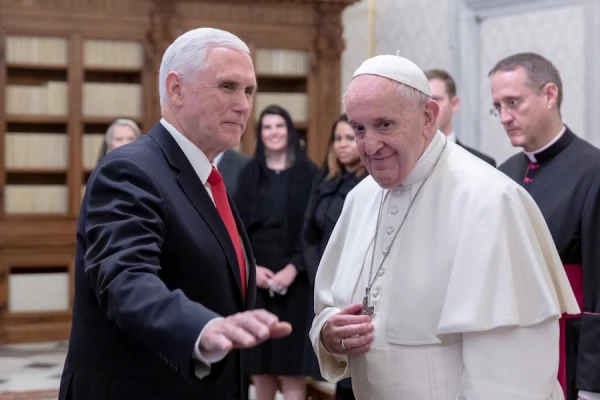
Vatican City, Jan 24, 2020 / 09:40 am (CNA).- After an hour long meeting with Pope Francis Jan. 24, Vice President Mike Pence sat down with EWTN News to discuss their conversation. Here is CNA’s transcript of that interview:
EWTN News: Mr. Vice President, you spent about an hour with the Holy Father, Pope Francis, today and what did you discuss?
Pence: Well, it was a great privilege for me to spend time with Pope Francis and to be able to do so on a day that literally hundreds of thousands of Americans, including many Catholic Americans, are gathered on our National Mall in Washington D.C. standing up for the right to life, was a particular joy for me. And to hear his passion for the sanctity of life, and to hear the American Bishops were coming to him this month and speaking about their determination to see the Church in the United States continue as it has always done to stand without apology for the sanctity of human life. It was a great privilege.
EWTN News: How can the U.S. government work together with the Holy See in the entire world to promote the sanctity of life and work against abortion and also euthanasia?
Pence: Well, I believe that the Church in the U.S. has been a bulwark in the right to life movement since Roe v Wade was first adopted by our Supreme Court in 1973. In fact, on the National Mall today, among those hundreds of thousands of young people, will be an enormous number of Catholic youth.
They will be waving their banners of their parishes, they’ll be waving the banners of their Catholic schools, and I think continuing to educate young people about the unalienable right to life, and the fact that every child is a gift from God has been the contribution that the Church has made to this cause, and the truth is in the U.S. we see more young people everyday embracing the right to life. The numbers are growing.
I know the Church is playing a critical role in that and I know will continue to until we reach that day that we restore the sanctity of life to the center of American law and will carry that message throughout the world.
EWTN News: You’ve personally been involved with many Marches for Life now, Mr. Vice President. Why have you taken this on as your sort of personal campaign as well?
Pence: Well, for my wife and me to stand for life in the public square is a calling. It’s a calling of our convictions, it’s a calling of our faith. We think it is the most pressing moral issue of our time.
And throughout our years in congress, and as Governor, and now as Vice President, I’ve sought to stand for the right to life and to stand with all of those who cherish the unborn.
But I have to tell you, I couldn’t be more proud to be Vice President to the most Pro-Life president in American history. As we gather here in Rome today, President Trump will go to the National Mall and be the first American president to ever address the March for Life in person. And that’s no real surprise when you see President Trump’s record for life, whether it be ending the Mexico City Policy, ending the providing funding for organizations that promote or support abortion around the world, defunding the largest abortion provider in America, or appointing principled conservatives to our courts.
One step after another, President Donald Trump has stood consistently for the right to life, and I expect the warm reception that he’ll get today from those hundreds of thousands of people gathered on our National Mall will reflect the fact that people all across America know in President Donald Trump they have a champion for life.
EWTN News: Going back to your meeting with Pope Francis today, did you speak about the tensions between the United States and Iran? He has spoken about this and has invited both parties to dialogue.
Pence: Today in my discussions with Pope Francis, we spoke about a number of issues, including the Pope’s great concern for Christian and religious minorities in Iraq and across the Nineveh Plain. I told the Pope that we are very proud to work with many Catholic charities as we work to rebuild Christian communities that were so set upon through ISIS and terrorist action in the region in recent years.
We’ve really partnered with the Knights of Columbus and other organizations across the region to make it possible for those Christian communities to come back and to have vibrant communities, not only Christian, but Yazidi communities, and the Pope shared with me his great passion for [the issue of] religious persecution and for religious minorities across the Middle East. We also then talked about Venezuela.
Pope Francis is a son of South America, and I wanted to better understand his insight about how we can together work as a global community to help restore democracy for the people of Venezuela. As I stand here today, the dictatorship of Nicolás Maduro has impoverished their country, nearly 5 million people have fled Venezuela to neighboring countries, the poverty and deprivation there in what was once one of the wealthiest countries in our hemisphere is tragedy.
I sought Pope Francis’ counsel about how we can work more closely with him and with the Church in Venezuela and across South and Central America to really continue to bring the kind of pressure to bear from the ground up that will make it possible for the people of Venezuela to have a new birth of freedom. The reality is that the National Assembly has named Juan Guaidó now more than a year ago as the interim president, and democracy is waiting in the wings in Venezuela, but it will take all of us and I trust the consistent and courageous voice of the Church in Venezuela to see liberty restored.
EWTN News: You said yesterday in Israel that you invited states to stand together against this rise of anti-Semitism worldwide. Pope Francis has often spoken out against anti-Semitism…
Pence: He has.
EWTN News:… as well. How do you see that the US and Europe and the world can take concrete steps forward against anti-Semitism?
Pence: Well, first it’s so important that we remember the past, so as not to relive it in the future. And yesterday in Jerusalem, it was my great privilege to be there as we mark the 75th anniversary of the liberation of Auschwitz, and to see nearly 60 world leaders come together to mark what was not only the darkest chapter in human history but to really…to mark a triumph of freedom 75 years ago was deeply moving. But what was equally impressive was the universal call by all those present to condemn anti-Semitism in all of its forms.
And the truth is that we are seeing vile anti-Semitism rear its head in both rhetoric and violence across the world.
We’ve seen synagogues attacked in the United States of America, Jewish communities attacked around the world, and we believe as we said yesterday that it’s imperative that leaders around the world and in the faith community and in the public sphere condemn anti-Semitism without reservation every time it emerges. And also in the midst of that that we stand together against the leading state purveyor of anti-Semitism on the planet: the Islamic Republic of Iran.
Iran actually today, as a state position denies the Holocaust ever happened or routinely says that its aim is to wipe Israel off the map. It’s important, particularly in the light of our action against Iran and a military leader just a month ago that the world continue to isolate Iran economically and diplomatically, and President Trump is going to continue to lead that charge.
We cannot allow the leading state sponsor of terrorism with so much enmity toward Israel to ever have a nuclear weapon, and we will continue to stand strong, and we will continue to work to bring the world community together, but stopping anti-Semitism wherever it emerges must be a priority of every nation in the world, and we need only to look to that dark chapter 75 years ago to know how dangerous anti-Semitism is and how it is a moral imperative in this century to see to it that it is condemned and rejected wherever it’s expressed.
EWTN News: Thank you so much, Mr. Vice President.
Pence: Thank you.
This interview will air on EWTN News Nightly, Jan. 24, 2020.
 […]
[…]


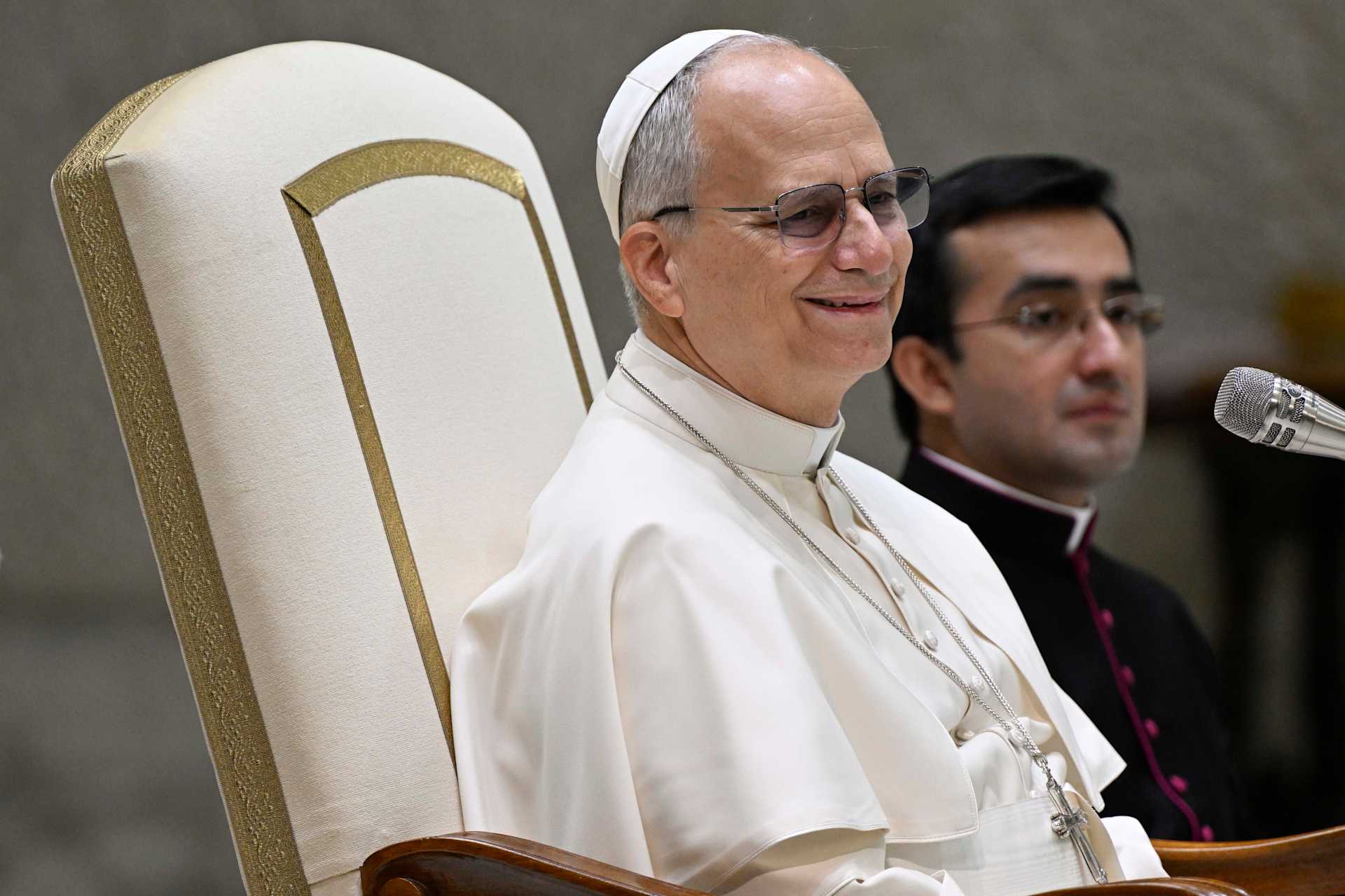
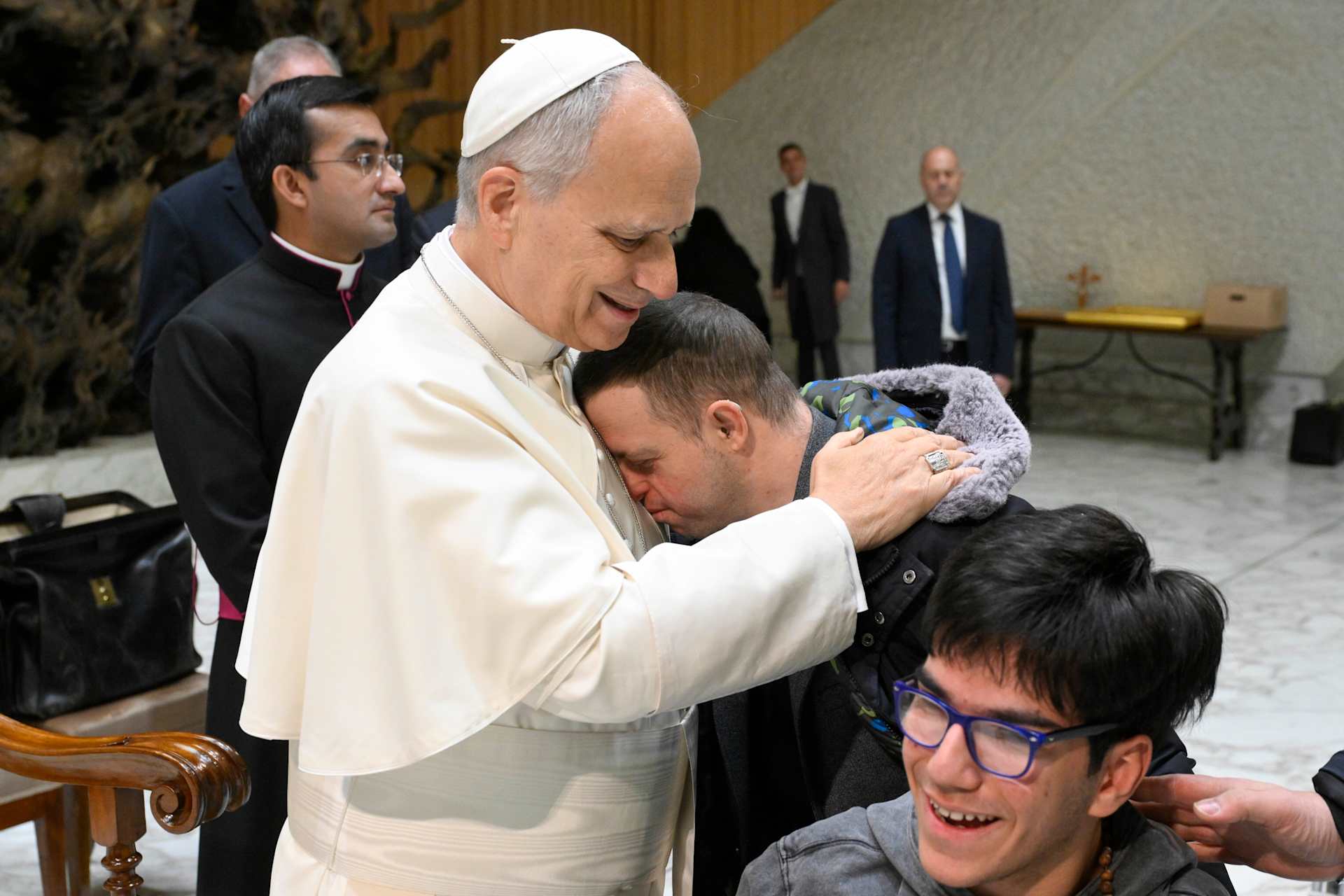


Leo XIV said the consistory was consultative. Nevertheless he affirmed that Synodaly is a dimension of the Magisterium, suggesting in words to the effect that we must be realistic and look ahead, liturgy included.
While he emphasizes consultative, in the same breath sets a permanent agenda.
Fr. Morello, I wish you a blessed New Year!
Of course, complete authority remains entirely with the Pope, but at least he is consulting with the Cardinals, instead of just the Curia or a handful of advisors.
There are too many topics I wish they’d take up, such as the tension between proponents of the old and the new Mass, the limits of synodality, and the unresolved legacy of Pope Francis. But do you think two days is enough time to discuss them?
I also think Cdl. Fernandez might be out of the DDF by the time the consistory is over, but I’m not holding my breath.
I’m hopeful and will keep praying because I love our Lord Jesus Christ and His Church.
Thank you, Fr. Morello, for your great comments in the past.
The destruction of the church will go on.
From the quoted remarks, the central message is clearly the “real Council of the Documents” as contrasted with the “virtual” Council (Benedict’s oft repeated distinction) or the detached spirit of the Council of the medial and Hans Kung and his later sycophants.
Some thoughts and a relevant quote from Benedict XVI and a summary:
THOUGHTS: Yours truly reads Pope Leo XIV’s message as recentering the perennial Catholic Church back from the sideline or periphery of a roundtable experiment under deformed “synodality.” The path ahead will be to invigorate the always Eucharistic Church as both institutional and charismatic, as both hierarchical and as communio—that is, as the “hierarchical communion” set forth in the Council Constitution on the Church (Lumen Gentium, Chapter 3 with the integral Explanatory Note). Not to be substituted by only a managed process.
Also, as useful as the Council Documents themselves is Final Report of the 1985 Extraordinary Synod of Bishops (a real synod!) convened by St. John Paul II, after twenty years—for the explicit purpose of preventing “divergent interpretations” of the Council—the ‘real” versus the “virtual” Council.
BENEDICT XVI: Also following the Council, Pope Benedict XVI—who participated in the Council—reflected on the partial loss at Trent of the broad “communio” or “ecclesial assembly” (not a synod) as more inclusive than the institutionally distinct role of the Apostolic Succession… .The Council of Trent—in response to the crisis of the Reformation—clarified Church teachings and restored the priesthood as more than a detached “cult-minister” (his words) but as a bearer of sacramentality through Holy Orders. This reaffirmation led to a separation of sorts between the baptized laity from the baptized-and-ordained clergy—the loss of communio—”the problem of the laity, which arose at this time and still haunts us today” (Benedict’s words in “Successio Apostolica,” as Chapter 2 of Ratzinger, “Principles of Catholic Theology,” Ignatius, 1982/Ignatius 1987). The “original meaning of the word ‘ecclesia’ as a ‘coming together’ within a Church that is both institutional and charismatic.
SUMMARY: the current consistory of cardinals (January 7-8, 2026) transcends the confusion advanced by a circular and invertebrate version of synodality, this by redirecting attention to the “real” Council of the Documents—versus any half-way house toward a congregationalist “paradigm shift.”
How to walk and chew gum at the same time?
I can’t see how a look back at the real VII can be anything but a good thing.
Unless it goes wrong like an inversion or a deconstruction or is used to perpetuate such.
Wait a sec, the Council is now complete and so the test of something and not the “grounds of a synodalizing journey” that is not in the Council. I can see a confirmation class getting authentic VATICAN II instruction at the parish level which itself isn’t “synod” but instruction. Broadcast to everyone at large wouldn’t be Gospel.
Pilgrim Church is on the move. We are privileged to be nourished and fortified by the dynamic teachings of the Second Vatican Council. Ecumenism, interreligious dialogue, and dialogue with people of goodwill is a mission second to none.
For some it would appear that the “spirit of Vatican II” has replaced Jesus Christ as the Church’s one foundation. When do we see disciplining of “spirit of Vatican II” advocates for misrepresenting Vatican II? The church at Corinth had those who thought that their knowledge of the pagan idols being false made it possible for them to eat meat offered to idols in violation of the Council of Jerusalem ban on this practice. The “spirit of Jerusalem” in action. St. Paul gave them correction in First Corinthians. Where is the Apostolic Succession/correction?