
Washington D.C., Jul 28, 2020 / 03:00 am (CNA).- As Election Day nears, one big question remains outstanding: Who will be joining Joe Biden on the Democratic ticket?
Former vice president Joe Biden, the presumptive Democratic Party’s nominee for president, committed to selecting a woman for his running mate back in March. That is about all that can be certain about who Biden plans on selecting.
Normally, the selection of a running mate is intended to court a certain segment of the electorate–see: Lyndon Baines Johnson and southern voters; Mike Pence and conservative Christians; and even Biden himself, who was selected to appeal to blue collar workers. With the 2020 election, however, the stakes for selecting a running mate are likely higher.
If Biden were to be elected president, he would be sworn in at 78 years old–the oldest first-term president in American history. During a December 2019 debate, Biden refused to comment on whether or not he would run for a second term, saying, “I’m not even elected to one term yet, and let’s see where we are. Let’s see what happens.”
Because of his age, Biden’s choice of a running mate has been framed as a near lock to run for the presidency in four years if Biden wins in 2020. And his running mate is likely to play a major role in shaping policy during a Biden presidency, especially because Biden himself played an active role in the Obama administration.
If Biden wins the presidency, his administration is expected to roll back Republican administrative efforts to limit federal funding for domestic and international abortion, as well as changes to Title X policy, and to make other changes to abortion policy at the federal level.
On the issue of abortion, CNA examined the voting histories and public policy stances of some names expected to be on Biden’s shortlist.
Rep. Karen Bass (D-CA)
Rep. Karen Bass, a five-term member of the House of Representatives, has been one of the lesser-known names to surface as a contender during veepstakes. She is on the House Judiciary Committee and is the chair of the Congressional Black Congress.
Bass has a 100% rating from NARAL, a national organization that supports expanded abortion access. She also has a 100% rating from Planned Parenthood Action Fund.
In 2013, Bass received the International Family Planning Hero award from Planned Parenthood and the United Nations. She was praised as a “true hero for women’s health and rights” by former Planned Parenthood Federation of America President Cecile Richards.
“Her leadership has been crucial to ensuring that women in the United States and all over the world can decide whether and when to have children, and that they have access to a wide range of reproductive health services. Thanks to her support for international family planning, and others like her, the United States is able to improve the lives of millions of women and girls, and put women’s health and rights at the top of its global development agenda,” Richards said.
Rep. Val Demings (D-FL)
Rep. Val Demings was elected to Congress in 2016. Before she was elected, she served as the first-ever female chief of police of the Orlando Police Department. She serves on the House Judiciary, Intelligence, and Homeland Security Committees.
Since arriving in Congress, Demings has had 100% ratings from Planned Parenthood Federation of America and NARAL. On the anniversary of the Roe v. Wade decision in 2020, Demings tweeted a call to “redouble our resistance against attempts” to pass pro-life legislation.
“Women’s health is not negotiable. Women’s bodies belong to no one but themselves,” said Demings.
Sen. Kamala Harris (D-CA)
Sen. Kamala Harris is arguably Biden’s frontrunner, and has been in the vice presidential conversation since she suspended her own presidential campaign in December.
Harris is a staunch supporter of legal protection for abortion. As California attorney general, she drew the ire of the state Catholic conference by sponsoring a bill compelling pro-life pregnancy centers advertise for “free or low-cost” abortion services. That law was overturned by the Supreme Court in 2018.
More recently, Harris has confronted Biden over his own record on abortion – challenging the former vice president for not being “pro-choice” enough for the modern Democratic party. And her confrontation has been effective: Harris has been among a group of politicians widely seen to have pushed Biden to the left on abortion.
During the July 31 debate last year, Harris lambasted Biden’s long support for the Hyde Amendment, which prohibits the use of federal funds to pay for abortion services. She accused Biden of “withhold(ing) resources to poor women to have access to reproductive health care, including women who were the victims of rape and incest.”
In response, Biden, who opposed Roe vs. Wade early in his career, told Harris that he believes abortion to be a constitutional right. Biden promised that, as president, “I in fact will move as president to see to that the Congress legislates [a right to abortion into] the law.”
Amb. Susan Rice
Ambassador Susan Rice served as the U.S. ambassador to the United Nations from 2009 until June 2013, and then served as President Barack Obama’s National Security Advisor for the remainder of his term. She has never actually run for office, although she did briefly ponder the idea of challenging Sen. Susan Collins (R-ME) for her Senate seat.
Rice’s name has been put forward as a potential Biden VP. As she has never run for office, she has made few public statements on domestic social issues. Rice was motivated to challenge Collins after her vote to confirm Justice Brett Kavanaugh to the Supreme Court.
Sen. Elizabeth Warren (D-MA)
Sen. Elizabeth Warren has been a vocal proponent of abortion, and has 100% ratings from both Planned Parenthood Federation of America and NARAL. She wore a Planned Parenthood scarf to President Donald Trump’s inauguration as a show of protest and as a show of support for the nation’s largest abortion provider.
Warren published the “Congressional Plan to Protect Choice,” a slew of proposals of pro-abortion legislation. These proposed legislation included “federal laws to preempt state efforts that functionally limit access to reproductive health care,” which would effectively prevent states from passing pro-life policies; and legislation that would mandate abortion coverage in health plans.
—
It is uncertain just when exactly Biden intends on announcing his selection of a running mate. The Democratic National Convention kicks off on August 17, so the announcement will happen sometime before then, likely after August 1.
 […]
[…]




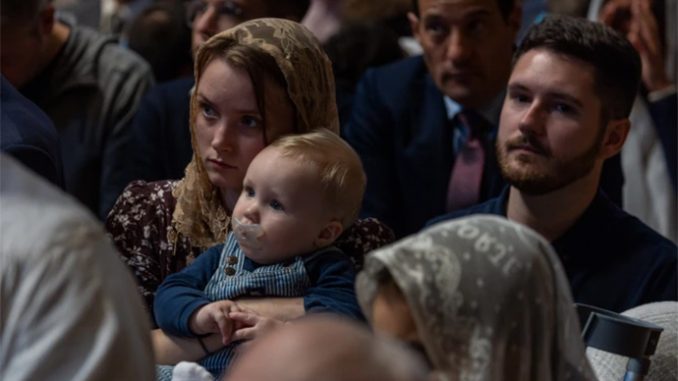



Summorum Pontificum was abrogated in 2021. This is just clinging to a past that is beyond its expiration date.
I see the Monopoly Man in the last picture took off his hat in church.
The TLM has lost. Trads just don’t realize it yet.
“Has lost”? I didn’t know it was a contest. Thanks a lot for letting me know that it is, from one perspective anyway.
It’s not a contest or competition. We’re a universal Church with room for many Rites and liturgies.
Unity, not uniformity.
Yeah but that was the Rupnik-Pontificate, so it’s to be ignored.
Scott Walker: you come across as an angry & bitter man. Try Christ.
Classic. Argumentum ad hominem followed with the obligatory ipse dixit.
Scott Walker. You have the perspicacity to have spotted the Monopoly Man in this very rare photo. Perhaps a premonition that the gods of good fortune are betting on the restoration of the TLM [why else would the Monopoly Man, an obvious traditionalist, have attended this Mass?].
Yours exhibits perfectly the problem at hand.
Scott;
Re: your 10/25 @9:51 p.m. – Do yourself a favor and go to a TLM. Get there about 30-45 minutes early, sit quietly (notice that the others are doing so) perhaps say a Rosary. Read from your Missal or just sit there and enjoy the silence until the Mass begins.
If you have to get up before dawn and then drive 50 or more miles to get there – tant mieux.
When in God’s universe and God’s eternity and human worship of God and His revelations of immutability has truth ever changed or been timebound?
Agree 100%! Cardinal Burke’s grand Vetus Ordo Mass at St. Peter’s, the usual parade of lace, Latin, and liturgical nostalgia, polished up as if it’s some kind of triumph. You’d think the 1962 Missal had just staged a stunning comeback on the Vatican charts. In reality? It’s more like an old vinyl spinning for a very small crowd who still swear it sounds better than Spotify.
Once again, the Tridentine enthusiasts are treating this as proof that “tradition lives on,” when in fact, it’s mostly wheezing on life support. Even before Traditionis Custodes turned down the volume, there were barely 1,700 parishes worldwide offering the old Mass out of roughly 225,000. That’s not a “movement”; that’s a niche hobby. In the U.S., it was about 700 out of 18,000 — a sliver that wouldn’t fill a pew in St. Peter’s.
Meanwhile, the rest of the Church, the overwhelming majority, has moved on, celebrating Vatican II’s liturgical reforms with the Novus Ordo in living, breathing communities. But sure, let’s pretend this tiny, dwindling enclave of dissenters represents the future. Nothing says “vibrant renewal” quite like shrinking attendance and defiant muttering about 1962.
“the usual parade of lace, Latin, and liturgical nostalgia, polished up as if it’s some kind of triumph.” Oh, the horror! Latin!?
Do the Divine Liturgy of Saint John Chrysostom next. Don’t hold back. Your charity and insight is sooooo needed.
“It’s more like an old vinyl spinning for a very small crowd who still swear it sounds better than Spotify.”
I’ve used Spotify for years and own 4,000 LPs. Both have advantages and drawbacks. But, in your world, we just toss out the vinyl and mock it.’
I have a hard time believing you are an actual deacon.
Carl, I doubt that he is a deacon. He uses the title to give credibility to what he writes without which there is none. If he were a deacon in actuality, he wouldn’t hesitate to use his full (and actual) name. He’s best ignored.
Deacon Dom, why such uncharity?
Why is liturgical diversity celebrated only selectively?
Catholics worshipping together at a licit Mass is a good thing whether it’s the TLM in the photos or a mariachi Mass in honor of Our Lady of Guadalupe.
For goodness sakes. Our Church is catholic and universal. There’s plenty of room for everyone.
I looked at all 2 minutes and 3 seconds of this video, and I found no dwindling:
March 1st 2023 – The Altar is Installed – Building The Immaculata
https://www.youtube.com/watch?v=oMYtADn_xh8
Death has, of course, “abrogated” the abrogator. But not the TLM. This from one who is not a particular advocate of it. I simply respect those who are.
Snarky attitudes, btw, are invariably more harmful to the articulators of them than they are to their targets. That they (the articulators) don’t know this is part of their problem.
Our patrimony.
Let the Extraordinary Form of the Mass BREATHE freely alongside so many other Rites in the Church each of which have their own form. Lets stop the warring among Catholics. If we don’t, we’re no better than Hamas v. Jews and Ukrainians v. Russians. But if we do, we’re more like Christ.
Right on, Deacon!
Deacon and Br Jaques: agreed. Liturgical peace is the only way forward. But who is making war? It’s been a one-sided liturgical-genocide since 16.07.2021.
“The pilgrimage began on the evening of Oct. 24 with vespers in Rome’s Basilica of San Lorenzo in Lucina, presided over by Cardinal Matteo Zuppi, archbishop of Bologna. A solemn closing Mass of Christ the King will be celebrated at the Church of Santissima Trinità dei Pellegrini on the final day of the pilgrimage, Oct. 26.”
Summorum Pontificum pilgrimage began with vespers in Rome’s Basilica of San Lorenzo in Lucina, presided over by Cardinal Matteo Zuppi, who has defected from The Catholic Faith through his public manifest heresy that denies Sacred Tradition, Sacred Scripture. And The Teaching Of The True Magisterium of The Catholic Church, Grounded In Sacred Tradition And Sacred Tradition, The Deposit Of Faith Christ Has Entrusted To His Church For The Salvation Of Souls, by his desire to Bless and have Christ’s One, Holy, Catholic, And Apostolic Church begin to Bless, disordered sexual relationships that deny Christ’s teaching regarding lust and the sin of adultery? Who would approve such a denial of The Deposit Of Faith , Christ Has Entrusted To His One, Holy, Catholic, And Apostolic Church, for The Salvation Of Souls and claim such an act is an act of compassion?
The question is, how can both Cardinal Zuppi and Cardinal Burke both be Baptized Catholics who desire to keep their Baptismal Promise to remain in communion with Christ and His One, Holy, Catholic, And Apostolic Church, and thus be United in Prayer With The One Word Of God, Jesus The Christ?
“They went out from us, but they were not of us. For if they had been of us, they would no doubt have remained with us; but that they may be manifest, that they are not all of us.”
https://www.ncregister.com/blog/cardinal-zuppi-same-sex-blessing
Grace a Dieu
Blessed are the Peacemakers.
Amen, Knowall.
And those who save souls.
Apparently the purpose of depriving Catholic faithful of the TLM is for the Church Establishment to show that they own and control everything in their “Bugnini-ized-NGO-of-the-decapitated-Body.”
As JP2 and B16 observed, they are incapable of “generosity.”
And Insane.
See, when you write things like that, it confirms that trads are recalcitrant and will never agree to be integrated into the post-Vatican II Church. Peter Kwasniewski published a screed on Friday saying that trads will never compromise nor assimilate nor yield. Pope Francis was correct that TLM adherents and communities inculcate insular separation from the rest of the Church.
Donald:
As I believe you are replying to me, I do not have the opportunity (any longer) to attend The Mass I served and sang at as a boy, so I am like millions more aptly labeled a “Bugnini-Mass-hostage.”
I simply observe that the Church Establishment is utterly incapable of being “generous” (as JP2/ B16 specifically directed) to faithful who desire the TLM, and as their just reward they deserve to wear the badge of their malice, as a sign of how miserly they are.
I suppose their miserliness flows from the apostasy that their “thought leaders” profess, and that do many of them silently assent to.
Poor darlings that they are..,
That’s just silly, Donald. I love the TLM but it’s not a deal breaker for me. I know many other Catholics who feel likewise.
Choices are good and so is diversity in a catholic and universal Church. It’s not all one or the other.
Donald: you sound angry. Why call fellow Catholics “trads”? It’s offensive. Does anyone have a gun pressed to your temple forcing you to attend Mass in the Extraordinary Form?
Why should Catholics be forced to make compromises with beliefs that are not catholic or damage the faith?
The church is dying because of all a the compromises that have been.
If the faith that is being taught and practiced today is the same as before the council, then why such hatred and anger towards the pre vatican II liturgy and practices?
The evidence is that there is a small cadre of prelates led by the late Pope for whom the suppression of this liturgy is an imperious exercise of ecclesial power. Now that we know the putative reasons for TC were contrived, it should be annulled.
Francis famous enjoined others to make a mess. Nobody can accuse him of not leading by example.
How many of vernaculars can the Mass be said? No restrictions that I am aware, but the Latin Mass is supposedly divisive. Nearly Verboten. It’s not about God or faith. It’s ungodly power politics baby.
I am not “a trad” but I would refuse to participate in that grand TLM in the Vatican because I do not wish to land myself to manipulation. It would be unthinkable for me to participate in such Mass while the same TLM is being suppressed/restricted to the point of suffocation elsewhere.
Most “trads” seem not to realize that they are being used by the Vatican as a tool for proving credibility to its current course. I have seen “trads” lashing those Catholics who criticize the Pope for his inconsistencies and watering down the faith or turning it into something else. Those “trads” appear not to realize that an occasional TLM given to them is only to buy their allegiance or at least to be quiet.
This is a brilliant technique, actually, “see, even the most traditional Catholics approve me so I am not deviating from the faith”.
However, there is an obvious flavour of insincerity and absurdity in a situation when TLM is pompously celebrated in the Vatican yet it is being suffocated elsewhere – in the common parishes, among common people who need it. If TLM is to be suppressed, it must be suppressed everywhere – but PL needs TLM, not as a people’s Mass but as a part of his entourage, as an artefact in a museum.
I don’t see any manipulation going on. I don’t know that we should even be looking for that. Why not be grateful for this opportunity & move forward?
Anna:
That is a very shrewd observation.
It’s all part of the cult and practice of deceitfulnees.
Anna, Is anyone threatening to put a gun to your head and march you from your home to a church where the Extraordinary Form of the Mass is going to be said? Do you ‘vent your spleen’ when someone mentions Mass in the Anglican Ordinariate Form? Or the Melikte? Or the Ruthenian? Or the Maronite? Etc, etc, etc, etc, etc…?
This Sunday November 2 will be the beginning of Eastern Daylight time, meaning that if I want to go to the Latin Mass in Lewiston, 55 miles away I can, since I won’t have to drive in the dark.
So I’ll be on my feet at 5:30 and around 6 Rachel and I will be on the road and we’ll proceed westerly to Lewiston to the magnificent Sts. Peter & Paul Basilica, built around 1900 or so by the Franco-American Catholics there (the Stations of the Cross are in French). Does all this make me a “trad”? I haven’t the slightest idea.
It’s been a long time since I’ve been there – I can’t wait!!
As a simple matter of ecclesiological liturgical coherence, the TLM should be completely eliminated. Yes, even the Ecclesia Dei religious communities should be told that they may no longer accept new candidates for ordination unless they agree to switch from celebrating the old Mass to the new Mass.
The TLM is no longer an adequate liturgical expression of Catholic faith after Vatican 2. That’s the crux of the matter. It would be liturgically incoherent to maintain both liturgical expressions simultaneously, and to continue with the unrevised Mass.
“The TLM is no longer an adequate liturgical expression of Catholic faith after Vatican 2.”
And The Divine Liturgy of Saint John Chrysostom? Should it go as well? After all, the priest has his back to the people much of the time, some parts aren’t in English, the icon screen keeps the people from seeing all that is happening up front, and the reverence is overwhelming. Surely that’s not adequate for 2025, right?
Carl, I have to think that most of these who rail against the EF are simply poorly catechized Catholics. I would also venture a guess that they are not well-travelled either. How could they possibly tolerate attending Mass in Germany, Sweden, Italy, Austria, Czech, France, Spain, Portugal, Russia, Ukraine, Poland, etc since none of them are likely to celebrate Mass in English and they “won’t understand a word of it?”