The popemobile used by Pope Francis during his visit to Bethlehem in 2014. / Credit: Courtesy of Caritas
ACI Prensa Staff, Jun 3, 2025 / 14:50 pm (CNA).
Prior to his death, Pope Francis donated the popemobile he used during his visit to Bethlehem in May 2014 to be turned into a mobile clinic to assist children in the Gaza Strip.
The initiative was personally entrusted by the late pontiff to Caritas Jerusalem to respond to the grave humanitarian emergency in Gaza, where nearly 1 million displaced children live without access to food, clean water, or basic medical care amid the conflict with Israel.
However, ongoing border restrictions, including the sealing of the Rafah crossing between Egypt and Gaza, have prevented the vehicle, which was refurbished with essential medical equipment, from reaching its destination.
“We are still working in coordination with government agencies to ensure the popemobile enters Gaza. But the borders remain closed, and in my opinion, it will not be possible in the near future,” Harout Bedrossian, press officer for Caritas Jerusalem, confirmed to ACI Prensa, CNA’s Spanish-language news partner.
Bedrossian indicated that while some humanitarian aid is entering, “it is controlled by military distribution points” and is not effective as the situation remains “very chaotic.”
One of the main problems facing Caritas on the ground is the shortage of permits issued by the Israeli government to enter Gaza: “Obtaining permits to enter Gaza from Israel is a very arduous and lengthy process. From Egypt, it is a little easier, but as I said, all borders are currently closed.”
Humanitarian aid to the population of Gaza is trickling in, but not without serious problems that have even led to bloodshed in recent days, according to authorities in the Gaza Strip.
According to local observers, Doctors Without Borders and the Red Crescent, Israeli soldiers fired on a Gaza Humanitarian Foundation (GHF)-run aid distribution center, killing at least 31 people. However, the GHF denied this report and asserted that the aid was distributed without incident.
This story was first published by ACI Prensa, CNA’s Spanish-language news partner. It has been translated and adapted by CNA.
If you value the news and views Catholic World Report provides, please consider donating to support our efforts. Your contribution will help us continue to make CWR available to all readers worldwide for free, without a subscription. Thank you for your generosity!
Click here for more information on donating to CWR. Click here to sign up for our newsletter.
CNA Staff, May 14, 2020 / 08:00 pm (CNA).- As schools in Chad remain closed due to coronavirus pandemic restrictions, teachers from the Jesuit Refugee Service are conveying safety measures to prevent the spread of the virus in local communities.
¨We came together to raise awareness among the community. Our students are part of it, so it is important for us to spread the message,¨ Ibrahim Isaakh, a science teacher in Djabal, southeastern Chad told JRS May 11.
For her part, Fatimé Ali Rifa, a teacher in the Touloum refugee camp, Iriba, located in the east of the country, has been recommending frequent handwashing and avoidance of crowds as precautionary measures to the prevent the spread of the coronavirus.
More than 450,000 refugees live in Chad, who have fled from conflicts in Sudan, the Central African Republic, and Nigeria, among other countries. Refugees live in camps afflicted by the same poverty and food insecurity faced by most residents of Chad. In addition to refugees, there are more than 150,000 internally displaced people in Chad.
Eighty percent of people in Chad live below the poverty line, and most experience chronic food insecurity.
Schools in the landlocked country, Africa’s fifth largest nation, have been closed since March 19, a move that has brought new challenges to the more than 102,000 refugee students across the country.
“Their academic engagement is at risk of great delay as many refugees lack a TV or radio to be able to follow the telematic classes offered by the government,” the JRS explained in a May 11 release.
For Abdelhamid Ibrahim Radjab, a teacher at Amnabak refugee camp in Iriba, every time he meets the parent of a child in his school area, he reminds them to ask their child to “review the materials they have already learnt at school in order to be ready for their [upcoming] exam.”
As schools in Chad’s refugee camps often serve as points of safety, reconciliation, and community awareness, their closure means that “children are more vulnerable to domestic, sexual and gender-based violence, as well as exploitation,” according to the JRS.
“For the students, the closure of the schools affects their schedules, as they won’t be able to finish the programme,” Abdallah Ahmat, a math teacher at Djabal refugee camp said.
“The community is worried; it is not sure what will happen with the future of our children. The question is when is this all going to finish?”
As the Jesuit agency monitors the situation in the semi-desert country, leaders are developing strategies to continue the school calendar.
As a precautionary measure to prevent the spread of the disease among students, leaders are considering arranging for each class to include no more than 10 students.
Students may also study from home in groups of three or four; teachers go from home to home to check what the students are doing and offering them guidance on the curriculum.
The leadership of JRS has expressed confidence in the teachers in its school programs noting, “Throughout all the uncertainties, one thing is clear: the commitment of our teachers has never wavered.”
“We hope that the situation gets better soon to allow the teachers and students to walk back to school. For the moment, and until the end of the pandemic, we will continue supporting our students with home-based learning,” Makka Abdallah Dehie, a primary teacher at Mile refugee camp, Guereda, told JRS.
With programs across 56 countries across the world, JRS runs seven refugee camps in Chad.
Founded in 1980, the mission of JRS is “to accompany, serve, and advocate on behalf of refugees and other forcibly displaced persons, that they may heal, learn, and determine their own future.”
A version of this story was first published by ACI Africa, CNA’s African news partner. It has been adapted by CNA.
Kaduna, Nigeria, Jan 20, 2020 / 11:30 am (CNA).- A Nigerian seminarian who was abducted this month was freed by his kidnappers after 10 days in captivity. Three seminarians kidnapped with him remain in captivity.
The freed seminarian, who has not yet been identified, is being treated at a Catholic hospital in Kaduna, Nigeria. The extent of his injuries is unclear, but he is being treated in the hospital’s intensive care unit.
“From the time of the abduction, this seminarian was stubborn to the abductors; he could hold on anything he could find, resisting the kidnapping,” a source close to Good Shepherd Major Seminary in Kaduna told ACI Africa, CNA’s African news partner.
“The seminarian was beaten up badly resulting in some fractures of his body parts, yet they took him still,” the source said of the Jan. 8 kidnapping.
The seminarian, still suffering injuries from his abduction, was dumped by kidnappers Jan. 18 on the side of Nigeria’s Kaduna-Abuja highway. He was taken to the hospital after being found by passing motorists.
The seminarian might have been freed and dumped along the road “because the abductors felt the boy could not survive in their hands,” a source told ACI Africa.
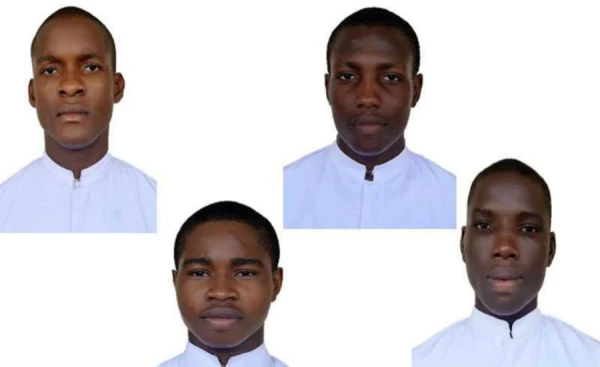
The students, Pius Kanwai, 19; Peter Umenukor, 23; Stephen Amos, 23; and Michael Nnadi, 18, were abducted on the night of Jan. 8 in a 30-minute operation that saw the kidnappers, dressed in military uniform and armed with guns, force their way onto the Catholic seminary campus, which is home to 268 seminarians.
Since Jan. 11, the abductors have been making contact with family members of the seminarians to discuss ransoms for their release, a source in Nigeria told ACI Africa Jan. 12.
According to a Sunday news report, Archbishop Matthew Man’oso Ndagoso of Kaduna has cautioned against speculation about the abductors’ demand for ransom for the safe release of the seminarians.
“We have streamlined discussion with the kidnappers, it is only one person that is communicating with them, we can’t disclose any discussion with them,” Archbishop Man’oso told local media. Good Shepherd Seminary is located just off the Abuja-Kaduna-Zaria Express Way. According to AFP, the area is “notorious for criminal gangs kidnapping travelers for ransom.”
The news agency said that schoolgirls and staff from a boarding school also located near the highway were kidnapped in October, and were later released.
Kidnappings of Christians in Nigeria have multiplied in recent months, a situation that has prompted Church leaders to express serious concern about the security of their members and to call on the government to prioritize the security of its citizens.
A version of this story was first published by ACI Africa, CNA’s African news partner. It has been adapted by CNA.
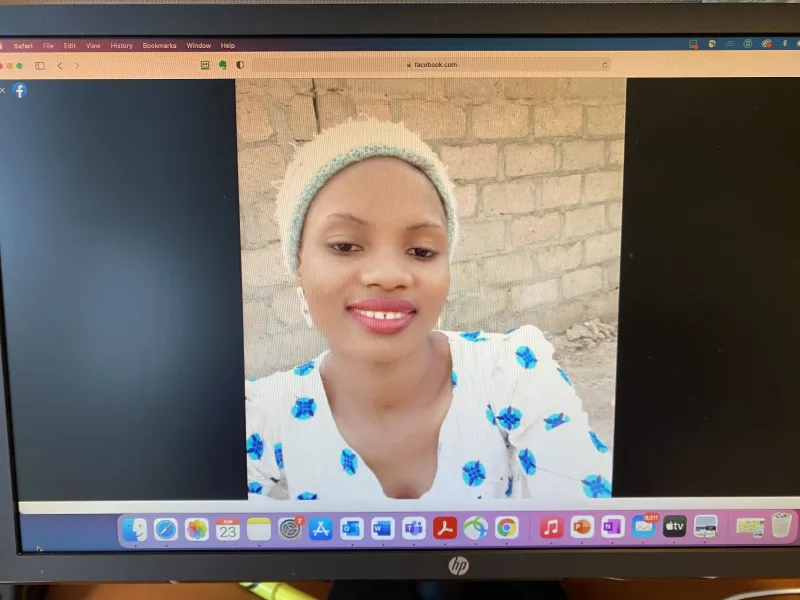
A photo of Deborah Emmanuel’s photo on her Facebook page. Emmanuel, a Christian student in Nigeria, was killed by an Islamic mob on her college campus on May 12, 2022. / CNA
Washington, D.C. Newsroom, Jun 23, 2022 / 14:01 pm (CNA).
Deborah Emmanuel, the Nigerian Christian student who was murdered by a Muslim mob last month, spent her final hours with a close friend who has shared exclusive details of the brutal killing with CNA.
CNA is using the pseudonym “Mary” for the woman’s protection. A Christian herself, she nearly was killed by the same mob.
Significantly, Mary’s account contradicts the claim of authorities that they attempted to rescue Emmanuel from the mob but were “overwhelmed.”
On the contrary, the police “could have stopped the murder if they had really tried,” Mary told CNA.
Emmanuel’s so-called “blasphemy murder” took place on May 12 on the campus of Shehu Shagari College of Education in Sokoto, Sokoto State, a major city located in the northwest corner of Nigeria. The city is home to the Muslim Sultan who serves as the top religious authority for Nigeria’s 100 million Muslim believers.
Prior to the attack, Emmanuel, a home economics major who attended Evangelical Church Winning All, was bullied by fanatical Muslim students at the teacher’s college for audio statements she made on WhatsApp, a messaging platform. She credited Jesus Christ for her success on a recent exam, and when threatened and told to apologize she refused, invoking the Holy Spirit, saying “Holy Ghost fire! Nothing will happen to me,” according to WhatsApp messages reviewed by CNA.
In the aftermath of these heated exchanges, a Muslim mob attacked Emmanuel on the college’s campus. After an hours’ long siege, the mob beat and stoned her to death, then set her body on fire with burning tires, according to graphic video footage posted online. The rioters also rampaged in a Catholic Church compound in Sokoto, according to reports. The riots spread to other Christian-owned properties over two days.
A relative of Emmanuel’s, who said he was standing approximately 60 feet from the mob, also told CNA he believes the police could have saved her. He, too, asked that his identity be withheld for his safety.
Unarmed campus security personnel made a futile attempt to rescue Emmanuel, according to a campus security report shared with CNA. But Emmanuel’s relative said there were dozens of armed police officers on the scene who didn’t fire their weapons.
The commissioner of police in the state also said officers did not fire their weapons. However, he maintained that only 15 of his officers were at the scene, according to a report in The Epoch Times.
Bishop Matthew Hassan Kukah of the Diocese of Sokoto has strongly condemned the attack and called on Emmanuel’s killers to be brought to justice..
“This matter must be treated as a criminal act,” he said. You can read his full statement here.
A plea for help
On the day of Emmanuel’s death, Mary received a frantic phone call from her around 9 a.m, asking for help. By that time, women who lived in her dormitory had begun slapping Emmanuel, Mary told CNA.
Mary arrived at the campus to see her friend surrounded by a mob and being led by a campus staffer to a gatehouse building for her protection. The Muslim students had bloodied her face and head with blows from rods and were joined by male students who believed their duty was to execute a blasphemer on the spot, Mary said.
“Allahu Akbar!” meaning “God is Great” was bellowed for hours, she said.
Mary initially stayed outside the building and tried to intercede for her friend, but she said it wasn’t long before the mob turned on her, too. Within moments Mary was trying to ward off punches and blows from sticks as she backed away from the gatehouse and toward the gate of the college 40 feet away.
Mary said a college lecturer rescued her and brought her to join Emmanuel inside the gatehouse by 10 a.m.
At 10:25 a.m., the relative said, six officers of the Department of State Security (DSS) — the equivalent to the FBI in the U.S. — arrived, firing their rifles in the air but with no effect. Five minutes later, he said, a group of Sokoto police came on the scene and fired tear gas, temporarily scattering the mob.
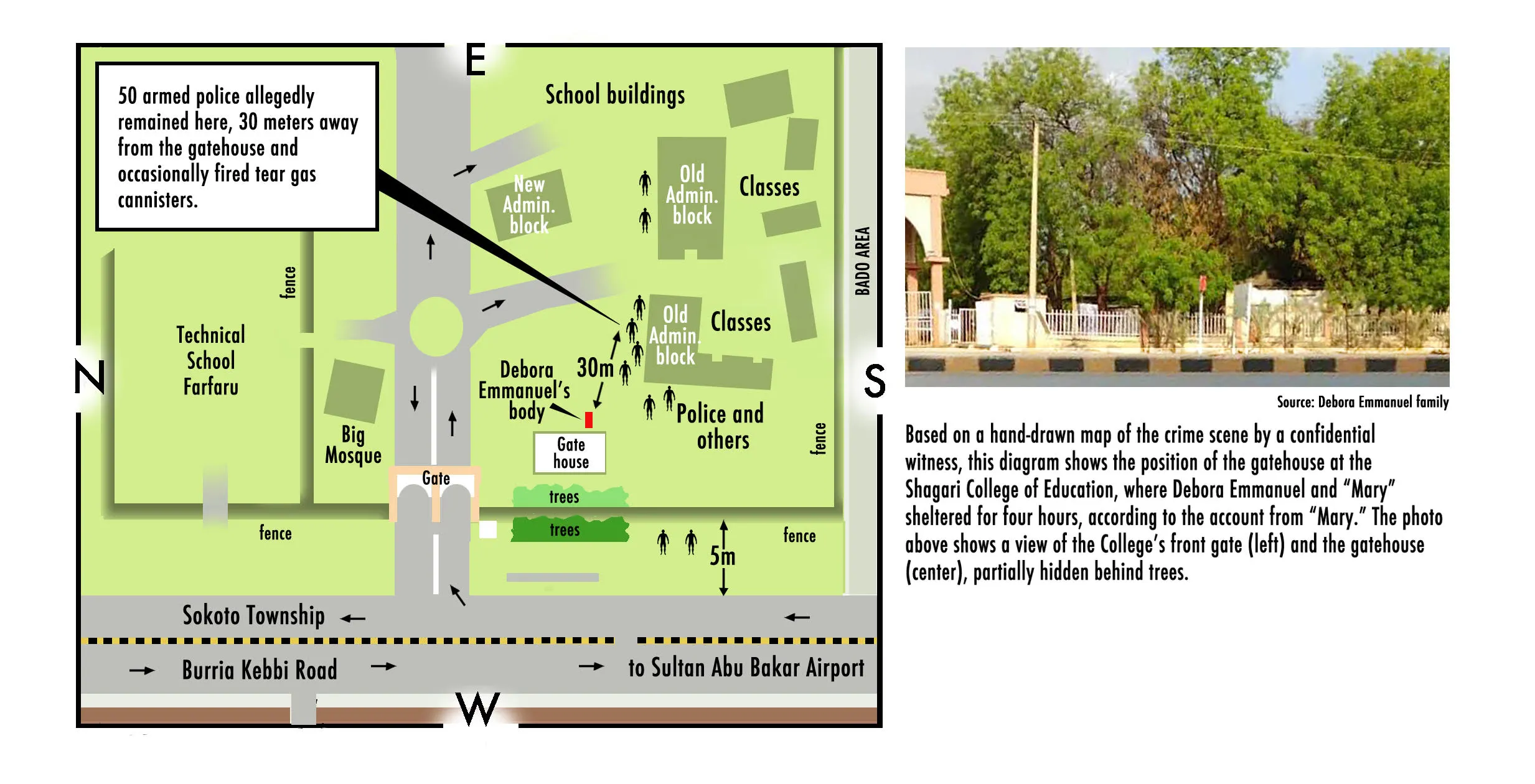
The above map is based on eyewitness accounts of the murder of Nigerian Christian student Deborah Emmanuel on her college’s campus on May 12, 2022. Graphic by Alexander Hunter
For about 10 minutes police had an opportunity to disperse the mob and force their way to the gatehouse to extract Mary and Emmanuel, Emmanuel’s relative believes. But that did not happen.
By 11 a.m., the mob had returned to the building, holding cloths against their faces to ward off the tear gas. The mob tried hurling stones at Mary through the windows of the locked gatehouse, but Mary barricaded herself behind a table.
The mob then threw gasoline on the women through the front windows and attempted to burn them alive, Mary said.
“Deborah was soaked with gasoline, but when lighted plastic was pitched in through the windows, I quickly stamped the flames out,” Mary said.
No escape
All of this transpired as police and DSS officers watched from a safe distance, according to Emmanuel’s relative.
The traumatized women said little to each other, but Emmanuel was still hoping to do her examination that day, Mary said. At one point, she recalled, Emmanuel asked, “What time is it? I have an examination at noon.” Mary said she looked at her cell phone and told her it was 1 p.m.
After another excruciating hour of siege, the mob pushed down a single Sokoto policeman guarding the door, broke the padlock on the door, and rushed in to find Mary and Emmanuel hiding behind furniture, Mary and the relative related. Two rioters placed a chain around Mary’s neck and pulled it hard, trying to strangle her, she recounted.
“Let this girl go! She is not an offender,” Mary recalled one of the rioters shouting. But as they released her, a young man in the mob grabbed Emmanuel and took her to the front steps of the gatehouse. There she was bludgeoned with steel pipes and wooden rods and stoned, the relative said.
Two DSS officers attempted to rescue Emmanuel but were hit by stones and pushed aside, the relative said. The police officers remained in position and did not come to her aid, he alleged.
Mary collapsed inside the gatehouse gasping from the strangulation. Approximately 40 minutes later, she said, she was roused by one of the mob to leave the building, which was on fire.
As she walked through the smoke, Mary saw the gatehouse burning and Emmanuel’s lifeless body in flames.
The face of Christian persecution
In the aftermath of Emmanuel’s murder, human rights advocates and others have leveled sharp criticism at Nigeria’s government leaders for not doing enough to stem the rising tide of violence directed at Christians and other non-Muslims.
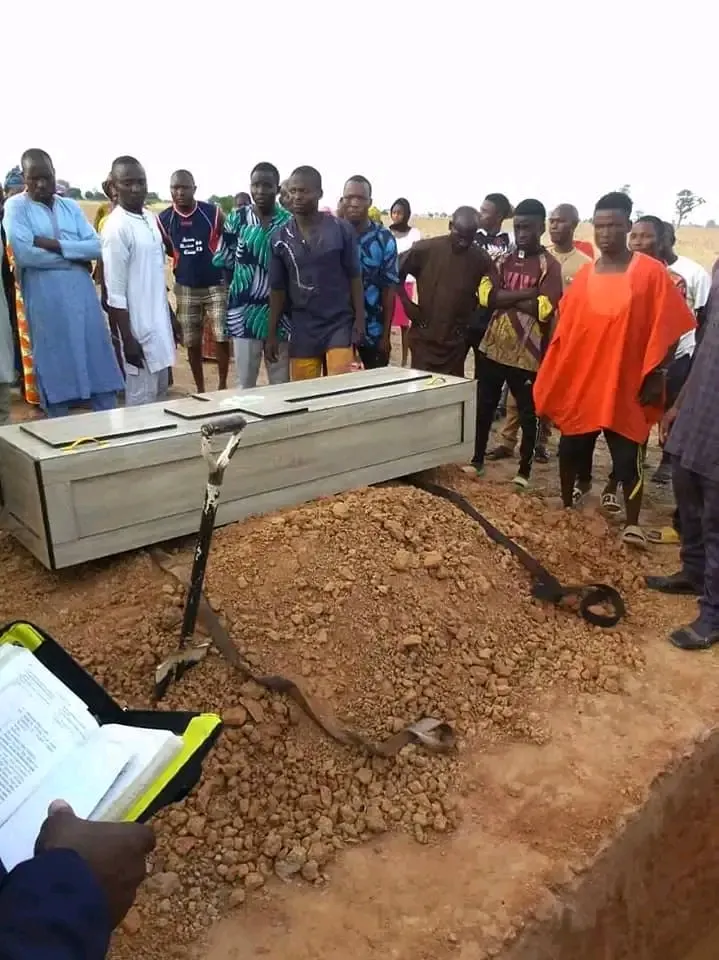
Relatives of Deborah Emmanuel at her burial in Niger State, Nigeria. Courtesy of the Emmanuel family
Anti-Christian hatred was evident in days of rioting in Sokoto following the arrest of two suspects in Emmanuel’s murder. The rioters reportedly were incensed that there were any arrests at all.
“Deborah Emmanuel, like kidnapping victim Leah Sharibu (who was enslaved by Boko Haram insurgents in 2019), has become the face of Christian persecution in Nigeria,” said Kyle Abts, executive director of the International Committee on Nigeria (ICON). “There has not been an official report from the security forces on the lynching of Ms. Emmanuel. Her killing and subsequent riots show clear government complicity and coverup.”
Tina Ramirez, founder of the international nonprofit Hardwired Global, also believes the Nigerian government has been unwilling to take a strong stand against blasphemy killings.
“The recent attacks on students are reminiscent of the attacks at Nigerian colleges two decades ago that were the precursor to the growth of extremist groups across Nigeria’s North and Middle Belt,” Ramirez wrote in a text to CNA.






Leave a Reply