

 By
Lawmakers discussed Nigeria’s designation as a country of particular concern for religious persecution and expressed concern about the slow pace of progress.
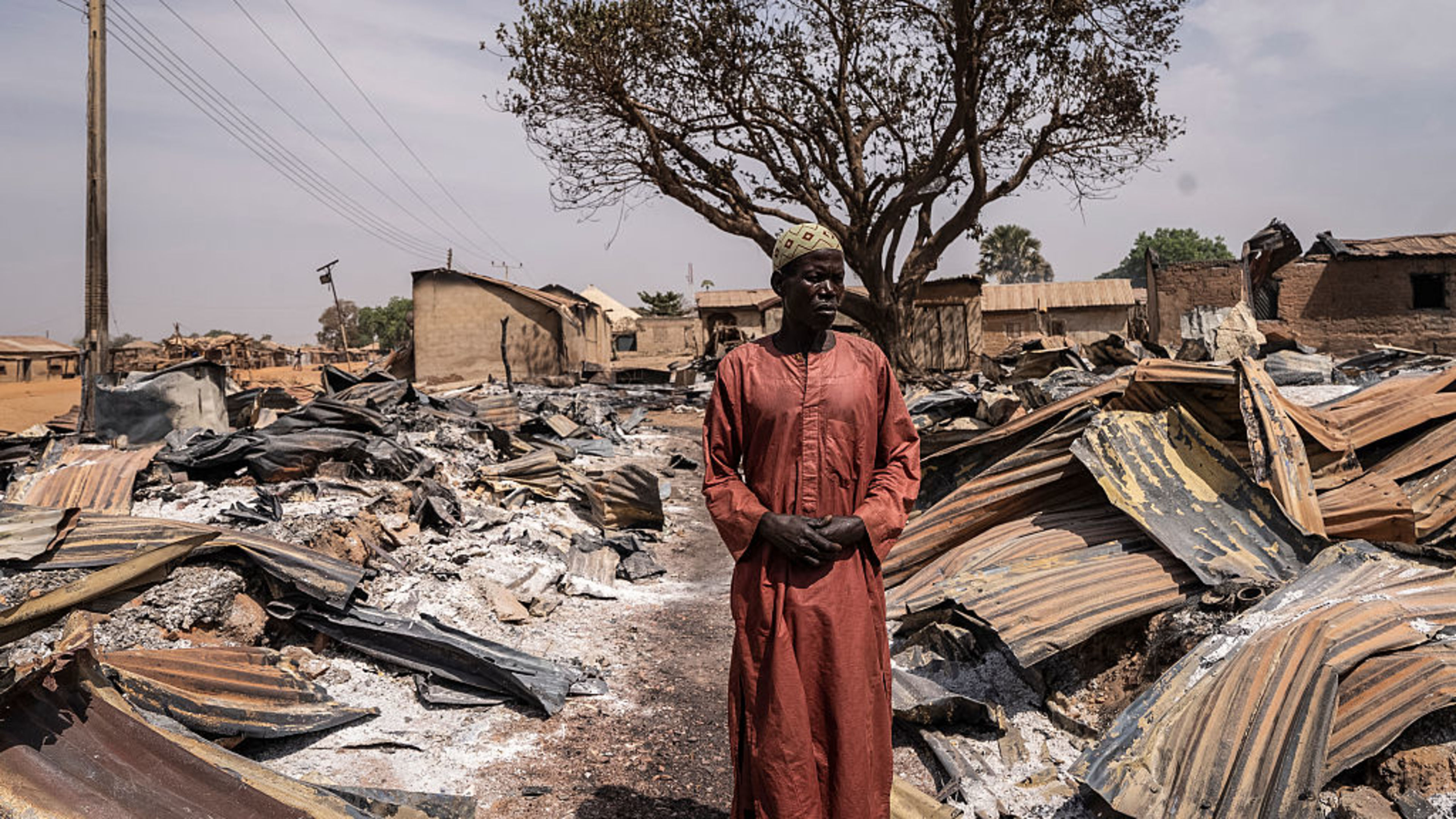
As Christians continue to suffer persecution and the death toll from ethnoreligious conflicts keeps rising in Nigeria, some Republican lawmakers are urging the Department of State to demand more accountability of the Nigerian government.
“I really question, along with many others, as to whether enough has been done,” Rep. Bill Huizenga, R-Michigan, said during a Nov. 12 hearing by the U.S. House Foreign Affairs Subcommittee on Africa.
“My question is, has any work been done?” he asked. “Has any real work been done?”
The subcommittee convened to assess the ongoing crisis of terrorism, banditry, kidnappings, and mass casualty attacks rooted in ethnoreligious violence, in which Christians make up a disproportionate share of the victims. Much of the violence is perpetuated by Fulani Ethnic Militias but also includes attacks by Boko Haram and the Islamic State West Africa Province.
Two Department of State assistant secretaries — Frank Garcia and Riley Barnes — along with specialists in religious freedom and international relations delivered testimony slightly more than one year after President Donald Trump designated Nigeria as a country of particular concern (CPC) for its toleration of “systematic, ongoing, and egregious violations of religious freedom.”
The CPC designation and cooperation between the U.S. and Nigeria has not reduced fatalities from this violence. According to the Nigeria Risk Index, Nigeria saw a slight decrease in security incidents from January through June 2026 when compared with the same period in 2025 but saw an increase in fatalities.
The number of security incidents decreased from 2,242 to 2,199, but the fatalities from those incidents increased by nearly 37%, from 2,242 to 4,435. The average fatality rate per incident rose from 1.45 to 2.02.
CPC designations must be reviewed annually, and the decision is left to the executive branch. Many of the Republican lawmakers expressed concern that the intended goals are far from being completed.
Both Garcia and Barnes argued there has been some progress with the Nigerian government acknowledging the crisis and working with the American government after the designation, but they warned that many problems persist and the Department of State’s work is ongoing.
“We are engaging the Nigerian government through direct, results-driven diplomacy,” Garcia told the lawmakers.
He pointed to the U.S.-Nigeria Joint Working Group, which was created to address the security issues and efforts to protect Christian communities through increased Nigerian security and law enforcement deployments, more timely responses to impending attacks, and biometric sharing with the government to help catch and prosecute those who perpetuate violence. The U.S. has also worked with the Nigerian government to target terrorist financial networks.
However, Garcia said the “pace” of the progress has been “insufficient,” acknowledging that “the violence has not stopped.” He called the crisis “an ongoing atrocity.”
Barnes said “the levels of violence and atrocities committed against Christians in Nigeria are appalling” and warned that attacks from the Fulani Ethnic Militias are often rooted in religious persecution.
“Nigerians I have spoken to on the ground have underscored the depth and breadth of suffering for many and ample witness testimonies over even the past year have stated plainly that perpetrators use religious language during their attacks, specifically identifying Christians for killing and abduction,” he said. “President Trump shined a light on these atrocities and made clear we must work to protect these vulnerable communities.”
Barnes also said the administration is pressing the Nigerian government to halt its enforcement of anti-blasphemy laws, which he warned are used to target Christians who speak about Islam.
Ongoing concerns
Republican lawmakers who questioned the assistant secretaries highlighted that significant work must still be done to address the crisis.
Rep. Riley Moore, R-West Virginia, said “there are certainly some positive signs” and cited Nigerian cooperation with the United States to target Fulani militants and detain suspected terrorist leader Mahmoud Adam.
“These steps followed sustained American engagement, and they are welcome,” he said. “But steps are not results. The … communities whose suffering prompted the designation are still waiting for protection and justice.”
“Success here means a definitive end to the genocidal murder of our brothers and sisters in Christ, and the peaceful return of [internally displaced persons] to their ancestral lands,” Moore said. “By that measure, [Nigeria] is falling short.”
Huizenga also expressed concern that the Nigerian government is “out of touch with what’s really happening,” which he called a “tragedy.”
“What needs to happen?” he said. “When are they going to take it serious and when are they going to do something about it?”
Rep. Chris Smith, R-New Jersey, who chairs the subcommittee, said during the hearing that CPC designation “is the beginning” but “not the end” of what is needed.
Speaking to EWTN News after the hearing, Smith praised the work of the Department of State in Nigeria, saying that without the CPC designation, “it would be far worse” because Nigeria “would have no incentive or pressure to try to mitigate the violence.”
“These are people, unfortunately, who are so radicalized that the only good Christian is a dead Christian,” he said. “And to me, thatʼs disgusting. All people, Christian, Jewish, Muslim should be allowed to thrive on their faith and believe as they would like freedom of religion.”
Smith also said the pace of progress has been “slow” and needs to “accelerate.”
“The Christians are disproportionately being slaughtered and abducted,” he said. “We want a free and prosperous Nigeria. … The CPC is like a mirror. Weʼre holding it up to you and saying … friends donʼt let friends commit human rights abuses. We donʼt want you to enable it or look the other way or deny it.”
If you value the news and views Catholic World Report provides, please consider donating to support our efforts. Your contribution will help us continue to make CWR available to all readers worldwide for free, without a subscription. Thank you for your generosity!
Click here for more information on donating to CWR. Click here to sign up for our newsletter.

Leave a Reply