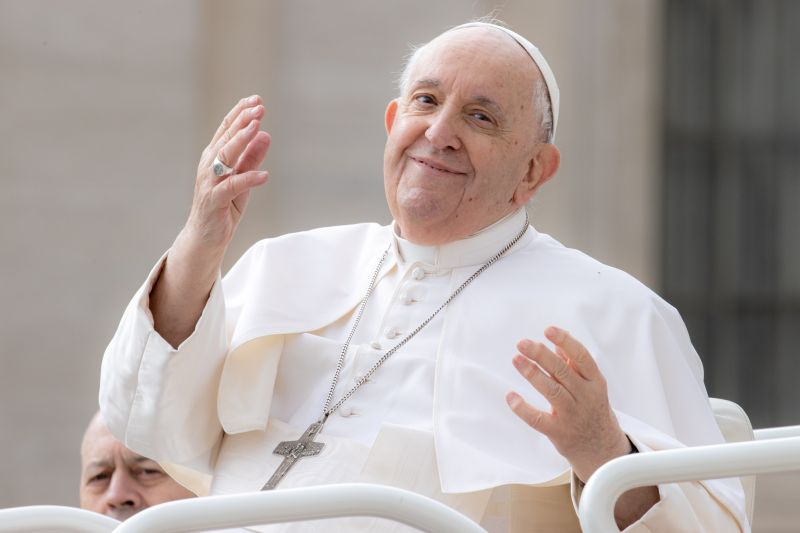
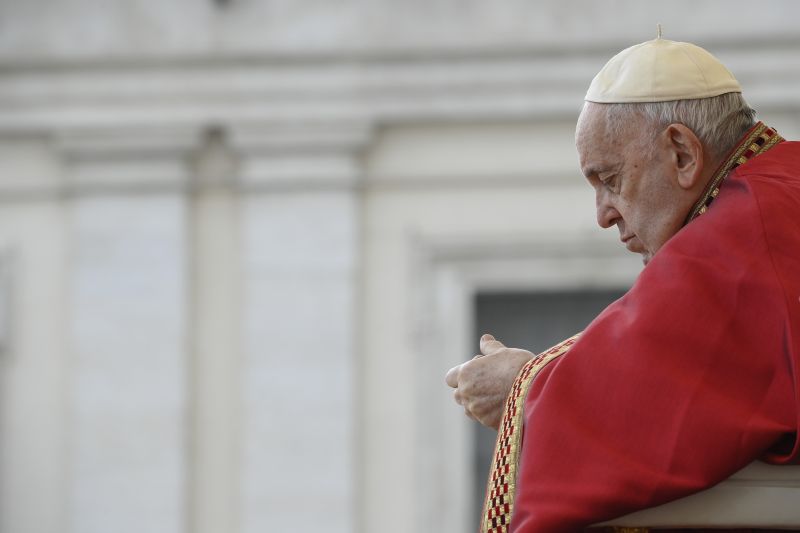
Pope Francis greets pilgrims from the popemobile in St. Peter’s Square on March 8, 2023. / Daniel Ibáñez/CNA. See CNA article for full slideshow.
Vatican City, Mar 8, 2023 / 05:00 am (CNA).
Pope Francis said Wednesday that there is no option to be “passive subjects” when it comes to evangelization because every baptized Catholic has a mission to actively proclaim the Gospel.
“There are not those who preach, those who proclaim the Gospel in one way or another, and those who keep silent. No. Every baptized person … whatever his position in the Church or level of education in the faith, is an active subject of evangelization,” he said on March 8.
“Are you Christian? ‘Yes, I received Baptism …’ And do you evangelize?” the pope asked.
“By virtue of the Baptism received and the consequent incorporation into the Church, every baptized person participates in the mission of the Church and, in it, in the mission of Christ the King, Priest, and Prophet.”
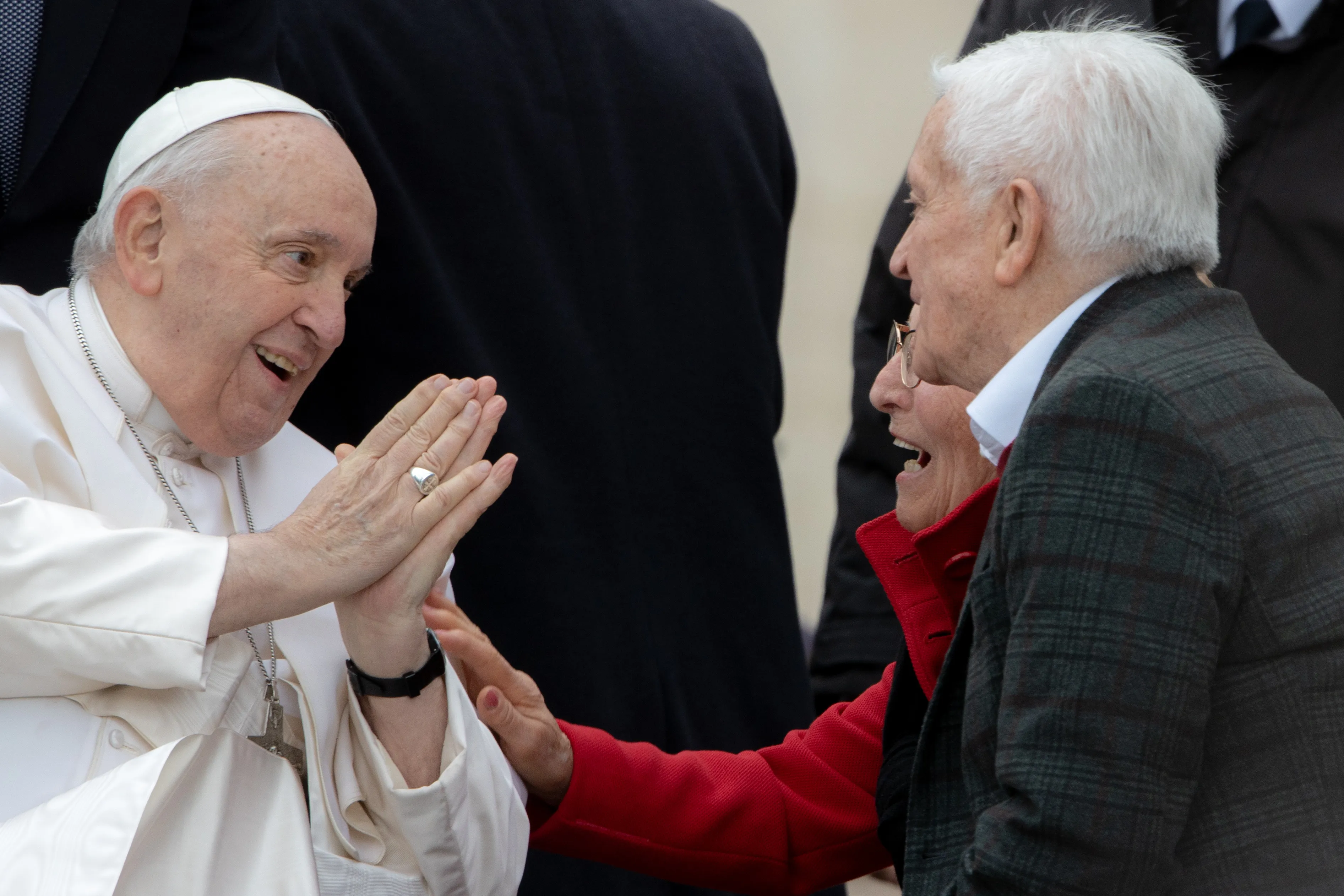
Pope Francis greets pilgrims in St. Peter’s Square on March 8, 2023. Daniel Ibáñez/CNA
In his weekly Wednesday audience in St. Peter’s Square, Pope Francis encouraged Catholics to reflect on the Second Vatican Council’s decree on missionary activity, Ad gentes (To the nations), which he said “reminds us that it is the task of the Church to continue the mission of Christ, who was ‘sent to preach the Gospel to the poor.’”
Quoting Ad gentes, he said: “‘The Church, prompted by the Holy Spirit, must walk in the same path on which Christ walked: a path of poverty and obedience, of service and self-sacrifice to the death, from which death He came forth a victor by His resurrection.’”
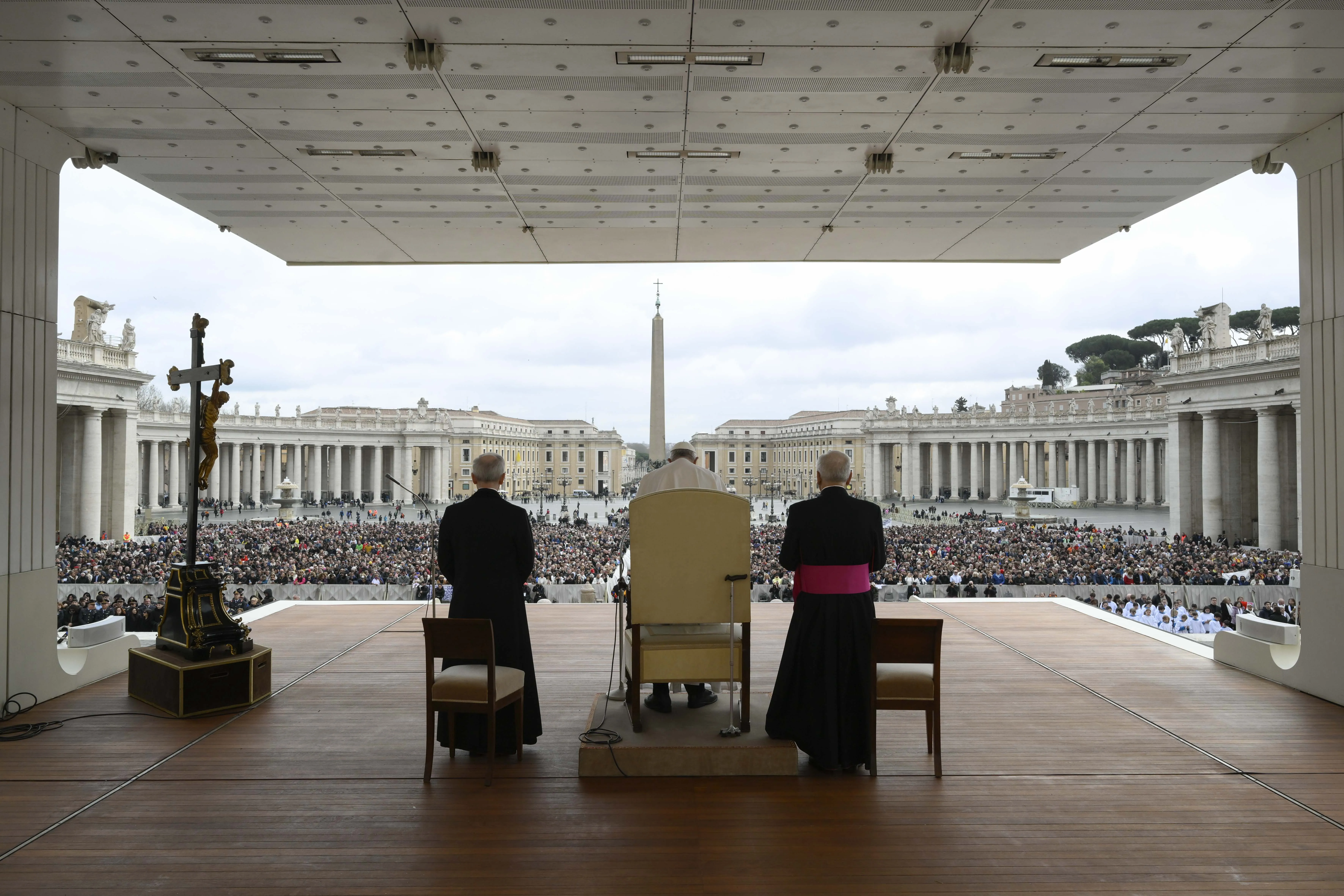
Pope Francis speaks in St. Peter’s Square on March 8, 2023. Vatican Media
Pope Francis added that preaching the Gospel should be done in community and should never be a solitary or individualistic task independent of the Church.
“Today we listen to the Second Vatican Council to discover that evangelizing is always an ecclesial service, never solitary, never isolated or individualistic,” he said.
He also warned of the temptation to follow “easier pseudo-ecclesial paths” or to “adopt the worldly logic of numbers and polls.”
The pope underlined that evangelizing the faith that one has received from the Church ensures “the authenticity of Christian proclamation.” He added that evangelization should always be done “in the community and without proselytizing because that is not evangelization.”
The livestreamed address was the seventh in Pope Francis’ cycle of catechesis on “the passion for evangelization” and the first general papal audience held outdoors in 2023.
Children joined Pope Francis in the popemobile as it made its way around St. Peter’s Square as pilgrims from around the world waved and cheered.
At the end of the audience, Pope Francis shared a message for International Women’s Day, a holiday adopted by the United Nations in 1977.
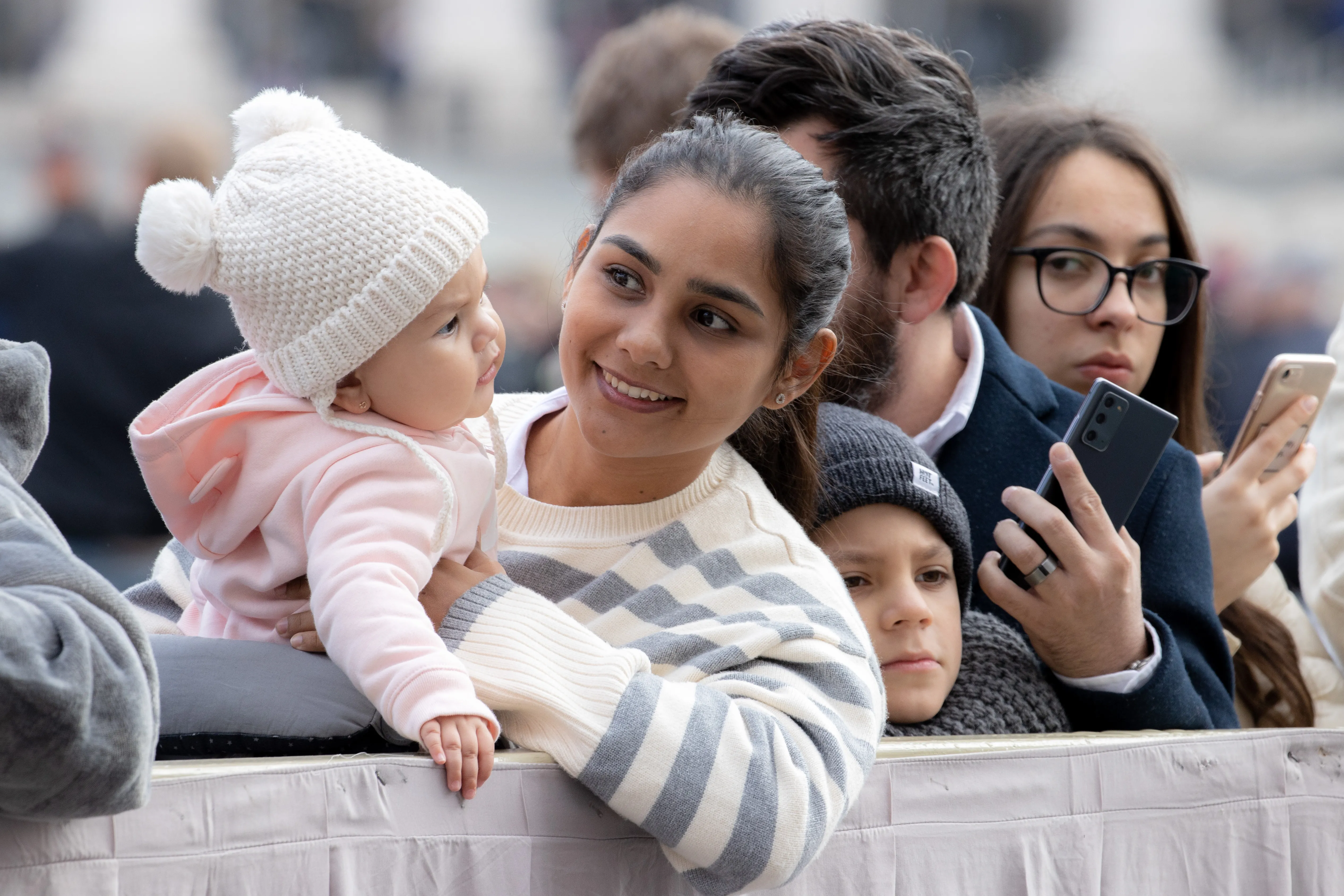
Pilgrims in St. Peter’s Square on March 8, 2023. Daniel Ibáñez/CNA
“On International Women’s Day, I think of all women: I thank them for their commitment to building a more humane society through their ability to grasp reality with a creative gaze and tender heart. This is a privilege of women alone! A special blessing for all the women in the piazza. And a round of applause for the women. They deserve it!” Francis said.
The pope also encouraged people to continue praying for war-torn Ukraine during Lent.
“In these days of Lent, let us walk even more courageously in Christ’s footsteps, trying to imitate his humility and fidelity to the Divine Will,” he said.
“And please, dear brothers and sisters, do not forget the pain of the martyred Ukrainian people, they suffer so much. Let us always have them present in our hearts and prayers.”
If you value the news and views Catholic World Report provides, please consider donating to support our efforts. Your contribution will help us continue to make CWR available to all readers worldwide for free, without a subscription. Thank you for your generosity!
Click here for more information on donating to CWR. Click here to sign up for our newsletter.
Pope Francis presides over the funeral Mass for Pope Emeritus Benedict XVI in St. Peter’s Square on Jan. 5, 2023. / Vatican Media
Rome Newsroom, Jan 15, 2023 / 11:00 am (CNA).
It was widely anticipated that a major reform of the Diocese of Rome was coming, as Pope Francis has been thinking about it for some time.
But no one expected it to come when it did: On Jan. 6, one day after the funeral of Francis’ predecessor as Bishop of Rome, Pope Emeritus Benedict XVI.
With the reform, Pope Francis firmly took over the reins of the vicariate, or hierarchy, of the diocese. Everything is centralized, and everything must pass, at least formally, under the control of the pontiff.
Cardinal Angelo de Donatis, the pope’s vicar for the diocese, sees his role deeply diminished. The diocese’s auxiliary bishops strengthen their direct link with the pope. In the end, the pope has made it clear that he is the one who also formally presides over the Episcopal Council, a new body established as an “expression of synodality.”
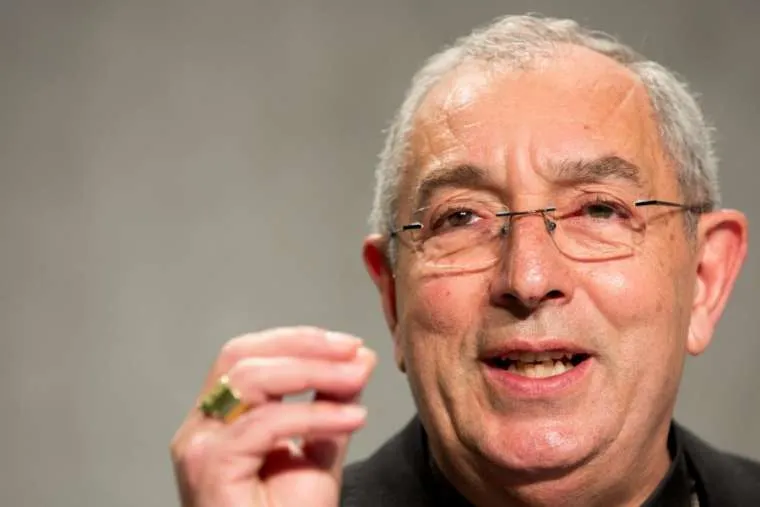
Cardinal Angelo De Donatis. . Daniel Ibanez/CNA
The backstory
Before going into some details of the new decree, however, some background is necessary.
The last reform of the structure of the Vicariate of Rome was outlined by John Paul II in 1908, with the apostolic constitution Ecclesia In Urbe. For the new reform, Pope Francis copied and pasted several passages from that document. In some cases, these have been minimally rewritten to emphasize some details instead of others. In other cases, greater changes were made but these do little to alter the basic substance of things.
The reform presents two general characteristics of Pope Francis’ way of legislating: using councils or commissions and requiring those bodies to report directly to him.
It is clear that the pope is the bishop of Rome and that the pope’s vicar for the diocese is his auxiliary. Pope Francis, however, in this case, goes further, including with the constitution a decree that directly defines the areas of competence of the auxiliary bishops.
Pope Francis shows, in this way, a willingness to exercise greater personal control over everything that happens in the vicariate. At the same time, this choice also testifies to a “break” in the relationship of trust with his vicar, Cardinal de Donatsi.
Although Francis called de Donatis to preach retreats to the Roman Curia in 2014, he was never the pope’s candidate to succeed Cardinal Vallini as vicar. That was Cardinal Paolo Lojudice.
Pope Francis, however, wanted to first consult the parish priests of Rome, 80% of whom preferred de Donatis. It was impossible, therefore, for the pope not to listen to them. He appointed De Donatis vicar (and cardinal) and made Lojudice archbishop of the prestigious Diocese of Siena, and a cardinal, as well.
Last May, at the general assembly of the Italian Episcopal Conference, it seemed clear that Pope Francis preferred the appointment of Cardinal Lojudice as the new president of the CEI.
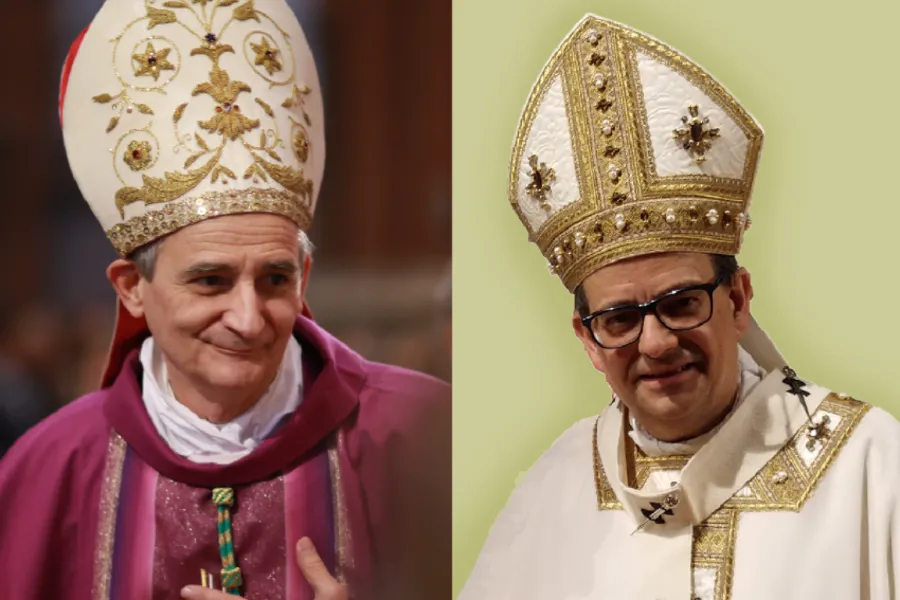
Cardinal Matteo Zuppi and Cardinal Augusto Paolo Lojudice. Francesco Pierantoni via Wikimedia (CC BY 2.0)/Pufui PcPifpef via Wikimedia (CC BY-SA 4.0).
The plan was to appoint Lojudice vicar of the Diocese of Rome to succeed Cardinal de Donatis, who had finished his five-year term, which would then have made Lojudice the primary contact person for the pope both in Rome and among the Italian bishops. De Donatis would have been appointed the new Penitentiary in place of Cardinal Mauro Piacenza, who has now turned 78.
The Italian bishops, however, preferred Cardinal Matteo Zuppi, archbishop of Bologna, who was not unwelcome to Pope Francis.
Lojudice didn’t become vicar for the Rome Diocese, either, as everyone assumed would happen. Meanwhile, the relationship of trust between de Donatis and the pope seemed to have been interrupted in 2020, when, at the beginning of the lockdown for COVID-19, de Donatis decided to close the churches of Rome. When Pope Francis later highlighted the inadvisability of closing churches, de Donatis withdrew the decree but announced that every decision had been made in agreement with the pope. There also have been other moments of friction in recent years.
The pope, however, now seems intent on changing the vicar this year when de Donatis’ mandate expires. An indication of this is the fact that in the decree in which the Pope defines the area and pastoral competencies of the auxiliary bishops, de Donatis is not mentioned as vicar. One might take his presence for granted, of course, but the general interpretation is that the change will be made.
What’s new
What are the novelties introduced by Pope Francis? First, the figure of the prelate general secretary disappears, while the vicegerente (or the deputy of the vicar) manages the offices of the General Secretariat. The prelate secretary also had the function of the moderator of the Curia. In this case, everything is entrusted to the vicegerente, who thus sees his functions and weight increase.
The pope chose the vicegerente from among the auxiliary bishops, and in this case, Baldassare Reina was selected. Bishop Reina does not come from the Diocese of Rome but was called from Agrigento. The pope’s logic is to break possible power chains by bringing in fresh and foreign forces.
The choice of a new parish priest is entrusted to a lengthy procedure which must then, in any case, be submitted to the pope, who acts as the true and proper bishop of Rome without relying on the vicar, who is left with the appointment of assistant parish priests.
Article 20 of the Constitution requests a report for each candidate for the priesthood or diaconate to be submitted before ordination. Also, in this case, the candidates must be presented by the cardinal vicar to the pope, and only after obtaining the Episcopal Council’s consent. Therefore, the vicar seems to be practically a commissariat: He does not choose the candidates but submits them to the pope and can submit them only after the Episcopal Council has endorsed the choice.
The council is defined as the “first organ of Synodality” and must meet “at least three times a month,” presided over by the pope. Only in the absence of the pope can the cardinal vicar preside over the council, which is made up of the vicegerent and the auxiliary bishops. However, the pope wants to receive “the agenda for each meeting as soon as possible.”
Finally, there is also the establishment of an Independent Supervisory Commission. This will have a regulation that must be “approved by the Pope” and six members appointed by the pope who can remain in office for a maximum of two five-year terms.
The service for the protection of minors and vulnerable people is also added, which “reports to the Episcopal Council, through the auxiliary bishop appointed by me,” the pope has decreed.
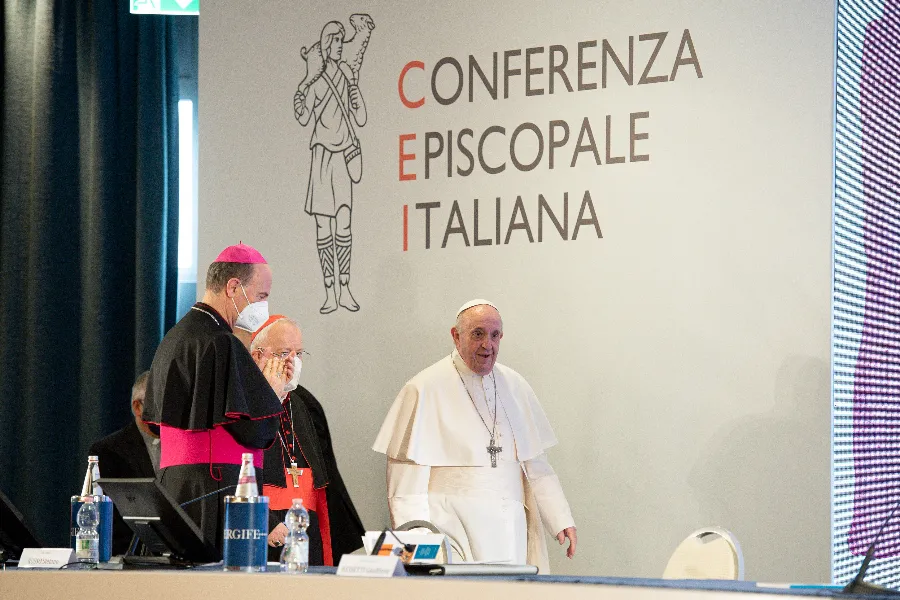
Pope Francis attends the Italian bishops’ plenary assembly in Rome on May 24, 2021. Vatican Media.
The effects of the reform
The constitution also redistributes the areas and offices of the Vicariate’s Curia, and the accompanying decree gives each auxiliary bishop a specific task.
Beyond the reorganization, it should be noted how the pope enters into action as the actual bishop of Rome. Everything must pass through the decisions of the pope, while before, the cardinal vicar enjoyed trust and discretion. For the first time, however, the pope’s vicar is defined as an “auxiliary.” He is, therefore, an auxiliary among the auxiliaries, with a considerable reduction in his weight.
With this centralization, Pope Francis probably wants to overcome the risk of having “abuses” within the Vicariate.
It is worth remembering that in June 2021, Pope Francis ordered an inspection of the Vicariate itself. It was an audit entrusted to the Auditor General of the Holy See, Alessandro Cassinis Righini. It was the first time the Vicariate sifted through the accounting books, registers, and cooperative societies.
However, the Pope, as a matter of practice, has sent an inspection to all the dicasteries of the Curia every time there is a reform or a new mandate. The review, therefore, already predicted the change of pace in the Vicariate, one that has led Pope Francis to be increasingly alone in command.
Vatican City, Oct 28, 2017 / 10:36 am (CNA/EWTN News).- In a lengthy speech to civil and ecclesiastical leaders of Europe on Saturday, Pope Francis defended the family as being made up of a man and woman open to life – saying that this fundamenta… […]
Pope Leo XIV speaks to participants in the Jubilee of Synodal Teams and Participatory Bodies on Oct. 24, 2025, in the Paul VI Audience Hall at the Vatican. / Credit: Vatican Media
Vatican City, Oct 27, 2025 / 11:30 am (CNA).
Pope Leo XIV drew l… […]
1 Comment
The Good News is liberating, healing, and empowering.





The Good News is liberating, healing, and empowering.