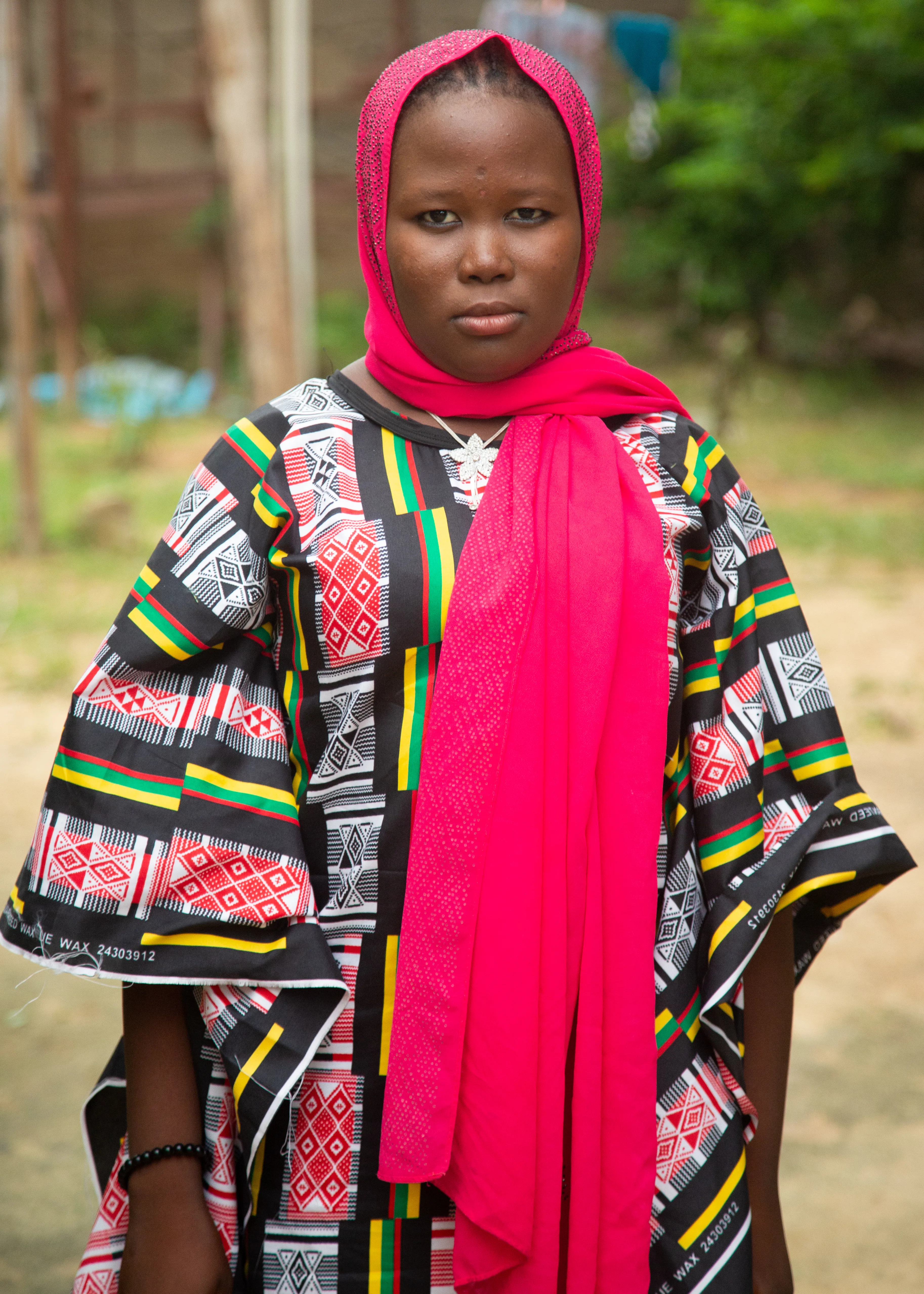
Janada Marcus, 22, was forced to flee Boko Haram with her family twice before the terrorists attacked them again, killing her father and kidnapping her. (Image: Aid to the Church in Need)
Washington D.C., Mar 8, 2023 / 08:20 am (CNA).
“Oh, what sorrow to have watched three of my parishioners shot dead in cold blood, right before my eyes — and I couldn’t do anything,” Nigerian parish priest Father Bako Francis Awesuh, 37, shared in a new Aid to the Church in Need (ACN) report published Friday.
“I couldn’t pray because of the shock I was in. Whenever I opened my mouth to pray, words failed me. All I could say was ‘Lord, have mercy.’”
ACN’s report, titled “Nigeria: A Bleeding Wound,” shares some of the firsthand testimonies of Catholic faithful who have survived torture, kidnappings, and massacres at the hands of Nigerian terrorists.
In May 2021, Awesuh and 10 of his parishioners were kidnapped from St. John Paul II Parish in Nigeria’s Kaduna state by radical Islamic Fulani attackers.
Awesuh was alone in his room at 11 p.m. when he heard gunshots. Terrified, he turned out the lights and waited.
“I stood there confused, not knowing what to do, as I felt completely lost. There was a knock on the door. My legs went cold and my body stiff. I was sweating profusely,” Awesuh said. “They broke down the door and forced themselves inside. One of the men pushed me to the floor, tied me up, and flogged me mercilessly.”
Awesuh and his parishioners were marched barefoot through the wilderness for three days. They were then held captive in harsh conditions for more than a month until a large ransom could be paid.
Eventually, Awesuh and his parishioners were ransomed, but not before three parishioners were shot dead during a rescue attempt.
“I narrowly escaped death,” Awesuh said. Yet, he said, there are many priests there who have not been as fortunate.
“I know of so many priests kidnapped before and after me who were killed even after a ransom was paid,” Awesuh said.
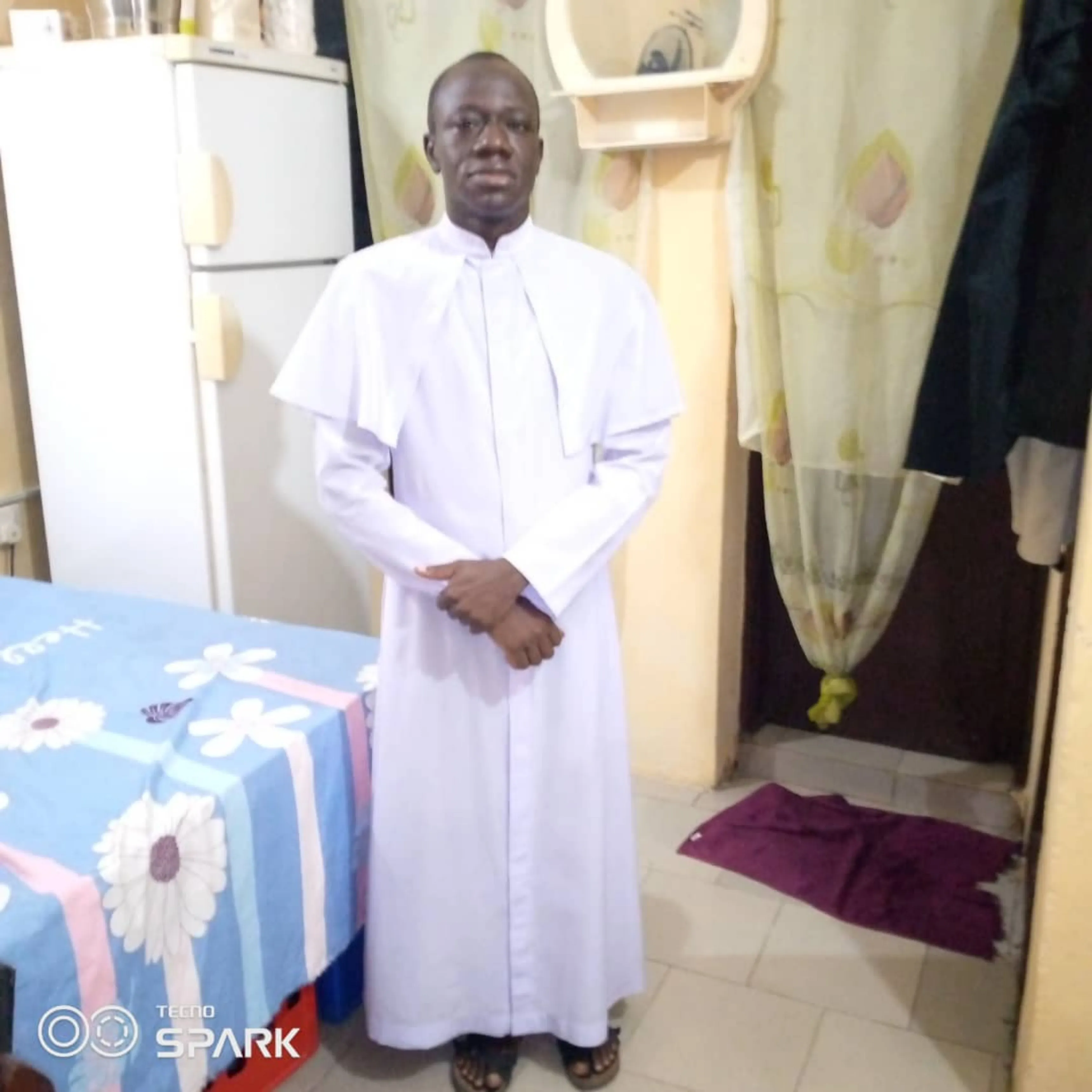
Nigerian parish priest Father Bako Francis Awesuh told Aid to the Church in Need that he witnessed three of his parishioners shot to death in cold blood. Aid to the Church in Need
In 2022 alone more than 5,000 Christians were killed in Nigeria, according to religious freedom watchdog Open Doors International.
As a Catholic priest in Nigeria, Awesuh faces some of the highest risks of kidnapping, torture, and murder of any person in the world.
“Kidnappings are a hallmark of terrorist organizations in Nigeria … and clergy are increasingly being targeted,” the new ACN report said.
With over 30 million faithful, Catholics make up a large minority in Nigeria, accounting for approximately 14.82% of the country’s population.
Yet, violent persecution in Nigeria has become a growing concern in recent years, according to many religious freedom organizations, including ACN.
Both priests and lay faithful are regularly targeted by Islamic terror groups such as Boko Haram, the Islamic State West Africa Province (ISWAP), and militant Fulani.
In June of last year, gunmen believed to be Islamic Fulani extremists opened fire on Catholic worshippers attending Pentecost Mass at St. Francis Xavier Catholic Church in southwestern Nigeria, killing at least 50.
Maryamu Joseph was only 7 years old when Boko Haram attacked her village, taking her captive for nine years. Aid to the Church in Need
Maryamu Joseph, 16, shared her story with ACN after only two months since escaping captivity.
She was only 7 years old when Boko Haram attacked her village, called Bazza, taking her captive for nine years.
“Words cannot do justice to what I’ve gone through,” Joseph told ACN. “They murdered without remorse, like it’s a normal thing to do.”
“Right before my eyes, they took one of my siblings and killed him. They cut off his head, then his hands, legs, and stomach … I was devastated. I asked myself, ‘Who’s next?’”
According to Joseph, the Christians of her village faced particularly cruel treatment.
“They put the Christians in cages, like animals. The first thing they did was forcefully convert us to Islam. They changed my name to Aisha, a Muslim name, and warned us not to pray as Christians or we would be killed,” Joseph said.
Janada Marcus, 22, was forced to flee Boko Haram with her family twice before the terrorists attacked them again in the city of Maiduguri. In this attack, Janada’s father was told to either rape her or be killed.
“With a machete pointed at my father’s forehead, he looked at my mother and at me, but I avoided eye contact because I was ashamed to look him in the face, ashamed of what the men had suggested — it was an abomination!” Marcus told ACN. “My father put his head down in submission to be killed and answered: ‘I cannot sleep with my own flesh and blood, my own daughter, I would rather die than commit this abomination.’”
Her father was beheaded, and Marcus continued to suffer at the hands of the Islamic terrorists.
“They took me to the bush and tortured me severely, emotionally, physically and mentally for six days. I suffered a lot of terrible and wicked experiences — beyond explanation — that made those six days seem like six years,” Marcus said.
By sharing these testimonies, ACN said it seeks to call attention to Nigerian persecution, which has only continued to rise.
“ACN has been highlighting the plight of Christians in Nigeria for many years with growing concern, calling the country one of the most dangerous for Christians in the world,” ACN said in its report. “We call on organizations to work for justice in the country and we encourage people of goodwill, around the world, to pray for peace in Nigeria.”
ACN has not been alone in calling attention to the persecution in Nigeria.
Sean Nelson of Alliance Defending Freedom International told CNA at the beginning of the year that “2022 saw some of the worst violence and persecution against Christians in Nigeria.”
In the face of this rising persecution, Nigeria has by far the highest Mass attendance of any nation in the world. According to recent data compiled by the Center for Applied Research in the Apostolate, 94% of Catholics in Nigeria attend Mass at least weekly.
“The faith of so many in Nigeria, despite this suffering, is among the strongest I know of anywhere,” Nelson said. “It is high time that the U.S. and the international community finally recognize the devastation of the persecution in Nigeria and apply all resources to stop it.”
If you value the news and views Catholic World Report provides, please consider donating to support our efforts. Your contribution will help us continue to make CWR available to all readers worldwide for free, without a subscription. Thank you for your generosity!
Click here for more information on donating to CWR. Click here to sign up for our newsletter.
Pope Francis led the “Regina Caeli” on Monday, April 18, 2022, at St. Peter’s Square. / Daniel Ibáñez | CNA
Washington, D.C. Newsroom, Apr 18, 2022 / 10:40 am (CNA).
Fear is like a tomb that can “bury us,” Pope Francis said Monday, but the Risen Lord’s words to the women who were the first to announce his resurrection apply to us, as well: “Be not afraid.”
Jesus knows that “our fears are our daily enemies” and that “our fears hide from the great fear, that of death: fear of fading away, or losing loved ones, of being sick, of not being able to cope further,” the pope said.
But Easter marks the day that Jesus conquered death, he added, “so no one else can tell us in a more convincing way: ‘Do not be afraid.’”
Pope Francis led the “Regina Caeli” on Monday, April 18, 2022, at St. Peter’s Square. Daniel Ibáñez | CNA
Pope Francis spoke Monday afternoon to a large crowd in St. Peter’s Square on La Pasquetta, or “Little Easter,” a national holiday in Italy. The day’s Gospel reading, from the twenty-eighth chapter of Matthew, records how Mary Magdalene and “the other Mary” encounter Jesus while running to bring the news of his rising to his disciples.
“Brother, sister, who believe in Christ, do not be afraid! Jesus says: ‘I tasted death for you, I took your pain upon myself. Now I have risen to tell you: I am here with you forever. Do not be afraid!'” Pope Francis said.
The Holy Father noted that the Lord gives the women another instruction: “Go and tell my brethren to go to Galilee, and there they will see me.”
Fear “closes us in on ourselves,” the pope said, but we can overcome fear by answering Jesus’ call to proclaim the resurrection to others.
Pope Francis led the “Regina Caeli” on Monday, April 18, 2022, at St. Peter’s Square. Daniel Ibáñez | CNA
We may doubt our ability to share that news, but it is important to note that “the women were not perhaps the most suitable and prepared to proclaim the resurrection” either, the pope said. Nevertheless, “that did not matter to the Lord.”
Jesus cares only that “we go forth and proclaim … because the Easter joy is not to be kept to oneself,” he said.
“The joy of Christ is strengthened by giving it, it multiplies sharing it,” Pope Francis added. “If we open ourselves and bear the Gospel, our hearts will open and overcome fear. This is the secret: We proclaim and overcome fear.”
In addition to fear, there is another obstacle to sharing the Gospel, the pope noted: falsehood.
Falsehood can be seen in the “counter-proclamation” of the soldiers who guarded the tomb and lied saying that Jesus’s body was stolen by his disciples, the pope said.
“The Gospel says [the guards] were paid ‘a sum of money,’ a good sum, and received these instructions: ‘Tell people, “His disciples came by night and stole him away while we were asleep”’’” Pope Francis said.
But there is a contradiction: If the soldiers were sleeping, how did they see the disciples steal Jesus’ body? The payment they received explains their contrived narrative. Money is “the other lord that Jesus says we must never serve,” the pope said.
“Before the Risen Lord, there is another ‘god’ – the god of money that dirties and ruins everything, that closes the door to salvation,” Pope Francis said. “This is present everywhere in daily life with the temptation to adore the god of money.”
Pope Francis said that when deceit and lies are discovered by the media within the lives of people, it causes scandal.
“But let us give a name also to the obscurity and falsehoods we have in ourselves! And let us place our own darkness and falsehoods before the light of the Risen Jesus,” he said.
Jesus wants to “bring hidden things to light to make us transparent and luminous witnesses to the joy of the Gospel, of the truth that will make you free,” he said.
He then asked “Mary, Mother of the Risen One,” to “help us overcome our fears and give us passion for the truth.”
Pope Francis at the general audience in St. Peter’s Square, Oct. 5, 2016. / Daniel Ibanez/CNA.
Washington, D.C. Newsroom, Mar 13, 2023 / 13:15 pm (CNA).
Today marks the 10th anniversary of the election of Pope Francis as the 265th successor of St. Peter. Here is a timeline of key events during his papacy:
2013
March 13 — About two weeks after Pope Benedict XVI steps down from the papacy, Cardinal Jorge Bergoglio is elected pope. He takes the papal name Francis in honor of St. Francis of Assisi and proclaims from the central balcony of St. Peter’s Basilica: “Let us begin this journey, the bishop and people, this journey of the Church of Rome, which presides in charity over all the Churches, a journey of brotherhood in love, of mutual trust. Let us always pray for one another.”
March 14 — The day after he begins his pontificate, Pope Francis returns to his hotel to personally pay his hotel bill and collect his luggage.
July 8 — Pope Francis visits Italy’s island of Lampedusa and meets with a group of 50 migrants, most of whom are young men from Somalia and Eritrea. The island, which is about 200 miles off the coast of Tunisia, is a common entry point for migrants who flee parts of Africa and the Middle East to enter Europe. This is the pope’s first pastoral visit outside of Rome and sets the stage for making reaching out to the peripheries a significant focus.
Pope Francis gives the Wednesday general audience in St. Peter’s Square on Oct. 2, 2013. . Elise Harris/CNA.
July 23–28 — Pope Francis visits Rio de Janeiro, Brazil, to participate in World Youth Day 2013. More than 3 million people from around the world attend the event.
July 29 — On the return flight from Brazil, Pope Francis gives his first papal news conference and sparks controversy by saying “if a person is gay and seeks God and has goodwill, who am I to judge?” The phrase is prompted by a reporter asking the pope a question about priests who have homosexual attraction.
Nov. 24 — Pope Francis publishes his first apostolic exhortation Evangelii gaudium (The Joy of the Gospel). The document illustrates the pope’s vision for how to approach evangelization in the modern world.
2014
Feb. 22 — Pope Francis holds his first papal consistory to appoint 19 new cardinals, including ones from countries in the developing world that have never previously been represented in the College of Cardinals, such as Haiti.
March 22 — Pope Francis creates the Pontifical Commission for the Protection of Minors. The commission works to protect the dignity of minors and vulnerable adults, such as the victims of sexual abuse.
Pope Francis greets pilgrims during his general audience on Nov. 29, 2014. Bohumil Petrik/CNA.
Oct. 5 — The Synod on the Family begins. The bishops discuss a variety of concerns, including single-parent homes, cohabitation, homosexual adoption of children, and interreligious marriages.
Dec. 6 — After facing some pushback for his efforts to reform the Roman Curia, Pope Francis discusses his opinion in an interview with La Nacion, an Argentine news outlet: “Resistance is now evident. And that is a good sign for me, getting the resistance out into the open, no stealthy mumbling when there is disagreement. It’s healthy to get things out into the open, it’s very healthy.”
2015
Jan. 18 — To conclude a trip to Asia, Pope Francis celebrates Mass in Manila, Philippines. Approximately 6 million to 7 million people attend the record-setting Mass, despite heavy rain.
March 23 — Pope Francis visits Naples, Italy, to show the Church’s commitment to helping the fight against corruption and organized crime in the city.
May 24 — To emphasize the Church’s mission to combat global warming and care for the environment, Pope Francis publishes the encyclical Laudato si’, which urges people to take care of the environment and encourages political action to address climate problems.
Pope Francis at a Wednesday general audience in St. Peter’s Square on June 17, 2015. Bohumil Petrik.
Sept. 19–22 — Pope Francis visits Cuba and meets with Fidel Castro in the first papal visit to the country since Pope John Paul II in 1998. During his homily, Francis discusses the dignity of the human person: “Being a Christian entails promoting the dignity of our brothers and sisters, fighting for it, living for it.”
Sept. 22–27 — After departing from Cuba, Pope Francis makes his first papal visit to the United States. In Washington, D.C., he speaks to a joint session of Congress, in which he urges lawmakers to work toward promoting the common good, and canonizes the Franciscan missionary St. Junípero Serra. He also attends the World Meeting of Families in Philadelphia, which focuses on celebrating the gift of the family.
Oct. 4 — Pope Francis begins the second Synod on the Family to address issues within the modern family, such as single-parent homes, cohabitation, poverty, and abuse.
Oct. 18 — The pope canonizes St. Louis Martin and St. Marie-Azélie “Zelie” Guérin. The married couple were parents to five nuns, including St. Therese of Lisieux. They are the first married couple to be canonized together.
Dec. 8 — Pope Francis’ Jubilee Year of Mercy begins. The year focuses on God’s mercy and forgiveness and people’s redemption from sin. The pope delegates certain priests in each diocese to be Missionaries of Mercy who have the authority to forgive sins that are usually reserved for the Holy See.
2016
March 19 — Pope Francis publishes the apostolic exhortation Amoris laetitia, which discusses a wide variety of issues facing the modern family based on discussions from the two synods on the family. The pope garners significant controversy from within the Church for comments he makes in Chapter 8 about Communion for the divorced and remarried.
April 16 — After visiting refugees on the Greek island of Lesbos, Pope Francis allows three Muslim refugee families to join him on his flight back to Rome. He says the move was not a political statement.
Pope Francis at the General Audience in St. Peter’s Square, Feb. 24, 2016. Daniel Ibanez/CNA.
July 26–31 — Pope Francis visits Krakow, Poland, as part of the World Youth Day festivities. About 3 million young Catholic pilgrims from around the world attend.
Sept. 4 — The pope canonizes St. Teresa of Calcutta, who is also known as Mother Teresa. The saint, a nun from Albania, dedicated her life to missionary and charity work, primarily in India.
Sept. 30–Oct. 2 — Pope Francis visits Georgia and Azerbaijan on his 16th trip outside of Rome since the start of his papacy. His trip focuses on Catholic relations with Orthodox Christians and Muslims.
Oct. 4 — Pope Francis makes a surprise visit to Amatrice, Italy, to pray for the victims of an earthquake in central Italy that killed nearly 300 people.
2017
May 12–13 — In another papal trip, Francis travels to Fatima, Portugal, to visit the Shrine of Our Lady of Fatima. May 13 marks the 100th anniversary of the first Marian apparition to three children in the city.
July 11 — Pope Francis adds another category of Christian life suitable for the consideration of sainthood: “offering of life.” The category is distinct from martyrdom, which only applies to someone who is killed for his or her faith. The new category applies to those who died prematurely through an offering of their life to God and neighbor.
Pope Francis greets a participant in the World Day of the Poor in Rome, Nov. 16, 2017. L’Osservatore Romano.
Nov. 19 — On the first-ever World Day of the Poor, Pope Francis eats lunch with 4,000 poor and people in need in Rome.
Nov. 27–Dec. 2 — In another trip to Asia, Pope Francis travels to Myanmar and Bangladesh. He visits landmarks and meets with government officials, Catholic clergy, and Buddhist monks. He also preaches the Gospel and promotes peace in the region.
2018
Jan. 15–21 — The pope takes another trip to Latin America, this time visiting Chile and Peru. The pontiff meets with government officials and members of the clergy while urging the faithful to remain close to the clergy and reject secularism. The Chilean visit leads to controversy over Chilean clergy sex abuse scandals.
Aug. 2 — The Vatican formally revises No. 2267 of the Catechism of the Catholic Church, which concerns the death penalty. The previous text suggested the death penalty could be permissible in certain circumstances, but the revision states that the death penalty is “inadmissible.”
Aug. 25 — Archbishop Carlo Viganò, former papal nuncio to the United States, publishes an 11-page letter calling for the resignation of Pope Francis and accusing him and other Vatican officials of covering up sexual abuse including allegations against former Cardinal Theodore McCarrick. The pope initially does not directly respond to the letter, but nine months after its publication he denies having prior knowledge about McCarrick’s conduct.
Aug. 25–26 — Pope Francis visits Dublin, Ireland, to attend the World Meeting of Families. The theme is “the Gospel of family, joy for the world.”
Pope Francis at the 2018 World Meeting of Families in Ireland. . Daniel Ibanez/CNA.
Oct. 3–28 — The Synod on Young People, the Faith, and Vocational Discernment takes place. The synod focuses on best practices to teach the faith to young people and to help them discern God’s will.
2019
Jan. 22–27 — The third World Youth Day during Pope Francis’ pontificate takes place during these six days in Panama City, Panama. Young Catholics from around the world gather for the event, with approximately 3 million people in attendance.
Feb. 4 — Pope Francis signs a joint document in with Sheikh Ahmed el-Tayeb, the grand imam of Al-Azhar, in Abu Dhabi, United Arab Emirates, titled the “Document on Human Fraternity for World Peace and Living Together.” The document focuses on people of different faiths uniting together to live peacefully and advance a culture of mutual respect.
Pope Francis and Ahmed el-Tayeb, grand imam of al-Azhar, signed a joint declaration on human fraternity during an interreligious meeting in Abu Dhabi, UAE, Feb. 4, 2019. Vatican Media.
Feb. 21–24 — The Meeting on the Protection of Minors in the Church, which is labeled the Vatican Sexual Abuse Summit, takes place. The meeting focuses on sexual abuse scandals in the Church and emphasizes responsibility, accountability, and transparency.
Oct. 6–27 — The Church holds the Synod of Bishops for the Pan-Amazon region, which is also known as the Amazon Synod. The synod is meant to present ways in which the Church can better evangelize the Amazon region but leads to controversy when carved images of a pregnant Amazonian woman, referred to by the pope as Pachamama, are used in several events and displayed in a basilica near the Vatican.
Oct. 13 — St. John Henry Newman, an Anglican convert to Catholicism and a cardinal, is canonized by Pope Francis. Newman’s writings inspired Catholic student associations at nonreligious colleges and universities in the United States and other countries.
2020
March 15 — Pope Francis takes a walking pilgrimage in Rome to the chapel of the crucifix and prays for an end to the COVID-19 pandemic. The crucifix was carried through Rome during the plague of 1522.
March 27 — Pope Francis gives an extraordinary Urbi et Orbi blessing in an empty and rain-covered St. Peter’s Square, praying for the world during the coronavirus pandemic.
Pope Francis venerates the miraculous crucifix of San Marcello al Corso in St. Peter’s Square during his Urbi et Orbi blessing, March 27, 2020. Vatican Media.
2021
March 5–8 — In his first papal trip since the start of the COVID-19 pandemic, Pope Francis becomes the first pope to visit Iraq. On his trip, he signs a joint statement with Grand Ayatollah Ali al-Sistani condemning extremism and promoting peace.
July 3 — Cardinal Giovanni Angelo Becciu, who was elevated to the College of Cardinals by Pope Francis, is indicted in a Vatican court for embezzlement, money laundering, and other crimes. The pope gives approval for the indictment.
July 4 — Pope Francis undergoes colon surgery for diverticulitis, a common condition in older people. The Vatican releases a statement that assures the pope “reacted well” to the surgery. Francis is released from the hospital after 10 days.
July 16 — Pope Francis issues a motu proprio titled Traditionis custodes. The document imposes heavy restrictions on the celebration of the Traditional Latin Mass.
Dec. 2–6 — The pope travels to Cyprus and Greece. The trip includes another visit to the Greek island of Lesbos to meet with migrants.
Pope Francis greets His Beatitude Ieronymos II in Athens, Greece on Dec. 5, 2021. Vatican Media
2022
Jan. 11 — Pope Francis makes a surprise visit to a record store in Rome called StereoSound. The pope, who has an affinity for classical music, blesses the newly renovated store.
March 19 — The pope promulgates Praedicate evangelium, which reforms the Roman Curia. The reforms emphasize evangelization and establish more opportunities for the laity to be in leadership positions.
May 5 — Pope Francis is seen in a wheelchair for the first time in public and begins to use one more frequently. The pope has been suffering from knee problems for months.
Pope Francis greeted the crowd in a wheelchair at the end of his general audience on Aug. 3, 2022. Daniel Ibanez/CNA
July 24–30 — In his first papal visit to Canada, Pope Francis apologizes for the harsh treatment of the indigenous Canadians, saying many Christians and members of the Catholic Church were complicit.
2023
Jan. 31–Feb. 5 — Pope Francis travels to the Democratic Republic of Congo and South Sudan. During his visit, the pope condemns political violence in the countries and promotes peace. He also participates in an ecumenical prayer service with Anglican Archbishop of Canterbury Justin Welby and Moderator of the Church of Scotland Iain Greenshields.
Is Allah peaceful? Is Allah respectful of God’s creation? Can Allah be reformed?
Some Muslims are peaceful, respectful and want to be conformed into the image of Jesus Christ.
Mark 1:15 And saying, “The time is fulfilled, and the kingdom of God is at hand; repent and believe in the gospel.”
Daniel 12:3 And those who are wise shall shine like the brightness of the sky above; and those who turn many to righteousness, like the stars forever and ever.
2 Timothy 4:2 Preach the word; be ready in season and out of season; reprove, rebuke, and exhort, with complete patience and teaching.
Romans 10:13 For “everyone who calls on the name of the Lord will be saved.”
Is there a Muslim who wishes to be saved? Is there a Muslim who would like to learn of God’s plan of salvation?
Is there a Muslim who would like to discuss Islam?
I have great respect for Muslims. We have a number in our general community who fled violence in Lebanon & other places. Lebanese Maronite Catholics came here also.
At some point we need to build bridges because Christians, Jews, & Muslims all are children of Abraham whether in spirit or in fact.
And we all face a common enemy: secularism.
I too have respect for Muslims. Respect is speaking God’s truth to the follower of Islam. Jesus Christ is our bridge builder, His truth and compassion for our eternal soul.
Isaiah 9:6 For to us a child is born, to us a son is given; and the government shall be upon his shoulder, and his name shall be called Wonderful Counsellor, Mighty God, Everlasting Father, Prince of Peace.
Isaiah 53:5 But he was pierced for our transgressions; he was crushed for our iniquities; upon him was the chastisement that brought us peace, and with his wounds we are healed.
Psalm 2:6-12 “As for me, I have set my King on Zion, my holy hill.” I will tell of the decree: The Lord said to me, “You are my Son; today I have begotten you. Ask of me, and I will make the nations your heritage, and the ends of the earth your possession. You shall break them with a rod of iron and dash them in pieces like a potter’s vessel.” Now therefore, O kings, be wise; be warned, O rulers of the earth.
Proverbs 30:4 Who has gone up to heaven and come down? Whose hands have gathered up the wind?
Who has wrapped up the waters in a cloak? Who has established all the ends of the earth?
What is his name, and what is the name of his son? Surely you know!
Respect?? Respect needs to be earned in order to be given. Muslims who claim they do not agree with these sorts of violent actions need to speak up within their own population and try to change some minds.It appears to me that wherever Muslims are living in numbers, they are engaged in killing and violence. In addition to Nigeria, Israel comes to mind. If Muslims cant figure out this unprovoked violence reflects badly on them and their religion, someone needs to tell them. What have Muslims done in the last few centuries to earn respect? Improve world peace or advance humanity? People also forget too easily their attempts to take over Europe until the Miracle of the Battle of Lepanto in 1571. Maybe they will do it now by shear demographics. If so, the fate of Christians in Western Europe will be dire, as it is in Nigeria. A good reason for European nations and the US to rethink their immigration policies.
Muslim demographics in many countries are just as dismal as Christians’. Fertility rates in Sub Saharan Africa are higher overall but they are falling too.
Generally when immigrants relocate they eventually assume the birthrates of their new culture.
As a Christian I don’t demand that anyone earns my respect. That should be extended automatically. We are all God’s children.
I dont respect people who operate off a platform of institutional violence in their “religion”. In Israel I saw churches whose beautiful mosaics had been defaced when the muslim majority took over.Some are now being restored with an eye toward developing tourism. The question is why were they defaced in the first place. Because they only point of view they think is valid is their own. Tolerance is a word they do not understand and we should be very wary of that fact. I recall their destruction of the ancient statues of Buddha in Afghanistan. The Museum in Mosul, Iraq, was also subjected to destruction, as have many historic sites. I could never just smile and pretend its not happening. Nor pretend that those perpetrating such actions are anything but witless idiots.
I have great respect for Muslims – some of them, anyway.
The plight of persecuted Christians should be front and center of any synodal discussions rather than worrying about whether the “lived experiences” of the bourgeoisie are sufficiently addressed. Catholics getting raped, beheaded, and kidnapped are the experiences that should be foremost on the minds of our shepherds and the laity at this moment.
Is Allah peaceful? Is Allah respectful of God’s creation? Can Allah be reformed?
Some Muslims are peaceful, respectful and want to be conformed into the image of Jesus Christ.
Mark 1:15 And saying, “The time is fulfilled, and the kingdom of God is at hand; repent and believe in the gospel.”
Daniel 12:3 And those who are wise shall shine like the brightness of the sky above; and those who turn many to righteousness, like the stars forever and ever.
2 Timothy 4:2 Preach the word; be ready in season and out of season; reprove, rebuke, and exhort, with complete patience and teaching.
Romans 10:13 For “everyone who calls on the name of the Lord will be saved.”
Is there a Muslim who wishes to be saved? Is there a Muslim who would like to learn of God’s plan of salvation?
Is there a Muslim who would like to discuss Islam?
I have great respect for Muslims. We have a number in our general community who fled violence in Lebanon & other places. Lebanese Maronite Catholics came here also.
At some point we need to build bridges because Christians, Jews, & Muslims all are children of Abraham whether in spirit or in fact.
And we all face a common enemy: secularism.
Dear Mrscracker:
I too have respect for Muslims. Respect is speaking God’s truth to the follower of Islam. Jesus Christ is our bridge builder, His truth and compassion for our eternal soul.
Isaiah 9:6 For to us a child is born, to us a son is given; and the government shall be upon his shoulder, and his name shall be called Wonderful Counsellor, Mighty God, Everlasting Father, Prince of Peace.
Isaiah 53:5 But he was pierced for our transgressions; he was crushed for our iniquities; upon him was the chastisement that brought us peace, and with his wounds we are healed.
Psalm 2:6-12 “As for me, I have set my King on Zion, my holy hill.” I will tell of the decree: The Lord said to me, “You are my Son; today I have begotten you. Ask of me, and I will make the nations your heritage, and the ends of the earth your possession. You shall break them with a rod of iron and dash them in pieces like a potter’s vessel.” Now therefore, O kings, be wise; be warned, O rulers of the earth.
Proverbs 30:4 Who has gone up to heaven and come down? Whose hands have gathered up the wind?
Who has wrapped up the waters in a cloak? Who has established all the ends of the earth?
What is his name, and what is the name of his son? Surely you know!
God bless you,
Brian
God bless you also Mr Brian.
🙂
Respect?? Respect needs to be earned in order to be given. Muslims who claim they do not agree with these sorts of violent actions need to speak up within their own population and try to change some minds.It appears to me that wherever Muslims are living in numbers, they are engaged in killing and violence. In addition to Nigeria, Israel comes to mind. If Muslims cant figure out this unprovoked violence reflects badly on them and their religion, someone needs to tell them. What have Muslims done in the last few centuries to earn respect? Improve world peace or advance humanity? People also forget too easily their attempts to take over Europe until the Miracle of the Battle of Lepanto in 1571. Maybe they will do it now by shear demographics. If so, the fate of Christians in Western Europe will be dire, as it is in Nigeria. A good reason for European nations and the US to rethink their immigration policies.
Muslim demographics in many countries are just as dismal as Christians’. Fertility rates in Sub Saharan Africa are higher overall but they are falling too.
Generally when immigrants relocate they eventually assume the birthrates of their new culture.
As a Christian I don’t demand that anyone earns my respect. That should be extended automatically. We are all God’s children.
I dont respect people who operate off a platform of institutional violence in their “religion”. In Israel I saw churches whose beautiful mosaics had been defaced when the muslim majority took over.Some are now being restored with an eye toward developing tourism. The question is why were they defaced in the first place. Because they only point of view they think is valid is their own. Tolerance is a word they do not understand and we should be very wary of that fact. I recall their destruction of the ancient statues of Buddha in Afghanistan. The Museum in Mosul, Iraq, was also subjected to destruction, as have many historic sites. I could never just smile and pretend its not happening. Nor pretend that those perpetrating such actions are anything but witless idiots.
I have great respect for Muslims – some of them, anyway.
I have absolutely no respect at all for Islam.
The plight of persecuted Christians should be front and center of any synodal discussions rather than worrying about whether the “lived experiences” of the bourgeoisie are sufficiently addressed. Catholics getting raped, beheaded, and kidnapped are the experiences that should be foremost on the minds of our shepherds and the laity at this moment.
Amen Frank.
Amen seconded.
Biden and Blinken says there is no reason to be concerned.
They simply don’t care and/or they’re afraid of angering Iran and Pakistan.