Vatican City, Jan 14, 2021 / 05:45 pm (CNA).- Pope Francis might soon choose a new Archpriest of St. Peter’s Basilica, to replace Cardinal Angelo Comastri, who turned 77 in September. His replacement, according to Vatican observers, may bring a broader generational change that could involve at least five Vatican dicasteries.
Comastri, who had a private audience with Pope Francis on Jan. 11, is a well-known preacher whose books are good sellers. During the lockdown due to the pandemic, Cardinal Comastri began to pray the rosary at noon in St. Peter’s Basilica.
St. John Paul II appointed Comastri as his general vicar for the Vatican City State, President of the Fabric of St. Peter, and coadjutor Archpriest of St. Peter’s Basilica in 2005. In 2006, Benedict XVI appointed Comastri Archpriest of the St. Peter’s Basilica. He succeeded Cardinal Francesco Marchisano.
One clue of Comastri’s upcoming retirement is Pope Francis’ decision to postpone the election of the members of the Chapter of St. Peter, the college of priests that governs the Basilica under the guidance of the archpriest. The elections were supposed to take place at the end of the summer or during the fall, but the Pope asked to hold them after Jan. 11.
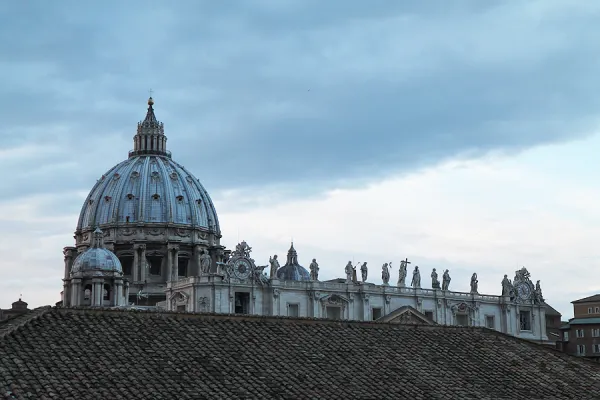
The Archpriest of St. Peter’s Basilica is in charge of the worship and pastoral activity of the basilica. The position is very ancient and has always been assigned to a cardinal. Since 1991, the Archpriest of the St. Peter’s Basilica is also the Pope’s vicar for the Vatican City State.
The position is important not only because the Archpriest is one of the Pope’s closest collaborators, but also because he manages and organizes the worship of the most emblematic temple in the Catholic world.
St. Peter’s Basilica includes 45 altars and 11 chapels, while the Vatican Grotto has several Marian chapels.
The daily Mass schedule in St. Peter’s Basilica lists one Mass per hour from 9 to 12 am, in Italian, at the Altar of the Chair. There is another Mass in Italian at 8.30 am at the altar of the Most Holy Sacrament, while every day at 5 pm, there is a Mass in Latin.
On Sundays, there are 5 Masses celebrated in Italian and one in Latin.
Beyond the regular Mass schedule, there is the possibility to celebrate Mass in every chapel of St. Peter’s Basilica. The chapels are booked by groups of pilgrims or individuals who celebrate Mass in their own language. In fact, every day, St. Peter’s Basilica is filled with celebrations in several languages at the same time.
The new Archpriest will be called to manage this. Will he keep things as they are?
There is a broad discussion among members of the Chapter of the Basilica regarding whether to keep the possibility to celebrate private masses in the Basilica or instead ruling that the pilgrims who want to take part in a Mass must be at the Masses already scheduled. The debate is also about a possible abolition of the daily Mass in Latin. The Mass is celebrated according to the Paul VI missal, so it is not a Mass in the extraordinary form.
A Vatican source with knowledge of the facts, who asked to remain anonymous, stressed with CNA that these discussions were also behind the power struggle that led to allegations of mismanagement at the Fabric of St. Peter. This institution takes care of the maintenance of St. Peter’s Basilica.
Following these allegations and investigation initiated by the Vatican prosecutor, Pope Francis made the unprecedented decision to put the Fabric of St. Peter under an extraordinary commissioner, Archbishop Mario Giordana.
According to Vatican sources, there seems to be two candidates to replace Comastri. One is Cardinal Konrad Krajewski, the Papal Almoner. Krajewski is in the Pope’s inner circle, and the Pope strongly appreciates his work for the poor. Among his initiatives are the installation of showers for the homeless in the St. Peter colonnade, the opening of two dormitories for the homeless in Vatican facilities around St. Peter Basilica, and the doctor and barbershop services on the side of the colonnade.
The other candidate would be Cardinal Mauro Gambetti. Cardinal Gambetti was the exiting Custodian of the Sacred Convent of Assisi. A Franciscan Conventual, Gambetti has no posts assigned yet. After his creation as cardinal, he went back to Assisi, waiting for the Pope’s call.
If Gambetti indeed becomes Comastri’s successor, his appointment could be the first step in a generational change in several Vatican top positions. Cardinals Marc Ouellet, Leonardo Sandri, Luis Ladaria, Giuseppe Versaldi, Beniamino Stella, and Giuseppe Bertello are all older than the retiring age. The pope could be already looking for their successors at the helm respectively of the Congregation for Bishops, for the Eastern Churches, for the Doctrine of the Faith, for the Catholic Education, for the Clergy, and at the Vatican City State administration.

[…]