No Picture
News Briefs

New York bishops condemn ‘dangerous’ surrogacy bill

January 8, 2020 CNA Daily News 0

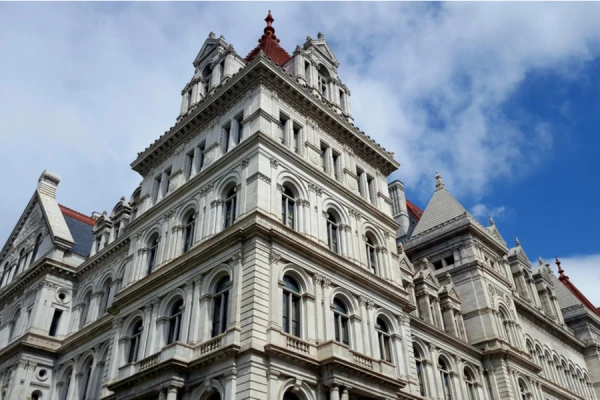
Albany, N.Y., Jan 8, 2020 / 04:00 pm (CNA).- The bishops of New York stated their opposition to commercial surrogacy Wednesday as a new bill was introduced to legalize the practice in the state.

“The surrogacy legislation is designed mainly to benefit wealthy men who can afford tens of thousands of dollars to pay baby brokers, at the expense of low-income women,” said a Jan. 8 statement from Kathleen M. Gallagher, director of pro-life activities for the New York State Catholic Conference.

A bill, A.1071 / S.2071, has been introduced in the state legislature which removes existing prohibitions on surrogacy contracts in New York. The Empire State is one of the few remaining states in the country not to have legislation on surrogacy. 

Under the legislation, embryos created in a laboratory through in vitro fertilization (IVF), using sperm and eggs that may or may not be from the legal parents, can be transferred to the uterus of a woman who, having agreed to be a surrogate mother, is contractually obligated to bear the child and give the baby back to the legal parents.

Gov. Andrew Cuomo, a Catholic, supports the legislation.

Regarding the practice of IVF, the Catechism of the Catholic Church paragraph 2376 teaches that:

“Techniques that entail the dissociation of husband and wife, by the intrusion of a person other than the couple (donation of sperm or ovum, surrogate uterus), are gravely immoral. These techniques (heterologous artificial insemination and fertilization) infringe the child’s right to be born of a father and mother known to him and bound to each other by marriage. They betray the spouses’ ‘right to become a father and a mother only through each other.’”

The New York Catholic Conference, which speaks on behalf of the bishops of the state, called the bill “a dangerous policy that will lead to the exploitation of poor, vulnerable women, and has few safeguards for children.” There are no safeguards such as residency requirements and background checks for surrogate parents, the conference says.

Other countries, including almost all European Union members, have begun moving away from the practice after cases of abuse of poor women acting as surrogates were made public.

India, Nepal, Thailand and Cambodia have banned the commercial surrogacy trade and the EU Parliament has found it to be a “serious problem” and one “which constitutes an exploitation of the female body and her reproductive organs.”

In addition, the legislation explicitly denies any and all rights to babies in utero, stating that they may not be viewed as a ‘child’ under the laws of New York, with the presumption that they must instead be viewed as manufactured products or disposable goods.

[…]

No Picture
News Briefs

Analysis: Why the McCarrick report could be delayed

January 8, 2020 CNA Daily News 3

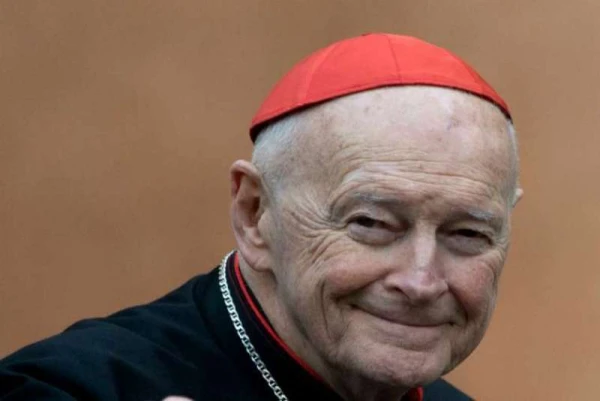
Vatican City, Jan 8, 2020 / 02:33 pm (CNA).- The news that Theodore McCarrick recently moved from the Kansas friary where he had been living has fueled speculation that a report from the Vatican’s internal investigation on McCarrick will soon be released.

But while the report may be completed in Rome, its release may not be imminent, and some U.S. bishops may be quietly hoping for further delays.

The report is the fruit of an internal Vatican investigation into the career of McCarrick, who was a cardinal and the archbishop of two major American sees before he was found canonically guilty of serial sexual abuse and laicized.

In October 2018, just months after sexual abuse allegations against McCarrick first emerged, the Vatican said that Pope Francis had commissioned a study of the Vatican archival files on McCarrick, “in order to ascertain all the relevant facts, to place them in their historical context and to evaluate them objectively.”

Since the study was announced, American Catholics have called for the release of its findings. In recent months, the report’s release has become highly anticipated.

In November, Cardinal Sean O’Malley told the U.S. bishops’ conference that the Vatican intended to publish the report “soon, if not before Christmas, soon in the new year.”

O’Malley said that he had seen a “hefty document,” which was being translated into Italian for the benefit of Pope Francis, before its imminent release.

“The long wait has resulted in great frustration on the part of bishops and our people, and indeed a harsh and even cynical interpretation of the seeming silence,” O’Malley acknowledged.

In December, Bishop Earl Boyea said he had told been told by the pope that the report would be issued “probably after the beginning of the new year.”

And McCarrick’s January move to an undisclosed priests’ residence was apparently motivated, at least in part, by a desire to avoid media attention when the report is released. That move has led to speculation that the report could be released at any time.

But some U.S. bishops may not be eager for the report to be released.

Some, of course, might be concerned about their own connections to McCarrick. But the saga of Fulton Sheen’s beatification suggests that some bishops might have other reasons to consider asking for the McCarrick report to be postponed.

Last month, the Diocese of Peoria, Illinois announced that the beatification of Archbishop Fulton Sheen, which had been set for Dec. 22, had been indefinitely delayed.

CNA soon reported that the delay was caused by an intervention from Rochester’s Bishop Salvatore Matano, who asked the apostolic nuncio in the U.S. to postpone the ceremony. Sources close to the Rochester diocese told CNA that among Matano’s concerns was the possibility of lawsuits against Sheen, who was Rochester’s bishop from 1966 to 1969.

New York is in the midst of a “window” that allows lawsuits related to sexual abuse that fall beyond the normal statute of limitations. That window closes in August.

New Jersey is also in a statute of limitations window, which began in December and ends in 2021. McCarrick served as a bishop in both New York and New Jersey, during the period in which he committed acts of sexual abuse and coercion.

In light of the Sheen beatification delay, it is reasonable to wonder whether some bishops in New York and New Jersey might borrow a page from Matano’s playbook, and ask that the McCarrick report be delayed, at least until August, when the New York window closes.

Obviously, no bishop would want to make such a request publicly. But the bishops of New York and New Jersey cannot be eager to face the litigation that could follow the McCarrick report. Some of them might decide to ask the apostolic nuncio, or the Secretariat of State, to consider that.

According to Boyea, Vatican Secretary of State Cardinal Pietro Parolin is already apprehensive about public fallout from the McCarrick report. The cardinal might be disposed to look favorably on their request, or to tie up the report in bureaucracy until after the New York window has closed.

Of course, any such request presumes that the report will offer new and significant details about the former cardinal’s career, protectors, and abusive behavior. It might not.

Veteran Vatican journalists are already predicting that long-time Vatican power broker Cardinal Angelo Sodano will not figure into the report, despite his significant influence during the John Paul II papacy. Some have also suggested that Cardinal Stanislaw Dziwisz, John Paul II’s long-time secretary, will also be notably absent from the report.

While Pope Francis promised in 2018 to “follow the path of truth wherever it may lead” on McCarrick, there is little indication how much of that truth will be made available for public consumption. Politics, horse-trading, and the reflexive Vatican tendency not to stir up trouble will doubtlessly be factors in negotiations over the report.

American Catholics are eager for a report telling them who promoted McCarrick, and who protected him.

Whenever it is actually released, the Vatican’s report may offer few satisfying insights into those questions.


[…]

No Picture
News Briefs

Louisiana Catholic church vandalized with graffiti

January 8, 2020 CNA Daily News 0

Lafayette, La., Jan 8, 2020 / 01:47 pm (CNA).- Last weekend, the property of a Catholic church in Louisiana was vandalized with black spray paint, including symbols of a satanic nature.

The graffiti was found on a statue, Marian grotto, and prayer altar outside of St. Theresa of the Child Jesus Catholic Church in Abbeville, La., just over 20 miles southwest of Lafayette.

One of the vandalized objects was a 70-year-old statue of Saint Therese of Lisieux. The symbols spray-painted on the statue included an upside-down cross, the word satan, and a pentagram. The police were called Jan. 4.

“Vandals came and defaced our statue of [St. Therese]. It’s sad that it’s not a random act of graffiti that some kids did. These are cult paintings, satanic cult, 666, an upside down cross,” said Trustee John T. Landry, according to KATC.

The damage to the grotto and prayer altar, which includes similar graffiti, was found this week when a parishioner came to pray at the Marian shrine. It is unsure if this vandalism occurred on the same night, and it had been overlooked when the police conducted their report.

Landry expressed sorrow for the attack, claiming the site as a place of peace and contemplation.

“Churches are places of peace and solitude and prayer. To see someone that malicious to not only put graffiti, but to put the devil’s work and signature on a Christian statue, is horrible,” he said, according to KATC.

While the property does have security cameras, the cameras were not pointed at the statue. Abbeville police department said the perpetrators are unknown and have offered a cash reward for information.

[…]

No Picture
News Briefs

Archbishop Warda: US-Iran tensions threaten Iraq’s Christian communities

January 8, 2020 CNA Daily News 0

Erbil, Iraq, Jan 8, 2020 / 11:48 am (CNA).- After Iran attacked an air base in Erbil early Wednesday, the Chaldean Archbishop of Erbil said the current tensions between Iran and the U.S. threaten the fragile Christian communities in Iraq’s Nineveh Plains.

“The current tensions between the two powers must not escalate. Iraq has been suffering from proxy wars for decades; they have torn our country apart,” Archbishop Bashar Warda told CNA Jan. 8.

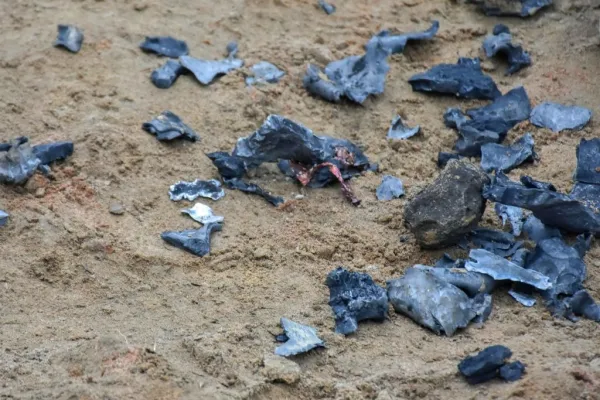
In retaliation for the U.S. drone strike that killed Qasem Soleimani, Iran fired a more than a dozen ballistic missiles at the Al Asad and Erbil air bases, where U.S. troops are stationed. There were no casualties from the attacks, according to U.S. and Iraqi forces.

U.S. President Donald Trump said in a speech Jan. 8 that he is asking NATO to become much more involved in the Middle East, and said Iran appears to be “standing down.”

Warda said his Catholic community in Iraqi Kurdistan is tired of war and its tragic consequences. “They have continually suffered far too much and can no longer face an unknown future,” he said.

“We are a courageous people of hope. Since the defeat of ISIS in May 2017 by the coalition forces, our archdiocese has been working with other church leaders, Christian agencies, humanitarian agencies, governments and NGOs  to help rebuild our fractured communities in Mosul and Nineveh Plain. It has been a very challenging road to raise funds and international support to help us to physically regain what we lost starting in August 2014. The current tensions are threatening the serious fragility of the communities,” Warda said.

Iraqi Christians “need the certainty, reassurance, hope and the belief that Iraq can be a peaceful country to live in rather than being victims and endless collateral damage,” he said.

The Archbishop of Erbil said he was united with the appeal from Cardinal Louis Raphael I Sako, Chaldean Patriarch of Babylon, prudently to seek civilised dialogue and to pray for peace.

“As Church leaders we will always follow the path of God in seeking peace, reconciliation, mutual dialogue and not conflict,” he said.

Fr. Benham Benoka, a priest of the Syriac Archeparchy of Mosul, said that he hopes the situation of Christians in the Nineveh Plains will be taken into consideration as Iran and the United States confront one another.

“We feel increasingly insecure, especially now that we are talking about the withdrawal of military forces,” Benoka said in an an Italian interview with Vatican Radio Jan. 8.

Fr. Benoka is currently based in Bartella, a Christian city fewer than 20 miles east of Mosul controlled by Shia militiamen.

Following Islamic State’s occupation of the Bartella, the city’s Christian population has been reduced to less than a third of what it was, according to the Associated Press, who reported in 2019 that Christians families were afraid to return to Bartella due to intimidation by the Shabak, a Shia ethnic group who make up the militias controlling the town.

“Since we returned, even if only partially, to our land, after the defeat of IS in October 2016, we have been engaged in the reconstruction of houses and churches. But there are other forces, such as the so-called ‘Thirty Brigade’ of Shiite Shabak Muslims, who have taken control of the Christian city of Bartella and every day we must suffer their aggressive acts against churches and against our Christians, especially against women. This is why we have been asking for a solution to our situation for some time,” Fr. Benoka said.

The Iraqi priest said that he was particularly concerned to hear that the Iraqi parliament voted to ask the government to end the presence of international coalition forces.

“We only have 24 soldiers from the so-called NPU, the Protection Units of the Nineveh Plain, that is, Christian popular mobilization forces, and these 24 soldiers will never be able to defend us. So how can we do it? Where should we go?” he said.

“We truly pray that the military solution is not the only solution, but that there is a diplomatic solution to protect Iraqi blood,” the priest said.

Fr. Benoka said that his community prays the rosary every day for solutions to the problems facing the Iraqi people: “We ask that everyone agree – politicians and everyone else – to solve the problems that our Iraqi people suffer from, instead of chasing the interests of other foreign agendas.”

“We ask that the situation of us Christians here in the Nineveh Plain be taken into consideration: we have neither weapons nor anything,” the priest said.

[…]