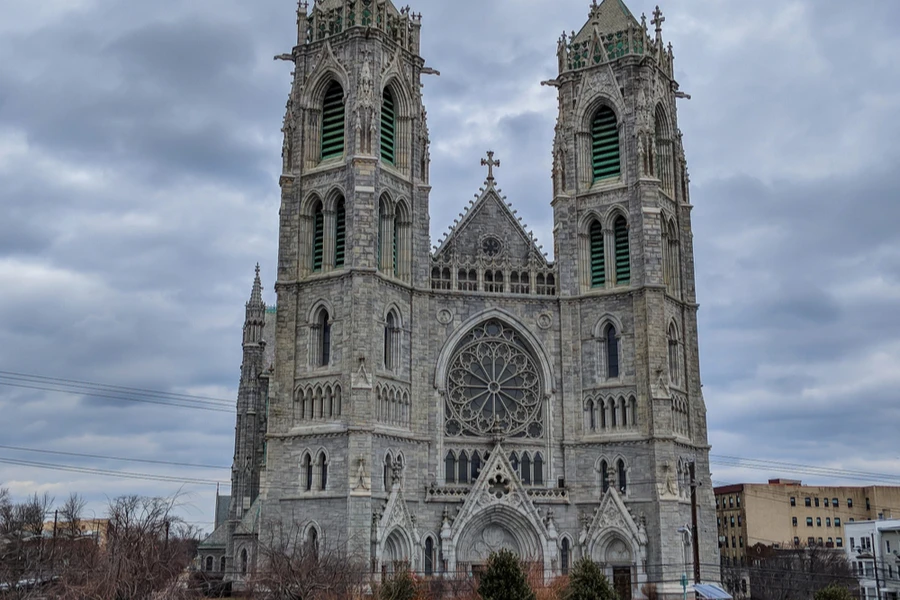
Newark, N.J., Feb 12, 2019 / 05:00 pm (CNA).- The five Roman Catholic dioceses of New Jersey announced on Monday the creation of the Independent Victim Compensation Program (IVCP) for survivors of sexual abuse as minors by clerics in the state. The program will not handle claims of sexual abuse involving adults, including seminarians.
The IVCP will be administered by victims’ compensation experts Kenneth R. Feinberg and Camille S. Biros, according to a statement from the IVCP that was emailed to CNA and posted on the websites of the New Jersey dioceses.
Feinberg and Biros were involved in the creation of compensation programs for abuse survivors in New York and Pennsylvania, as well as in the administration of the 9/11 Victim Compensation Fund and the BP Gulf of Mexico Oil Spill Fund.
“Cardinal Joseph Tobin of Newark and the Bishops throughout New Jersey have united in going further than any other state in establishing such a compensation program,” said the statement.
While dioceses in other states such as New York and Pennsylvania have created programs to compensate abuse survivors, the IVCP is unique in being statewide program that involves every diocese agreeing to follow the same compensation protocol.
“The program provides victims with an attractive alternative to litigation,” said the statement, and will give abuse survivors a “speedy and transparent process to resolve their claims with a significantly lower level of proof and corroboration than required in a court of law.”
After agreeing on and receiving a settlement, the abuse survivor will not be able to pursue additional legal action against the diocese. All settlements will be funded by the dioceses themselves.
The first phase of the program will give “priority” in compensation to those who have already filed a complaint about abuse committed by a member of the clergy.
The statement from the IVCP confirmed that abuse survivors who have not previously reported their abuse will be eligible to join phase II of the program. These claims will be reviewed by Feinberg and Biros, and survivors will be compensated if their claims are found eligible.
According to the IVCP, Feinberg and Biros will “act independently” in their administration when evaluating claims and deciding levels of compensation. The dioceses will not be able to appeal the decisions made by the administrators.
“[The participating dioceses] have assured us that we have complete discretion in deciding who is eligible to receive compensation and the amount to be paid to the individual victim,” Biros said in the statement.
The IVCP has been in the works since mid-November 2018. At that time, a statement was published by the Archdiocese of Newark announcing that some sort of compensation program would come together in the near future.
A draft of the IVCP protocol will be released on March 1, and a final version will be implemented after a 30-day comment period. After the final version is adopted, the IVCP will commence receiving claims.
All claims must be submitted before December 31, 2019.
The IVCP is limited to those who were abused as minors. According to (Amy Weiss, the PR lady for Feinberg and Biros? I don’t know how to phrase this) there are no plans at this time to create a similar fund for those who were abused as adults, including by Archbishop Theodore McCarrick.
McCarrick, who resigned from the College of Cardinals in July after being credibly accused of abusing two minor boys, was the Bishop of Metuchen from 1981 until 1986 and the Archbishop of Newark from 1986 until 2000.
In 2005, the Archdiocese of Newark and the Dioceses of Metuchen and Trenton paid an $80,000 settlement to Robert Ciolek, who was abused by McCarrick while he was a seminarian. A $100,000 settlement was paid in 2007 to a man who says he too was abused by McCarrick when he was in seminary.
Both of these settlements were first disclosed after McCarrick was accused of abusing a minor.
 […]
[…]



There were two Senate votes made public identifying the individual Senators. The first vote was 23 for the legislation to 7 against. The second vote was 22 to 8. One Senator switched.