No Picture
News Briefs

Kenyan bishop: Poor could be exploited in COVID vaccine trials

May 14, 2020 CNA Daily News 0

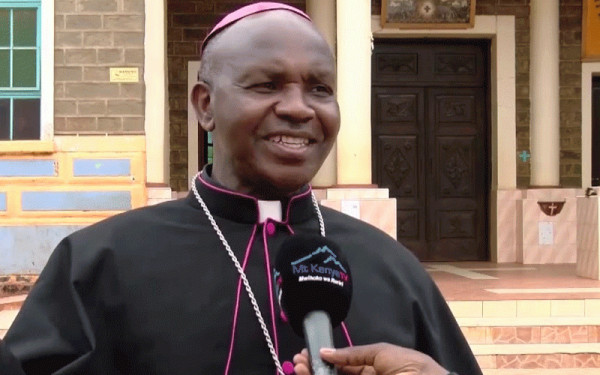
Nairobi, Kenya, May 14, 2020 / 01:05 pm (CNA).- A Kenyan bishop said testing potential coronavirus vaccines on his countrymen could disrespect human dignity, and amount to a breach of the country’s constitution, especially if Kenyans are not fully informed of the risks involved in testing new drugs.

“Whereas the Covid-19 pandemic is a grave matter at hand, it should not in any way be used to compromise the rights and dignity of the citizens” of Kenya, Bishop James Wainaina of the Diocese of Murang’a said May 7.

Because “vaccines or drugs may have side effects on the citizens, we must be convinced of the safety of the same and preservation of the citizens’ dignity.”

“Everything should be done with maximum openness, and testing should not be carried out on unsuspecting citizens,” he added.

The bishop’s statement came after Kenyan media reports that drugs and vaccines in development to treat COVID-19 could be tested in the country.

“The media has been awash with many messages and video clips talking about the intentions of foreign research agencies to come to Kenya to test some Coronavirus vaccines and drugs,” Wainaina said.

“This matter has left many Kenyans wondering whether the circulating information has been true or not.”

The bishop made particular reference to a May 5 report from Kenya’s highest circulation newspaper, Daily Nation, which claimed that “local researchers participating in an international study are seeking final approval from agencies to test three drugs on Kenyans.”

The bishop said that alleged testing plans are disrespectful to Kenyans and a possible indicator of opportunistic tendencies by foreign agencies to take advantage of the “poor” who are bribed into human subject research unethically. 

“The ‘Glory of Kenya’ that we sing about in our national anthem implies that Kenyans deserve respect,” Bishop Wainaina observed.

“All of us must remain vigilant to the foreign insurgences, including research agencies that plan to come and lure poor Kenyans with money, and instill fear of the disease in order to get people to agree to undergo trials of such vaccines and drugs.”

“Poverty, it must be said, or sickness does not remove the dignity of a person. The dignity of the poor must nevertheless be protected,” he added.

Wainaina noted that Kenya’s constitution requires the opportunity for public participation in decisions concerning a matter as serious as human drug trials.

“The fact that this matter was circulating in the media and the Government failed to address it openly leaves the public with more questions than answers,” Bishop Wainaina noted in his May 7 statement.

According to the Daily Nation, the principal local investigator in the study, Dr. Loice Achieng Ombajo, said her team’s submissions have been approved by a government ethics committee, and are now awaiting final approval from two additional government oversight boards.

“If the two agencies of research mentioned in the Nation Newspaper have already obtained initial approvals, it would be important for our Government to tell Kenyans how they got the approvals,” the bishop said.

“In the spirit of our Constitution, was there any public participation or approval by Parliament?”

The bishop urged “authorities to take the necessary steps, even to deny such agencies entry into our country to carry out trials of vaccines and drugs until the safety of Kenyans and their dignity are guaranteed.”

He pleaded with Kenya’s President Uhuru Kenyatta “not to allow any medical practice, whether by local or foreign agencies, that would compromise the dignity of Kenyan citizens.”

As of May 14, Kenya had recorded 758 cases of COVID-19, including 284recoveries and 42 deaths. There are at least 76,000 confirmed cases across Africa, while at least 4.5 million have been infected globally.

“Kenya is not the worst hit country in Africa and in the world,” the bishop noted.

“One is left wondering about the wisdom of choosing Kenya as the testing ground for the vaccines and drugs.”


A version of this story was first published by ACI Africa, CNA’s African news partner. It has been adapted by CNA.


[…]

No Picture
News Briefs

NY judge upholds Child Victims Act after challenge by Rockville Centre diocese

May 14, 2020 CNA Daily News 0

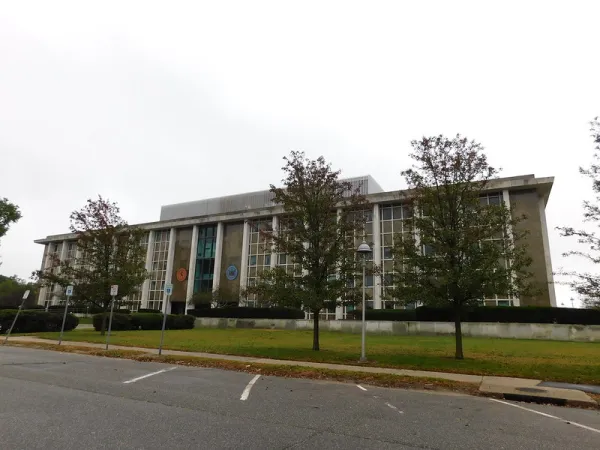
CNA Staff, May 14, 2020 / 12:01 pm (CNA).- A judge ruled Wednesday that New York’s Child Victims Act is constitutional, rejecting a suit filed by the Diocese of Rockville Centre that claimed the law is barred by the due process clause in the state constitution.

The act opened a one-year window for adults in the state who were sexually abused as children to file lawsuits against their abusers. It also adjusted the statute of limitations for both pursuing criminal charges and civil suits against sexual abusers or institutions where the abuse took place.

“The court finds the Child Victims Act is a reasonable response to remedy the injustice of past child sexual abuse,” Justice Steven Jaeger of the New York Supreme Court in Nassau County wrote in his May 13 decision. “Accordingly, it does not violate defendant diocese’s right to due process under the New York State Constitution.”

Newsday, a Long Island daily, reported that Jaeger “said New York courts have upheld suspensions of time limitations as a remedy in extraordinary cases,” and on this basis he held the law to be a reasonable response.

Sean Dolan, spokesman for the Rockville Centre diocese, said that “We disagree with the court’s ruling on the due process challenge to the Child Victims Act and we are analyzing our options with respect to appeal of this and other issues.”

The law’s one-year window opened in August 2019. It was to have expired Aug. 13, 2020, but was extended by governor Andrew Cuomo this week by five months, to Jan. 14, 2021, due to court delays caused by the coronavirus.

According to Newsday, 44 suits have been filed against the Rockville Centre diocese under the the Child Victims Act. Across the state, more than 1,700 have been filed.

The diocese had filed its motion in November 2019. It said the Due Process clause “allows the legislature to revive formerly time-barred claims only where they could not have been raised earlier,” which it adds “is not so here.”

“The formerly time-barred claims revived by the legislature pursuant to the Child Victims Act all could have been brought within the then-applicable three- or five-year period, after plaintiffs attained the age of majority,” according to the diocese.

The diocese added that the state Court of Appeals “has held that the Due Process Clause allows for the exercise of what it has characterized as an exceptional legislative power ‘to remedy an injustice’ created by circumstances that prevented the assertion of a timely claim.”

It said claims under the Child Victims Act “do not fit within the scope of this narrowly circumscribed legislative authority.”

The Child Victims Act was signed into law in February 2019. In addition to opening a one-year window for suits, it allows child abuse victims to file criminal charges up to age 28, and lawsuits up to age 55. Previously, they had until the age of 23 to file charges or a civil claim.

Dolan said the diocese is committed to providing “pastoral care and equitable compensation” to child sex abuse victims through its independent reconciliation and compensation program.

As of August 2019 that program had paid a little more than $50 million to 277 claimants since its 2017 institution. Between 75 and 80 claims were still being processed, and 370 people had filed claims with the program.

The day the one-year lookback was opened, Bishop Robert Guglielmone of Charleston was named in a lawsuit accusing him of sexually abusing a young man while he was a priest of the Rockville Centre diocese, starting in 1978. The bishop has said he is innocent of the accusation.

In January 2019 Dennis Poust, director of the New York Catholic Conference, told CNA the conference had not opposed the final version of the act, which provided the same protections for child abuse victims in public insitutions, including schools, as it did for private institutions.

Earlier versions discriminated between public and private institutions, but once that was amended “the conference dropped any opposition to its passage,” he said.

When the bill was passed, the New York bishops issued a joint statement saying, “We pray that the passage of the Child Victims Act brings some measure of healing to all survivors by offering them a path of recourse and reconciliation.”

Earlier this month the Diocese of Buffalo asked a federal court to halt all outstanding clergy sex abuse litigation against it as it navigates bankruptcy proceedings.

[…]

No Picture
News Briefs

Saint Paul-Minneapolis priests adapt to bring sacraments to COVID-19 patients

May 13, 2020 CNA Daily News 0

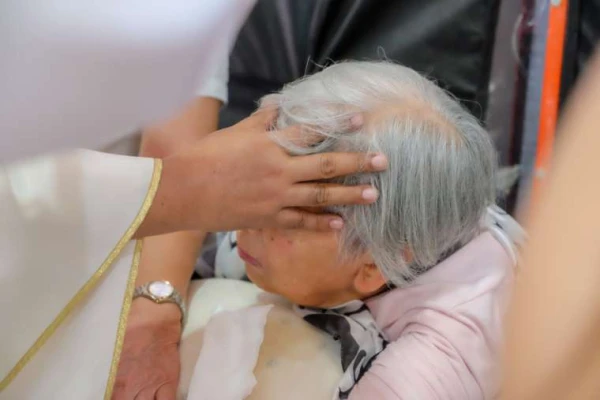
Denver Newsroom, May 13, 2020 / 05:42 pm (CNA).- The Archdiocese of Saint Paul and Minneapolis has assembled a team of 30 priests ready to administer last rites— confession, communion, and anointing of the sick— to COVID-19 patients.

All the priest-volunteers on the “Anointing Corps,” which launched early this month, are under 50, and most are parochial vicars. The team has anointed at least a dozen patients so far, the archdiocese said May 12.

Auxiliary Bishop Andrew Cozzens, who is spearheading the initiative, told CNA that priests from the Anointing Corps have been called to several nursing homes already.

“The nursing homes, I think, have just been happy that we’re handling it professionally,” Cozzens said.

On some occasions, he said, the anointing priest has been able to “live-stream” the anointing of the sick person to their family outside the nursing home, since they are not able to be there in person.

The Archdiocese of Chicago in early April assembled a team of 24 priest volunteers— all under age 60, and without pre-existing medical conditions— to administer anointing of the sick to Catholics with COVID-19 during the coronavirus pandemic.

Cozzens said he looked to Chicago for guidance on how to assemble their own team.

The key for the St. Paul and Minneapolis “Anointing Corps”, he said, has been their training and professionalism. In addition to the priests, their archdiocesan team has triage nurses working on it, he said— people who know how to communicate effectively with hospital staff.

“We haven’t been able to get into every nursing home— nor every hospital— because of the protocols, but we’ve been making a lot of progress,” Cozzens said.

The priests on the team have received the same personal protective equipment training as the doctors and nurses, he said.

“The key for us has been convincing the hospitals and nursing homes that we have a really good protocol, and that our priests are trained and know what they’re doing.”

Several of the hospitals and nursing homes where priests have performed anointing, Cozzens said, have been especially welcoming of and grateful for the priests’ ministry.

Most care centers have been helpful in providing the PPE that the priests need in order safely to  enter the room and physically touch the patient when anointing them.

“The ones that are really helpful understand the importance of care at the time of death, and have been understanding that for us as Catholics, actual sacramental contact at the time of death is really important. And they’ve been understanding of that reality, and have provided us what we need to be able to do that.”

Cozzens encouraged other local Churches wanting to create their own anointing teams to consult with medical experts and make sure the priests are well trained in what they are being asked to do.

“Having a professional and consistent approach has been the key to hospitals letting us in,” he said.

Father Joseph Gifford, associate pastor of Church of All Saints in Lakeville typically serves as a nursing home chaplain.

His ministry as a chaplain normally would consist of celebrating Mass for the Catholic residents at four or five area nursing homes once or twice a month. In addition, Father Gifford would normally often be called to hear confessions and administer the anointing of the sick to residents.

Father Gifford said he is glad that it is he— as All Saints’ parochial vicar— who is tasked with anointing COVID-positive patients, and not his pastor.

“That way, my pastor can see the non-COVID-19 patients who are still in danger of death for all the other reasons,” he said.

“In my short experience as a priest, I can always look forward to going and saying Mass at the nursing home, and it’s going to be the same people,” adding that he looks forward to “getting to know them better, and share life and share God with them.”

Father Gifford was a trained singer before he entered the seminary, and told CNA he has used his gift of singing to entertain residents at the nursing homes he serves at by singing to them outside their windows.

In addition, since no one currently can visit the area nursing homes in person, All Saints parish has set up a “calling tree” of staff members and volunteers in order to regularly check on parishioners over 65.

He says he most misses the in-person interaction with the residents, and looks forward to the opportunity once more to talk with the residents in person.

The archdiocese has also set up a site where Catholics can commit to daily prayer for health care workers.

The Archdiocese of Boston also has assembled anointing teams of priests. In that local Church, the priests are housed together in strategic locations close to hospitals.

Throughout the country, chaplains at hospitals and nursing homes have had to adapt their ministry to protect the elderly and those at greatest risk of contracting COVID-19.

Father Hugh Vincent Dyer, a Dominican priest in New York, took up residence in the nursing home where he has served as chaplain since December 2019. There are about 360 elderly residents at the nursing home, not all of them Catholic, the Federalist reports.

To continue to minister while keeping his distance, Father Dyer has been broadcasting Mass, the rosary, and meditations from the facility’s chapel via closed-circuit television.

He also has been using the CCTV system to screen films, some of which he has found “can trigger forgotten memories and fascinating stories.”

In addition, he has been broadcasting a weekly “Cultural Miscellany,” during which he reads poetry— some of which are favorites that the residents have specifically requested— and offers reflections on them.

[…]