The Dispatch

When I die, do not cremate me!

May 15, 2020 Casey Chalk 25

There’s something inexplicably profound about the dead, buried body, even as it decays to bones and dust. It reminds man of his morality, while suggesting, via the tension of a corpse that looks and feels […]

No Picture
News Briefs

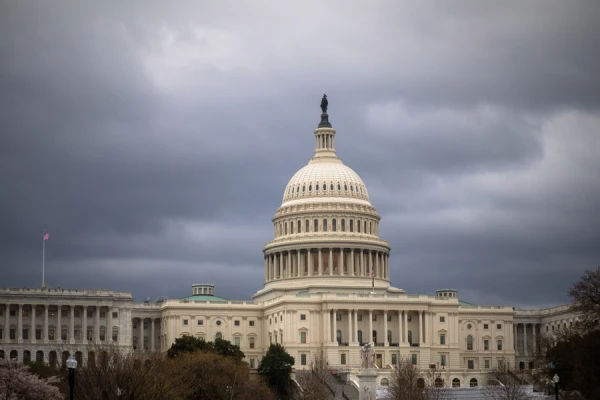
New coronavirus relief bill could fund abortions

May 15, 2020 CNA Daily News 0

CNA Staff, May 15, 2020 / 01:30 pm (CNA).- As the House on Friday prepares to vote on another coronavirus relief package, pro-lifers warn that it could be used to fund abortions.

The $3 trillion Health and Economic Recovery Omnibus Emergency Solutions (HEROES) Act (H.R. 6800) is scheduled for a vote in the House on Friday.

It provides funding for state and local governments, assistance to hospitals, and direct payments to American families along with funding unemployment insurance. It also sets up a strategic plan for testing for the virus.

However, the White House has already said it will veto the legislation, and Senate Majority Leader Mitch McConnell has declared it dead on arrival in the chamber, saying that “I don’t think we have felt yet the urgency of acting immediately.’”

Senators have already said that a bill would not pass the chamber before Memorial Day, according to The Hill.

“He [McConnell] wants us to just ‘pause.’  He wants us to just pause.  But families know that hunger doesn’t take a pause, not having a job doesn’t take a pause, not being able to pay the rent doesn’t take a pause,” Pelosi said on Thursday.  

Pro-life leaders have already pointed out that the stimulus bill fails to put Hyde protections in critical spots—thus allowing for taxpayer funding of abortions. The Hyde Amendment bars federal funding of elective abortions.

Marjorie Dannenfelser, president of the pro-life Susan B. Anthony List, said on Thursday that the legislation “is full of giveaways to the abortion lobby.”

“Shame on the Pelosi Democrats for exploiting a national emergency to foist a radical abortion agenda on the American people,” Dannenfelser said.

“Not only does the bill fund abortion and health plans that cover abortion, it includes subsidies to the abortion industry,” she stated.

In the CARES Act, the first stimulus bill that passed Congress in March, Planned Parenthood was left out of emergency small business loans because of a 500-employee limit for non-profits to be eligible for Paycheck Protection Program (PPP) loans. The current bill amends the regulations to allow for Planned Parenthood to access PPP loans.

Hyde protections are not included in the legislation’s funding of state and local governments, and are not attached to subsidies for COBRA premiums or other coverage for furloughed workers that could include abortion coverage.

Republicans have also criticized the bill for possibly sending direct stimulus checks to undocumented immigrants, mandating blanket release of prison inmates while putting the burden of justifying their continued detention on governments, and freezing any further work requirements for food stamps.

“We urge Congress to continue to put partisan agendas aside and remember that the real heroes across America are working and making sacrifices to save lives, including the lives of the unborn,” Dannenfelser said.

[…]

No Picture
News Briefs

Senate approves Uyghur human rights bill

May 15, 2020 CNA Daily News 1

CNA Staff, May 15, 2020 / 12:30 pm (CNA).- The Senate approved a bill on Thursday to sanction Chinese leaders complicit in the persecution of Uyghur Muslims.

The Uyghur Human Rights Policy Act, authored by Sen. Marco Rubio (R-Fla.) and co-sponsored by… […]

No Picture
News Briefs

Coloradans gather final round of signatures for late-term abortion ban

May 15, 2020 CNA Daily News 0

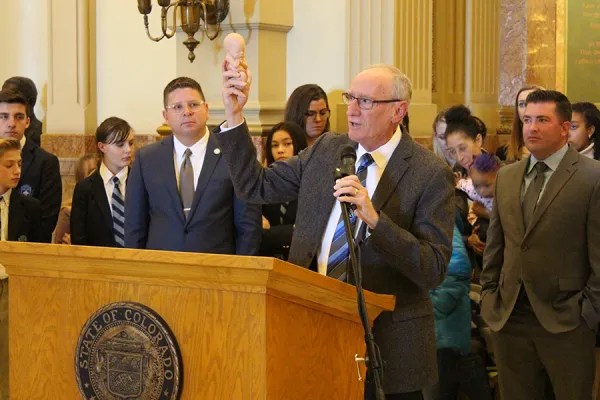
Denver, Colo., May 15, 2020 / 11:01 am (CNA).- A coalition of volunteers in Colorado hopes to gather enough signatures in the next two weeks on a petition to put a late-term abortion ban on the November ballot – an effort complicated by restrictions related to the coronavirus pandemic.

The Coalition for Women and Children, a Christian group led by Giuliana Day, filed the petition during July 2019 with the Colorado Secretary of State. The initiative would ban abortions in the state after 22 weeks, with an exception to save the life of the mother.

Colorado remains one of the only states where late-term abortion is not, under law, explicitly protected or restricted. As a result, abortions can take place up until birth. Notably, the Boulder Abortion Clinic is one of just a handful of clinics in the U.S. that publicly accept patients seeking late-term abortions from anywhere in the world.

The organization of volunteers supporting the petition – known as Due Date Too Late – was originally tasked with collecting nearly 125,000 signatures within a six-month time limit in order to have the question appear on the ballot in November 2020.

The original deadline to submit the signatures was March 4. When the Colorado Secretary of State’s office counted the 137,624 signatures that the group submitted, it ruled only 114,647 of them valid— about 10,000 too few for the initiative to make it onto the ballot.

Now, the volunteers have two weeks, what is known as a “cure period,” to make up the signature deficit by gathering new signatures and encouraging those whose signatures were ruled invalid to re-sign.

The Archdiocese of Denver is encouraging Catholics to sign the petition.

“Our efforts are really focused on getting new signatures, and then whatever can be ruled valid that was previously invalid is going to be helpful, but we don’t want to count on that. So we want to make sure we get the new ones,” Deacon Geoff Bennett, vice president of parish and community relations for Catholic Charities of Denver, told CNA.

The cure period was originally set to begin April 27, but a district court judge granted Due Date Too Late a delay until May 15 because of the continued restrictions related to the coronavirus.

Governor Jared Polis’ statewide stay-at-home order ended April 26, but the state remains under a “safer-at-home” policy, whereby all are encouraged to stay at home and avoid unnecessary interactions whenever possible, and to comply with social distancing requirements.

Beginning May 15, there will be approximately 100 signing locations throughout the state staffed by over 400 volunteers from Due Date Too Late. Many of the original signers of the petition were Catholic or Evangelical Christian, and as a result most of the signing locations are places of worship.

Because Colorado is a large state and coronavirus restrictions and recommendations vary, the organizers are asking all signature collectors to check on the most current social distancing guidelines with their county, rather than issuing their own guidelines.

The organizers have, however, offered suggestions to volunteers such as offering a new, clean pen to every signer, as well as offering hand sanitizer to each signer.

All public and private gatherings remain limited, by the governor’s order, to no more than ten people.

The organizers used geomapping based on the data they collected about the original signers of the petition to determine the best locations to send volunteers to collect signatures.

The group will be collecting signatures through May 28, since the signatures need to be submitted by May 29. The plan is to collect about 15,000 signatures in the next two weeks.

In an April 24 statement, Due Date Too Late stated that a sample of 40,000 signees showed “broad-based, bipartisan support,” with 40% of those sampled members of the Democratic Party or unaffiliated.

Bennett encouraged anyone who has already signed the petition to check whether their signature was accepted; the Secretary of State rejected many of the signatures, he said, because the signers’ information did not exactly match their voter registration.

There are other potential issues other than voter registration mismatches. For example, the petition circulator may have filled out their affidavit incorrectly, which in some cases invalidated entire packets of signatures.

While signers whose signatures were previously ruled invalid will have the opportunity to re-sign, new signatures are preferable, organizers have told CNA.

If the late-term abortion ban passes in November, it would mark the first time since 1967 that Colorado would impose voter-approved restrictions on abortion.

Lauren Castillo, director of church relations for Students for Life of America and spokesperson for Due Date Too Late, told the press in February that in Colorado in 2019, at least 323 abortions were performed on babies after 21 weeks gestation.

“The vast majority of these late term abortions are done on babies without adverse late-term fetal diagnoses, or serious health risks in the pregnancy, and without life threatening circumstances for the mother,” Castillo said.

“They’re done electively, and are not necessary. And in an emergency situation that would be life threatening to the mother, a c-section is a far safe procedure than a late-term abortion.”

Bennett noted that abortion-rights groups in Colorado touted the fact that for a time during the pandemic, many women from other states were traveling to Colorado to take advantage of the state’s permissive abortion laws.

Abortion clinics in states like Colorado, Nevada, and New Mexico, which did not introduce any pandemic-related restrictions on abortion, saw increases in patients traveling from other states, such as Texas, to undergo the procedure.

“We want to encourage people to make a stand for life, especially in the environment that we’re in [the pandemic] where we’re so concerned about life,” Bennett said.

Colorado was the first state in the nation to decriminalize abortion. The initial legislation, signed into law April 25, 1967, allowed abortion in certain limited cases: rape, incest, or a prediction of permanent mental or physical disability of either the child or mother. Six years later, the U.S. Supreme Court’s ruling in Roe v. Wade declared abortion a constitutional right nationwide.

[…]

No Picture
News Briefs

St. Peter’s Basilica is sanitized ahead of reopening to public

May 15, 2020 CNA Daily News 1

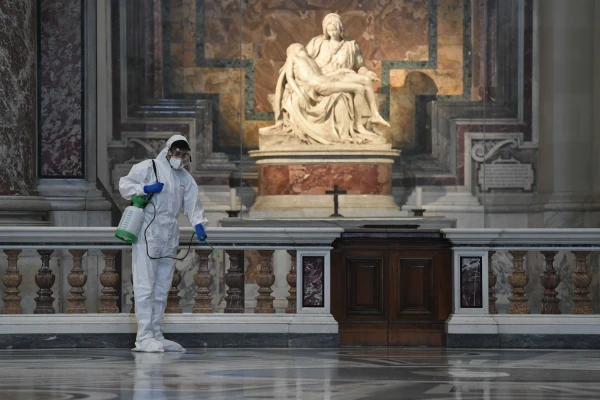
Vatican City, May 15, 2020 / 10:15 am (CNA).- Ahead of its eventual reopening to the public, St. Peter’s Basilica is being cleaned and sanitized at the direction of the Vatican’s health and hygiene department.

Public Masses will resume throughout Italy from May 18 under strict conditions.

After being closed to visitors and pilgrims for more than two months, the Vatican basilica is preparing to open again, with increased health measures, though the exact date has not yet been announced. 

Friday’s sanitation procedure began with a basic cleaning with soap and water and has proceeded to disinfecting, according to Andrea Arcangeli, the vice director of Vatican City State’s health and hygiene office. 

Arcangeli said staff are disinfecting “the pavements, the altars, the sacristy, the stairs, practically all the surfaces,” while taking care to not damage any of the basilica’s artworks. 

One of the additional health protocols St. Peter’s Basilica may adopt as a precaution against the spread of coronavirus is checking visitors’ temperatures, the Holy See press office said May 14.

Representatives of the four major Roman basilicas – St. Peter’s, St. Mary Major, St. John Lateran, and St. Paul Outside the Walls – met May 14 under the auspices of the Vatican Secretariat of State, to discuss this and other possible measures to adopt.

Holy See Press Office Director Matteo Bruni told CNA that each papal basilica would adopt measures that reflected their “specific characteristics.”

He said: “For St. Peter’s Basilica, in particular, the Vatican Gendarmerie will provide for access restrictions in close collaboration with the Inspectorate for Public Security and will facilitate safe entry with the assistance of volunteers from the Sovereign Military Order of Malta.”

Rome’s churches are also being sanitized ahead of the restart of public liturgies May 18.

After a request from the Vicariate of Rome, nine teams of hazardous-material specialists have been dispatched to disinfect inside and outside Rome’s 337 parish churches, according to the Italian daily newspaper Avvenire.

The work is being carried out through the cooperation of the Italian army and Rome’s environmental office.

During public Masses, churches in Italy will be required to limit the number of people present – ensuring a one-meter (three feet) distance – and congregants must wear face masks. The church must also be cleaned and disinfected between celebrations.

[…]