
Denver, Colo., Oct 18, 2018 / 04:00 am (CNA).- Tonia Borsellino knows she’s a part of the “one percent” in the U.S. It doesn’t bother her. In fact, she seems proud.
She’s actually Sister Tonia Borsellino. And as a newly-veiled, 23 year-old novice with the Mercederian Sisters, she is among the one percent of religious sisters in the United States under the age of 40.
While her life, and the lives other young religious, may look different from those of their lay counterparts, Borsellino and other young religious say they are looking for similar things from the bishops participating in the Vatican’s synod of bishops on young people, taking part in Rome this month.
CNA spoke with several young consecrated religious sisters and brothers about their hopes for the synod.
Chief among their concerns is authenticity – they want leaders who are honest and holy; they want their bishops to be unafraid to speak the full truth of the Gospel to young people, even when it’s hard.
Brother Lawrence Johnson, 29, is a friar with the Franciscan Friars of the Renewal in Bronx, New York.
Johnson, who participated in a pre-synod meeting in Rome with other young people, told CNA that authenticity was one of the key concerns of the delegates at that meeting. The words “authentic” or “authenticity” appear seven times in the 14-page document from that meeting.
“We talked at the pre-synod meeting about the power of testimony and personal witness as something that really resonates with young people, and so I think to see Church leaders…give their own testimony to the power of their encounter with Christ is something youth need to hear,” he said.
It’s particularly important at this specific time in the Church, he said – the months just after the so-called “summer of hell”, when sexual abuse scandals continued to break throughout the Church in the United States and other countries throughout the world.
Young people need an answer from their leaders as to why they are still Catholic even in difficult times, Johnson said, “because even religious and priests can have a temptation to discouragement.”
“So I think we need to talk about what’s happened, to speak credibly and authentically, but at the same time with joy and fervor…centered on the center of our faith, on the reality of God’s love manifested in Jesus Christ.”
Sister Benedicta Turner of the Daughters of St. Paul is another young sister – “yes, we exist!” – who hopes that the synod fathers recognize young people’s desire for clarity and truth, even when it is difficult.
“It is a generation that strongly values clarity and authenticity, perhaps to a fault. Slick, expensive presentations go ignored while raw, sincere testimony is held with reverence,” she said.
Turner said that Church leaders need to return to an authentic presentation of the totality of the Gospel, and to challenge rather than compromise with the current culture.
“I think we need leaders who are willing to answer the hard questions young people are asking, who are more inclined to engage the culture than to make excuses for it, and who are willing to admit mistakes and failure with honesty and humility,” she said.
“We need leaders who are unafraid to give us the Gospel in its most intense, undiluted form; the Gospel for which the martyrs offered their lives and whose beauty has inspired countless works of art over the centuries,” she added.
Only this kind of engagement with the Gospel and the hearts of young people will be effective in calling them out of complacency and into relationship with Christ, she said.
Br. Neil Conlisk, a 30 year-old Carmelite brother, told CNA that he feared the synod’s bishops would not listen to young people’s desire for authenticity and truth and that they would continue on with “business as usual” and talk past young people.
“No one wants a worldly Church,” he said. “I fear that the Synod Fathers will try to change the Church in the name of the youth, but this ‘change-the-church’ fever is a symptom of the illness that has caused the long decline, and we simply cannot afford to destroy the Church any more.”
“We are hearing, from many bishops, moralistic therapeutic deism, but we want the fullness of the faith within the one, holy, catholic and apostolic Church,” he added.
In addition to speaking the truth, Johnson said that what he hopes arises from the synod is a greater recognition throughout the Church of the need to live lives of holiness, so that young people have examples to follow in the Christian life.
“Young people need to see examples of holiness so that they know that Christianity is true, it’s beautiful and its attainable,” he said.
When young people need to see that there are Christians who “weren’t born perfect, but there are people who admit their weaknesses and rely on the Lord’s strength and are able to lead lives of holiness,” whether that person is a bishop or a priest or a lay member of the Church, he said.
This need for examples of Christian holiness is not new, Borsellino told CNA, but it is a constant need throughout the history of the Church.
“Young people need radical, authentic witnesses of the Gospel in this world that are willing to speak to their hearts,” she said. “It has always been and will always be a need. Jesus knew that well when he formed those intimate relationships with his disciples.”
Vocational discernment is another point of focus for the youth synod. As young people who have discerned at least the first few steps of a religious vocation, many of the young religious CNA spoke to said they hoped the synod bishops would emphasize the importance of a relationship with Jesus through prayer and the sacraments as key to discernment.
“Discernment is about listening to God’s voice and one cannot do that without having a relationship with Jesus,” said Sr. Kathryne of the Holy Trinity, a 26-year old with the Mercederian Sisters. “Then once that relationship is established, it cannot remain stagnant.”
Johnson said he was surprised by the strong desire for increased access to the sacraments and Eucharistic adoration expressed by the delegates at the pre-synod meeting – something that has been echoed in synod’s working document.
“When it comes to questions of discernment and being disposed to discern God’s will, I think focusing on silence and being in the presence of Christ (particularly) in the Eucharist” are important, he said.
Another desire of young people expressed in the pre-synod document was for more formation in the faith. Borsellino said she was surprised by how many basic things about the faith she did not know until she began religious life, and emphasized the need for ongoing formation even after young people are confirmed.
“…it is important for the Church to educate the faithful because the desire will then grow in them to continue pursuing that truth,” she said.
“Especially ministering to young people, post-confirmation, when the sense of ‘obligation’ to continue practicing the faith is lost if there is not an understanding of the faith or deep love for Christ in their hearts.”
Overall, Borsellino said she is encouraged that the bishops are trying to listen to the young people of the Church, and encouraged Catholics not to be too discouraged by the growing number of young people who are religiously unaffiliated.
“I think the messages from the youth synod so far are proof of a desire that young people have for Truth, who is Jesus Christ,” she said. “There might not be many young people filling the pews right away but souls are being transformed. Look at the attendance at World Youth Days or FOCUS conferences,” she said.
“Young people might just go for fun at first, but then something clicks because we encounter Christ’s real presence in our lives.”
She added that parishes and the whole Church community need to support each other in the journey to sainthood.
“We must all, young and old, pray for each other!”
 […]
[…]


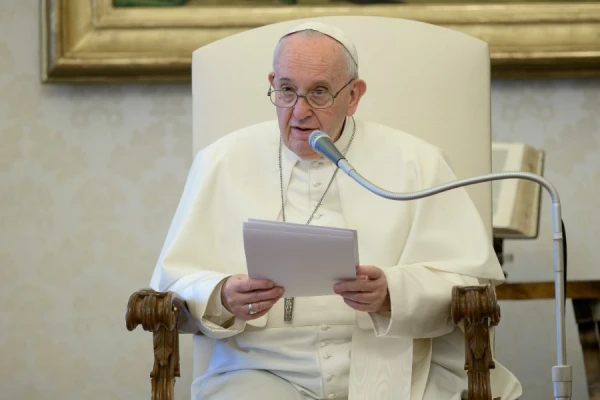

Francis said there was a Spanish saying that “God forgives always; we men forgive sometimes; the earth never forgives.”
********
I’ve always heard that as “Nature” never forgives. And that doesn’t portray nature as a loving mother but rather as something affected by the results of a fallen world: disease, famine, natural disasters, etc.
We suffer the natural consequences of some of our poor choices.
To be clear, the virus sent to the rest of the world by the Communist government of China is not nature’s punishment for the “sin” of “climate change.” Some of the statements coming from the Holy Father beggar belief. Interestingly, the government of China, with which this papacy has such amiable relations, has not come in for any criticism from the Vatican during this crisis. On the other hand, Francis has not been able to restrain himself from taking veiled swipes at Trump. Pretty telling, I’d say.
In his urgent and strategic efforts to beckon very disparate and fragmented “movements” toward a more moral commonwealth, the Holy Father makes very good points–but from time to time is he perhaps too ambiguous(?).
Do we really “sin” against the earth? And do we really engage only when “our children take to the streets to teach us the obvious”? Did St. John Paul II make the same points–also in an evangelizing and well-grounded way (and less earthy, shall we say), when he wrote:
“Man remains above all a being who seeks the truth and strives to live in the truth, deepening his understanding through dialogue which involves past and future [both!] generations” (Centesimus Annus, 1191, n.49). And, without seemingly conflating the two spheres by poetic license, he too drew urgent attention to both the endangered “natural ecology” and the related but also distinct—-and sinned against—-members of the “human ecology” (nn. 37-40).
“We have sinned against the earth” implies a living person. We can sin against a brother who has a soul created in God’s image. Figuratively. We actually sin against God when we sin against our brother. As the Pope acknowledges. As an afterthought and nuance of ambiguity. Yes we should care for our common home. If we misuse the planet, dump our garbage, old vehicle down a ravine we sin against God not the planet. Nevertheless love for our common home as couched clashes with Christ’s admonition against [an excessive] love of this world. The Earth Day prayer has that connotation when viewed in context. Goddess of the Andes veneration cannot be dismissed. Earth Day “is an occasion for renewing our commitment to love and care for our common home and for the weaker members of our human family.” Nothing is said here, very little is said elsewhere about the millions upon millions of infants murdered in the womb. Jeffrey Sachs is chosen as a Vatican consultant on the Family. Obviously not in an effort to care for those who are actually the most weak and vulnerable. There’s an exaggerated emphasis on ecological concern that makes “love and care for our common home” suggest a competitive love with the divinity. Is such exaggerated ecological concern, though not necessarily intentional albeit idolatry in disguise? If so then this must be addressed and set right.
https://www.abc.net.au/news/2018-06-27/china-ghost-cities-show-growth-driven-by-debt/9912186
It is, indeed, ironic to hold a conference on biodiversity in China. Perhaps, it is to prove a point of the destruction the country made over the decades when building massive cities that NO ONE lives in. Just think of the swats of land cleared for all those projects!
We are privileged to be living on God’s Holy Ground.