No Picture
News Briefs

Group of South Sudanese clerics, laity reject Juba archbishop appointment

December 13, 2019 CNA Daily News 2

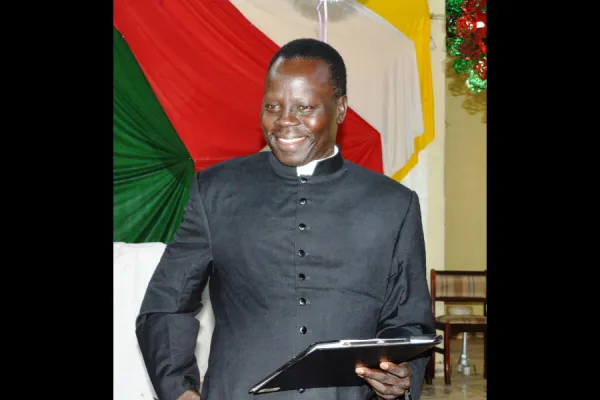
Juba, South Sudan, Dec 13, 2019 / 06:01 pm (CNA).- A group of three priests and five laymen from the Archdiocese of Juba wrote Thursday to the Congregation for the Evangelization of Peoples protesting the appointment of Stephen Ameyu Martin Mulla as archbishop.

In their Dec. 12 letter, obtained by CNA, the group say they are indigenous and represent “the majority of concerned people of the Archdiocese.”

That day the Vatican announced the resignation of Archbishop Paulino Lukudu Loro, 79, and the appointment of Ameyu as his successor.

Ameyu, 55, was ordained a priest of the Diocese of Torit in 1991, and had been appointed bishop of the same see earlier this year.

The concerned people of Juba gave three reasons for opposing the appointment, charging that government officials and some Juba priests had conspired to promote Ameyu as archbishop for personal interests, and had influenced a Vatican diplomat to that end; that a local priest could have been appointed; and alleging that Ameyu has fathered at least six children.

They wrote that Ameyu “will not be accepted to serve as Archbishop of Juba under any circumstance.”

The situation calls to mind that in the Diocese of Ahiara, where a December 2012 appointment of a bishop from a neighboring diocese was rejected by the people of Ahiara. The Mbaise ethic group whom the Ahiara diocese serves objected that the new bishop was not Mbaise. That episcopal installation was performed outside the Ahiara diocese because of protests, and while Pope Francis in 2017 demanded the acceptance of the appointment, the rejected bishop’s resignation was accepted early in 2018.

The letter from clerics and laymen of Juba indicated that they had written to the congregation Dec. 10 asking for “dialogue over the serious allegations raised against Bishop Stephen Ameyu.”

“Given the genuine concerns based on the legitimate issues cited in our memo, we had honestly expected the suspension of the announcement, until further investigation can be conducted on the matter,” they wrote.

“Now that the misled Vatican has arrogantly ignored our concerns by choosing the path of undue confrontation, we have no other option than to respond with proportional means.”

According to the letter-writers in Juba, Archbishop Hubertus van Megen, apostolic nuncio to South Sudan and Kenya, “has dismissed the allegations brought against Bishop Stephen Ameyu and put the whole blame on Archbishop Paolino Lukudu Loro.”

Detailing a “series of conspiracies and briberies by some determined interest groups and lobbyists both inside and outside Juba”, the group said they have “substantial evidence that the Nunciature in Juba was heavily compromised by some officials from the government of South Sudan from its inception up to date.”

The letter’s signatories said that Msgr. Mark Kadima, the Vatican’s chargé d’affaires in South Sudan who was appointed last year, was given money and goods “to gain leverage over him,” and that they have evidence “some high profile politicians influenced the process by ruling out some of our candidates and worked to promote Bishop Stephen Ameyu.”

The group also wrote that they have evidence that some of the priests of Juba, “who are also polygamists, businessmen and senior government security personnel” worked to manipulate Msgr. Kadima to support Ameyu “who would … protect their personnel [sic] interests.”

These priests, the concerned clerics and laymen charged, divided several senior positions in the archdiocese, including vicar general, among themselves Dec. 8.

Secondly, the letter asks, “Who among our priests in Juba can be appointed bishop anywhere?”

It charges that priests from Juba were passed over for episcopal appointments in Yei in 1986, and recently in both Rumbek and Torit.

“Should we understand that the Vatican listens only when there are real violent threats attached,” they asked. “Otherwise, we still find it inexplicable why and how the local church of Juba, already blessed with over 30 local priests who have excelled in their pastoral, administrative and academic experience should be humiliated by getting a Bishop who has two concubines and six biological children. How can our mother Church go for this Bishop when some of our priests were disqualified on unfounded rumours of fathering only one child?”

Finally, the letter says that Ameyu’s having fathered at least six children “is common knowledge and does not need much prove [sic].” They charge that he has a concubine in Gudele, located just outside Juba.

The concerned people of Juba wrote that they are “a generous and hospitable people … kind hearted and straightforward people who do not tolerate any form of humiliation. We take long to react but once the gloves come off, it becomes difficult to calm things later.”

They maintained that their opposition “should not be misinterpreted as tribalism,” saying they have “no objection in having a bishop from outside the Archdiocese,” noting that most of their bishops have not been indigenous.

“Therefore, it should be the question of being Bari or none [sic] Bari, but rather appointing a good priest with right qualifications,” they wrote.

The Bari an ethnic group who are centered in Juba.

The protesters added that they are “not questioning or interfering with the prerogative of the Holy Father to appoint bishops,” but are “only against the manipulation and the buying of the process by politicians and other interest groups.

“We are against a person brought from outside just to promote personal interests while maliciously leaving out the qualified sons of this land,” they wrote.

The letter says that Archbishop van Megen and Msgr. Kadima “have gone so low and naïve that they have irrevocably lost the good will of the people of Juba,” charging that they have given in “to worldly pleasures to the extent of misleading the Propaganda Fide” and the Holy Father, choosing “to serve individual government officials and some lobbyists instead of serving the local Church.”

According to the protesters, Ameyu’s appointment had already been made while the consultation to find an Archbishop of Juba was being conducted.

They charge that the Juba archbishop “must be a visible sign of unity among all the faithful,” saying that this requires mastery of English and Arabic, as well as “ample knowledge of local language and the culture of the indigenous tribes of the Archdiocese of Juba: Bari, Nyangwara, Mundari, Pojulu, Lokoya and Lulubo.”

“Where does Bishop Stephen come close on these requirements,” they asked.

They charged that the nuncio, based in Nairobi, has dismissed their allegations against Ameyu as unsubstantiated, and believed those against local priests “without any investigation.”

“How can these men of God (Nuncio Bert and Msgr. Kadima) who are barely three years in our country pretend to know our priests more than us [sic] who live and work with them on daily basis,” they asked.

“We cannot overstress that there is absolutely no chance for Bishop Stephen Ameyu to serve as the Archbishop of Juba,” the priest and laymen wrote. They said that “there will be no cooperation by the clergy and faithful of the Archdiocese … he will be resisted tooth and nail on the ground to the point of abdicating the helm by himself. But he will eventually regret why he accepted the appointment as he will be spending the rest of his life in protecting himself rather than shepherding the people. We feel that the Vatican can still save the situation now instead of or having to eat its words the hard way later.”

They said the people of Juba are ready to close the doors of all churches in the archdiocese on the day of Ameyu’s installation, saying that “the Nunciature will have to hire government troops to scatter the protesting youth, children, priests, religious, women and other people of Juba. It will be a traumatic situation for the people of Juba since the installation will be over some dead bodies.”

They added that Juba’s indigenous people have said that “they will cancel all the contracts and withdraw all the lands they had given” to the archdiocese and the bishops’ conference.

The group also said that Archbishop van Megen and Msgr. Kadima are unwelcome in the archdiocese, and “will no longer be safe in our roads, land, churches and towns. They will have to rely on the protection of the forces whose interests they serve and seek to advance.”

They said the Vatican diplomats should have known “that the era of ‘Roma locuta est, causa finita est, is over and that is now time of ‘vox populi vox dei’.”

“Why should the fate of the Church in Juba be left to the mercy of Nuncio Bert and Msgr. Kadima alone. Why would the local church not have a say in the appointment of its own shepherds? … How and why can Nuncio Bert and Msgr. Kadima not know that the Archdiocese of Juba is not their chocolate to divide and give it to whoever they life?”

They also asked what experience Ameyu gleaned in less than a year of being Bishop of Torit, to be appointed Archbishop of Juba.

Concluding, they reiterated a desire for “dialogue with the Vatican while the appointment is called off. We are left with no option than to say that if the Vatican adamantly insists to have its sole way; there will be no way in Juba. Do it your way and reap the consequences.”

The concerned group wrote that “given that this question is so existential to us, we now turn to the Holy Spirit to do His work in the Church.”

[…]

No Picture
News Briefs

‘No logical connection’ between celibacy and abuse, CDF official says

December 13, 2019 CNA Daily News 7

Vatican City, Dec 13, 2019 / 03:00 pm (CNA).- A senior official at the Congregation for the Doctrine of the Faith has defended clerical celibacy in the wake of the abuse crisis. 

In an essay published in a Spanish magazine, Fr. Jordi Bertomeu Farnós said that there is “no evidence” celibacy has any relation to instances of sexual abuse, and warned that priests have been unfairly branded a suspect class.

In the essay, published in Palabra Dec. 10, Fr. Farnós laid out the context of sexual abuse by Catholic priests, noting that the high-profile nature of the scandals has resulted in a number of mistaken presumptions about the causes of abuse.

“Although unfortunately, in all social classes, professions, ethnic groups and, of course, religions, there is the phenomenon of child abuse, Catholic priests are seen or even increasingly treated as ‘suspects’ of having committed this horrible crime.”

Speaking against attempts to link the discipline of celibacy to crimes of sexual abuse, Farnós said that “regardless of other circumstances and arguments that have emerged in the recent Synod for the Amazon,”  “this conclusion does not present any logical connection with the problem we are dealing with here: there is no scientific data that demonstrates that a married life would put an end to the deviant behavior of these few priests with this sexual disorder.”

“There is no evidence that priestly celibacy directly causes any deviant sexual addiction, as evidenced by those cases of men or women who, due to life’s circumstances, must live as celibate.”

“In addition,” he added, “celibacy has never been considered as a relevant parameter to identify abusers. Rather, most abusers are married men. Priests, mostly celibate men are… usually characterized precisely for their psychological balance, for their availability and selfless delivery to all, not only to the Catholic faithful.”

Farnós went on to offer a strident defence of the discipline of celibacy which, he said, was often unintelligible to modern society.

“According to some, in a sexually uninhibited and eroticized society… with numerous cases of addiction to all kinds of pornography and sexual deviations or paraphilias, priestly celibacy would be a pernicious life option,” he said. 

According to this mindset, Farnós argued, celibacy is only recognized as “perpetual self-censorship of sexual desire,” and must lead to “psychological problems related to immaturity” that result in pedophilia.

“If the experience of celibacy has always been countercultural,” Farnós says, today it is “even more” so.

“Our society needs many young people to show everyone the goodness of living a true, chaste and free love. Living the consecration as ‘anointing’ and not simply ‘function’ encourages everyone, particularly those who have received the marriage vocation, to surrender without fainting despite daily difficulties,” he said.

“Priests are called, therefore, to surrender with a totalizing love to be ‘signs’ of a more real love than any utopia.”

Pointing to other examples of institutions rocked by abuse scandals, Fernós said that attempts to link celibacy to abuse lacked evidence. 

“The data offered by other Christian and non-Christian churches, without celibate sacred ministers, belies that claim,” he said, pointing to the example of the Unity Church of Australia, which has 240,000 members, no hierarchy, and which elects married male and female clergy, but has recently made headlines for 2,500 cases of child abuse. 

“Contrast such data with the Catholic Church, with 466,000 priests and 6,000 cases reported to the Congregation for the Doctrine of the Faith,” he said. 

In the essay, Farnós pointed out that while the vast majority of cases of sexual abuse occur in the family, no one draws the conclusion that family members are ipso facto prone to abuse.

“If 73% of sexual abuse of minors seems to occur in the family environment, it cannot be affirmed that ‘being a father or being a mother predisposes to abuse,’” he said.

Farnós said that media coverage of the scandals had rightly highlighted the seriousness of all cases, but given rise to “certain statements destined to provoke the social panic and discredit of the Church, unfairly stigmatizing the social group of the clergy.”

Noting that the CDF has received approximately 6,000 cases of abuse world-wide, “an excessive number that shames us as Christians and particularly as priests,” Farnós said that priest account for only 3% of abuse cases reported to civil authorities.

“In the last two decades, we have attended with pain, particularly in some regions of the Catholic world, to an unworthy, improper, inconsiderate and even vexatious treatment of priests for the mere fact of [their] being [priests],” he said, pointing to “irresponsible” coverage of clerical abuse by the media.

The CDF official did, however, acknowledge that the vast majority of sexual abuse cases in the Church, some 80%, involve men preying on boys or young men, but warned against drawing any causal link between homosexuality as an orientation and a disposition to abuse.

Despite what Farnós called “certain ultraconservative ideological positions,” the data available to the CDF showed that “there is no direct relationship between homosexuality and pedophilia or between the latter and a ‘progressive style’ of clergy.”

“Affirming the direct connection of homosexuality with pedophilia from the data […] not only involves the commission of a great injustice, but also the criminalization of a certain sexual identity,” Farnós said, while at the same time observing that cultures of active homosexuality were a contributing factor to sexual abuse.

“It is […] possible to affirm that a certain homosexual subculture typical of some clerical groups and present in certain seminars or novitiates, with the consequent tolerance towards active homosexual behaviors, can lead to pedophilia.” 

These, Fornós said, “deserve greater attention from pastors, who have the pastoral and disciplinary means to invite [clerics] by example, the word and even coercion to a chaste life that does not pose a danger or scandal for the priest himself and for the Church.”

Offering his own reflections on preventing future abuse, he said that bishops need to focus on the selection of candidates for the priesthood, moving away from “a superficial predisposition to welcome all,” and identifying men “capable of living loneliness as a moment of grace and maturation, integrating aggressiveness and maintaining healthy relationships with adult people for a long time.”

“We should insist on candidates for ministry [suitable for] their future public and social role,” he said.

“They will be moral reference points and, therefore, should be exercised from the first moment of their formation in great self-control, with the aim of never scandalizing or even moving anyone away from the faith, the great gift that sustains us.”

[…]

No Picture
News Briefs

US bishops in Rome ask Pope Francis about McCarrick report

December 13, 2019 CNA Daily News 1

Vatican City, Dec 13, 2019 / 09:56 am (CNA).- American bishops from the Midwest met with Pope Francis this week with questions about the outcome of the Vatican’s investigation of Theodore McCarrick.

“I did ask about the McCarrick situation. That was something that all of us were very interested in knowing where this was going. And very glad to hear that a report is coming, and not sure when it will be, probably after the beginning of the new year,” Bishop Earl Boyea of Lansing told EWTN Dec. 13.

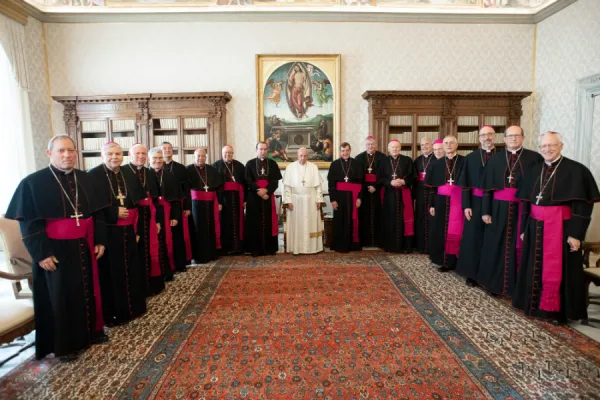
The seventeen bishops from Ohio and Michigan (Region VI of the US bishops) met with the pope for two hours Dec. 10 as a part of their ad limina visit to Rome, and had the opportunity to ask the pope questions.

Bishop Boyea said he asked Pope Francis about the promised McCarrick report, and that the pope described it for them. He said that the bishops also discussed the report with the Vatican Secretary of State Cardinal Pietro Parolin.

Parolin is “a little more nervous about the reception of this in the public,” he added.

The Vatican announced that it would conduct a review of files on McCarrick in October 2018.

At the U.S. bishops’ conference fall meeting in Baltimore Nov. 11-13, Boyea asked that an update on the Vatican’s McCarrick investigation be added to the agenda. Cardinal Sean O’Malley responded that the Holy See intended to publish the results of the investigation in the new year, “if not before Christmas.”

O’Malley said that the bishops of New England also discussed the McCarrick report during their ad limina meeting with Francis in early November before the U.S bishops meeting.

The cardinal said he was shown a “hefty document” by the Vatican, which is being translated into Italian for a presentation to Pope Francis, with an intended publication by early 2020.

Reports of McCarrick’s history of sexual abuse were initially made public in June 2018, when the Archdiocese of New York announced that a sexual abuse allegation against then-retired Cardinal McCarrick was “credible and substantiated.”

Subsequent reports of sexual abuse or harassment of children and seminarians by McCarrick surfaced, and Pope Francis accepted his resignation from the College of Cardinals and assigned him to a life of prayer and penance in July 2018.

In August 2018, former apostolic nuncio to the U.S. Carlo Maria Vigano claimed that Pope Francis had known about existing sanctions on McCarrick but chose to repeal them.

At their November 2018 meeting, just months after settlements of the Archdioceses of New York and Newark of abuse cases involving McCarrick were made public, the bishops were set to vote on a number of measures to deal with the clergy sex abuse crisis including a call for the Vatican to release all documents about McCarrick in accord with canon and civil law.

However, after the Vatican requested shortly before the meeting that the bishops not take action on the abuse crisis until an international summit of bishops in Rome in early 2019, the bishops did not end up voting on the McCarrick measure because of fears they could be viewed at odds with Rome.

Pope Francis dismissed McCarrick from the clerical state in February 2019, shortly before convening a summit of bishops from around the world on clergy sexual abuse. The Vatican’s accelerated investigation into McCarrick’s case was an “administrative penal process,” not a full juridical process, but one used when the evidence in the case is overwhelming.

Bishops Boyea said that he expects that the anticipated McCarrick report will “be like peeling a scab off” for the Church in the U.S. “It is going to be tough, we know that, but it is better to get that out and get that done with,” he said.

“This is ultimately for the good of the Church. The truth cannot hurt the Church,” Boyea told EWTN.

[…]

No Picture
News Briefs

Pope Francis celebrates 50th ordination anniversary by honoring his mentor

December 13, 2019 CNA Daily News 1

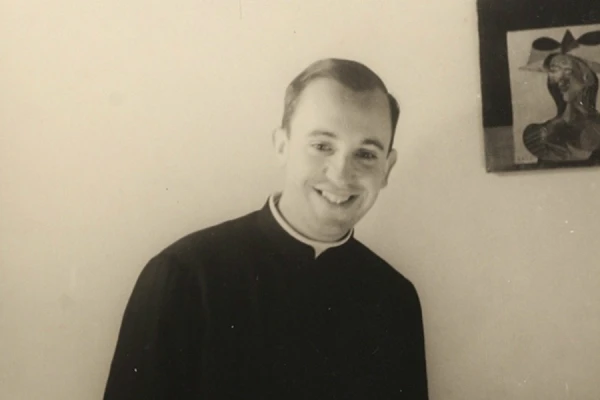
Vatican City, Dec 13, 2019 / 06:00 am (CNA).- Fifty years ago on Dec. 13, Jorge Mario Bergoglio was ordained a Jesuit priest in Argentina. As pope, he will celebrate his ordination anniversary Friday by honoring one of his early spiritual mentors, Fr. Miguel Angel Fiorito.

Fiorito, 1916-2005, was a Jesuit Argentine priest, professor, and spiritual writer who died when Cardinal Bergoglio was Archbishop of Buenos Aires.

In a preface to a five-volume collection of his writings to be launched Dec. 13, Pope Francis wrote that Fiorito had a “passion for the spiritual exercises,” and “taught many to pray and to discern the signs of the times.”

The future Pope Francis first met Fiorito as a young priest shortly after his ordination in 1969. Bergoglio later put Fiorito in charge of the last stage of Jesuit seminary formation when he served as Jesuit provincial for Argentina.

As a professor of Jesuit spirituality, Fiorito understood that “the spiritual mercy is to teach to discern,” Pope Francis wrote of Fiorito in the preface to his spiritual writings to be presented at the General Curia of the Society of Jesus Dec. 13.

“He had a special nose to feel a bad spirit, he knew how to expose him for his bad fruits. He was a man of combat against a single enemy: the bad spirit, satan, the devil, the tempter, the accuser, the enemy of our human nature,” he said.

Pope Francis described Fiorito in the preface as both “a man of “dialogue and listening” and “lovable father, a patient master and a firm adversary.”

The pope discovered his own vocation to the priesthood as a chemistry student in Argentina after a making a confession with a priest who was dying from leukemia.

“At that moment I felt that I had to become a priest. And I didn’t have the slightest hesitation,” Bergoglio said in an Italian radio interview in 2013.

In 1958, he entered the novitiate of the Society of Jesus. He received a philosophy degree in 1963, taught literature and psychology, and then studied theology. He was ordained a priest in 1969. He would go on to serve as Jesuit provincial for Argentina, a seminary rector, a pastor, a professor, and a spiritual director.

Fr. Bergoglio was consecrated an auxiliary bishop of the Buenos Aires archdiocese in In 1992. He became the archdiocese’s coadjutor archbishop in 1997, and succeeded as archbishop the following year. St. John Paul II appointed Archbishop Bergoglio a cardinal in 2001.

Pope Francis began his 50th ordination anniversary with a private morning Mass in Casa Santa Marta with all of the cardinals present in Rome. In the evening, he will celebrate with the General Curia of the Society of Jesus as he presents Fiorito’s collected writings.

Fr. Fioriti “brought us the divine imprint that the Lord Jesus has impressed on his life: that of the passion for spiritual exercises, which are an instrument for knowing how to feel and taste the Lord’s request to our soul and help to cleanse it of all ambiguities,” Pope Francis wrote.

[…]

No Picture
News Briefs

Senior Victoria cops said Pell investigation could distract from major police scandal

December 13, 2019 CNA Daily News 0

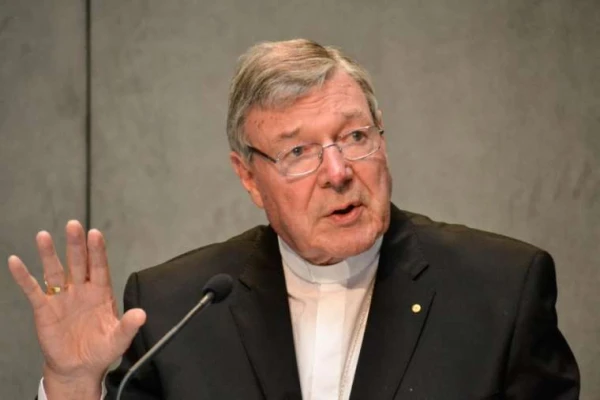
Washington D.C., Dec 13, 2019 / 04:00 am (CNA).- Senior police officials in the Australian state of Victoria discussed by email the way that their 2014 investigation into Cardinal George Pell could deflect public scrutiny from an emerging corruption scandal in the force.

In a 2014 email exchange, then-Deputy Commissioner Graham Ashton and Charlie Morton, assistant director of media and corporate communications for the Victoria police department, discussed how to respond to a high-profile scandal which would hamper the credibility of Victoria police operations.

In an email dated April 1, 2014, Morton advised Ashton not to make a media appearance in response to the “Lawyer X” scandal, because forthcoming announcements about Cardinal Pell could distract media and public attention.

“The Pell stuff is coming tomorrow and will knock this way off the front page,” Morton wrote to Ashton.

“Unless there are some serious appeals from convicted [criminals] which might get up as a result of this, then I can’t see this continuing with the same level of profile.”

The emails emerged this week as Ashton, now Chief Commissioner of Victoria Police, gave evidence at a Royal Commission inquiry into the use of police sources and the Lawyer X scandal, in which criminal defense lawyer Nicola Gobbo was recruited to work as an informant against members of the Calabrian mafia, while she was representing several of them as an attorney.

Gobbo has claimed that her work as an informant for Victoria police from 1995-2009, despite issues of professional ethics and client confidentiality, led to 386 convictions, many of which are now believed to be tainted, subject to appeal, and could be overturned.
 
The email exchange between Ashton and Morton came after a news radio host in Melbourne referred on air to the about-to-break story as one of the “biggest law and order scandals in [Victoria state] history” and predicting it could result in “killers walking free.”
 
A subsequent High Court injunction prevented publication of Gobbo’s name, or any media reporting of the case from 2014, part of a years’-long, $4.5 million legal effort by Victoria police to keep details of the case from becoming public.
 
The reference to news about Pell being used to deflect negative coverage came just two months after Pope Francis had appointed Pell to reform Vatican financial affairs, placing him in charge of the newly-created Prefecture for the Economy in February, 2014.
 
It is not clear what information the two police officials were anticipating would be released the next day, though the previous week Pell had given evidence before the Royal Commission investigation into child sexual abuse in Church institutions.
 
In 2013, Victoria Police opened Operation Tethering, an open-ended investigation into possible crimes by Cardinal Pell, although no victims had come forward against him and there had been no criminal complaints made against him at the time. Although they had found no victims or criminal accusations, in 2015 the program was expanded and put on a more formal footing.
 
In 2017, Pell was charged with sexually abusing two minors. He was convicted in 2018 on the evidence of a single victim-accuser, the second supposed victim died of a heroin overdose on Aril 8, 2014 – one week after the Victoria police email exchange. That second victim had denied on several occasions that he was sexually abused by Pell.

The cardinal’s conviction was upheld on appeal by the Victoria Supreme Court in August. The Australian High Court will hear Pell’s appeal of that decision in 2020.
 
Since the court gag order was lifted in 2019, the Lawyer X scandal has tainted successive chiefs of the Victoria police force, all of whom were aware of Gobbo’s role a mob informer and practicing criminal lawyer.
 
Much of Gobbo’s work as a lawyer was with Australian members of the Ndrangheta, the Calabrian mafia organization, which has established a deep presence both in Victoria and across the country, with allegations of multi-million dollar bribes to judges and close connections to local Victorian politicians in both political parties.
 
The link between the Italian and Australian branches of the organization is known to be close and ongoing.

The Lawyer X scandal has tainted several former heads of the Victoria police, all of whom were aware of Gobbo’s role and allowed it to continue. Ashton was first told of her work in 2007 when he was serving as assistant director of the Office of Police Integrity, an anti-corruption body.

Ashton told the Royal Commission on Tuesday that he saw no reason to suspect “anything untoward was going on” when he learned the lawyer was acting as a police informant against her own clients.

Gobbo, who is the niece of a former Victoria Supreme Court judge, has since said she fears retribution by police because of the scandal, refusing to go into witness protection and claiming police have threatened to take her children into protective custody to compel her cooperation.

Earlier this week, she told Australian media that “It’s not the first time that they [Victoria Police] threatened me in relation to toeing the line and doing things their way or they would take my children.”

The Victoria police force has been the subject of numerous scandals over the years. In addition to the allegations concerning Gobbo, a 2017 report found that nearly half (46%) of Victoria Police employees believe they would suffer personal repercussions if they reported corruption, with almost one in five saying it would cost them their job.
 

[…]