Rockville Centre diocese challenges Child Victims Act over due process
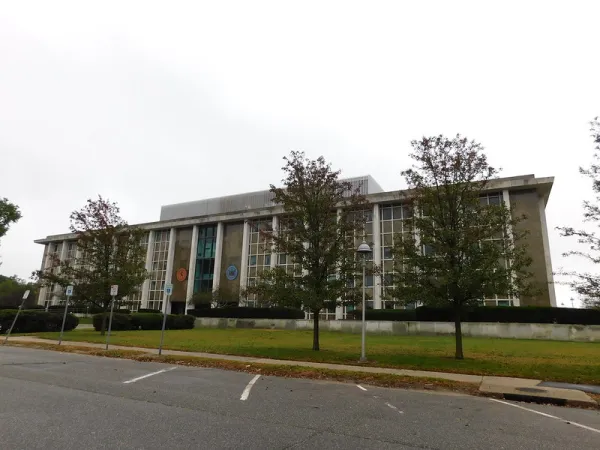
Rockville Centre, N.Y., Nov 15, 2019 / 01:31 pm (CNA).- The Diocese of Rockville Centre filed a suit challenging New York’s Child Victims Act on Tuesday, claiming it is barred by the due process clause in the state constitution.
The act opened a one-year window for adults in the state who were sexually abused as children to file lawsuits against their abusers. It also adjusted the statute of limitations for both pursuing criminal charges and civil suits against sexual abusers or institutions where the abuse took place.
The diocese’s motion, filed Nov. 12 in the New York Supreme Court in Nassau County, says that “the Due Process Clause allows the legislature to revive formerly time-barred claims only where they could not have been raised earlier,” which it adds “is not so here.”
“The formerly time-barred claims revived by the legislature pursuant to the Child Victims Act all could have been brought within the then-applicable three- or five-year period, after plaintiffs attained the age of majority,” according to the diocese.
The diocese added that the state Court of Appeals “has held that the Due Process Clause allows for the exercise of what it has characterized as an exceptional legislative power ‘to remedy an injustice’ created by circumstances that prevented the assertion of a timely claim.”
It said claims under the Child Victims Act “do not fit within the scope of this narrowly circumscribed legislative authority.”
The one-year window opened Aug. 14.
The Child Victims Act was signed into law Feb. 14 by Gov. Andrew Cuomo. In addition to opening a one-year window for suits, it allows child abuse victims to file criminal charges up to age 28, and lawsuits up to age 55. Previously, they had until the age of 23 to file charges or a civil claim.
Other New York dioceses have not indicated they would challenge the act.
Sean Dolan, spokesman for the Rockville Centre diocese, said the diocese is committed to providing “pastoral care and equitable compensation” to child sex abuse victims through its independent reconciliation and compensation program.
As of August, that program had paid a little more than $50 million to 277 claimants since its 2017 institution. Between 75 and 80 claims were still being processed, and 370 people had filed claims with the program.
The spokeman added that “the diocese supported the CVA as a mechanism for all survivors of sexual abuse to seek redress through the court system for sexual abuse – that took place in any organization, municipality or organization. At the same time, the diocese supports the rule of law and, in particular, the rights of all citizens of this state to have access to the courts and to invoke the protections afforded to all of them by our laws of civil procedure and the New York state Constitution. The diocese’s motion and its brief present these important issues to the judiciary for resolution.”
The Times Union reported Nov. 13 that nearly 1,100 cases have been filed under the Child Victims Act.
The day the one-year lookback was opened, Bishop Robert Guglielmone of Charleston was named in a lawsuit accusing him of sexually abusing a young man while he was a priest of the Rockville Centre diocese, starting in 1978. The bishop has said he is innocent of the accusation.
In January, Dennis Poust, director of the New York Catholic Conference, told CNA the conference had not opposed the final version of the act, which provided the same protections for child abuse victims in public insitutions, including schools, as it did for private institutions.
Earlier versions discriminated between public and private institutions, but once that was amended “the conference dropped any opposition to its passage,” he said.
When the bill was passed, the New York bishops issued a joint statement saying, “We pray that the passage of the Child Victims Act brings some measure of healing to all survivors by offering them a path of recourse and reconciliation.”
The Diocese of Rockville Centre said Aug. 14 that it “takes seriously and investigates all allegations of sexual abuse … While the ultimate effects of the Child Victims Act on the Diocese of Rockville Centre and its parishes are not yet known, and may not be known for some time, we expect the daily work of the diocese’s many ministries to continue uninterrupted. Bishop Barres and his leadership team at the Diocese of Rockville Centre have been working for months with financial and legal experts to prepare for this day.”
In preparing for the one-year window, the diocese created an independent advisory committee in May “to review its financial position and related party transactions.”
“The diocese has diligently prepared over the last several months to meet the challenges presented by the Child Victims Act, while ensuring it continues to meet its responsibilities to parishioners and its ministries. The diocese also continues its efforts to extend to survivors of abuse: pastoral care, healing and support services,” it stated.
Bishop John Barres of Rockville Centre said Aug. 11 that “we have worked diligently with our financial and legal advisors to assess our financial position and maximize the availability of insurance coverage to meet the demands that will likely be imposed by anticipated CVA litigation.”