


By Ed Condon
The Holy See’s relationship with a disreputable Swiss bank triggered an internal dispute between the Secretariat of State and Vatican financial authorities. At the center of the conflict was a multimillion-dollar line of credit used to fund a controversial investment in London property speculation.
Sources inside the Vatican’s Prefecture for the Economy confirmed to CNA that a substantial part of the $200 million used to finance the Secretariat of State’s purchase of a luxury development at 60 Sloane Avenue came through credit extended by BSI, a Swiss bank with a long track record of violating money-laundering and fraud safeguards in its dealings with sovereign wealth funds.
In 2018, BSI was the subject of a damning report by FINMA, the Swiss financial regulator, which concluded that the bank was in “serious breaches of the statutory due diligence requirements in relation to money laundering and serious violations of the principles of adequate risk management and appropriate organization.”
The bank was absorbed by the EFG Group last year. The merger was approved by FINMA on the condition that it was “fully integrated and dissolved” within a year and that no BSI employee be given a senior management role in EFG. Had the merger not been approved by FINMA, BSI would have had its banking license revoked and the business shuttered.
On Nov. 4, CNA reported that in 2015 Cardinal Angelo Becciu attempted to disguise $200 million loans on Vatican balance sheets by cancelling them out against the value of the property purchased in the London neighborhood of Chelsea, an accounting maneuver prohibited by financial policies approved by Pope Francis in 2014.
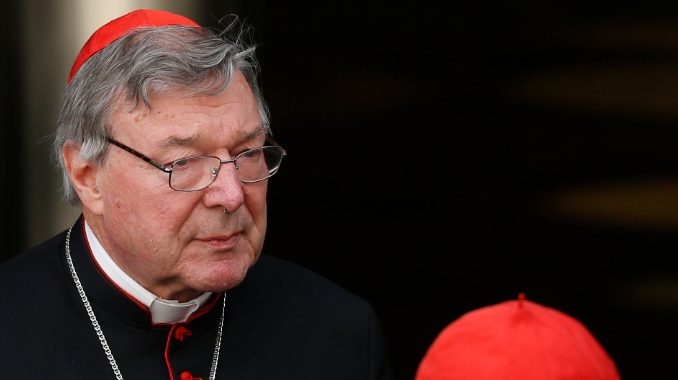
The attempt to hide the loans off-books was detected by the Prefecture for the Economy, then led by Cardinal George Pell. Senior officials at the Prefecture for the Economy told CNA that when Pell began to demand details of the loans, especially those involving BSI, then-Archbishop Becciu called the cardinal in to the Secretariat of State for a “reprimand.”
“Becciu summoned the cardinal – summoned him,” one senior official told CNA. “Pell was supposed to be the ultimate authority in monitoring and authorizing all Vatican financial business, answerable only to Pope Francis, but Becciu shouted at him like he was an inferior.”
“Cardinal Pell was given to understand that as far as [Becciu] was concerned, the prefect was basically an administrative clerk and a rubber stamp, no more.”
Cardinal Becciu declined to answer questions from CNA on the topic, and Pell is incarcerated and unavailable for questions.
Pell raised the attempt to disguise the loans at the Council for the Economy, an agency led by Cardinal Reinhard Marx of Münich and charged with final oversight of Vatican financial transactions.
One senior curial source told CNA that the issue was “noted, but no action was taken” by the council, despite the highly irregular nature or the arrangement.
One senior official at APSA, which acts as the Holy See’s reserve bank and manages the Vatican’s sovereign asset portfolio, defended the Vatican’s relationship to BSI and similar financial institutions.
“You have to understand, a lot of good can be done in those grey areas,” he told CNA. “Not everything the Church does or supports can be printed in a financial statement like a normal company. Sometimes the Church must be able to help without being seen to be helping.”
The FINMA report also highlighted instances in which BSI employees complained about the lack of transparency in handling transactions by sovereign wealth fund clients. Forbes magazine quoted one employee’s internal complaint, saying “My team is implementing these transactions without really knowing what we are doing and why and I am uncomfortable with this. […] there should be a stronger governance process around all this.” No action was taken in response to this and similar complaints.
The connection to BSI comes to light as the Vatican’s own financial watchdog is struggling to assert its credibility. On Nov. 18, the president of the Financial Information Authority (AIF), René Brüelhart, resigned his post.
Although the Vatican press office characterized the departure as the end of “a five year term,” Brüelhart had not appointed for a fixed period, and he made it clear he had resigned.
Shortly thereafter, Marc Odendall, a member of the AIF board, resigned as well, saying that the Egmont Group, through which 164 financial intelligence authorities share information and coordinate their work, had suspended the AIF.
Odendall told the Associated Press that the AIF had been effectively rendered “an empty shell” and that there was “no point” in remaining involved in its work.
The agency’s director, Tommaso Di Ruzza, was recently reinstated after a suspension which followed a raid on his office by Vatican gendarmes. That raid also targeted offices at the Secretariat of State and is believed to be part of an internal investigation into the London property deal funded by the BSI loans.
If you value the news and views Catholic World Report provides, please consider donating to support our efforts. Your contribution will help us continue to make CWR available to all readers worldwide for free, without a subscription. Thank you for your generosity!
Click here for more information on donating to CWR. Click here to sign up for our newsletter.



We are all so proud of all of this, are we not?
Is the Vatican the most corrupt organization on Earth? Likely not, but I wouldn’t bet on it.
Makes one wonder about what really happened to Pell. May the truth be exposed by the light of our beloved Savior and Head of the Church.
Nov. 22nd: Why hasn’t Pope Francis helped Cdl. Pell the way he helped other Bishops and Cardinals who were credibly accused of abuse??? Why did he say nothing to help Cdl. Pell? There seems to be corruption and evil even in the highest places. Pray for Cdl. Pell that he may be freed soon and that the truth…the whole truth, be revealed for all the world to see.
I wonder how much of that missing money when to Pell’s accuser….
I am not familiar with all the ins and outs of this case, but I think it is worth noting what one official said: “Sometimes the Church must be able to help without being seen to be helping.” What many normal people fail to realize is that there are lots of people living in countries where everything possible is being done to destroy and handicap the Church and Christianity in general. The financial aid of the Church is needed at times, and at such times it has to be given in ways that are not open to snooping by hostile governments who are up to no good for their own citizens.
I had the same thought as I read it but I also had the thought that in light of recent revelations it was also cover for something more nefarious
And all of this happening as Bergoglio helps usher in One World Religion to welcome the Antichrist:
https://www.lifesitenews.com/news/abp-vigano-decries-pope-approved-plan-to-build-abrahamic-religious-site-with-muslims-jews
Truly scandalous.
The fraud at the Vatican Bank explains the obviously false allegations against Cardinal Pell.
The Vatican Secretariat of State is the tap-root of evil in the Catholic Church.
What’s so notable about the “raids” by Vatican police is that we never hear the purpose of the raids. But these raids, which seem to be primarily aimed at confiscating evidence, can be done to stop anyone, a good guy or a bad guy. In fact, people in the investigation business, as police are, are sometimes hired to do things that appear to be legitimate, but are being controlled from above by people with conflicting, conflicted and sometimes illegitimate aims. I have experienced this first-hand as an investigator in a major financial case, involving what turned out to be longstanding deception by senior personnel inside the organization.
It is patently obvious that The Vatican Secretary of State, and it’s characters like Becciu and Parolin, consider themselves “above the law,” and are brazen about it.
These men are determined to prevent good Bishops like Cardinal Pell, and good Catholic laymen like Mr. Odendall and his colleagues, from disclosing some very rotten behavior in the Secretary of State, which the Pontiff Francis has given an iron grip over everyone in the Curia, with his recent “reorganization” that creates the Secretary of State Cardinal Parolin as a super tyrant who can intervene in each and every office in the Vatican.
These men like Parolin and Becciu are tyrants and outlaws. They helped arrange the phony abuse allegation against Pell, in network with their shady pals in the financial fraud underworld, which extends and connects from Rome to Victoria, and to cities around the world.
Now, with being kicked out of the Egmont Group, even the secular banking world doesn’t trust them…and that is an ENORMOUSLY BAD indicator. It doesn’t get any worse…
A whole lot of these men in the Secretariat of State and APSA and the Vatican Bank are probably frauds.
Its not just Bergoglio that has given the Secretariat of State near tyrannical authority, it was after the Second Vatican Council that this happened. Under Pius XII and John XXIII, the Prefect of the Holy Office was always viewed as “second in command”, with the Secretariat of State far below. As the Council wanted the Church to be more worldly, and involved in political issues, the Secretariat become more important.
Aaron – You are exactly right, and I have written previously that I believe that Pope Paul VI’s demotion of the Sacred Congregation for the Faith and the elevation of the Secretariat of State is a horrible sign of personal priorities held by Pope Paul VI, and so may others in the Church.
Pell is the victim of Masonic influence. There are many good, faithful Catholics who don’t want to believe this …….Freemasonry is at the root of all these issues….
It’s a pity we can’t have as Secretary of State the Venerable Rafael Cardinal Merry del Val.
Not only are the Vatican agencies and ultimately, the “Holy” Father implicated, also the Australian judicial system is. The charges against Cardinal Pell are absurd, as the first jury concluded. But the mafia has a long arm: In light of the impossibility of the charge, one has to suppose that the second jury, which convicted him, and with one courageous exception, the state-level panel of top judges have also been threatened or bribed. It’s a good thing that the CNA news is now becoming public, not long before the Australian Supreme Court hears the case definitively. Or maybe they too will capitulate.
For all of the above read ‘Masonic influence’. Call it. Mafia if you will, or threats or bribery, but don’t discount the reach of Freemasonry ….. whether in government or church or legal circles. The issues we as a Church face today are not the sum of coincidences. We are under attack from within….at the highest levels…from some whose message is at odds with the Gospel, and whose loyalties lie with a Master…other than Jesus Christ.
What you say is certainly possible.
All the comments, which refer to the Holy Father seem to me to be inflammatory, personal attacks.
Here are continuing problems, heaped on top of the October 2019 act of idolatry.
https://www.catholicculture.org/commentary/one-more-damaging-blow-to-popes-credibility/
Historically the Secretary of State presumed function as primary communicator within the curia, and diplomatically representing the Pontiff and Church affairs. Although Paul VI enlarged that office – historically the Secretary of State presumed under Paul VI essentially the same function as primary within the curia, and diplomatically representing the Pontiff and Church affairs. For example.
Although Paul VI enlarged the office placing the Secretary over all the curia departments he did not mitigate the function of the CDF as the primary and exclusive defender of the faith within the Curia dicasteries. That arrangement likely was made out of naivete by Paul VI not foreseeing a future Pontiff Francis who would place Propaganda Fides as the primary dicastery and voice of what Catholicism is in practice. The fault line was the enhancement of the Secretariat the earthquake Pope Francis’ policy of diminishing the CDF autocratically dismissing Cardinal Gerhard Muller’s better personnel on apparent grounds of their strictness in adhering to ‘Rules’ that conflicted with the new gospel Amoris Laetitia. Sex and money is an age old corrupter Cardinal Pell the likely victim of Vatican and world wide machinations to silence a true man of the cloth. As documented by Chris in Maryland whatever his sources they add up. The marked difference in corruption within our Church at this moment, its mimic of age old corruption in the secular is that it’s not simply a general presumption of a corrupt Church. Rather it is the catalyst Pope Francis. He relegated CDF to innocuousness and he did zero to step in to expose the sexually disturbed players money laundering, and taking in monetary support from an obliging German Hierarchy. A kind of quid pro quo in order to advance a radical agenda. Where does it leave the faithful Catholic. Borderline despair affects many though like Paul the Apostle we recover because of Christ’s strengthening presence within us and continue to resist. Like Michael Matt The Remnant a continuance of an historically deeply Catholic family with roots in Germany “We Resist You” directed at the fallacies of our Pontiff not the Chair of Peter or the Church instituted by Christ. Faithful Catholics are not ‘children’ as portrayed by Pope Francis in response to the removed from office Cardinal Muller. His voice is ridiculed and in the case of of Archbishop Carlo Vigano his voice is perjured. We have not legal recourse regarding the Pontiff’s authority. We have infinitely more authority within the Church instituted by Jesus Christ because we stand with Him and the Gospel he revealed.