No Picture
News Briefs

First permit issued under Australian state’s assisted suicide, euthanasia law

July 24, 2019 CNA Daily News 1

Melbourne, Australia, Jul 24, 2019 / 04:01 pm (CNA).- The first permit for medically assisted death in Victoria was issued in recent weeks, less than a month after the Australian state’s legalization of voluntary assisted suicide and euthanasia took effect.

The Voluntary Assisted Dying Act 2017 allows adult Victoria residents who are terminally ill, expected to die within six months (or 12 if they have a neurodegenerative condition), and mentally competent, to ask their doctor to prescribe drugs that will end their lives. The law took effect June 19.

Two doctors must verify the requester’s eligibility, and the person must make three requests for assisted suicide or euthanasia. Those seeking to end their lives must have lived in Victoria for at least a year, and be an Australian citizen or permanent resident.

Neither the identity nor the medical condition of the person granted a permit to commit suicide have been released.

A spokesperson for the Victorian health department told the ABC that the state’s “model for the voluntary assisted dying system is working.”

“We know that doctors are talking to patients about voluntary assisted dying and are carrying out assessments.”

Under the law, pharmacists at The Alfred Hospital will prepare and supply the mixture of drugs. They will deliver to the terminally ill the dose of about 100mL of liquid in a locked box with a key.

The box will include instructions on how to mix and drink the drugs, “and there is no expiry date on when the drugs can be consumed,” Melbourne daily The Age reported in June.

Physicians will be allowed to administer the drugs via an intravenous drip to those incapable of swallowing.

Health practicioners are granted conscientious objection rights against participation in euthanasia or assisted suicide under the law.

About 100 doctors across the nearly 92,000 square mile state “have began receiving the mandatory training required to be allowed to assist terminally ill patients who need medical help to die,” according to The Age.

A review board of 13 medical and legal experts will review assisted suicide-euthanasia applications after the fact to ensure compliance with the law. The board will also be able to recommend improvements to the state government, and refer breaches to police, coronors, or the Australian Health Practicioner Regulation Agency.

The Victorian health minister, Jenny Mikakos, has said the state expects about a dozen people to utilize assisted suicide or euthanasia during the first year the law is in effect. She expects this number to top out at about 150 people each year. There are about 6.5 million Victorian residents.

Efforts to expand access to assisted suicide and euthanasia have grown in recent years. Presently, at least one of the practices is legal in nine US states and the District of Columbia, as well as in all Canada, Switzerland, the Netherlands, Belgium, Luxembourg, and Colombia.

Victoria is the only Australian jurisdiction where assisted suicide or euthanasia are legal.

Advocates for assisted suicide and euthanasia have said the eligibility requirements are too onerous, and intend to challenge them in court, but do hope other Australian states will follow Victoria’s lead.

Queensland and Western Australia are considering similar bills.

New South Wales rejected such a bill in 2017, as did the national parliament in 2016, and that of Tasmania in 2013.

The Northern Territory legalized assisted suicide in 1995, but the Australian parliament overturned the law two years later.

The four Latin rite ordinaries in Victoria wrote a pastoral letter denouncing the state’s “new, and deeply troubling chapter of health care” when the Voluntary Assisted Dying Act 2017 took effect.

In a June 14 letter, the bishops of Melbourne, Ballarat, Sale, and Sandhurst wrote that “We cannot cooperate with the facilitation of suicide, even when it seems motivated by empathy or kindness.”

“What is being referred to as ‘VAD’ is a combination of what in plain- speaking is more commonly known as physician assisted suicide and euthanasia,” they said.

“We feel a responsibility not just to say ‘no’ to VAD, but to give every encouragement to model a way of life that renders VAD unnecessary.”

[…]

Books

The trouble with new books

July 24, 2019 Roy Peachey 3

The trouble with new books is that they prevent us from reading the old ones. That was the view of Joseph Joubert, writing two hundred years ago, and the problem he identified then is even […]

No Picture
News Briefs

China continues to rebut Western claims about repression of Uighurs

July 24, 2019 CNA Daily News 0

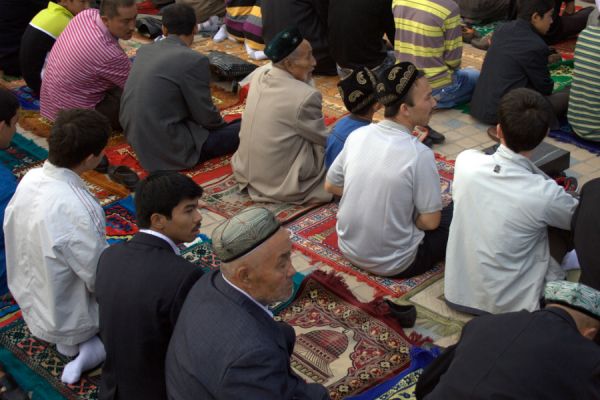
Beijing, China, Jul 24, 2019 / 12:15 pm (CNA).- An article published Wednesday in a state-run paper from mainland China repeated government talking points regarding the situations of the Uighurs, a Muslim ethnoreligious group in the country’s northwest.

Some 1 million Uighurs have been detained in re-education camps for Muslims in China’s Xinjiang Uyghur Autonomous Region. Inside the camps they are reportedly subjected to forced labor, torture, and political indoctrination. Outside the camps, Uyghurs are monitored by pervasive police forces and facial recognition technology.

Uighurs can be arrested and detained under vague anti-terrorism laws. Violence in the region escalated in the 1990s and again in 2008.

In August 2014 officials in Karamay, a city of Xinjiang, banned “youths with long beards” and anyone wearing headscarves, veils, burqas, or clothes with the crescent moon and star symbol from using public transit. That May, universities across the region banned fasting during Ramadan.

The Chinese government has said reports on the camps by Western governments and media are unfounded, claiming they are vocational training centers and that it is combatting extremism.

Li Yang, an author at China Daily, an English language daily owned by the Communist Party of China, wrote July 24 that “Western critics of China’s policies on human rights and religious freedom in the Xinjiang Uygur autonomous region seem to be divorced from the realities of the situation.”

Li’s piece focused on “Uygur separatists” who try “to brainwash the other Uygurs with extremism and terrorism.”

He said that “all the measures that Beijing has taken to fight separatism, extremism and terrorism in Xinjiang are part of the global anti-terrorism campaign, as well as an integral part of China’s efforts to boost local development.”

Li noted that the Chinese government has set up “vocational educational centers” in Xinjiang, as well as “installing surveillance systems and deploying security forces.”

He also pointed out that 150 million tourists visited Xinjiang last year, and that the autonomous region’s economy has risen 40 percent over the past five years.

According to Li, “the religious freedom of all ethnic groups … is strictly protected by law.”

Li focused on the diversity of Xinjiang, saying that separatists ignore the interest of the region’s other ethnic groups. Uighurs make up about 46% of the region’s population; Han Chinese 39%, Kazakhs 7%, and Huis 5%. A large number of minorities make up the remaining 3%.

Attention was drawn to the human and religious rights situation in Xinjiang at the recent Ministerial to Advance Religious Freedom held by the US State Department last week.

US Secretary of State Mike Pompeo said July 18 at the gathering that survivors of the detention camps have described “a deliberate attempt by Beijing to strangle Uighur culture and stamp out” Islam.

In response, Chinese officials have been outspoken in defense of policies in the region.

A letter signed by Chinese scholars and religious officials posted July 19 by the Xinjiang government said Pompeo should “stop fabricating lies and slander about Xinjiang.”

An editorial published in the People’s Daily July 20 claims that China actually respects religious rights, and said that the United States has an “ulterior motive” to criticize China’s treatment of religious minorities.

“They even use so-called freedom of religious belief as an excuse to undermine China’s national harmony and interfere in China’s internal affairs,” the editorial said.

And the Chinese State Council Information Office released a white paper July 21 that claimed, among other things, that Xinjiang is a region where religious freedom is respected, and that the Uighur population did not choose to become Muslim.

In June, Rep. Chris Smith (R-NJ) told a congressional hearing that China’s campaign to “sinicize” religion is proceeding with brutal efficiency. “Under ‘sinicization,’ all religions and believers must comport with and aggressively promote communist ideology — or else,” Smith said.

“It’s never been worse than it is right now.”

“Religious believers of every persuasion are harassed, arrested, jailed, or tortured. Only the compliant are left relatively unscathed. Bibles are burned, churches are destroyed, crosses set ablaze atop church steeples,” Smith said.

[…]

No Picture
News Briefs

Eritreans suffering from seizure of Catholic health clinics, aid group says

July 24, 2019 CNA Daily News 0

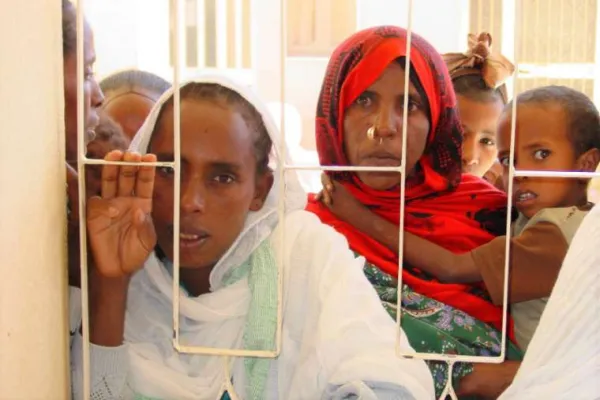
Asmara, Eritrea, Jul 24, 2019 / 10:37 am (CNA).- The Eritrean government’s recent closure of all Catholic-run health clinics in the country will have devastating effects for the people of the country, warned the pontifical foundation Aid to the Church in Need.

Sources in the country told the agency that the situation is dire and denounced the international indifference and lack of response.

“They are preventing us from offering what little we could give, in places where no one cares for the population, not even the state,” a source told Aid to the Church in Need, according to Vatican News.

“What will the people do?”

Last month, military forces arrived at the Church’s 22 health care clinics, telling patients to return to their homes, and subsequently guarding the buildings.

The government justified its seizures of the property under a 1995 decree restricting social and welfare projects to the state. The decree has been used intermittently since then to seize or close ecclesial services.

According to the BBC, analysts believe the recent seizures were retaliatory, after the Church in April called for reforms to reduce emigration. The bishops had also called for national reconciliation.

When the government interrupts the work of the Church, it is the people who suffer, Aid to the Church in Need said.

The agency argued that government-run hospitals lack the equipment and resources to take over the operations of the closed Church-run facilities, particularly in rural areas, Vatican News reported.

The agency also noted that the Catholic health care centers served people of all faiths. Some 95% of Eritreans are non-Catholic.

The Eritrean bishops have objected to the seizure of the clinics, stressing that the Church’s social services are not an act of opposition to the government.

“Any measure that prevents us from fulfilling … the obligations that come to us from the supreme commandment of brotherly love is and remains a violation of the fundamental right of religious freedom,” the bishops said in a statement.

Eritrea is a one-party state whose human rights record has frequently been deplored. Government seizure of Church property in the country is not new.

In July 2018, an Eritrean Catholic priest helping immigrants and refugees in Italy told EWTN that authorities had recently shut down eight free Catholic-run medical clinics. He said authorities claimed the clinics were unnecessary because of the presence of state clinics.

Christian and Muslim schools have also been closed under the 1995 decree designating the state as sole provider of social services, according to the US Commission on International Religious Freedom’s 2019 annual report.

Eritrea has been designated a Country of Particular Concern since 2004 for its religious freedom abuses by the US Department of State.

Many Eritreans, especially youth, emigrate due to a military conscription or a lack of opportunities, freedom, education, and health care.

A July 2018 peace agreement between Ethiopia and Eritrea, which ended a conflict over their mutual border, led to an open border which has allowed for easier emigration.

[…]

The Dispatch

On the new “nationalism”

July 24, 2019 George Weigel 20

Thanks to President Trump’s “America First” rhetoric and the rise of populist-nationalist parties in Europe, there’s a lot of debate about “nationalism” these days. On that subject, as on so many others, it’s worth listening […]