No Picture
News Briefs

The generals who marched with ‘Warriors’ in Lourdes

May 22, 2019 CNA Daily News 1

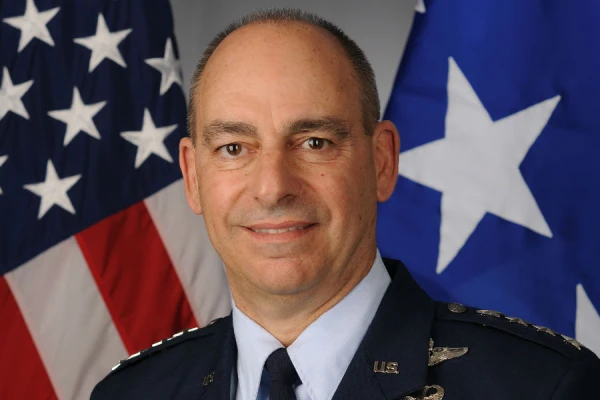
Lourdes, France, May 22, 2019 / 12:00 pm (CNA).- Gen. Jeff Harrigian, commander of U.S. Air Forces Europe and Africa, and Lt. Gen Chris Cavoli, commander of the U.S. Army in Europe, are two of the highest-ranking members of the American military. And over the weekend, they joined the thousands of military pilgrims who traveled to Lourdes seeking healing and peace.

Harrigian and Cavoli were asked to join the official American delegation to the International Military Pilgrimage, Warriors to Lourdes. Warriors to Lourdes is a program of the Knights of Columbus and the Archdiocese for the Military Services, USA.

Although the two generals are both Catholic, neither had been to Lourdes previously. Both explained to CNA how their faith impacts their military career, and what the pilgrimage meant to them.

Harrigian has been in his current position for only a few weeks, but joined the Air Force in 1985 and attended the Air Force Academy.

“I wanted to fly airplanes,” he explained, which led to him applying to the Academy.

Harrigian was unfamiliar with the story of Lourdes prior to this trip, but he said his wife taught him about the significance of the site, and thought the pilgrimage would be fruitful for the family, for a multitude of reasons.

“She thought it would be a great opportunity, first to experience it but also to be with some of our warriors here and have an opportunity to interact with them,” said Harrigian.

The size and scope of the pilgrimage came as a surprise to the general, who repeatedly used the word “extraordinary” to describe the event. Approximately 12,000 servicemembers from about 40 countries traveled to Lourdes.

“The first thing I would say is, I didn’t truly understand the breadth of all the nations that participated in this,” he said. “And to have an opportunity to interact with the different nations, the families, the warriors, it’s a once-in-a-lifetime opportunity, one that I’m not sure I truly appreciated as I read about it.”

“But now that I’m here I find it to be an extraordinary experience,” he added. Part of this experience included talking to senior French military officers and members of the Italian military.

“The interaction has been extraordinary,” he said. “It’s been a great opportunity to interact with them on a personal basis and get a sense of what Lourdes means to them as well.”

Harrigian said that he considers his Catholic faith to be an important facet that helps him maintain balance in his life and helps him with his military duties. He told CNA he is “always praying for our troops that are deployed down-range.”

“Reflecting on what your faith brings to you, your background, and having that underpin who you are is very important to any person,” he said. “And for me personally, it really helps in the command role that I have now.”

Cavoli is also visiting Lourdes for the first time. Unlike Harrigian, he was very familiar with the story of Lourdes and had been wanting to visit.

“I’ve been hearing about [Lourdes] my whole life, since I was a kid, so this is a unique opportunity to get to do something I’ve wanted to do so much,” he said.

Cavoli told CNA that he finds his faith to be “intertwined” with his military career, and calls upon his faith to provide the graces needed to carry out the duties of his job.

“Of course, I have my strictly military duties, which are mainly secular in nature, but the moral compass that religion gives me, the moral compass and the ethical fortitude, as well as the emotional strength to deal with what is a pretty hard profession, that helps me a great deal,” he said.

Additionally, Cavoli credits his faith with giving him the wisdom to make the choices in tough decisions, as well as “the strength to carry on when things are hard.”

One of the benefits of the International Military Pilgrimage is that it gives servicemembers a chance to be surrounded by people who have similar experiences and can understand and empathize.

“It gives folks time to be together and to share their thoughts. In this case, in the context of their faith, which adds strength to the discussion.”

Of course, soldiers, sailors, and airmen train and deploy to defend lives and to risk their own in the service of others. But an inherent truth of military service is that it can involve armed conflict and the taking of human life.

Even in pursuit of the noblest cause or in defense against the clearest of evil, killing and death leave marks on the consciences of all those involved. The “moral injuries” of armed conflict can be as real and as in need of healing as physical wounds.

“Moral injury is a serious thing,” Cavoli said, offering that civilians could best help in the healing process by not make assumptions about the experiences of servicemen and women. Listening comes before understanding, he said.

During the pilgrimage, there were major events for all pilgrims, and smaller events for subsets. Both Cavoli and Harrigian said that they considered a shared Mass for English-speaking pilgrims, including servicemen and chaplains from the U.S., the U.K., and Ireland at the Lourdes Grotto, to be a highlight of the journey.

“The Mass at the Grotto was absolutely moving. It was beautiful,” said Cavoli. Afterwards, he joined a group for the Stations of the Cross, something he said added up to a “beautiful, beautiful morning” that was “just perfect.”

Harrigian called the Mass was “a great chance to just reflect upon everything that this experience brings to the entire community of warriors that are here, along with our families.”

And while neither had visited the baths when they spoke to CNA, both were carrying specific intentions with them.

“Personally, internal to our family, I’m always looking for grace and the opportunity to appropriately look over all those that I work with and work for, in the role that I currently have,” Harrigian told CNA. He said he was extremely grateful to the Knights of Columbus for orchestrating Warriors to Lourdes, which he called “an incredible event.”

Cavoli had similar intentions, saying he would be praying for “Peace, my soldiers, [and] my family.” He has appreciated his time in Lourdes, saying it was a place that made him feel “very calm” and fully aware of the presence of God.

“It’s just a wonderful pilgrimage,” he said.

[…]

No Picture
News Briefs

Investigative authority continues to fight misuse of Vatican financial entities

May 22, 2019 CNA Daily News 0

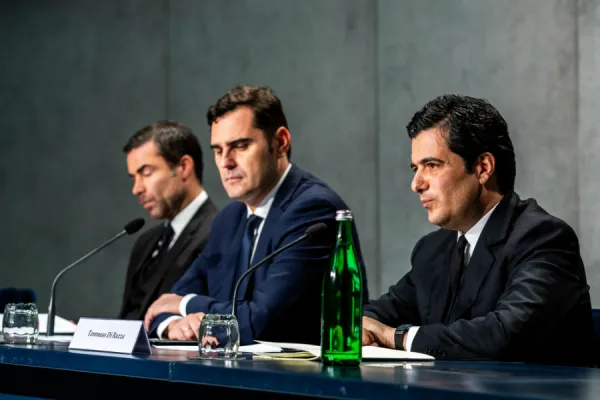
Vatican City, May 22, 2019 / 11:49 am (CNA).- The Vatican’s Financial Information Authority said in their annual report Tuesday that they continue to catch cases of fraud involving the city state’s financial institutions, including a case of money laundering.

The report, presented to journalists March 21, showed that there were 56 Suspicious Activity Reports filed with the AIF in 2018, down from 150 in 2017.

SARs filed over the last three years have led the AIF to investigate cases of money laundering and financial fraud within Vatican financial entities.

Among these appears to be the case of Argentine Msgr. Patrizio Benvenuti, who was arrested and charged with financial fraud, tax evasion, and money laundering in 2016.

Sums worth around 9 million euros were seized from Benvenuti’s non-profit organization, Kepha Invest. It is believed he defrauded some 300 people out of around 30 million euros ($33.5 million).

The AIF was established by Benedict XVI in 2010 to supervise the Vatican’s financial activity and prevent and counter money laundering. It investigates suspicious activity and then passes the information on to the competent authorities for prosecution.

The competent authority may be a foreign state or the Vatican’s Office of the Promoter of Justice.

Dicasteries of the Roman Curia and any non-profit organizations which have registered offices in the Vatican City State fall under the supervision of the AIF, which may take measures to counter and prevent money laundering and terrorism financing as well as undertake “prudential supervision” of financial activities.

The AIF also monitors and reviews actions carried out by the Administration of the Patrimony of the Holy See, which oversees the Vatican’s real estate holdings, and the Institute for Religious Works, which is commonly called “the Vatican bank,” though a misnomer.

During 2018, the AIF referred 11 cases to the Office of the Promoter of Justice. The report gave limited to no information on the conclusion of those cases. The report gave four example cases from the last three years, the investigations of which were completed in 2018, but without identifying information.

One of the examples given likely refers to the case of Angelo Proietti, who was convicted by a Vatican court in December 2018 of money laundering and sentenced to two years and six months in prison. The conviction is currently under appeal. This was the Vatican tribunal’s first conviction for money laundering.

Another example likely refers to the case against Angelo Caloia, president of the IOR from 1989-2009, and his lawyer, Gabriele Liuzzo, who were indicted March 5, 2018, on accusations of having embezzled money from Vatican real estate sales during the years 2001-2008.

The report also lists the AIF’s uncovering of a fraudulent “branch” of the IOR in Spain. The alleged non-profit organization presented itself as a canon law foundation, like the IOR is, and used the name of the Vatican institution to elicit donations. The head of the network was also falsely posing as a diplomat.

According to the report, the AIF collaborated with the Financial Intelligence Unit in Spain and “the beneficial owners of the company were arrested on charges of criminal conspiracy, and sums of money and valuables, including firearms, were seized.”

Also, in 2018, the AIF exchanged information with counterpart authorities in foreign jurisdictions in 488 cases, and signed eight new “Memoranda of Understanding,” meaning it now has agreements with financial intelligence units and supervisory authorities in 57 countries.

René Bruelhart, president of the AIF, told journalists May 21, “if we look back in 2018, I think it has been a very positive and also encouraging year.”

While he said challenges still exist, now they have the systems in place to tackle them. “At this point, I think a fully functioning system has been implemented and achieved,” he said. “The path we are walking on has become a well paved one… and we continue moving forward.”

[…]

No Picture
News Briefs

States sue over HHS’ stronger conscience protections for doctors, nurses

May 22, 2019 CNA Daily News 1

Washington D.C., May 22, 2019 / 09:55 am (CNA).- An array of states and cities filed a lawsuit Tuesday against a new Department of Health and Human Services rule allowing medical professionals to refuse to take part in procedures because of religious or conscientious objections.

The suit filed May 21 in the US District Court for the Southern District of New York claims the conscience provision illegally favors healthcare workers over patients.

The HHS rule, announced May 2 and published May 21 in the Federal Register, strengthens a series of laws intended to protect the conscience rights of doctors and nurses. It is due to take effect two months from its publication in the Federal Register.

Under the rule, medical providers may opt of direct participation, as well as having to refer patients to other providers who will perform procedures to which they object, such as abortion and sterilization.

Roger Severino, director of the HHS’ new Conscience and Religious Freedom Division, has said the rule “ensures that healthcare entities and professionals won’t be bullied out of the health care field because they decline to participate in actions that violate their conscience, including the taking of human life.”

“Protecting conscience and religious freedom not only fosters greater diversity in healthcare, it’s the law,” he stated. “Finally, laws prohibiting government funded discrimination against conscience and religious freedom will be enforced like every other civil rights law.”

Abortion activists have said that the new rule will severely curtail access to such procedures in rural and other communities.

New York is leading the suit against the new rule; its co-plaintiffs are Colorado, Connecticut, Delaware, Hawaii, Illinois, Maryland, Massachusetts, Michigan, Minnesota, Nevada, New Jersey, New Mexico, Oregon, Pennsylvania, Rhode Island, Vermont, Virginia, and Wisconsin, as well as the District of Columbia, Chicago, New York City, and Cook County, Ill.

The plaintiffs say the rule would force some healthcare facilities to hire more staff in case there are too many conscientious objectors to provide requested procedures.

California filed a separate lawsuit against the rule, saying it “impedes access to basic care” and “encourages discrimination against vulnerable patients.”

San Francisco also filed a suit against the rule earlier this month.

The text of the rule acknowledges that several submissions were made during consultation regarding the possible limitation on access to abortion and sterilization in some communities, saying these submissions proved the inadequacy of previous conscience protections.

“The Department observed that it was contradictory to argue, as many commenters did, both that the rule would decrease access to care and that the then‐current conscience protections for providers were sufficient,” the rule reads.

“If the Department’s new rule would decrease access to care because of an increase in providers’ exercise of conscientious objections, it would seem that the statutory protections that existed before the regulation did not result in providers fully exercising their consciences as protected by law.”

[…]