No Picture
News Briefs

Cardinal Marx: Bill banning circumcision in Iceland a threat to religious freedom
February 7, 2018 CNA Daily News 2

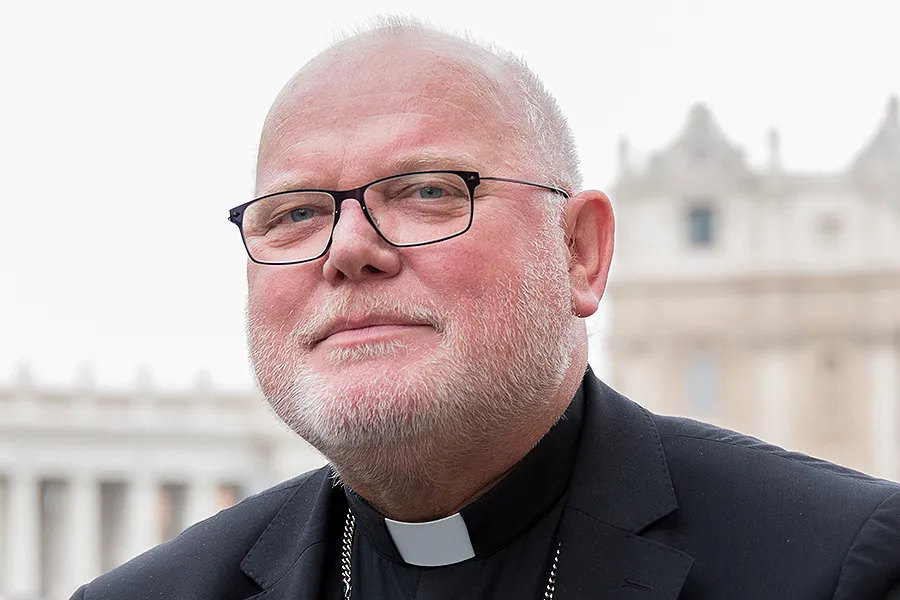
Reykjavik, Iceland, Feb 8, 2018 / 12:00 am (CNA/EWTN News).- A new bill proposed in Iceland that would make circumcision punishable by up to six years in prison is a “dangerous attack” on religious freedom, Cardinal Reinhard Marx has said.

“Protecting the health of children is a legitimate goal of every society, but in this case this concern is instrumentalized, without any scientific basis, to stigmatise certain religious communities. This is extremely worrying,” Marx said in a statement.

Marx commented on the issue as President of the Catholic Church in the European Union (COMECE). While Iceland does not belong to the European Union, it does have “privileged relations” with EU countries, COMECE noted.

“COMECE considers any attempt on the fundamental right to freedom of religion as unacceptable. The criminalisation of circumcision is a very grave measure that raises deep concern,” Marx added.  

Circumcision is a religious ritual for many, notably Jews and Muslims. Jews typically circumcise infant boys eight days after birth, while Muslim practices vary widely.

The proposed bill states that “Anyone who…causes damage to the body or health of a child or a woman by…removing sexual organs shall be imprisoned for up to 6 years.”

The bill specifically states that circumcisions on boys, if performed for non-medical reasons, would be banned in Iceland under the bill. Female circumcision has been banned in Iceland since 2005.

Male circumcisions used to be “generally encouraged…to prevent various disorders and behaviors,” the bill states.

“In recent years, this view has been expanding, and is quite widespread in Europe, that the execution of a construction for a purpose other than a medical is a violation of human rights boys because of irreversible interventions in their bodies,” it states, and carries a risk of infection.

The bill also states that circumcision of young boys violates “Article 12. UN Convention on the Rights of Children to Affect Your Own Life” as well as “paragraph 3. Article 24 which guarantees children protection against traditions that are harmful to children’s health.”

While the bill does not define at what age childhood ends, the age of sexual consent in Iceland is 15 years of age.

According to Mayo Clinic, circumcision may have some health benefits, including easier hygiene, decreased risk of urinary tract infections, decreased risk of sexually transmitted infections, and a decreased risk of penile cancer.

The American Academy of Pediatrics notes that the benefits of circumcision outweigh the risks, although they encourage parental discretion in the decision.

The health risks and benefits have been a topic of debate for several years in some European countries, although none have banned the practice outright.

Iceland, which has a population of around 334,000, has a small Muslim population of a few hundred people, and an even smaller Jewish population of around 100 people.

While Iceland has no designated Rabbi, Jewish news source ynetnews.com reports that Chief Rabbi of Denmark Yair Melchior and the Rabbi of Oslo, Yoav Melchior are campaigning against the bill on behalf of the Jewish population in Iceland.

“Iceland does not have a significant Jewish or Muslim population; therefore there are hardly any opponents to the bill. Only considerable international pressure can help,” the Rabbis told ynetnews.
 
“There is no country in the world now that bans circumcision. This sets a dangerous precedent that may affect other countries; the Danish parliament is now considering such a bill as well,” they added. The Danish Medical Association has advised against male contraception in boys for several years, though no ban has been enacted in the country.

The European Conference of Rabbis also voiced their opposition to the bill in a statement, as reported in ynetnews.  
 
“Circumcision is a critical part of Jewish life and no authority in the world can forbid Jews from carrying out this commandment,” they said.

Rabbi Pinchas Goldschmidt, president of the group, added that “although the Icelandic Jewish community is small, we cannot ignore the dangerous precedent that this law can set and the consequences that such legislation can cause in other countries.”
 
“We call on lawmakers to immediately rescind this miserable piece of legislation and continue supporting Jewish life without limits.”

It is unclear when the bill would be up for a vote.

[…]

No Picture
News Briefs

Holy Land pilgrimages on the rise, despite political tensions

February 7, 2018 CNA Daily News 0

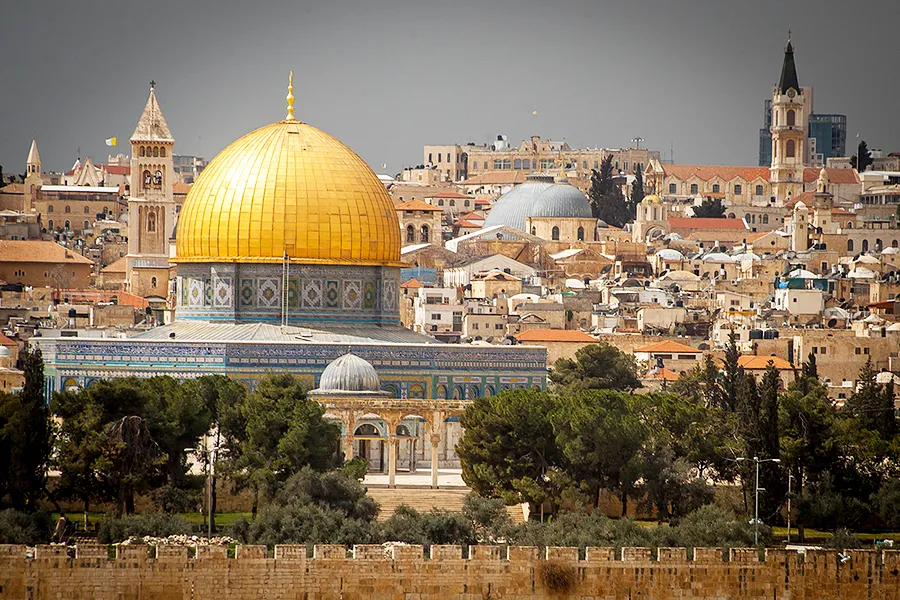
Denver, Colo., Feb 7, 2018 / 03:00 pm (CNA).- While the transition of the American embassy to Jerusalem has exacerbated regional tension in recent months, the number of Christian pilgrims traveling to the Holy Land has increased.

Last month 770 registered pilgrimage groups, some 26,000 people, visited Jerusalem, while 529 groups visited in the same time period last year, and 390 visited in January 2016. The statistics were recently released by Israel’s Christian Information Center,

A priest who recently took a group of young adults to the Holy Land told CNA that the pilgrimage was peaceful, and seemed to be unaffected by political tensions.

“The experience for everyone was very peaceful. You don’t necessarily experience any conflict in the environment,” said Father Daniel Cardo, pastor of Holy Name Church in Englewood, CO.

Sobhy Makhoul, deacon of the Maronite Patriarchate of Jerusalem, told Asia News that the rise in pilgrims began at the end of 2017. “Between November and mid-December there were many pilgrims, so many that for the first time we had to house some of them in the city like Hebron, almost 30 km south of Bethlehem,” he said.

There has also been a notable increase in pilgrims from China, Russia, and Eastern Europe, among them are many pilgrims from Eastern Orthodox churches, Makhoul told Asia News.

Makhoul also said that a peaceful reaction in Palestine to the US Embassy’s move from Tel Aviv to Jerusalem has reassured pilgrims that Israel is a safe place to travel.

He said that most people in the region want peace, and that most recognize the economic importance of pilgrimage trips.

Fr. Cardo told CNA that there is also a general respect in the region for the sacredness of pilgrimages to Holy Land, which he called the “father land” to many religions.

“People from the Holy Land, whether they are Christians or not, and actually a vast majority as we know aren’t Christians, recognize … the sacredness of the practice of pilgrimage,” he said.

“It is moving to me to see how many people, whether they are fully into the spiritual experience or not, are attracted to” sacred sites in the Holy Land, he said.

“The experience of going to Holy Sepulchre in particular … It’s just entering into a mystery, pointing to the place that reflects the mystery of God’s victory, but such a stark contrast, with the craziness of our humanity – the many languages [and] the noise of the place.”

Father Cardo encouraged more groups of Catholics to travel to the Holy Land. He said the experience allows pilgrims to envision the reality of  Scripture’s settings, and that pilgrimages help Christians in the Holy Land, who only make up a small fraction of the population.

“To visit Christian places and support local Christian businesses is a very important thing we have to do in order to maintain the life of the Church in those holy places,” he said.


[…]

No Picture
News Briefs

Colosseum to be lit red for persecuted Christians

February 7, 2018 CNA Daily News 0

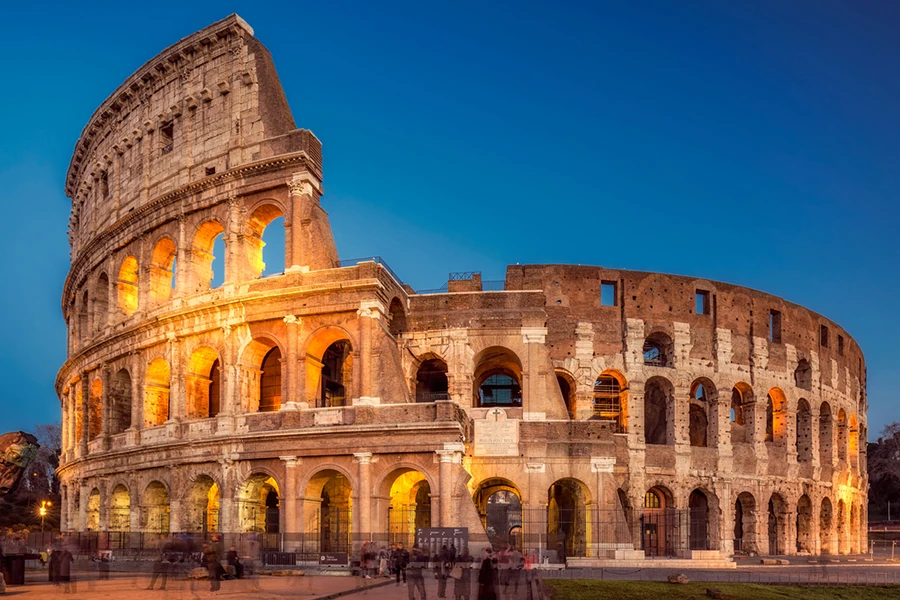
Rome, Italy, Feb 7, 2018 / 01:49 pm (CNA/EWTN News).- The Roman Colosseum will be illuminated by red lights later this month to draw attention to the persecution of Christians around the world, and especially in Syria and Iraq.

On Saturday, Feb. 24, at 6 p.m. the Colosseum will be spotlighted in red, to represent the blood of Christians who have been wounded or lost their lives due to religious persecution.

Simultaneously, in Syria and Iraq, prominent churches will be illuminated with red lights. In Aleppo, the St. Elijah Maronite Cathedral will be lighted, and in Mosul, the Church of St. Paul, where this past Dec. 24, the first Mass was celebrated after the city’s liberation from ISIS.

The event, sponsored by Aid to the Church in Need (ACN), follows a similar initiative last year, which lit-up London’s Parliament building in red, as well as the Basilica of the Sacred Heart in Paris and the cathedral in Manila, Philippines. In 2016, the famous Trevi Fountain in Rome was lit.

Alessandro Monteduro, director of ACN, told journalists Feb. 7 that the “illumination [of the Colosseum] will have two symbolic figures: Asia Bibi, the Pakistani Christian condemned to death for blasphemy and whose umpteenth judgment is expected to revoke the sentence; and Rebecca, a girl kidnapped by Boko Haram along with her two children when she was pregnant with a third.”

“One of the children was killed,” he said, “she lost the baby she was carrying, and then became pregnant after one of the many brutalities she was subjected to by her captors.”

Once she was freed and reunited with her husband, she decided she “could not hate those who caused her so much pain,” Monteduro said.

Aid to the Church in Need released a biennial report on anti-Christian persecution Oct. 12, 2017, detailing how Christianity is “the world’s most oppressed faith community,” and how anti-Christian persecution in the worst regions has reached “a new peak.”

The report reviewed 13 countries, and concluded that in all but one, the situation for Christians was worse in overall terms for the period 2015-2017 than during the prior two years.  

“The one exception is Saudi Arabia, where the situation was already so bad it could scarcely get any worse,” the report said.

China, Eritrea, Iraq, Nigeria, North Korea, Pakistan, Saudi Arabia, Sudan, and Syria were ranked “extreme” in the scale of anti-Christian persecution. Egypt, India, and Iran were rated “high to extreme,” while Turkey was rated “moderate to high.”

The Middle East is a major focus for the report.

“Governments in the West and the U.N. failed to offer Christians in countries such as Iraq and Syria the emergency help they needed as genocide got underway,” the report said. “If Christian organizations and other institutions had not filled the gap, the Christian presence could already have disappeared in Iraq and other parts of the Middle East.”

The exodus of Christians from Iraq has been “very severe.” Christians in the country now may number as few as 150,000, a decline from 275,000 in mid-2015. By spring 2017 there were some signs of hope, with the defeat of the Islamic State group and the return of some Christians to their homes on the Nineveh Plains.

The departure of Christians from Syria has also threatened the survival of their communities in the country, including historic Christian centers like Aleppo, ACN said. Syrian Christians there suffer threats of forced conversion and extortion. One Chaldean bishop in the country estimates the Christian population to be at 500,000, down from 1.2 million before the war.

Many Christians in the region fear going to official refugee camps, due to concerns about rape and other violence, according to the report.

ACN also discussed the genocide committed in Syrian and Iraq by the Islamic State and other militants. While ISIS and other groups have lost their major strongholds, ACN said that many Christian groups are threatened with extinction and would likely not survive another attack.


[…]